News related to
World

Greenlogue/AP A global analysis commissioned by Transport & Environment and conducted by Cerulogy reveals that biofuels now generate 16 percent more carbon dioxide emissions than the fossil fuels they are intended to replace. The finding throws into sharp relief the risks of scaling up crop-based biofuel programmes ahead of the COP30 climate summit in Belém, Brazil. The study includes emissions not only from cultivation, harvesting and processing, […]

Intercontinental Exchange, the parent company of the New York Stock Exchange, is committing up to $2 billion in cash to back Polymarket, giving the prediction-market platform a pre-investment valuation of $8 billion. ICE will also serve as the global distributor of Polymarket’s event-driven data and collaborate on tokenisation efforts.

The deal signals a bold shift by a major financial infrastructure firm into the realm of speculative markets tied to politics, culture, economics and sports. ICE’s announcement states the investment will not have a material impact on its 2025 financials.

Polymarket, launched in 2020 by Shayne Coplan, allows traders to take positions on the probability of real-world outcomes. The platform had earlier barred U. S. users after settling in 2022 with the CFTC over operating an unregistered exchange. But it has since acquired QCEX, a CFTC-licensed derivatives exchange and clearinghouse for $112 million, positioning itself for compliant U. S. operations.

In public statements, ICE’s Chair and CEO, Jeffrey C. Sprecher, described the move as connecting “trusted financial infrastructure” with a next-generation platform that leverages user behaviour and probability markets. Coplan said the partnership will help bridge “how individuals and institutions use probabilities to understand and price the future.”

Analysts view the crux of ICE’s interest lies in monetising Polymarket’s crowd-driven data. The platform’s users collectively assign probabilities to outcomes, producing sentiment indicators ICE can package and distribute to institutional clients. Michael Ashley Schulman, partner at Running Point Capital Advisors, noted that ICE sees more value in data distribution than in clearing event contracts.

Regulatory conditions have softened under the current federal regime. Polymarket had reported that investigations by the Department of Justice and the CFTC closed without new charges, eliminating a regulatory overhang. Legal experts note that its acquisition of QCEX gives it a structural path to U. S. markets that was unavailable earlier.

Despite that progress, legal risks remain. Some jurisdictions still view event-betting as gambling, not financial activity. In Belgium, for example, authorities recently banned the platform’s use within the country. Polymarket’s own disclosures show it had raised around $205 million in earlier rounds before ICE’s investment, but with limited access to established trading jurisdictions.

Institutional interest in prediction markets has surged since the 2024 U. S. election cycle, which fuelled growth in platforms wagering on election outcomes, geopolitical events and social trends. ICE’s investment may prompt legacy financial firms to explore similar tie-ups or launches of probabilistic trading models.

In markets, ICE’s shares nudged upward following the announcement. The platform’s next test will be demonstrating whether prediction markets, previously the domain of retail and niche crypto users, can scale under institutional frameworks while satisfying securities, derivatives and gambling regulators.

Abu Dhabi’s Department of Health will present a portfolio of artificial intelligence–based healthcare solutions at the upcoming GITEX Global 2025 event in Dubai. The showcase is intended to reinforce the emirate’s ambitions to lead in digital health transformation and embed AI into clinical and public health systems.

DoH plans to display tools ranging from predictive diagnostics to personalised wellness platforms, emphasising preventive care and data-driven interventions. H. E. Dr Noura Khamis Al Ghaithi, Undersecretary of DoH, stated that leveraging AI is central to “reshaping how care is delivered” and enabling people to “live healthier, longer lives.”

The Abu Dhabi delegation will also highlight the emirate’s efforts to integrate AI across healthcare infrastructure, including hospital systems and community services. As part of the pitch, DoH intends to advance models that predict health risks, flag early disease onset, and streamline patient journeys from diagnosis to treatment.

The timing of this unveiling aligns with Abu Dhabi’s broader push into AI research and high-tech partnerships. In September 2025, Nvidia and Abu Dhabi’s Technology Innovation Institute launched a joint lab focusing on robotics and advanced AI models, including deployment of Nvidia’s “Thor” chip for robotic applications. That initiative is part of the UAE’s wider effort to become a global AI player.

At GITEX Global—a technology exhibition scheduled from 13 to 17 October at the Dubai World Trade Centre—the DigiHealth & Biotech track is expected to draw startups, tech firms and health ministries showcasing innovations across genomics, diagnostics, telemedicine and biotech. The exhibition emphasises frontier domains: physical AI, quantum computing, semiconductors and data-centre infrastructure.

Abu Dhabi is also seeking to signal that its AI investments are more than pilot projects. Through collaborations with private technology firms, academic institutions and regional health authorities, DoH aims to build a scalable, interoperable health data ecosystem. Under its strategy, AI modules would be deployed not just in tertiary hospitals, but in primary care, clinics, remote monitoring and wellness programmes.

Critics point to challenges ahead, including data privacy, algorithmic bias, regulatory oversight and integration with legacy systems. Effective AI deployment in health requires robust patient consent frameworks, transparent models and continuous validation across diverse populations. Observers note that many AI health systems falter when scaled beyond controlled environments.

SINGAPORE – Media OutReach Newswire – 8 October 2025 – Food Japan 2025, ASEAN’s premier exhibition for Japanese food and beverage (F&B) products, technology, and services, opened today for its 13th edition. The event continues to serve as a vital platform for celebrating Japan’s culinary heritage, spotlighting cutting-edge innovations, and fostering business partnerships across the region. This year, 153 exhibitors from 35 prefectures and Singapore are participating, […]

Demand for Regulated Forex Brokers Grows for UAE Investors Trade247, a broker firm based in Dubai and regulated by the UAE’s Securities and Commodities Authority as well as the Financial Services Commission of Mauritius, has introduced its technology geared towards what it calls “complete multi-asset trading,” which covers forex, equities, indices, commodities, precious metals, energy products, and digital currencies, in which they identify the current trend of […]

Google DeepMind has made public a new AI model, Gemini 2.5 Computer Use, capable of interacting with web and mobile user interfaces by mimicking human actions such as clicking, typing and scrolling. The model is now available in preview through the Gemini API, via Google AI Studio and Vertex AI, allowing developers to build agents that can directly operate interfaces otherwise inaccessible via backend APIs. The model […]

Jamf launched its 16th annual Jamf Nation User Conference in Denver, unveiling a bold expansion of its device management platform with new AI tools, a richer API ecosystem and automated updates driven by declarative device management. The three-day gathering at the Colorado Convention Center brings together Apple IT administrators, security professionals and developer partners to explore the next era of enterprise Apple management. Jamf CEO John Strosahl […]

Advertisements

HONG KONG SAR – Media OutReach Newswire – 8 October 2025 – Jamf, (NASDAQ: JAMF), the standard in managing and securing Apple at work, today kicked off its 16th annual Jamf Nation User Conference (JNUC) in Denver, Colorado. Joined by key partners including Apple, Okta, AWS, Microsoft, Google and more, Jamf unveiled the latest updates to its leading Apple device management and security platform. Those updates include […]

The World Bank has warned of a looming cycle of poverty in Gaza, in which child malnutrition, psychological trauma and institutional collapse could entrench deprivation across generations. The economist issuing the warning, speaking in an internal briefing that has been seen by multiple international analysts, observed that Gaza’s humanitarian emergency is evolving into structural impoverishment — a process that cannot be reversed simply by aid injections. He […]

Riyadh — DataVolt, in partnership with the Energy & Water Academy and Innovatics, has inaugurated the Kingdom’s first industry-integrated National Diploma in Data Science and AI, embedding real-world projects into foundational training for Saudi talent. The diploma carries full approval from the Technical and Vocational Training Corporation and College of Excellence, and is granted endorsement by the Ministry of Communications and Information Technology alongside support from the […]

The World Bank has trimmed its projection for South Asia’s economic expansion in 2026, citing elevated U. S. tariffs on Indian exports as a key drag. The region’s growth is now forecast at 5.8 percent, down from 6.6 percent this year.

The updated “South Asia Development Update” flags the U. S. trade measures as a major headwind, especially given India’s size and its integration into regional supply chains. The report sets India’s growth for fiscal year 2025–26 at 6.5 percent, up from its earlier estimate of 6.3 percent, but warns of a drop to 6.3 percent in 2026–27 as tariff pressures intensify.

The U. S. has imposed tariffs of up to 50 percent on a broad swath of Indian goods—impacting sectors such as textiles, gems and jewellery and seafood—affecting nearly $50 billion in exports. These are among the highest duties levied on any U. S. trading partner. The World Bank notes that these tariffs will particularly bite in 2026 as initial buffers from public spending fade.

Franziska Ohnsorge, chief economist for South Asia at the World Bank, asserted that the toll from trade restrictions reflects “a reversal of the gains” India had made in integrating into global value chains. She urged structural adjustments: lowering tariffs and signing free trade agreements to support export competitiveness.

Beyond India, Bangladesh and Sri Lanka show varying trajectories. The Bank upgrades forecasts for Bangladesh and Sri Lanka, citing easing fiscal strain and improving external balances. Meanwhile, Nepal and the Maldives bear the brunt of tighter global conditions, with their outlooks revised downward.

Policy responses in India are already in motion. The government launched sweeping tax cuts spanning consumer goods to automobiles, one of the largest fiscal interventions in recent years. Concurrently, infrastructure spending is being boosted to drive domestic demand and counterbalance export headwinds. The Reserve Bank of India held its repo rate at 5.50 percent in October, citing subdued inflation and leaving open room for a future cut.

Indian officials remain confident. Finance Minister Nirmala Sitharaman called the economy “resilient,” expressing faith it could absorb external shocks while targeting an ambitious 8 percent growth. The Chief Economic Adviser affirmed earlier forecasts of 6.3–6.8 percent GDP growth, downplaying long-term damage from trade friction.

International institutions have also flagged downside risks. The Asian Development Bank cut India’s FY 26 forecast to 6.5 percent from 6.7 percent, pointing to duty pressures and policy uncertainty. The IMF earlier trimmed India’s 2025-26 prediction to 6.2 percent, citing heightened global trade tensions.

The World Bank’s report emphasises that over the medium term, trade liberalisation combined with labour flexibility and investment in digital infrastructure could help South Asia reclaim momentum. Within the document, a scenario of tariff cuts and deeper trade integration is modelled to yield significant gains in productivity, employment, and output per capita.

Still, the path ahead is fraught. The report cautions that the region is vulnerable to a global slowdown, geopolitical shocks and labor market disruptions from artificial intelligence. In particular, it warns that weaker export growth from India will spill over across the region via trade, financial and migrant-worker channels.

Fight Fight Fight LLC, the company behind the TRUMP memecoin, has launched a capital-raising campaign of at least $200 million with ambitions that could scale up to $1 billion to establish a dedicated digital asset treasury that would accumulate holdings of the token, according to people with knowledge of the matter.

The undertaking is led by Bill Zanker, a long-time promoter and Trump ally, and signifies one of the most aggressive attempts yet to stabilise a creator-driven token through internal backing. The funds would be deployed primarily to purchase TRUMP tokens from the open market, an effort to shore up price and signal confidence in what has become a volatile asset.

TRUMP, launched just before Donald Trump’s second inauguration, operates on the Solana blockchain under two joint issuers—Fight Fight Fight LLC and CIC Digital—together controlling 80 percent of its total supply. The public tranche was released in January 2025, and the token rapidly gained speculative traction before encountering steep declines.

Insiders caution that the fundraising process is ongoing and not guaranteed to succeed in full. They also note that structuring such a treasury around a politically branded memecoin carries substantial market, regulatory and reputational risks.

Cryptocurrency analysts observe that the move is consistent with broader trends in 2025: increasingly, token issuers are creating “treasury models” to backstop flagging price action. Yet few of those are tethered so explicitly to a political figure or narrative, making the TRUMP case unique.

The token’s price trajectory has been volatile. After peaking earlier in the year, it has fallen sharply—losing more than 80 percent of its value from highs—attracting scrutiny about its speculative nature and sustainability. Meanwhile, TRUMP maintains strong social media backing and occasional high-visibility events, such as a dinner hosted by Trump in May for top token holders, which had triggered a notable price bump.

In June, plans were floated by the issuer to launch an “Official Trump Wallet” to facilitate trading and custody, but disputes emerged with World Liberty Financial. Those tensions underscored internal complexity and fragmented control within the broader Trump crypto ecosystem.

Analysts underline that for the treasury plan to have long-term impact, it must go beyond buybacks. Critics argue that stockpiling tokens may serve only short-term price support, lacking sustainable utility or integration into broader infrastructure. There is a risk that concentrated control over token issuance and vesting schedules could invite regulatory scrutiny or undermine confidence among external investors.

Institutional curiosity is emerging: Canary Capital Group has reportedly filed paperwork with U. S. regulators to launch a spot ETF tied to TRUMP. Yet the Securities and Exchange Commission’s cautious posture toward meme coins, and obstacles in listing a futures-based derivative market, could impede progress.

The broader Trump-adjacent crypto strategy has already stretched into multiple verticals. Trump Media & Technology Group announced a $2.5 billion initiative to build a bitcoin treasury, and World Liberty Financial has launched a $1.5 billion self-buy programme in its own token, WLFI. In that case, about half the funding is to be in WLFI itself, with the rest directed to debt settlement and resale.

Ahmad Assiri Gold has done it. Gold has reached the long-awaited $4,000 per ounce mark, a level that carries psychological and symbolic significance. This moment represents a powerful and sustained rally that began with a breakout from a lengthy consolidation phase in early September, evolving into a pivotal chapter for the market and the yellow metal. Since that breakout, gold has risen by 16%, while attempts at […]

Greenlogue/AP Mubadala Energy achieved a 36.5 per cent drop in its Scope 1 and 2 greenhouse gas emissions in 2024, the company’s newly published Sustainability Report reveals, underscoring the firm’s accelerating role in the energy transition. The decline was complemented by a sharp 55 per cent fall in emissions intensity, from 15.57 to 6.95 tonnes CO₂e per kilo barrel of oil equivalent. Emissions from flared gas fell […]

Over 200 films from 40 countries light up Bangkok until October 15 BANGKOK, THAILAND – Media OutReach Newswire – 8 October 2025 – The Bangkok International Film Festival (BKKIFF) has returned in spectacular form, transforming the Thai capital into a global stage for cinema and culture. Running from September 27 to October 15, 2025, the 19-day festival is now in full swing, already drawing packed audiences, international […]

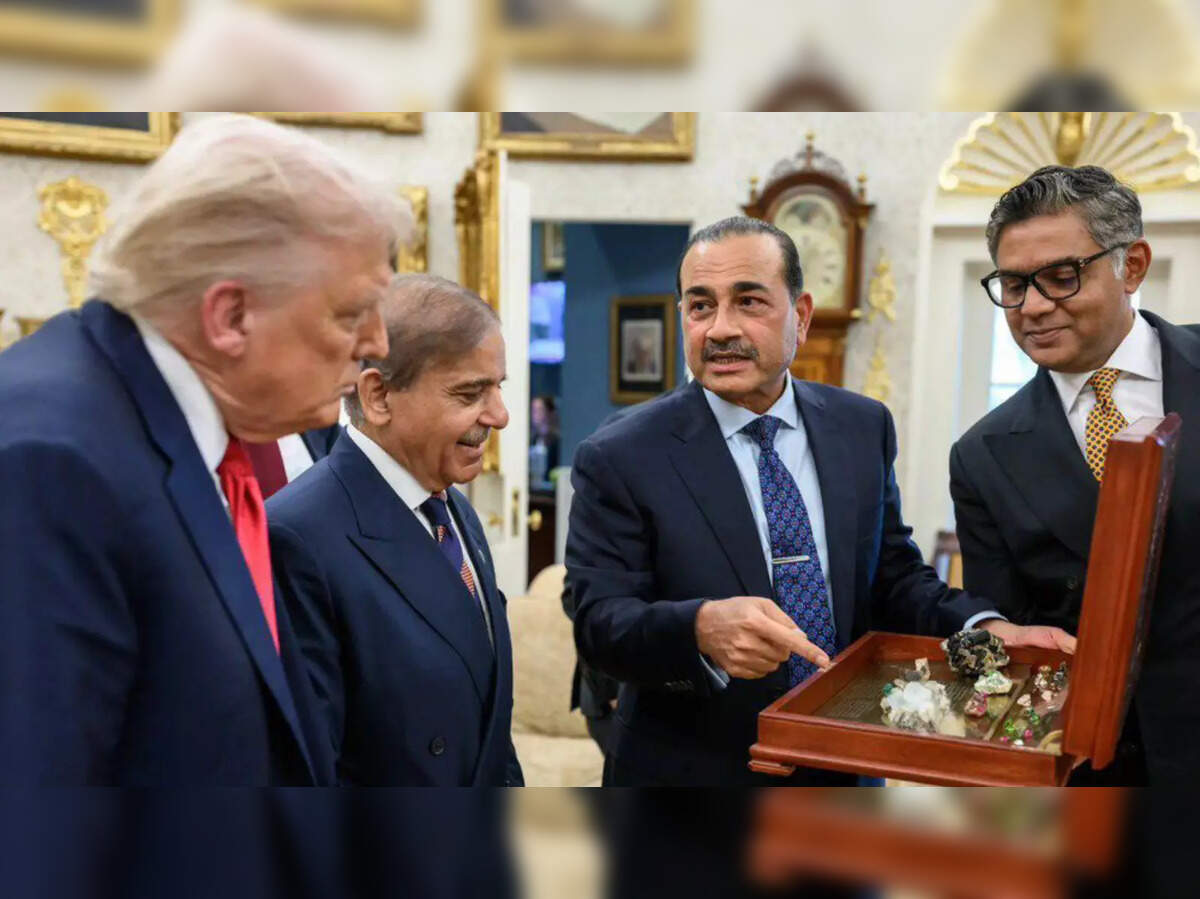
By Sushil Kutty Rare minerals included lots of ores, this was something we were taught in school and we learned about stone age, copper age and iron age, the last of which remains to this day the most basic of minerals, out of which was born steel and the term steely strength, like in ‘Superman […]

The article Pakistan Is The Dearest To Trump In Asia As Islamabad Exports Rare Earth Minerals appeared first on Latest India news, analysis and reports on Newspack by India Press Agency).

HO CHI MINH CITY, VIETNAM – Media OutReach Newswire – 7 October 2025 – Vinpearl Golf Léman, a 36-hole course with a distinctive design and comprehensive 5-star facilities, has officially opened in Củ Chi, on the outskirts of Ho Chi Minh City. The launch represents a new step in Vinpearl Golf’s development of international-standard courses and introduces a destination where the golf community can meet, compete, and […]

When Jane Goodall ventured into the forests of Tanzania in 1960, she carried no formal zoological degree, just a fierce curiosity and letters of introduction to Louis Leakey. She was 26 years old and stepping into what was then a largely uncharted world of primate behaviour. Over the next six and a half decades, she would not only reshape our understanding of chimpanzees, but also become one […]

The World Bank has upgraded its 2025 growth forecast for the Middle East, North Africa, Afghanistan, and Pakistan region to 2.8 percent, up from 2.6 percent, while trimming the outlook for 2026 amid intensifying conflict and faltering oil output. Expansion in the Gulf and non-oil sectors is driving the upward revision in 2025, securing a more optimistic tone for this year. But persistent geopolitical stress—particularly in Iran, […]

Greenlogue/AP Saudi Arabia’s Public Investment Fund has mandated Crédit Agricole CIB, JPMorgan and Société Générale to arrange a dual-tranche, euro-denominated green bond issue in three- and seven-year maturities, sources close to the matter said. This marks the fund’s inaugural euro green bond issuance and appears set to be its only green debt deal of the year. By pursuing this move, the sovereign wealth fund signals a further […]

The Co-Hosted With The World Economic Forum, The Summit Is Set To Launch Regional Initiatives on Sustainable and Safe AI and the Transitioning Industrial Cluster KUALA LUMPUR, MALAYSIA – Media OutReach Newswire – 7 October 2025 – The Malaysia Centre for the Fourth Industrial Revolution (MYCentre4IR) together with the World Economic Forum (WEF) will co-host the Powering the Intelligent Age: Driving Innovation with Southeast Asia and Beyond […]

Dubai Airports has announced an extended 10-year strategy aimed at transforming Dubai International and Dubai World Central – Al Maktoum into the world’s most accessible and inclusive airports by 2035. The plan underscores a shift from enhancing infrastructure alone to driving cultural change, embedding empathy and user-centred design in every element of the passenger journey.

The strategy rests on three pillars: reinforcing existing accessibility frameworks, improving guest experience across every touchpoint, and elevating the airports’ status as global benchmarks in inclusive aviation. The commitment aligns with the UAE’s broader obligations to support the rights of People of Determination and Dubai’s ambition to become a disability-friendly city.

Majed Al Joker, Chief Operating Officer of Dubai Airports, emphasised that accessibility is a “core pillar” rather than a peripheral initiative. He noted that, for the first time, the airport authority is co-creating programmes with the PoD community to redesign the passenger journey from their lived perspective. The launch coincides with the debut of a public awareness campaign called “DXB for All”, which presents six narratives of travellers with sensory sensitivities, mobility challenges, hearing or visual impairments, and highlights their airport experiences.

This new phase builds on the 2022 “We All Meet the World Differently” campaign. While that initiative focused primarily on raising awareness, the current strategy delves deeper by integrating accessibility into operations, staff training, and passenger interactions. Airport operators intend to cultivate empathy across staff, travellers, and the public, encouraging all stakeholders to reframe how they engage with PoD.

To facilitate inclusive travel, Dubai Airports already provides a suite of services: a Travel Planner visual guide, the Sunflower Lanyard to signal discreet assistance, free two-hour parking, dedicated taxis, wheelchair support from curb to gate, over 520 hearing loops across terminals, and a sensory-friendly Assisted Travel Lounge in Terminal 2. These measures will be expanded and refined under the new strategy.

The initiative is being deployed through the “oneDXB” partnership network, which includes Emirates, flydubai, Dubai Police, GDIFA, Dubai Customs, dnata, Dubai Health, Dubai Duty Free, Serco, and other stakeholders. The collaborative structure ensures that airport services, security, passenger handling, health and taxi operations all align with inclusivity goals.

Challenges are considerable. DXB is already operating near capacity: in 2024 it handled 92.3 million passengers, its highest ever annual volume. That puts pressure on space, queueing, and infrastructure to adapt without undermining operational efficiency. Meanwhile, DWC is undergoing significant expansion—with a projected $35 billion investment to scale it toward handling up to 260 million passengers annually. Dubai Airports plans to shift major operations to DWC by 2032, adding urgency to ensuring that new terminals and systems are fully accessible from the start.

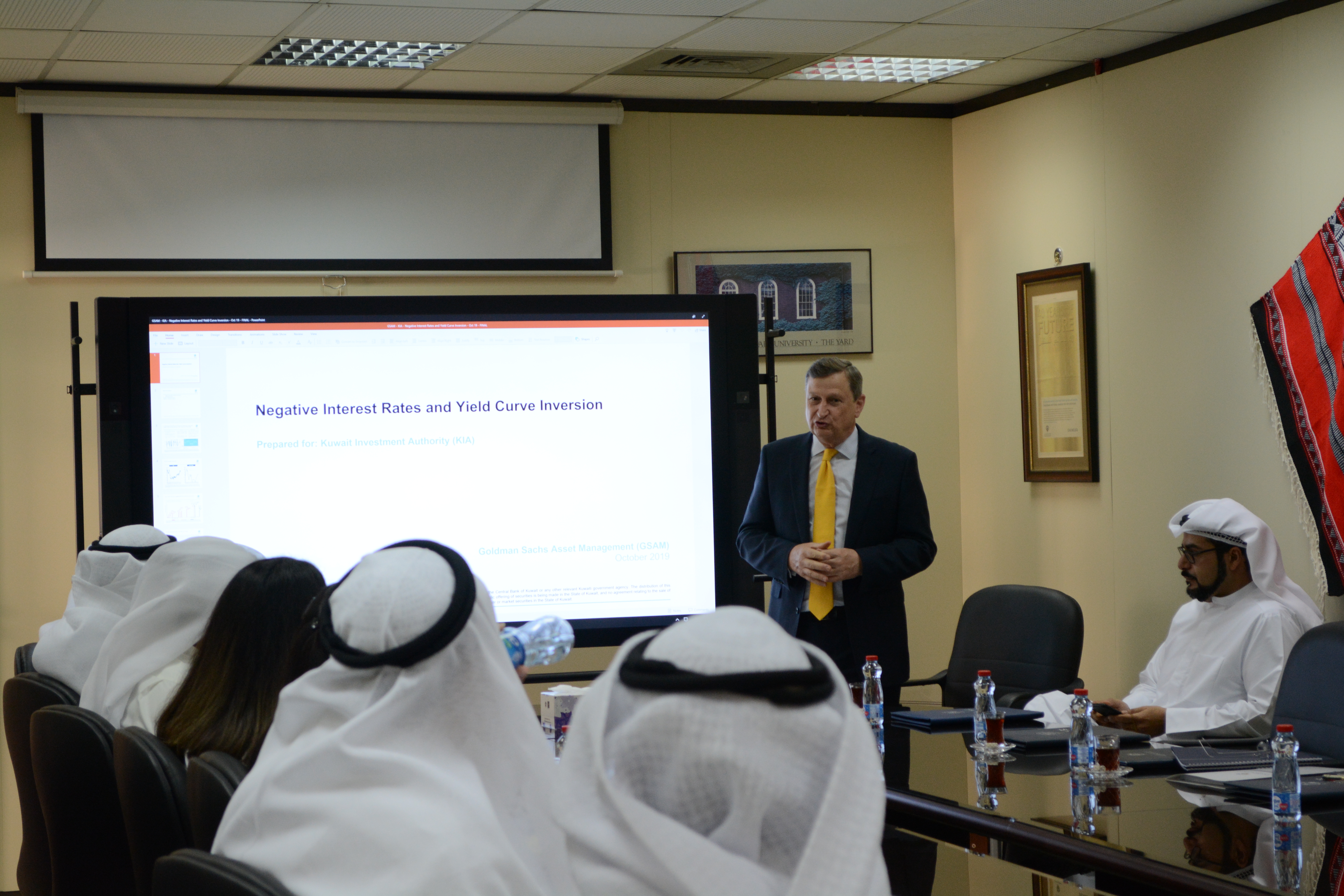
Goldman Sachs has launched a new office in Kuwait, asserting a significant push to enhance its reach across the Middle East and deepen its ties with Gulf-region clients under fresh leadership.

The New York-based investment bank said its role over five decades in Kuwait spans investment banking, capital markets and asset management. As part of its latest expansion, Goldman has tapped Mohammad Almatrouk as managing director of the Kuwait office, pending regulatory green light, while Fahad Alebrahim has been appointed managing director of the firm’s private wealth business in Kuwait.

David Solomon, Goldman Sachs’s Chairman and Chief Executive, framed the move as a commitment to “grow our capabilities across the Middle East and better serve our clients,” emphasising Kuwait’s economic vision as a catalyst for the firm’s expansion.

Goldman Sachs points to a long-standing capacity-building partnership in Kuwait that includes a professional training scheme designed to nurture talent at institutions such as the Kuwait Investment Authority, the Public Institution for Social Security and the Kuwait Fund. That programme, the bank says, will continue to play a central role in integrating local human capital into its global operations.

The choice of Kuwait underscores a growing focus on the Gulf’s institutional capital. Kuwait, host to one of the world’s largest sovereign wealth funds, has attracted global financial firms looking to align with its diversification and investment ambitions. Goldman Sachs’s decision follows earlier regional expansions, such as establishing a presence in Abu Dhabi and securing a banking licence in Saudi Arabia.

Kuwait’s Director General of the Direct Investment Promotion Authority, Sheikh Dr. Meshaal Jaber Al-Ahmad Al-Sabah, praised the move as aligned with Kuwait’s economic diversification and global integration goals. He stressed that opening the office supports national priorities including talent development and sustainable growth.

Regional analysts view Goldman’s Kuwait office as part of a broader recalibration by global banks to embed themselves closer to Gulf capital sources. Over the past two years, deal activity in sovereign and quasi-sovereign asset structures has exploded, prompting major firms including Lazard, JPMorgan and Deutsche Bank to expand in the Gulf with new leadership hires.

Inside Goldman Sachs, the timeline coincides with a leadership transition: the firm’s co-head for the Middle East and North Africa, Fadi Abuali, is slated to retire after nearly 28 years of service. His departure is expected to reshape the firm’s regional hierarchy just as Kuwait becomes a new hub.

Some observers caution the move carries execution challenges. Regulatory approvals in Kuwait must be secured, and Goldman must integrate the new office into its broader Gulf operations without duplicating functions. Success will depend on maintaining local relationships while delivering global platform advantages.

Telecom operator du and technology vendor Nokia have completed a trial of an artificial intelligence–driven automation system aimed at simplifying and expediting the expansion and management of optical networks in the UAE.

The deployment tested Nokia’s WaveSuite AI, which combines traditional AI methods with generative models to assist du engineers with tasks such as planning, troubleshooting and documentation retrieval. The trial reportedly halved the time needed for optical network planning and produced designs 30 percent more efficient, while reducing errors during deployment.

During the trial, du’s engineering team used a single natural language interface to query live network status, access accurate documentation instantly, and simulate potential network evolutions. The system flagged possible inconsistencies or conflicting configurations early, allowing corrective adjustment before full-scale rollout. According to du, the result was faster troubleshooting, fewer manual errors and improved resource utilisation.

Saleem AlBlooshi, chief technology officer at du, said the trial “shows how innovation can transform network operations to face challenges brought on by increasingly sophisticated networks and ever-higher traffic volumes.” He emphasised that the automation of routine tasks and provision of intelligent tools would lead to more reliable, SLA-backed connectivity for customers.

From Nokia’s standpoint, Ron Johnson, senior vice president and general manager of Optical Networks, called WaveSuite AI “a demonstration of the real value of automation solutions with both classical and generative AI for optical networking.” He noted that the system reduces friction in planning, documentation search, and operational processes, and helps service providers accelerate provisioning of higher-speed, more reliable services.

The trial builds on du’s broader effort to embed AI and automation more deeply across its systems. Earlier this year, du partnered with Microsoft, Nokia, Khalifa University’s 6G Research Center and the ITU to launch an “Arabic Telecom LLM,” a large language model tailored for internal telecom operations. That model is designed to handle internal workflows, resolve device issues, process complaints and provide operational insights in Arabic and English. The initiative is part of du’s strategy to blend regional research leadership and global AI tools while retaining language and cultural fidelity in its operations.

This AI-driven automation trial comes amid growing pressures on telecom operators worldwide to scale quickly to meet surging demand for bandwidth, driven by AI workloads, data centers and new real-time applications. As networks grow in complexity, manual processes no longer scale efficiently, pushing operators into an era of closed-loop or autonomous operations. Nokia, in its public literature, frames network automation as essential to reducing manual intervention, improving performance and enabling faster service delivery across domains such as core, mobile, IP and optical networks.

In the UAE context, this trial signals du’s ambition to advance its optical infrastructure ahead of demand peaks, while benchmarking its operations for future 6G readiness. The success of automation in planning and deployment could reduce operational costs, increase agility, and support more complex services such as network slicing, ultra-low latency applications and differentiated service tiers.


VISHNU RAJA
RYO YAMADA
HITORI GOTOH
IKUYO KITA