News related to
World

HONG KONG SAR – Media OutReach Newswire – 8 May 2026 – The Global Mediation Summit, the first international conference hosted by the International Organization for Mediation (IOMed) since its inauguration in Hong Kong last October, was held today (May 8) at the Hong Kong Convention and Exhibition Centre.

The event, with the Department of Justice (DoJ) and the Hong Kong International Legal Talents Training Academy as the key sponsors, gathered more than 400 leaders, policymakers and distinguished professionals from 48 countries and regions. They explored frontier topics such as cross-cultural international mediation, financial and investment dispute mediation, and the development of a global mediation ecosystem.

Speaking at the Summit, John Lee, Chief Executive of the Hong Kong Special Administrative Region (HKSAR), noted that Hong Kong has long supported mediation.

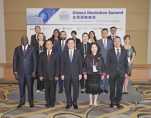
HKSAR's Chief Executive, John Lee (first row, centre), attends the Global Mediation Summit today (May 8), joined by the Commissioner of the Ministry of Foreign Affairs of the People's Republic of China in the HKSAR, Cui Jianchun (first row, second left); the Secretary for Justice, Paul Lam (first row, far right); the Secretary-General of the IOMed, Professor Teresa Cheng (first row, second right), along with other guests.
HKSAR’s Chief Executive, John Lee (first row, centre), attends the Global Mediation Summit today (May 8), joined by the Commissioner of the Ministry of Foreign Affairs of the People’s Republic of China in the HKSAR, Cui Jianchun (first row, second left); the Secretary for Justice, Paul Lam (first row, far right); the Secretary-General of the IOMed, Professor Teresa Cheng (first row, second right), along with other guests.

“Hong Kong is committed to becoming a global mediation capital. And we are well-positioned to do so,” Mr Lee said.

“Under ‘one country, two systems’, Hong Kong is a thriving hub for international finance, shipping and trade. We benefit from our country’s strong support and the opportunities it gives us, while maintaining extensive international connectivity as a world city.

“Hong Kong is the only common law jurisdiction in China, our country. And our legal professionals are internationally acknowledged for their professionalism and integrity. And now, as IOMed’s headquarters, Hong Kong is at the very heart of global dispute resolution and its promising future.”

image-1.jpeg

Paul Lam, Secretary for Justice of the HKSAR, highlighted the HKSAR Government’s ongoing support for the IOMed in different ways.

“First, it will be responsible for the maintenance of the Headquarters. Second, the DoJ will continue to second Hong Kong legal professionals to the IOMed Secretariat. Since 2023, the DoJ has already seconded a total of four counsel to assist in the establishment of the IOMed. Third, the Government will actively promote the use of IOMed mediation by, among other things, taking the lead in procuring the inclusion of an IOMed mediation clause in suitable international agreements to which the HKSAR Government is a party,” Mr Lam said.

“Hong Kong is well recognised as a leading international legal and dispute resolution services centre. Indeed, one of the mandates stated in the National 15th Five-Year Plan is that Hong Kong shall strengthen its status in this respect.”

Since the IOMed’s inauguration, the number of signatory states has climbed from 37 to 41, while the number of contracting states has gone from eight to 13.

“IOMed is the first inter-governmental international organisation set up by a Convention to promote exclusively the use of mediation,” said Professor Teresa Cheng, Secretary-General of IOMed, in her welcome remarks at the summit. “It fills an institutional gap and brings forth mediation as a true viable alternative to resolving international disputes alongside litigation and arbitration.”

Professor Cheng shared two important developments of the IOMed.

First, a maritime dispute was successfully resolved through mediation administered by IOMed at its Hong Kong Headquarters in early May, just a few days ago. “The case marks an important milestone: it is the first international maritime dispute involving a charterparty chain referred to IOMed for mediation,” Professor Cheng said.

Second, aligning with Hong Kong’s goal to further develop the commodities market, and the intention to stipulate use of IOMed mediation in the related contracts and policy, the Secretariat of IOMed is working with the HKSAR Government and other stakeholders to explore the establishment of a dedicated special panel of mediators for commodities market disputes under the IOMed framework.

The Global Mediation Summit is the finale event of the Mediation Week 2026 held in Hong Kong under the theme of “Mediate First: An Attempt of Mediation, Harvests Abundant Harmony”, with a view to promoting mediation as a friendly way to amicably resolve disputes and conflicts, and to build a more harmonious community.

“Our commitment to mediation, locally and globally, is clear in the five-day Mediation Week programme that ends today with this Summit,” Mr Lee said. “Mediation Week events spotlighted disputes related to schools, sports, neighbourhoods and the elderly. The goal in each case was to apply mediation structure and skills to achieve peaceful and rational solutions to our problems.”

Hashtag: #hongkong#brandhongkong#asiasworldcity#globalmediationsummit#IOMed


The issuer is solely responsible for the content of this announcement.

Three new Laguna Phuket developments – spanning lakeside living, golf-front design and Angsana-branded luxury – to be showcased at Park Lane Hong Kong on 16–17 MayCaption

HONG KONG SAR – Media OutReach Newswire – 8 May 2026 – Banyan Group Residences is bringing three of its most anticipated new residential launches to Hong Kong this month, with a two-day sales exhibition taking place at Park Lane Hong Kong (Canvas, 26F) on Saturday 16 and Sunday 17 May 2026, from 11:00 am to 6:00 pm. The event offers Hong Kong buyers a rare opportunity to explore and invest in some of Phuket’s most compelling new addresses, with dedicated sales teams on hand for private consultations.

Angsana Golf Residences Topaz

The exhibitions follow a year of record residential sales for Banyan Group Residences, as growing numbers of global investors look to Phuket as a safe haven for capital – drawn by the island’s political stability, strong rental yields, year-round lifestyle appeal, and the relative value it continues to offer against comparable markets. Demand has been particularly robust from buyers across Asia, the Middle East, and Europe, with Hong Kong remaining one of the Group’s most consistent source markets.

The three projects on show represent some of the most exciting new additions to Laguna Phuket – Asia’s premier integrated resort destination – and span a range of living concepts, price points, and design inspirations, united by the hallmark quality and hospitality expertise of Banyan Group Residences, Asia’s leading branded residential developer by volume.

“Hong Kong has consistently been one of our strongest buyer markets, and we look forward to welcoming buyers in person to discover what we believe is an exceptional line-up of new homes,” said Stuart Reading, Managing Director of Banyan Group Residences. “Whether you’re looking for a holiday retreat, a permanent base in a world-class resort community, or a smart long-term investment, this exhibition offers something genuinely compelling. High-quality property in a prime location at Laguna Phuket still represents outstanding value compared to equivalent homes in Hong Kong or other major cities.”

Bellaguna Lake Residences

Brand new blocks of Bellaguna Lake Residences will be revealed for the first time at the exhibition. Set beside a shimmering lake within Laguna Phuket – steps from Bang Tao Beach – the development takes its design cues from the sleek lines of a contemporary luxury yacht. Five elegantly elongated buildings feature dark wave-like façades and warm, light-filled interiors, with generous private terraces overlooking the lagoon. Residences include one- to three-bedroom condominiums and two- to three-bedroom penthouses with private rooftop pools, as well as a brand new category of two-bedroom residences with private pool.

Bellaguna is Banyan Group Residences’ newest residential brand, conceived specifically for premium year-round living outside of hotel inventory – yet fully supported by the Group’s renowned hospitality management standards.

Bellaguna Golf Residences

Set on land that once formed part of Phuket’s historic tin-mining landscape, Bellaguna Golf Residences draws its design identity from that heritage – soft horizontal lines and sculpted contours reinterpreted through a contemporary tropical lens. Low-rise buildings unfold amid lush gardens and a signature free-form pool, overlooking the fairways of the championship Laguna Golf Phuket course. A brand new block has also just been released for this project, which features a compact one-bedroom configuration, alongside one- to three-bedroom condominiums and two- to three-bedroom penthouses with private pools and sunset golf views.

Angsana Golf Residences Topaz

Inspired by the clarity and elegance of the topaz gemstone, Angsana Golf Residences Topaz comprises three gracefully curved low-rise buildings set within Laguna Phuket, with Sino-Portuguese design accents that subtly reference Phuket’s cultural heritage. The development offers two- and three-bedroom residences and exclusive penthouses with private rooftop pools, all enjoying panoramic views of the golf course, mountains, and the Andaman Sea. A signature rooftop ring-shaped pool completes the picture.

All three projects now have show units available to view at Laguna Property Sales Gallery

Banyan Living

Banyan Group has recently launched Banyan Living, a residential rental and marketing platform created to support owners of branded residences across the Group’s portfolio, while offering guests a professionally managed alternative to traditional home‑sharing platforms.

Developed as a structured, hospitality-led rental ecosystem, Banyan Living enables private owners to generate income from their residences, while providing guests who rent the properties assurance of the design integrity and professional service standards associated with Banyan Group.

Why Phuket, Why Now

Phuket continues to attract growing international interest as both a lifestyle destination and an investment market. Within Laguna Phuket, nationals of some 70 countries have chosen to make the resort community their home, drawn by year-round tropical living, world-class amenities, international schools, medical facilities, and a level of quality and security that is difficult to match elsewhere in the region.

Banyan Group Residences anticipates launching up to USD 1 billion in new luxury residential projects in Phuket over the next two to three years, reflecting the Group’s confidence in the market and the enduring strength of demand from international buyers.

Prospective buyers are welcome to visit the exhibition at Park Lane Hong Kong, Canvas (26F), on Saturday 16 and Sunday 17 May 2026, between 11:00 am and 6:00 pm. Private appointments can be arranged in advance by contacting the team directly.

Hashtag: #BanyanGroupResidences #LagunaPhuket #PhuketProperty

The issuer is solely responsible for the content of this announcement.

About Banyan Group

Banyan Group (“Banyan Tree Holdings Limited” or the “Group” – SGX: B58) is an independent, global hospitality company with purpose. The Group prides itself on its pioneering spirit, design-led experiences and commitment to responsible stewardship. Its extensive portfolio spans more than 100 properties, over 140 spas and galleries, and 20-plus branded residences in over 20 countries. Comprising 12 global brands, including the flagship Banyan Tree, each distinct yet united under the experiential membership programme with Banyan. The founding ethos of “Embracing the Environment, Empowering People” is embodied through the Banyan Global Foundation and Banyan Management Academy. Banyan Group is committed to remaining the leading advocate of sustainable travel, with a focus on regenerative tourism and innovative programmes that elevate the guest experience.

About Laguna Phuket

Laguna Phuket is Asia’s premier integrated resort destination, set against the stunning backdrop of the Andaman Sea. Spanning over 1,000 acres, the resort features six luxury hotels, an award-winning 18-hole golf course, fine dining, luxury spas, and branded residences. Guests benefit from complimentary shuttle services, a cashless payment system, and access to world-class recreational and wellness facilities.

About Banyan Group Residences

Banyan Group Residences is the property development arm of leading hospitality pioneer Banyan Group, listed on the stock exchange of Singapore. With over 35 years of development experience and an impressive portfolio of residential brands to suit different lifestyles and budgets, it is Thailand’s leading lifestyle property developer with a strong and increasingly international pipeline of projects. The Group’s main residential brands include the flagship luxury Banyan Tree Residences, Angsana Residences, Dhawa Residences, Garrya Residences, Laguna Residences, Cassia Residences, Skypark, Laguna Lakelands, and Bellaguna.

UAE air defence systems were activated early on Friday after authorities detected incoming missile and drone threats from Iran, the third such episode this week as Gulf security tensions deepened around the Strait of Hormuz. The National Emergency Crisis and Disasters Management Authority issued an alert shortly after 6.30am UAE time on May 8, urging residents to remain in safe locations and follow official channels for warnings […]

World Liberty Financial’s leadership has moved to contain a wave of online speculation over the Trump-linked crypto venture, with Donald Trump Jr. and chief executive Zach Witkoff insisting the project remains intact even as its legal dispute with Tron founder Justin Sun deepens. Trump Jr., speaking at the Consensus crypto conference in Miami on Thursday, rejected claims that he and other members of the Trump family had […]

Arabian Post Staff -Dubai Dubai’s automotive data market is moving deeper into predictive intelligence after Seez entered a strategic collaboration with AutoData Middle East to strengthen vehicle valuation and market analytics across the region. The agreement brings Seez’s artificial intelligence models into AutoData Analytics, with an immediate focus on the platform’s Future Residual Value module. The integration is intended to improve projections of how vehicles retain value […]

Air India is preparing deeper cost controls and fresh flight reductions as the Iran war pushes up fuel costs, disrupts airspace and intensifies pressure on a carrier still trying to complete one of the world’s most ambitious airline turnarounds.

The Tata Group-owned airline is weighing measures that could include furloughs for non-technical employees, salary reductions for senior executives, lower bonus payouts and capacity cuts of more than 20 per cent over the next three months. The review comes as the airline faces longer routings, higher aviation turbine fuel prices and weaker economics on several long-haul and regional services.

Nearly 100 domestic and international flights are expected to be trimmed through July, with North America, Europe and West Asia routes among the most exposed. Longer flight paths caused by restricted airspace across parts of West Asia have increased flying time, crew costs and fuel burn. For an airline with a large share of wide-body operations, even a modest extension of flight time can turn a marginal route into a loss-making one.

Chief executive Campbell Wilson has told staff that the airline had already scaled back some services in April and May, but worsening operating conditions required further action in June and July. The cuts are being framed as a temporary response to abnormal costs rather than a reversal of Air India’s expansion strategy, though they underscore the fragility of the carrier’s recovery.

Air India’s financial strain predates the latest escalation in West Asia. The airline has been absorbing the cost of fleet renewal, cabin refits, technology upgrades, merger integration and service improvements since Tata Group acquired it from the government in 2022. Its merger with Vistara has expanded its premium network and given Singapore Airlines a stake of just over 25 per cent in the enlarged carrier, but the integration has also added complexity at a time of volatile fuel markets and aircraft supply delays.

The airline’s losses for the year ended March 2026 have been estimated at more than ₹220 billion, a sharp deterioration linked to high fuel costs, airspace restrictions, operational disruptions and the heavy cost of restructuring. The figure has raised expectations that shareholders may need to provide additional financial support while management attempts to protect liquidity.

War-linked airspace restrictions have hit Air India more severely than many rivals because of its geography. Flights between the subcontinent and North America or Europe often depend on corridors through Pakistan, Iran, Iraq and surrounding regions. With some of these routes restricted or avoided for safety reasons, aircraft must take longer paths, increasing fuel consumption and reducing aircraft productivity.

The carrier has also faced constraints from aircraft availability. Refits of Boeing 787 aircraft, delivery delays and maintenance requirements have limited flexibility in reallocating capacity. The airline’s earlier suspension of Delhi-Washington services highlighted how aircraft shortages and airspace restrictions can combine to make long-haul routes commercially difficult even where demand exists.

Air India’s planned cuts come against a wider global aviation squeeze. Jet fuel prices have surged as the Iran war disrupted energy markets and raised fears over supply through the Gulf. Airlines with weaker fuel hedging, older fleets or longer detour-heavy networks face the harshest impact. Some carriers are raising fares, while others are cutting capacity to protect cash and preserve operational reliability.

For passengers, the adjustments could mean fewer non-stop choices, higher fares on peak routes and greater reliance on partner airlines through hubs such as London, Frankfurt, New York, Newark, Chicago and San Francisco. Air India is expected to prioritise commercially stronger routes and maintain connectivity where demand, yields and aircraft availability justify operations.

Coinbase users faced prolonged disruption to crypto trading after an Amazon Web Services failure in northern Virginia impaired parts of the exchange’s platform for more than five hours, leaving customers unable to execute some transactions while engineers worked to restore normal access. The outage affected Coinbase’s website, mobile services and Advanced Trade functions, with the exchange reporting degraded performance across key retail and professional trading channels. Coinbase […]

Advertisements

Global asset managers are pressing ahead with Abu Dhabi expansion plans, signalling confidence in the emirate’s financial architecture despite a regional war that has tested the UAE’s security environment and disrupted air and maritime activity. Abu Dhabi Global Market, the capital’s international financial centre, has drawn fresh commitments from major investment houses including Capital Group, Man Group, Bain Capital and Barings, underlining a strategy built around long-term […]

Arabian Post Staff -Dubai   Washington’s plan to escort commercial vessels through the Strait of Hormuz has run into an early diplomatic test, after Saudi Arabia and Kuwait were reported to have withheld full operational access before later easing restrictions on U. S. use of bases and airspace. The pause in “Project Freedom,” a U. S.-led effort to restore commercial navigation through one of the world’s most […]

Wall Street’s biggest financial groups are expanding digital-asset hiring, signalling that blockchain, tokenisation and crypto-linked trading are moving deeper into mainstream finance after years of caution. BlackRock, JPMorgan Chase and Morgan Stanley have advertised a fresh batch of roles tied to digital assets, blockchain engineering, tokenised products, risk controls and wealth-management infrastructure. The openings span senior product posts, software engineering, fraud-risk oversight, programme management and operations strategy, […]

Arabian Post Staff -Dubai Global health officials moved to contain public anxiety over a deadly hantavirus cluster linked to the MV Hondius, a Dutch-flagged expedition cruise ship that sailed from Argentina toward Cape Verde, stressing that the outbreak does not signal the start of another coronavirus-style pandemic. Dr Maria Van Kerkhove, the World Health Organization’s director for epidemic and pandemic preparedness and prevention, said the virus behaves […]

Adnoc Distribution will roll out an artificial intelligence-powered self-checkout system across 50 Oasis by Adnoc convenience stores from the second quarter of 2026, marking a new phase in the company’s push to turn its fuel-station retail network into a digitally enabled mobility and convenience platform. The agreement with UAE-based DTEK. ai will introduce SWIFT, a computer-vision and machine-learning checkout system designed to recognise products instantly and allow […]

By Saifur Rahman The Emirates Group, which operates the world’s largest airline Emirates and its ground handling and ticketing arm Dnata, reported a 7 percent growth to record $6.6 billion (Dh24.4 billion) profit before tax in its 2025-26 financial year ending March 31, 2026, despite a disruption of flight operations during the US-led attach on Iran and its fall-out on the regional aviation industry from February 28, […]

BANGKOK, THAILAND – Media OutReach Newswire – 7 May 2026 – On May 7, 2026, Huawei held the “Now Is Your Spark” global product launch in Bangkok, Thailand, where they officially unveiled the HUAWEI MatePad Pro Max, HUAWEI WATCH FIT 5 Series, HUAWEI WATCH GT Runner 2 Racing Legend Edition, and other innovative products. With all-scenario technology, these devices serve as a genuine extension for global users to explore the world and express themselves.

MatePad Pro Max
MatePad Pro Max

An ultra-slim flagship tablet setting new benchmarks in mobile productivity

Huawei globally debuted the HUAWEI MatePad Pro Max at this launch. Combining refined design, a premium display, PC-level productivity, and a full suite of creative tools, the HUAWEI MatePad Pro Max provides flagship tablet performance in a remarkably thin and light form factor. At 499g and measuring a mere 4.7 mm thick, even the exclusive PaperMatte Edition weighs just 509g, HUAWEI MatePad Pro Max is the thinnest and lightest tablet among the 13-inch+ tablet.

Smart wearables refreshed for the next generation

Huawei has introduced a fresh lineup of smart wearables tailored for the young generation. The HUAWEI WATCH FIT 5 Series retains its iconic square design, now enhanced with a sleek, vibrant aesthetic. It guides users through engaging and accessible mini-workouts, encouraging a more active lifestyle. The series also supports a wide range of competitive sports, including cycling, golf, trail running, and tennis. With advanced tracking, analysis, and guidance features, it caters to diverse needs, from daily fitness routines to competitive sport.

Debuting at this event, the HUAWEI WATCH GT Runner 2 Racing Legend Edition is a professional running watch that embodies the look and feel of marathon racing. It features a new single running ability index (RAI) and a professional Training Camp Dashboard, giving runners deeper data insights to train smarter and race harder.

Huawei partnered with renowned jewelry designer Francesca Amfitheatrof to launch the HUAWEI WATCH ULTIMATE DESIGN Spring Edition. Inspired by the blooming beauty of spring, this design features 99 natural diamonds and diamond-cut sapphire glass, a wearable celebration of feminine strength and vitality.

Huawei has also unveiled new premium flagship kids watches: the HUAWEI WATCH KIDS X1 Series. Equipped with a front and rear high-definition camera setup, it features a 110° ultra-wide-angle front camera and a 1.82-inch AMOLED screen, offering a larger display and broader field of view. The device also includes a detachable and rotatable device body and AR fun feature, enabling kids to capture every precious moment of their explorations.

A new phone experience for the diverse needs of young users

Huawei officially launched the HUAWEI nova 15 Max, redefining the experience for a generation that plays hard and shoots sharp. Equipped with a 50 MP RYYB Ultra Vision Camera, it delivers true-to-life colors even in low light or backlit conditions. The 8,500 mAh Super Battery powers all-day use, eliminating battery anxiety. The Extra-Durable Body is drop-resistant, so everyday bumps are no longer a worry. Combined with a Vivid OLED Screen and Symmetrical Stereo Dual Speakers, an immersive audio-visual experience is always within reach. From photography to battery life, and from durability to audio-visuals, the HUAWEI nova 15 Max continuously empowers every passion.

From flagship tablets to smartwatches designed for children, Huawei’s connected device ecosystem continues to expand its presence in the daily lives of users around the world. Huawei remains committed to technology that is not only useful, but genuinely enriching, technology that ignites inspiration. Huawei looks forward to continued collaboration with users around the world, helping people live and work better, wherever they are.

Hashtag: #Huawei

The issuer is solely responsible for the content of this announcement.

NEAR Protocol rallied sharply on Thursday as traders returned to artificial intelligence-linked digital assets, lifting one of the main layer-1 tokens tied to blockchain-based AI infrastructure and cross-chain automation. The token rose more than 13 per cent over 24 hours, trading near $1.47 after reaching an intraday high of about $1.54. The move placed NEAR among the stronger large-cap altcoins during a session marked by renewed appetite […]

Tesla’s China-made electric vehicle sales rose sharply in April, extending a rebound that has strengthened the Shanghai plant’s role as the company’s key export and volume hub.

Deliveries of Model 3 and Model Y vehicles built at Tesla’s Shanghai factory reached 79,478 units in April, including exports to Europe and other overseas markets. The figure was 36% higher than a year earlier, marking a sixth straight month of year-on-year growth, though it was 7.2% lower than March as the market moved through a seasonally softer month after a stronger end to the first quarter.

The April performance signals that Tesla is regaining some stability after a difficult stretch in 2025, when competition, pricing pressure and consumer fatigue weighed on its standing in major electric vehicle markets. Shanghai remains central to that recovery because it supplies the domestic market while also serving as a major export base for Europe, Asia-Pacific and other regions. The plant produces Tesla’s two highest-volume models, leaving its monthly output closely watched as a gauge of both local demand and overseas momentum.

Tesla sold 85,670 China-made vehicles in March, giving it a stronger base heading into the second quarter. April’s decline from that level suggests the rebound remains uneven, but the year-on-year rise points to healthier order flow than at the same point last year. The recovery has been helped by adjustments to production, export allocation and the refreshed Model Y cycle, while Tesla has continued to use financing incentives and targeted promotions to defend its share.

China’s electric vehicle market remains the world’s most competitive, with new energy vehicles accounting for a growing majority of passenger-car retail sales. April industry estimates pointed to new energy vehicle retail sales of about 860,000 units and a penetration rate above 60%, underscoring how quickly battery-electric and plug-in hybrid models are displacing petrol vehicles. That shift benefits Tesla’s broader addressable market, but it also exposes the company to fierce price competition from domestic manufacturers with faster model cycles and wider product ranges.

BYD remains Tesla’s most formidable rival, with a broad line-up spanning mass-market cars, plug-in hybrids, premium models and exports. Geely, Chery, Leapmotor, Xpeng, Li Auto, Nio and Xiaomi are also pressing deeper into the market, competing not only on price but on software, cabin technology, driving-assistance features and charging convenience. Several of these manufacturers are expanding overseas, putting pressure on Tesla in Europe and other export markets that were once more heavily dominated by the US company.

Tesla’s challenge is sharpened by the age of its core passenger line-up. The Model Y and Model 3 remain strong global sellers, but rivals are launching fresh sport-utility vehicles, sedans and compact models at a faster pace. Tesla has been working on lower-cost products and software-led upgrades to protect volumes, but investors and customers are watching closely for evidence that the company can broaden its appeal beyond its two main models.

Europe has become a key test of whether Shanghai’s output can translate into renewed international growth. Tesla sales have improved in several European markets after a weak 2025, helped by stronger demand for electric vehicles and a recovery from earlier supply disruptions. Yet the company faces a more crowded field, with BYD, Xpeng and other manufacturers gaining visibility through competitive pricing, longer equipment lists and expanded dealer networks.

Regulatory approval for advanced driver-assistance technology remains another variable. Tesla’s Full Self-Driving package is central to its long-term positioning, but approvals in China and Europe have moved cautiously. Wider deployment could support margins and brand differentiation, though regulators continue to scrutinise safety, data handling and driver-monitoring requirements. Without a faster software rollout, Tesla’s sales recovery will depend more heavily on vehicle pricing, product updates and production efficiency.

Tesla’s first-quarter global deliveries stood at 358,023 vehicles, with Model 3 and Model Y accounting for 341,893 units. That concentration highlights the importance of Shanghai’s April result: the plant is not merely a regional asset but a major pillar of the company’s global volume strategy. Stronger China-made deliveries can ease pressure on other factories, support export flexibility and help Tesla manage inventory across markets with uneven demand.

Snap has confirmed the quiet end of its $400 million artificial intelligence partnership with Perplexity, removing a high-profile growth lever from its 2026 outlook just as the Snapchat parent faces pressure from uneven advertising demand, geopolitical disruption and a deeper push for cost discipline. The agreement, announced in November 2025, was designed to bring Perplexity’s conversational answer engine into Snapchat’s Chat interface, allowing users to ask questions […]

Greenlogue/AP Climate campaigners have accused Shell of turning wartime turmoil into a fossil-fuel windfall after the group reported first-quarter adjusted earnings of $6.9bn, lifted by higher oil and gas prices, stronger trading and improved refining margins. The London-listed energy major’s profit was more than double the $3.26bn recorded in the final quarter of last year and above market expectations of about $6.36bn. The figures have sharpened scrutiny […]

The five-year extension ensures operational continuity at one of Thailand’s leading container terminals, supporting the country’s expanding role in intra-Asian trade

BANGKOK, THAILAND – Media OutReach Newswire – 7 May 2026 – DP World, through its joint venture Laem Chabang International Terminal Co., Ltd. (LCIT), has secured a five-year concession extension to continue operating the B5 container berth at Laem Chabang Port. The extension comes at a time of increasing intra-Asian trade and evolving supply chain dynamics, reinforcing the port’s role as a critical gateway for Thailand’s economy.

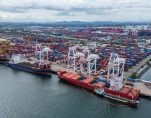
Terminal and yard at Laem Chabang Port

The contract, granted by the Port Authority of Thailand (PAT), will run from May 2026 to April 2031, reinforcing DP World’s central role in bolstering regional trade flows.

LCIT operates both B5 and C3 berths at Laem Chabang, Thailand’s principal deep-sea gateway and the country’s largest container hub supporting international trade. The terminals can accommodate up to four vessels simultaneously along 900 meters of berth length and are supported by 4,420 sqm of on-dock container freight station (CFS) facilities. In 2025, LCIT handled a record 1.936 million twenty-foot equivalent units (TEUs), its highest annual throughput to date, reflecting sustained growth in container volumes.

Glen Hilton, CEO & Managing Director, Asia Pacific, DP World, said: “This concession extension at Laem Chabang Port ensures continuity and service stability for our customers at a time when supply chains face increasing pressure and complexity. As Thailand strengthen its position as a regional trade hub, this extension allows us to continue investing in capacity, efficiency and sustainable operations. Together with our partners at LCIT, we are well positioned to support growing intra-Asia trade and deliver long-term value for customers across the Asia Pacific region.”

This concession will enable continued investment by DP World in operational efficiency and sustainability at Laem Chabang. In 2025, five electric internal transfer vehicles (eITVs) were deployed at LCIT, reducing emissions by approximately 60% compared to diesel alternatives while supporting faster vessel handling. Further upgrades are planned in 2026, including the installation of additional eITVs, electric reach stackers, and an electric empty container handler.

Complementing its operations at Laem Chabang Port, DP World has an integrated logistics network throughout Thailand, including cross-border trucking, landside logistics and freight forwarding. The company also recently launched a rail-connected inland container yard in Khon Kaen with a dedicated thrice-weekly rail shuttle to Laem Chabang, enhancing connectivity for exporters in Thailand’s Northeastern region.

​ These services and solutions aim to strengthen Thailand’s domestic and export trade by enabling the seamless movement of goods and materials from port to domestic hinterlands, and to markets across the wider Asia Pacific region.
Hashtag: #DPWorld


The issuer is solely responsible for the content of this announcement.

About DP World

DP World is reshaping the future of global trade to improve lives everywhere. Operating across six continents with a team of over 125,000 employees, we combine global infrastructure and local expertise to deliver seamless supply chain solutions. From Ports and Terminals to Marine Services, Logistics and Technology, we leverage innovation to create better ways to trade, minimising disruptions from the factory floor to the customer’s door.

In Asia Pacific, DP World employs over 15,000 people across 22 geographies. We operate 17 ports and terminals, complemented by a comprehensive suite of end-to-end supply chain solutions – to connect the region to the rest of the world.

WE MAKE TRADE FLOW

France have been tipped to win the 2026 FIFA World Cup by defeating Spain in the final, with Bank of America analysts placing Kylian Mbappé at the centre of their forecast for the expanded tournament in North America. The projection, based on a survey of 65 respondents across the bank’s Global Research department, gives France its third World Cup title after triumphs in 1998 and 2018. Mbappé […]

Tether is positioning USDT as a core payments and liquidity layer for the Bitcoin economy, with chief executive Paolo Ardoino framing the stablecoin issuer’s strategy as a long-term infrastructure project rather than a conventional crypto trading business. Ardoino has likened the company’s approach to Isaac Asimov’s Foundation series, arguing that durable systems must be built before periods of financial stress expose weaknesses in existing institutions. The comparison […]

OpenAI is reportedly accelerating work on a ChatGPT-centred smartphone, raising the prospect that the artificial intelligence company could move from software into mass-market consumer hardware as early as 2027. Supply-chain checks point to a device designed around AI agents rather than the familiar app-led smartphone model. The project is being described as OpenAI’s first AI agent phone, with mass production targeted for the first half of 2027 […]

Ethereum Foundation has sold another 10,000 ETH to BitMine Immersion Technologies through an over-the-counter transaction, extending a series of treasury sales that has drawn scrutiny from the crypto market as staking withdrawals climb and institutional ETH accumulation intensifies. The latest deal was priced at an average of $2,292.15 per ETH, raising about $22.9 million for the non-profit organisation behind Ethereum’s core development ecosystem. It followed a 10,000 […]

China’s push into humanoid robots is emerging as a new test of its ability to convert industrial policy, supply-chain depth and scale manufacturing into export power, with Morgan Stanley research arguing that the sector could help lift the country’s share of global manufacturing by the end of the decade.

Economists led by Chetan Ahya have drawn a parallel with electric vehicles, where early policy support, component localisation and aggressive production expansion turned China from a fast follower into the world’s dominant exporter. Their research projects China’s share of global manufacturing could rise to 16.5 per cent by 2030, from about 15 per cent now, as advanced automation and embodied artificial intelligence move from demonstration projects into factory and logistics use.

The bullish case rests on China’s widening lead in humanoid robot production. Industry estimates show the country produced about 12,800 humanoid robots in 2025, close to 90 per cent of global output, though the market remains tiny compared with conventional industrial robotics. China also remains the world’s largest industrial robot market, accounting for more than half of global factory robot installations in 2024, with an operational stock above 2 million units.

That foundation matters because humanoid robots require the same manufacturing strengths that supported China’s rise in solar panels, batteries and electric vehicles: precision motors, sensors, actuators, batteries, control systems, machine vision and low-cost assembly. Local companies are building ecosystems around these components, while provincial governments are offering subsidies, industrial parks and procurement support to accelerate commercial deployment.

Beijing has identified humanoid robots as a strategic industry, setting targets for mass production and global leadership while integrating robotics into wider plans for artificial intelligence and advanced manufacturing. The 15th Five-Year Plan framework is expected to place AI-powered robots near the centre of industrial upgrading, although large-scale commercialisation is more likely toward the later part of the plan period than immediately.

The sector’s momentum has drawn major private capital. Start-ups such as Unitree, UBTech, AgiBot and Fourier Intelligence have moved quickly from stage demonstrations to pilot factory and warehouse deployments. Linkerbot, a fast-growing maker of dexterous robotic hands, is seeking a valuation of about $6 billion after building a strong position in high-degree-of-freedom robotic hands used in humanoids and industrial systems. Its modular products point to an important feature of the market: some of the earliest profits may come from components rather than complete humanoid machines.

Automakers and electronics groups are also moving into the field. Xpeng has said humanoid robotics could become a long-term investment area alongside electric vehicles, while other manufacturers are testing robots for inspection, sorting, materials handling and repetitive shop-floor tasks. The logic is clear. China faces an ageing workforce, rising labour costs in coastal manufacturing hubs and growing pressure from tariff barriers. A successful humanoid robotics industry could help preserve competitiveness even as low-cost labour advantages fade.

The export implications are broader than robot sales. If humanoids improve productivity in Chinese factories, they could lower production costs across electronics, machinery, appliances and consumer goods. That would reinforce the country’s position in global supply chains at a time when the United States, Europe and several Asian economies are trying to reduce dependence on Chinese manufacturing. It could also create a new export category in robots, components, software and maintenance services.

Yet the constraints remain substantial. Humanoid robots are still expensive, often have limited battery life and struggle with unstructured environments. Many can perform scripted tasks in controlled settings but fall short when asked to handle the speed, judgement and dexterity of human workers. Even executives in China’s robotics industry acknowledge that factory humanoids remain less efficient than people in many jobs. Safety certification, liability rules, data protection and workplace integration will also affect adoption.

Dependence on high-end chips and advanced software ecosystems is another weakness. US restrictions on AI semiconductors have pushed Chinese firms to localise more hardware, but training and deploying capable embodied AI systems remains compute-intensive. Without steady access to cutting-edge chips, progress may be uneven, particularly in models that require real-time perception, movement planning and continuous learning.

VISHNU RAJA
RYO YAMADA
HITORI GOTOH
IKUYO KITA