Quantic Dream has halted development of Spellcasters Chronicles and will close its servers on June 19, ending the studio’s first original multiplayer title less than four months after its early access launch on Steam. The Paris-based developer said the free-to-play action-strategy game had failed to attract the audience needed to support long-term development. Players will be able to access the game until the shutdown date, while all […]
Cybersecurity teams are reviewing exposed SonicWall firewall interfaces after a sharp burst of internet scanning activity hit SonicOS management endpoints, with almost 597,000 sessions observed on 12 May, the highest single-day total for the tracked activity over a 90-day period. The surge, recorded between 9 May and 18 May, stood out because the 12 May peak was about 46 times higher than the normal daily volume seen […]
Jensen Huang’s arrival in Taipei ahead of Computex has put Nvidia’s next AI platform at the centre of a widening test for Taiwan’s semiconductor supply chain, as the company seeks more production capacity for Vera Rubin while riding record demand for data-centre chips.
Huang is expected to meet Taiwan Semiconductor Manufacturing Company chairman and chief executive C. C. Wei as Nvidia prepares a second-half production ramp for Vera Rubin, the next-generation platform that combines new Vera CPUs, Rubin GPUs, advanced memory and high-speed networking for rack-scale AI systems. The visit has drawn close attention because Nvidia’s product cycle is now tied more tightly than ever to Taiwan’s foundries, packaging houses, server assemblers and component suppliers.
Nvidia reported revenue of $81.6bn for the quarter ended April 26, up 85 per cent from a year earlier, with data-centre revenue reaching $75.2bn, up 92 per cent. The company also authorised an additional $80bn in share repurchases and raised its quarterly dividend to 25 cents a share from 1 cent, underscoring the scale of cash generation from the AI infrastructure boom.
Demand is being driven by cloud providers, AI model developers, enterprise customers and sovereign AI projects, all seeking clusters capable of training and running larger generative and agentic AI systems. Nvidia has described the buildout of “AI factories” as one of the largest infrastructure expansions in technology history, with its platform spanning chips, networking, systems software and reference designs for data centres.
Vera Rubin is expected to follow the Blackwell and Grace Blackwell generation, which is still being shipped in high volumes. That overlap is creating pressure across Taiwan’s supply chain because new capacity must support existing commitments while preparing for a platform with different requirements in advanced packaging, high-bandwidth memory integration, board assembly, cooling and system validation.
Huang has described Vera Rubin as potentially the biggest product ramp in Nvidia’s history and one of the largest technology manufacturing efforts Taiwan has handled. Industry estimates around the platform point to millions of parts across each system and the involvement of well over 100 Taiwan-based ecosystem partners, from chip fabrication and advanced packaging to printed circuit boards, power systems, connectors, thermal modules and final server integration.
TSMC remains central to the effort because Nvidia depends on its leading-edge process technology and advanced packaging capacity. The challenge is not limited to wafers. CoWoS and other packaging technologies have become strategic bottlenecks as AI accelerators require multiple logic dies, high-bandwidth memory stacks and dense interconnects. Any delay in packaging expansion can ripple through server production schedules, cloud deployment plans and Nvidia’s revenue timing.
Taiwan’s broader technology sector has become a critical artery for the global AI trade. TSMC, Foxconn, Quanta, Wistron, Wiwynn, Inventec and a dense network of specialist suppliers are competing to add capacity while dealing with constraints in land, power, water, skilled labour and equipment availability. The concentration gives Nvidia speed and engineering depth, but also exposes the company to geopolitical and operational risks.
China remains the clearest commercial setback. Huang has said US export controls have pushed Nvidia’s share of China’s advanced AI chip market to zero, a striking reversal for a company that once held a dominant position there. The restrictions have strengthened the opening for Huawei and other domestic suppliers, while leaving Nvidia dependent on whether Washington and Beijing allow compliant chips to be sold without triggering national-security objections.
That loss has not slowed Nvidia’s global momentum, but it has changed the composition of growth. Revenue is now increasingly concentrated in markets where hyperscale cloud companies, enterprise AI developers and governments are building large AI data centres outside China. For investors, the question is whether demand can keep absorbing each successive architecture at the scale implied by Nvidia’s guidance.
Nvidia forecast revenue of about $91bn for the current quarter, above market expectations, signalling that orders for AI infrastructure remain strong despite concerns about overcapacity, power shortages and the pace at which customers can monetise AI services. Operating expenses rose 49 per cent to $7.75bn, reflecting the growing cost of research, supply commitments and ecosystem investments needed to sustain the company’s lead.
US cyber authorities have added a critical Drupal Core SQL injection flaw to their exploited-vulnerabilities list after attacks began targeting unpatched websites using PostgreSQL databases, escalating pressure on government agencies, universities, media groups and enterprises that rely on the open-source content management platform. The vulnerability, tracked as CVE-2026-9082, affects Drupal Core versions from 8.9.0 through several 10. x and 11. x branches before the fixed releases issued […]
New Delhi will send its largest business delegation to Canada this week, marking a sharp acceleration in efforts to rebuild commercial ties after more than two years of diplomatic strain and stalled trade negotiations.
Commerce and Industry Minister Piyush Goyal is scheduled to visit Canada from May 25 to 27, accompanied by around 150 business leaders for meetings in Ottawa and Toronto. The delegation is expected to include senior representatives from mining, energy, automotive, aerospace, manufacturing, pharmaceuticals, education and technology, with talks centred on investment, market access and the proposed Comprehensive Economic Partnership Agreement.
The visit comes as negotiators from both countries hold another round of discussions in Ottawa from May 25 to 29. Officials are working towards an early conclusion of the trade pact after formally relaunching negotiations this year. The agreement is intended to widen market access, reduce barriers and deepen supply-chain cooperation across sectors where both economies see strategic value.
Bilateral trade stood at nearly $9bn in 2024-25, modest in relation to the size of the two economies. Both governments have set a target of raising trade to $50bn by 2030, a goal that would require faster progress in goods, services, investment and energy cooperation. Canada is seeking stronger commercial links beyond its heavy dependence on the United States, while New Delhi is trying to secure reliable supplies of critical minerals, uranium, clean-energy technology and advanced manufacturing inputs.
Energy and minerals are expected to figure prominently in the discussions. Canada holds significant reserves of uranium, potash, lithium, nickel, cobalt and rare earth elements, all of which are relevant to New Delhi’s nuclear power, fertiliser security, electric mobility and electronics manufacturing plans. Earlier this year, the two sides announced a C$2.6bn uranium supply arrangement involving Cameco, giving fresh weight to talks on long-term clean-energy cooperation.
Market access will be another sensitive area. New Delhi wants wider entry for textiles, leather goods, processed foods, pharmaceuticals and services, while Canada is expected to push for opportunities in agriculture, energy, education, financial services and high-technology sectors. Businesses on both sides have argued that tariffs, standards, certification rules and mobility restrictions have limited the relationship despite strong people-to-people ties and a large diaspora in Canada.
The delegation also carries political significance. Relations deteriorated sharply in 2023 after Ottawa alleged involvement by New Delhi in the killing of Sikh separatist leader Hardeep Singh Nijjar in British Columbia. New Delhi rejected the allegation, and both sides expelled diplomats as the dispute spread into security, visa and intelligence cooperation. The strain interrupted trade talks and pushed commercial engagement into a lower gear.
A gradual reset began after political engagement resumed at senior levels. Canada’s Prime Minister Mark Carney invited Prime Minister Narendra Modi to the G7 summit in Alberta in June 2025, and the two governments subsequently restored channels for trade and strategic dialogue. Carney’s visit to India in March 2026 gave the relationship a clearer economic framework, including the signing of terms of reference for the trade pact and a commitment to expand cooperation in energy, technology, agriculture, education and defence-related sectors.
The May visit is designed to move that process from political signalling to business execution. Meetings with Canadian ministers, industry bodies and corporate leaders are expected to test where near-term agreements are possible, especially in sectors less vulnerable to political friction. Ottawa and New Delhi are also exploring cooperation in shipbuilding, pharmaceuticals, tourism and education, areas identified during earlier ministerial exchanges.
Canada’s interest is shaped by a broader effort to diversify export markets and reduce exposure to shifts in US trade policy. New Delhi, meanwhile, is looking for partners that can support its manufacturing expansion, clean-energy transition and mineral security. The fit is commercially evident, but negotiations are likely to remain complex because both sides have defensive interests in agriculture, labour mobility, procurement and regulatory standards.
For businesses, the scale of the delegation suggests a wider appetite to resume investment conversations that had slowed during the diplomatic dispute. More than 600 Canadian companies have a business presence in India, while firms from India have built interests in information technology, steel, automotive components, hospitality and financial services in Canada. Student mobility and professional services also remain important links, although visa and security concerns have added caution to the relationship.
Rugby Africa has appointed former NBA Africa executive Aïcha Diop as chief of staff to its president, Herbert Mensah, in a move aimed at strengthening the organisation’s governance, commercial execution and continental growth strategy. Diop will work directly with Mensah as Rugby Africa seeks to sharpen coordination across its 40 member unions, expand competitions, deepen partnerships and raise the profile of the sport in markets where participation […]
Nicolas Cage’s first leading television role has arrived with a strong critical start, as Spider-Noir opened on MGM+ with a 91 per cent Tomatometer score on Rotten Tomatoes from 45 reviews, giving Sony’s live-action Spider-Man television experiment an early boost before its global Prime Video launch on 27 May. The eight-episode series places Cage at the centre of a 1930s New York crime story as Ben Reilly, […]
Chainlink has made its data standard available through AWS Marketplace, giving cloud developers and enterprise technology teams a simpler route to deploy oracle infrastructure for tokenised assets, stablecoins, decentralised finance and on-chain financial applications. The launch brings Chainlink Data Feeds, Data Streams and Proof of Reserve into the AWS procurement environment, reducing the need for institutions to build bespoke systems to connect blockchains with market data, reserve […]
Arabian Post Staff -Dubai Ras Al Khaimah’s push to build a deeper corporate real estate market has gained momentum after major structural works were completed at RAK Central Square, the emirate’s first luxury Grade A office complex, keeping the project on track for a planned opening in the fourth quarter of 2027. The five-building development will provide 2.27 million sq ft of high-quality workspace, with large, efficient […]
SoftBank Group shares rose to a record high as investors priced in the prospect of major gains from potential public listings of OpenAI and SB Energy, reinforcing Masayoshi Son’s return to the centre of the global artificial intelligence trade.
The Tokyo-listed investment group has become one of the most closely watched proxies for AI demand after committing tens of billions of dollars to OpenAI and building exposure across chips, power infrastructure, robotics and data-centre supply chains. The latest rally extended a sharp two-session advance that added tens of billions of dollars to SoftBank’s market value, marking one of its strongest runs since the technology boom that first made the group a symbol of risk-taking capital.
Investor enthusiasm has been driven by two linked expectations. OpenAI is preparing for a confidential US initial public offering filing that could set up a listing as early as September, while SB Energy, a power and data-centre infrastructure company backed by SoftBank and OpenAI, has said it intends to confidentially file for a US IPO. Together, the developments have strengthened the market view that SoftBank’s private holdings may be moving closer to public-market price discovery.
SoftBank’s OpenAI position is the main driver of that reassessment. The group has invested $34.6bn in the ChatGPT maker since September 2024 and has agreed to make a further $30bn investment through SoftBank Vision Fund 2. Completion of those tranches would lift its cumulative investment to $64.6bn for an ownership interest of about 13 per cent. The preferred shares are designed to convert automatically into common shares if OpenAI completes an IPO or related listing transaction.
OpenAI’s valuation has become central to SoftBank’s investment case. The company was valued at $852bn in private markets and preliminary discussions around a listing have included the possibility of a valuation as high as $1tn. The company is also seeking to raise at least $60bn at the lower end of earlier discussions, reflecting the huge capital needs of frontier AI model development, data centres, chips and power supply.
The OpenAI bet has already reshaped SoftBank’s earnings profile. The group reported a sharp profit rebound, helped by valuation gains tied to OpenAI, and said cumulative gains on the investment had reached $45bn. Its annual profit of about ¥5tn was described by the company as the highest recorded by a Japanese company, underscoring how quickly Son’s AI strategy has altered investor perceptions after years of scrutiny over the Vision Fund’s uneven performance.
SB Energy has added another layer to the rally because its business sits at the intersection of AI and power infrastructure. Founded in 2019, the company develops large-scale energy and data-centre projects and has positioned itself to benefit from surging electricity demand linked to AI workloads. It has raised more than $18bn in project capital and has a portfolio of about 5 gigawatts of operating and under-construction energy assets.
The company’s January partnership with OpenAI under the Stargate initiative placed it inside a broader push to build AI and energy infrastructure in the United States. That has made SB Energy more than a conventional renewable power developer in the eyes of investors. Its appeal rests on the argument that AI expansion will require dedicated power generation, grid connections and purpose-built campuses capable of supporting high-density computing.
SoftBank’s rally has also been supported by strength in Arm Holdings, the UK chip designer in which the group holds a large stake. Arm remains a key public asset for SoftBank and is viewed as a beneficiary of AI-related semiconductor demand. Gains in Arm shares have helped reinforce confidence that SoftBank owns multiple assets tied to the same structural theme, rather than a single concentrated wager on OpenAI.
The optimism carries risks. OpenAI faces intensifying competition from Alphabet’s Gemini, Anthropic’s Claude and other model developers, while the cost of training and operating advanced AI systems continues to rise. Credit analysts have raised concerns that the size of SoftBank’s OpenAI commitment may affect liquidity and asset quality, particularly as the group uses loans, asset sales and financing backed by holdings such as Arm and SoftBank Corp. to fund its strategy.
SoftBank arranged a $40bn bridge loan in March and drew $20bn in April, largely for the OpenAI investment, while also repaying part of that borrowing. The group has sold stakes in holdings including Nvidia and T-Mobile, issued bonds and considered other financing options as it reallocates capital towards AI. Chief Financial Officer Yoshimitsu Goto has said the group may also explore ways to use its OpenAI assets for financing if market conditions allow.
Australia is moving to extend its domestic gas reservation scheme across liquefied natural gas projects and export arrangements, including volumes tied to existing contracts, sharpening a policy shift aimed at easing pressure on households, power generators and manufacturers exposed to volatile east coast gas prices. The draft design framework for the scheme requires LNG exporters to supply gas equal to 20 per cent of their export volumes […]
Gold rose more than 1 per cent on Monday as hopes of a possible US-Iran agreement pushed oil prices lower, weakened the dollar and reshaped inflation expectations across commodity and currency markets. Spot bullion climbed to about $4,559 an ounce, while US gold futures traded near $4,560, extending gains as investors assessed signals that Washington and Tehran had moved closer to a framework that could ease pressure […]
Greenlogue/AP UAE officials used the World Hydrogen Summit & Exhibition in Rotterdam to reinforce the country’s ambition to become a global hub for low-emission hydrogen, placing cross-border trade, common standards and industrial decarbonisation at the centre of its energy transition agenda. The Ministry of Energy and Infrastructure represented the UAE at the gathering in the Netherlands, where governments, technology developers, financiers and energy companies examined the commercial […]
Mohammad Yahya’s PFL MENA debut ended in frustration at Coca-Cola Arena as Tunisia’s Mehdi Saadi edged the Dubai-based fighter by split decision in the featherweight tournament headliner, while 18-year-old Zamzam Al Hammadi gave the home crowd a lift with a unanimous decision victory in her women’s strawweight amateur showcase. The mixed results at PFL MENA 9: Pride of Arabia on Sunday night underlined both the opportunity and […]
Qatar has stepped up its investment campaign in China with high-level business meetings in Shanghai and Hangzhou aimed at turning long-standing trade links into deeper industrial, technology and financial partnerships.
Invest Qatar’s delegation, led by its chief executive Sheikh Ali bin Alwaleed Al-Thani, held executive-level meetings, site visits and closed-door business discussions with Chinese companies across advanced manufacturing, life sciences, industrial technologies and digital platforms. The engagements included WuXi Biologics, Shanghai SUS Environment, Cainiao Group and Ant International, placing the tour at the intersection of Qatar’s diversification agenda and China’s strengths in biotechnology, logistics, environmental services and digital finance.
The visit was designed to present Qatar as a platform for regional expansion, with Invest Qatar highlighting support for market entry, regulatory coordination, site selection, expansion planning and aftercare services. The pitch reflects Doha’s effort to move beyond energy-led ties and attract capital, technology and operational expertise into sectors linked to the Third National Development Strategy and Qatar National Vision 2030.
China already occupies a central place in Qatar’s external economic network. Bilateral cooperation spans energy, logistics, manufacturing, technology and financial services, while Qatar hosts about 520 Chinese companies. Over the 2017-2026 period, China has ranked among Qatar’s top 10 sources of foreign direct investment, with 59 projects generating more than $3bn in capital expenditure and creating more than 3,200 jobs across multiple sectors.
The Shanghai and Hangzhou programme signals a more targeted approach by Qatar’s investment promotion authorities. Rather than broad promotional activity, the delegation focused on companies that fit Qatar’s priority clusters. WuXi Biologics brings relevance to life sciences and contract research, Shanghai SUS Environment operates in waste-to-energy and environmental infrastructure, Cainiao Group is a major logistics and supply-chain player, and Ant International strengthens the digital payments and fintech dimension of the outreach.
Energy remains the anchor of Qatar-China economic relations. China is Qatar’s largest trading partner, with bilateral trade reaching $24.22bn in 2024. China exported goods worth about $4.17bn to Qatar and imported about $20.05bn, led by liquefied natural gas and industrial helium. Qatar is also China’s second-largest source of LNG imports, reinforcing the strategic weight of the relationship at a time when Asian demand remains central to global gas markets.
QatarEnergy’s expansion strategy has further tightened industrial links with China. Long-term LNG supply arrangements linked to the Chinese market, together with major vessel orders placed with Chinese shipbuilders, have created a broader commercial ecosystem around the North Field expansion. Qatar aims to raise LNG production capacity from 77mn tonnes a year to 142mn tonnes by 2030, a target that will require shipping, engineering, financing and downstream partnerships across Asia.
The investment outreach comes as Gulf states increasingly seek to use energy relationships as a foundation for wider economic cooperation with Asia. For Qatar, China offers scale, capital depth and technology capacity. For Chinese groups, Qatar provides political stability, strong transport connectivity, free-zone infrastructure and access to Gulf, African and South Asian markets.
Doha is also seeking to position itself as a business base for companies navigating a more fragmented global trade environment. Regulatory certainty, a relatively high-income market, advanced digital infrastructure and a sovereign investment ecosystem give Qatar tools to compete for regional headquarters, specialised manufacturing and services projects. The challenge will be converting exploratory meetings into project commitments in sectors where regional competition is intense, particularly from Saudi Arabia and the UAE.
Financial services form another important strand of the relationship. Qatar Investment Authority’s moves in China’s asset management sector and broader Gulf interest in Asian financial markets point to a shift from passive portfolio exposure towards more strategic investment channels. That trend could support new capital-market links, fintech partnerships and investment vehicles connecting Doha and Chinese financial centres.
The latest Invest Qatar tour also reflects a diplomatic-economic strategy that has become more visible across Asia. Qatar has sought to deepen ties with major economies while keeping its partnerships diversified across the United States, Europe, China and other Asian markets. This balancing approach allows Doha to pursue commercial opportunities while avoiding excessive dependence on any single investment corridor.
For Chinese companies, Qatar’s offer is strongest where national development goals align with corporate expansion plans. Life sciences companies can tap healthcare investment and research partnerships, logistics operators can link into Hamad Port, Hamad International Airport and regional re-export networks, and digital platforms can benefit from a market that has been investing in cashless payments, cloud services and smart-city infrastructure.
For many Pakistani families residing across the GCC, conversations around long-term residency planning have started to change in recent months. While the UAE remains one of the world’s leading destinations for expatriates and international business, broader regional developments appear to be pushing more families to think about what additional long-term options may look like outside the region. The Strait of Hormuz has once again become part of […]
Gold prices advanced by more than 1 per cent on Monday as a weaker dollar and a sharp fall in crude oil prices strengthened demand for bullion, with investors reassessing inflation risks and the likely course of US monetary policy amid signs of progress in Washington’s talks with Tehran. Spot gold traded near $4,560 an ounce, extending gains after the dollar slipped against major currencies and oil […]
Dubai Police have warned that selling or promoting counterfeit products through social media and digital marketplaces is a criminal offence, intensifying scrutiny of online accounts that use advertising, influencer posts and informal e-commerce channels to move fake goods across the UAE. The warning, issued through the Anti-Economic Crimes Department at the General Department of Criminal Investigation, targets commercial account owners, advertisers and young social media users who […]
Arabian Post Staff -Dubai Abu Dhabi has gained a new artificial intelligence venture aimed at removing one of the most persistent barriers facing deaf and hard-of-hearing people: the absence of instant, affordable sign-language interpretation in everyday public services. New York University Abu Dhabi has launched ChatSign, a commercial AI spin-out developed from research at its Embodied AI and Robotics Lab. The system translates spoken Arabic and English […]
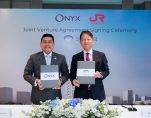
BANGKOK, THAILAND – Media OutReach Newswire – 25 May 2026 – ONYX Hospitality Group, a leading hospitality management company in Asia Pacific specialising in hotels, resorts, serviced apartments, and luxury residences, has announced a significant international partnership through the signing of a joint venture agreement with JR Kyushu Business Development (Thailand) Co. Ltd. (a group company of Kyushu Railway Company), one of Japan’s foremost corporations listed on Tokyo Stock Exchange. The collaboration will see the development of Shama North Pattaya, further advancing ONYX’s portfolio by leveraging Shama’s expertise to capitalize on short- and extended-stay demand, while reinforcing confidence in the growth potential of Thailand’s Eastern Economic Corridor (EEC).
Left: Mr. Yuthachai Charanachitta Right: Mr. Toshihiro Mori
This latest agreement marks a continuation of the strategic partnership between the two organizations, building upon the success of Shama Lakeview Asoke, which ONYX manages on behalf of JR Kyushu Group. The property has earned recognition as one of the leading serviced apartments in Bangkok’s central business district, reflecting the Japanese partner’s strong confidence in ONYX’s management capabilities and in-depth market expertise.
The development of Shama North Pattaya therefore represents not only an expansion into a high-potential location, but also a reaffirmation of ONYX’s disciplined growth strategy. By collaborating with globally respected partners, the group continues to strengthen its footprint in the EEC.
Mr. Yuthachai Charanachitta, Chief Executive Officer of ONYX Hospitality Group, stated that this joint venture with JR Kyushu Group reflects the company’s long-standing commitment to growing alongside its partners. It also marks ONYX’s second joint venture with an international partner under its strategic expansion plan, underscoring continued investor confidence in the company’s capabilities, as well as its ongoing pursuit of investment opportunities and strategic collaborations with high-potential partners.
“For ONYX Hospitality Group, growth is not defined merely by the number of projects we develop, but by the strength of the partnerships we cultivate. Our joint venture with JR Kyushu Group reflects a shared vision and a commitment to creating long-term value together.
The Shama brand has grown from a deep understanding of the long-stay market, which we have consistently studied and monitored over the years. We see clear future potential in this segment. Each Shama development is founded on comprehensive insights into resident needs and expectations, placing emphasis on the core of the living experience — comfort, flexibility and a genuine sense of home — all delivered to international standards.
Shama North Pattaya represents another important strategic property in strengthening and completing ONYX Hospitality Group’s presence in Pattaya, a high-potential destination within the EEC, alongside our key brands Amari and OZO, helping to create a more integrated and cohesive hospitality cluster in the area.”
Yuthachai added, “Shama North Pattaya reflects ONYX’s commitment to strengthening Thailand’s position as a leading destination for long-term residents while supporting the sustainable growth of the residential hospitality sector.”
Mr. Toshihiro Mori, Representative Director and Senior Managing Executive Officer of Kyushu Railway Company stated that this joint venture marks an important next step in JR Kyushu Group’s continued partnership with ONYX Hospitality Group in Thailand, building on the success of Shama Lakeview Asoke.
“Following our successful collaboration on Shama Lakeview Asoke Bangkok, we are pleased to deepen our partnership with ONYX Hospitality Group through Shama North Pattaya. We see strong potential in Pattaya as a leading resort destination within the EEC, and we have full confidence in ONYX’s hospitality expertise to deliver an exceptional property that meets the evolving needs of both Thai and international guests. We look forward to creating lasting value together.”
Strategically located in North Pattaya, a key tourism and economic hub within the EEC, Shama North Pattaya is designed to blend the comfort and convenience of serviced apartments with the refined services of a leading hotel brand. The project aims to cater to the steadily expanding long-stay segment, which is projected to continue its upward trajectory in 2026 and beyond.
The partnership between ONYX Hospitality Group and JR Kyushu Group not only highlights the complementary strengths of both organisations, but also serves as a strong indicator of Japanese investor confidence in Thailand’s economic stability and long-term prospects. At the same time, it signals the readiness of Thai hospitality brands to compete and grow alongside global partners in a sustainable and forward-looking manner.
Hashtag: #ONYXHospitalityGroup
The issuer is solely responsible for the content of this announcement.
About ONYX Hospitality Group
ONYX Hospitality Group, a reputable force in the Asia-Pacific hospitality industry, operates a collection of comprehensive yet complementary brands – Amari, OZO, Shama and Oriental Residence – catering to the distinctive needs of discerning business and leisure travellers across the region where it has deep expertise. In addition to its brand portfolio, ONYX Hospitality Group also operates additional hospitality services across spa and food & beverage. With six decades of management experience, the company extends its innovative solutions throughout the region, upholding internationally recognised standards and ensuring optimal operational manoeuvrability. By fostering enduring relationships with like-minded business partners, ONYX Hospitality Group delivers unparalleled experiences in a dynamic and competitive market, meeting the ever-evolving demands of travellers.
Kyushu Railway Company (JR Kyushu), headquartered in Fukuoka, Japan, and listed on the Prime Market of the Tokyo Stock Exchange, is a diversified group operating across Transportation, Real Estate and Hotels, Retail and Restaurants, Construction, and Business Services. Building on more than three decades of experience since its establishment in 1987, JR Kyushu has expanded beyond its core railway operations into a wide range of community-based and lifestyle businesses. In Thailand, JR Kyushu Business Development (Thailand) Co., Ltd. serves as the group’s investment platform for hospitality and real estate, building on the success of Shama Lakeview Asoke Bangkok and continuing to pursue long-term growth opportunities in the region.
UAE Minister for Foreign Trade Dr Thani bin Ahmed Al Zeyoudi used a high-level GLOBSEC Forum 2026 panel in Prague to present the country’s trade-continuity strategy as the Iran war continues to disrupt Gulf shipping, energy flows and global supply chains. Speaking during “The Ripple Effect: How the Iran War is Shaping Global Economies and Politics”, Al Zeyoudi told senior policymakers, business executives and international officials that […]
BANGKOK, THAILAND – Media OutReach Newswire – 25 May 2026 – Thai retail investors are increasingly changing the way they manage their portfolios amid rising volatility across global financial markets. According to new market insights fromBrokersThai.com, traders in Thailand are no longer focusing on a single asset class, but are instead actively researching both gold and Bitcoin as part of a broader diversification strategy.
Recent Google search trends in Thailand show continued growth in interest for both asset classes. Gold trading-related searches such as “XAUUSD today” have consistently generated between 1,000 and 10,000 monthly searches over the past year, while cryptocurrency-related keywords including “crypto” have maintained similarly strong search volumes.
The trend is also reflected in internal traffic data from BrokersThai.com. Pages related to Forex brokers for gold trading generated more than 5,000 impressions over the last year, highlighting continued interest from Thai traders seeking reliable broker comparisons and trading cost information.
The data also reveals that cryptocurrencies like Bitcoin are no longer seen as just tools for quick gambling. Instead, users search for risk management, such as how to handle price drops and volatility, spike every time the stock market experiences volatility. This proves that traders are carefully weighing crypto risks against the steady safety of gold.
Justin Grossbard, CEO of BrokersThai.com, commented: “Thai traders are now interested in trading multiple assets, especially gold and Bitcoin, while paying more attention to trading costs and broker transparency. Many traders are carefully comparing spreads and execution speeds to reduce unnecessary trading costs as much as possible.”
The findings indicate that Thai retail traders are adapting to uncertain market conditions by conducting deeper research before making investment decisions. Rather than choosing between gold or Bitcoin, many traders are now using both together — relying on gold to help preserve capital while viewing Bitcoin as a long-term growth opportunity.
California Governor Gavin Newsom has declared a state of emergency in Orange County after an overheating chemical storage tank at a Garden Grove aerospace facility raised fears of an explosion, toxic release or hazardous spill affecting tens of thousands of residents. The emergency proclamation covers a GKN Aerospace site where a tank holding roughly 5,000 to 7,000 gallons of methyl methacrylate began heating and emitting fumes on […]
OpenAI-generated images are now easier to trace after the company added two embedded provenance signals to pictures created through ChatGPT, Codex and its application programming interface, marking a significant shift for users who rely on AI visuals but cannot openly disclose generative AI use. The change, introduced on May 19, places OpenAI’s image tools inside a widening industry push to label synthetic media as platforms, publishers, regulators […]




 www.onyx-hospitality.com
 https://www.instagram.com/onyxhospitalitygroup/
 https://www.linkedin.com/company/onyx-hospitality-group/
 https://www.facebook.com/ONYXHospitalityGroup