Just in:
Crypto market loses $150 billion amid broad sell-off // 2026 Tropical Rainforest Ecosystem Partners Conference Kicks off in Hainan // Padmini follows Padmaja for ‘ghar vapsi’ // Saudi Arabia schedules multinational top-up tax for 2027 // Sabarimala booking discrepancies prompt sabotage angle probe // Anthropic shares finish above offer price after Nasdaq debut // Toward a Shared Future for Humanity: Rethinking Civilizational Exchange // Sharjah clears Kalba free zone plan for 400MW complex // Dubai Introduces SHARH, an AI-Powered Platform Helping Entrepreneurs Buy, Sell and Manage Businesses in the UAE // PayerMax and ShopeePay Strengthen Strategic Partnership to Advance Digital Payment Collaboration in Southeast Asia // ED searches five districts in probe against hawala // Saudi defences destroy three Houthi missiles targeting Riyadh // Singapore regulator cautions against AI access to bank logins // Diabetes Malaysia And Alpro Pharmacy Set National Record With 11,007 Most Blood Glucose Screenings Conducted Across Malaysia In Just 48 Hours // Yeebo Announces Interim Results for FY26/27 Revenue Increases by 45.5% to HK$806.7 Million Profit Attributable to Owners Surges 87.6% to HK$2,284.7 Million // European Commission takes systems offline after AI cyberattack // Promoting Common Human Development Through Exchanges and Mutual Learning Among Civilizations // Balagopal challenges CM over tax revenue // Coinbase targets 2027 launch amid state gambling lawsuits // Phancy Announces Business Performance for the Nine Months Ended September 30, 2026 //

News related to
crude

President Donald Trump pressed executives from major oil companies on Friday to commit at least $100 billion of private capital to rebuild Venezuela’s depleted oil industry, but several leaders voiced deep reservations about the risks and structural barriers to doing business in the South American country. The meeting, held in the East Room of the White House and attended by representatives from ExxonMobil, Chevron, ConocoPhillips and other […]

President Donald Trump announced the cancellation of a planned second wave of military attacks on Venezuela, pointing to improved cooperation from the country’s interim leadership and gestures such as the release of political prisoners and discussions on oil infrastructure. The decision marks a shift in the U. S. approach after its forces ousted Venezuelan President Nicolás Maduro earlier this month, and underscores Washington’s focus on stabilising relations […]

Republic of Korea delivered its largest current account surplus ever recorded for a November, underpinned by a sharp rebound in exports led by semiconductors, according to data released by the central bank, reinforcing signs that Asia’s fourth-largest economy is benefiting from a global technology upcycle.

Figures published by Bank of Korea showed the surplus widened markedly from a year earlier, driven primarily by goods exports as overseas demand for memory chips and advanced components strengthened. The milestone November result adds to a sequence of solid monthly balances this year and signals improving external resilience after a period of volatility linked to energy prices and weaker global trade.

Exports rose at a double-digit pace year on year, with semiconductors once again the dominant contributor. Chip shipments, which had slumped during the global downturn in memory prices, rebounded strongly as inventories normalised and orders increased from data-centre operators and manufacturers deploying artificial intelligence workloads. Analysts said demand for high-bandwidth memory and advanced logic chips has been particularly supportive for Korean producers.

The current account surplus, which measures the balance of trade in goods and services alongside income flows, was also supported by a narrower energy import bill. Lower prices for crude oil and liquefied natural gas compared with last year reduced the cost of imports, amplifying the positive effect of export growth. Services remained in deficit, reflecting outbound travel by residents, but the shortfall was smaller than earlier in the year.

Economists link the export recovery to the improving cycle in global technology spending. Korean chipmakers, led by Samsung Electronics and SK Hynix, have benefited from rising prices for dynamic random-access memory and NAND flash products, as well as from long-term contracts tied to AI infrastructure. Both firms have announced higher capital expenditure plans focused on advanced memory and packaging technologies, moves that are already filtering through trade data.

Beyond semiconductors, shipments of automobiles, machinery and petrochemical products also contributed positively. Vehicle exports remained robust despite softer demand in some advanced economies, reflecting competitive pricing and the growing popularity of electric and hybrid models produced by Korean manufacturers. Machinery exports gained from infrastructure and energy projects across the Middle East and parts of Southeast Asia.

Income from overseas investments added another layer of support. Dividend and interest receipts from Korean companies’ foreign assets increased, offsetting profit repatriation by foreign firms operating domestically. This helped keep the overall current account firmly in surplus despite the persistent services deficit.

Policy makers view the November outcome as confirmation that the economy is on a steadier footing. The central bank has previously signalled that a sustained export-led recovery would ease pressure on monetary policy, even as it remains cautious about household debt and property-market risks. A strong external balance also provides a buffer against currency volatility, a concern earlier in the year when the won weakened amid global interest-rate uncertainty.

Still, officials and analysts warn that risks remain. The export outlook is closely tied to the durability of the global technology rebound and to geopolitical developments that could disrupt supply chains or dampen investment sentiment. Slower growth in major trading partners or renewed trade frictions could weigh on momentum in coming months. Services exports, particularly tourism, have yet to return to levels seen before the pandemic, limiting diversification of the external balance.

ADNOC Drilling has formally entered Oman’s onshore drilling services sector, marking a strategic expansion beyond its core home market after completing the purchase of a controlling stake in a land-rig joint venture with SLB that operates six rigs in the sultanate. The move positions the company to participate more directly in Oman’s upstream development plans at a time when regional producers are prioritising operational efficiency, drilling intensity […]

A landmark agreement between Caracas and Washington will see up to $2 billion worth of Venezuelan crude oil exported to the United States under terms announced by President Donald Trump, marking a major shift in energy geopolitics and offering a potential reprieve to Venezuela’s embattled oil sector. The arrangement, underscored by negotiations that could divert barrels previously bound for China, elevates the United States into a key […]

Uncertainty has gripped Cuba after claims circulated that Venezuelan President Nicolás Maduro had been captured following a United States strike in Venezuela, a development that, if confirmed, would shake the island’s most important political and economic partnership. Cuban authorities have offered no confirmation of the reports, while state media has urged calm and emphasised continuity in Havana’s foreign policy, underscoring the fog surrounding events that residents say […]

Washington’s move to detain Nicolás Maduro has sharpened the White House’s focus on Venezuela’s vast petroleum reserves, with President Donald Trump signalling that access to crude exports is now a strategic priority. The shift marks a harder edge in US policy towards Venezuela, but it also exposes legal, logistical and market obstacles that complicate any rapid redirection of oil flows. The administration’s intent has been framed as […]

Advertisements

  Washington moved to recalibrate its public posture on Venezuela as Secretary of State Marco Rubio outlined a strategy centred on economic coercion rather than direct governance, while President Donald Trump repeated assertions that the United States would be “in charge” following the removal of Nicolás Maduro. The contrasting messages underscored tensions inside the administration over how far Washington should go in reshaping the oil-rich South American […]

Venezuela’s state-run oil industry continued operating without interruption on Saturday despite a dramatic United States operation that led to the capture of President Nicolas Maduro, according to people familiar with the operations of Petróleos de Venezuela, known as PDVSA. Production, refining and internal logistics remained stable, the sources said, with no damage reported at oilfields, pipelines or export terminals that underpin the country’s energy revenues. The announcement […]

Arabian Post Staff -Dubai   OPEC+ decided to keep its oil production levels unchanged after a brief ministerial meeting on Sunday, opting to focus narrowly on market conditions while avoiding discussion of political strains affecting several of its key members. The decision came at a time of sustained pressure on crude prices and mounting concerns over global oversupply, underlining the group’s cautious approach as it seeks to […]

Matein Khalid 2026 has started with a bullish bang for my Dr. Copper trade, even though a single trading session when half of Asia is still getting over its New Year’s Day hangover is hardly an optimal sample size. Yet as I see LME spot copper trade at $12500 a metric ton, I feel exhilarated as this is precisely the breakout I flagged for my friends and […]

Finnish authorities have detained two crew members from a foreign-flagged cargo vessel as part of an expanding criminal investigation into damage to an undersea telecommunications cable linking Helsinki and Tallinn, sharpening security concerns across the Baltic Sea region at a time of heightened geopolitical tension. The sailors were taken into custody following the seizure of the vessel Fitburg, which Finnish officials believe may be connected to the […]

Bitcoin surged beyond the $91,000 mark as a broader rally lifted ether and dogecoin, with traders pointing to political developments tied to Venezuela and signals of possible United States involvement as catalysts for volatility across digital asset markets. The move underscored how geopolitical risk, alongside liquidity conditions and investor positioning, continues to shape price action in cryptocurrencies that are increasingly sensitive to macro and political cues. The […]

Donald Trump has said United States oil companies would invest billions of dollars to rebuild Venezuela’s battered energy system, asserting that a change in political control would unlock one of the world’s largest proven crude reserves for American firms and help stabilise global supply. Speaking during a campaign-style address, Donald Trump portrayed Venezuela’s oil sector as a prime target for rapid private investment, arguing that US producers […]

SINGAPORE – Media OutReach Newswire – 31 December 2025 – Asian Agri reaffirmed its commitment to sustainable palm oil development by recognising its scheme smallholders in Riau and Jambi through the 2024 Certified Palm Oil Premium Sharing Programme. The appreciation event, held at Hotel Santika, Bukittinggi, West Sumatra, highlighted the consistent efforts of smallholders in applying sustainable plantation practices aligned with international certification standards.

The programme generated approximately Rp5.5 billion in premium sharing, which will be distributed to 76 Village Unit Cooperatives (KUDs), benefitting more than 30,000 smallholders. The initiative underscores Asian Agri’s long-term commitment to improving smallholder welfare while advancing environmentally responsible palm oil management.

Head of Partnership at Asian Agri, Rudy Rismanto, said RSPO certification plays a critical role in expanding market access for smallholder-produced palm oil.

“Through RSPO certification, palm oil produced by our partner smallholders can be accepted in global markets, including Europe, which requires sustainably produced products,” Rudy said. “The premiums received are reinvested to improve productivity, upgrade infrastructure, strengthen KUD facilities and support alternative sources of income. In this way, sustainability delivers tangible economic benefits for smallholders.”

Rudy emphasised that Asian Agri’s sustainability approach goes beyond environmental stewardship to include social and economic impact.

“Through strong collaboration with smallholders, we ensure that sustainable practices also translate into improved livelihoods. This reflects Asian Agri’s philosophy of creating benefits for society, the environment, customers, and ultimately the company itself—so that sustainability and prosperity grow together.”

Representing partner cooperatives, Subiyono, Head of Karya Bersama KUD, said the premium sharing scheme has delivered clear and measurable benefits.

“The premium has provided meaningful support to both smallholders and the cooperative,” he explained. “In 2026, we plan to allocate these funds to improve and maintain roads that serve as the main access routes for transporting Fresh Fruit Bunches to palm oil mills. Better infrastructure will help ensure smoother operations for smallholders.”

Karya Bersama KUD is currently participating in a replanting partnership with Asian Agri. The replanted oil palm area, now 49 months old, has achieved an average productivity of 2 tons per hectare per month.

Similarly, Waluyo, Head of Makmur Rezeki KUD, highlighted how the premium strengthens institutional capacity while supporting sustainable practices.

“The funds are allocated to strategic priorities, including improvements to fertiliser and herbicide warehouses, road upgrades, provision of personal protective equipment (PPE) for smallholders, and the installation of owl nesting boxes as part of natural pest control,” he said. “These initiatives enable more environmentally friendly and efficient plantation management.”

According to Waluyo, the programme also reinforces smallholders’ commitment to sustainability.

“This support not only improves cooperative facilities and operations but also strengthens members’ dedication to sustainable practices. We hope Makmur Rezeki KUD can continue to grow together with Asian Agri, so the benefits can be felt more widely by our members and surrounding communities.”

Through the Certified Palm Oil Premium Sharing Programme, Asian Agri, a member of the RGE group of companies founded by Sukanto Tanoto, continues to invest in the long-term resilience of smallholders and cooperatives, ensuring that sustainable palm oil development delivers enduring social, economic, and environmental benefits for generations to come.
Hashtag: #RGE #AsianAgri #CSR #palmoil #Indonesia #smallholders #sustainability #RSPO #certification #KUD


The issuer is solely responsible for the content of this announcement.

About Asian Agri

Founded in 1979, Asian Agri is one of Indonesia’s foremost companies in crude palm oil production, managing over 100,000 hectares of oil palm plantations and employing over 20,000 people.

As a pioneer of the Indonesian Government’s Smallholder Transmigration Core Plantation Programme (PIR-Trans), Asian Agri has partnered with 30,000 scheme smallholders in Riau and Jambi, who collectively manage 60,000 hectares of oil palm plantations. The company also fosters partnerships with independent smallholders to enhance their welfare and drive socio-economic growth.

Committed to sustainable practices, Asian Agri upholds a zero-burning policy and implements plantation best management practices to help smallholders boost productivity, increase crop yields, and improve supply chain traceability while supporting their journey towards certification. Asian Agri’s mills leveraged advanced technology and self-generated green energy to minimize greenhouse gas emissions.

Asian Agri’s plantations, as along with their scheme smallholder plantations, are full Roundtable on Sustainable Palm Oil (RSPO) and International Sustainability & Carbon Certification (ISCC) certified, underscoring the company’s commitment to responsible and sustainable palm oil production.

Please visit Asian Agri’s for more information.

Venezuela has begun shutting oil wells in its prolific Orinoco Belt after storage filled up and inventories swelled, a move that underscores the operational strain facing the state producer as financial pressure from Washington tightens. The cutbacks, which started on 28 December, are set to lower heavy crude output by at least a quarter in the belt that holds the world’s largest known oil deposits, according to people familiar with internal operations.

Petroleos de Venezuela SA, known as PDVSA, is aiming to bring Orinoco production down to about 500,000 barrels a day, the people said. That reduction equates to roughly 15% of the country’s total output of around 1.1 million barrels a day. The wells were idled as tanks reached capacity and export bottlenecks left little room to keep pumping.

The Orinoco Belt, stretching across eastern Venezuela, has been the backbone of the nation’s oil recovery over the past two years as PDVSA revived projects, leaned on foreign partners and relied on intermediaries to place barrels abroad. Heavy crude from the belt requires blending and specialised handling, making storage constraints particularly acute when exports slow or logistics falter.

The curtailment comes amid a renewed effort by the Donald Trump administration to financially squeeze Caracas. Measures have focused on limiting cash flows and tightening scrutiny of trade channels that had allowed Venezuelan oil to reach global markets. While PDVSA has navigated sanctions for years through complex trading arrangements, the latest actions have reduced the room for manoeuvre.

Operationally, the impact is immediate. Engineers have prioritised shutting wells with higher water cut or maintenance needs, while keeping strategic upgraders running to preserve reservoir integrity. Restarting heavy-oil wells can be costly and time-consuming, raising the risk that some output may not return quickly even if conditions improve.

For the government in Caracas, the setback dents a fragile rebound that had lifted production from historic lows. Oil remains the main source of hard currency, funding imports and social spending. Lower volumes threaten fiscal plans at a time when inflation has moderated but public finances remain stretched.

Internationally, the cuts add a layer of uncertainty to heavy crude markets. Refineries in Asia and the United States Gulf Coast have relied on Venezuelan grades as substitutes for similar barrels from elsewhere. Traders said tighter availability could widen discounts and prompt buyers to seek alternatives from Canada or the Middle East.

PDVSA’s partners in the Orinoco Belt, including joint ventures with foreign companies, are also affected. Output reductions translate into lower liftings for partners and could complicate investment decisions. Several projects had been ramping up after maintenance and drilling campaigns, betting on stable export routes.

The government has framed the situation as a temporary adjustment driven by logistics rather than geology. Officials argue that reserves remain intact and that production can rebound once storage is freed and exports normalise. Behind the scenes, PDVSA has been exploring options to lease additional floating storage and accelerate shipments to Asia, though payment and insurance hurdles persist.

Analysts note that the episode highlights structural weaknesses. Venezuela’s oil infrastructure has suffered years of underinvestment, leaving little buffer when trade flows are disrupted. Power outages, pipeline leaks and equipment shortages have repeatedly constrained operations, forcing stop-start cycles that erode efficiency.

In the broader geopolitical context, the pressure campaign reflects Washington’s leverage over energy finance and shipping. Even when licences allow limited trade, banks, insurers and carriers often tread cautiously, amplifying the impact on producers like PDVSA. The result is a stopgap approach that prioritises managing bottlenecks over long-term optimisation.

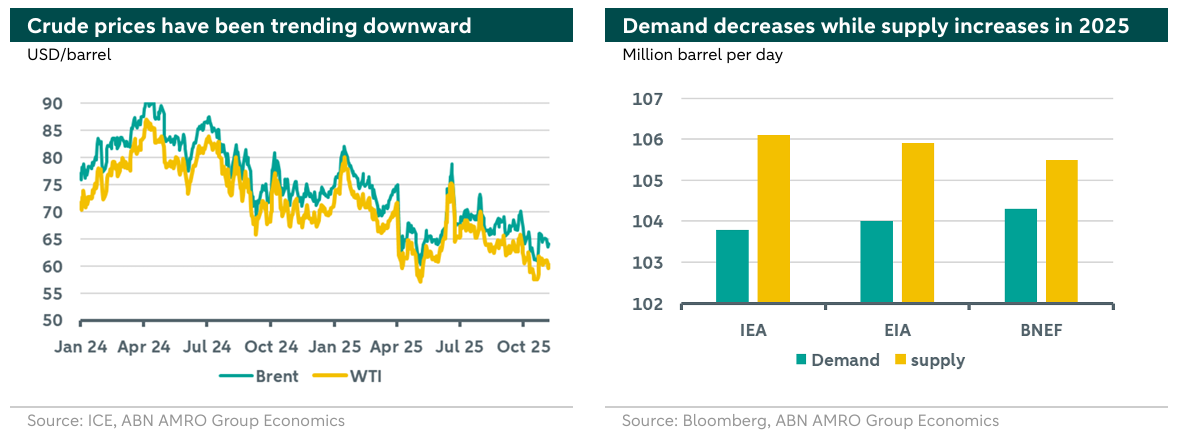
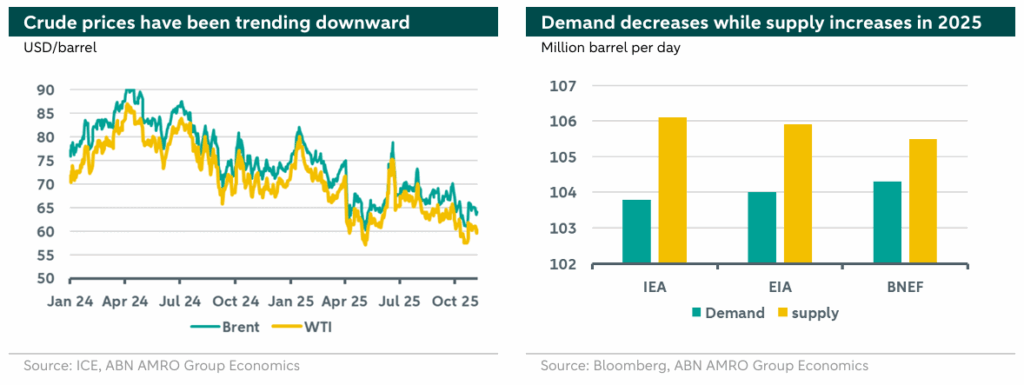
By K Raveendran As 2026 approaches, the global oil market is heading into a year that could decisively reshape price dynamics, fiscal planning in producing states, and energy security calculations for importing economies. The defining feature of the coming year is not demand destruction or geopolitical shock, but the growing weight of surplus supply. Market […]

The article 2026 Would Be A Year Of Lower Oil Prices And Crude Oversupply appeared first on Latest India news, analysis and reports on Newspack by India Press Agency).

By Nantoo Banerjee US President Donald Trump may have problems with Russia, Venezuela and a host of other states and has every right to decide on the US trade and diplomatic policies to deal with those countries. But he has no right to thrust upon other free nations his likes, dislikes and prejudices. Unfortunately, he […]

The article Trump Has Become A Threat To Free Trade appeared first on Latest India news, analysis and reports on Newspack by India Press Agency).

Oil prices advanced in early Asian trade on Monday after United States authorities intercepted an oil tanker off the coast of Venezuela in international waters, reinforcing concerns over supply risks linked to enforcement actions in key producing regions. Brent crude futures gained 44 cents, or 0.73%, to $60.91 a barrel by 0141 GMT, while U. S. West Texas Intermediate rose 40 cents, or 0.71%, to $56.92. The […]

Matein Khalid The Indian equity markets have experienced one of Asia’s most frenetic IPO bonanzas in 2024-25 even if no less than 50% of all new flotations are now trading below their offer price. Despite the decline of the Indian rupee’s new low against the dollar beyond 91 and Dalal Street’s underperformance relative to my fave emerging markets Argentina, Poland and Brazil in 2025, the macro omens […]

Saudi Arabia is preparing to lift crude oil shipments at the start of 2026, a move that underscores mounting concerns about excess supply as global demand growth remains uneven. Allocations to buyers across Asia, Europe and North America are set to rise, according to trade and shipping data reviewed by market participants, pointing to a more assertive sales posture by the world’s largest exporter after months of […]

Prime Minister Narendra Modi arrived in Muscat on December 17 for a two-day visit that places the spotlight on a partnership shaped by geography, commerce and people-to-people ties across the Arabian Sea. Sayyid Shihab bin Tarik Al Said, Deputy Prime Minister for Defence Affairs, led the welcoming party at Muscat International Airport, receiving the guest and his delegation with ceremonial honours. The visit marks a milestone year […]

By K Raveendran Oil prices slipping below $60 a barrel for the first time since February 2021 and a sharp easing in European gas prices mark more than a cyclical downturn in commodities. They signal a rapid repricing of geopolitical risk at a moment when diplomacy, rather than escalation, has begun to dominate market psychology. […]

The article Energy Markets Recalibrate As Geopolitics Reshapes Supply Calculus appeared first on Latest India news, analysis and reports on Newspack by India Press Agency).

Middle Eastern crude markets have shown clear signs of weakening as traders and refiners grapple with mounting concerns that regional supply is exceeding demand, adding pressure to an already fragile global oil balance. Pricing indicators closely watched by physical traders point to softer buying interest from Asia, where refiners face ample alternative supplies and uncertain consumption growth. One of the most telling signals has been the narrowing […]

VISHNU RAJA
RYO YAMADA
HITORI GOTOH
IKUYO KITA