News related to
crude

Arabian Post Staff -Dubai Washington is pressing ahead with claims of progress toward a peace deal with Tehran, even as fresh US strikes on targets in southern Iran and renewed uncertainty over the Strait of Hormuz exposed the fragility of efforts to end a war approaching its third month. The latest flare-up came after US forces struck what they described as missile launch sites and mine-laying boats, […]

South Africa’s diesel shock has turned a distant Middle East conflict into a domestic economic threat, exposing how sharply the country’s transport, mining, farming and power systems now depend on imported refined fuel. The Iran war and disruption around the Strait of Hormuz have pushed global energy markets into a new phase of volatility, but South Africa’s vulnerability is not driven by crude oil alone. The deeper […]

Rupee trading came under renewed pressure on Tuesday as the currency slipped to 95.43 against the US dollar in early deals, weighed down by firm crude oil prices, month-end dollar demand and fading optimism over a quick easing of tensions in the Middle East.

At the interbank foreign exchange market, the currency opened weaker than Monday’s close of 95.26, losing 17 paise as importers and oil companies stepped up dollar purchases. The fall interrupted a brief recovery in the previous session, when the rupee had gained ground after suspected Reserve Bank of India intervention and softer crude prices lifted sentiment.

Market participants said the rupee’s early weakness reflected a broader risk-off mood across Asia. Oil-sensitive currencies faced selling pressure as traders reassessed the likelihood of a quick diplomatic settlement between Washington and Tehran. The rupee, already vulnerable because of the country’s heavy dependence on imported crude, moved in line with regional peers as energy prices rebounded and the dollar drew support from safe-haven demand.

Brent crude moved sharply higher towards the $100-a-barrel mark after fresh military action involving Iran raised doubts over the durability of peace efforts. Higher oil prices typically increase demand for dollars from refiners and importers, widening pressure on the trade balance and adding to inflation risks. For a country that imports nearly nine-tenths of its crude requirement, each sustained rise in oil prices feeds directly into currency, bond and equity market expectations.

The Reserve Bank of India is expected to remain active in the foreign exchange market to prevent disorderly moves rather than defend a fixed level. State-run banks were seen selling dollars in earlier sessions, a pattern traders often associate with central bank intervention. The central bank has used spot and forward market tools through periods of sharp volatility, drawing on its foreign exchange reserves while seeking to preserve market stability.

Foreign exchange reserves remain substantial by global standards, though they have eased from their February peak amid currency management and valuation changes. The buffer gives policymakers room to smooth volatility, but it does not fully insulate the rupee from external shocks when oil prices, global yields and geopolitical risks move in the same direction.

The rupee’s trajectory now hinges on three immediate variables: the price of crude, the strength of the dollar and the credibility of diplomatic efforts in the Middle East. A sustained climb in oil would complicate the inflation outlook and increase pressure on the current account. A softer dollar or clearer signs of de-escalation could help the rupee recover some lost ground, particularly if portfolio flows stabilise.

Bond markets also reflected caution. The benchmark 10-year yield edged higher as traders priced in the risk that imported inflation could narrow the central bank’s room for policy easing. Money-market rates showed a firmer bias, with swap markets reassessing the path of interest rates ahead of the next monetary policy review.

Equity markets faced a parallel adjustment, with energy-sensitive sectors, import-heavy companies and businesses exposed to foreign currency costs attracting closer scrutiny. Exporters, especially technology and pharmaceutical firms, may gain a translation benefit from a weaker rupee, but broader market sentiment remains tied to oil, capital flows and global risk appetite.

The pressure on the currency comes at a delicate moment for policymakers. Retail inflation has moderated from earlier peaks, but fuel costs and a weaker exchange rate can quickly alter expectations if the move persists. A weaker rupee raises the landed cost of crude, fertilisers, electronics and other imported goods, while also increasing the rupee value of external debt servicing for firms without adequate hedges.

Companies with dollar liabilities are likely to increase hedging activity if volatility persists. Importers generally prefer to cover near-term exposures when oil and the dollar rise together, while exporters may stagger dollar sales in expectation of better rates. This tug of war often intensifies near month-end, when corporate demand for foreign currency rises.

Saudi Aramco will transfer its equity stakes in Malaysia’s PRefChem refining and petrochemical ventures to Petronas, bringing an eight-year downstream partnership in Southeast Asia to an end and giving the Malaysian state energy group full control of one of the region’s largest integrated energy complexes. Petronas and Aramco said the agreement, announced on Monday, covers Aramco’s holdings in Pengerang Refining Company Sdn Bhd and Pengerang Petrochemical Company […]

By Nantoo Banerjee India’s economy is navigating severe stress. The impact of Persian Gulf war, high cost of imported crude oil, frequent upward adjustment of retail oil prices, rising commodity rates, soaring transportation costs, weakening Rupee and continuous exit of foreign portfolio investors (FPI) are posing a big challenge to the economy. The government appears […]

The article Rising Prices, Falling Rupee And FPI Exit Pose Big Challenge To Economy appeared first on Latest India news, analysis and reports on Newspack by India Press Agency).

US federal investigators have warned that a new phishing-as-a-service platform called Kali365 is enabling cybercriminals to steal Microsoft 365 access tokens and bypass multi-factor authentication without capturing victims’ passwords. The platform, first observed in April 2026 and distributed mainly through Telegram, marks a sharper turn in identity-based attacks because it abuses legitimate Microsoft authentication flows rather than relying on fake login pages alone. By capturing OAuth access […]

Gold rose more than 1 per cent on Monday as hopes of a possible US-Iran agreement pushed oil prices lower, weakened the dollar and reshaped inflation expectations across commodity and currency markets. Spot bullion climbed to about $4,559 an ounce, while US gold futures traded near $4,560, extending gains as investors assessed signals that Washington and Tehran had moved closer to a framework that could ease pressure […]

Advertisements

Arabian Post Staff -Dubai Abu Dhabi National Oil Co is moving oil, gas and refined fuel cargoes out of the Gulf through the Strait of Hormuz using ships linked to its own logistics network, keeping a limited export channel open while one of the world’s most important energy corridors remains under severe strain. Ship-tracking data indicates that vessels associated with ADNOC Logistics & Services have crossed or […]

Gold prices advanced by more than 1 per cent on Monday as a weaker dollar and a sharp fall in crude oil prices strengthened demand for bullion, with investors reassessing inflation risks and the likely course of US monetary policy amid signs of progress in Washington’s talks with Tehran. Spot gold traded near $4,560 an ounce, extending gains after the dollar slipped against major currencies and oil […]

Matein Khalid US President Donald Trump’s recent state visit to China has done little to end the stalemate in the Strait of Hormuz. If anything, Iran appears to have been emboldened enough to escalate Gulf tensions through drone strikes near the Barakah Nuclear Energy Plant in Abu Dhabi and rocket attacks targeting sites in Saudi Arabia. Brent crude trading at about $110 a barrel has coincided with a brutal sell-off […]

President Donald Trump said a proposed agreement with Iran to reopen the Strait of Hormuz has been “largely negotiated”, raising hopes of a diplomatic breakthrough after months of conflict disrupted one of the world’s most important energy routes. Final terms are still being discussed among Washington, Tehran and regional governments, with an announcement expected once the remaining points are settled. Trump said the framework followed calls with […]

A loaded liquefied natural gas tanker has crossed out of the Strait of Hormuz bound for India, marking the country’s first confirmed LNG shipment from the Persian Gulf since the Iran war disrupted one of the world’s most important energy corridors.

The Al Hamra, operated by ADNOC Logistics & Services, was tracked leaving the Gulf with a cargo headed towards western India after weeks of restricted tanker movements through the narrow waterway. The vessel had stopped transmitting its position around April 19, when it was empty and near the eastern entrance of Hormuz, before reappearing with indications that it had loaded and moved through the passage.

The shipment is significant because it points to a cautious reopening of Gulf energy trade for selected cargoes, even as shipping remains constrained by security checks, insurance costs and uncertainty over whether the waterway can return to normal operations. The Strait of Hormuz links the Persian Gulf with the Gulf of Oman and the Arabian Sea, making it the most sensitive maritime route for Gulf oil and gas exports to Asia.

For India, the transit offers limited relief after weeks of pressure on energy logistics. The country relies heavily on imported LNG to supply fertiliser plants, city gas networks, refineries, power producers and industrial users. Western India, where several import terminals are located, is a critical landing point for Gulf cargoes because of its proximity to major gas-consuming states and pipeline networks.

The war that began on February 28 led to a sharp fall in tanker traffic through Hormuz, leaving ships idle inside the Gulf and forcing buyers to consider alternative cargoes from outside the region. LNG, crude oil and liquefied petroleum gas flows were all affected, with importers seeking supplies from the United States, Africa and Southeast Asia where available. The disruption came at a sensitive time for Asian buyers, with summer demand rising and spot cargoes becoming more costly.

Around one-fifth of global LNG trade passes through Hormuz in normal conditions. Qatar is the dominant LNG exporter through the route, while the UAE also ships cargoes from its Das Island facility. Asia receives the overwhelming share of Hormuz-linked LNG, with China, India and South Korea among the leading destinations. Any sustained restriction therefore has an immediate effect on Asian gas pricing and supply planning.

India’s LNG import system has expanded over the past decade, but dependence on seaborne supply remains a strategic vulnerability. The country has operational terminals at Dahej, Hazira, Dabhol, Kochi, Ennore, Mundra and Dhamra, with combined capacity of nearly 48 million tonnes a year. Dahej in Gujarat remains the most important facility, serving fertiliser units, refineries, power plants and city gas distributors across northern and western markets.

The Al Hamra movement follows earlier signs that limited LNG traffic had resumed through the chokepoint. The Mubaraz, another LNG tanker linked to the UAE, crossed out of the Gulf in late April after weeks of inactivity, becoming the first loaded LNG shipment to exit Hormuz since the conflict began. A second ADNOC-linked LNG tanker followed in early May, showing that Gulf suppliers were testing the scope for controlled departures.

Shipping executives and energy traders remain cautious, however. Vessel owners are facing higher war-risk premiums, tighter routing decisions and uncertainty over whether transponders should remain active in conflict-sensitive waters. Some tankers have switched off tracking systems for security reasons, making it harder for buyers and market participants to confirm loading and transit details in real time.

India has also been dealing with pressure in LPG supply, a politically sensitive segment because of household cooking fuel demand. Several LPG cargoes linked to India were stranded or delayed after the Hormuz disruption, prompting authorities to prioritise the return of ships already inside the Gulf before sending more vessels into the area. That approach reflects a broader effort to balance energy security with crew safety and insurance exposure.

Arabian Post Staff -Dubai President Donald Trump has said a peace agreement with Iran is close to completion, raising expectations of a diplomatic breakthrough that could reopen the Strait of Hormuz after months of conflict disrupted one of the world’s most important energy corridors. Trump wrote on Saturday that an agreement had been “largely negotiated” but remained subject to finalisation between the United States, Iran and other […]

Abu Dhabi has cast its departure from OPEC as a strategic move to protect national revenue before global oil demand enters a long-term decline, marking one of the sharpest shifts in Gulf energy policy in decades. The UAE ended nearly 60 years of membership in the Organization of the Petroleum Exporting Countries on May 1, stepping away from both OPEC and the wider OPEC+ framework after years […]

State-run fuel retailers raised petrol and diesel prices on Saturday for the third time in eight days, extending a phased pass-through of higher crude costs to consumers after nearly four years of broadly frozen pump rates.

Petrol in New Delhi rose by 87 paise to ₹99.51 a litre, while diesel increased by 91 paise to ₹92.49 a litre. The latest increase takes the cumulative rise in both fuels to about ₹5 a litre this month, following the first retail fuel price increase since April 2022.

The pricing move reflects mounting pressure on oil marketing companies as international crude benchmarks remain elevated amid conflict in West Asia and supply concerns around key shipping routes. The controlled increases also point to a calibrated approach by the government, which is seeking to protect refiners’ balance sheets without delivering a sharp one-time shock to household budgets, freight operators and small businesses.

Indian Oil Corporation, Bharat Petroleum Corporation and Hindustan Petroleum Corporation dominate the retail fuel market, operating more than 90 per cent of the country’s roughly 103,000 fuel stations. Their pricing decisions carry wide implications for transport costs, food supply chains, inflation expectations and fiscal calculations.

The latest revision follows a ₹3-a-litre increase on May 15 and another smaller increase during the week, marking a clear shift from the long freeze that had shielded consumers from global volatility while pushing losses onto state-run refiners. That freeze had become harder to sustain as crude prices climbed and the rupee’s movement added to import costs.

The country imports more than four-fifths of its crude oil requirements, leaving domestic retail prices exposed to global oil markets and exchange-rate swings. Refiners have been selling petrol and diesel at discounted rates relative to landed costs, with diesel under-recoveries remaining larger because of its central role in freight, agriculture, public transport and industry.

Losses on diesel sales have been estimated at ₹25-30 a litre even after the first hike, while petrol losses have been placed at about ₹10-14 a litre. The fresh increase narrows that gap only modestly, suggesting further upward revisions could follow if crude prices stay high or the currency weakens.

Diesel is the more sensitive fuel for the broader economy. It powers trucks, buses, farm equipment, construction machinery and a large part of the country’s goods movement. Even modest increases can feed into freight rates, especially for smaller fleet operators with limited capacity to absorb higher running costs.

Petrol demand has also stayed firm, supported by urban commuting, two-wheeler use and private vehicle ownership. April consumption data showed petrol sales at about 3.7 million tonnes, up more than 6 per cent from a year earlier, while gasoil sales stood near 8.3 million tonnes, marginally higher than last year. The numbers indicate that demand has not weakened sharply despite higher living costs.

Bulk fuel demand has added another layer of pressure. Large users such as transport operators, mining companies and industrial consumers often respond quickly to price differences between retail outlets and direct industrial supply. A spike in retail buying can worsen supply imbalances and deepen losses for refiners if pump prices remain below market-linked levels.

The government has so far signalled little appetite for direct subsidies to compensate refiners for continuing under-recoveries. That stance increases the likelihood of gradual price adjustments, particularly if global crude remains above levels assumed in company projections. A sudden subsidy programme would also complicate fiscal planning at a time when public spending priorities remain stretched across infrastructure, welfare and defence.

State-level taxes mean consumers across major cities will see different pump prices even when the base increase is broadly similar. Mumbai, Kolkata, Chennai, Bengaluru and Hyderabad typically record higher retail rates than New Delhi because of local levies, dealer commissions and freight costs. That variation also affects inflation differently across regions.

Compressed natural gas prices have moved higher as well, with Delhi seeing another ₹1-per-kg increase, the third rise in ten days. The parallel increase in CNG adds pressure on taxis, autorickshaws and urban commuters who had shifted to gas-based transport as a cheaper alternative to petrol and diesel.

For oil marketing companies, the price increases may support margins but are unlikely to restore full profitability immediately. Investor attention is now focused on how quickly the companies can recover past losses, whether demand holds up, and whether policymakers allow market-linked pricing to continue if inflationary pressure grows.


OKX is moving beyond digital assets into oil-linked derivatives through a partnership with Intercontinental Exchange, marking a fresh step in the convergence of crypto trading platforms and traditional commodity markets. The crypto exchange plans to introduce perpetual futures contracts tied to ICE Brent Crude and ICE WTI Crude benchmarks, giving eligible users exposure to two of the world’s most closely watched oil price references without using conventional […]

Variational has raised about $50 million in a Series A round led by Dragonfly, giving the peer-to-peer derivatives startup fresh capital to expand perpetual futures tied to real-world assets including oil, gold, silver and copper. The funding marks a sharper push by decentralised finance firms into traditional market instruments at a time when traders are seeking broader access to commodities, indices, foreign exchange and equities through blockchain-based […]

Full oil shipments through the Strait of Hormuz are not expected to return before the first or second quarter of 2027, even if the Middle East conflict were to end immediately, ADNOC chief Sultan Ahmed Al Jaber has said, signalling that the energy shock from the Iran war could outlast any diplomatic settlement by many months. The warning from the head of the Abu Dhabi National Oil […]

UAE economic growth is expected to slip into a mild contraction in 2026 as the Iran war disrupts oil exports through the Strait of Hormuz, before staging a strong recovery in 2027 on higher crude and gas production, major energy projects and continued strength in non-oil sectors. The projected setback marks a sharp reversal for the Gulf’s second-largest economy, which has spent the past decade reducing its […]

France will add €710 million in targeted aid to help households and businesses absorb higher energy costs, as the war in Iran keeps fuel prices elevated and tests the government’s fiscal restraint. Budget Minister David Amiel said the new measures would lift total support for consumers and affected sectors to nearly €1.2 billion, while the government seeks to avoid broad tax cuts that would deepen pressure on […]

DipCoin has completed its first year on the Sui blockchain, seeking to strengthen its position in decentralised multi-asset trading after building its platform around perpetual contracts, self-custody, transparency and faster execution. Launched on May 21, 2025, the Sui-based decentralised exchange has used its first anniversary to highlight what it describes as a zero-incident operating record, a key claim in a market where security failures, liquidity shocks and […]

Caracas has become an unlikely stop for financiers, oil executives and restructuring advisers as Venezuela’s attempt to reopen its economy turns a once-quiet luxury hotel into a meeting point for dealmaking. The Cayena, a boutique property in the capital’s La Castellana district where rooms start at about $400 a night, spent much of its 13 years operating in a market cut off by sanctions, political conflict and […]

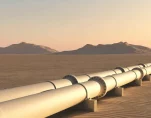
Arabian Post Staff -Dubai Abu Dhabi’s push to build a new crude pipeline bypassing the Strait of Hormuz has reached the halfway mark, with ADNOC chief executive Sultan Al Jaber saying the project is being accelerated towards a 2027 launch as regional tensions continue to expose the vulnerability of Gulf energy routes. Al Jaber said the pipeline, intended to expand export capacity through Fujairah on the Gulf […]

Arabian Post Staff -Dubai Abu Dhabi’s push to build a crude export route outside the Strait of Hormuz has moved to the centre of Gulf energy security after ADNOC said its new West-East Pipeline is about halfway complete and on course to expand shipments through Fujairah by 2027. The project, being fast-tracked under the direction of Sheikh Khaled bin Mohamed bin Zayed Al Nahyan, Crown Prince of […]

VISHNU RAJA
RYO YAMADA
HITORI GOTOH
IKUYO KITA