President Donald Trump on Thursday sharpened his threat against Iran by publicly celebrating the destruction of a major bridge and warning that more infrastructure could be hit unless Tehran accepts a deal, a move that deepened concern over the direction of the conflict and added to volatility across energy and financial markets. In a social media post, Trump said “the biggest bridge in Iran” had come […]
U. S. defence shares have failed to sustain the geopolitical bounce that often accompanies armed conflict, with the sector sliding in March even as tensions around Iran intensified. The NYSE Arca Defense Index, which tracks 34 large and small-cap companies, fell nearly 8% during the month, a steeper decline than the S&P 500’s roughly 5% drop, underscoring how investors have become more cautious about paying up […]
Rising global energy prices are adding a fresh inflation risk to the United States even as the International Monetary Fund said the world’s largest economy remains on a solid growth path, with trade and fiscal changes expected to narrow the current-account deficit only modestly over the medium term. The IMF’s latest assessment said growth in the US is projected to reach 2.4 per cent in 2026, while […]
Real estate developers across the UAE are sticking to original construction and launch schedules despite a regional war that has lifted energy and materials costs, with industry participants signalling that any easing in prices and transaction volumes is more likely to be temporary than structural while the conflict runs on. Market activity has slowed in parts of the sector, but there has been no broad retreat from […]
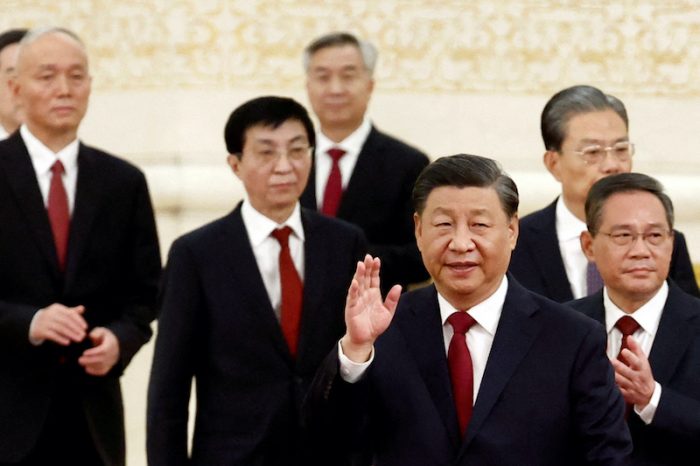
China’s central bank has pulled cash from the banking system for the first time in about a year, signalling a more cautious near-term approach to liquidity management as higher oil prices begin to feed into factory costs, transport bills and corporate margins.
The People’s Bank of China conducted a small reverse repo operation on 2 April while a far larger batch matured, producing a net daily withdrawal of 223.5 billion yuan. The move came after policymakers had spent months leaning towards support for growth, and it suggests Beijing is trying to preserve room for manoeuvre rather than rushing into broader easing while imported inflation risks build.
That calibration matters because China is facing two conflicting pressures at once. On one side, domestic demand remains weak, producer prices are still soft, and policymakers have already acknowledged that supply continues to outstrip demand in parts of the economy. On the other, the oil shock linked to the Middle East conflict is lifting input costs and complicating the case for an immediate flood of fresh liquidity. China’s central bank said after its first-quarter monetary policy committee meeting that it would maintain an “appropriately loose” stance while keeping liquidity ample and supporting a recovery in prices.
The timing of the drain is striking because it follows signs that parts of the economy had started to stabilise before energy costs became a bigger threat. Official manufacturing activity returned to expansion in March, with the PMI rising to 50.4 from 49.0 in February, while a private survey showed factory output and orders still growing even as cost pressures intensified. Those readings pointed to a modest improvement in momentum, but they also showed that the rebound is vulnerable to rising commodity prices and longer supplier delivery times.
Economists and policy advisers in China have begun to frame the challenge less as a choice between stimulus and restraint, and more as a balancing act between supporting growth and containing imported inflation. Huang Yiping, a central bank adviser, said this week that oil-led price pressure was hurting profitability and narrowing the room for policy to respond, even though broader inflation remains below the official target. China’s consumer inflation rose 1.3% in February, the highest in more than three years, but still below Beijing’s target of around 2% for 2026.
For markets, the signal is not that Beijing has turned hawkish. The seven-day reverse repo rate remained unchanged at 1.4%, and the central bank has continued to stress that it can still use rate cuts, reserve requirement reductions and other tools if needed. What has changed is the sequencing. Officials appear unwilling to react to every external shock with an immediate dose of easier money, especially when higher oil prices could push up headline inflation even as underlying demand stays fragile.
That caution is also tied to the broader policy picture. China set a 2026 growth target of 4.5% to 5%, below last year’s goal, reflecting weaker confidence in the external environment and the unfinished task of shifting growth away from debt-heavy sectors and towards household consumption. Policymakers have pledged to support demand, private investment and prices, but the tone from Beijing has been measured rather than aggressive. The central bank’s liquidity withdrawal fits that pattern: it does not amount to a policy reversal, but it does show a preference for targeted fine-tuning over blunt stimulus.
The oil backdrop helps explain why. China has entered the current energy shock in a stronger position than some of its Asian peers, with strategic stockpiles, diversified power supply and a large electric-vehicle base helping to soften the blow. That resilience has supported Chinese assets during wider market turbulence. Yet the country is not immune. Independent refiners have already been cutting processing rates as crude costs climb and domestic fuel demand stays under pressure, while manufacturers are reporting the fastest increase in output prices in years.
U. S. Treasuries fell across the curve after President Donald Trump used a televised address to harden his stance on Iran, unsettling investors who had been looking for signs of de-escalation and instead got a warning of heavier military action that sent oil prices sharply higher and revived fears of another inflation pulse through the global economy. The move in government debt reflected a quick reassessment of […]
Arabian Post Staff -Dubai Oil prices leapt on Thursday after President Donald Trump said the United States would keep striking Iran for at least the next two to three weeks, dashing hopes that Washington was preparing to scale back military action and easing concerns in energy markets only briefly. Brent crude rose above $108 a barrel and West Texas Intermediate climbed past $106 in early trade, reversing […]
South Korea’s consumer prices rose 2.2 per cent in March from a year earlier, quickening from 2.0 per cent in both January and February as higher energy costs fed through the economy and kept inflation above the Bank of Korea’s medium-term 2 per cent target. The increase was milder than market expectations for 2.4 per cent, but it still marked the fastest annual pace since December and underscored the strain created by elevated crude prices linked to conflict-driven instability in the Middle East.
On a monthly basis, consumer prices rose 0.3 per cent in March, matching February’s pace. Petroleum products were a major driver even after Seoul introduced emergency measures to curb the blow to households and businesses. Government controls on fuel prices helped limit the pass-through, yet petroleum product prices still rose sharply from the previous month, showing how external energy shocks are overpowering domestic stabilisation efforts.
The inflation print matters because it lands at a moment when policymakers are trying to balance stronger export-led growth against mounting imported price pressures. The Bank of Korea said in its February outlook that consumer-price inflation for 2026 was expected to average 2.2 per cent, slightly above its previous 2.1 per cent forecast. That projection was made before the latest oil surge intensified, leaving economists to question whether the central bank’s assumptions have already been overtaken by events.
Core inflation, which strips out volatile food and energy items, eased slightly to 2.2 per cent in March from 2.3 per cent in February. That suggests underlying domestic demand pressures remain contained, even as headline inflation is being pushed up by imported costs. Another closely watched measure, which excludes agricultural products and petroleum, had been running at 2.5 per cent in February, indicating that sticky service-sector and household spending components have not fully disappeared.
Food prices offered some relief. Agricultural product prices fell in March as supply conditions improved, helping offset part of the jump in fuel-linked costs. That softer food picture helped explain why the overall figure came in below forecasts despite the energy shock. Still, analysts say the cushion from better farm output may prove temporary if transport, fertiliser and logistics costs keep climbing with oil.
South Korea is especially exposed because of its dependence on imported energy. About 70 per cent of its crude oil imports come from the Middle East, leaving the country vulnerable whenever shipping routes or production in the region come under threat. The government has already floated wider demand-management steps, including possible driving curbs beyond the public sector if crude prices climb further, a sign of how seriously officials are treating the supply risk.
Seoul has also moved on the fiscal side. This week the government proposed a supplementary budget of 26.2 trillion won, or about $17.3 billion, aimed at cushioning the economy from the oil shock and supporting low-income households and affected businesses. Of that, 10.1 trillion won is earmarked for measures tied to surging oil prices, including support for refiners operating under the emergency pricing system. The package highlights concern that inflation and slower consumption could combine to weaken the broader recovery.
For the central bank, the March data complicate an already delicate policy setting. The Bank of Korea’s next rate decision is due on April 10. Policymakers had held rates steady in February, and the latest inflation reading, while lower than forecast, is unlikely to offer much comfort because upside risks remain tied to oil, the exchange rate and transport costs. At the same time, softer core inflation argues against an aggressive response unless the energy shock broadens into wages and services.
Arabian Post Staff -Dubai Silver tumbled on Thursday, extending a volatile run in precious metals as higher oil prices, firmer Treasury yields and a stronger dollar pulled investors out of bullion. Spot silver was reported down about 4.6% on the day, while market data showed the metal trading near $72.31 an ounce and futures dipping to an intraday low around $70.35, leaving the market pressing against […]
Arabian Post Staff -Dubai Gold fell sharply on Thursday, but the viral claim that bullion had crashed below $4,600 and lost more than $1 trillion in market value in a single day appears to overstate what can be firmly confirmed from broad market data. By late trading, spot gold was quoted at $4,664.39 an ounce and US gold futures at $4,691.10, after a strong rebound a day […]
ORLANDO, UNITED STATES – Media OutReach Newswire – 2 April 2026 – As the global pet industry gathers for the Global Pet Expo in Orlando—the largest pet trade show in North America—a new power from Southeast Asia has taken center stage. MR.VET, the rising star of the Asian pet food market, has officially been honored with the 2026 Orange Dot Award (USA) in the Biotech Category, marking a historic milestone for regional brands on the world stage.
The Orange Dot Award is a benchmark of excellence in the pet industry, established by a panel of elite American experts, including the former president of the American Pet Products Association (APPA). It recognizes products that push the boundaries of safety, innovation, and nutritional science. This year, the spotlight shines on MR.VET’s commitment to “Precision Healthcare.”
A Biotech Breakthrough: The T-Series Revolution
The award-winning entry, MR.VET’s T-Series, represents a paradigm shift in how pet owners approach feline health. Unlike conventional dry kibble, the T-Series—comprising T1 (Intestinal Care), T2 (Skin and Coat Care), T3 (Urinary Health), and T4 (Indoor Cat)—is built on a foundation of advanced biotechnology.
At the heart of this innovation is MR.VET’s Specialized Freeze-Drying Technology. While traditional high-heat processing often destroys delicate bioactive compounds, MR.VET utilizes low-temperature dehydration. This “Bioactive Retention” process locks in original nutrition, ensuring that proteins, fatty acids, and essential micronutrients remain intact for efficient absorption. By combining this technology with customized nutritional profiles, MR.VET offers a tailored solution to the most common health “pain points” faced by modern pet owners.
Certified Market Dominance: The Number One Choice
MR.VET’s scientific accolades are backed by staggering commercial success. According to a recent market position statement by the world-renowned consulting firm Frost & Sullivan, MR.VET has been officially certified as the “Ranked No. 1 in Southeast Asia by Sales Volume of Dry Cat Food in 2025.”
Frost & Sullivan, a global leader in market research for over 60 years, conducted an exhaustive analysis of the Southeast Asian landscape, confirming MR.VET’s status as the undisputed market leader. Over the past year, the brand has witnessed an explosive growth trajectory across both digital and physical storefronts:
Indonesia: Ranked #1 on both TikTok and Shopee.
Vietnam: Ranked #1 on TikTok and #3 on Shopee.
Thailand: Recognized as a Top 10 TikTok Trending Brand.
Regional Reach: Rapidly becoming the preferred choice for consumers in Malaysia and the Philippines.
Double Victory: Bite of Wild Sweeps Nutrition Category
The Orange Dot Award ceremony also celebrated a second victory for the group, as sister brand Bite of Wild secured the award in the Nutrition Category for its 42 Series.
The inspiration for Bite of Wild began with a personal mission by co-founder Steve Bui. As a devoted pet owner, Steve sought to create a diet that truly honored the “obligate carnivore” nature of his own pets. Dissatisfied with conventional options, he set out to develop a high-meat, biologically appropriate formula, which eventually evolved into the award-winning 42 Series.
Designed to replicate the “Ancestral Blueprint” of wild felines, the Bite of Wild 42 Series (including the P42 High Meats, F42 6-Fish recipes, and K42 Kitten Formula) is engineered for the “Tiger Physique.” The series boasts industry-leading specifications:
92% Animal Raw Materials: Providing pure biological fuel.
42% High Crude Protein: The gold standard for lean muscle and vitality.
0% Grain & Pork: Eliminating common allergens to ensure peak digestive health.
Bite of Wild caters to the “obligate carnivore” nature of cats, proving that high-performance nutrition can be both scientifically precise and naturally sourced.
A New Era for the Pan-Asian Pet Market
The success of MR.VET and Bite of Wild at the Global Pet Expo signals a broader revolution within the Asian pet market—a transition from “basic feeding” to “scientific nurturing.”
“Winning two Orange Dot Awards in Biotech and Nutrition is a powerful validation of our commitment to elevating pet health standards across the Asian market,” said Steve Bui, co-founder of the brands, during the Orlando ceremony. “It proves that by merging global scientific breakthroughs with deep regional insights, we can lead the world in both market scale and technological sophistication.”
As MR.VET continues to expand its footprint across the Pan-Asian region and beyond, its mission remains clear: to provide pets with “the right care made easy”—backed by science and proven by millions of satisfied owners. The revolution in pet health has arrived, led by the “Tiger Physique” of Bite of Wild and the biotech-driven precision of MR.VET.
Hashtag: #MRVET
The issuer is solely responsible for the content of this announcement.
Donald Trump’s administration is making a fresh attempt to draw U. S. oil companies into Venezuela, offering regulatory relief and political backing as Washington tries to turn the country’s vast crude reserves into a strategic and commercial prize. Yet the campaign is meeting resistance from executives wary of sinking billions into a battered industry still shadowed by political risk, legal uncertainty and years of neglect. The push […]
Binance has moved into energy-linked crypto derivatives, launching perpetual futures tied to WTI crude, Brent crude and natural gas in a step that broadens its product range beyond digital assets and into commodity price exposure. The exchange said Binance Futures would roll out USDⓈ-margined CLUSDT, BZUSDT and NATGASUSDT perpetual contracts on 1 April, with the contracts linked to benchmark oil and gas markets and designed for […]
Global energy markets are facing a supply shock more severe than the oil crises of 1973 and 1979 combined with the gas disruption that followed Russia’s 2022 invasion of Ukraine, according to International Energy Agency executive director Fatih Birol, who said mounting losses of oil and liquefied natural gas from the Middle East were set to intensify through April. Birol said more than 12 million barrels of […]
Ryanair has warned that jet fuel supplies into Europe could come under pressure from May if the US-Israeli war with Iran continues, with chief executive Michael O’Leary saying as much as a quarter of the airline’s fuel could be at risk during May and June if disruption around the Strait of Hormuz is not resolved by the middle or end of April. The warning, made on April […]
French President Emmanuel Macron is due to meet Japanese Prime Minister Sanae Takaichi in Tokyo on Wednesday, with the war involving Iran and the growing scramble for critical minerals set to dominate talks that reach far beyond bilateral ties. The meeting comes as Japan and France face the same strategic question from different angles: how to protect economic security in a world where energy supplies, shipping routes […]
Arabian Post Staff -Dubai Copper prices climbed on Wednesday after US President Donald Trump said military action against Iran could end within two to three weeks, helping trigger a wider rebound across markets that had been hit by worries over energy shocks, inflation and weaker global growth. The move in the red metal tracked a broader shift towards riskier assets as investors responded to the prospect, however […]
President Donald Trump said the United States could end its military campaign against Iran within two to three weeks, offering the clearest indication yet that Washington is looking for an exit from a war that has shaken Gulf security, driven up energy costs and unsettled allies. Speaking at the White House on Tuesday, Trump said the US had gone far enough militarily and suggested responsibility for the […]
Arabian Post Staff -Dubai Commercial movement through the Strait of Hormuz is showing only the faintest signs of life, with a handful of vessels crossing under tightly controlled conditions as Iran continues to hold effective power over who may pass and when. Tracking data compiled by Bloomberg showed average weekly two-way transits rising to seven vessels through Monday from five a week earlier, a small increase that […]
Pressure on the rupee is poised to intensify after the Reserve Bank of India ordered banks to sharply cut net open rupee positions in the onshore market, forcing a scramble to unwind large arbitrage trades that had linked domestic and offshore pricing. Bankers have warned that the adjustment could amplify volatility, strain treasury books and unsettle corporate hedging activity even as the central bank seeks to restore […]
Arabian Post Staff -Dubai Gold edged higher on Tuesday but remained on course for its sharpest monthly decline since October 2008, as investors weighed a powerful mix of delayed hopes for US rate cuts, a surge in energy prices linked to the Iran war and a stronger dollar through much of March. Spot gold was up about 3.2% at $4,652.31 an ounce by Tuesday, yet still showed […]
Nigeria has forfeited a potential revenue surge from elevated crude prices during the Iran war because it could not raise production enough to match the market opportunity, according to Dele Oye, chairman of the Alliance for Economic Research and Ethics, who said the lost upside could amount to about $20.2 billion a year. He argued that Brent’s climb far above Nigeria’s budget benchmark should have delivered a […]
Vessel traffic through the Strait of Hormuz has begun to edge higher for ships deemed acceptable by Tehran, but the Gulf’s main maritime chokepoint remains tightly controlled and effectively shut to most commercial operators without Iranian clearance. Tracking data cited by Bloomberg showed a gentle rise in signal-on transits, while Reuters and other maritime reports indicate that only a narrow stream of ships linked to countries Iran […]
South Africa will cut a fuel tax for April to soften the hit from surging global oil prices, as Finance Minister Enoch Godongwana moves to contain a steep rise in petrol and diesel costs that threatens to feed inflation across Africa’s most industrialised economy. The step comes as oil markets remain under strain from conflict-linked supply disruption in the Middle East and as the rand has weakened […]