Just in:
Jaiedco and Golden Bridge Announce Strategic Collaboration for a New Dubai Islands Development // Workday targets Honeydew purchase to unify AI metrics // Toward a Shared Future for Humanity: Rethinking Civilizational Exchange // Thailand’s Most Iconic New Year’s Celebration Returns: ICONSIAM Unveils “Amazing Thailand Countdown 2027” // Phancy Announces Business Performance for the Nine Months Ended September 30, 2026 // International Business Leaders Say Xi’s Speech Boosts Confidence in Asia-Pacific Cooperation // Dubai Introduces SHARH, an AI-Powered Platform Helping Entrepreneurs Buy, Sell and Manage Businesses in the UAE // Coinbase targets 2027 launch amid state gambling lawsuits // Sharjah clears Kalba free zone plan for 400MW complex // Promoting Common Human Development Through Exchanges and Mutual Learning Among Civilizations // NASA tests supersonic Mars rotors for heavier payloads // Sui activates Hashi Bitcoin lending across partner network // 2026 Tropical Rainforest Ecosystem Partners Conference Kicks off in Hainan // LittleLives, Little Lab and SEGi College Sign MOU to Explore Early Childhood Education Collaboration Across ASEAN // Anthropic shares finish above offer price after Nasdaq debut // AXS and PayerMax Advance Omnichannel Payment Acceptance for Merchants // PicCollage extends photo editing platform to web browsers // Yeebo Announces Interim Results for FY26/27 Revenue Increases by 45.5% to HK$806.7 Million Profit Attributable to Owners Surges 87.6% to HK$2,284.7 Million // Anthropic’s debut is lifting markets, but someone is still paying for it // Antony’s wife called to police station with husband over complaint //

News related to
crude

Saudi Aramco is in advanced discussions with a consortium spearheaded by BlackRock to secure approximately $10 billion for infrastructure linked to its expansive Jafurah gas initiative. The financing structure echoes prior deals, with investors purchasing usage rights while Aramco retains operational control and ownership.

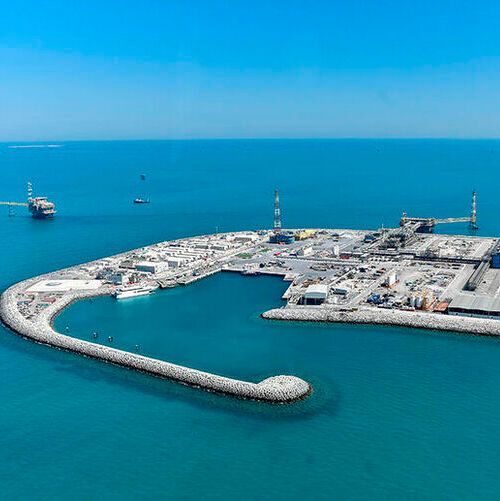
The proposed transaction centres on critical assets—specifically pipelines and a processing facility—essential to the $100 billion Jafurah project, the world’s largest shale gas development outside the United States. Aramco aims to lift gas output by 60 per cent by 2030 from 2021 levels.

This initiative represents another strategic approach by Gulf oil majors to diversify their revenue models amid volatile crude prices. The deal allows Aramco to tap private capital while offering investors stable tariff income backed by long‑term usage commitments.

In 2021, BlackRock and EIG invested in Aramco’s gas and oil pipeline subsidiaries through similar lease‑back transactions, collectively raising nearly $28 billion. Under those agreements, Aramco retained a 51 per cent stake in each entity and paid tariffs to investors for pipeline usage, a structure described by consultancy Qamar Energy as more akin to borrowing than a sale.

With this new deal, Aramco continues its disciplined approach to infrastructure financing. The Jafurah project itself is a linchpin of Saudi Arabia’s energy transition agenda, aligning with national objectives to bolster gas production and reduce reliance on oil exports.

While those familiar with the talks confirm the structure mirrors the 2021 transactions, the group declined to specify a timeline for finalisation. Both Aramco and BlackRock declined to comment.

Experts note that such arrangements enable Aramco to free up capital for diversification ventures while retaining strategic infrastructure oversight. “The pipeline deals were basically a securitisation,” said Robin Mills, chief executive of Qamar Energy, referencing the 2021 transactions.

Market analysts believe this deal could serve as a template for financing future segments of Jafurah, which is expected to reach production of 2 billion cubic feet per day by 2030.

Taken together with Aramco’s earlier asset sales—such as its consideration of offloading gas-fired power plants and port infrastructure—these moves reflect mounting government pressure to boost proceeds amid a fiscal deficit and fluctuating oil revenues.

Saudi Arabia’s reliance on oil revenues—which accounted for around 62 percent of state income in 2024—has prompted a series of asset realisations, bond issuances and structured financing to support large-scale domestic projects and broaden the economic base.

The Jafurah deal also highlights growing investor appetite for stable, long‑dated infrastructure revenue streams in the Gulf. With institutional players like BlackRock involved, these deals are gaining traction as a viable alternative to traditional equity or debt-financing routes. Analysts suggest more such partnerships could emerge as the kingdom scales up energy-reform initiatives, including clean energy and non-oil sectors.

As the deal progresses, stakeholders will monitor its structure, particularly in comparison with the 2021 models, and assess implications for Aramco’s capital allocation strategy. The outcome could influence both market perception of the firm and broader investment flows into Middle East energy infrastructure.

Momentum across the United Arab Emirates’ equity capital markets is building as the second half of 2025 begins, while Saudi Arabian firms preparing share issuances are confronting investor concerns over lofty valuations. May’s launch of a residential real estate investment trust on the Dubai Financial Market reignited market sentiment after a lull in listing activity during the previous year. Investor interest is intensifying ahead of expected deals […]

A tide of tariffs is sweeping across Europe, and the damage is becoming visible just as earnings reports begin to drop. President Trump’s trade decisions are no longer a future threat; they’re now a present force reshaping European corporate performance. The timing is brutal. What was expected to be a modestly positive second quarter for European earnings has shifted into decline, with weakness now concentrated in a […]

Oil traded in a narrow range as tariffs and sanctions threats unsettled global markets, weighing heavily on the outlook for energy demand. Brent hovered just above $70 a barrel, while West Texas Intermediate stayed above $68. Futures markets weakened as U. S. equity-index futures dropped following fresh trade tensions between Washington and key global partners.

U. S. President Donald Trump escalated tariff threats, targeting both the European Union and Mexico with 30 per cent duties and flagging potential levies against Brazil, the Philippines, Japan, South Korea and others. Markets interpreted this as a risk to economic momentum, especially in energy‑sensitive regions of Asia, denting crude demand expectations. At the same time, Asian buyers adopted a cautious stance, amplifying downward pressure on oil.

Against this backdrop, investors are eyeing a scheduled “major statement” from President Trump concerning Russia. Anticipation of new sanctions against the country, a major oil producer, lent modest support to prices that might otherwise have fallen further. Still, this support was checked by rising output from OPEC+ and a pause in geopolitical flare-ups in the Middle East.

Data from the International Energy Agency signals that global oil markets remain relatively tight. Summer driving seasons and increased refinery activity have buoyed demand, although analysts note that elevated output from Saudi Arabia—above its OPEC+ quota—puts a dent in any sustained rally. The kingdom disputes claims of non‑compliance, stating marketed crude remains within agreed limits.

Market watchers also flag OPEC+ plans to hike production by approximately 548,000 barrels per day in August, potentially followed by another boost in September. ING warns these moves could put the market into surplus in the final quarter of 2025. Additionally, the group revised its global demand forecasts downward for 2026–29, citing weakening growth in China.

Further clouding the outlook, heightened tariff uncertainty is exerting macroeconomic drag. The IEA forecasts a meaningful drop in global oil consumption growth for 2025, down a third from earlier projections, due in part to Trump’s tariff measures. Analysts stress that inflationary pressures and slower global trade would dampen energy demand.

From a logistical standpoint, renewed Houthi tensions in the Red Sea have introduced another variable, interrupting shipping and supporting prices marginally. Still, Middle East volatility has largely receded compared with levels seen earlier this year.

Looking ahead, market players are set to digest a blend of geopolitical and macroeconomic signals. Key Chinese trade figures due soon may reveal shifts in demand. OPEC+ decisions on output will be scrutinised closely, as will the next moves in Washington’s trade and sanctions policy. Meanwhile, U. S. gasoline consumption remains robust, with the Energy Information Administration reporting a 6 per cent increase to 9.2 million barrels per day—signalling that underlying demand has not yet faltered.

Oil markets are caught between supportive fundamentals—such as strong summer demand, supply constraints from Russia and geopolitical flare‑ups—and sobering headwinds from proposed tariffs, elevated output and macroeconomic uncertainty. Traders remain cautious, awaiting concrete policy developments from Washington, data releases from China, and steps by OPEC+ to navigate a market landscape that is anything but stable.

UAE’s Ministry of Energy and Infrastructure has restated its unwavering aim to lift crude oil production capacity to five million barrels per day by 2027 amid shifting global energy demand. The clarification from Abu Dhabi follows remarks from the Energy Minister indicating potential capacity growth beyond that goal.

Aligned with its declared strategy, the nation insists the 5 million bpd target remains intact. Energy Minister Suhail Mohamed al‑Mazrouei, speaking at the Opec International Summit in Vienna, emphasised the UAE could scale up to six million bpd if global markets required—while making clear this figure is not an official target.

Presently, UAE’s production capacity stands at around 4.85 million bpd. The ministry’s public affirmation underscores long‑established plans by Abu Dhabi National Oil Company to align with wider economic imperatives, including state‑led diversification and responsible growth.

On the sidelines in Vienna, Minister al‑Mazrouei pointed to oil inventories that have not surged, interpreting it as evidence of sustained market demand. He characterised the additional million barrels potential as a proactive choice, contingent on demand, rather than a binding pledge.

Opec+ has already increased the UAE’s production quota this year, acknowledging its heavy investment in expanding capacity from 3 million to 4.85 million bpd. That quota adjustment reflects a bid to balance output with capacity and avoids penalising investment-led increases.

Global energy forecasts cited at the summit envision oil demand climbing by nearly 19 percent to 123 million bpd by 2050, driven by economic growth, urbanisation, and energy‑intensive industries such as artificial intelligence. Despite this, Opec has revised its short‑term forecast downward amid signs of slowing demand in China. Long‑term growth, however, is expected from regions including Asia, the Middle East and Africa.

ADNOC’s accelerated expansion plan—bringing forward its 5 million bpd capacity objective from 2030 to 2027—was endorsed by the board under the leadership of His Highness Sheikh Mohamed bin Zayed Al Nahyan, supported by CEO Sultan Ahmed Al Jaber. The strategy forms part of a broader state-led drive combining energy security with economic diversification and sustainability.

While bolstering its crude oil output, ADNOC is also investing heavily in low‑carbon solutions. It allocates about US $5 billion annually to clean energy and has set a net‑zero emissions ambition for 2045. The company is integrating solar and nuclear power into offshore fields and is implementing carbon‑capture technologies in major developments.

ADNOC’s low-carbon division recently acquired Germany’s Covestro for US $16 billion, signalling a move to diversify into value‑added petrochemicals such as plastics, foams and ammonia. Its strategy foregrounds gas, chemicals and downstream operations alongside oil capacity growth, in anticipation of structural shifts in global energy use.

The UAE is poised to become the world’s fourth-largest oil and liquids producer if the anticipated expansion is achieved, trailing only the United States, Saudi Arabia and Russia. At six million bpd capacity, it would surpass producers such as Canada, China, Iraq and Iran in scale.

However, uncertainties remain. The pace of global energy transition, the adoption of renewables, and potential peaking of oil demand—especially in China—pose risks to long-term strategy. But the UAE appears ready to hedge by maximizing flexibility: build for five million bpd, yet leave room to stretch if markets demand.

The public reaffirmation by the ministry serves both domestic and international audiences: showcasing earnest delivery of targets, reassuring investors on energy stability, and reinforcing the UAE’s position as a stabilising force within Opec+.

Oil prices have shifted sharply this week, with demand forecasts now under pressure from escalating trade tensions fuelled by fresh tariffs. Brent crude is trading in the high‑60s per barrel, while benchmark WTI hovers around mid‑60s, reflecting growing investor caution. Analysts point to revised supply and demand projections as indicators of a changing market landscape.

An International Energy Agency monthly report has cut its global oil‑demand growth forecast for 2025 to 700,000 bpd, the slowest pace since 2009 outside the pandemic, down from 720,000 bpd last month. The downgrade reflects weaker consumption in emerging markets and a cooling US‑China trade outlook. Supply continues to outpace demand as OPEC+ ramps up production; global output in June rose by about 950,000 bpd to reach 105.6 mbpd.

The IEA notes the oil market remains technically in surplus, with inventories building globally—even as regional stock draws persist. Oil runs at refineries have slowed, particularly in the US and China, enabling downward revisions in demand projections. Enverus Intelligence Research offers a counter‑view, pointing to balanced OECD inventories and sustained summer demand north of 1 mbpd, which may support higher prices.

The US Energy Information Administration expects US crude oil production to plateau at roughly 13.4 mbpd in 2025, dropping modestly later this year as lower prices curb drilling activity. Despite this, producers remain vulnerable to profit erosion unless prices stabilise in the $65–70 range.

President Trump’s trade moves have reignited fears of another global trade war, with new tariff letters dispatched to Brazil, South Korea, Japan, the Philippines and others this week. Threats of 50% duties on exports such as copper, semiconductor components and auto parts are weighing heavily on commodity‑linked equity markets and raising recession risk concerns. Oil prices dropped more than 2% on Thursday as benchmark futures responded to the potential hit to economic growth.

While some market participants remain in “wait‑and‑see” mode, given Trump’s unpredictability and history of policy reversals, the overarching effect is to dampen demand forecasts. Onyx Capital’s head of research, Harry Tchilinguirian, cautions against overreaction but acknowledges that tariffs are adding to inflationary pressures and may reinforce Federal Reserve caution.

Geopolitical flashpoints in the Middle East continue to influence sentiment. Oil surged in June as Iran threatened to close the Strait of Hormuz, which handles almost 20% of world oil shipments, but prices eased once the waterway remained open. Meanwhile, Saudi Arabia raised official prices to consumers, citing strong demand in China’s post‑pandemic recovery, though refiners are reporting margin squeezes.

Financial institutions have started to reflect this shifting environment in their projections. A Reuters‑polled group of 40 analysts revised Brent average forecasts for 2025 to $67.86 per barrel—up marginally from May—while predicting demand growth of only around 730,000 bpd. JP Morgan cut its annual Brent estimate to $66, citing rising OPEC+ output and sluggish consumption. TD Economics trimmed its forecast further, expecting 2025 WTI to average near $62, warning of sustained downward pressure from trade risk and oversupply.

Two factors loom large over the coming months. First, the path of trade tensions: further tariff escalations or retaliatory actions could erode industrial activity and fuel sales. Second, OPEC+ strategy: with the bloc unconstrained in raising output, additional production could overwhelm tepid demand, pushing prices below current levels. The IEA projects supply growth for 2025 at 2.1 mbpd, while demand is seen rising just 700 kbpd.

On the financial front, hedge fund positioning has turned cautious, registering the sharpest drop in bullish sentiment since February. Traders are forecasting narrower price ranges ahead, with elevated volatility as tariff developments hit market headlines.

Forward‑looking forecasts remain mixed. EIA projects Brent to average $68.89 in 2025 and $58.48 in 2026, marking a seasonal decline. Enverus suggests the upside remains intact if demand holds steady, especially with summer driving season underway. Market watchers also note that rising gas‑to‑oil switching costs, refinery restarts and diminished spare capacity could temper price declines.

China’s consumption is also under scrutiny. While Beijing seeks to stimulate growth through fiscal and monetary tools, investor sentiment remains fragile. Saudi’s decision to push prices higher was based on perceived strengthening in Chinese demand, but many analysts caution that any slow‑down could rapidly tip the balance.

Emerging long‑term trends offer some balance. IEA’s long‑term outlook suggests oil demand will continue rising through the late 2020s, driven by non‑OECD economies and slower clean‑energy adoption, delaying peak demand beyond 2030. Nonetheless, short‑term price direction seems firmly tied to macroeconomic risks and geopolitical dynamics.

OPEC+ plans to finalise a 2.2 million-barrel-per-day supply restoration by September and is deliberating halting further production increases from October onwards, delegates have indicated. Source participants say the cartel has scheduled a final monthly increment of approximately 550,000 bpd in September, completing the planned unwinding of cuts. Following that, discussions have begun around suspending additional increases—especially the roughly 1.66 million bpd tied to later phases of the rollback—potentially pausing as early […]

Advertisements

Four sources confirm that Saudi Aramco is negotiating to acquire 2 million tonnes per annum of liquefied natural gas from Commonwealth LNG’s planned Cameron, Louisiana export facility. This addition would bring Commonwealth closer to its ambition of locking in 8 mtpa from its total 9.5 mtpa capacity, enhancing its commercial viability and drawing it nearer to a final investment decision by year‑end. Commonwealth LNG, backed by private equity firm Kimmeridge, […]

Senior officials from Saudi Arabia, the United Arab Emirates and Kuwait have defended the August production boost of 548,000 barrels per day, stating that global markets are absorbing the extra supply without piling up inventories. UAE Energy Minister Suhail al‑Mazrouei told delegates in Vienna that inventories have remained stable despite the accelerated output increases, reflecting genuine consumption growth. Kuwait Petroleum Corp. echoed this view, with its CEO Sheikh Nawaf Al‑Sabah noting strong demand from Asian customers and signalling a tighter market than widely perceived.

Oil markets displayed resilience as Brent crude climbed above $70 a barrel, recovering from an initial dip following the OPEC+ announcement. Analysts cite robust summer travel demand, Middle East geopolitical strains—such as intermittent Houthi attacks in the Red Sea—and tighter fuel product cracks as underpinning near‑term market firmness. The supply surge, although substantial, has not yet triggered signs of oversupply. OECD stock levels remain flat, while US Strategic Petroleum Reserve levels stay well below maximum, pointing to a balanced market setup and sustained product demand.

The OPEC+ decision marks an acceleration of a reversal programme that began in April with a modest 138,000 bpd increase, followed by three successive monthly hikes of 411,000 bpd. The latest announcement represents a strategic shift: rather than merely unwinding voluntary cuts, producers are intent on reclaiming market share and anchoring long-term stability. Saudi Arabia, which had shouldered most of the original production curbs, is now pushing ahead to restore output levels much faster than previously scheduled.

UAE officials emphasise fundamentals over headlines, asserting that additional barrels were essential to maintain equilibrium rather than depress prices. “We haven’t seen a major buildup in inventories, which means the market needed those barrels,” al‑Mazrouei said, stressing the need for steady investment in oil infrastructure. Kuwait’s Sheikh Nawaf further highlighted sustained demand growth—particularly in Asia—estimating additional global need of up to 1.3 million bpd over the year and pointing to record-high shipments from his country in June.

Supporting evidence emerges in price trend analysis. Despite the supply increase, Brent crude closed near $69–$70 per barrel, with West Texas Intermediate at approximately $68. Reuters reported a 1 per cent rise in oil prices shortly after the announcement, driven by stronger-than-expected demand signals and a dip in US production projections. Market commentary suggests that the anticipated supply surplus may not materialise until later in the year, allowing current price support to persist.

However, concern is building among forecasters regarding the risk of supply outpacing demand in the months ahead. Analysts at ING and Bloomberg caution that cumulative increases—including a potential similar rise in September—could tilt the market towards surplus by winter. Goldman Sachs predicts Brent could drop to an average of $59 in the fourth quarter if these trendlines hold. Such projections underscore the delicate balance between stabilising markets today and sowing the seeds of tomorrow’s oversupply.

Geopolitical factors continue to sway market sentiment. Renewed attacks by Houthi forces on shipping lanes in the Red Sea have boosted risk premiums and contributed to diverging regional price dynamics. In conjunction with potential US tariffs on trade partners, these developments inject layers of complexity into demand forecasts and shipping routes. Meanwhile, softer oil output projections from US shale producers, prompted by lower prices this year, have lent additional upward momentum to benchmarks.

Central to OPEC+ strategy is ensuring investment resilience in producing countries. UAE highlighted underinvestment concerns, warning that deferred spending could undermine long-term supply stability. The August lift, they argue, responds to both short-term demand and the need to signal commitment to investors. Kuwait pointed to customer outreach as evidence of healthy demand and stressed its competitive edge in terms of low-cost, lower-carbon intensity oil—a differentiator in markets such as China, Japan and South Korea.

Market analysts remain split on the outlook. Enverus Intelligence Research recently contended that prevailing data does not support a bearish narrative, noting flat stock levels in OECD countries, strong seasonal consumption, and resilient cracks. By contrast, energy consultancy FGE flagged the limitations of ramping up production, citing member compliance and infrastructure constraints that may prevent full implementation of quotas—particularly in Iraq and Kazakhstan.

SINGAPORE – Media OutReach Newswire – 10 July 2025 – To celebrate Singapore’s SG60 milestone, Chevron Singapore, which operates the Caltex retail brand, has launched a limited-edition SG60 picnic set comprising a picnic box and two chairs. Designed to enrich Singaporeans’ upcoming National Day celebrations while fostering a sense of local community spirit, these unique items will be available for purchase at all 26 Caltex stations nationwide […]

Iran has achieved its highest energy output in nearly half a century, as crude production and exports continue expanding despite escalating tensions and Western sanctions. In 2024, total oil output—including crude and gas liquids—reached approximately 5.1 million barrels per day, marking levels unseen since before 1978. Indicators from the first half of 2025 signal further growth, reinforcing Tehran’s stance that its energy sector remains resilient even under pressure.

China remains the principal destination for Iranian crude. According to Vortexa and Kpler data, Beijing imported an average of 1.4 million bpd of Iranian crude and condensate during the first half of 2025. In June alone, Chinese imports surged to a record 1.8 million bpd, exploiting floating storage reserves accumulated previously.

Despite U. S. legal restrictions, these volumes endure through intricate shipping methods and discounts. As of June, Iranian crude was being sold to China at discounts of $3.30–$3.50 per barrel below Brent—the widest spread since 2023—partly triggered by weak demand from independent Chinese “teapot” refineries and additional U. S. sanctions on mid-tier processing firms in Shandong province. Refineries such as these have cut utilisation rates to around 51 per cent, down from 64 per cent last year.

Iran’s export capacity has been safeguarded by infrastructural alternatives designed to bypass the Strait of Hormuz. The Goreh‑Jask pipeline and Jask terminal—capable of exporting around 300,000 bpd—offer strategic flexibility, although actual utilisation fell to under 70,000 bpd in late 2024. Elsewhere, Saudi Arabia and the UAE have also enhanced their own bypass routes through the Strait to mitigate risk.

Nonetheless, current events pose fresh challenges. Israeli strikes in June damaged parts of oil infrastructure near Tehran and affected the South Pars gas field—responsible for up to 700,000 bpd of condensate. Exports from key terminals such as Kharg Island briefly dropped below 120,000 bpd from a weekly average of 1.7 million bpd. However, Iran manages significant stockpiles—approximately 27.5 million barrels afloat—that can sustain exports for weeks.

Domestic dynamics complicate this energy story further. Iran’s gasoline consumption has outpaced refining capacity by nearly 15–20 per cent since late 2024, triggering reliance on reserves and imports to fill shortfalls. Peak summer demand reached unprecedented levels, surpassing 143 million litres in a single day. Panic-buying followed some military strikes, exposing strains in planning and supply.

Iran’s global energy standing aligns with broader market projections. The International Energy Agency forecasts that global oil supply will exceed demand in 2025 by around 1.8 million bpd, a backdrop that may soften impacts from Iranian output. At the same time, discussions in Washington about lifting U. S. sanctions have raised concerns in Beijing, particularly for its fragmented independent refining sector. Analysts warn that a sudden lifting of sanctions could flood global markets—with an additional 500,000 bpd of Iranian oil—and undercut smaller Chinese players by crushing their margins.

Iran’s energy strategy shows calculated resilience. While nuclear tensions invite military risks, the oil ministry appears intent on diversifying markets, expanding infrastructure, and leveraging geopolitical leverage. Iran Daily reported that production comprised 4.3 million bpd of crude plus around 0.7 million bpd of other liquids in 2024. Analysts advocate that increased domestic use, ageing facilities, and investment gaps could temper the pace of future gains unless Tehran secures long-term funding and technical partnerships.

Observers note the inherent paradox: Iran continues ramping production even as global energy security faces renewed uncertainty. Control over chokepoints such as the Strait of Hormuz remains central. Although no full closure has occurred—the Iranian parliament proposed closure in late June pending council approval—the symbolic threat alone underlines Tehran’s strategic positioning. Global markets, buoyed by inventories and diversified routes, have so far absorbed the shock. Yet any escalation could rapidly unsettle thresholds.

OPEC+ has opted to raise oil production by approximately 548,000 barrels per day in August, marking a sharp departure from earlier plans and surprising markets worldwide. The move, confirmed in a brief video conference, is projected to accumulate a surplus towards the close of the year, potentially eroding revenues for both OPEC members and higher-cost producers, including US shale firms.

With Brent crude prices slipping over 1% to around $67.50 and West Texas Intermediate falling to the mid‑$65 range, the group’s decision has already begun to ripple through markets. The scale of the increase is unprecedented compared to prior months—more than 130% larger than April’s hike and substantially above the 411,000 bpd rise earlier this summer.

Leaders within OPEC+ signalled that this shift reflects a strategic pivot: from defending elevated prices to asserting market share. Saudi Arabia, the group’s dominant force, spearheaded the increase, while also raising premiums for Arab Light crude sold to Asian markets—a move widely interpreted as a signal of confidence in near-term demand.

Analysts emphasise that current market structure is supportive of absorbing this surge. UBS’s Giovanni Staunovo remarked that “the oil market remains tight, suggesting it can absorb additional barrels,” though he cautioned about potential headwinds from macroeconomic uncertainties and lingering trade tensions in the next 6–12 months. Similarly, Reuters reporting notes that the decision followed assessments of low inventories and healthy economic indicators.

US President Donald Trump, whose administration has repeatedly lobbied for lower fuel costs domestically, is widely seen as a direct beneficiary of this policy. OPEC+ officials framed the increase as responsive to US pressure, with Saudi Arabia effectively stepping into a balancing role ahead of diplomatic visits.

Nevertheless, market watchers warn of mounting risks. RBC Capital projects that around 80% of the voluntary cuts—a total of 2.2 million bpd—will be reversed by September, hinting at oversupply. Financial institutions such as Morgan Stanley anticipate Brent could slide below $60 by early 2026, while ING and Barclays have also trimmed their forecasts in response to expanding inventories.

Geopolitical variables add further complexity. Though Middle Eastern tensions have eased since the brief flare‑up between Israel and Iran, any resurgence in conflict could inject volatility into the supply outlook. Moreover, internal cohesion within OPEC+ remains fragile, with nations such as Kazakhstan and Iraq reportedly exceeding quotas in recent months.

US domestic production continues its ascent, as data shows output from shale and other sources has hit record levels—adding to potential global gluts. The prospect of elevated US tariffs and slowing economic momentum could further suppress demand, amplifying price pressures.

Even so, OPEC+ remains optimistic in the short run. Saudi Arabia’s decision to lift regional premiums and analysts’ assessments of supportive market conditions reinforce this stance.

As this enlarged supply enters the market, price-sensitive producers such as US shale operators may face tighter margins. Global capitals will closely follow whether OPEC+ sustains this production path or retreats in the face of a deepening surplus.

Saudi energy giant Aramco is preparing to divest up to five gas-fired power plants as part of a broader strategic shift aimed at unlocking billions of dollars to bolster state revenues and maintain fiscal discipline amid softening global oil prices. The proposed sale, focused on gas-based plants supporting key refinery operations, is expected to yield approximately $4 billion, according to individuals familiar with the internal deliberations. These […]

A coalition of eight OPEC+ nations is preparing to approve another increase in oil production for August, locking in a 411,000 barrels‑per‑day boost during their meeting on Saturday. The group—comprising Saudi Arabia, Russia, the UAE, Kuwait, Oman, Iraq, Kazakhstan and Algeria—has steadily wound back earlier cuts, reversing a 2.2 million bpd reduction begun in April.

Market analysts note that this would mark the fourth straight monthly escalation, totaling around 1.78 million bpd so far this year—equivalent to more than 1.5 per cent of global oil consumption. While the group has repeatedly implemented these increases, actual output has varied, as some members still clamp down to make up for past quota overshoots.

A shift ahead of schedule

OPEC+ fast‑tracked this weekend’s gathering by one day, underscoring its urgency to reclaim market share amid rising competition, particularly from U. S. shale producers. This realignment follows a strategy change observed across May, June and July, a pivot away from enforced cuts towards restoration of production volumes.

Internal friction persists

Tensions within the group continue, especially with Kazakhstan. The country’s June output reached record levels—1.88 million bpd—far exceeding its quota, as Chevron’s expansion at the Tengiz field ramped up operations. Other members, observing tighter compliance, have expressed frustration over these deviations. Observers suggest the bulk output increases serve multiple purposes: penalising over‑producers and deterring further deviations by rewarding compliant members.

Price and market reception

Brent crude recently edged lower, trading in the mid‑$60s per barrel, partly due to assurances that supply will remain ample, and also on uncertainties around U. S. tariff policy. Analysts at ING and Morgan Stanley expect prices to hover near $60‑$67, citing well‑supplied markets. Goldman Sachs forecasts a similar output increase at 0.41 mbpd and anticipates stable production after August, projecting average Brent prices around $60 in 2025.

HSBC, meanwhile, warned that ongoing supply hikes could push Brent below $65 in the fourth quarter, predicting mounting market surplus through 2026 and into 2027.

Strategic trade‑offs

OPEC+ appears to be walking a tightrope between market share expansion and price support. The rollout of successive supply increases challenges the group’s previous aim of bolstering prices. Analysts from Energy Aspects and RBC’s Helima Croft view this as a deliberate shift: smoothing out supply reductions to prevent erosion of influence, while retaining flexibility to respond to demand surprises.

Geopolitical context also features in the calculus. The group continues to factor in global uncertainties—such as U. S. tariff threats and geopolitical strains in the Middle East—into its supply decisions. Saudi Arabia is expected to raise its official selling prices to Asia in August, even amid the production uptick, reflecting efforts to defend revenue amid market volatility.

Looking ahead, market watchers will scrutinise whether all eight members will fully support the proposed increase—or whether some seek a more aggressive supply push above the already ambitious 411,000 bpd figure.

United States authorities have implemented a sweeping array of sanctions targeting companies, vessels and networks that facilitate clandestine oil exports from Iran. The Treasury’s Office of Foreign Assets Control moved to freeze assets and prohibit transactions by an Iraqi-led smuggling group and its associated Iranian “shadow fleet.” Simultaneously, the State Department added further designations aimed at restricting Tehran’s access to critical oil revenues. The Treasury identified a […]

Matein Khalid Both Israel and the US were careful not to target Iran’s oil export terminal at Kharg Island, a major reason why Brent crude trades at 68 and not 100. It is ironic that Iran’s oil output is now 5.1-MBD (this figure includes condensates and gas to liquids), its exact amount in 1978, the last year the Shah ruled from his Peacock Throne. There is no […]

Gulf Cooperation Council stock markets rallied in June, with the S&P GCC Composite Index climbing 3 % on easing Middle Eastern tensions and growing expectations of US interest rate cuts. Investor sentiment strengthened across the region, led by notable gains in Kuwait and Dubai. Kuwait’s All Share Index recorded a 4.2 % rise in June, lifting its year‑to‑date performance to 14.8 %. The consumer‑staples and real‑estate sectors led the charge, […]

A sharply rising trend in India’s share markets is encountering resistance from multiple fronts, prompting increasing scrutiny over its sustainability. Benchmark indices have enjoyed roughly a 14 per cent rally over the past six months, invigorating initial public offerings and share sales. Yet, foreign investors have been net sellers to the tune of US$10 billion this year, triggering alarm among market watchers.

The spike in corporate fundraising—from HDB Financial Services and others—has elevated supply to near record levels, raising the prospect of a correction should demand fail to keep pace. With IPOs totalling around US$1.75 billion launching this week and dozens more awaiting approval, promoters are cashing out aggressively. Companies such as British American Tobacco and Reliance Industries have conducted substantial secondary offerings, exacerbating the supply pressure.

Foreign institutional investors have pulled capital at a faster clip. Already offloaded nearly US$29 billion from Indian equities since October as they pivoted to China in search of stimulus-led returns. Over the January–March period, FPIs unwound ₹61,000 crore from the Indian market amid global headwinds, while June saw ₹8,749 crore in fresh outflows on escalating US–China trade friction and rising yields abroad.

The domestic funding round is proving insufficient to fill the gap. Domestic mutual fund inflows recorded a 13‑month low, signalling wavering local investor sentiment. The result: valuations are increasingly stretched, and analysts caution that the market may be overextending.

Oil price volatility adds another layer of risk. India’s dependence on imported crude leaves its markets vulnerable to geopolitical flare-ups. Experts warn that if Brent crude surpasses US$80 per barrel due to conflict in West Asia, inflation could spike and equity valuations may come under renewed selling pressure.

Offsetting these challenges are encouraging technical patterns. The market has recently broken out of a five‑week consolidation phase, with key indices like the Nifty approaching the 26,000 mark. Renewed investor interest in metals and chart‐based breakout signals have sparked fresh optimism. Improved global sentiment—including a cooling of trade tensions and reported progress in US–China negotiations—may underpin further gains if inflows resume.

Still, some analysts remain unconvinced of a robust economic shift. Growth indicators have softened and wage pressures remain muted. India’s cyclical revival is far from assured, with consensus calling for cautious optimism over the next 18–24 months. Delays in domestic reforms or widening global pressures could blunt momentum.

A decision by Abu Dhabi National Oil Company to slash July shipments of its flagship Murban crude has led to significant trading losses for equity partners hedging their positions, with estimates reaching $12 per barrel. The move stunned major stakeholders, including BP Plc and TotalEnergies SE, forcing abrupt reshuffling in the derivatives market and weighing on profitability metrics. The volume cut, amounting to approximately 3–4 million barrels […]

By Saifur Rahman Global credit rating agencies Moody’s Investors Service, Standard and Poor’s and Fitch Ratings have assigned ‘AA’ rating with stable outlook for the UAE economy, despite the regional tension. This comes right after the cessation of the military conflict in the region that significantly reduces security, political and economic risks. Standard and Poor’s (S&P Global) on June 17 has assigned ‘AA/A-1+’ long- and short-term foreign […]

Air India and IndiGo have recommenced services to the UAE after a suspension triggered by airspace closures amid the Israel–Iran conflict. Airlines halted operations on Monday following triggered restrictions from missile strikes on the U.S. Al Udeid Air Base in Qatar. With Gulf skies now reopening, the carriers have initiated phased resumption of flights, prioritising passenger safety and adjusted routing measures.

Reinstatement efforts began on Tuesday, with most Air India flights to and from the Middle East set to resume by 25 June. The airline confirmed European routes would also come back online, and services to the U.S. East Coast and Canada are slated to recommence “at the earliest opportunity”. IndiGo echoed this approach, stating operations through Gulf countries had “stabilised”, albeit with some flights rerouting around closed Iranian airspace, which may cause extended journey times. Air India Express has similarly resumed select West Asian routes, including those from Delhi and Mumbai to Muscat, Riyadh, Jeddah and key UAE destinations.

The sudden airspace closure followed Iran’s missile assault on Qatar’s Al Udeid base in retaliation to U.S. bombings of Iranian nuclear sites. Multiple states, including the UAE, Kuwait, Bahrain, Iraq and Qatar, sealed their skies, incurring over 160 flight diversions. Airlines including Air India, IndiGo, Gulf carriers, and major European operators were forced into rerouting, cancellations and prolonged airborne holds.

In Bengaluru, Kempegowda International Airport experienced significant disruption on Monday, as 21 international flights were either cancelled or diverted. Six incoming flights and ten departures were scrapped, while five services arriving from the Middle East were rerouted to Bengaluru. The affected flights included services from IndiGo, Air India, Akasa Air, Kuwait Airways and Gulf Air, connecting destinations such as Doha, Abu Dhabi, Jeddah, Kuwait, London, Dubai, Dammam and Bahrain. IndiGo has since issued advisories encouraging passengers to verify their itineraries via the airline’s app or website.

Airspace closures prompted widespread disruptions across India. At Delhi’s Indira Gandhi International Airport, 48 flights were cancelled. The closures also affected routes beyond the Gulf, with Air India suspending services to Europe, the East Coast of North America and Canada. Such decisions followed safety concerns reminiscent of past incidents involving civilian aircraft in conflict zones.

Air India’s messaging emphasised the phased nature of the restoration plan. The airline noted that most flights to the Middle East would resume by 25 June and affirmed regular updates to passengers via official channels. Delays and reroutings may continue temporarily as the network stabilises. The airline pledged to avoid airspace deemed unsafe by international aviation authorities. IndiGo’s CEO framed the resumption as “prudent and progressive”, committed to using the safest routes amid ongoing monitoring.

Industry experts highlight the additional burden on airlines due to these disruptions. Longer flight paths translate to higher fuel consumption and operational costs. Rival carriers in Europe and the Middle East have already adopted detours to bypass Israeli, Iraqi and Jordanian airspace, citing financial impacts and tighter margins. Brent crude oil briefly climbed to around $70.80 per barrel following the regional skirmishes, adding strain on airline fuel budgets.

Passenger advocacy groups have urged transparency from carriers during this phase. With unforeseen diversions and cancellations, travellers seek clarity on compensation, rerouting options and timely notifications. Airline platforms are now investing in real-time advisory systems to minimise frustration and smooth operational turbulence.

The current easing of tensions appears tied to a ceasefire agreement brokered by the United States, accepted by both Israel and Iran. Although hostilities continue in limited form, the reopening of Gulf airspace indicates improved conditions for aviation. Travel experts caution, however, that volatility may persist if diplomatic progress stalls or military exchanges recur.

For Indian travellers, the resumption of Middle East routes is particularly timely. The Gulf region is a major employment and transit hub, hosting millions of Indian nationals. Restored connectivity affects not only personal travel but also supply chains, cargo links and business routes vital to India’s economic relations with Gulf partners.

Looking ahead, most Indian airlines face a dual challenge: restoring pre-conflict schedules while preparing contingency plans for renewed tensions. Many are exploring additional over-water routes, flexible flight planning and enhanced coordination with aviation regulators. These efforts aim to ensure that in the event of future disruptions, passenger inconvenience is minimised and safety remains paramount.

Matein Khalid It is ironic that Brent crude collapsed from its $78 high on the New York Merc to as low as 66.80 in early Singapore trading even though Iran’s Revolutionary Guards launched a missile strike on America’s largest military base in the Gulf in Qatar. This retaliatory strike was polite, measured and apologetic with advance notice given to Centcom to avoid any US military casualties. Trump […]

Markets surged as President Donald Trump announced a ceasefire agreement between Israel and Iran on Monday, calming fears of a broader Middle Eastern conflict and triggering a sharp drop in oil prices. With Brent crude falling nearly 5% in Asian trading and U.S. West Texas Intermediate declining by around 3%, investors responded swiftly to the prospect of restored supply and reduced geopolitical risk. At the same time, […]

Matein Khalid Operation Midnight Hammer was a spectacular military success though it will take 60 years more for the top secret CIA files on Trump’s rendezvous with history at Fordo to be declassified even though I hope Centcom and the Pentagon generals will release their BDA (Battle Damage Assessments) in the next two weeks to reinforce their claim that the Islamic Republic’s nuclear assets beneath the mountain […]

VISHNU RAJA
RYO YAMADA
HITORI GOTOH
IKUYO KITA