Just in:
Yeebo Announces Interim Results for FY26/27 Revenue Increases by 45.5% to HK$806.7 Million Profit Attributable to Owners Surges 87.6% to HK$2,284.7 Million // Diabetes Malaysia And Alpro Pharmacy Set National Record With 11,007 Most Blood Glucose Screenings Conducted Across Malaysia In Just 48 Hours // Saudi Arabia schedules multinational top-up tax for 2027 // Phancy Announces Business Performance for the Nine Months Ended September 30, 2026 // Toward a Shared Future for Humanity: Rethinking Civilizational Exchange // ED searches five districts in probe against hawala // Promoting Common Human Development Through Exchanges and Mutual Learning Among Civilizations // Singapore regulator cautions against AI access to bank logins // Saudi defences destroy three Houthi missiles targeting Riyadh // Ex-minister named accused in Messi visit fraud case // Coinbase targets 2027 launch amid state gambling lawsuits // Sui activates Hashi Bitcoin lending across partner network // Thailand’s Most Iconic New Year’s Celebration Returns: ICONSIAM Unveils “Amazing Thailand Countdown 2027” // European Commission takes systems offline after AI cyberattack // Crypto market loses $150 billion amid broad sell-off //
Centre grants aircraft cabin access for Sabarimala pilgrims’ irumudi
// US military rebuts Iran’s Gulf F-16 strike allegation // PayerMax and ShopeePay Strengthen Strategic Partnership to Advance Digital Payment Collaboration in Southeast Asia // Dalilk Academy reaches 27 million, targets 100 million by 2030 // Sabarimala booking discrepancies prompt sabotage angle probe //

News related to
crude

Maein Khalid Since the pandemic, IPO activity across GCC capital markets has surged – offering a sharp contrast to the stop-start pace on New York’s Nasdaq and the near standstill on London’s LSE. Nearly 300 IPOs have raised around $50 billion across the Gulf since 2021. Below I outline six key macro themes shaping this post-Covid IPO boom in the GCC. First, contrary to expectations, the number, […]

Oil prices maintained stability following a notable rise as market participants reacted to constructive signals from high-level discussions between the United States and China. Brent crude hovered near $65 a barrel, positioning itself for a weekly advance that would mark its first since mid-May. Similarly, West Texas Intermediate settled close to $63, reflecting a cautious but optimistic outlook amid evolving geopolitical dynamics. The dialogue between President Donald […]

The East African Crude Oil Pipeline , stretching 1,443 kilometres from Uganda to the Tanzanian port of Tanga, has passed the 60 percent completion mark, marking a significant step forward in one of Africa’s largest infrastructure projects. This progress highlights the accelerating momentum in the development of critical energy infrastructure in the East African region, with implications for the economies and geopolitics of multiple countries. The pipeline, […]

Oil prices strengthened sharply as OPEC+ agreed to a modest increase in production, falling short of some market expectations, while escalating geopolitical tensions in Ukraine and Iran added further upward pressure. West Texas Intermediate crude futures climbed 2.8%, settling near $63 per barrel, reflecting a cautious market balancing supply concerns against demand uncertainties.

The Organisation of the Petroleum Exporting Countries and its allies approved a production boost of 411,000 barrels per day for July, a figure that surprised some analysts who anticipated a larger output increase. This decision followed extensive negotiations marked by dissent from several members, including Russia, which has historically played a pivotal role in the alliance’s supply management. The group’s choice to limit production growth indicates a strategic effort to maintain price support amid a volatile global economic outlook.

Within the alliance, certain countries advocated for a pause in the output hike, citing lingering uncertainties in global demand recovery and concerns over market oversupply. This internal division has led financial institutions to offer contrasting forecasts on OPEC+ policy direction for the coming months. Some banks now expect additional gradual supply increases to ease pressure on energy markets, while others warn of a more restrained approach to sustain price levels.

Market participants are also closely monitoring the geopolitical landscape, which has become a significant factor influencing oil prices. The conflict in Ukraine continues to disrupt supply chains and has led to concerns over potential shortages in European energy markets. The war has prompted a reconfiguration of energy trade flows, with European countries seeking alternatives to Russian crude and refined products amid sanctions and supply restrictions.

Meanwhile, escalating tensions surrounding Iran’s nuclear programme and regional activities have heightened fears of disruptions in the Middle East, a region critical to global oil supply. The possibility of renewed sanctions or military confrontation has contributed to risk premiums embedded in crude prices. Iranian officials have issued statements warning against external interference, further adding to the geopolitical uncertainties that traders are factoring into their decisions.

The market’s response to these developments reflects a complex interplay between supply management by OPEC+ and external geopolitical risks. While the alliance’s measured increase in output signals a cautious optimism about demand recovery, the persistent threats to supply continuity underscore the fragility of the current energy market balance. This dynamic has led to increased volatility in oil prices as traders weigh the prospects of tighter supply against potential disruptions.

Analysts note that global oil inventories remain a critical indicator of market health. Recent data show stocks in key consuming regions have fluctuated, influenced by varying rates of economic activity and shifts in fuel consumption patterns. The International Energy Agency has highlighted that while demand has strengthened, it faces headwinds from inflationary pressures and a slower-than-expected economic rebound in several major economies.

Energy firms and investors are responding to the evolving scenario by adjusting their strategies. Some producers are exercising caution in ramping up output, mindful of price swings and regulatory challenges. Investment in exploration and production continues to be scrutinised in light of global energy transition policies and commitments to reduce carbon emissions, factors that could constrain long-term supply growth.

The global energy market is also observing shifts in trade flows as refiners and consumers adapt to changing supply sources. Countries in Asia and Europe are recalibrating their crude procurement strategies to mitigate risks and capitalise on price movements. This realignment is creating new patterns of demand that could influence OPEC+ decisions and broader market trends going forward.

Despite these complexities, market analysts caution that the oil market remains sensitive to any significant geopolitical escalation or unexpected shifts in production policies. The interplay between supply discipline by producing nations and geopolitical developments will continue to be key drivers of price direction. The potential for further volatility remains high as global economic conditions evolve and political uncertainties persist.

Financial institutions remain divided on how aggressively OPEC+ will pursue production hikes in the coming months. Some expect a gradual easing of supply constraints if demand shows sustained improvement, while others predict continued restraint to maintain price support amid ongoing global uncertainties.

Prince Abdulaziz bin Salman’s tenure as Saudi Arabia’s energy minister has marked a decisive shift in OPEC+ dynamics, culminating in a significant production decision that underscores Riyadh’s growing influence within the cartel. The latest OPEC+ meeting saw Saudi Arabia successfully advocate for a third consecutive super-sized monthly output increase, a move that has reshaped the alliance’s approach to oil supply management despite opposition from key players such as Russia.

Since assuming office six years ago, Prince Abdulaziz has positioned Saudi Arabia as a firm leader within OPEC+, emphasising discipline and adherence to agreed production quotas. This approach contrasts with the historically more conciliatory stance the kingdom sometimes took within the cartel. The current strategy reflects a broader ambition to reclaim market share lost to non-compliant members and emerging producers outside the alliance’s remit.

The decision to boost output again—by approximately 500,000 barrels per day—signals a willingness to absorb short-term price volatility in favour of longer-term market dominance. Riyadh’s strategy appears geared towards punishing those within OPEC+ who have routinely exceeded their quotas, thereby undermining the cartel’s collective efforts to control supply and sustain prices. Saudi Arabia’s emphasis on stringent compliance aims to reinforce OPEC+ cohesion, even at the risk of dampening crude prices temporarily.

Russia’s resistance to the output increase highlighted fissures within OPEC+ as Moscow has consistently advocated a more cautious production approach, citing concerns over oversupply and the fragility of global demand recovery. Russia’s stance reflects a balancing act between maximising revenue and preserving the alliance’s unity. However, Saudi Arabia’s assertiveness in pushing the hike through demonstrates Riyadh’s readiness to leverage its dominant production capacity and market position to set the cartel’s agenda.

Global oil markets responded to the output hike by seeing a downward adjustment in prices, reflecting the increased supply entering the market. This shift contrasts with the supply restraint policies of previous years, which had been instrumental in stabilising prices amid fluctuating demand and geopolitical uncertainty. Market analysts note that the Saudi-led increase could signal a new phase in OPEC+ policy, one in which Riyadh is prioritising market share recovery over price support.

The broader context of this development involves multiple factors. The energy transition and climate policies worldwide have added pressure on oil producers, particularly those heavily reliant on hydrocarbons. Saudi Arabia’s move suggests a pragmatic response to these challenges, aiming to maximise current revenues while investing in diversification strategies such as renewable energy and petrochemicals.

The kingdom’s position as the de facto swing producer within OPEC+ gives it substantial leverage. Saudi Arabia can modulate output to influence global prices, a power that has been increasingly evident under Prince Abdulaziz’s stewardship. The kingdom’s vast spare capacity and low production costs enable it to sustain output increases that smaller or higher-cost producers cannot match.

The decision also reflects Saudi Arabia’s geopolitical considerations. Energy policy remains a critical tool of regional influence and international diplomacy. By asserting control over OPEC+ production decisions, Riyadh reinforces its leadership role not only within the cartel but also in broader energy markets, which remain pivotal to global economic stability.

The internal dynamics of OPEC+ have evolved since the alliance’s formation in 2016. Initially established to coordinate between OPEC members and major non-OPEC producers like Russia, the group has faced ongoing challenges balancing competing national interests. Saudi Arabia’s push for discipline and market share signals a new era where Riyadh asserts a more centralised command, even if that risks tensions with key allies.

The output increase also responds to market signals, including stronger oil demand forecasts and inventory levels that have stabilised. By expanding supply, Saudi Arabia aims to pre-empt supply shortages that could push prices beyond levels palatable to consuming nations and industries. This approach seeks to sustain demand growth by ensuring adequate supply and avoiding disruptive price spikes.

Critics argue that the output hike risks destabilising markets by flooding them with excess supply amid uncertainties in global economic growth, inflation, and energy transition timelines. They caution that prolonged lower prices could undermine investment in the oil sector, affecting long-term supply security. However, proponents view Saudi Arabia’s move as a necessary recalibration to reinforce market order and assert control over a fragmented supply landscape.

The ripple effects of the Saudi-led decision extend beyond OPEC+ members. Non-OPEC producers, including the United States shale industry, watch closely as changes in cartel policy impact global price signals and investment decisions. The output hike could influence the pace and scale of shale production, which remains a significant factor in global supply dynamics.

As the alliance navigates these complexities, Saudi Arabia’s approach under Prince Abdulaziz bin Salman sets a clear tone of leadership and strategic resolve. The kingdom’s readiness to push through output increases despite opposition illustrates its confidence in wielding its production capacity as a geopolitical and economic tool.

This assertive posture aligns with Saudi Arabia’s broader economic vision, including the ambitious Vision 2030 plan to diversify its economy and reduce dependence on oil revenues. Managing oil production to balance market share and price stability forms a critical part of this strategy, enabling the kingdom to finance diversification projects and maintain fiscal stability.


By K Raveendran Brent crude oil futures continue to hover around the $65 per barrel mark, a level that reflects the push and pull of market forces clouded by a cocktail of geopolitical tensions, environmental disruptions, and strategic production decisions. As prices hold steady, the broader sentiment among traders and analysts leans toward caution, with […]


Dubai-listed Gulf Navigation Holding PJSC has secured shareholder approval for a AED 3.2 billion acquisition of Brooge Energy Ltd.’s assets, marking a significant expansion into the midstream oil and gas sector. The transaction, involving cash, newly issued shares, and mandatory convertible bonds , is expected to close in the second quarter of 2025, pending regulatory approvals. The acquisition encompasses Brooge Petroleum and Gas Investment Company FZE, Brooge […]

Advertisements

Saudi Aramco has filed a new prospectus for an Islamic bond issuance programme, indicating a potential return to the debt markets following a $5 billion conventional bond sale earlier this week. The prospectus, dated 30 May, was submitted to the London Stock Exchange, where the sukuk would be listed. Under its terms, Aramco has a year to issue the Islamic bonds. This move comes as the company […]

OPEC+ is poised to consider a more substantial oil production increase for July than the previously agreed 411,000 barrels per day , according to sources familiar with the group’s deliberations. The move reflects escalating internal tensions and strategic manoeuvring within the alliance. Eight member countries have been accelerating output beyond initial plans, a strategy reportedly orchestrated by Saudi Arabia and Russia to discipline non-compliant allies and reclaim […]

Saudi Aramco has secured $5 billion through a three-part bond sale, signalling its commitment to leveraging debt markets to sustain growth and maintain financial stability amidst declining oil revenues. The bond issuance, comprising five-, ten-, and thirty-year tranches, attracted strong investor interest, with spreads tightening significantly from initial guidance, reflecting confidence in the company’s creditworthiness despite a challenging energy market landscape. The bond sale follows a 4.6% […]

Kuwait’s fiscal deficit is projected to average 8.9% of GDP between 2025 and 2028, a significant increase from the estimated 2% in 2024, according to S&P Global Ratings. This deterioration is attributed to subdued oil prices and persistently high government expenditures, particularly on wages and subsidies, which together account for approximately 70% of total spending. S&P anticipates Brent crude oil prices to average $65 per barrel in […]

OPEC and its allies, collectively known as OPEC+, have reaffirmed their existing oil production targets through 2026, opting to maintain current supply restraints despite ongoing market volatility and internal disagreements over future quotas.

During a virtual ministerial meeting on Wednesday, the 22-member alliance confirmed that the group-wide production cuts, initially set in 2022, will remain in place. These cuts include a 2 million barrels per day reduction agreed upon in November 2022, along with additional voluntary cuts totaling 3.85 million bpd by eight key producers—Saudi Arabia, Russia, the United Arab Emirates, Kuwait, Iraq, Algeria, Oman, and Kazakhstan. The voluntary cuts are structured in two layers: a 1.65 million bpd reduction extended through the end of 2026 and a 2.2 million bpd cut scheduled to expire in March 2025.

The alliance’s decision to uphold these targets comes amid a backdrop of fluctuating oil prices and concerns over global demand. Brent crude futures have hovered around $65 per barrel, a significant drop from earlier highs, influenced by factors such as increased production from non-OPEC countries and economic uncertainties stemming from global trade tensions.

A more contentious discussion is set to take place on Saturday, when the eight core OPEC+ members implementing voluntary cuts will convene to decide on July production levels. These countries have been gradually unwinding the 2.2 million bpd cut since April, with increases of 411,000 bpd implemented in both May and June. The group is expected to consider a similar hike for July, potentially accelerating the rollback of cuts and impacting global oil supply dynamics.

Saudi Aramco is exploring asset sales to bolster its balance sheet as it navigates declining oil revenues and intensifies its international expansion efforts. The state-owned oil giant has engaged investment banks to propose strategies for monetising its assets, according to individuals familiar with the matter. While specific assets and banks involved remain undisclosed, the move underscores Aramco’s proactive approach to financial management amid market challenges.

The company’s net income fell by 12% to $106.2 billion in 2024, down from $121.3 billion the previous year, primarily due to lower oil prices and reduced production volumes. Consequently, Aramco plans to cut its total dividend payout by nearly a third in 2025, distributing $85.4 billion compared to $124 billion in 2024. This reduction is expected to impact Saudi Arabia’s budget, which heavily relies on Aramco’s dividends to fund its Vision 2030 economic diversification initiative.

In response to these financial pressures, Aramco is actively seeking investors for infrastructure assets in its $100 billion Jafurah gas project, aiming to become a major global natural gas player. The company intends to maintain majority ownership and operational control while attracting external investments to support development. This strategy follows previous deals, including nearly $28 billion raised in 2021 through selling 49% stakes in its oil and gas pipeline subsidiaries.

Aramco’s international expansion includes signing preliminary agreements with U.S. companies valued at up to $90 billion, encompassing sectors such as liquefied natural gas, artificial intelligence, and technology. Key deals involve a 20-year LNG purchase agreement with NextDecade’s Rio Grande LNG export project in Texas and collaborations with ExxonMobil to upgrade the Samref refinery in Saudi Arabia. Additionally, Aramco is in discussions to invest in two new refineries in India, seeking stable markets for its crude amidst increased competition from cheaper sources like Russia.

Despite the dividend cut, Aramco plans capital investments between $52 billion and $58 billion in 2025, focusing on expanding its gas capabilities and integrating its upstream and downstream businesses. The company expects potential operating cash flows of $9 billion to $10 billion from growth in its upstream gas business and $8 billion to $10 billion from its downstream business by 2030.

Aramco’s financial adjustments come amid a broader context of declining oil prices, with Brent crude trading around $70 a barrel, down from approximately $100 three years ago. The company’s performance-linked dividend has seen a significant reduction, reflecting broader struggles in the oil industry. Analysts suggest that Aramco may need to tap into debt markets to finance its dividend and capital expenditure commitments if oil prices remain subdued.

KUALA LUMPUR, MALAYSIA – Media OutReach Newswire – 26 May 2025 – As global crypto markets show increased volatility, traders rethink their risk exposure. One vivid option is contracts for difference (CFDs). Kar Yong Ang, a financial market analyst at Octa broker, shares three reasons crypto traders should adopt CFDs and migrate from traditional exchanges. This year began with a harsh reminder that even the biggest crypto […]

Oil prices are on track for their first weekly decline in over a month, as Brent crude dipped below $64 per barrel and West Texas Intermediate slid under $61. The downturn, marking a fourth consecutive session of losses, is attributed to expectations of increased output from the Organisation of the Petroleum Exporting Countries and its allies , coupled with signs of a global supply surplus. Delegates within […]

Matein Khalid While I never ​ever found diamonds in any coal mine, the truth is​ I never looked since I never really believed that De Beers/James Bond propaganda that diamonds are forever. In fact, my ​i​ndustry sixth sense​ tells me that diamonds are forever – worthless. I guess, my only investment in diamonds was a romantic one when I proposed to my then GF and now proud […]

KUALA LUMPUR, MALAYSIA – Media OutReach Newswire – 23 May 2025 – Asian countries are navigating uncertainty amidst the U.S. tariff pause. The region runs a large trade surplus with the U.S., and many countries’ economies rely heavily on exports. Now, the Asian states have about seven weeks left to negotiate new trade deals with the U.S. Octa Broker looks at the progress made so far and […]

Matein Khalid The US Treasury bond market is unnerved by Powell’s reluctance to cut rates at the May FOMC and increasing short bets on long duration Uncle Sam IOUs by the world’s biggest hedge funds. This is the reason the 2-year Treasury note yield, the single security most sensitive to changes in expectation of US central bank monetary policy, has risen 15 basis points this week to […]

Ghana is undertaking significant measures to reduce its $2.5 billion debt owed to independent power producers and gas suppliers by the end of 2025, as announced by President John Dramani Mahama. This initiative is part of a broader strategy to stabilize the country’s energy sector and ensure consistent electricity supply. The debt, which has been a persistent issue, poses a substantial threat to Ghana’s economy and energy […]

Oil prices surged over $2 per barrel in Asian trading on Monday, buoyed by a significant easing of trade tensions between the United States and China. Brent crude futures climbed $2.11, or 3.3%, to $64.14 a barrel, while US West Texas Intermediate crude futures rose $2.12, or 3.47%, to $63.14. The rally followed a joint announcement from Washington and Beijing declaring a 90-day suspension of additional tariffs, […]

The United States and China have agreed to a significant reduction in tariffs, marking a notable de-escalation in their ongoing trade conflict. Effective immediately, the US will lower tariffs on Chinese imports from 145% to 30%, while China will reduce its tariffs on US goods from 125% to 10%. This mutual agreement, set to last for 90 days, follows high-level negotiations held in Geneva. The trade dispute […]

Saudi Aramco has reported a decline of 4.6% in its first-quarter profit, totalling 97.54 billion riyals for the period ending March 31. This drop in profit is attributed to lower sales and increased operating costs, with the economic uncertainty weighing heavily on the global crude markets. Despite this decline, Aramco’s performance still exceeded analysts’ expectations, as the company had previously provided a median forecast of $25.36 billion. […]

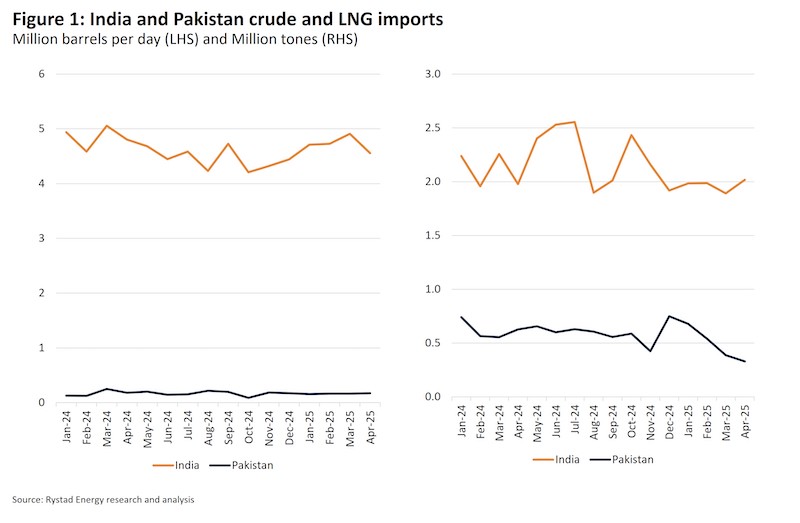
By K Raveendran Reports from across the border suggest that Pakistan is already suffering a fuel crisis, with petrol pumps having been ordered closed for the time being. An analysis of the emerging energy scenario in the wake of the ongoing conflict suggests the beginning of a serious crisis for Pakistan, while India is relatively […]

By Saifur Rahman The Emirates Group reported an 18 percent growth in profit before tax exceeding US$6.2 billion (Dh22.7 billion) – a new record – in the financial year 2024-25. This is the first financial year that the UAE corporate tax, enacted in 2023, is applied to the Emirates Group. After accounting for the 9 percent tax charge, the Group’s profit after tax reached US$5.6 billion (Dh20.5 […]

VISHNU RAJA
RYO YAMADA
HITORI GOTOH
IKUYO KITA
Just in:
2026 Tropical Rainforest Ecosystem Partners Conference Kicks off in Hainan // Dalilk Academy reaches 27 million, targets 100 million by 2030 // Thailand’s Most Iconic New Year’s Celebration Returns: ICONSIAM Unveils “Amazing Thailand Countdown 2027” // Russia permits retail cryptocurrency purchases under regulated framework // Padmini follows Padmaja for ‘ghar vapsi’ // Saudi defences destroy three Houthi missiles targeting Riyadh // Sui activates Hashi Bitcoin lending across partner network // PayerMax and ShopeePay Strengthen Strategic Partnership to Advance Digital Payment Collaboration in Southeast Asia // Dubai Introduces SHARH, an AI-Powered Platform Helping Entrepreneurs Buy, Sell and Manage Businesses in the UAE // Ex-minister named accused in Messi visit fraud case // Yeebo Announces Interim Results for FY26/27 Revenue Increases by 45.5% to HK$806.7 Million Profit Attributable to Owners Surges 87.6% to HK$2,284.7 Million // Jaiedco and Golden Bridge Announce Strategic Collaboration for a New Dubai Islands Development // Phancy Announces Business Performance for the Nine Months Ended September 30, 2026 // Technology at Work, Heritage for All: The “Chinese Approach” to Safeguarding the Leshan Giant Buddha // Sharjah clears Kalba free zone plan for 400MW complex // ED searches five districts in probe against hawala // Toward a Shared Future for Humanity: Rethinking Civilizational Exchange // Balagopal challenges CM over tax revenue //
Rahul addresses League’s INDIA bloc grievances
// Singapore regulator cautions against AI access to bank logins //