Arabian Post Staff -Dubai UAE authorities confirmed there was no security threat after an emergency missile warning was pushed to mobile phones across the country on Friday evening and withdrawn within minutes, briefly unsettling residents before officials traced the episode to a technical malfunction in the national early warning system. The first message, sent at about 5.17pm on June 26, warned of “potential missile threats” and instructed […]
The residency-by-investment landscape looks very different in 2026 than it did just a few years ago.[/caption] Across the world, governments have tightened eligibility requirements, increased investment thresholds and, in some cases, closed popular investment routes altogether. At the same time, investor priorities have evolved. Rather than simply looking for a residence permit, families are increasingly asking a broader question: Which country offers the best long-term opportunities for […]
Iraq has signalled that it may reconsider its position inside OPEC unless its production quota is lifted sharply, opening a new dispute inside the oil producers’ group at a time when war-related disruption in the Gulf has strained export revenues and weakened confidence in the cartel’s cohesion. The warning marks an unusually direct challenge from one of OPEC’s five founding members and its second-largest producer after Saudi […]
HANOI, VIETNAM – Media OutReach Newswire – 26 June 2026 – VinEnergo, a member of Vingroup’s green ecosystem, and SunAsia Energy Inc., a pioneer in the Philippine solar energy sector, have announced a strategic partnership to develop a portfolio of large-scale renewable energy projects utilizing the Solar on Stilts model. With expected lifetime revenues exceeding USD 1.5B, the projects will drive job creation, catalyze infrastructure investment, and strengthen the Philippines’ energy security.
Ms. Tetchi Capellan, Chief Executive Officer and Chairperson of SunAsia Energy (second from left), and Mr. Nguyen Anh Khoa, CEO of VinEnergo (second from right), sign the agreement between the two companies in the presence of Ms. Sharon Garin, Secretary of Energy of the Philippines, and Mr. Lai Thai Binh, Ambassador of Vietnam to the Philippines.
Between 2027 and 2028, VinEnergo and SunAsia Energy plan to bring three flagship projects into operation, with a combined installed capacity of 422MWp. These are projects located in Macabebe, Pampanga (181 MWp), Sagay (126 MWp) and Silay (115MWp), both in Negros Occidental Province.
The partnership aims to deliver reliable renewable energy to the national grid, while supporting the Philippines’ goals of strengthening energy security, reducing carbon emissions, and promoting local economic development. Once operational, the projects are expected to supply electricity to approximately 278,000 households and reduce carbon emissions by more than 460,000 tons annually, equivalent to planting around 21 million trees.
Over the next 18 months, VinEnergo will work closely with SunAsia Energy on engineering design and project implementation. This phase will include the selection of engineers, technology providers, and contractors to install nearly 700,000 solar panels mounted on pile structures, as well as approximately 62 kilometers of new transmission lines across Negros and Pampanga.
The project portfolio will utilize the Solar on Stilts technology, in which solar panels are mounted on pile-supported structures above the water surface, enabling the integration of clean power generation with aquaculture activities. This approach effectively leverages the Philippines’ strong potential for combining renewable energy development with agriculture and fisheries, while serving as a model for future sustainable energy projects. It also aligns with VinEnergo’s strategy of advancing the Food-Energy-Water Nexus to optimize resource use and create long-term value for communities.
ING and SGV & Co. acted as exclusive M&A advisors to VinEnergo and SunAsia, respectively.
Mr. Nguyen Anh Khoa, Chief Executive Officer of VinEnergo, said: “Our partnership with SunAsia Energy on this strategic project portfolio is a clear demonstration of VinEnergo’s regional growth ambitions. We are proud to bring forward solutions that combine sustainable energy development with responsible resource utilization. Floating solar not only contributes to addressing energy security challenges, but also provides a valuable opportunity to share Vietnam’s development experience in protecting local livelihoods and fostering the parallel growth of the energy and agricultural sectors.”
Ms. Tetchi Capellan, Chief Executive Officer and Chairperson of SunAsia Energy Inc., said: “This partnership is driven by the shared commitment of SunAsia Energy and VinEnergo to strengthen energy security, support economic growth, improve people’s lives, and help protect the planet. Through the Floating Solar model, we are not only developing renewable energy infrastructure but also creating a framework where food production and clean energy generation can thrive together.”
The announcement of this strategic partnership comes as the Philippines hosts the ASEAN Summit, underscoring VinEnergo’s role in advancing cross-border collaboration to address energy and climate challenges. It also marks an important milestone in VinEnergo’s international expansion strategy, while highlighting the capabilities of Vietnamese enterprises in developing pioneering renewable energy models that contribute to ASEAN’s and the world’s sustainable energy transition goals.
Hashtag: #VinEnergo #SunAsiaEnergy #SolarOnWater
The issuer is solely responsible for the content of this announcement.
About VinEnergo
VinEnergo is a leading Vietnamese energy developer focused on investing in and developing large-scale energy projects to accelerate the sustainable energy transition in Vietnam and across the region. With innovation at the core of its strategy, VinEnergo develops projects that deliver positive socio-economic impact while leading the deployment of integrated solutions that combine renewable energy, baseload power, and battery energy storage systems (BESS) to build a greener, more stable, and more reliable energy system.
About SunAsia Energy Inc.
SunAsia Energy Inc. is a Philippine renewable energy developer focused on innovative clean energy and solar solutions, including floating solar, Solar on Water, and other renewable energy projects that support the country’s clean energy transition.
At MWC IoT Summit 2026, Kigen made the case that the EU Cyber Resilience Act is not a compliance burden — it is a once-in-a-generation opportunity. For manufacturers who move now, the competitive advantage is structural.
SHANGHAI, CHINA – Media OutReach Newswire – 26 June 2026 – 5.5 trillion dollars. That is the annual cost of cybercrime to the global economy — a figure larger than the GDP of every nation except the United States and China. Behind it lies a single, solvable problem: billions of connected devices shipped without robust security baked in.
At MWC IoT Summit 2026 in Shanghai, Jean-Louis Carrara, SVP Global Sales at Kigen, delivered a keynote that reframed this challenge as an inflection point. The message was clear: the era of voluntary security is over, and the manufacturers who recognise this first will define the competitive landscape for the decade ahead.
The Regulation That Changes Everything
The EU Cyber Resilience Act (CRA) is the most significant cybersecurity legislation ever enacted. It covers more than 90% of all IoT products containing digital elements — sensors, gateways, industrial equipment, consumer devices. If it connects, it is covered.
Manufacturers must now provide security updates across a five-year product lifecycle, report confirmed security incidents within 72 hours, and demonstrate security by design from the earliest stages of product development. Non-compliance carries penalties of up to €15 million, or 2.5% of global annual turnover.
Documentation requirements and vulnerability management obligations are already in force from September 2026. For any product in development today — any product planned for market entry in 2027 — compliance is not a future consideration. It is a present one.
“Security is no longer a cost to be minimised. It is an investment in market access, competitive standing, and long-term resilience.”
Speaking at MWCShanghai, Mr Jean-Louis Carrara, SVP of Kigen presented the challenge for industry leadership in electronics exports and pragmatic, cost-effective interventions immediately available.
Market Access as Competitive Advantage
Independent analysis puts the average cost of CRA compliance at approximately €100,000 per product line. Against a potential penalty exposure of €15 million, the arithmetic is straightforward. But Carrara pressed further: as the compliance threshold rises, EU market access becomes selectively available — a structural advantage for those who are ready.
This is the reframe that matters. Security is not a constraint on speed to market. It is the enabler of access to the world’s most demanding — and most rewarding — markets.
Proof at Scale — and Under Pressure
Kigen’s eSIM technology operates across more than 250 terrestrial and satellite networks worldwide. Hundreds of millions of devices. Decades of real-world hardening. But scale, Carrara argued, is not the same as trust.
Trust is demonstrated when the stakes are highest. When significant vulnerabilities were identified in eSIM frameworks used across the industry, Kigen responded within 72 hours — developing and sharing a patch openly, without paywalls, in full coordination with the GSMA and in alignment with ENISA disclosure guidelines.
“We did not wait for regulation to demand it,” Carrara said. “We acted because it was right — and because the industry’s security is only as strong as its weakest point. Our actions supported the coordinated response to develop countermeasures and mitigate the risks and we continue to collaborate on furthering these by contributing back through GSMA and other standards bodies. With certified eSIMs now carrying capabilities to patch, the tools are available for the mandates OEMs must meet on cybersecurity – readily, with our expertise.”
The Platform Already Built
Kigen’s platform delivers autonomous over-the-air security updates — deployable across an entire installed fleet without physical intervention. Native IoT profile management enables secure provisioning at manufacturing scale. Proven interoperability across the global operator ecosystem ensures devices function wherever customers need them.
Kigen also chairs the GSMA eSIM Working Group, actively advancing standards that raise the security floor for the entire industry — not to hold competitive advantage, but to make the ecosystem stronger for everyone.
The Convergence Moment
AI is transforming manufacturing. Advanced connectivity is extending that transformation to every point on the globe. And regulatory-grade security is the condition that makes all of it trustworthy. These forces are converging — and the window for first-mover advantage is open.
The imperative to build every capability in-house belongs to a previous era. The manufacturers who will define this decade are those who identify where deep, specialised expertise already exists — and accelerate their path to market by partnering with it.
“This is a once-in-a-generation opportunity to establish security correctly — at the foundation, with lasting effect.”
The regulatory framework is clear. The technical capability is proven. Trust, at scale, is a durable advantage.
The issuer is solely responsible for the content of this announcement.
Kigen (UK) Limited
Kigen is the forerunner in secure eSIM and RSP solutions, enabling manufacturers to adopt and scale cellular IoT with ease. Our award-winning solutions are certified to GSMA eSA (eUICC Security Assurance) and SAS (Security Accreditation Scheme) standards—the highest levels of security assurance in the industry. Our technology delivers freedom to choose from 200+ terrestrial and satellite networks, compliant to EU and China cybersecurity and data regulations for export products, with proven interoperability on leading chipsets and modules.
Backed by Arm, SoftBank Vision Fund 2, SBI Group and Salica Investments, Kigen is trusted by leading global brands in consumer electronics, energy, automotive, logistics, and industrial automation.
Learn more at https://kigen.com/ or follow @kigen for #FutureofSIM matters on LinkedIn.
HONG KONG SAR – Media OutReach Newswire – 25 June 2026 – The Hong Kong Research Institute of Textiles and Apparel (HKRITA) yesterday officially signed a landmark Memorandum of Understanding (MoU) with two key global partners, Jeanologia and Looptworks, to establish the Green Machine Circular Textile Ecosystem – a first-of-its-kind collaboration to accelerate the large-scale recycling of blended textiles.
Mr Jake Koh, CEO of HKRITA (middle), Ms Begoña García, Jeanologia Global Director of Sustainable Innovation, (left) and Mr Scott Hamlin, Founder and CEO of Looptworks, (right) have signed the MoU for this landmark tripartite initiative, advancing a complete and actionable circular textile ecosystem.
Bringing together cutting-edge innovation, industrial machinery expertise, and real-world adoption, this tripartite initiative unites HKRITA with Jeanologia as the first official machinery partner and Looptworks as a prospective adopter. The partnership signals a decisive shift from research-driven innovation to practical, scalable deployment with industry support, creating a complete and actionable pathway for circular transformation.
At the centre of this ecosystem is HKRITA’s latest Green Machine 4.0, the newest iteration of its pioneering hydrothermal recycling technology. This advanced version recovers polyester at 98% or higher purity from cotton-polyester textiles without harmful processes. Through this collaboration, Jeanologia contributes by delivering industry-ready machinery engineered to European standards that meets the CE high-pressure requirement, enabling seamless integration and streamlined logistics. Meanwhile, Looptworks, a Certified B-Corp recycling specialist, transforms diverse pre- and post-consumer textiles into high-quality GRS-certified fibres. This cross-industry collaboration supports expandable industrial implementation across diverse settings, enabling the industry to execute circular solutions at scale.
By integrating scientific innovation, engineering excellence, and operational deployment, the Green Machine ecosystem provides a viable pathway for circular transformation. This initiative empowers textile recyclers to process previously unrecyclable materials and unlock new revenue streams, while enabling fashion brands to incorporate recycled fibres into their supply chains in commercial volumes. It also supports manufacturers in adopting more sustainable production models, helping all stakeholders close the loop on textile waste and reduce dependence on virgin resources.
Mr Jake Koh, Chief Executive Officer of HKRITA, said, “The circular economy is no longer a distant goal—it is here. With the Green Machine 4.0 now proven adoption-ready and scalable, this partnership marks a decisive shift from research to commercialisation. True innovation is defined by real-world impact, and today we are making it a reality.”
Mr Enrique Silla, CEO and Founder of Jeanologia, said, “For the last 25 years, we have transformed the denim industry through technology, innovation and collaboration. Today, we are bringing that same experience to one of the industry’s greatest challenges: textile-to-textile recycling. At Jeanologia, we believe recycling must become part of the industry’s pre-competitive space, where companies work together to create solutions that no single organisation can achieve alone. By combining HKRITA’s innovation, Jeanologia’s industrial engineering and textile bleaching expertise, and Looptworks’ operational deployment, we are creating a model that can help make circularity a reality at industrial scale.”
Mr Scott Hamlin, Founder and CEO of Looptworks, said, “Looptworks has had a relationship with HKRITA for over a decade. We are proud to have worked together with the research and management teams at HKRITA to further develop textile circularity innovations at scale. The Green Machine represents a shining example of what is possible for textile recycling. Blended materials have long been a major barrier to circularity, and this technology enables us to effectively realise their value at scale. By reintroducing recovered fibres into the supply chain, we are proving that circular solutions are both environmentally practical and economically viable.”
Aiming to ensure ecologically sound circularity in the industry, HKRITA invites textile recyclers, fashion brands, and manufacturing partners to join the ecosystem and explore opportunities for collaboration, adoption, and expansion.
Hashtag: #HKRITA
The issuer is solely responsible for the content of this announcement.
About The Hong Kong Research Institute of Textiles and Apparel (HKRITA)
Established in 2006, HKRITA is funded by the Innovation and Technology Commission of the HKSAR Government and is hosted by The Hong Kong Polytechnic University. Celebrating its 20th anniversary in 2026, HKRITA continues to contribute to the competitiveness of the textile and apparel industry by providing one-stop services in applied research, technology transfer and commercialisation. HKRITA also plays a vital and expanding role in driving sustainable improvements in the industry and thus bringing benefits to society as a whole.
About Jeanologia
Jeanologia is a Spanish technology company with more than 30 years of experience transforming the textile industry through innovation. Today, more than 40% of the world’s jeans are produced using Jeanologia technologies.
The company pioneered technologies such as laser, G2 ozone and water recycling systems, helping brands and manufacturers eliminate harmful processes, reduce water and chemical consumption, and improve productivity.
As part of its Mission Zero vision, Jeanologia is now extending its expertise beyond garment finishing to accelerate textile circularity, developing industrial solutions for water reuse, textile recycling and the transition towards a waste-free industry.
About Looptworks
Looptworks is a Certified B-Corp textile-to-textile recycling specialist offering innovative, scalable solutions for brands and organisations world-wide. Based in Gresham, Oregon, Looptworks is the first and only GRS certified, recycling company in the United States equipped with a circular system capable of processing multiple types of materials into a range of finished spinning and nonwoven fibre products. The Looptworks facility is fully operational, and features a unique technology that transforms pre-and post-consumer textiles into high-quality recycled fibres.
Valve has acknowledged that its new Steam Machine will cost more than it wanted, putting pressure on the company’s attempt to bring PC gaming deeper into the living room at a price well above mainstream consoles. The Bellevue-based games and hardware group has priced the 512GB Steam Machine at $1,049, while the 2TB version costs $1,349. Bundles with the new Steam Controller lift the prices to $1,128 […]
Avalanche has launched the Avalanche Payments Collective, bringing together 28 financial and technology groups including VanEck, Franklin Templeton, Anchorage Digital and Paxos in a push to build blockchain-based infrastructure for global payments, treasury management and settlement. The initiative, unveiled on Thursday, is designed to consolidate a payments ecosystem around Avalanche’s blockchain network, covering stablecoins, custody, foreign exchange, card issuance, business payments, asset management, global payouts and on-chain […]
MUNICH, GERMANY – Media OutReach Newswire – 25 June 2026 – EVB successfully concluded its June 23–25 exhibition at Power2Drive Europe 2026 at Messe München, where it connected with global industry professionals and highlighted its latest EV charging, energy storage, and power management solutions for cleaner, smarter, and more efficient energy systems.
Power2Drive Europe is a leading international exhibition for charging infrastructure and e-mobility. It brings together global players in EV charging and sustainable mobility, making it a key platform for industry exchange and innovation.
Showcasing Advanced Charging Technologies
Highlighting its PTB-certified technologies, EVB presented charging solutions for residential, commercial, fleet, and public applications.
Floor-mounted AC EV Charger: Featuring a 21-inch LCD touch screen, POS payment, and ISO 15118-2 certification, it combines EV charging and digital advertising for retail, parking, and urban charging hubs.
Liquid-Cooled DC Charger: With up to 480 kW output and a modular design that supports independent operation, it is built for high-demand public and commercial charging scenarios, delivering reliable performance with easier operation and maintenance.
Split MW DC Charger: A 2 MW high-power charging solution for electric trucks, logistics fleets, ports, and industrial applications, supporting MCS/CCS interfaces, smart power sharing, and expandable DC outputs.
EVB also showcased its award-winning BUDC Ultra Fast Charger 150 kW, an ultra-thin dual-gun charger honored with Red Dot and iF Design Awards. Featuring a 75 kW liquid-cooled module and a slim 100 mm body, it delivers reliable, low-noise fast charging for space-limited scenarios.
Integrated PV, Storage and Charging Solutions
Beyond EV charging products, EVB showcased integrated PV, energy storage, and charging solutions for diverse application scenarios. By combining solar power, energy storage, and charging infrastructure, EVB helps customers improve energy efficiency, optimize power use, and reduce operating costs.
Strengthening Global Partnerships
The exhibition enabled EVB to strengthen partnerships and explore new collaborations, with discussions focused on fleet electrification, commercial deployment, and integrated energy infrastructure. Hashtag: #ZhejiangBenyiNewEnergyCo
The issuer is solely responsible for the content of this announcement.
About EVB
EVB is a global provider of smart EV charging solutions.Backed by over 100 patents and international certifications, EVB has a presence in nearly 70 countries and has delivered more than 25,000 projects worldwide, providing reliable, high-speed, and eco-friendly charging infrastructure to support the clean energy transition.
For more information, please visit www.evb.com or contact [email protected].
Arabian Post Staff -Dubai ADNOC Drilling has delivered AD-300, its first AI-enabled automated walking island rig, nearly three months ahead of schedule, advancing Abu Dhabi’s push to use robotics, data systems and lower-emission power options in offshore oilfield development. The rig is the first of six next-generation island units covered by a $1.54 billion drilling services programme awarded by ADNOC Offshore across 2024 and 2025. Its early […]
A macOS backdoor linked to North Korea-aligned cyber operations has exposed a new weakness in security workflows by embedding instructions designed to confuse artificial intelligence systems used by malware analysts. The malware, tracked as macOS. Gaslight, is written in Rust and contains a 3.5 KB prompt-injection payload made up of 38 fabricated “system” messages. The messages are not aimed at Apple’s operating system or at a conventional […]
Arabian Post Staff -Dubai Abu Dhabi’s banking regulator has imposed an AED20 million penalty on the UAE branch of an unnamed foreign bank after examinations found significant and repeated failures in its anti-money laundering, counter-terrorism financing and sanctions compliance framework. The Central Bank of the UAE said the action was taken under the federal law governing the regulator and licensed financial institutions. It also imposed a separate […]
Arabian Post Staff -Dubai The Central Bank of the UAE has imposed a Dh20 million financial penalty on a branch of a foreign bank after supervisory examinations found significant and repeated failures in its anti-money laundering, counter-terrorism financing and sanctions compliance framework. The action, announced in Abu Dhabi, was taken under the federal law governing the Central Bank and the organisation of financial institutions and activities. The […]
Arabian Post Staff -Dubai J. P. Morgan has cut its Brent crude price forecast for the second half of 2026, signalling that weaker demand and smaller-than-expected stock draws have reduced the upward pressure that had kept oil markets tense through much of the year. The bank now expects Brent to average $86 a barrel in the third quarter and $80 in the fourth, with prices ending 2026 […]
SINGAPORE – Media OutReach Newswire – 25 June 2026 – Impossible Marketing, Singapore’s leading SEO agency and pioneer of AI SEO, has announced the launch of ImpossiblePlus™ — a proprietary AI visibility platform built to help businesses track how their brand is being recommended, cited, and positioned across AI-powered search engines.
As consumers increasingly turn to AI platforms for answers and recommendations, traditional search visibility alone is no longer enough. ImpossiblePlus™ gives business owners a clear, real-time view of where their brand stands in the AI landscape, and what it takes to come out on top.
Perfecting AI SEO since 2023
In 2023, the agency made a decisive shift from traditional SEO to pioneer AI SEO — which includes Generative Engine Optimisation (GEO) and Answer Engine Optimisation (AEO) — helping businesses prepare for the new era of AI-powered search and get discovered across platforms such as ChatGPT, Gemini, Google AI Overviews, Claude, Perplexity, and more.
Since then, the agency has invested heavily in research and development to refine its approach. This includes building ImpossiblePlus™, a proprietary AI visibility platform that:
Tracks prompts and brand mentions across AI platforms
ImpossiblePlus™ monitors the exact queries potential customers are typing into AI search platforms and flags not just where a brand appears, but where it doesn’t. By identifying high-intent prompts where a client is absent from AI-generated answers, the agency can immediately pinpoint new opportunities and get to work closing those gaps.
Maps Share of Voice against competitors
The software breaks down visibility scores across ChatGPT, Gemini, Google AI Overviews, and other platforms individually, while benchmarking a brand’s Share of Voice directly against competitors — revealing who is winning the AI conversation and what it takes to pull ahead.
Identifies cited webpages and surfaces citation views
ImpossiblePlus™ pinpoints the specific pages on a website that AI platforms are referencing as trusted sources, and lets users read those AI-generated answers word for word — so brands know exactly how they are being positioned and whether the right message is being conveyed.
Turns visibility gaps into an action plan
With real-time data updates, ImpossiblePlus™ surfaces the specific prompts a brand is missing, the pages AI isn’t trusting yet, and the competitor territory yet to be claimed — giving Impossible Marketing’s team a clear, prioritised roadmap to act on for every client.
These advancements mean that Impossible Marketing’s clients now benefit from smarter, data-driven strategies that go beyond conventional SEO, helping them remain ahead in a fast-evolving digital landscape.
Driving Value for Businesses
By perfecting its AI SEO solutions, Impossible Marketing ensures that brands do not just appear on search engines but are also featured in AI-generated responses — the new frontier of online visibility. This advancement enables businesses to reach audiences where they are increasingly seeking answers, ensuring greater relevance and a stronger digital presence.
Investing in Future Growth
To support its innovation drive, Impossible Marketing has also been expanding its team with AI developers and specialists to further enhance its internal capabilities. The company’s ongoing investments in technology and talent reflect its commitment to pushing the boundaries of digital marketing in Singapore and across Southeast Asia.
Looking ahead, Impossible Marketing plans to continue scaling its AI solutions and explore regional expansion opportunities, further solidifying its position as a leader in the digital marketing industry.
The issuer is solely responsible for the content of this announcement.
About Impossible Marketing
Established in 2012, Impossible Marketing has received multiple industry accolades, including Search Marketing Agency of the Year, Lead Generation Agency of the Year, Best Digital Strategist, and many others. Over the past decade, it has helped more than 2,000 businesses across Singapore and Southeast Asia improve their online visibility and achieve top-ranking positions on Google, while earning over 700 5-star reviews from satisfied clients. The agency is also a PSG pre-approved vendor, allowing eligible SMEs to benefit from up to 50% grant support for selected digital marketing solutions.
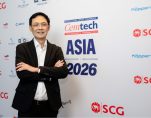
BANGKOK, THAILAND – Media OutReach Newswire – 25 June 2026 – SCG, ASEAN’s leading low-carbon cement manufacturer, co-hosted Cemtech ASIA 2026, a world-class conference and exhibition for the global cement sector held from June 14 to 17, 2026. Driven by a shared commitment to accelerating low-carbon transition and achieving Net Zero goals, industry executives and experts from across the world gathered to explore breakthrough innovations, expand business networks amidst global challenges, and navigate sustainable business transformations in response to tightening environmental regulations and resource conservation demands.
Mr. Surachai Nimlaor, President of SCG Cement and Green Solutions
At Cemtech Asia 2026, SCG demonstrated its commitment to advancing the cement industry through tangible low-carbon cement innovations. Mr. Surachai Nimlaor, President of SCG Cement and Green Solutions, stated:
“As the region’s leader in the low-carbon cement industry, SCG is dedicated to developing breakthrough innovations that minimize resource consumption and maximize eco-friendliness. By steadily reducing carbon dioxide emissions, we directly address the evolving demands and adaptation challenges of the construction industry across ASEAN and global markets.”
Alongside showcasing its cutting-edge LC3 low-carbon cement prototype at the exhibition, SCG hosted an exclusive site visit to its Ta Luang Cement Plant in Saraburi Province for global delegates. Key highlights of the showcase and tour included:
SCG LC3 Structural Cement: Developed from limestone, calcined clay, and specialized additives, this next-generation low-carbon cement reduces CO2 emissions by up to 30–40%. Its production process incorporates up to 40% biomass alternative fuels (such as rice husks and straw) and over 35% renewable energy. This is achieved without compromising any product performance or structural integrity, with its environmental performance independently verified through an Environmental Product Declaration (EPD).
Rondo Heat Battery: SCG has pioneered ASEAN’s first installation of the Rondo Heat Battery at the Ta Luang Cement Plant. Developed in collaboration with Rondo Energy, this breakthrough thermal energy storage solution converts intermittent renewable power into high-temperature thermal energy, storing it at up to 1,500°C in thermal media. With an exceptional energy recovery efficiency of up to 97% and a lifespan exceeding 40 years, the system provides a continuous 24/7 supply of clean heat, supporting the decarbonization of industrial manufacturing processes.
Refractory Solutions by The Siam Refractory Industry Co., Ltd. (SRIC): As a leading global refractory solutions provider, SRIC showcased its advanced technologies and innovative solutions designed to enhance operational efficiency, reliability, and sustainability, including:
Anti-Hydration Brick: The world’s first Anti-Hydration brick, extending shelf life from 6 to 24 months. This breakthrough innovation helps minimize material degradation, reduce production downtime, and improve overall operational efficiency.
Thermal Media for Heat Battery: Co-developed with Rondo Energy, these high-performance heat storage blocks deliver up to 97% thermal efficiency, enabling reliable 24-hour energy availability and supporting the transition toward cleaner industrial energy solutions.
Solar Floating: Installed at the Ta Luang Cement Plant, this floating solar array generates 16.6 million kWh of clean electricity annually, cutting greenhouse gas emissions by over 8,000 tons of CO₂ equivalent per year. By repurposing the plant’s industrial reservoirs, the system optimizes resource efficiency and highlights SCG’s integration of green energy into heavy industry.
As co-host of Cemtech ASIA 2026, SCG reaffirmed its role as a trusted industry leader on the global stage. The event served as a major catalyst for expanding business networks and facilitating high-level technology and knowledge exchanges with world-class industry players. Moving forward, SCG is dedicated to cultivating global alliances to propel Thailand’s cement industry toward a Net Zero pathway, solidifying its position as ASEAN’s cement leader.
Watch the video:
CEMTECH ASIA 2026 | SCG Driving ASEAN’s Cement Industry Towards Net Zero
Singapore’s push to embed artificial intelligence across business is moving from operational efficiency to the boardroom, forcing companies to confront a harder question: how far can machines assist corporate leadership before accountability becomes blurred?
The debate has sharpened as enterprises test AI systems for strategy modelling, risk alerts, market forecasting, compliance reviews and scenario planning. These tools promise faster decisions and broader analysis, but they also raise questions over directors’ duties, audit trails and responsibility when algorithmic advice shapes corporate choices.
Singapore has positioned itself as one of Asia’s most active AI governance centres, combining public investment, industry adoption programmes and voluntary frameworks rather than sweeping legislation. The approach is designed to encourage innovation while keeping human accountability at the centre of AI deployment. That balance is now being tested as companies examine whether AI can move beyond back-office functions and become a structured part of board deliberations.
The issue has gained urgency because AI systems are no longer limited to producing summaries or automating routine workflows. Newer agentic AI tools can plan tasks, reason across data, trigger actions and interact with software systems with limited human intervention. For corporate boards, such capability creates both opportunity and exposure. A system that can flag liquidity pressure, supply-chain disruption or reputational risk may improve oversight. A system that gives flawed recommendations based on incomplete data, hidden bias or weak assumptions may deepen governance failures.
Singapore’s corporate law framework continues to place responsibility on human directors. Directors are expected to act honestly, use reasonable diligence and discharge their duties in the company’s interests. That obligation does not shift to software vendors, consultants or internal AI teams merely because a board relied on machine-generated analysis. If directors accept AI output without challenge, the legal and reputational risk remains with the board.
Regulators have therefore focused on controls rather than replacement. Financial institutions already face sharper expectations because AI is being used in credit, insurance, fraud detection, wealth management and customer engagement. The fairness, ethics, accountability and transparency principles promoted for data-driven finance have helped shape how firms assess AI systems, particularly where customer outcomes may be affected. Proposed AI risk-management guidance for the sector points towards stronger board oversight, model governance, validation, monitoring and escalation procedures.
For non-financial companies, the same discipline is becoming harder to avoid. Listed companies must show that boards oversee strategy, risk and management performance. As AI begins to influence capital allocation, workforce planning, cyber-risk management and mergers, directors may need to demonstrate that they understand what the tools can and cannot do. Board papers generated by AI may require clear labelling, version control and records of the human judgement applied before decisions are approved.
The government’s wider AI strategy has added momentum. Singapore has refreshed national AI priorities, expanded support for enterprises and set out plans to help thousands of businesses adopt AI meaningfully. Public investment in AI research, computing capacity and talent is intended to strengthen national competitiveness, while partnerships with major technology firms are drawing more AI activity into the city-state.
Corporate leaders are watching these moves closely. Singapore’s appeal as a trusted business hub depends partly on whether it can offer companies a stable governance environment for AI adoption. The city-state has avoided a heavily prescriptive regime, preferring practical frameworks, testing tools and assurance mechanisms. That has helped businesses experiment, but it also means boards cannot simply wait for detailed rules before acting.
A growing concern is explainability. Board decisions often involve judgement under uncertainty, but directors must still be able to justify their reasoning. AI tools can generate polished recommendations without revealing how conclusions were reached or which data points carried the most weight. That creates problems for audit committees, external auditors and regulators when a decision later comes under scrutiny.
Another risk is over-reliance. Directors may treat AI output as neutral because it appears data-driven, even when the underlying model reflects skewed training data, weak prompts or commercial assumptions built by vendors. Smaller enterprises face an added challenge because they may lack internal expertise to test systems independently. For them, AI adoption can depend heavily on third-party products whose limitations are not always clear.
Singapore’s emerging answer is likely to rest on disclosure, assurance and accountability. AI “nutrition labels” under discussion would help users understand intended uses and limitations of AI products. Testing frameworks and accredited evaluation bodies could make it easier for companies to compare tools and identify risks before deployment. These measures would not remove directors’ obligations, but they could give boards a clearer basis for responsible adoption.
New Delhi’s Jantar Mantar has become the centre of a sharp youth-led challenge to the government, with Cockroach Janta Party supporters extending their sit-in over exam scandals and unemployment while pressing for Union Education Minister Dharmendra Pradhan to resign.
The protest, now in its fourth day, has drawn students, job aspirants and young supporters of a movement that began as online satire and quickly turned into a street mobilisation. Demonstrators have slept at the protest site, banged steel plates with spoons, raised slogans and used humour as a political weapon against what they describe as a broken education and recruitment system.
The Cockroach Janta Party, or CJP, was launched by Abhijeet Dipke, a 30-year-old political communications strategist and Boston University student, after a Supreme Court judge’s remark comparing some jobless youth to “cockroaches” angered many young people. The group embraced the insult as a badge of survival, saying the term captured the resilience of a generation struggling with paper leaks, cancelled exams, high coaching costs and limited formal work opportunities.
Its rise has been unusually fast. The movement built a following of more than 22 million on Instagram within weeks, overtaking several established political handles and forcing parties across the spectrum to respond. Its supporters say that online reach is only the first stage, and the Jantar Mantar protest is intended to prove that digital anger can move into organised public action.
The immediate trigger is the NEET-UG 2026 controversy. More than two million candidates had to sit for a re-examination on 21 June after allegations that the original medical entrance test paper was compromised. The episode prompted extraordinary security measures, including biometric checks, heightened police presence and tighter monitoring of communication channels. Telegram was temporarily restricted after claims that leaked papers and fraudulent exam material were being circulated through the platform.
The National Testing Agency has said the re-examination was conducted under enhanced safeguards and has rejected claims that the fresh paper was leaked. It has warned students against fraudsters offering answer keys or question papers for money, while cybercrime officials have been asked to act against accounts spreading false claims. For many candidates, however, the distinction between confirmed leaks, fake leaks and administrative failure has done little to calm anger after months of uncertainty.
CJP supporters accuse the education ministry of failing to protect the integrity of high-stakes examinations that shape careers for millions of families. Their demand for Pradhan’s resignation has become the central slogan of the protest, though the movement’s wider language reaches beyond NEET. It links exam scandals with joblessness, inflation, expensive coaching centres and the feeling that young people are being asked to absorb the costs of institutional failure.
At Jantar Mantar, the movement’s theatrical style has been central to its visibility. The banging of plates echoed Prime Minister Narendra Modi’s 2020 appeal during the pandemic, when people were asked to honour frontline workers from balconies and rooftops. CJP used the same sound as protest, turning a familiar public ritual into a message of anger. Supporters have also called for symbolic actions such as diaper donations, using ridicule to keep attention on their demands.
Police have maintained a heavy presence around the protest site, using cameras and drones to monitor the gathering. Demonstrators have alleged that basic facilities were restricted as pressure mounted on them to leave, while organisers have said they will continue unless accountability is fixed. Dipke has told supporters that the movement is open to dialogue, but only after the education minister steps down.
The government has not accepted the demand for resignation. Officials have emphasised investigations, tighter safeguards and action against fraud networks. The dispute has nevertheless widened into a political issue, with opposition figures describing the CJP phenomenon as a signal of youth frustration while also arguing that lasting change must be carried through established political structures.
By K Raveendran The new FCRA rules may look like an administrative tightening of India’s foreign funding regime, but their political effect is likely to be far larger than their legal wording suggests. On paper, the framework is simple: organisations receiving foreign donations must be more precise about what they do, where they operate, and […]
EU lawmakers have moved the digital euro closer to formal negotiations, giving Brussels a stronger legislative path for a public payment system designed to reduce dependence on Visa, Mastercard, Apple Pay and other privately controlled networks. The European Parliament’s economic affairs committee has approved draft rules for the proposed digital euro, clearing a key stage before a wider parliamentary vote expected in July. The measure is intended […]
ByteDance is exploring a $20 billion offshore loan as the TikTok owner seeks fresh financial firepower for artificial intelligence infrastructure, in what would be the company’s largest global borrowing if completed. The Beijing-based technology group has opened preliminary discussions with banks on a facility that could run for three years, with an option to extend the maturity to as long as five years. The size, pricing and […]
Electronic Arts is pushing artificial intelligence deeper into its game development pipeline as senior executive Laura Miele said the technology is already helping its studios move faster and sharpen creative decisions by taking repetitive work out of production. Miele, president of EA Entertainment, Technology and Central Development, said AI tools had contributed to “a real rise of creativity” across the company’s teams by removing some of the […]
OpenAI has expanded its Daybreak cybersecurity programme with Patch the Planet, a new initiative aimed at helping open-source maintainers find, validate and fix software flaws before attackers can exploit them. The project, built with security research firm Trail of Bits and supported by HackerOne, Calif, researchers and maintainers, shifts the focus from simply discovering vulnerabilities to landing tested patches in widely used software. It comes as artificial […]
Bajaj Auto has disclosed a ransomware attack that affected its systems and those of its wholly owned technology subsidiary, Bajaj Auto Technology Limited, adding another listed manufacturer to the widening roster of companies forced to make cyber-risk disclosures to investors. The Pune-based two- and three-wheeler maker said the incident took place on 23 June at around 8am IST. Technical teams, senior management and external cybersecurity specialists responded […]







 https://www.kigen.com
 https://www.linkedin.com/company/kigen
 https://x.com/Kigen_Ltd






 https://www.youtube.com/watch?v=pl9NZ6j_JcA


 https://www.facebook.com/impossiblemarketing
 https://www.instagram.com/impossiblemarketing/