Arabian Post Staff -Dubai Jazan Municipality has put 28 development projects worth SR546 million into the Farasan Islands pipeline, combining completed works with schemes still under construction as authorities step up efforts to improve infrastructure, add hospitality capacity and expand housing across one of the Red Sea’s most distinctive island groups. The municipality said 19 projects valued at SR398 million have been completed, while nine more worth […]
UAE authorities are advancing a Dh6 billion federal highway project designed to ease chronic congestion on the Dubai-Sharjah-Ajman corridor, pressing ahead with what officials describe as a strategic expansion of the national road network as population growth and commuting demand intensify. The scheme, reviewed this week by the UAE Infrastructure and Housing Council, centres on the Fourth Federal Corridor, a planned road of about 68 kilometres with […]
Dubai International Financial Centre has rolled out a temporary package of economic support measures for businesses and retailers, offering flexible payment plans, licence-fee instalments and grace periods on selected administrative charges as the emirate’s financial hub seeks to cushion companies from a turbulent regional operating environment. The steps took effect immediately and were presented by the centre as a way to reduce short-term financial and operational pressure […]
Meta Platforms has unveiled Muse Spark, its first new flagship artificial intelligence model in about a year, marking a pivotal moment in Mark Zuckerberg’s attempt to restore the company’s standing against OpenAI, Google and Anthropic after a period of criticism around its earlier Llama releases. Muse Spark began rolling out on 8 April through the Meta AI app and the meta. ai website in the United States, […]
China has authorised state oil refiners to draw on commercial crude reserves as the Middle East war enters its sixth week, a move that points to mounting concern in Beijing over supply security, refinery operations and fuel stability in the world’s biggest crude importer. The decision marks a notable shift after reporting in March indicated that access to such reserves had been denied, underscoring how sharply the market backdrop has changed.
The policy adjustment comes as the conflict centred on Iran has disrupted flows through the Strait of Hormuz, a route that handled about 20 million barrels a day of crude and oil products in 2025 and remains one of the most critical chokepoints in global energy trade. The International Energy Agency said in March that the war had created the biggest supply disruption in oil market history, with flows through Hormuz falling from around 20 million barrels a day before the war to only a trickle.
For China, the timing is especially sensitive. State refiners have already been grappling with higher feedstock costs, disrupted shipping routes and a scramble for replacement barrels from outside the Gulf. Reuters reported in late March that Sinopec, the country’s largest refiner by capacity, had sought access to state reserves after deciding against buying Iranian crude, while also trimming refinery runs. Earlier reporting in mid-March said China had been building inventories rather than drawing them down, suggesting Beijing initially preferred to preserve stocks.
That stance now appears to have softened. Bloomberg reported on April 10 that authorities had given state refiners the green light to tap commercial reserves. While the precise volume and duration were not publicly disclosed, the move is significant because it signals Beijing is willing to use part of the country’s stock cushion to smooth supplies for domestic processing rather than rely solely on the spot market at a time of exceptional volatility.
The wider market has been under intense pressure even as talk of a ceasefire has briefly cooled futures prices. Reuters reported that physical crude markets in Europe and Africa remained extremely tight despite a temporary truce, with buyers in Asia and Europe competing aggressively for non-Middle East barrels. Another Reuters report said U. S. crude premiums had surged to record highs as importers sought alternatives to Gulf supplies. That matters for China because replacing lost or delayed Middle East cargoes has become more expensive just as refining margins in parts of Asia remain fragile.
Supply conditions deteriorated further this week after attacks on Saudi energy infrastructure cut output capacity by around 600,000 barrels a day and reduced throughput on the East-West Pipeline by about 700,000 barrels a day, according to Saudi state media cited by Reuters. The pipeline is vital because it allows exports to bypass Hormuz via the Red Sea. Damage there narrowed one of the few remaining alternative routes for Gulf producers trying to keep oil moving to Asian customers.
Asian refiners have already felt the strain. Reuters reported that seaborne crude imports into Asia in April were estimated at 19.22 million barrels a day, sharply below the three-month average of 25 million barrels a day. Although refined fuel prices eased after hopes of a truce, the same report said the market was still stressed and that it could take months for normality to return even if shipping improves. For Beijing, releasing commercial stocks is therefore less a dramatic emergency measure than a tactical effort to bridge a period of dislocation.
The decision also reflects China’s domestic balancing act. Authorities have been trying to keep fuel output steady even as weak underlying demand and higher crude costs squeeze refiners. Reuters reported on April 2 that officials had pressed independent refiners to maintain production despite the surge in oil prices and wartime disruption. That suggests Beijing is seeking to avoid sharp swings in fuel availability or industrial costs while preserving broader economic stability.
There is also a geopolitical layer. China has opposed any overtly force-based international response around Hormuz and has pushed for de-escalation at the United Nations, according to Reuters reporting on Security Council negotiations. At the same time, the reserve release shows that Beijing is preparing for a conflict that may not be resolved quickly and for shipping conditions that may remain uncertain even if diplomatic language softens.
Washington and Tehran head into talks in Islamabad this weekend with far more at stake than a temporary pause in fighting, as negotiators face pressure to tackle the entire dispute at once rather than salvage only a narrow ceasefire. Pakistan has helped bring the sides to the table after a two-week truce took shape, but the diplomatic opening is already under strain from disputes over uranium enrichment, […]
Air travellers in Germany faced widespread disruption on Friday after Lufthansa cabin crew staged a one-day strike that the airline and airport officials said would force the cancellation of more than 520 flights and affect about 90,000 passengers, hitting the carrier’s Frankfurt and Munich hubs during a busy holiday return period. The walkout, called by the UFO cabin crew union, ran from 00:01 to 22:00 local time […]
A cross-border espionage campaign that targeted journalists, civil society figures and some government-linked entities across the Middle East and North Africa between 2023 and 2024 has been tied by researchers to BITTER, a long-tracked South Asian threat actor, marking what investigators describe as the first documented case linking the group to attacks on civil society in the region. The attribution remains qualified rather than definitive: Lookout said […]
Amazon’s Sparrow robot is moving the company’s automation drive beyond lifting shelves and sorting parcels into one of warehouse robotics’ hardest jobs: selecting individual products of different shapes, sizes and surfaces from bins and placing them into totes for the next stage of fulfilment. Introduced as an AI-enabled picking arm, Sparrow marked a notable step in Amazon’s effort to automate item handling while keeping human workers in […]
The U.S. State Department in April 2026 indicates that demand for passports is still at an all-time high, with Consular Affairs estimating an all-time high of 24.6 million passport applications. The sudden surge in applications surpasses a record 23,308,976 applications filed in 2025. Highlights of Changes The application volume for a U.S. passport in the State Department’s recent budget narrative is forecast at an unprecedented 24.6 million. […]
OpenAI is projecting a steep new revenue path built around advertising, with the ChatGPT maker expecting about $2.5 billion in ad revenue in 2026 and as much as $100 billion annually by 2030, according to a report by Axios citing investor presentation material. The same projections indicate ad sales could climb to $11 billion in 2027, $25 billion in 2028 and $53 billion in 2029, underscoring how […]
US unemployment benefit claims rose last week but stayed at levels that still point to a labour market holding together, even as investors and policymakers brace for a March inflation reading that could complicate the Federal Reserve’s next move. Initial claims for state unemployment benefits increased by 16,000 to 219,000 in the week ended April 4, according to Labor Department data released on Thursday. The prior week’s […]
Arabian Post Staff -Dubai Dubai’s financial regulator has unveiled temporary relief measures for firms in the Dubai International Financial Centre, offering regulatory flexibility on licensing, staffing, reporting and selected implementation deadlines as companies manage an exceptional operating environment. The Dubai Financial Services Authority said the package is designed to help regulated firms continue serving clients and markets while preserving supervisory standards. The measures apply both to firms […]
Polygon’s token remained under pressure on Thursday even as the network’s stablecoin business gathered pace, highlighting a widening gap between on-chain usage growth and investor sentiment around POL, the token that replaced MATIC on Polygon’s mainnet in September 2024. POL was down about 4.7% over seven days on CoinGecko as of April 9, while Polygon continued to market itself as infrastructure for global payments and stablecoin settlement. […]
Arabian Post Staff -Dubai Saudi medical devices distributor ProMedEx has renewed an 84 million riyal Islamic financing package with Riyad Bank for one year, extending a facility the company says will be used to fund existing projects and back expansion plans as healthcare suppliers across the kingdom continue to seek working capital for inventory, imports and contract execution. The facility is equivalent to about $22.4 million. The […]
HO CHI MINH CITY, VIETNAM – Media OutReach Newswire – 9 April 2026 – Within the context of a new global growth cycle, Vietnam is cementing its position as a strategic hub for global institutional capital. At the ‘Inbound Capital Flows’ forum, analysts underscored that Vinhomes is making a significant contribution to shaping the next generation of urban development and also addressing critical mass challenges in the Asian property sector. Through ‘urban marvels’ like Vinhomes Green Paradise, Vietnam is effectively repositioning itself as a leader in large-scale, infrastructure-led real estate on the world map.
Experts at the ‘Inbound Capital Flows’ forum discuss Vietnam’s growing resilience and its strategic role as a hub for global institutional capital, underpinned by political stability, legal reforms, and massive infrastructure investment.
Vietnam’s Macroeconomic Resilience Amid Global Volatility
Amid global volatility, geopolitical fragmentation, and monetary tightening cycles, Vietnam has distinguished itself as a rare convergence of macroeconomic stability and long-term growth potential. International analysts now recognize the country as a strategic hub for institutional capital.
Political consistency is the bedrock of Vietnam’s appeal. The country’s high-growth trajectory is underpinned by strong governance coherence, with a unified government that minimizes execution risk. Over the past five years, a series of legal reforms have strengthened land valuation transparency, financial discipline, and environmental compliance. These regulatory improvements systematically align Vietnam’s real estate market with international institutional standards.
Infrastructure investment serves as another structural catalyst. With public investment reaching approximately 7% of GDP, Vietnam is undertaking one of the region’s most aggressive infrastructure expansion programs. Flagship projects such as Long Thanh International Airport, Cai Mep deep-sea port, and metropolitan ring roads are not merely improving connectivity, they are fundamentally reshaping spatial economics and unlocking new real estate frontiers.
Urbanization further amplifies this trajectory. Unlike many regional peers that have reached saturation, Vietnam remains in an early-to-mid stage of urban transformation, creating a sustained demand pipeline for residential, commercial, and mixed-use developments. From a capital markets perspective, Vietnam demonstrates stronger growth across key indicators compared to neighboring countries, with robust FDI inflows and a favorable demographic profile positioning it as a top-tier emerging market in Asia’s real estate investment landscape.
Vinhomes Green Paradise (Can Gio): A New Urban Wonder of Asia
As global investor preferences shift from fragmented, single-asset developments toward integrated urban ecosystems, Vinhomes has emerged as a master developer capable of delivering internationally competitive megaprojects. At the center of this evolution is Vinhomes Green Paradise in Can Gio, a coastal development that international experts describe as unmatched in Asia.
Infrastructure plays a catalytic role in unlocking such projects. The transformation driven by Long Thanh Airport and Cai Mep Port significantly improves accessibility to Can Gio, redefining peripheral land into high-value development corridors. Vietnam’s coastal real estate, long overlooked, now offers a unique opportunity to develop globally competitive destinations, provided they are master-planned and executed at scale.
The defining factor is achieving critical mass. A large-scale integrated development that combines education, healthcare, entertainment, and residential zones within a single master plan is what truly differentiates a project. This philosophy is embedded from inception in Vinhomes’ development model. From an international vantage point, investors are increasingly looking for “urban wonders”, destinations that act as economic engines and catalysts for regional development. Vinhomes Green Paradise is regarded as truly a wonder, featuring world-class infrastructure and amenities.
Stephen Higgins, representing Cushman & Wakefield, emphasized the project’s unique positioning: “There is currently nowhere else in Asia delivering a project like Vinhomes Green Paradise in Can Gio, located adjacent to an existing major city.”
When benchmarked against global icons such as Marina Bay Sands and Palm Jumeirah, the project signals Vietnam’s emergence as a new frontier for landmark urban developments. In this paradigm, Vinhomes transcends the role of a conventional developer, positioning itself as a place-maker that engineers destination ecosystems, an increasingly critical concept in global real estate investment strategy.
Competitive Advantages of Scale, Pricing, and a Strategic Entry Point
A defining characteristic of Vietnam’s real estate market is the rare combination of high growth potential and relatively attractive pricing at scale. With a population of 100 million and a median age of 32, ideal within the region, Vietnam benefits from a demographic dividend that underpins long-term housing demand, absorption rates, and market liquidity.
Vietnam’s strategic geographic positioning near major economic hubs such as China, Singapore, and Hong Kong enhances its role within regional supply chains and capital flows. Importantly, the country can deliver world-class developments at a much more competitive price point. This pricing arbitrage creates significant upside potential as the market continues to mature and converge toward regional benchmarks.
Scale is another decisive factor. Mega-scale developments exceeding 1,000 hectares provide a rare opportunity to design entirely new urban environments. Globally, such large contiguous land parcels are increasingly scarce, making Vietnam one of the few markets capable of delivering next-generation master-planned cities. Within this landscape, Vingroup stands out as a dominant force, with Vinhomes at the forefront of executing these large-scale visions. By integrating residential, commercial, and smart-city infrastructure within a unified master plan, Vinhomes is not merely supplying real estate, it is institutionalizing a new asset class for global investors.
Highlighting the requirements for market competitiveness, Troy Griffiths from Savills stated: “Vietnam must compete through pricing, quality, and the value delivered within a master-planned estate.“ When these three pillars converge, real estate evolves from a transactional asset into a long-term value platform.
With global capital increasingly reallocating toward markets with structural growth and scalable opportunities, Vietnam is transitioning from an emerging destination to a strategic investment hub.
As a central figure in this transition, Vinhomes is playing a significant role in evolving Vietnam’s urban landscape and elevating the nation’s standing within the global real estate sector.
South Africa’s net foreign reserves fell to $73.19 billion at the end of March from $75.84 billion in February, as the country’s gross reserves also dropped to $77.76 billion from $81.06 billion, according to central bank data released on Thursday. The decline came after a stronger February reading and marks a pullback from levels that had been supported earlier this year by higher reserve values and foreign-exchange […]
Sub-Saharan Africa’s growth is set to hold at 4.1% in 2026, but the World Bank has cut its earlier projection and warned that a more hostile external backdrop, led by conflict-linked jumps in fuel and fertiliser costs, is making the region’s recovery harder to sustain. The lender said the outlook had been revised down by 0.3 percentage points from its October 2025 estimate, even as governments across […]
Google has begun rolling out vertical tabs and an upgraded reading mode to the desktop version of Chrome, adding two widely requested features aimed at users juggling large numbers of open pages and those seeking a cleaner full-screen reading experience. The company said the changes are arriving for Chrome on desktop platforms including Windows, macOS, Linux and ChromeOS, with availability expanding gradually rather than landing for all […]
Arabian Post Staff -Dubai Mubadala Capital has closed its biggest Brazil-focused investment vehicle at about $900 million, exceeding its original $750 million target in a sign that large overseas investors still see room for opportunistic deals in Latin America’s biggest economy despite a tougher global fundraising climate. The fund, Brazil Special Opportunities Fund III, was backed by a $250 million anchor commitment from Mubadala Capital, the investment […]
S&P Global Ratings has lowered the Philippines’ outlook to stable from positive, while affirming its long-term sovereign credit rating at BBB+, saying the war in the Middle East has raised the risks facing the country’s external accounts and public finances. The move keeps the nation within investment-grade territory but signals that a near-term upgrade is now less likely as higher energy costs, inflation pressure and a weaker peso complicate the policy outlook.
The ratings agency said elevated oil prices are likely to widen the current-account deficit this year and weaken external buffers, even as it still expects the economy to expand at a healthy pace and the fiscal deficit to narrow over the next two years. S&P projected growth of 5.8% in 2026 after the economy expanded 4.4% in 2025, with softer momentum in the first half and a rebound later in the year.
The decision lands at a delicate moment for Manila. The Bangko Sentral ng Pilipinas warned this week that higher fuel costs were already feeding into broader prices after March inflation accelerated to 4.1%, above the central bank’s 2% to 4% target band and sharply higher than February’s 2.4%. Transport costs were the main driver, with diesel prices up 59.5% from a year earlier and gasoline up 27.3%, while core inflation also edged higher, suggesting second-round effects may be starting to build.
That inflation pulse helps explain why S&P has become more cautious. A country that depends heavily on imported fuel is especially exposed when conflict disrupts Middle East energy flows, and the Philippines has been among the Asian economies hit hardest by the latest oil shock. Reuters reported that Brent crude had risen 55% since the Iran war began on February 28, while the Philippine peso slid to record lows against the dollar, adding another layer of imported inflation pressure.
The external vulnerability is not new, but the conflict has made it harder to ignore. Philippine officials have been scrambling to secure energy supplies, including seeking assurances over safe passage for Philippine-flagged ships and fuel cargoes through the Strait of Hormuz. Manila has also explored alternative sources of crude and emergency measures to protect domestic supply, underlining how quickly a geopolitical crisis can turn into a ratings issue for an energy-importing economy.
For investors, the key point is that S&P did not cut the rating itself. The agency kept the BBB+ grade in place, indicating that it still sees underlying strengths in the economy, including growth potential, remittance support and expectations of gradual fiscal repair. That distinction matters. An outlook change signals rising risk over the medium term, but it is not the same as a downgrade, and it leaves room for the sovereign to stabilise if external pressures ease and macroeconomic management holds firm.
Still, the downgrade in outlook will sharpen attention on the government’s fiscal path. The Philippines has already lowered its medium-term growth targets to reflect the impact of Middle East tensions and shifts in US trade policy. Official forecasts now put 2025 growth at 5.5% to 6.5%, down from 6% to 8%, while targets for 2026 to 2028 have been narrowed to 6% to 7%. That softer growth backdrop makes deficit reduction harder, particularly if the state is forced to spend more on fuel relief, transport support or other measures to cushion households and businesses.
There are signs, however, that the fiscal picture is not uniformly worsening. Treasury data showed the budget deficit in February narrowed marginally from a year earlier, while year-to-date figures improved sharply because of stronger revenues and earlier remittance of dividends. S&P’s own statement suggests it still expects fiscal metrics to improve, even if the war has made that path more vulnerable to setbacks.
Beyond the government balance sheet, the social cost of the energy spike is becoming harder to miss. Reuters reported that some farmers in Benguet province were abandoning harvests because higher fuel, labour and transport costs made it uneconomic to bring produce to market. That kind of strain matters for credit analysis because it shows how an oil shock can move from shipping lanes and currency markets into household spending, food supply chains and political pressure for intervention.
Google’s handling of API keys has come under fresh scrutiny after security researchers said Android applications are exposing credentials that can now unlock parts of the Gemini AI platform, potentially allowing unauthorised access to files, cached data and billable AI services. The latest warning, published by CloudSEK on April 7, says 32 hardcoded Google API keys were found across 22 popular Android apps and that the issue […]
Anthropic has launched Project Glasswing, a controlled cybersecurity programme that gives a select group of large technology, finance and security organisations access to its unreleased Claude Mythos Preview model to identify and help fix serious software vulnerabilities in widely used systems. The company says the model has already uncovered thousands of significant flaws across operating systems, browsers and other foundational software, but has stopped short of making […]
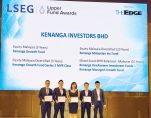
KUALA LUMPUR, MALAYSIA – Media OutReach Newswire – 9 April 2026 – Kenanga Investors Berhad (“Kenanga Investors“) has swept four accolades at the LSEG Lipper Fund Awards 2026 (“the Awards“).
Xav Feng, Asia Pacific Research director, LSEG Lipper, Christopher Kok, Head of Equities, Kenanga Investors Berhad, Lee Sook Yee, Chief Investment Officer, Mohd Faiz Hamsidi, Fixed Income Fund Manager, and Kuek Ser Kwang Zhe, Wealth editor, The Edge Malaysia.
The firm was recognised across various categories, a testament to its continued outperformance:
Kenanga Growth Fund (“KGF“) – Best Equity Malaysia – Malaysia Provident Funds over 5 Years
Kenanga Growth Fund Series 2 MYR Class (“KGFS2“) – Best Equity Malaysia Diversified – Malaysia Provident Funds over 3 Years
Kenanga Malaysian Inc Fund (“KMIF“) – Best Equity Malaysia Diversified – Malaysia Provident Funds over 10 Years
Kenanga Managed Growth Fund (“KMGF“) – Best Mixed Asset MYR Balanced Malaysia – Malaysia Provident Funds over 10 Years
Datuk Wira Ismitz Matthew De Alwis, Chief Executive Officer and Executive Director said, “We are honoured to be recognised by LSEG Lipper for our consistent performance in 2025 against a backdrop of volatility, underpinned by heightened trade wars. During the year, geopolitical risks and trade tensions caused sudden swings in sentiment, which affected small- and mid-cap stocks. We steered clear of headlines and focused on sustainable earnings. This allowed us to selectively position ourselves for when valuations turned compelling while reducing exposure when risks escalated which proved effective and underscores our expertise in Malaysian equities”.
Since the launch of KGF in 2000 and KGFS2 in 2018, both funds have demonstrated consistent performance. As of December 2025, each has surpassed RM1 billion in assets under management1, underscoring Kenanga Investors’ disciplined investment approach and commitment to long term value creation. This year’s Awards also mark KGF’s sixth Lipper title while KGFS2 celebrates its inaugural win.
Lee Sook Yee, Chief Investment Officer, elaborated on the firm’s approach, “We maintained a disciplined bottom‑up stock‑picking strategy anchored in company fundamentals, giving us the conviction to stay invested in high quality businesses with strong balance sheets and structural growth drivers. This was supported by a strict risk management framework focused on sector diversification, prudent buffers, and incremental rebalancing. In 2026, we will emphasise themes such as artificial intelligence and data centre expansion, infrastructure, utilities, and selective REITs, while remaining true to our investment philosophy”.
Over the five‑year period ended 31 December 2025, KGF delivered a total return of 48.82%, significantly outperforming its benchmark2 of 3.25%. Similarly, KGFS2 achieved a robust 49.92% return compared to its benchmark’s3 46.93%. KMIF also recorded solid results with a 32.67% return against a benchmark4 of 5.26%, while KMGF posted a commendable 25.88% return, exceeding its benchmark’s5 11.32%.
The firm also recently introduced the Kenanga Growth Fund Series 3 (“KGFS3“), the third fund within its flagship conventional fund series. The KGFS3 utilises the firm’s proven investment philosophy and is managed with an active investment strategy depending on the market conditions and outlook, combining a top-down asset and sector allocation process with a bottom-up stock selection methodology.
The LSEG Lipper Fund Awards, granted annually, highlight funds and fund companies that have excelled in delivering consistently strong risk-adjusted performance relative to their peers. The Awards are based on the Lipper Leader for Consistent Return rating, which is a risk-adjusted performance measure calculated over 36, 60 and 120 months. This year’s achievements will serve to strengthen Kenanga Investors’ market leadership and drive its focus on creating enduring value for its investors.
For more information about Kenanga Investors, please visit kenangainvestors.com.my.
1 Source: Lipper, 31 December 2025
2 Benchmark: FTSE Bursa Malaysia KLCI CR
3 Benchmark: 8% p.a.
4 Benchmark: FTSE Bursa Malaysia Top 100 CR
5 Benchmark: FTSE Bursa Malaysia Top 100 Index (50%) & All MGS Index by RAM Quant Shop (50%)
Hashtag: #Kenanga
The issuer is solely responsible for the content of this announcement.
Kenanga Investors Berhad 199501024358 (353563-P)
We provide investment solutions ranging from collective investment schemes, portfolio management services, alternative investments, as well as wills and trusts for retail, corporate, institutional, and high net worth clients via a multi-distribution network.
The LSEG Lipper Fund Awards 2026 recognised four funds under the Malaysia Provident Funds category; Kenanga Growth Fund was named Equity Malaysia (5 Years), Kenanga Growth Fund Series 2 was awarded Equity Malaysia Diversified (3 Years), Kenanga Malaysian Inc Fund was awarded Equity Malaysia Diversified (10 Years) while Kenanga Managed Growth Fund was recognised with the title Mixed Asset MYR Balanced – Malaysia (10 Years).
The Hong Kong-based Asia Asset Management’s (“AAM“) 2026 Best of the Best Awards awarded Kenanga Investors under the following categories, Malaysia Best Impact Investing Manager, Best Impact Investing Manager in ASEAN, Malaysia Best Equity Manager, Malaysia CEO of the Year (Co-Winner), Malaysia CIO of the Year, Malaysia Best House for Alternatives and Malaysia Best ESG Engagement Initiative.
At the AAM ETF Awards 2026, Kenanga Investors received an accolade under the category Malaysia Leverage and Inverse ETF of the Year for the Kenanga KLCI Daily 1x Inverse ETF. The IFN Investor Awards 2025 awarded the Kenanga Islamic Balanced Fund under the categories of “IFN Investor Best Balanced Mixed Assets Fund in Malaysia — MYR 2025”, “IFN Investor Best Balanced Mixed Assets Fund in Asia Pacific 2025”, and “IFN Investor Best Global Balanced Mixed Assets Fund 2025”.
The FPAM Financial Planning Leadership Award 2025 presented Kenanga Investors with the Platinum Award under the Charter Member Category, highlighting our dedication to shaping the future of financial planning. The FSMOne Recommended Unit Trusts Awards 2025/2026 has awarded the Kenanga Growth Fund Series 2 with the “Sector Equity — Malaysia Focused” award for the fourth consecutive year since 2022. For the ninth consecutive year, we were affirmed an investment manager rating of IMR-2 by Malaysian Rating Corporation Berhad, since first rated in 2017. The IMR rating on reflects the fund management company’s well-established investment processes and sound risk management practices.
This Press Release was issued by Kenanga Group’s Marketing, Communications & Sustainability department.





 https://vinhomes.vn/en