News related to
prove no

Arabian Post Staff -Dubai Oil prices fell on Wednesday after Saudi Arabia offered additional crude cargoes to Asian refiners through Oman, easing fears that Middle East disruptions would remove more barrels from the market. Brent crude settled $2.92, or 2.7 per cent, lower at $105.83 a barrel, while US West Texas Intermediate dropped $3.40, or 3.2 per cent, to $102.43. The decline followed a rally driven by […]

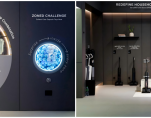
BERLIN, GERMANY – Media OutReach Newswire – 17 September 2026 – At IFA 2026, Midea’s Fabric and Floor Care division presented its latest innovations in laundry and floor-cleaning technologies themed at “Zoned Care, Omni Clean”.

Midea Builds on IFA 2026 Momentum with Wider Vision for Home Care

With the Omni Trio washing machine and AT8 Ultra wet-and-dry floor cleaner as key highlights, the showcase addressed a wide range of everyday home-care challenges, including separate laundry care, noise and vibration reduction, stubborn stain removal and the cleaning of tangled hair from floors.

During the exhibition, the products drew attention from German technology and smart-home media and also received recognition from industry bodies. The showcase innovations were honoured with the YD Best Design Award, while the Omni Trio received VDE A-10% low-noise certification, highlighting Midea’s continued strengths in both industrial design and product engineering.

Two Products, One Home-Care Direction

The Omni Trio brings a different approach to laundry separation. Its three independently operated drums—a 10 kg main drum and two 0.5 kg smaller drums—allow different loads to be washed separately at the same time. Everyday clothing, baby garments, socks and underwear can be handled without waiting for one cycle to finish before starting another.

Independent water inlets and Auto Dose systems, Foam & Flow DualSpray technology and low-noise performance support the same objective: making categorized laundry care easier to integrate into daily routines.

For floor care, the AT8 Ultra addresses another set of frequent cleaning tasks. Its technologies include Easy Foam cleaning, 60°C hot water on demand, a mechanical arm for improved water pickup, anti-tangle technology, and automated roller cleaning and drying. Each targets a practical issue, whether it is a stubborn stain, residual water or hair wrapped around the roller.

Together, Omni Trio and AT8 Ultra demonstrate how “Zoned Care, Omni Clean” extends beyond individual product features. Different cleaning tasks call for different solutions, and Midea FFC is applying its experience across laundry care and floor cleaning to address these needs with greater precision.

From European Needs to Global Development

IFA 2026 also provided Midea with an opportunity to observe how these innovations respond to expectations in the European market, where quieter operation, efficiency, flexibility and ease of use remain key considerations for home appliances.

These local insights also contribute into Midea FFC’s global product development. Learnings from different markets help shape technologies that can be adapted to diverse homes, daily routines and cleaning habits.

For the home-care category, the next stage of innovation is not simply adding more functions. It is about enabling appliances to better understand and handling specific household tasks, with greater automation and less effort from the user. For Midea FFC, the response at IFA 2026 offers a valuable reference point as the company continues to develop home-care technologies for markets around the world.

Hashtag: #Midea #OmniTrio #AT8Ultra

The issuer is solely responsible for the content of this announcement.

ABOUT MIDEA & MIDEA GROUP

Midea is a global technology company specializing in smart home appliances, climate solutions and floor-care technologies, with a focus on user-centric design, energy efficiency and sustainable innovation.

Nigeria’s fixed-income market appears to be crossing an important threshold. For much of the past two years, yields were principally shaped by a familiar combination of aggressive government borrowing, restrictive monetary policy and investors demanding substantial compensation for inflation and currency risk. That hierarchy is changing. AAG Capital argues that liquidity is becoming the more powerful force behind pricing, potentially pushing government yields lower even while fiscal […]

Washington’s rare purchase of Japanese yen has put currency intervention, US Treasury stability and global risk appetite into the same market equation, with implications extending to bitcoin and other digital assets. The US Treasury joined Japan on July 31 in buying yen to counter what Tokyo described as excessive volatility and disorderly moves in the currency. Japan’s Ministry of Finance confirmed the coordinated operation on August 3, […]

Meta Platforms is preparing a camera-free pair of smart glasses, internally code-named Luna, for an expected autumn debut, with shipments targeted for October, according to people familiar with the company’s plans. The glasses are designed around voice-based artificial intelligence rather than photography or video, marking a notable departure from Meta’s existing camera-equipped eyewear. People familiar with the product say Luna will contain six microphones, open-ear speakers and […]

Publicly listed Bitcoin miners fell below cash breakeven as a group in the second quarter, with their weighted average pre-tax production cost reaching about $75,500 per coin against Bitcoin’s quarter-end price of $58,400. The gap of roughly $17,100, or 29%, marked a sharp deterioration in industry economics during the three months to June, according to a new sector review by digital-asset investment group CoinShares. The report said […]

Protests over surging fuel costs widened across several countries on Wednesday as crude oil remained above $100 a barrel, pushing diesel and petrol prices higher and forcing governments to confront growing public anger over the economic fallout from the Middle East conflict. French fishermen blocked the Frontignan fuel depot near Sète, a day after a similar action at Fos-sur-Mer near Marseille, demanding relief from fuel costs and […]

Advertisements
HONG KONG SAR – Media OutReach Newswire – 16 September 2026 –

Response by KK Chiu, International Director, Chief Executive, Greater China, Cushman & Wakefield:

Optimising the Housing Ladder and Improving Living Conditions

We welcome the Government’s commitment to increase housing supply, shorten the Composite Waiting Time for public rental housing and further strengthen the housing ladder. The adoption of a long-term housing supply framework comprising 40% public rental housing, 30% subsidised sale housing and 30% private housing, together with the delivery of approximately 196,000 public housing units over the next five years, will provide a clearer housing and homeownership pathway for different income groups.

We believe that increasing the supply of subsidised sale housing and enhancing the housing ladder will help more public housing tenants progress towards homeownership, accelerate housing mobility and enable families with genuine housing needs to gain access to public housing more quickly.

We support the Government’s efforts to increase public housing supply, continue the Light Public Housing programme and implement the Basic Housing Units regime in an orderly manner to phase out substandard subdivided units. This approach is consistent with our long-held view that increasing housing supply is the fundamental solution to improving inadequate housing conditions. With the Government targeting the resolution of substandard subdivided units in domestic buildings by 2030, we expect living conditions for grassroots households to improve progressively.

Urban Renewal Incentives

We support the Government’s more flexible approach to urban renewal, including transferable plot ratio arrangements and measures to unlock redevelopment potential. These initiatives will help enhance market participation, accelerate renewal in areas with pressing redevelopment needs and contribute to overall housing supply growth. We recommend the Government provide clearer guidance on application requirements and further streamline cross-departmental approval procedures to facilitate implementation.

Advancing the Yacht Economy

We welcome the Government’s continued efforts to promote the yacht economy. Beyond increasing marina berth supply and enhancing supporting infrastructure, we believe it is equally important to further facilitate cross-boundary initiatives, allowing greater mobility of yachts within the Greater Bay Area and fostering regional collaboration.

As more superyachts and high-net-worth visitors arrive in Hong Kong, demand is expected to rise across luxury tourism, hospitality, food and beverage, retail, marine services and waterfront commercial facilities, helping unlock the economic potential of Hong Kong’s coastline and island resources. At the same time, Hong Kong has the potential to develop a more comprehensive marine industry ecosystem encompassing yacht repair and maintenance, refitting services and specialised professional services. The development of a holistic marine services value chain will further strengthen Hong Kong’s competitiveness as a regional and international yachting hub.

Response by John Siu, Managing Director, Hong Kong, Cushman & Wakefield:

Planning Ahead for AI and Data Centre Infrastructure

We welcome the Government’s commitment to accelerate the development of the Sandy Ridge Data Facility Cluster, which is expected to provide computing power equivalent to 36 times Hong Kong’s current capacity by 2032, alongside a HK$1 billion injection into the Artificial Intelligence Subsidy Scheme. These initiatives will provide important support for the development of Hong Kong’s artificial intelligence and data centre sectors, further strengthening the city’s position as a regional digital and innovation hub.

However, with rapid advancements in artificial intelligence, large language models and cloud computing, demand for computing power is expected to grow significantly in the coming years. We believe that, in addition to planning data centre sites, the Government should proactively review long-term requirements for power supply, electricity grid capacity and related infrastructure. As AI adoption becomes more widespread, access to reliable power and supporting infrastructure will be a key factor in maintaining Hong Kong’s competitiveness as a technology and data centre hub.

We support the Government’s stated direction of pursuing “high-efficiency computing power, stable electricity supply and low-carbon transition”. Looking ahead, we recommend that the Government regularly review future demand for land, power supply and supporting infrastructure arising from the growth of artificial intelligence and data centre activities, particularly within the Northern Metropolis and other strategic development areas. A coordinated approach to computing, energy and digital infrastructure planning will help attract more data centre operators and technology companies to Hong Kong, while supporting the city’s long-term development as a regional hub for data and artificial intelligence.

Response to the Budget 2026/2027 by Rosanna Tang,Deputy Managing Director, Head of Research, Hong Kong, Cushman & Wakefield:

Clear Industry Positioning for the University Towns

We welcome the Government’s efforts under Hong Kong’s First Five-Year Plan to further define the positioning of the three university towns in the Northern Metropolis University Town, and are encouraged by its strategy to promote synergy among the university towns, the San Tin Technopole and surrounding industry parks. As the only city in the world with five universities ranked among the global top 100, Hong Kong possesses a strong foundation in higher education and research. At the same time, the San Tin Technopole is set to become a key innovation and technology hub. The complementary strengths of these two pillars, both geographically and strategically, provide a solid foundation for building a globally competitive innovation ecosystem in Hong Kong.

We are particularly encouraged by the Government’s emphasis on integrated industry-academia-research collaboration. The university towns should not be viewed merely as educational developments, but as strategic platforms for research commercialisation, international talent attraction and the cultivation of emerging industries. Closer collaboration among universities, research institutes, innovation and technology enterprises and industry parks will help establish a complete innovation value chain covering talent development, scientific research, technology transfer and industrial implementation.

In addition, the Plan proposes approximately 300 hectares of educational facilities as the core of the university towns, connected with adjacent strategic industry areas, distinctive conservation areas, sports and cultural facilities, and surrounding communities, bringing the overall development footprint to more than 1,000 hectares. Such a large-scale integrated education and industry development model is rare in Hong Kong’s urban planning history and clearly demonstrates the Government’s long-term vision of creating a knowledge-based city cluster and an international education hub in the Northern Metropolis.

Attracting Signature Industry Projects and Anchor Institutions to Enhance the Northern Metropolis’ Global Appeal

We welcome the Government’s efforts to establish differentiated industry positioning through the three university towns, while integrating key development nodes such as the San Tin Technopole, the Hong Kong Park of the Hetao Shenzhen-Hong Kong Science and Technology Innovation Co-operation Zone, the Hung Shui Kiu Industry Park and Ta Kwu Ling. This provides a clearer direction for industrial development in the Northern Metropolis and helps address long-standing market concerns regarding overlapping functions and unclear district positioning.

As highlighted in our previous research, we believe the next critical stage for the Northern Metropolis will be its ability to attract influential anchor institutions and leading enterprises. By bringing together universities, research institutes and industry leaders, Hong Kong can foster the clustering of businesses, talent and capital, gradually forming industry clusters with scale and international competitiveness. Hong Kong should also capitalise on its common law system, international financial centre status, intellectual property protection framework and global talent network by focusing on high value-added segments such as research and testing, intellectual property management, fundraising and listing activities, and international accreditation services. This will help Hong Kong establish an irreplaceable role within the Greater Bay Area industrial value chain.

Beyond strategic industries, we believe the Northern Metropolis could also explore internationally recognised and iconic industry projects to further enhance its global profile and attractiveness. For example, the Government may consider developing initiatives around new energy vehicles, smart mobility and advanced technologies, while exploring the feasibility of internationally recognised racing events, testing facilities or technology R&D platforms, such as those associated with Formula One. By leveraging motorsport-related economic activities and innovation-led development, Hong Kong could attract international automotive manufacturers, mobility technology companies and research institutions to establish regional headquarters, R&D centres or testing facilities in the city. This would in turn support the growth of engineering, intelligent transport, advanced manufacturing, tourism, hospitality, retail and convention and exhibition industries, further enriching the Northern Metropolis industrial ecosystem.

Accelerating Land Supply While Advancing Industries and Infrastructure in Parallel

We note that Hong Kong’s First Five-Year Plan proposes a significant acceleration in land and housing supply within the Northern Metropolis. Residential completions are expected to increase substantially from approximately 11,000 units during 2021/22 to 2025/26 to around 70,000 units during 2026/27 to 2030/31. Over the same period, the supply of “spade-ready sites” will rise from approximately 120 hectares to around 900 hectares, representing an increase of around 7.5 times. These figures demonstrate that the Northern Metropolis is transitioning from a planning and land formation phase to a new stage characterised by large-scale development, industrial implementation and population intake.

However, we believe the success of the Northern Metropolis should not be measured solely by the volume of land or housing delivered. As substantial residential, innovation and technology, and industrial sites come on stream, the focus should gradually shift from land supply to city-building. The Government should ensure the coordinated delivery of railway and cross-boundary infrastructure networks, industry parks, commercial facilities, public services and community amenities, while accelerating the introduction of leading enterprises and strategic industries to create sufficient, high-quality employment opportunities and achieve a genuine jobs-housing balance.

In particular, we believe the Northern Metropolis should be driven by industry-led development, with the San Tin Technopole, the Hetao Shenzhen-Hong Kong Science and Technology Innovation Co-operation Zone, the university towns and major industry parks serving as key growth engines. This would create a virtuous cycle in which industry attracts population, population supports consumption, and consumption drives urban development. Only through the coordinated growth of industry, talent, infrastructure and communities can the Northern Metropolis evolve from a large-scale land development project into a modern metropolitan district integrating industry, education, living and international exchange.

Response by Tom Ko, Executive Director, Head of Capital Markets, Hong Kong of Cushman & Wakefield:

New Opportunities for Student Accommodation Market

We welcome the Government’s initiatives to deepen Hong Kong’s development as an international hub for post-secondary education through the “Hong Kong: Your World-class Campus” campaign, expanded global student recruitment efforts and the extension of the Immigration Arrangements for Non-local Graduates pilot arrangement to graduates from Greater Bay Area campuses of Hong Kong universities. These initiatives will further enhance Hong Kong’s attractiveness to overseas students and talent while reinforcing the “Study in Hong Kong” brand.

We are encouraged by the continued progress of the Hostels in the City Scheme. The scheme has already received 41 confirmed applications, providing approximately 10,800 bed spaces and demonstrating strong market confidence in the long-term growth of Hong Kong’s education sector.

The scheme has opened up a new supply channel for converting commercial buildings into student accommodation. At a time when hotel conversion opportunities are becoming more limited as tourism continues to recover, it provides an alternative pathway for investors while helping unlock the value of underutilised commercial assets and meet rising demand for student housing. As the Government prepares to tender the first dedicated student hostel site, we believe purpose-built student accommodation will gradually emerge as a distinct and scalable asset class within Hong Kong’s real estate market.

To further increase supply, we recommend that the Government continue reviewing and refining approval procedures for student hostel conversions. Greater flexibility and streamlined processes, while maintaining appropriate safety and operating standards, would encourage wider market participation and support Hong Kong’s ambition to become a leading international education destination.

(Click here for high-res pictures)

Hashtag: #Cushman&Wakefield

The issuer is solely responsible for the content of this announcement.

About Cushman & Wakefield

Cushman & Wakefield (NYSE: CWK) is a leading global commercial real estate services firm for occupiers and investors with approximately 53,000 employees in over 350 offices and nearly 60 countries. In Greater China, a network of 23 offices serves local markets across the region. In 2025, the firm reported revenue of $10.3 billion across its core services of Valuation, Consulting, Project & Development Services, Capital Markets, Project & Occupier Services, Industrial & Logistics, Retail, and others. Built around the belief that Better never settles, the firm receives numerous industry and business accolades for its award-winning culture. For additional information, visit or follow us on LinkedIn ().

South Korea will not slow its artificial intelligence drive, Deputy Prime Minister and Science and ICT Minister Bae Kyung-hoon said on Wednesday, arguing that the country must pair rapid development with stronger safeguards rather than curb the technology’s advance.

Bae said South Korea was still trying to close the gap with leading AI powers while creating new markets, making its position different from countries or companies at the technological frontier. “We cannot afford to slow down AI right now,” he wrote on social media, describing the government’s approach as one of “speed responsibility” rather than speed control.

His remarks place Seoul firmly on the acceleration side of a widening debate over whether developers should moderate the pace of capable AI systems. Anthropic chief executive Dario Amodei has called for a slowdown in frontier model development to allow more time for safety work, while OpenAI chief executive Sam Altman and other technology leaders have voiced support for stronger precautions as capabilities advance.

Bae said South Korea should continue expanding research, industrial adoption and home-grown model development while strengthening protections against deepfakes, cyber threats and privacy violations. Faster progress, he said, required safety and trust measures to move at the same pace rather than follow after deployment.

The minister pointed to a broader technology agenda that includes sovereign foundation models, systems capable of processing vision and language, and models able to interact with physical environments. He said the country also needed to prepare for AI becoming deeply embedded across industries and everyday life.

The government has made domestic foundation-model development a central part of its ambition to place South Korea among the world’s top three AI powers. The Ministry of Science and ICT has been running a sovereign AI foundation model programme intended to improve domestic capabilities and reduce dependence on foreign technology.

Three teams led by Upstage, SK Telecom and LG AI Research advanced after the programme’s second-stage evaluation this year. The ministry has said models developed under the initiative were built with comparatively limited resources but were released as open source as part of an effort to expand the domestic AI ecosystem.

Bae indicated that further details on the next phase of the foundation-model programme would be announced after ongoing reviews. His comments also referenced government work on security-focused AI models and frontier systems, alongside an “AI for All” initiative intended to spread adoption across the economy.

The policy push is being developed alongside South Korea’s AI Basic Act, which establishes rules covering both the development of artificial intelligence and the creation of a framework for trust. The law’s stated purpose includes protecting rights and human dignity while supporting quality of life and national competitiveness.

That legal structure gives Seoul a basis for pursuing faster adoption without presenting safety as a separate objective. Bae said competitiveness and sustainability were linked, arguing that development speed and safeguards should advance together.

The global dispute has intensified as leading executives and policymakers weigh the economic benefits of faster AI deployment against concerns over misuse and loss of control. Amodei has proposed independent safety evaluators, coordination among major laboratories and greater international cooperation, while Nvidia chief executive Jensen Huang has argued against slowing technological progress and favours advancing safety alongside innovation.

European Commission President Ursula von der Leyen on Wednesday backed calls for greater caution and said frontier AI laboratories would be invited for talks on managing risks. Meta chief executive Mark Zuckerberg, by contrast, said AI companies already had strong incentives to build systems safely and did not require an industry-wide slowdown.

Bae’s intervention highlights the competitive pressures facing countries outside the United States and China, where most frontier AI investment and model development remains concentrated. South Korea has strong semiconductor and technology industries, but its government has acknowledged the need to strengthen domestic models, computing capacity and commercial adoption to narrow the gap.

Arabian Post Staff -Dubai Dubai’s hotel occupancy rose to 66 per cent in August as international tourism strengthened, marking the sector’s highest monthly occupancy rate since February, according to the Dubai Department of Economy and Tourism. The August level was equivalent to 89 per cent of the occupancy recorded in the same month of 2025 and represented a sharp recovery from 36 per cent in March, when […]

Hong Kong has placed a global gold trading hub at the centre of its first five-year economic plan, using the market as an entry point to expand commodity trading and broaden international use of the renminbi.

The 2026-2030 plan, released on Wednesday, calls for an integrated gold ecosystem covering storage, trading, clearing, refining and related financial services, while encouraging more renminbi-denominated commodity products. The government said it would strengthen links with mainland exchanges and attract international investors as it develops the city’s role as a global offshore renminbi centre.

It describes gold as an asset and envisages a one-stop storage, trading and clearing centre.

The strategy gives formal five-year backing to a gold-market expansion already under way. Hong Kong began trial operations of a central clearing and settlement system for gold in July and plans to launch the system formally in the first quarter of 2027. The administration is also seeking to expand storage capacity, improve refining capability and support more gold dealers and financial institutions in establishing operations in the city.

The plan says Hong Kong will explore renminbi-denominated gold and commodity markets and deepen co-operation with the Shanghai Gold Exchange and Shanghai Futures Exchange. It also aims to increase the range of products priced in the Chinese currency and encourage the use of renminbi for pricing and settlement in spot commodity transactions.

Chief Executive John Lee’s administration has framed the programme as part of a broader effort to strengthen Hong Kong’s position as an international financial centre while aligning more closely with China’s national development priorities. The five-year plan also seeks to enlarge the city’s offshore renminbi business, improve liquidity support and expand the range of renminbi bonds and other financial products.

Hong Kong remains the world’s largest offshore renminbi market. The government said offshore renminbi lending reached a record 935 billion yuan in 2025, while renminbi bond issuance reached 1 trillion yuan for a second consecutive year. The new plan proposes a dedicated offshore renminbi liquidity provision mechanism and wider use of the currency in trade, investment, financing and government expenditure.

Gold is intended to provide the first platform for a wider commodities push. The government said Hong Kong would use its status as an approved delivery point in the London Metal Exchange’s global warehousing network to develop trading, risk-management and financing services across additional commodities.

Since Hong Kong joined the LME warehousing network in 2025, approved storage space has exceeded 60,000 square metres and metal inventories have risen above 20,000 tonnes, according to the government. Authorities plan to facilitate more LME-approved warehouses in the Northern Metropolis and introduce a half-rate tax concession for physical commodity trading to attract additional market participants.

The Hong Kong Exchanges and Clearing group also plans to announce details this year for new renminbi-denominated, physically settled gold futures contracts. The government said the contracts are intended to strengthen the currency’s role in precious-metal pricing and provide another channel for international investors to gain renminbi exposure.

Other measures include possible tax concessions for qualifying gold and commodity activities, additional insurance capacity for gold storage and trading, and support for an industry-led trade association. Officials are also examining tokenised warehouse-receipt financing and blockchain-based systems that would allow commodity inventories to be used more flexibly as collateral.

The administration has set a target of lifting Hong Kong’s gold storage capacity to more than 2,000 tonnes within three years. It is also encouraging internationally qualified refiners to establish or expand local operations, with government agencies assisting interested companies in identifying sites and navigating regulatory requirements.

Closer integration with mainland markets is another element of the strategy. The plan calls for wider market access between Hong Kong and mainland gold markets and further collaboration with the Qianhai Mercantile Exchange, including development of renminbi-settled commodity futures, options and spot products.

Arabian Post Staff -Dubai Fasset will become the first platform worldwide to list DDSC, the UAE dirham-backed stablecoin, under a new collaboration that will also allow users to swap the token with major dollar-backed stablecoins including USDC and USDT. The arrangement expands DDSC’s distribution beyond its initial institutional use and follows regulatory approvals that opened the way for the token to appear on selected platforms overseen by […]

Monaco is poised to leave the Financial Action Task Force’s grey list next month after completing an on-site review of reforms aimed at strengthening controls against money laundering and terrorist financing, with Bulgaria and Côte d’Ivoire also moving towards removal. The Paris-based watchdog is expected to consider the three jurisdictions at its plenary meeting from October 26 to 30, after determining in June that each had substantially […]

Microsoft has released an out-of-band Windows update to correct several faults introduced by its September security patches, including Remote Desktop instability, Hyper-V Linux file-sharing failures and problems affecting some USB audio devices. The emergency servicing release, issued on September 14, applies across multiple supported Windows editions, with separate packages for Windows 11, Windows 10 and Windows Server versions. Microsoft said the updates address problems traced to security […]

OpenAI is using hundreds of outside contractors to examine real ChatGPT conversations and rate the system’s replies, with some reviewers earning more than $50 an hour, according to leaked internal materials that have sharpened scrutiny of the company’s privacy practices. The work is described in instruction guides, Slack messages and reviewer materials under an internal initiative known as Project Lily. Contractors are shown user prompts and, in […]

SOCAR plans to take a final investment decision by the end of 2026 on a petrochemical expansion in Türkiye valued at up to $7 billion, placing higher-value manufacturing at the centre of Azerbaijan’s effort to broaden its energy economy beyond crude oil and gas sales. The State Oil Company of the Republic of Azerbaijan is assessing new production units and upgrades to existing facilities at Petkim, its […]

Arabian Post Staff -Dubai Saudi Arabia is broadening international security contacts as Iran-backed Houthi forces consolidate positions along Yemen’s Red Sea coast, with Britain backing Riyadh and reports of Israeli intelligence co-operation emerging as the kingdom confronts missile, drone and maritime threats. The Saudi outreach has accelerated after Houthi forces captured territory and islands around the Bab el-Mandeb Strait, the narrow waterway linking the Red Sea with […]

By TN Ashok The 18th BRICS Summit, held at Bharat Mandapam in New Delhi on September 12–13, 2026, was never going to escape Washington’s shadow — and it didn’t. Even as Prime Minister Narendra Modi steered eleven member states toward a unanimously adopted New Delhi Declaration that pointedly avoided naming the United States, President Donald […]

The article India steers 18th BRICS summit deftly, keeps anti-West rhetoric at bay appeared first on Latest India news, analysis and reports on Newspack by India Press Agency).

The same handful of avoidable mistakes get repeated every cycle by foreign buyers in Dubai, usually by those moving fast on a deal that felt urgent. None of these errors require bad luck. They require skipping a step that felt optional at the time. Trusting the asking rent instead of the signed one A listing advertising $16,338 in annual rent doesn’t mean that’s what tenants are actually […]

Arabian Post Staff -Dubai Dubai has introduced a round-the-clock service at Dubai International Airport allowing eligible UAE citizens and residents to obtain an International Driving Permit within five minutes before travelling abroad. The service is available at the Customer Happiness Centre in Terminal 3 Arrivals and is open to people holding a valid UAE driving licence. It brings permit issuance directly into the airport environment, giving travellers […]

WRISE Prestige records over300% revenue growth in HK since end-2024, expands to more than 400 IWCs and advances a new professional standard combining human expertise, independence and AI

  • Assets under management increased by 927%, revenue grew by 301% and the number of clients increased by 382% compared with the end of 2024.
  • WRISE Prestige’s network has expanded to more than 400 Independent Wealth Consultants (IWCs) in Hong Kong.
  • The broader WRISE ecosystem has added capabilities spanning family office and wealth planning, corporate advisory, trust and legacy planning, structured products, international insurance and AI labs, while the IWC proposition evolves from Independent Wealth Consultant to Intelligent Wealth Consultant.

HONG KONG SAR – Media OutReach Newswire – 15 September 2026 – WRISE Prestige, a core business of WRISE Group serving affluent and high-net-worth clients through a network of wealth consultants, is set to celebrate its second anniversary in Hong Kong on 16 September, marking two years of rapid growth and the next chapter in its approach to wealth advisory.

Since the end of 2024, WRISE Prestige in Hong Kong has recorded 927% growth in assets under management (AUM), 301% growth in revenue and a 382% increase in the number of clients. Its Hong Kong network has also grown to more than 400 IWCs, reflecting rising demand for independent, people-led advice and broader access to integrated wealth solutions.

Two Years of Growth and an Expanding Wealth Ecosystem

Over the past two years, WRISE Prestige has broadened its role within the WRISE ecosystem, connecting clients with capabilities across different aspects of wealth and advisory. These include WRISE Capital for corporate finance and advisory services, WRISE Private for family office solutions and sophisticated wealth planning, and WRISE Master Trust for wealth structuring and legacy planning.

WRISE Prestige has broadened its solution capabilities in parallel, expanding its insurance spectrum from local offerings to Bermuda solutions and connecting clients with investment, banking, protection, trust and corporate advisory resources.

Client demand has become increasingly diverse, spanning liquidity, income, diversification, downside management, succession and cross-jurisdictional wealth planning. Structured products may be considered as part of client solutions where suitable, depending on risk tolerance and circumstances, illustrating the need for tailored risk-return outcomes rather than one-size-fits-all distribution.

The Group’s expanding regional footprint, including presences in Taipei, Shenzhen, Changsha, Chengdu, Wuxi and Vancouver, further strengthens WRISE Prestige’s ability to connect clients and wealth consultants with capabilities across markets.

From Independent Wealth Consultant to Intelligent Wealth Consultant

The evolution comes as Hong Kong’s wealth management industry reaches a new scale. According to the Securities and Futures Commission, AUM in Hong Kong’s private banking and private wealth management business rose 24% year-on-year to HK$12.9 trillion at the end of 2025.[1]

As wealth grows, the needs behind it are becoming increasingly complex. Clients require holistic advice connecting investments and protection with family governance, business interests, succession and intergenerational planning. They increasingly value sound judgement, independence, expertise, trust and connectivity to a wider wealth ecosystem.

WRISE Prestige believes this is expanding the role of the wealth consultant. Building on the foundations of independent wealth advisory, the IWC approach puts the individual at the centre, considering their family, business, aspirations, risks and legacy, while drawing on a broader ecosystem to address wealth more holistically. Within this approach, independence refers to an open-architecture model that gives wealth consultants the flexibility to consider solutions from a broad range of financial institutions and providers, rather than being tied to a single institution or product. This approach does not imply the absence of conflicts of interest; any applicable conflicts are managed and disclosed in accordance with relevant policies and regulatory requirements.

IWC is now entering its next chapter, evolving from Independent Wealth Consultant to Intelligent Wealth Consultant. The new proposition builds on the open-architecture approach, trusted human relationships and professional expertise that have defined IWC, while bringing together the research, analytical and efficiency capabilities of AI.

Technology can enhance how wealth consultants analyse information, generate insights and serve clients, while human judgement, accountability and relationships remain at the heart of wealth advice. The goal is not to replace wealth consultants with AI, but to empower them with greater capabilities to support better-informed, more holistic wealth decisions.

As part of this evolution, WRISE Prestige is also strengthening the professional development pathway for its IWC network through QLC, a structured professional assessment covering four specialist areas relevant to the evolving needs of high-net-worth clients: Family Office, Trust, Offshore Insurance and Advanced Investment. IWCs who complete the QLC examination will earn the designation of IWC-Certified, establishing a common foundation of professional knowledge and standards across the network. Following certification, IWCs can continue to develop through pathways recognising both professional expertise and business performance.

Henry Shin, CEO of WRISE Prestige Hong Kong, said: “The wealth management industry has continuously evolved, from traditional institution-led models, to the emergence of independent financial advice, and now towards a new generation of wealth advisory. We believe the next stage of this evolution is intelligence.

Intelligent Wealth Consultant brings together the independence and trust that have always been fundamental to wealth advice with professional expertise, human judgement, and the insights and analytical capabilities of artificial intelligence. This is not about replacing the human element with technology, but about empowering our consultants with technology to deliver deeper insights and help clients make more informed and holistic wealth decisions.

At WRISE Prestige, we aspire to take this evolution one step further, not simply to witness the transformation of our industry, but to work alongside the industry in helping shape best practices for the next generation of wealth advisory.”

Building the Next Chapter of Wealth Advisory

Looking ahead, WRISE Prestige expects wealth management to become more connected, technology-enabled and accessible. Its focus will remain on combining technology with human judgement and relationships, using technology to improve connectivity, insight and scalability while maintaining appropriate professional and regulatory standards.

Over the next two to three years, WRISE Prestige plans to expand its business-to-business capabilities and advance an Open-EAM architecture that connects IWCs, external asset manager partners and clients through the broader WRISE ecosystem. The architecture is intended to make it easier for wealth consultants and partners to access specialist capabilities across wealth management, banking, investments, protection, trust and corporate advisory services, supported by technology and the WRISE platform.

Through this approach, WRISE Prestige aims to create greater connectivity and scale for wealth consultants, more integrated choices for clients, and a stronger professional ecosystem for Hong Kong and the region. Its ambition for the next chapter is not only to grow its own platform, but also to contribute to the continued development of wealth advisory across the industry.

Hashtag: #WRISEGroup

The issuer is solely responsible for the content of this announcement.

About WRISE

WRISE is one of Asia’s fastest-growing financial firms, driven by strategic acquisitions of companies with deep expertise and solid foundations. With a strong presence across key financial hubs including Singapore, Hong Kong, Dubai, Tokyo, Shanghai, Shenzhen, Changsha, Chengdu, Wuxi, Taipei and Vancouver, WRISE is home to one of the largest networks of independent qualified advisors. With over 600 employees located globally, supported by an ecosystem of over 200 financial intermediaries and access to eight booking centres worldwide, WRISE ensures unparalleled service and expertise in navigating today’s financial landscape.

WRISE Group of companies include WRISE Wealth Management (Singapore), WRISE Wealth Management (Hong Kong), WRISE Wealth Management Middle East Ltd (DIFC, regulated by the DFSA), WRISE Prestige (Hong Kong), WRISE Prestige Securities (Hong Kong), WRISE Prestige Asset Management (Hong Kong), WRISE Capital (Hong Kong), WRISE Financial Services (Hong Kong), and affiliates including WeWrise Services.


Arabian Post Staff -Dubai Al-Futtaim Motors has begun two safety recall campaigns covering 6,933 Lexus LX500 and LX600 sport utility vehicles in the UAE, addressing separate engine software and transmission defects in models built in Japan between 2021 and 2024. The larger programme is being conducted in coordination with the Ministry of Economy and Tourism and requires affected owners to have their vehicles inspected or reprogrammed without […]

A federal judge has stopped the Trump administration from imposing fixed limits on how long foreign students, exchange visitors and journalists may remain in the United States, blocking a major immigration rule one day before it was due to take effect. U. S. District Judge F. Dennis Saylor IV in Boston issued a preliminary injunction on Monday, September 14, finding that the Department of Homeland Security had […]

BRICS leaders have placed development priorities of emerging economies at the centre of their New Delhi agenda, endorsing stronger representation for the Global South while advancing cooperation on trade, technology, finance and sustainable growth.

Chinese President Xi Jinping used the 18th BRICS Summit to argue that countries should pursue development paths suited to their own national conditions, a message that overlapped with the summit’s broader emphasis on policy autonomy, inclusive growth and reform of global institutions.

Addressing the first leaders’ session on September 12, Xi marked 20 years of BRICS cooperation and said members had strengthened themselves through unity while preserving independence in choosing their economic and social models. He described BRICS as an increasingly important platform for emerging markets and developing countries.

The summit’s New Delhi Declaration gave that theme wider institutional form. Leaders called for a more representative international order, greater participation by developing countries in global decision-making and reforms to institutions including the United Nations, World Trade Organization and international financial architecture.

The declaration also reflected the diversity within the expanded grouping. Rather than prescribing a single model of development, BRICS leaders stressed national circumstances, differing capacities and the need for policy space, particularly in areas such as energy transition, industrialisation and climate action. That approach broadly matched Xi’s argument that development strategies should reflect domestic conditions rather than external templates.

Xi sought to extend the idea into technology policy. He proposed an initiative on artificial intelligence-enabled industrialisation, deeper cooperation in research and applications, and stronger industrial and supply-chain links. China also promoted open-source AI collaboration and international platforms intended to improve access to emerging technologies for developing economies.

Other leaders framed similar priorities through their own national perspectives. Prime Minister Narendra Modi emphasised resilience, innovation, cooperation and sustainability, the four themes of India’s 2026 BRICS chairship, and called for solutions developed within the grouping to serve a wider range of developing countries. He also urged members to translate summit commitments into practical programmes.

BRICS members agreed on measures spanning digital cooperation, food and energy security, health, trade facilitation and the use of local currencies in cross-border transactions. The declaration supported stronger payment connectivity while stopping short of endorsing a common BRICS currency.

The economic agenda also underlined the practical test facing the grouping. Members backed use of national currencies in trade and investment, stronger cooperation through the New Development Bank and efforts to improve financial resilience. Such measures are intended to widen financing options for developing economies without committing members to a single monetary framework or common currency.

The expanded bloc now brings together countries with sharply different political systems, strategic alignments and economic structures. That breadth gives BRICS a larger claim to represent developing-country concerns, but it also limits how far members can converge on detailed policy prescriptions. Analysts have noted differences over whether the group should remain primarily an economic and development forum or assume a stronger geopolitical role.

Those tensions were visible alongside the development agenda. Leaders opposed protectionism and unilateral economic measures, supported a stronger multilateral trading system and called for reforms that would increase the voice of developing countries. At the same time, members avoided turning the summit into a unified ideological platform, relying instead on consensus language broad enough to accommodate competing interests.

Xi’s second summit intervention on September 13 placed a “people-centred” development philosophy within a wider call for Global South cooperation. He urged progress on the UN Sustainable Development Goals, improvements to global climate governance and a consensus-based framework for governing artificial intelligence.

China’s approach also carries strategic implications. Beijing has increasingly used BRICS and other multilateral forums to promote its views on development, sovereignty and global governance. Some members share its criticism of unequal representation in international institutions, while others remain cautious about allowing BRICS to become identified with any single country’s geopolitical agenda.

VISHNU RAJA
RYO YAMADA
HITORI GOTOH
IKUYO KITA