Greenlogue/AP Qatar’s greenhouse industry is projected to more than double in value by 2034 as investment in controlled-environment farming accelerates efforts to raise domestic food production and conserve water resources. Market research firm IMARC Group estimates the sector will expand from $226.9 million in 2025 to $600.1 million by 2034, equivalent to about QR2.18 billion at Qatar’s fixed exchange rate. The forecast implies compound annual growth of […]
South Korea’s central bank began a pilot of a 24-hour won settlement network on Monday, advancing preparations to give overseas investors broader access to the country’s currency market from next year.
The Bank of Korea said the Bank of Korea Won International Wire Network started trial operations at 9am local time with KB Kookmin Bank, Woori Bank, Hana Bank and Shinhan Bank participating. Two of the banks completed transactions worth about 1.4 billion won during the initial test, according to the central bank.
Full operation is scheduled for January 2027, when foreign financial institutions are expected to gain wider access to the network. The system is designed to allow won payments and settlement during the business hours of major overseas financial centres rather than limiting activity to South Korea’s domestic banking day.
Under the planned framework, offshore investors will be able to trade the won with other foreign participants using accounts opened with Registered Foreign Institutions for KRW Business, known as RFI-Ks, in their home markets. This is intended to reduce the need for investors to open and operate separate accounts directly with financial institutions in South Korea.
The network will function continuously from 9am on each business day until 9am the following day, effectively providing round-the-clock settlement on weekdays. It will remain closed on weekends and public holidays. Foreign banks are also due to participate in the trial, although the Bank of Korea has not specified when they will enter the testing phase.
The central bank said it would monitor the pilot, refine operating arrangements and expand participation before the system moves into full service. It expects the new infrastructure to improve foreign investors’ access to won settlement and support wider international use of the currency.
The trial follows South Korea’s move in July to extend onshore dollar-won trading to a 24-hour schedule. That change removed the previous gap between Seoul trading hours and active periods in major centres such as London and New York, allowing transactions to continue through the global trading day.
Authorities have paired the longer trading window with changes to settlement arrangements because extended dealing hours alone do not remove operational barriers if investors cannot complete payments outside domestic banking hours. The new network is intended to address that mismatch by keeping settlement infrastructure available while overseas markets are active.
The initiative forms part of a broader programme to open South Korea’s foreign-exchange market and make local assets easier for global institutions to access. Seoul has also been seeking improvements in market infrastructure as it pursues developed-market classification for its equities from MSCI, whose accessibility assessments examine areas including foreign-exchange convertibility, investment flows and operational arrangements.
South Korea has already introduced the RFI framework to permit eligible overseas financial institutions to participate directly in the domestic foreign-exchange market. The settlement network extends that approach by enabling those institutions to hold and transfer won through designated accounts linked to the central bank’s payment infrastructure.
The Bank of Korea has also been modernising its core settlement systems. Its 2025 payment and settlement systems report, released last week, said operating hours for BOK-Wire+ were extended in March and that work continued on the international won network and the adoption of the ISO 20022 financial messaging standard.
The central bank has said the international network will use real-time gross settlement, a structure in which transactions are settled individually and continuously rather than being netted for later settlement. That approach is intended to limit credit risk during the payment process while supporting cross-border compatibility.
Preparations have included linked-system testing and business-continuity planning before the scheduled commercial launch. The authorities have also revised foreign-exchange regulations to accommodate the wider use of overseas won accounts and settlement channels.
Arabian Post Staff -Dubai Dubai has begun 10 days of official mourning following the death of Sheikh Ahmed bin Rashid Al Maktoum, Deputy Chairman of Dubai Police and Public Security and the younger brother of Sheikh Mohammed bin Rashid Al Maktoum, Vice President and Prime Minister of the UAE and Ruler of Dubai. The Court of Sheikh Mohammed announced Sheikh Ahmed’s death on Monday morning, September 21, […]
Asian share markets advanced on Monday as technology stocks rallied on continuing demand for artificial intelligence infrastructure, while crude oil prices fell as traders assessed stronger-than-expected energy flows from the Middle East.
South Korea and Taiwan led the regional gains, reflecting renewed buying in semiconductor companies tied to expanding demand for data centres, memory chips and advanced computing. South Korea’s Kospi rose about 1.4%, while Taiwan’s benchmark gained around 1% and reached a three-month high. MSCI’s broadest index of Asia-Pacific shares outside Japan added roughly 0.9%.
Chinese blue-chip shares were also firmer, rising about 0.2%, while Japan’s cash market was closed for the Silver Week holiday. Nikkei futures nevertheless edged 0.2% higher. Trading across parts of the region was thinner than usual because Japanese markets will remain shut through Wednesday.
The strength in Asian technology shares followed continued investor focus on the capital spending required to support generative AI and cloud computing. Samsung Electronics rose sharply in Seoul, while Taiwan Semiconductor Manufacturing Co gained in Taipei, reinforcing the technology-heavy tone across major regional bourses.
US equity futures also pointed higher during Asian trading. S&P 500 futures gained about 0.4% and Nasdaq futures rose 0.6%, while European futures indicated a firmer opening, with EUROSTOXX 50 and German DAX contracts advancing.
Oil prices moved in the opposite direction. Brent crude fell about 1.7% to just above $102 a barrel, while US West Texas Intermediate dropped close to 2% to around $98.50. Both benchmarks had already weakened at the end of last week.
The decline reflected signs that more crude and other energy cargoes were moving through the Gulf despite continuing disruption linked to the conflict in the region. Data from Kpler showed Saudi Arabian crude exports recovering to just above 4 million barrels per day so far in September after dropping to about 2.4 million barrels per day in August.
Saudi shipments through the Strait of Hormuz have increased after disruption to the East-West pipeline and reduced flows through the Red Sea export hub of Yanbu. JPMorgan analysts estimated that total Middle East oil flows averaged 17.1 million barrels per day over the previous 10 days, suggesting that physical supply had proved more resilient than traders initially feared.
Energy markets were also monitoring the possibility of diplomatic engagement this week, which helped reduce part of the geopolitical risk premium built into crude prices. However, tensions remained high after further attacks involving Saudi targets, leaving traders cautious about assuming that supply risks had disappeared.
Bond markets remained another constraint on risk appetite. The US two-year Treasury yield was around 4.76%, after rising sharply over the previous two weeks. Futures markets were pricing a greater-than-even chance of another Federal Reserve rate increase in October following the central bank’s hawkish guidance last week.
Higher borrowing costs have complicated the outlook for equities even as technology stocks continue to attract capital. Investors are balancing the earnings potential created by AI-related investment against the prospect that restrictive monetary policy could persist as central banks attempt to contain inflation.
The US 10-year Treasury yield was close to 5%, keeping pressure on rate-sensitive assets and supporting the dollar. The currency was little changed around 157 yen, with investors alert to the possibility of intervention by Japan’s authorities during the holiday-thinned session.
The yen had strengthened sharply on Friday after Japanese authorities conducted rate checks in the foreign-exchange market. The euro was broadly steady near $1.148 after losing ground against the dollar over the previous week.
Gold prices were little changed to slightly lower as higher bond yields offset safe-haven demand generated by Middle East tensions. Copper, meanwhile, remained supported by signs of stronger demand from China and constrained inventories.
Australia’s S&P/ASX 200 was broadly flat, lagging the technology-led advances elsewhere in the region. India’s benchmark Sensex traded higher during the session, while Hong Kong shares also advanced as investors continued to favour large technology and internet companies.
Arabian Post Staff -Dubai GFH Bank has signed a partnership agreement with AlNassr Club Company, making the Bahrain-headquartered bank a partner of the Saudi football club for the 2026–2027 season as it seeks to strengthen its profile in key regional markets. The agreement was signed in Riyadh by GFH Bank chief executive and board member Hisham Alrayes and AlNassr chief executive José Semedo, with senior representatives of […]
Arabian Post Staff -Dubai Dubai Electronic Security Centre has unveiled SARAAB, an artificial intelligence model built to detect deepfake videos, presenting the Emirati-developed system at GISEC Global 2026 as authorities intensify efforts to counter AI-enabled cyber fraud and manipulation. The open-source model was developed entirely by a team at the Dubai Electronic Security Centre, or DESC, and is designed to analyse video frame by frame for signs […]
Chancellor Friedrich Merz has pledged to remain in office and press ahead with his government’s reform programme after his Christian Democratic Union suffered its worst result in a German state election, falling below the threshold for parliamentary representation in Mecklenburg-Western Pomerania. Preliminary official results from Sunday’s vote gave the CDU 4.9 per cent of second votes in the northeastern Baltic coast state, leaving it without seats in […]
Gold prices were little changed on Monday, holding close to a one-week high as investors balanced persistent Middle East tensions against expectations that US interest rates could remain elevated for longer. Spot gold was almost flat at about $4,379.74 an ounce in early trade, while US gold futures for December delivery slipped 0.1 per cent to $4,419.40. The metal had climbed to a one-week high on Friday […]
Arabian Post Staff -Dubai Etihad Rail and AD Ports Group have launched a direct freight service linking Fujairah Terminals with the Industrial City of Abu Dhabi, creating a rail-based inland logistics route between the UAE’s East Coast and Abu Dhabi’s main industrial zone. The service combines scheduled rail freight with a customs-enabled inland cargo gateway at ICAD, allowing containers arriving at Fujairah to move directly to Abu […]
Abu Dhabi’s International Holding Company has identified Fount Trust as its ultimate parent above Royal Group Holding LLC, formalising the ownership structure that followed an earlier restructuring. IHC said on Monday that the change affects the legal ownership chain but does not alter its ultimate beneficial ownership, operations, strategy or business activities. Royal Group continues to exist and operate within the structure, while IHC remains governed by […]
Arabian Post Staff -Dubai Qatar’s prime minister has called for Gulf states to act together to restore regional stability and help secure a settlement between the United States and Iran, arguing that the war should force governments to rethink how security is organised across the Gulf. “We are hoping this war is a wake-up call for everyone,” Sheikh Mohammed bin Abdulrahman Al-Thani said on Sunday at the […]
HONG KONG SAR – Media OutReach Newswire – 21 September 2026 – Phancy Group Co., Ltd. (“Phancy” or “the Group”, stock code: 6682.HK), a leading full-stack enterprise-AI cloud services platform, ranked first overall in the latest 2026 China AI Computing Resource Management Platform Technology Capability Assessment, published by International Data Corporation (“IDC”), a global technology intelligence firm.
The assessment evaluated multiple leading AI computing resource management platform providers in China and noted Phancy’s industry-leading technological maturity across heterogeneous accelerator compatibility and adaptation, large-scale cluster operations, and delivery in hybrid cloud environments. Drawing on its accumulated capabilities in heterogeneous computing resource management, fine-grained GPU virtualization and agent-oriented computing services, Phancy received full scores and outperformed the industry benchmark in four out of six evaluated dimensions[1].
According to the IDC report, as AI moves into large-scale deployment, the growing adoption of AI agents is reshaping cloud infrastructure. In the meantime, AI infrastructure is evolving beyond basic computing capacity to become a core part of the enterprise technology stack, supporting digital and intelligent transformation.
Dr. Dai Wenyuan, Founder and Chief Executive Officer of Phancy, said: “The AI industry is moving beyond the ‘model race’ and entering a new phase of large-scale deployment. For enterprises, the real challenge is no longer whether they can access large language models, but about how to translate agentic AI capabilities into sustained productivity while keeping costs under control and operations stable. IDC’s assessment reflects the growing importance of unified management, flexible scheduling and fine-grained operations for heterogeneous computing resources. Phancy will continue to advance its capabilities in heterogeneous computing resource scheduling and agent infrastructure, helping more enterprises unlock the value of AI with greater efficiency, cost-effectiveness and reliability.”
Five Core Capabilities Behind Phancy’s Vendor-Neutral Unified Management Platform
At the core of Phancy’s offering is vendor-neutral unified management software that supports large-scale training and high-concurrency inference for mainstream models across chips from over ten leading vendors[2]. Its core technological capabilities include:
Code-compatible multi-chip virtualization: Phancy supports the partitioning of a single AI accelerator across multiple workloads, enabling mainstream frameworks and inference engines, including PyTorch, TensorFlow, vLLM and SGLang, to run without changes to application code. Resource quotas help maintain stability when multiple workloads run concurrently.
Three-tier resource pools and intelligent workload scheduling: Phancy’s platform provides three types of resource pools: dedicated, shared and overcommitted pool. Resources can be intelligently scheduled based on four dimensions (workload priority, hardware topology, real-time load and resource requirements), enabling large-scale training and high-concurrency inference workloads to run on the same infrastructure.
AI gateway and dual-track metering: The AI gateway provides unified management of model routing, API calls and audit activities. Usage is measured through both accelerator hours and token consumption, helping enterprises track costs and resource utilization from the perspectives of both resource consumption and model usage.
Agent-oriented computing services: Phancy’s platform turns heterogeneous computing resources into standardized services that AI agents can call on demand. These services support partitioning, reuse and elastic scaling. Combined with intelligent routing through the AI gateway, this accommodates the frequent calls and fluctuating workloads associated with AI agents, while token quotas and circuit-breaking mechanisms also help enterprises manage usage risks and costs when predefined limits are exceeded.
Operations and maintenance for heterogeneous computing resources: Phancy’s platform provides end-to-end observability spanning nodes, accelerators, workloads and model services. It supports fault isolation, workload rescheduling and private deployment in environments without public internet access, helping enterprises improve operational efficiency across complex heterogeneous computing environments.
The report highlighted a use case in which a Chinese policy bank significant improved resource utilization by using Phancy’s three-tier resource pool architecture to manage computing resources across three data centers in two locations, while also enabling a smooth business migration.
Looking ahead, Phancy will continue to advance its AI computing resource management platform as AI infrastructure shifts from traditional “cloud + AI” architectures toward greater cloud-native, agent-oriented integration. The Group will continue to help enterprises manage computing resources more efficiently, deploy AI across a wider range of production environments, and turn AI into sustainable business productivity at scale.
[1] The assessment evaluated platforms across six dimensions: computing resource management, computing service management, compute operations, Technical architecture, business scenario support, and delivery services. According to the IDC report, the findings are intended to help enterprises evaluate and select the platforms best suited to their needs.
[2] Phancy’s platform now supports accelerators from more than ten vendors, including Ascend, Hygon DCU, Cambricon, Iluvatar CoreX, MetaX, Moore Threads, Kunlunxin, Enflame, T-Head and Biren Technology.
Hashtag: #Phancy
The issuer is solely responsible for the content of this announcement.
About Phancy Group
Phancy Group (6682.HK) is a leading full-stack AI cloud services platform, providing comprehensive solutions for the AI 2.0 era. Our offerings include SageAIOS, HAMi vGPU and ModelHub XC, delivering efficient and scalable AI infrastructure with end-to-end capabilities. We provide a complete solution from heterogeneous compute resource management and optimization to the deployment of intelligent agent models. These solutions empower digital transformation across a wide range of industries, supporting our vision of building a large-scale and efficient “Token Factory.”
Guided by the mission of “AI for Everyone” and positioned as the “Navigator of AI,” Phancy Group is committed to becoming a global leader in Artificial General Intelligence.
Security researchers participating in OpenAI’s bug bounty programme penetrated employee accounts and reached the company’s private GitHub monorepo after using Anthropic’s Claude models to develop an exploit chain. The July operation was carried out by three researchers at cybersecurity start-up Hacktron AI, who said they combined a vulnerability in software used by OpenAI’s community forum with a flaw in the company’s single sign-on configuration. OpenAI later fixed […]
JAKARTA, INDONESIA – Media OutReach Newswire – 20 September 2026 – Green SM, an all-electric ride-hailing platform, officially launches its 6-seat electric taxi service, Green Limo, in Indonesia, with 100% of its fleet featuring the spacious and well-equipped Limo Green, aiming to elevate the mobility experience in the premium electric taxi segment. On the occasion, the company also introduces a new vehicle rental program, “Rent a VinFast. Become a Green SM Driver. Be Your Own Boss,” offering a range of benefits for driver partners, including a low initial payment, access to brand-new VinFast vehicles, earnings of up to IDR 14 million per month, and revenue sharing of up to 92%.
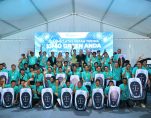
Green SM hands over the first Limo Green vehicles to driver partners in Jakarta.
Green Limo is the third four-wheel service launched by Green SM in the market, following Green Car and Green Premium, providing a mobility option specifically designed for families, larger groups, business travelers, passengers carrying more luggage, and customers who value greater space, comfort and a smooth ride throughout their journeys.
Featuring a modern exterior design and a spacious three-row cabin, the Limo Green offers the “3 Nos” advantages of an electric vehicle: no emissions, no fuel odors and no engine noise. The vehicle is also equipped with features including a multi-purpose phone charging cable, automatic air conditioning, dedicated air vents for the two rear rows, and an air filtration and deodorizing system, helping maintain a fresh, clean and comfortable cabin environment.
From September 19 to 29, 2026, Green SM will officially hand over the first batch of 500 Limo Green vehicles in Jakarta to pioneering Green SM drivers at the Green SM Kemayoran Depot. In addition to vehicle handovers to pioneer driver partners, the event features test drives, program consultations and application intake, allowing prospective partners to experience VinFast’s modern electric vehicles firsthand, learn more about the new vehicle rental program and receive valuable gifts when placing a deposit.
To celebrate the launch of the new service, Green SM is offering a special promotion for customers using Green Limo for the first time, with 20% off the trip fare, up to IDR 50,000. The promotion is valid for 15 days from September 19 through October 3, 2026, giving customers an opportunity to experience the premium 6-seat electric taxi service at a special introductory fare.
On the same day, Green SM announces its new vehicle rental program, “Rent a VinFast. Become a Green SM Driver. Be Your Own Boss,” for driver partners. With an initial payment starting from just IDR 2 million and rental fees starting from IDR 254,000 per day, the program offers a range of VinFast vehicle options to suit individual needs, including Limo Green, VF e34/Nerio Green, VF 5/Herio Green and VF 6.
Notably, to give driver partners greater confidence as they get started with Green SM, the program provides guaranteed daily earnings of up to IDR 400,000 during the first two months, depending on the applicable conditions, along with revenue sharing of up to 92%. Driver partners can also benefit from a range of incentives, including a sign-up bonus of IDR 1,000,000 per month, a brand bonus of IDR 676,000 per month, and an operating bonus of up to IDR 1,340,000 per month. In addition, driver partners receive free charging at V-Green charging stations, helping reduce operating costs and improve business efficiency.
Mr. Pham Nhat Minh Hoang, Global CEO of Green SM, said: “Green Limo not only adds a new model to Green SM’s fleet, but also offers a suitable option for journeys where space and comfort are priorities. Alongside the Green Limo service, the new vehicle rental program with flexible options gives driver partners an easier way to earn stable income with modern, cost-efficient VinFast electric vehicles. We expect the combination of suitable products, practical policies and Green SM’s 5-star service standards to deliver meaningful value to both driver partners and customers, thereby helping raise the standard of transportation services in Indonesia.”
Throughout its global development journey, Green SM has completed approximately 850 million rides covering nearly 6 billion kilometers, helping reduce more than 800,000 tons of CO₂ emissions, equivalent to the amount of carbon absorbed by approximately 36 million trees. In Indonesia, Green SM continues to expand its all-electric mobility options, increase its coverage and enhance service quality, in line with its “5 Green Promises” commitment, contributing to greener transportation and creating positive value for local communities, the environment and the local economy./.
Hashtag: #GreenSM
The issuer is solely responsible for the content of this announcement.
Arabian Post Staff -Dubai President Donald Trump returned unexpectedly to the White House on Saturday after cutting short a weekend at Camp David, as a Houthi missile attack on Riyadh pushed the renewed Saudi-Yemen conflict into the kingdom’s capital. The White House gave no explanation for Trump’s early return, which came a day before he had been scheduled to leave the presidential retreat in Maryland. The timing […]
Hong Kong has laid out a five-year programme to strengthen its established economic pillars while building new growth engines, with a gold-led commodity trading ecosystem among the centrepieces of its strategy through 2030.
Chief Executive John Lee’s 2026 Policy Address and the city’s first Five-Year Plan for Economic and Social Development set out measures covering finance, trade, shipping, aviation, innovation and technology, alongside efforts to attract capital, companies and skilled workers. The government said the programme is designed to reinforce Hong Kong’s international competitiveness and support longer-term economic development.
Gold will serve as the entry point for a broader commodity trading ecosystem. Hong Kong plans to formally launch its central clearing and settlement system for gold in the first quarter of 2027, following trial operations that began in July. The system is intended to support trading that meets international standards and strengthen links among clearing, settlement, storage and physical delivery.
Hong Kong Exchanges and Clearing will announce details this year of new renminbi-denominated, physically settled gold futures contracts. The government also plans to explore tax concessions for qualifying activities across the gold and commodity trading chain, with proposals expected to be put to the Legislative Council for consultation next year.
The Hong Kong Monetary Authority is studying whether the Exchange Fund should moderately increase its gold holdings and participate in local spot and futures markets. Existing physical gold inventories could gradually be transferred to designated vaults appointed by the Hong Kong Precious Metals Central Clearing Company.
Authorities also plan to expand storage and related infrastructure. Since the London Metal Exchange added Hong Kong to its global warehousing network in 2025, approved storage space has exceeded 60,000 square metres and inventories have risen above 20,000 tonnes of metal. More LME-approved warehouses are planned for the Northern Metropolis.
A half-rate tax concession for physical commodity trading is also being pursued to encourage traders to establish or enlarge operations in the city. A joint working group led by the Secretary for Financial Services and the Treasury will examine market opportunities and possible collaboration between exchanges.
The wider financial strategy seeks to strengthen Hong Kong’s role as an offshore renminbi business hub and an international centre for asset management and risk management. The government plans to deepen green and digital finance, widen financing channels for technology companies and strengthen trade finance, supply-chain finance, clearing, settlement and risk-management services.
A proposed Innovation and Technology Industry-Oriented Fund will receive HK$10 billion in government funding and is expected to reach at least HK$40 billion when market capital is included. Priority areas include life and health technology, artificial intelligence and robotics, semiconductors and smart devices, digitalisation, and sustainable development.
The five-year plan also calls for greater emphasis on high-value maritime services rather than relying mainly on traditional port logistics. Measures include reforms to ship registration, support for ship financing and marine insurance, and further development of maritime arbitration and other professional services.
Hong Kong also intends to build a broader aviation industry ecosystem. Plans include developing aircraft-parts processing and trading, participating in research and certification connected with domestically developed aircraft, and expanding sustainable aviation fuel supply chains across the Greater Bay Area. Authorities aim for sustainable aviation fuel to account for 1% to 3% of fuel used by departing flights at Hong Kong International Airport in 2030.
Trade policy will focus on digitalisation, diversification and higher-value supply-chain services. The government wants more companies to use Hong Kong for international orders, foreign-exchange transactions, treasury operations, trade finance and supply-chain management, while attracting regional and international headquarters.
The plan places innovation alongside the traditional pillars, with support directed towards artificial intelligence, robotics, life sciences, microelectronics and advanced manufacturing. It also identifies aerospace technology, marine technology, quantum technology and embodied intelligence as fields for longer-term development.
Spain’s data protection authority has disclosed its first notified personal-data breach in which an artificial intelligence agent allegedly carried out several stages of an intrusion, including vulnerability discovery, data modification and access to billing records. The Agencia Española de Protección de Datos said the incident involved an agent using a known large language model and marked a significant shift in the operational use of AI in cyberattacks. […]
The European Union has urged the United States to reconsider its decision to deny visas to Palestinian President Mahmoud Abbas and other Palestinian officials seeking to attend the United Nations General Assembly in New York, intensifying diplomatic pressure on Washington before the gathering. Anouar El Anouni, a spokesman for the European External Action Service, said on Saturday that the bloc regretted the extension of the visa denial […]
Waymo will launch a fully autonomous ride-hailing service in Singapore in 2028, making the city-state its first Southeast Asian market as the Alphabet-owned company accelerates its international expansion.
The company said an initial fleet of all-electric Jaguar I-PACE vehicles will arrive in Singapore over the coming months, with preparations beginning before a phased testing programme in 2027. Trained autonomous specialists will initially drive the vehicles manually while Waymo maps roads and adapts its self-driving system to local conditions.
The programme will expose the Waymo Driver to Singapore’s road geometry, dense traffic environment and monsoon weather patterns before the company seeks to move towards autonomous operation. Commercial rides are scheduled to be offered through the Waymo app in 2028, subject to regulatory approvals.
Initial operations are expected to focus on western Singapore, including the Labrador and HarbourFront area, before any broader passenger rollout is considered locally.
Singapore’s Land Transport Authority said Waymo would become the country’s newest autonomous vehicle operator, joining ComfortDelGro and Grab. The authority said it would work closely with the company to ensure deployments meet safety and regulatory requirements and help build public confidence in autonomous vehicles.
Waymo is entering a market where autonomous transport is already moving from trials towards limited passenger services. Public rides on autonomous shuttle services began in Punggol in April, while operators including Grab, WeRide, ComfortDelGro and Pony. ai are expanding deployments and testing additional routes.
Waymo’s arrival therefore adds a major US developer to a field that already includes regional and China-based autonomous driving companies. Singapore has sought to attract multiple operators as it develops a competitive autonomous mobility sector and evaluates how driverless vehicles could supplement existing public transport.
Transport Minister Jeffrey Siow said Waymo would bring technology and operational expertise while supporting Singapore’s goal of creating additional transport options. Authorities have also stressed that autonomous vehicle deployment will not be allowed to move faster than measures to retrain and support drivers whose jobs could be affected.
The government announced a manpower transition package in July aimed at helping drivers acquire new skills and, where appropriate, move into jobs created by the autonomous vehicle sector. The issue has become more prominent as testing expands from controlled trials towards services carrying members of the public.
Singapore’s regulatory framework requires autonomous vehicles to clear technical and operational assessments before carrying passengers and progressing towards driverless operation. The Land Transport Authority assesses performance on authorised routes, including whether vehicles can cover sufficient distance without intervention and handle a range of traffic situations within their approved operating areas.
The Ministry of Transport also opened a public consultation this year on a broader legislative framework covering autonomous vehicles, including responsibility, licensing, insurance, liability and enforcement. Existing rules already require authorisation for autonomous vehicle trials and use on public roads.
Waymo said its Singapore expansion would follow the phased approach it has used elsewhere. The company has completed more than 20 million fully autonomous passenger rides and more than 300 million autonomous kilometres, according to company figures, giving it one of the largest operating datasets among commercial robotaxi developers.
Its overseas push is gathering pace. Waymo is preparing for commercial autonomous services in Tokyo and has also announced plans involving London and Munich, as it seeks to extend technology developed largely on US roads to markets with different driving environments, regulations and weather conditions.
Singapore offers a compact but demanding testing ground. Heavy rainfall, complex urban traffic, motorcycles, cyclists and dense interactions around public transport infrastructure create operating conditions that differ from many of Waymo’s established US service areas.
The company says its vehicles use lidar, radar and cameras to maintain a 360-degree view of their surroundings. The Singapore fleet will initially use Jaguar I-PACE sport utility vehicles, although Waymo has not disclosed how many vehicles will be deployed at launch or the eventual size of its commercial fleet.
Arabian Post Staff -Dubai Cross-border investment in commercial property rose 56 per cent to $71.8 billion in the first half of 2026, with stronger activity in Asia and Europe helping international deals outpace the broader recovery in global real estate transactions. Data from property consultancy JLL showed overseas investment into Asian property quadrupled to $19.3 billion, while cross-border investment in Europe increased 31 per cent to $39.9 […]
Westinghouse Electric is seeking a valuation above $50 billion for a planned US initial public offering, people familiar with the preparations said, as the nuclear technology group moves towards a potential public filing as early as October. The proposed valuation has not been announced by Westinghouse or its owners and could change as preparations advance. The number of shares to be sold, the price range and the […]
Russian President Vladimir Putin has placed Nestlé’s main Russian businesses and assets linked to three French groups under temporary management by L. E. V. Management, widening Moscow’s control over foreign-owned companies still operating in the country. The presidential decree, signed and published on Thursday, covers Nestlé Russia and Nestlé Kuban, as well as interests connected to retailer Auchan, logistics group FM Logistic and Groupe Adeo, the owner […]
Arabian Post Staff -Dubai flydubai has partnered with Egnatia Aviation and Skyborne Airline Academy to expand flight instruction for the first cadet batches of its Ab Initio Pilot Training Programme, strengthening a pipeline designed to feed qualified first officers into the Dubai carrier’s growing operation. The two academies will provide practical flight training for selected candidates working towards a Multi-Crew Pilot Licence, or MPL. Cadets completing the […]
Dubai has cleared an 80-kilometre Fourth Corridor road project linking Abu Dhabi, Dubai and Sharjah, adding a major new route intended to ease pressure on the emirate’s existing inter-emirate network. Sheikh Hamdan bin Mohammed bin Rashid Al Maktoum, Crown Prince of Dubai, Deputy Prime Minister and Minister of Defence of the UAE, and Chairman of The Executive Council of Dubai, approved implementation of the project under directives […]