Iran’s World Cup players have been granted visas to enter the United States, easing a major logistical and diplomatic obstacle 10 days before their opening match against New Zealand in Los Angeles. A White House official said the players’ entry documents had been approved overnight after Iran’s ambassador to Mexico, Abolfazl Pasandideh, said the squad was still waiting for US visas. The clearance removes the most immediate […]
Hola Browser’s Windows installer was compromised to deliver an undeclared cryptocurrency-mining executable to some users, exposing a supply-chain weakness in a product that had passed application certification checks before the anomaly was detected. The affected version, Hola Browser for Windows 1.251.91.0, wrote an unexpected file named me. exe to C:Program FilesHola on some systems. The executable was not part of the certified software footprint, was not digitally […]
Amazon has unveiled an upgraded version of its Proteus warehouse robot that can take plain-language instructions from workers, marking a major step in the company’s push to automate heavier tasks across its European fulfilment network. The next-generation Proteus was shown at Amazon’s Dartford fulfilment centre east of London as part of a wider investment programme of more than €10 billion, equal to about $11.6 billion, aimed at […]
Bitcoin slipped below $60,000, extending a sharp retreat that has weakened confidence among bulls and underscored a broader shift in speculative capital towards artificial intelligence-linked equities, large technology listings and parts of the gold trade. The world’s largest cryptocurrency touched its weakest level since October 2024 after failing to hold support around $65,000, a level traders had treated as critical following last month’s attempted recovery. The latest […]
Mastercard is moving deeper into blockchain-based settlement by adding regulated stablecoins and the XRP Ledger to a wider upgrade of its global payments infrastructure, marking a significant step in the effort to make card settlement operate beyond conventional banking hours. The payments group has outlined plans to expand settlement options for issuers and acquirers, including intraday, weekend and holiday processing in fiat currencies and on-chain card settlement […]
Abu Dhabi will add a Sphere entertainment venue to Yas Island by the end of 2029, placing a $1.7 billion immersive arena beside some of the emirate’s biggest visitor attractions and intensifying its drive to become a global leisure and live-events hub. The project, announced by the Department of Culture and Tourism – Abu Dhabi and Sphere Entertainment Co., will be the first Sphere venue outside the […]
Crypto markets were hit by a sharp wave of forced selling as about $155 million in leveraged long positions were liquidated within 60 minutes, deepening a broader sell-off that pushed Bitcoin and major tokens lower and exposed the risk built up across perpetual futures and margin trading platforms. The liquidation burst reflected a rapid unwinding of bullish bets after prices broke through key support levels, leaving heavily […]
TAIPEI, TAIWAN – Media OutReach Newswire – 5 June 2026 – The global demand for AI computing power continues to experience a massive construction boom. At the highly anticipated exhibition COMPUTEX 2026 in Taipei, Karrie, a globally leading server mechanical engineering solutions provider, showcased its latest advancements in AI server chassis and rack-scale mechanical solutions. Observing the latest dynamics from the recently concluded NVIDIA GTC 2026 conference to this year’s COMPUTEX, it is evident that AI hardware infrastructure is rapidly evolving from the server level to rack-scale deployment, placing higher demands on high-density mechanical design, modular configuration, and liquid-cooling readiness. Driven by this evolution, Karrie has expanded its footprint from traditional server chassis manufacturing into the global AI hardware ecosystem, encompassing early engineering involvement, precision mechanical component development, and volume manufacturing execution.
Since its official inclusion in NVIDIA’s approved and recommended vendor lists for server chassis and rack components in September 2025, Karrie has continually advanced its collaborations based on the NVIDIA MGX architecture and DGX-related platforms. During COMPUTEX this year, Karrie’s relevant server products and mechanical solutions have been featured prominently across the booths of major technology giants, showcasing its milestone achievements spanning from front-end R&D and collaborative design to back-end precision manufacturing. As highlighted by Karrie’s official statement during the exhibition: “We are proud to support NVIDIA MGX™ and be part of the ecosystem shaping the next generation of AI factories.”
Mechanical Technology Upgrade: Transitioning from Traditional Chassis to Full-Scale AI Mechanical Integration to Accelerate Hardware Deployment
As the industry undergoes this generational technological shift, mechanical engineering has become a critical part of system readiness. Behind every advanced AI computing platform is a robust, precise, and production-ready mechanical foundation—from rack-level structures and server chassis to key brackets, frames, and other precision assemblies that support system integration, serviceability, and large-scale deployment.
Leveraging decades of experience in server chassis, precision metal and plastic components, tooling development, automation, and high-volume manufacturing, Karrie consistently turns complex AI server and rack-level requirements into practical, production-ready, and deployment-flexible mechanical solutions. These capabilities support customers in accelerating their infrastructure rollouts based on the NVIDIA MGX architecture and the next-generation NVIDIA Vera Rubin platform.
Deeply Aligned with the Core Supply Chain: Early Engineering Involvement Empowers Tech Leaders Toward Volume Deployment
At COMPUTEX 2026, in addition to NVIDIA, multiple system integrators and ODM partners also showcased Karrie’s 1U, 2U, and 6U series AI chassis and rack-related products developed based on the MGX architecture. This extensive display fully demonstrates Karrie’s executive capability in delivering comprehensive engineering solutions and rapid prototyping, solidifying its position as a highly engaged mechanical engineering partner in the global AI supply chain.
Strategic Positioning for the Future of Intelligent Computing: Serving as a Trusted Mechanical Partner to Build the Physical Foundation for Accelerated Computing
As AI factories continue to scale worldwide, Karrie is committed to serving as a trusted mechanical engineering strategic partner for global technology leaders. The Group will continue to deepen its collaboration with world-class chipmakers, server brands, and cloud service providers to build the ultimate physical foundation for the accelerated computing ecosystem.
Karrie — A Leading Mechanical Partner for Global AI Computing Infrastructure.
The issuer is solely responsible for the content of this announcement.
Karrie International Holdings Limited
Established in 1980 and listed on the Stock Exchange of Hong Kong in 1996, Karrie International Holdings Limited (1050.HK) is a leading global provider of server mechanical engineering solutions. The Group specializes in server chassis, rack-scale mechanical components, and related precision metal and plastic parts. It delivers fully integrated, one-stop solutions, encompassing engineering design, rapid prototyping, tooling manufacturing, automated production, assembly, quality validation, and global delivery, to world-leading technology brands, server customers, and cloud service providers.
As AI servers and data center infrastructure accelerate their development, server mechanical components are evolving toward higher precision, enhanced reliability, and more complex rack-scale systems. Leveraging over four decades of manufacturing expertise, strong vertical integration capabilities, and a dual-production footprint in China and Thailand, Karrie continuously participates in the development of next-generation AI server platforms and rack-level solutions, providing global customers with scalable, agile, high-quality, and supply-chain-resilient manufacturing support.
Bitget has added 15 tokenised stocks and exchange-traded funds as eligible margin assets for futures trading, extending the role of equity-linked digital assets from spot exposure into collateral management inside its unified trading system. The change took effect on June 4, UTC+8, and applies to the exchange’s Unified Trading Account and Multi-Asset Mode for USDT-M Futures. It allows users to deploy selected tokenised equities and ETFs as […]
New Delhi scrapped capital gains tax on foreign institutional investment in government securities, using an ordinance to sharpen the appeal of its sovereign debt market and draw overseas capital as the rupee faces pressure from higher energy costs and equity outflows.
The exemption, effective from 1 April 2026, covers interest income and capital gains arising from the sale, exchange or transfer of specified government securities by eligible foreign institutional investors and the Bank for International Settlements. President Droupadi Murmu signed the Income-tax Ordinance, 2026 while Parliament was not in session, amending the new direct tax framework that took effect at the start of the financial year.
Foreign investors had been subject to long-term capital gains tax of 12.5% on listed bonds held for more than 12 months and withholding tax of 20% on interest from government securities. By removing the tax burden for eligible investors, the Centre is seeking to improve post-tax returns and make rupee debt more competitive at a time when global funds are weighing currency risk, oil-market volatility and geopolitical uncertainty.
The policy shift comes as the rupee has weakened by more than 5% this year, pressured by crude prices and sustained foreign selling in equities. The currency recovered after the announcement of measures aimed at attracting foreign currency inflows, but traders continued to watch oil prices, reserve levels and the central bank’s market operations for signs of durable support.
Reserve Bank of India kept the policy repo rate unchanged at 5.25% and announced steps to encourage dollar inflows, including support for foreign-currency borrowing by public sector entities, incentives for non-resident deposits and a longer window for exporters to repatriate proceeds. The central bank also revised its growth forecast to 6.6% and raised its inflation estimate to 5.1%, underlining the pressure created by imported energy costs.
The tax relief is aimed at deepening overseas participation in government securities after the inclusion of rupee bonds in major global debt benchmarks. Fully accessible route bonds have already been added to J. P. Morgan’s emerging market debt index and Bloomberg’s emerging market local currency index, widening the pool of passive and active investors that can allocate funds to sovereign debt. A separate decision on inclusion in broader global bond benchmarks is being watched by investors because it could influence medium-term flows.
Debt inflows have remained more resilient than equity flows, but the scale has not been sufficient to offset pressure from the current account and stock-market exits. Foreign investors have pulled large sums from equities this year, while government debt has continued to attract selective buying. Higher hedging costs and expectations of currency weakness have limited enthusiasm among some global investors despite the comparatively attractive yield on rupee bonds.
Market participants expect the tax exemption to help long-only funds, pension funds, sovereign investors and reserve managers that focus on net returns after tax. The measure could also support liquidity in benchmark government securities and reduce borrowing costs at the margin if foreign demand rises. For the Centre, a broader investor base would help absorb a large borrowing programme without placing excessive pressure on domestic banks and insurance companies.
The effect may still depend on factors beyond tax policy. Currency stability, inflation expectations, oil prices, fiscal credibility and the central bank’s approach to liquidity will shape overseas appetite. Investors that hedge currency exposure must still account for hedging costs, while those that remain unhedged face the risk of rupee depreciation wiping out yield gains.
Arabian Post Staff -Dubai First Abu Dhabi Bank has entered a strategic partnership with Water. org and WaterEquity, investing in the WaterEquity Everspring Fund to expand access to safe water and sanitation across emerging markets through market-based financing. The Abu Dhabi lender said the agreement creates a platform for continuing collaboration with the global non-profit Water. org and its affiliated impact investment manager WaterEquity. The fund channels […]
Japan is preparing to replace as many as 14 ageing nuclear reactors by the 2050s, marking one of its clearest moves yet towards restoring atomic power as a central pillar of national energy security after more than a decade of post-Fukushima restraint.
The Ministry of Economy, Trade and Industry has set out a policy proposal calling for the rebuilding of between two and five reactors by the 2040s and up to 14 by the 2050s. The plan would add about 16 gigawatts of nuclear capacity, helping the country meet rising electricity demand from artificial intelligence, data centres, advanced manufacturing and wider electrification.
The proposal reflects a major shift in Japan’s energy strategy. After the Fukushima Daiichi disaster in March 2011, Japan shut all 54 operating reactors, leaving the world’s third-largest economy more dependent on imported liquefied natural gas, coal and oil. Only 15 of the 33 remaining operable reactors have returned to service, while many units face retirement pressure as they approach or exceed their permitted 60-year operating life.
Tokyo’s latest energy plan targets nuclear power at around 20 per cent of electricity generation by fiscal 2040, while renewables are expected to provide 40 to 50 per cent. Thermal power, which still accounts for a large share of supply, is expected to decline but remain important for grid stability and emergency backup. The policy removes earlier language about reducing reliance on nuclear power, replacing it with a call to maximise the use of both renewables and atomic energy.
The renewed push is driven by a combination of economic and geopolitical pressures. Japan imports most of its energy, leaving households and industry exposed to volatile fuel prices, shipping risks and currency swings. The war in Ukraine, instability in the Middle East and tighter global gas markets have strengthened the case within government for expanding domestic low-carbon baseload power.
Electricity demand, which had been broadly flat for years, is also expected to turn higher. The spread of AI computing, semiconductor plants, battery factories and digital infrastructure has increased concern that inadequate power supply could weaken Japan’s ability to attract investment. Officials view nuclear energy as a way to provide stable, large-scale electricity without increasing carbon emissions.
The plan is likely to benefit major utilities including Tokyo Electric Power, Kansai Electric Power, Kyushu Electric Power and Chubu Electric Power, although the sector still faces high regulatory, financial and social hurdles. Reactor replacement requires local consent, safety approval, heavy capital spending and long construction timelines. Japan has not built a new reactor since before Fukushima, and public trust remains fragile.
Safety concerns remain the central political obstacle. The Fukushima disaster, triggered by the March 2011 earthquake and tsunami, forced mass evacuations and left deep scepticism about official oversight of the nuclear industry. Questions over seismic risk, evacuation planning, spent fuel storage and operator transparency continue to shape public debate, particularly in communities near existing plants.
Controversies have added to the challenge. Chubu Electric has faced scrutiny over falsified seismic risk assessment data at the Hamaoka nuclear plant, a facility long viewed as sensitive because of its location in an earthquake-prone area. Incidents of that kind reinforce concerns among critics who argue that Japan should prioritise renewables, storage, grid upgrades and efficiency rather than committing to another generation of nuclear infrastructure.
Supporters counter that renewables alone will not meet Japan’s industrial needs quickly enough, given land constraints, permitting delays and the intermittency of solar and wind power. Offshore wind has long-term potential, while next-generation solar technologies such as perovskite cells are being promoted, but large-scale deployment will take time. Nuclear advocates argue that replacing old reactors with advanced designs could improve safety and reliability while supporting climate targets.
The government’s approach is to rebuild reactors at existing or decommissioned nuclear sites rather than open entirely new locations, a strategy designed to reduce political resistance and use established grid infrastructure. Next-generation reactors are expected to incorporate stronger passive safety systems and improved resilience against natural disasters, although costs and construction schedules remain uncertain.
Microsoft Edge users have been urged to update their browsers after three security flaws tied to the Pwn2Own hacking contest were publicly detailed, including one vulnerability that could allow remote attackers to execute arbitrary code if a target opens a malicious page or file. The vulnerabilities, tracked as CVE-2026-45492, CVE-2026-45494 and CVE-2026-45495, affect Chromium-based Microsoft Edge and were credited to Orange Tsai of DEVCORE Research Team, one […]
Jersey is facing a defining test over whether its finance-led prosperity can keep pace with faster, technology-driven rivals without eroding the small-island character that has long set it apart. The British Crown Dependency, once widely labelled a tax haven, has spent decades recasting itself as a regulated international financial centre. That shift has helped turn a 45-square-mile island of just over 100,000 people into one of the […]
Microsoft’s unveiling of its Majorana 2 quantum chip has intensified debate over how quickly Bitcoin and other digital assets must prepare for a post-quantum security era. The chip, presented at the company’s Build conference in San Francisco, marks the next stage of Microsoft’s long-running push to develop a fault-tolerant quantum computer based on topological qubits. Microsoft says the new processor delivers a sharp improvement over Majorana 1, […]
Asia and MENA’s video games market is on course to expand from $88.9 billion in 2025 to $103.6 billion by 2030, a 16.5% rise that underlines the region’s growing weight in the global games industry as publishers, platforms and investors look beyond slower mature markets for new growth. The latest market model points to revenue growth of 3.4% in 2026 to $91.8 billion, with the five-year compound […]
First Abu Dhabi Bank has entered a strategic partnership with Water. org and WaterEquity, placing capital behind an impact fund aimed at expanding access to safe water and sanitation across emerging markets. The Abu Dhabi lender has invested in the WaterEquity Everspring Fund, an open-ended vehicle designed to channel private capital into financial institutions and enterprises that serve low-income households and small businesses needing affordable water and […]
Dubai has launched SME in a Box, a digital platform intended to cut the time, cost and complexity faced by entrepreneurs setting up and operating small businesses in the emirate. The initiative, introduced by the Dubai Department of Economy and Tourism through the Mohammed Bin Rashid Establishment for Small and Medium Enterprises Development, gives founders a single entry point to access core services that are usually handled […]
Thailand’s richest man Sarath Ratanavadi is preparing a 140 billion baht expansion through Gulf Development Pcl over five years, placing data centres, digital infrastructure and power supply at the centre of one of Southeast Asia’s most ambitious corporate bets on artificial intelligence demand.
The plan, worth about $4.3 billion, reflects a sharp turn by Gulf from its traditional base as a power producer into a broader infrastructure group linking electricity generation, telecommunications, cloud services and industrial logistics. The investment push comes as Thailand seeks to position itself as a regional data hub, helped by rising demand for cloud computing, artificial intelligence workloads and data-localisation capacity across Southeast Asia.
Gulf’s strategy is built around a simple commercial premise: AI facilities need vast, reliable and increasingly low-carbon electricity. Data centres are among the most power-intensive assets in the digital economy, and operators are under pressure to secure stable energy supply while meeting sustainability commitments from global technology clients. Gulf’s existing position in gas-fired power, renewable energy and utilities gives it an advantage that pure technology infrastructure firms may struggle to match.
Sarath, Gulf’s chief executive and controlling figure, has spent years reshaping the group from a conventional energy developer into a conglomerate with exposure to telecoms, satellites, digital platforms and cloud infrastructure. The merger of Gulf Energy Development and Intouch Holdings created a larger listed platform linked to Advanced Info Service, Thailand’s biggest mobile operator, and Thaicom, the satellite company. That structure gives Gulf access to telecom traffic, enterprise clients and digital distribution channels that can support its data-centre ambitions.
The investment programme is expected to support new data-centre capacity, related infrastructure and power projects needed to serve hyperscale and enterprise customers. Gulf has already moved into the sector through partnerships involving global technology names and regional operators, while its digital arm has explored cloud and AI services designed for corporate and government clients. The company’s first major data-centre project has become a reference point for its expansion into facilities that can host high-density computing workloads.
Thailand’s broader investment environment has also shifted in Gulf’s favour. Authorities have approved large-scale data infrastructure projects from global technology players, including server and data-processing investments across Bangkok, Samut Prakan and Chachoengsao. Google, Amazon Web Services, Microsoft and ByteDance-linked operations have all announced or pursued major commitments in the country, intensifying competition but also validating Thailand’s role in the regional digital economy.
For Gulf, the opportunity lies not only in renting data-centre capacity but also in selling bundled infrastructure: power, connectivity, cloud access and long-term operational reliability. That model could create recurring income and reduce dependence on regulated returns from power generation. It may also help Gulf deepen its relationship with large technology clients seeking local partners that understand land, energy approvals, grid constraints and domestic regulatory requirements.
The group’s financial position gives it room to move, though the scale of the programme will be closely watched by investors. Gulf reported strong first-quarter earnings for 2026, helped by its energy operations and profit contribution from Advanced Info Service. Revenue growth and core profit gains have strengthened confidence in its ability to finance new projects, but data centres require heavy upfront spending and returns can depend on utilisation rates, long-term contracts and energy costs.
The timing is also sensitive. Across Asia, governments are competing for data-centre investment while confronting pressure on power grids, water use and land availability. Singapore’s cautious approach to new data-centre capacity has encouraged developers to look at Malaysia, Thailand, Indonesia and Vietnam, but each market faces its own constraints. Thailand has industrial land, policy incentives and improving connectivity, yet grid readiness and clean-energy availability remain decisive issues for hyperscale clients.
Gulf’s renewable energy targets are likely to form part of its sales pitch. The company has set out plans to raise the share of renewables in its generation portfolio and reduce carbon intensity, while continuing to rely on gas as a stable baseload fuel. Its long-term LNG supply arrangements also point to a strategy that balances energy security with transition commitments, even as customers demand cleaner electricity for digital operations.
Sarath’s expansion plan underscores how AI is redrawing corporate strategy beyond Silicon Valley. Energy groups, telecom operators and infrastructure funds are increasingly competing for the physical assets behind the digital boom. Gulf’s bet is that Thailand’s AI economy will be shaped as much by power plants, fibre networks and industrial sites as by software models and cloud applications.
MIT and IBM researchers have opened a new front in multimodal artificial intelligence by releasing ChartNet, a large synthetic dataset designed to teach smaller vision-language models how to read, extract and reason from charts with greater accuracy than far larger commercial systems. The dataset, available through Hugging Face, contains 1.7 million richly annotated core chart samples and a broader collection running into millions of synthetic examples. Its […]
Greenlogue/AP Dubai Electricity and Water Authority has raised clean energy’s share of its total production capacity to 21.5%, strengthening the emirate’s shift towards a lower-carbon electricity system as demand for power continues to rise across residential, commercial and industrial sectors. Saeed Mohammed Al Tayer, Managing Director and Chief Executive Officer of DEWA, said the increase reflects Dubai’s long-term strategy to align infrastructure growth with environmental sustainability, […]
Over five years, nearly 9,000 teachers and students have participated in the Fair to drive youth engagement in innovation and technology
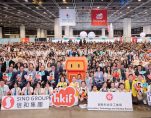
HONG KONG SAR – Media OutReach Newswire – 4 June 2026 – Organised by the Hong Kong Innovation Foundation (‘HKIF’), the Fifth Hong Kong Science Fair (‘Science Fair’) will take place from 27 to 28 June 2026 at the Hong Kong Convention and Exhibition Centre. The event will showcase around 120 shortlisted teams from primary and secondary schools across Hong Kong, presenting creative inventions that integrate artificial intelligence with a diverse range of technology applications. With Sino Group as Principal Patron, the Innovation, Technology and Industry Bureau of the HKSAR Government (ITIB) as the Supporting Bureau, and the Hong Kong Council for Testing and Certification (HKCTC) as Strategic Partner, HKIF is also honoured to have, for the first time, invited the Foundation for the Development of Science and Technology in China as an Advisory Organisation. Representatives from the Foundation will attend the award ceremony to witness the announcement of this year’s winning teams. Consistently a major draw for the community, the Science Fair is now open for online registration with free admission, and the public is warmly invited to attend in person.
Since its launch in 2021, the Science Fair has attracted participation from over 400 local schools, engaging nearly 9,000 students and teachers from Primary 4 to Secondary 6. To date, more than 2,200 creative invention submissions have been received, and the event has established itself as a key platform for youth I&T exchange.
Following Hong Kong’s first astronaut, Dr Lai Ka-ying, into space, the local innovation and technology ecosystem has attracted even greater attention. This year’s Science Fair has specially incorporated aerospace engineering elements, enabling the public to learn about the daily work and challenges of payload specialists, gain insight into the reality of aerospace research and development, and spark greater interest among young people in space exploration. Dr Lai launched aboard the Shenzhou-23 manned spacecraft and is expected to remain in space for approximately six months to conduct space science experiments and maintenance tasks. Visitors can express their support and encouragement by creating message cards for her. In addition, UBTECH Robotics, a globally leading enterprise in embodied AI robotics, will participate in the exhibition, showcasing multiple humanoid robots and offering visitors the opportunity to experience the appeal of embodied intelligence up close.
Professor Sun Dong, JP, Secretary for Innovation, Technology and Industry of the HKSAR Government, stated: ‘The Hong Kong SAR Government is fully committed to developing Hong Kong into an international innovation and technology (I&T) centre, with talent being a key driver of this growth. Now in its fifth edition, the Hong Kong Science Fair – organised by the Hong Kong Innovation Foundation – has become an annual flagship I&T education event. It offers students a valuable platform to turn their innovative ideas into practice, deepen their interest and confidence in I&T, and help bring I&T into schools and the wider community, thereby fostering a more innovation-friendly atmosphere. I look forward to seeing more young people unleash their potential through this platform, pursue careers in I&T, and contribute to the high-quality development of Hong Kong and our nation.’
Mr Daryl Ng, SBS, JP, Chairman of the Hong Kong Innovation Foundation and Chairman of Sino Group, said ‘Innovation and technology are key to Hong Kong’s long-term sustainable development and are integral to the country’s 15th Five-Year Plan. It is vital for Hong Kong to strengthen its I&T capabilities and actively contribute to national development, as underscored by the historic moment when Dr Lai Ka-ying became Hong Kong’s first astronaut. We are encouraged to see growing recognition of I&T opening up new opportunities for young people aspiring to pursue scientific research. As the Hong Kong Science Fair enters its fifth edition, its growth has been made possible by the support of the HKSAR Government, industry partners, tertiary institutions, research organisations, and our panels of judges. This year, we are grateful for the guidance and support of the Foundation for the Development of Science and Technology in China. Moving forward, the Science Fair will remain committed to nurturing talent from an early age, bringing together all sectors to promote I&T and inspire more young people to pursue careers in science and technology.’
Professor Anderson Shum, MH, Chairman of Judging Panel, Hong Kong Science Fair, President of The Hong Kong Young Academy of Sciences, said, ‘The Science Fair adopts the format of “integrating competition with exhibition,” enabling students to translate their learning into tangible and verifiable outcomes. This plays an important role in nurturing Hong Kong’s youth I&T ecosystem. I am delighted to have served as a judge for this major event over the years, witnessing students progressively enhance their presentation skills, build confidence, and broaden their horizons through exchanges with experts, participation in workshops and showcasing their work to the public. The standard of participating projects continues to improve each year, with increasing integration of artificial intelligence and diverse technological applications across different fields. Scientific research is a journey that demands passion and perseverance, and the growth of young scientists often begins with curiosity during their primary and secondary school years. Through these exchanges, we hope to leverage the role-model influence of young scientists, inspiring more students to pursue I&T as their lifelong career. I look forward to seeing our younger generation continue to grow and excel in scientific research and innovation, and officially join the community of scientists in the near future to jointly drive Hong Kong’s I&T development.’
Mr Michael Tam, Chief Brand Officer of UBTECH, said, ‘Humanoid robots are among the most promising real-world embodiments of artificial intelligence, reflecting a future in which intelligent systems are deeply integrated with the physical world. As a global pioneer in humanoid robotics, UBTECH has remained at the forefront of innovation for more than 14 years, with a long-standing commitment to I&T education. The company is dedicated to translating advanced technologies into practical, accessible educational resources. Through collaboration with like-minded partners such as the Hong Kong Innovation Foundation, we aim to inspire greater interest and engagement among both teachers and students in humanoid robotics and artificial intelligence. We are committed to supporting the development of Hong Kong’s I&T education ecosystem, helping to nurture future-ready talent and build a strong, sustainable foundation for long-term growth.’
Since its launch in 2021, the Science Fair has attracted participation from over 400 local schools, engaging nearly 9,000 Primary 4 to Secondary 6 students and their teachers. To date, more than 2,200 creative invention submissions have been received and total attendance has exceeded 120,000 visitors. The Science Fair has gradually established itself as a key platform for youth innovation and technology (‘I&T’) exchange and one of Hong Kong’s most representative I&T education initiatives. This year’s response has been enthusiastic, with over 500 project submissions received. Following preliminary judging, around 120 shortlisted teams took part in a series of workshops and mentorship sessions, and will present their projects at the exhibition in late June to compete for top awards. Gold award-winning teams from each category will have the opportunity to participate in the International Exhibition of Inventions Geneva in Switzerland, fostering idea exchange with global I&T talents.
The Hong Kong Science Fair draws tens of thousands of visitors each year. During the exhibition period, the venue will be transformed into a catalyst for city-wide I&T inspiration. In addition to student showcases, five interactive zones will offer hands-on experiences, including DIY bubble bath bomb workshops, freezer-free slushie making, themed games celebrating the Science Fair’s fifth anniversary, and modified remote-controlled cars made from upcycled household appliances, allowing visitors of all ages to explore science and innovation through engaging and enjoyable activities.
Bulu Bulu Bubble Factory: Blending science with sensory experiences, visitors can mix and mould from scratch to create a delightful ‘bathroom blind box’.
Shake Shake Ice Factory: Applying the principle of freezing point depression, participants will see how temperature can be rapidly lowered using only salt, ice and water to create personalised slushies — all without a freezer.
Scan2Play: Scan the QR Code on your phone to join the themed game celebrating the Hong Kong Science Fair’s Fifth Anniversary.
Racing Homey Kart 2.0: Showcasing the spirit of upcycling and upgrades, visitors can transform old, small household appliances into remote-controlled racing cars and compete on a dedicated track.
UBTECH Robotics Base: Featuring a wide range of robots, this zone provides a comprehensive showcase of the integration of artificial intelligence with mechanical engineering.
To celebrate the Science Fair’s fifth edition, various special experiences will be introduced. The venue will feature a hidden Science Fair character treasure hunt and check-in activity, through which visitors can redeem curated gifts upon completion. Limited-edition souvenirs, including the ‘HKSF-5 Metal Standee Collection’ and the ‘Special Edition Robo K’ blind boxes, will also be available in limited quantities. All proceeds from the HKSF Bazaar, with no deduction, will go directly to charity to support local community technology initiatives.
The Fifth Hong Kong Science Fair Details:
Date: 27 to 28 June 2026 (Saturday and Sunday)
Time: 10:00 am to 6:00 pm
Venue: Hong Kong Convention and Exhibition Centre, Hall 3FG
Admission: Free of Charge (Pre-registration online is required)
Goldman Sachs has joined Apex Group and Archax in launching a blockchain-native real estate fund, marking a fresh institutional test of whether tokenised structures can bring greater efficiency, transparency and transferability to a traditionally illiquid asset class without moving outside regulated fund frameworks. The Luxembourg-domiciled fund has been developed with LRC Group and Ownera, combining established alternative investment fund structures with on-chain issuance of fund units. The […]
Arabian Post Staff -Dubai Abu Dhabi Exports Office has begun direct site visits to UAE-based manufacturers under its AED1 billion financing partnership with Emirates Development Bank, stepping up efforts to link industrial companies with export funding, working capital support and market-expansion tools. The visits covered MEDECO, Star Paper Mill and Dana Steel, three manufacturers operating in sectors closely tied to the country’s localisation and export-growth agenda. ADEX […]



 http://www.karrie.com/
 https://www.linkedin.com/company/karrie-industrial-co–ltd-/
 https://www.youtube.com/@karrieinternational8734