Arabian Post Staff -Dubai Abu Dhabi’s International Holding Company has begun an AED1.8 billion share repurchase, opening the first tranche of an approved AED5 billion buyback after a sharp rise in first-quarter profit and continued expansion across its investment portfolio. The initial purchase, launched on 12 June, represents 36 per cent of the total programme approved by shareholders at the company’s annual general assembly on 16 March […]
Africa’s top disease control agency has warned that the true scale of the Ebola outbreak in the Democratic Republic of Congo cannot be established because response teams have not located thousands of people exposed to confirmed patients. The Africa Centres for Disease Control and Prevention said contact tracing in Ituri, the outbreak’s epicentre, remains far below the level needed to break chains of transmission. Dr Jean Kaseya, […]
The Linux Foundation has launched OpenSharing, a vendor-neutral protocol aimed at standardising how companies exchange AI agents, models and data across platforms, marking a fresh attempt to curb fragmentation as enterprises move from pilot projects to production-scale agentic AI. The project, contributed by Databricks and now hosted under Linux Foundation governance, extends the Delta Sharing protocol beyond structured data into AI-era assets such as agent skills, machine-learning […]
Refined fuel exports from the Persian Gulf have climbed this month as more tankers crossed the Strait of Hormuz, easing pressure on diesel, jet fuel, gasoline and naphtha markets starved of supply since the waterway was disrupted by the Iran war. The rebound marks a break from the squeeze that followed the closure of the world’s most important energy chokepoint after the February 28 attack on Iran […]
Mistral AI is in talks to raise about €3 billion at a valuation of roughly €20 billion, a potential deal that would sharply lift the Paris-based artificial intelligence company’s standing among Europe’s most valuable private technology groups. The discussions remain fluid and may still change in size, timing or investor composition. If completed near the terms being discussed, the financing would mark another significant jump for a […]
New Delhi has moved into crisis-management mode as the war in Iran raises fuel costs, strains the rupee and forces the Centre to balance energy security against its deficit-reduction pledge.
The latest response includes curbs on bulk diesel purchases at retail outlets, a willingness to let the fiscal deficit widen beyond the Budget target, and measures to pull in overseas capital as policymakers try to contain pressure on inflation, subsidies and the balance of payments. The measures mark a sharp shift from the calmer macroeconomic backdrop at the start of the financial year, when lower inflation and steady growth had given authorities room to focus on consolidation.
Retail fuel outlets run by public sector oil marketing companies have been told to cap high-speed diesel sales at 200 litres per customer or vehicle per day. The restriction, planned for up to 90 days, is aimed at preventing hoarding and stopping commercial users from shifting large purchases to retail pumps, where prices are lower than bulk supply rates. Diesel bought from retail outlets cannot be resold, and dealers have been asked to ensure that sales go directly into vehicle tanks or approved containers.
The decision followed a surge in purchases from retail pumps after the conflict in West Asia widened the gap between retail and bulk diesel prices. Trucking firms, contractors and other commercial users have sought cheaper supplies, adding pressure on state-run fuel retailers that already carry most of the retail burden. Diesel accounts for a large share of transport and farm fuel demand, making any disruption politically sensitive as the kharif sowing season approaches.
The fiscal impact is becoming harder to ignore. The Budget had set the fiscal deficit target for 2026-27 at 4.3% of gross domestic product, after 4.4% in the revised estimate for 2025-26. Officials are now prepared to tolerate a higher deficit, potentially around 4.8% of GDP, if subsidy costs and energy-related spending rise further. Fertiliser subsidies are also expected to climb as global input costs move up, while fuel-related tax and pricing decisions could reduce revenue flexibility.
Spending cuts across ministries are being examined, though the Centre is likely to avoid sharp reductions in capital expenditure unless market conditions deteriorate further. Infrastructure spending has been one of the main pillars of growth in the past few years, and cutting it too deeply would risk weakening private investment at a time when companies are already facing higher transport and raw material costs.
The rupee has become the other pressure point. It strengthened on Friday after Brent crude fell below $90 a barrel on hopes of a diplomatic breakthrough, but the currency remains vulnerable to oil spikes because India depends heavily on imported crude. The Reserve Bank of India has introduced measures to attract dollar inflows, including support for foreign currency deposits and lower-cost hedging routes for overseas borrowing by state-run companies. Large lenders are preparing dollar bond issues, and banks expect a stronger push to tap non-resident deposits over the coming months.
Inflation has also started to reflect the shock. Retail inflation rose to 3.93% in May from 3.48% in April, with food and fuel costs moving higher. The reading remains close to the central bank’s 4% target, but the risk is that higher diesel prices feed into freight, farm operations and food distribution. Any weak monsoon spell linked to El Niño conditions would add another layer of pressure.
Arabian Post Staff -Dubai Dubai has established the Dubai Longevity Authority under Law No. 17 of 2026, setting up a dedicated regulator to oversee one of the fastest-growing areas of healthcare, wellness and life sciences as the emirate seeks to build a global hub for advanced medicine and healthy ageing. The law was issued by His Highness Sheikh Mohammed bin Rashid Al Maktoum, Vice President and Prime […]
Arabian Post Staff -Dubai President Donald Trump said the United States and Iran could sign a peace agreement as early as this weekend to reopen the Strait of Hormuz, but Tehran pushed back against his claim, saying no final decision had been made on any settlement. The competing statements left diplomacy in a delicate phase on Friday, with Washington presenting the outline of a breakthrough while Iran […]
Investors have become so focused on AI software that many are overlooking the industries making the boom possible. I believe this could prove to be an expensive mistake. The dominant investment narrative has revolved around the companies building AI models, designing advanced chips and providing cloud-computing services. Investors have poured huge amounts of capital into firms such as NVIDIA, Microsoft, Amazon, Alphabet and Meta Platforms. Those businesses […]
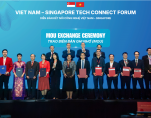
On the afternoon of May 29th, in Singapore, partnership signed at the Vietnam–Singapore Tech Connect Forum, witnessed by the highest-level government delegations from both nations, combining QuantumTX’s breakthrough MitoCharge technology with Kaopiz’s end-to-end software, AI, and IoT engineering capabilities
SINGAPORE – Media OutReach Newswire – 12 June 2026 – Kaopiz Holdings and QuantumTX announced a strategic Memorandum of Understanding (MOU) to co-develop next-generation preventive healthcare solutions powered by Artificial Intelligence, IoT engineering, and advanced health data platforms.
Kaopiz × QuantumTX sign MOU at Vietnam–Singapore Tech Connect Forum to co-develop next-generation healthcare solutions
The agreement was signed at the Vietnam–Singapore Tech Connect Forum held at Raffles City Convention Centre, Singapore, in the presence of Mr. To Lam, General Secretary and President of Vietnam, and Dr. Tan See Leng, Minister for Manpower and Minister-in-Charge of Energy and Science & Technology (MTI), Singapore – underscoring the partnership’s significance at the highest levels of Vietnam-Singapore bilateral cooperation.
Combining Hardware Innovation with Full-Stack Software & AI Engineering
QuantumTX contributes its proprietary MitoCharge technology – a clinically researched muscle-mitochondria activation system that delivers the physiological benefits of exercise without physical stress – purpose-built for the world’s rapidly aging population.
Kaopiz Holdings brings a 1,000-strong team of software engineers and IoT specialists with a proven delivery track record across healthcare, medical technology, and enterprise digital transformation. The combined capability spans:
End-to-end IoT device control software and embedded systems integration
AI-driven health data collection, processing, and analytics platforms
Cross-platform mobile applications for personalized health companion experiences
Cloud-based remote device management and real-time monitoring systems
Healthcare data security compliance aligned with applicable international standards
“Partnering with Kaopiz accelerates our next-generation product development while opening the door for MitoCharge technology to reach users across Vietnam and Southeast Asia.” – Mr. Ivan Goh, CEO, QuantumTX
Three Strategic Pillars of Collaboration
1. IoT Device & Software Development
Kaopiz will research, design, develop, and maintain software solutions deeply integrated with QuantumTX’s IoT medical devices, targeting the healthcare and rehabilitation sector.
2. Technical Support & Information Exchange
Kaopiz will embed advanced AI, Cloud Computing, and Data Analytics capabilities into QuantumTX’s medical device ecosystem, enabling predictive health insights, personalized rehabilitation guidance, and remote patient monitoring at scale.
3. Joint Market Development
Both companies will co-promote combined solutions to partners and customers across Vietnam, Singapore, and international markets, and will co-participate in healthcare technology projects, conferences, and exhibitions in the region.
“Population aging is a shared challenge that both Vietnam and Singapore must solve, and we believe technology is the key. Kaopiz is committed to leveraging our full expertise in software, AI, and IoT to co-develop next-generation healthcare solutions with QuantumTX, serving millions of people worldwide.” – Mr. Le Van Hoang, CEO, Kaopiz Holdings
A Milestone in Vietnam – Singapore Technology Cooperation
The MOU signing took place as part of the State Visit to the Republic of Singapore, at a forum co-organized by Vietnam’s Ministry of Foreign Affairs, Ministry of Science & Technology, Ministry of Finance, VSIP, and Enterprise Singapore. The forum brought together government leaders, research institutions, and enterprises from both nations to advance cooperation in science, technology, innovation, and sustainable development.
This partnership marks a tangible step in translating government-level bilateral commitment into commercial technology co-development, with a direct focus on healthcare innovation that addresses one of the most pressing demographic challenges shared by both Vietnam and Singapore.
The issuer is solely responsible for the content of this announcement.
About QuantumTX Pte. Ltd.
QuantumTX is a Singapore-based health technology company specializing in stress-free muscle activation devices backed by rigorous scientific R&D and clinical research. Its flagship MitoCharge technology activates muscle-mitochondria pathways to deliver physiological benefits equivalent to exercise, without physical exertion – designed specifically for aging populations, rehabilitation patients, and preventive health consumers. QuantumTX is committed to making healthy aging accessible and scalable across global markets.
About Kaopiz Holdings
Kaopiz is a global IT outsourcing and software development company with 12 years of experience and a core development center in Vietnam. With 1,000+ highly skilled engineers across software development, IoT solutions, AI integration, Cloud computing, Data engineering, and digital transformation, Kaopiz serves major enterprises in Japan, Singapore, and international markets across healthcare, finance, education, logistics, and manufacturing sectors, and more.
Kaopiz’s Singapore office is located at 1 Raffles Place, One Raffles Place Tower 2.
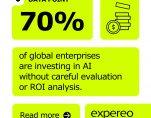
SINGAPORE – Media OutReach Newswire – 12 June 2026 – Enterprise AI spending is climbing rapidly, with boards racing to deploy the technology faster than they can measure whether it works. According to the latest IDC InfoBrief, commissioned by Expereo*, around 70% of organizations are investing in AI, motivated by its potential or by the fear of falling behind the competition, but they lag in disciplined ROI evaluation, and one in five (20%) admit they are investing aggressively in AI with little evaluation, driven by the fear of being left behind.
In Asia Pacific (APAC), that pressure is even more pronounced as 37% of organizations admit investing aggressively with little evaluation – nearly double the global average, and well ahead of the US (10%) and Europe (13%). The pressure is most acute in Australia (45%) and Vietnam (44%), while in Singapore, more than one in three organizations admit the same.
The IDC InfoBrief, based on a survey of 800 technology leaders across APAC, Europe, and the US, found that AI has become one of the most prioritized technology investments globally, with 51% of organizations planning to prioritize AI or machine learning investment over the next 12 months – rising to 61% across APAC. However, returns are failing to keep pace with the hype. Just 19% of global organizations surveyed say their AI implementations have exceeded expectations, and only 5% report they have significantly exceeded them1.
Across APAC, 40% say implementations have exceeded or significantly exceeded expectations – ahead of the global average but still leaving the majority falling short. Globally, the most-cited reasons for underperformance are inadequate or poor-quality training data (51%), higher-than-expected costs or ROI not achieved (47%), and AI not performing as well as expected (46%). For APAC specifically, the picture is broadly similar – though costs bite harder: 49% cite poor-quality training data, 54% cite cost overruns or ROI not achieved (rising to 80% in Malaysia), and 46% say AI has simply not performed as expected.
Where organizations have the right foundations in place, the results speak for themselves. Across APAC, 87% report productivity improvements in the business units most affected by AI, and 82% say quality of work has improved.
Underpinning many of these challenges is also a network and infrastructure readiness gap. Globally, 26% of organizations whose AI implementations have failed to meet expectations cite inadequate network or connectivity performance as a contributing factor. Looking ahead, 54% of organizations say they need more flexible and scalable networks to thrive in an AI-driven environment, and 51% need greater resilience and reliability to maximize uptime2. In APAC, the gap is acute as only 9% of organizations describe their network infrastructure as fully ready to support new AI, cloud, and digital initiatives, and 37% say it will need upgrading or replacing soon. The need is most acute in Thailand (74%) and Singapore (58%), both of which rank above the regional average on demand for flexible, scalable networks. In Indonesia, nearly half of all organizations (48%) say their infrastructure will need upgrading or replacing soon.
Ben Elms, CEO, Expereo, says: “Every enterprise we speak to is investing in AI, yet the data shows a clear gap opening up between AI ambition and AI outcomes. More often than not, that gap comes down to the network underneath. AI only delivers on its promise when the infrastructure carrying it is built to support it.
Without resilient, scalable, cloud-optimized networks, even the most well-funded AI programs will struggle to deliver ROI. Getting the network right is no longer an IT decision; it is one of the most important conversations happening in the boardroom today to help fulfill AI ambition.”
APAC is also leading on adoption, with 35% of organizations reporting extensive AI use across the business, against a global average of 25%3. Yet adoption alone is not enough without the right foundations beneath it.
Eric Wong, President, APAC, Expereo, says: “Asia Pacific is moving aggressively on AI adoption, but many organizations are discovering that scaling AI successfully requires more than just investment in applications and models. The underlying network, cloud connectivity, and operational readiness matter just as much. Across the region, we are seeing enterprises reassess whether their infrastructure is truly ready to support AI at scale, particularly around performance, resilience, governance, and visibility. Organizations that address those foundations early are generally seeing stronger outcomes and faster operational impact from their AI initiatives.”
Boardrooms are also waking up to the longer-term risks of unchecked AI investment. According to the survey, 54% of global tech leaders cite the creation of new security risks as a significant potential future threat for their organization’s use of AI, while 39% globally are concerned about losing track of AI-related costs and ROI once the technology is embedded across the business4. In APAC, that concern is sharper still as 41% of technology leaders in the region are worried about losing oversight of AI-related costs and ROI as adoption deepens – a figure that rises to 54% in Malaysia. Digital sovereignty is also moving up the strategic agenda, with 38% of APAC organizations rating it a high or top priority as they look to retain control over data and navigate an increasingly complex regulatory landscape.
For the full IDC InfoBrief, commissioned by Expereo, “Enterprise Horizons 2026: Where Innovation Meets Reality“ (doc #EUR154457526-IB, May 2026) please visit: [LINK]
The issuer is solely responsible for the content of this announcement.
Expereo
Expereo is a world-leading Managed Network as a Service provider that connects people, places, and things anywhere. Solutions include Global Internet, SD-WAN/SASE, and Enhanced Internet. With an extensive global reach, Expereo is the trusted partner of 60% of Fortune 500 companies. It powers enterprise and government sites in more than 190 countries, with the ability to connect to any location worldwide, working with over 2,300 partners to help customers improve productivity and empowering their networks and cloud services with the agility, flexibility, and value of the Internet, with optimal network performance.
Expereo was acquired in Feb 2021, by Vitruvian Partners which acquired a majority shareholding from Seven2.
General Motors has moved deeper into the power business by enabling vehicle-to-grid functions for some electric-vehicle customers, positioning its bidirectional EV fleet as a distributed energy resource while pursuing sodium-ion batteries for grid-scale storage. The announcement, made at GM Empower 2026 in San Francisco, centres on a software update that expands the capability of GM’s vehicle-to-home energy system. The update allows eligible users to send electricity from […]
ReactOS has crossed a symbolic gaming milestone after the open-source Windows-compatible operating system ran Valve’s original Half-Life in playable, in-game form on real hardware, marking a notable advance for a project that has spent decades trying to reproduce Windows NT behaviour without using Microsoft code. The demonstration showed the Windows version of Half-Life running on a Dell OptiPlex desktop fitted with an Intel Core i5-2400 processor and […]
Shin-Etsu Chemical plans to build a new rare-earth refining facility in Fukui Prefecture as Japan accelerates efforts to protect critical mineral supply chains from disruption caused by China’s export controls.
The project marks the company’s first new rare-earth refining facility since 2008 and comes as demand for high-performance magnets rises across electric vehicles, hard disk drives, robotics, wind power systems, defence equipment and advanced electronics. The investment is expected to exceed ¥35 billion, with ¥17.5 billion to be covered by government subsidy support, although the final cost and production schedule have not yet been fixed.
The new facility is intended to reinforce supplies for Shin-Etsu’s rare-earth magnet business and strengthen access to raw materials used in neodymium-based magnets. Heavy rare earths such as dysprosium, terbium and yttrium are particularly important because they improve magnet performance in high-temperature and high-stress applications, including vehicle motors and precision industrial systems.
Shin-Etsu already operates rare-earth refining facilities in Japan and has long been one of the country’s most important producers in the sector. Its rare-earth operations are centred in Fukui Prefecture, where it smelts materials and manufactures magnets at its plant in Echizen. The company says it works from raw materials through production to provide stable quality and supply, while also pursuing recycling and resource diversification.
The planned expansion reflects a broader shift in Japan’s industrial policy after months of tightening access to critical minerals. Chinese shipments of several heavy rare earths and gallium to Japan have been severely restricted since late 2025, heightening concerns among manufacturers that depend on these materials for magnets, semiconductors and other precision components. China continues to dominate mining, separation and refining capacity across the rare-earth value chain, giving Beijing considerable leverage over downstream industries.
Japan remains the largest rare-earth magnet producer outside China, but its manufacturers are still exposed to bottlenecks in the supply of heavy rare earths. The country has built stockpiles, backed overseas projects and encouraged recycling since the 2010 rare-earth shock, when diplomatic tensions with China exposed the risk of overdependence on one supplier. Those measures have improved resilience, but they have not removed the vulnerability.
The latest project is significant because it targets refining and processing rather than simply raw-material procurement. Mining deposits alone do not solve the supply challenge; rare earths require complex separation, purification and alloy processing before they can be turned into magnets. China’s advantage lies not only in reserves but also in decades of accumulated processing capacity, cost efficiency and industrial integration.
Shin-Etsu’s move also fits into a wider network of partnerships being pursued by Japan with Australia, France and the United States. Tokyo has backed alternative producers, supported offtake arrangements and encouraged private-sector investment in midstream processing. Australia-based Lynas has become a key non-China supplier, but output of heavy rare earths remains far below the volumes needed to replace Chinese supply in full.
The pressure is not limited to Japan. Manufacturers in the United States and Europe have faced similar supply uncertainty as export licensing delays affect rare earths used in aerospace, defence, clean energy and electronics. Companies exposed to the restrictions are searching for alternative suppliers, but industry executives warn that rebuilding a fully independent supply chain will take years.
For Shin-Etsu, the business case rests on both security and demand. Permanent magnets are central to electrification and digital infrastructure. Electric vehicles require compact, powerful motors; data centres and hard disk drives depend on precision magnetic components; wind turbines need high-strength magnets to improve efficiency. Demand growth has made the magnet supply chain a strategic concern for governments as well as manufacturers.
The company’s project is unlikely to eliminate Japan’s reliance on imported feedstock, especially for heavy rare earths where global non-China supply remains thin. It could, however, give domestic manufacturers greater control over processing, quality assurance and emergency production planning. That matters for customers in sectors where delivery delays can disrupt production lines and where material specifications are tightly controlled.
The government subsidy underscores how rare earths have moved from a specialist materials issue to a national industrial priority. Public support reduces the financial burden on companies undertaking technically demanding projects with long payback periods. It also signals that Tokyo is prepared to use industrial policy to keep strategic capabilities onshore.
By T N Ashok By the time Narendra Modi crossed Jawaharlal Nehru’s record as India’s longest-serving elected Prime Minister in continuous office, the country’s political landscape had already begun to resemble a battlefield after a great storm. The old certainties have vanished. Alliances that appeared permanent are fraying. Regional satraps are calculating survival. Political parties […]
Universities face mounting pressure to redesign coursework and examinations after a large study of undergraduates found that generative artificial intelligence is now embedded in student assignments and is being used by a measurable minority to cheat. The research, based on survey responses from 95,513 students across 20 major public research universities in the US, found that about two-thirds had used generative AI during the 2023-24 academic year, […]
Partnership with Korea Green Foundation and FIRA will help restore seagrass meadows off Geoje Island, supporting marine biodiversity, blue carbon habitats and local communities
BUSAN, SOUTH KOREA – Media OutReach Newswire – 11 June 2026 – DP World has launched its first global seagrass restoration initiative on Geoje Island in South Korea, supporting efforts to restore 2.4 hectares of coastal marine habitat over the next four years and enhancing marine biodiversity.
DP WORLD Seagrass restoration South Korea
The initiative in South Korea was formalised through a Memorandum of Understanding (MOU) between DP World, Korea Green Foundation and the Korea Fisheries Resources Agency (FIRA). The MOU establishes a long-term collaboration focused on ongoing monitoring of seagrass meadows, the development of restoration approaches informed by scientific research, and continued cooperation between public, private and community stakeholders in the coastal waters of Dadae Village on Geoje Island.
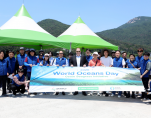
The partnership was launched on World Ocean Day, with representatives from DP World, Korea Green Foundation, FIRA and the local fishing community helping to transplant approximately 6,000 seagrass shoots along the Dadae coastline. The project aims to restore up to 2.4 hectares of seabed over the next four years and is expected to benefit local communities by supporting marine productivity and fish catch potential.
Glen Hilton, CEO & Managing Director, Asia Pacific, DP World, said: “Healthy oceans are essential to sustainable trade and thriving coastal communities. By restoring seagrass meadows in Geoje, we are helping protect one of nature’s most effective blue-carbon ecosystems while supporting marine biodiversity and local livelihoods. Together with the Korea Green Foundation and FIRA, we are supporting research, restoration and community engagement efforts that can deepen our understanding of these valuable marine ecosystems to strengthen the resilience of our coasts for future generations.”
Jung Tae-yong, Secretary General, Korea Green Foundation, said: “Seagrass meadows are an invaluable presence in supporting coastal ecosystems. They store carbon, help prevent coastal erosion and act as a breakwater for the ecosystem. This project goes beyond simple environmental protection, bringing together businesses, public institutions and local communities to expand practical marine-conservation models and public awareness of the importance of climate action.”
Seagrass meadows provide habitat for a wide range of marine species and contribute to the health of coastal ecosystems. They are recognised as an important blue carbon ecosystem because of their ability to absorb and store carbon naturally, making their protection and restoration an area of growing interest among researchers and conservation organisations.
The project will include ongoing monitoring and evaluation activities led by FIRA, alongside community engagement initiatives designed to support long-term stewardship of the restoration site. The partners also intend to build on the Geoje initiative through continued research, community engagement and public awareness activities that support understanding of marine ecosystems and coastal conservation.
This initiative builds on DP World’s broader sustainability efforts to support environmental stewardship and community resilience across Asia Pacific. From our flagship mangrove ecosystem restoration programme in Indonesia — aligned with DP World’s global commitment to restore and protect 280 hectares of mangroves by 2030 — to watershed rehabilitation initiatives in the Philippines and coral reef restoration in Australia, these efforts reflect a regional commitment to protecting the natural environments that are most critical to local communities.
Through partnerships with governments, non-governmental organisations and local communities, DP World continues to explore practical ways to contribute to the long-term sustainability of the environments in which it operates. Hashtag: #DPWORLD
The issuer is solely responsible for the content of this announcement.
DP World
DP World is reshaping the future of global trade to improve lives everywhere. Operating across six continents with a team of over 125,000 employees, we combine global infrastructure and local expertise to deliver seamless supply chain solutions. From Ports and Terminals to Marine Services, Logistics and Technology, we leverage innovation to create better ways to trade, minimising disruptions from the factory floor to the customer’s door.
In Asia Pacific, DP World employs over 11,000 people across 22 geographies. We operate 17 ports and terminals, complemented by a comprehensive suite of end-to-end supply chain solutions – to connect the region to the rest of the world.
SpaceX plans to begin testing artificial intelligence data centres in orbit by late 2027, accelerating Elon Musk’s push to turn the company’s satellite and launch network into a new layer of global computing infrastructure. The programme would move part of the AI computing race beyond land-based data centres, where power shortages, grid constraints, cooling costs and local opposition have become major obstacles for technology companies. The first […]
Researchers reviewing federally backed evidence on alcohol and health have recommended that adults consume no more than one alcoholic drink a day, after finding no net health benefit from even low levels of regular drinking. The findings sharpen a long-running public health debate over whether moderate drinking can be considered safe or beneficial. The work, commissioned to inform the 2025-2030 US dietary advice, found that one drink […]
Dubai’s push to turn long-term tenants into homeowners has crossed Dh5 billion in residential transactions, with more than 3,200 residents buying their first homes through the First-Time Home Buyer Programme since its launch in July 2025. The scheme, run by Dubai Land Department and the Dubai Department of Economy and Tourism, has drawn nearly 45,000 registrations in less than a year, underlining strong demand among residents seeking […]
A small change in central bank wording has given banks fresh room to mobilise foreign-currency deposits, potentially drawing as much as $50 billion into India at a time when the rupee and external balances are under pressure.
The Reserve Bank of India’s June package centres on Foreign Currency Non-Resident Bank deposits, or FCNR deposits, a long-used channel through which overseas citizens place foreign-currency funds with banks. The decisive shift lies in the way the central bank has structured the swap window and permitted banks to use incentives, including leverage, to make the deposits more attractive to wealthy overseas savers.
Under the scheme, banks can mobilise fresh three- to five-year FCNR deposits between 8 June and 30 September 2026 and swap the dollars with the RBI. The facility effectively removes the usual hedging burden that makes such deposits expensive for banks, as the central bank absorbs the foreign-exchange cost. The operational window will remain available until mid-October for eligible deposits raised during the mobilisation period.
The change has revived memories of 2013, when a similar facility helped banks raise about $34 billion during a period of sharp rupee weakness. This time, estimates from market participants range from about $20 billion to nearly $50 billion, depending on deposit pricing, rupee expectations, global interest rates and the ability of banks to market the product aggressively in the Gulf, North America, Britain and other diaspora-heavy markets.
Punjab National Bank chief executive Ashok Chandra has said banks could collectively raise $35 billion to $40 billion, with his own institution aiming for about $2.5 billion to $3 billion. Other lenders, including Canara Bank, Federal Bank and Indian Bank, are expected to compete for deposits by offering returns that can compare favourably with low-risk dollar assets, particularly once the swap benefit is factored into their pricing.
The subtle but consequential part of the circular is the permission for banks to offer leverage to depositors. That means eligible clients may be able to borrow abroad and place the proceeds into FCNR deposits, amplifying inflows beyond what would have arrived through ordinary savings alone. Market analysts see this as the feature that could lift the scheme from a modest stabilisation tool into a sizeable capital-flow channel.
The RBI has paired the deposit push with broader measures designed to deepen debt-market participation and ease pressure on the currency. These include expanding access to government securities, relaxing certain concentration limits, and improving the investment framework for foreign portfolio investors. The package comes after the rupee touched record lows, weighed down by elevated crude prices, portfolio outflows and a stronger dollar environment.
The immediate market reaction has been visible in government bonds. Short-end yields have fallen as banks and overseas investors reassessed the likely liquidity impact of dollar inflows converted into rupees. The two- to five-year segment has drawn stronger demand, while the curve has steepened as longer tenors remain more exposed to global rate movements and fiscal supply concerns.
For banks, the economics are straightforward. Without central bank support, hedging a multi-year dollar liability into rupees can wipe out much of the advantage of raising FCNR deposits. With the RBI taking that cost away, lenders can offer higher headline rates to overseas depositors while still obtaining rupee liquidity at competitive levels. The exemption from reserve requirements on eligible deposits further improves the economics by freeing banks from maintaining cash reserve ratio and statutory liquidity ratio buffers on those funds.
The policy also serves a macroeconomic purpose. Large dollar inflows can strengthen reserves, cushion the balance of payments and reduce the need for more aggressive currency-market intervention. They can also help offset pressure from oil import costs and equity-market withdrawals, both of which have weighed on external sentiment during the current financial year.
Yet the scheme carries risks. Leveraged deposits can be sensitive to interest-rate differentials and currency expectations. If global yields move sharply higher or confidence in the rupee weakens, flows may become less durable. The one-year lock-in reduces early withdrawal risk, but it does not fully eliminate rollover pressure once deposits mature. Banks also need to manage concentration risk, especially if a large share of funds comes from a narrow group of depositors or geographies.
Egypt’s Suez Canal recorded its strongest monthly revenue since early 2024 as oil tankers turned increasingly to the Red Sea route after the effective shutdown of the Strait of Hormuz disrupted Gulf energy flows. Revenue from the waterway reached about $419 million in April, up 27 per cent from a year earlier, supported by a sharp rise in tanker crossings and higher net tonnage. The canal handled […]
Apple has sharply narrowed software support for its smartwatch line, leaving the Apple Watch Series 8, first-generation Ultra, second-generation SE and several older models outside the watchOS 27 upgrade cycle as it shifts the platform towards artificial intelligence features and newer chipsets. The change means millions of users who bought relatively modern Apple Watches will remain on watchOS 26 unless they move to newer hardware. The supported […]
Morpho has secured $175 million from a group of heavyweight financial and crypto investors, strengthening its bid to turn decentralised lending into core infrastructure for global credit markets. The funding round was co-led by Paradigm, a16z crypto and Ribbit Capital, with participation from Apollo Funds, Circle Ventures, VanEck, Ledger Cathay, Variant, Wintermute Ventures, Prelude, IOSG, HashKey, Mirana, NJJ Capital, SBI Group and Bpifrance. The raise ranks among […]




 https://kaopiz.com/en/
 https://www.linkedin.com/company/kaopiz/
 https://x.com/KaopizGlobal
 https://www.facebook.com/com.kaopiz