Cybersecurity researchers have uncovered a human-operated phishing platform that impersonates advertising products linked to ChatGPT, Claude, Gemini and other artificial intelligence brands, using convincing fake browser windows to steal account credentials and multifactor authentication codes. Researchers Oleg Zaytsev and Ofek Ronen at browser security company Island disclosed the operation on October 6 after tracking a network of sites pitched to advertising professionals as tools for campaign optimisation, […]
Meta says its Muse Spark artificial intelligence models helped mathematicians produce answers to five previously open research questions using the standard Meta AI chat interface, highlighting a new form of collaboration between general-purpose AI and expert researchers. The company published six mathematics papers on October 2 covering probability, differential equations, group theory, optimisation, arithmetic physics and non-associative algebra. Five present answers to questions Meta described as previously […]
By Dr. Gyan Pathak Members of Parliament of INDIA bloc and other opposition parties began their Save Democracy March on Tuesday October 6 from the Parliament to Election Commission of India (ECI) in protest of “Vote Theft” and irregularities in SIR process, but only to be stopped by the Delhi Police. They were not allowed […]
By Ashok Nilakantan Ayers WASHINGTON: The battle lines for America’s November 3 midterm elections are now unmistakably drawn. With barely a month remaining, President Donald Trump is turning the contest for control of Congress into a personal referendum on his presidency, urging Americans to vote as though his own name were on the ballot. For […]
HANOI, VIETNAM – Media OutReach Newswire – 6 October 2026 – Vingroup and Alstom, a global leader in rail technology, have signed a rolling stock contract and a Technology License Agreement (TLA). Under the agreement, Alstom will transfer technology for train manufacturing and assembly in Vietnam and supply a total of 200 Metropolis trainsets to accelerate the operation of Hanoi’s urban rail projects.
Ms. Nguyen Thu Hang, CEO of Vinhomes (left), and Mr. Yann Maixandeau, Alstom’s Managing Director for East Asia, sign the contract between the two parties.
Under the contract, all trains designed and manufactured by Alstom for Hanoi’s urban rail lines will be new-generation five-car trains, offering advanced features in design, operational efficiency and safety. The aluminium car body reduces axle load, saving energy and reducing track wear. The wide-body design maximises interior space and increases passenger capacity. The train runs fully automated and driverless, at GoA4, the highest grade of automation. The modern braking system combines regenerative and disc brakes, ensuring safety while recovering energy during braking.
The first 83 trainsets will be designed and manufactured at Alstom’s Valenciennes Petite-Forêt site in France, one of Alstom’s centres of expertise for metros. In addition to supplying the 83 complete trainsets, Alstom will provide technology, engineering expertise, tooling support and key components, enabling Vingroup to develop local capabilities to manufacture and assemble the next 117 trainsets in Vietnam.
The contract between Vingroup and Alstom lays an important foundation for strengthening Vietnam’s self-reliance and modernising its rail industry ecosystem. The partnership also opens opportunities to establish a long-term industrial partnership and progressively expand Vietnam’s participation in the global value chain.
Mr. Martin Sion, Alstom CEO, said:“This agreement is a major milestone for Alstom in one of the fastest-growing mobility markets in the world. By combining Alstom’s global expertise with VINGROUP’s industrial strength and long-term vision, we are creating a unique partnership that supports both the expansion of Hanoi’s metro network and the development of local rail capabilities. This agreement also demonstrates the strength of French rail technology and reinforces Alstom’s position as a trusted partner for major mobility projects across the region.”
Mr. Nguyen Viet Quang, Vice Chairman and CEO of Vingroup, said:“High-speed rail, urban rail, bridges, ports, logistics and other next-generation transport infrastructure are among the key areas under Vingroup’s Infrastructure pillar. Our strategy is to connect world-class international resources, technologies and expertise with the strong execution capabilities of Vingroup’s ecosystem, enabling us to contribute to the development of infrastructure platforms with long-term significance for Hanoi and Vietnam.”
Vingroup is the general contractor for Hanoi’s metro projects through its subsidiary Vinhomes. The partnership with Alstom aims to provide rolling stock for Hanoi’s urban rail projects while progressively developing local capabilities, enabling Vingroup to contribute over the long term to the development of the city’s urban rail network.
Under Hanoi’s Capital Master Plan with a 2045 vision, the city’s urban rail network is planned to reach 979 kilometres, comprising 18 lines and serving as the backbone of the city’s public transport system.
With a total planned length of nearly 1,000 kilometres, the network would also represent one of the largest urban rail development programmes in Southeast Asia, helping reduce traffic congestion, mitigate environmental pollution and improve the quality of life for Hanoi’s residents.
Hashtag: #Vingroup
The issuer is solely responsible for the content of this announcement.
About Vingroup
Established in 1993, VINGROUP is one of the leading diversified private economic groups in the region, operating across six core sectors: Industrials & Technology, Real Estate & Services, Infrastructure, Green Energy, Culture and Social Enterprises.
Vinhomes is Vietnam’s leading real estate brand, pioneering the development of large-scale, high-quality urban communities with professional planning, comprehensive amenities and a modern, green and clean living environment, helping shape new lifestyles for Vietnamese residents.
Alongside 32 urban developments currently in operation across the country, Vinhomes continues to focus on developing new-generation mega and super-scale urban developments of leading regional scale and stature, aspiring to create “some of the world’s most desirable places to live” while contributing significantly to the transformation of Vietnam’s urban landscape.
Alstom is the pure rail leader, committed to making rail the backbone of sustainable transportation. We design and deliver a complete range of future-ready solutions – from high-speed and regional trains to metros, monorails, trams, turnkey systems, end-to-end services, infrastructure, signalling and digital rail solutions. With 87,800 people in 61 countries, Alstom brings together global expertise and multi-local presence to make every journey smarter, cleaner and more enjoyable. Together with our partners and customers, we realise the power of rail. Listed in France, Alstom generated revenues of €19.2 billion for the fiscal year ending 31 March 2026.
Upgrades improve print quality, strengthen security and simplify ID card issuance
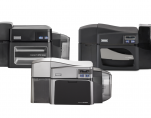
SINGAPORE – Media OutReach Newswire – 6 October 2026 – HID, a global leader in trusted identity solutions, is rolling out enhancements across its FARGO® DTC ID card printers, including the DTC1250e, DTC4500e and DTC1500 models, to help organizations issue secure, professional-quality ID cards faster, with less IT support and the ability to easily scale as needs evolve.
Organizations that issue ID cards — from schools and healthcare systems to government offices, corporate campuses and others — need printers that are easy to operate, produce consistently high-quality credentials and keep pace with growing security requirements. The latest enhancements address each of those priorities.
Built to Print: Faster, Sharper Output and Stronger Security Speed and reliability are essential for high-volume credential issuance. Printing more cards in less time with fewer interruptions, these printers have been updated with newer, faster hardware and electronics platforms. Support for high-capacity ribbons also streamlines the issuance workflow and maintains high productivity, reducing reloads and lost time. For front-desk and HR staff who issue dozens of badges a day, this means shorter lines and less time waiting on a stalled print job.
“We’ve been at this for a long time. For more than three decades, organizations have trusted us to power their ID badging programs,” said Apryl Erickson, VP and Head of FARGO. “With thousands of printers in the field worldwide, we’re excited to build on that legacy by delivering enhanced solutions that provide greater value to our end users and support their mission-critical issuance processes.”
Card quality matters just as much as issuance speed. With 300 x 600 dpi resolution, an enhanced color profile and adjustable K-panel printing, organizations benefit from having professional-quality ID cards that look sharper, have crisper text, cleaner logos and more accurate color.
When an organization issues credentials, they need to enhance card security and safeguard cardholder data. As such, all DTC printers offer enhanced AES-256-GCM encryption and resin scramble data protection. On the DTC1500 and DTC4500e, a built-in, customizable watermark overlay adds a layer of security at no added cost.
Built to Last: Secure, Reliable, Sustainable Performance and Less Downtime Reliable and sustainable, the enhancedDTC printers are backed by three-year product warranties, provide ongoing printer health monitoring and are specifically engineered for efficient energy use.
Organizations also need to keep operator maintenance low. An integrated diagnostic utility and Color Assist tool are now built directly into the printer driver, so common issues can be identified and resolved without a support call. An optional OLED SmartScreen on the DTC1250e further simplifies day-to-day operation, helping non-technical staff be productive from day one with no IT ticket required.
Built for More: Room to Grow Without Starting Over Programs rarely remain static, and organizations need to scale as their needs grow without incurring the cost of new hardware. FARGO DTC printers offer field-upgradable dual-side printing and encoding options that let organizations start with what they need and add capabilities later, without having to buy new base hardware, as programs expand.
These upgrades build on more than 30 years of DTC printing expertise. The portfolio also integrates with HID’s broader ecosystem for access control and identity management, helping organizations expand their credentialing programs as needs evolve. The DTC1500 and DTC4500e are also compatible with FARGO Connect™, a secure, cloud-based card printing platform that provides real-time fleet visibility.
The enhanced DTC printer portfolio is commercially available now. Product availability for enhanced FARGO DTC1250e and DTC4500e printers is slated for late October/early November, varying by region. Enhanced FARGO DTC1500 units will follow later in Q4 2026.
Building on these enhancements, HID plans to further expand the FARGO DTC portfolio later this year with a streamlined, single-sided printer designed for organizations with lower-volume issuance needs. It will not be available in the United States and Canada. It will be offered only in select regions outside these markets. The new model will bring the same reliability and ease of use while providing an accessible entry point into the broader FARGO portfolio.
The issuer is solely responsible for the content of this announcement.
About HID
HID powers the trusted identities of the world’s people, places and things. We make it possible for people to transact safely, work productively and travel freely. Our trusted identity solutions give people convenient access to physical and digital places and connect things that can be identified, verified and tracked digitally. Millions of people around the world use HID products and services to navigate their everyday lives, and billions of things are connected through HID technology. We work with governments, educational institutions, hospitals, financial institutions, industrial businesses and some of the most innovative companies on the planet. Headquartered in Austin, Texas, HID has over 4,500 employees worldwide and operates international offices that support more than 100 countries. HID is an ASSA ABLOY Group brand. For more information, visit www.hidglobal.com.
Qualcomm has agreed to license patents underpinning Huawei Technologies’ LogicFolding chip architecture as part of a broad multiyear intellectual-property agreement spanning 5G, artificial intelligence, computing and networking technologies.
The agreement gives Qualcomm access to technology Huawei has presented as an alternative route to higher semiconductor performance when conventional transistor shrinking becomes harder and more expensive. It also marks an important commercial endorsement of Huawei’s expanding patent portfolio as the company seeks a larger role in global AI and computing markets.
Huawei and Qualcomm said the arrangement includes cross-licences to their patent portfolios across multiple technology fields. Qualcomm will separately purchase certain Huawei patents registered in the United States covering computing, AI, networking and other technologies. That purchase remains subject to required regulatory approvals.
Financial terms and the duration of the agreement were not disclosed. Huawei said completion of the transaction would lift the cumulative value of its patent licensing agreements above $6.9 billion. The company has said its intellectual-property licensing operation has generated positive revenue since 2021.
LogicFolding forms part of Huawei’s Tau Scaling Law, a semiconductor design framework unveiled in May. Rather than depending solely on geometric scaling — making transistors progressively smaller — the approach seeks to reduce the time required for signals to travel through chips and electronic systems.
Huawei says LogicFolding can shorten critical signal paths by reorganising circuits across vertically integrated layers. The company argues that compressing signal-propagation delay can raise effective transistor density and improve performance and energy efficiency without relying entirely on successive advances in lithography.
The technology has particular strategic importance for Huawei because US export controls have restricted its access to some advanced semiconductor equipment and technologies. China-based chipmakers cannot obtain the most advanced extreme-ultraviolet lithography systems made by ASML, complicating efforts to manufacture chips using leading-edge processes through conventional methods.
Huawei has therefore increasingly emphasised architecture, packaging, interconnection and system-level optimisation as ways of extracting more computing performance from available manufacturing technology. LogicFolding is one element of that effort, although Huawei’s performance claims and longer-term projections remain subject to commercial-scale validation.
Huawei has already introduced the architecture in its latest Kirin processors. The Kirin 9050 Pro used in the Mate XT 2 foldable smartphone incorporates LogicFolding, providing an early commercial application of the design approach. Huawei has also outlined plans to extend the underlying method beyond mobile processors towards AI accelerators and other high-performance computing systems.
The patent arrangement does not mean Qualcomm is adopting Huawei’s complete chip architecture in its products. Patent licensing provides legal rights to use covered inventions under agreed terms, while individual product designs, manufacturing decisions and implementation choices remain separate. Neither company disclosed which Qualcomm products, if any, could eventually incorporate technologies covered by the LogicFolding patents.
The broader agreement also deepens a long-running intellectual-property relationship between the companies. Huawei made its first patent-licensing payment to Qualcomm in 2001, while the new pact is their first licensing agreement to encompass 5G technologies.
John Han, executive vice-president and general manager of Qualcomm Technology Licensing, said the agreement recognised Huawei’s continuing innovation and intellectual property in 5G and other technology fields. He also said it reaffirmed recognition of Qualcomm’s 5G technology and its standard-essential-patent licensing programme.
Huawei chief intellectual property officer Alan Fan said the agreement demonstrated the value of Huawei’s innovations while recognising Qualcomm’s foundational contributions to modern communications technology. Both companies said their licensing practices were intended to be consistent with fair, reasonable and non-discriminatory principles.
The deal comes as Qualcomm broadens its business beyond smartphone processors into personal computers, automotive systems, networking and data-centre computing, areas where efficient AI processing and high-speed interconnects are increasingly important.
Qualcomm’s licensing business remains central to its model, with the company saying its portfolio contains 200,000 granted and pending patents across more than 100 countries and jurisdictions, including foundational cellular and AI inventions.
Luxury homes in central London are approaching a 50% fall in inflation-adjusted value from their market peak, underlining the scale of a decade-long downturn that has reshaped one of the world’s best-known high-end property markets. Prime central London values are now about 26% below their 2014 peak in nominal terms, according to Savills, after falling another 2.5% during 2026 through its September assessment. Once the rise in […]
Greenlogue/AP Federal climate forecasters say the strengthening El Niño has a greater than 90 per cent chance of becoming very strong during the Northern Hemisphere autumn and winter, increasing risks of disruptive rainfall, drought and heat across several regions. The US Climate Prediction Center said in its September assessment that El Niño had intensified during August, with sea-surface temperature anomalies exceeding 3C in the eastern equatorial Pacific. […]
By Dr. Gyan Pathak In a most significant observation, the Supreme Court of India said on Monday, October 5, if any decision taken by the Election Commission is found not to be in accordance with law, the court can annul it. The Supreme Court issued notices to and sought reply in a week from CEC […]
By Nantoo Banerjee The hand-picked 30-share sensitive index (Sensex) of Bombay Stock Exchange, which has long been seen as the country’s overall industry performance barometer, seems to be losing its reliability under profit-booking punters’ whims. The Sensex faced sharp selling pressure last week, closing down at 72,972.56 after plunging over 1,000 points earlier in the […]
BANGKOK, THAILAND – Media OutReach Newswire – 5 October 2026 – The Long-Term Resident (LTR) visa has attracted 12,010 high-potential foreigners to Thailand in four years, generating approximately USD 1.28 billion (THB 43 billion) in economic value, according to the Board of Investment (BOI). The visa is a key mechanism for attracting executives and highly skilled personnel for future industries while increasing purchasing power and stimulating domestic spending and economic activity. A new online system now links services from four government agencies in an integrated process.
Mr. Narit Therdsteerasukdi, Secretary General of the Thailand Board of Investment (BOI)
Introduced in September 2022 to attract high-potential foreigners to reside and conduct economic activities in Thailand, the LTR visa program has generated an average economic value of more than USD 107,000 (THB 3.6 million) per recipient, according to BOI data. The calculation covers visa fees, spending in Thailand by visa holders, direct investment, and tax revenue from highly skilled professionals.
Amid intensifying global competition for highly skilled personnel, the LTR visa is an important mechanism for bringing global talent into Thailand. This is particularly relevant as the country prepares for a new wave of investment in advanced-technology industries, including semiconductors and advanced electronics, digital technology and AI, humanoid robotics, aviation, and biotechnology.
“The LTR visa is a strategic pillar to attract global talent as Thailand absorbs a new wave of advanced technology investments,” said Narit Therdsteerasukdi, Secretary General of the Board of Investment. “Drawing top-tier executives and technical specialists from around the world is vital to strengthening our national competitiveness and securing technology transfers from international partners.”
Approved LTR visa recipients primarily come from leading economies. The United States accounts for the largest group, with more than 2,400 approvals, followed by Japan with more than 1,300 and the United Kingdom with more than 1,000. Japanese nationals comprise a notable share of the specialist bracket, aligning with Japan’s heavy footprint in Thailand’s automotive and precision-electronics supply networks.
The 12,010 approved LTR visa recipients fall into five categories: 1,779 Highly-Skilled Professionals; 1,043 Work-from-Thailand Professionals, who work from Thailand for overseas employers; 737 Wealthy Global Citizens; 4,561 Wealthy Pensioners; and 3,891 Dependents of recipients in the first four categories.
Among recipients in the Highly-Skilled Professionals and Work-from-Thailand Professionals categories, 54% hold executive-level positions and 36% are professionals in various fields; the remainder are at the technical level. Applicants in each category must meet specific criteria, such as requirements relating to assets, income, investment evidence, work experience, and health insurance, and undergo rigorous checks by the relevant agencies.
To handle rising application volumes and remove long-standing administrative bottlenecks, the BOI rolled out an integrated digital processing portal in September 2026. The platform centralizes review procedures across four primary state bodies: the Department of Consular Affairs, the Immigration Bureau, the Department of Employment, and the Revenue Department.
Complementing the portal, the Thailand Investment and Expat Services Center (TIESC), a one-stop service center, is located on floors 6-7 of the Parade Zone at One Bangkok. “The center is intended to strengthen Thailand’s competitiveness in continuously attracting high-potential talent from around the world,” said Mr. Narit.
In addition to attracting foreign talent through the LTR visa, BOI also facilitates visas and work permits for executives and personnel working in BOI-promoted businesses through the BOI Visa, and offers the Smart Visa for startups. BOI also supports the skills development of Thai personnel through the Skill Bridge measure, and helps Thai entrepreneurs adopt modern technology to enhance their competitiveness through the Business Transformation measure. These measures work hand in hand to attract international experts, develop Thai personnel, and upgrade Thai businesses, strengthening Thailand’s readiness for the transition to a new economy driven by technology and innovation.
Note: Currency conversions are based on the Bank of Thailand’s average selling rate of approximately 1 USD = 33.6 THB.
The issuer is solely responsible for the content of this announcement.
Thailand Board of Investment (BOI)
Established in 1966, the Office of the Board of Investment (BOI) has played an important role for more than 60 years in promoting value-creating investment by both foreign and Thai investors, strengthening competitiveness and supporting Thailand’s sustainable economic restructuring toward the new economy.
Etihad Rail’s expanded passenger service could alter residential demand around stations in Abu Dhabi, Dubai and Sharjah, with rental enquiries likely to respond before sale prices, property consultancy Betterhomes has said. The assessment follows the official launch of the UAE national passenger rail network on September 30, when services expanded beyond the Abu Dhabi-Fujairah introductory route to include Dubai’s Al Yalayis Station and Al Dhaid in Sharjah. […]
Arabian Post Staff -Dubai Yemen’s internationally recognised government has ordered its armed forces into a nationwide campaign to retake Houthi-held territory, marking a sharp expansion of fighting after weeks of escalating confrontation involving the Iran-backed group and Saudi Arabia. Rashad Al-Alimi, chairman of the Presidential Leadership Council and supreme commander of the armed forces, announced the operation on Sunday, saying the government was moving from preparation to […]
HONG KONG SAR – Media OutReach Newswire – 5 October 2026 – Amid rising operating costs and accelerating digital transformation, many small and medium-sized enterprises (SMEs) in Hong Kong are facing increasing pressure from equipment investment, limited manpower resources, and the growing complexity of print management across multiple departments. For organizations with multiple teams, office locations, or hybrid work arrangements, maintaining a reliable and efficient printing environment at a reasonable cost has become an important operational challenge.
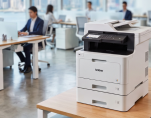
Most businesses primarily print A4 documents such as contracts, invoices, reports, and administrative paperwork. When A4 printing is sufficient to meet the majority of daily business requirements, investing in larger and more expensive printing equipment may not be necessary. Brother’s Managed Print Service (MPS) allows businesses to flexibly deploy printing resources according to actual operational needs without incurring substantial upfront capital expenditure. The service also provides comprehensive consumables management, maintenance, and professional technical support, making print management simpler and more efficient.
Comprehensive Print Management That Reduces Administrative and IT Workloads
Traditional printer ownership often involves purchasing equipment, replenishing consumables, arranging repairs, and managing technical support, all of which can increase administrative efforts and hidden operating costs, particularly for SMEs without dedicated IT or administrative teams.
Brother’s Managed Print Service includes printer usage, consumables supply, maintenance services, and technical support. This enables businesses to enjoy a reliable printing experience without spending additional time managing day-to-day printing operations, allowing resources to be redirected toward core business development.
Eliminate Large Capital Expenditure and Improve Cash Flow Management
For growing businesses and startups, major investments in office equipment can significantly impact cash flow planning.
Under the monthly subscription model, businesses pay a fixed monthly fee to access professional-grade Brother printing equipment without making a substantial upfront investment. The service also does not impose a fixed monthly print volume limit, enabling organizations to adjust printing usage and device deployment according to operational needs. This flexibility helps businesses control costs more effectively while minimizing resource underutilization and wastage. Flexible Multi-Device Deployment for Greater Departmental Productivity
For organizations with multiple departments or work teams, relying on a single shared printer can often result in wait times and reduced document processing efficiency.
Brother’s Managed Print Service solution enables businesses to deploy multiple printers according to actual operational requirements. For example, administrative, human resources, finance, and sales departments can each be equipped with printers tailored to their specific needs. This helps minimize waiting time, reduce cross-department disruptions, improve workflow efficiency, and enhance document confidentiality.
The solution is also well-suited for organizations with multiple offices, retail outlets, or distributed business teams, providing centralized management of multiple devices while ensuring consistent technical support and after-sales service.
Proactive Consumables Replenishment Minimizes Business Disruptions
Many businesses have experienced workflow interruptions caused by depleted toner or consumables, potentially delaying important document production, customer service, and internal operations.
Brother’s Managed Print Service automatically monitors printer performance and consumables usage, proactively arranging replenishment before supplies run low. For industries with high printing demands, such as insurance, financial services, logistics, professional services, and education, this not only reduces administrative workload but also minimizes inventory management and procurement-related tasks.
Designed for Hong Kong Offices and Hybrid Work Environments
As hybrid working becomes increasingly common, businesses require more flexible approaches to printer deployment.
Brother offers a range of compact yet feature-rich printers that are particularly suitable for Hong Kong’s space-constrained office environments, departmental workspaces, and shared offices. With a smaller footprint while still meeting everyday business printing requirements, these devices help organizations make better use of valuable office space.
In addition, Brother provides remote technical support services to assist with device setup, network connectivity, and other technical issues, reducing the day-to-day support burden on IT teams.
Five Key Benefits of Choosing Brother “Managed Print Service”
Reduce large upfront procurement costs and adapt flexibly to changing business needs
Proactive consumables replenishment to minimize inventory management and purchasing efforts
Maintenance and professional technical support to reduce equipment downtime risks
Automated usage monitoring to lower administrative and management workload
Compact printer design ideal for Hong Kong’s limited office space
Focus on Growing Your Core Business
Through its monthly subscription model, flexible device deployment, automated consumables management, and professional technical support, Brother’s Managed Print Service helps businesses simplify print management, reduce overall operating costs, and improve productivity across departments and locations.
When most printing requirements consist primarily of A4 documents, businesses can select the most suitable device configuration based on their actual operational needs without allocating additional resources to infrequent printing demands. By adopting a more flexible and streamlined print management approach, organizations can focus on growing their business, serving customers, and driving innovation, ultimately strengthening their competitive advantage.
Information contained in this release is accurate at the time of publication and is subject to change without prior notice. Hashtag: #BrotherHK #BrotherMPS #BusinessSolutions #OfficeSolutions #PrintManagement #PrinterRental #OfficeSolutions #Sustainability
The issuer is solely responsible for the content of this announcement.
About Brother International (HK) Limited
Founded in Japan in 1908, Brother has over 110 years of history. It has developed into an international brand with 16 production facilities and 51 sales points worldwide, spanning 44 countries. Brother produces high-quality and innovative products for the printing and imaging, labelling, and sewing markets, maintaining a leading position in the industry. Its main products include a variety of inkjet and laser printers, multifunction printers, fax machines, scanners, label printers, and a range of home sewing machines and commercial embroidery machines.
As a trusted brand, Brother adheres to a “customer-first” philosophy in all aspects of its business, continually meeting diverse customer needs and market challenges with comprehensive and high-quality solutions.
Brother International (Hong Kong) is one of the leading suppliers of home, office, and industrial products in Hong Kong. Established in 1994, it has been serving customers in Hong Kong and Macau for over 30 years. According to IDC’s Global Hardware Peripheral Tracker report, Brother’s A3 multifunction colour inkjet printer has been the number one in shipment volume in the world for 18 consecutive years from 2008 to 2025, reaffirming Brother’s business success in the region.
For more information about Brother Hong Kong, contact our WhatsApp at (852) 3187 0505 or visit the website www.brother.com.hk。
NOTE: All brand and products names are trademarks or registered trademarks of their respective companies.
DeepSeek has expanded support for Huawei’s Ascend artificial-intelligence processors by releasing core programming libraries designed to preserve familiar developer workflows across rival hardware, strengthening China’s effort to loosen Nvidia’s grip on AI computing software.
The Hangzhou-based AI developer released Ascend versions of several key components on September 30, including its DeepGEMM matrix-multiplication library and DeepEP communications software. The projects are designed to work with Huawei’s Ascend processors while keeping public interfaces aligned with versions built around Nvidia hardware, reducing the amount of code developers may need to rewrite when moving workloads.
That portability targets a critical part of Nvidia’s competitive advantage. Nvidia’s CUDA software platform has become deeply embedded in AI development, giving programmers mature libraries, tools and optimisation techniques built over years. Competing chips therefore have to overcome not only differences in raw computing performance but also the cost and complexity of shifting software away from CUDA.
DeepSeek’s DeepJIT project takes a further step by providing a shared runtime interface for Nvidia CUDA graphics processors and Huawei Ascend neural-processing units. It handles compilation, caching, loading and launching of specialised AI kernels while retaining backend-specific code where necessary. The approach does not make the two architectures interchangeable, but it can reduce friction for developers maintaining software for both.
DeepGEMM-Ascend is fully API-compatible with DeepSeek’s original DeepGEMM package and supports BF16, FP8 and FP4 calculations used in demanding AI workloads. DeepSeek says the library uses Ascend-specific optimisation methods to approach the hardware’s performance limits while shielding programmers from lower-level complexities including memory layouts, alignment constraints and address calculations.
Its DeepEP-Ascend library similarly aligns its public buffer interfaces with the Nvidia version while using Huawei’s communications technologies underneath. DeepSeek has also added Ascend support to DeepSelect, a specialised component used for sparse-attention and sampling operations, and released Ascend sparse-attention kernels for its model infrastructure.
Huawei, meanwhile, has been opening more of the software surrounding Ascend. Its CANN platform — the company’s counterpart to the programming infrastructure required to exploit AI accelerators — supports frameworks including PyTorch and works with open-source projects such as Triton, vLLM and veRL.
Huawei said last month that CANN had moved to sustained community-driven open-source development, with external programmers accounting for 61 per cent of its CANN developers. The company said the community had more than 5,200 monthly active developers, while more than 40 models had been natively pre-trained using Ascend and CANN.
The combination matters because China’s challenge to Nvidia has increasingly shifted from producing an alternative accelerator to assembling a usable full computing stack. Hardware can win orders only if model developers can train and run workloads efficiently without sacrificing too much engineering time or performance.
DeepSeek’s software also gives Huawei an influential independent developer helping test and improve that stack. The AI laboratory became prominent for building capable models with an emphasis on computational efficiency, and its infrastructure code is closely watched by developers seeking lower-cost approaches to training and inference.
The effort comes as US export controls continue to restrict China’s access to Nvidia’s most advanced processors, creating stronger incentives for technology groups to adopt domestic alternatives. Those restrictions have helped expand the strategic importance of Huawei’s Ascend line, even though China still faces constraints in advanced semiconductor manufacturing.
Nvidia nevertheless retains formidable advantages. CUDA has a vast installed developer base and an extensive collection of mature libraries, while Nvidia’s leading accelerators remain central to major AI training systems outside China. Compatibility layers and open-source libraries also require sustained testing, documentation and optimisation before they can match the reliability of an established platform across diverse workloads.
Ethiopian federal forces have retaken Mekelle’s airport and moved into other strategic parts of the Tigray regional capital after fighters loyal to the Tigray People’s Liberation Front withdrew, marking a significant shift in renewed fighting in northern Ethiopia. The advance gave federal troops control of a crucial transport hub serving Mekelle as Tigrayan forces pulled back from positions around the city. The whereabouts of senior TPLF figures […]
The UAE Jiu-Jitsu National Team ended its Aichi-Nagoya 2026 Asian Games campaign with a record five gold medals, completing an eight-medal haul that marked its strongest performance at the continental event. The team collected five golds, two silvers and one bronze across the jiu-jitsu competition, improving on the four gold medals won at Hangzhou 2023 and the two secured at Jakarta 2018. Gold medals went to Balqees […]
SHENZHEN, CHINA – Media OutReach Newswire – 3 October 2026 – Huawei hosted an international media roundtable today featuring Richard Yu, Executive Director, Chairman of the Investment Review Board, and Chairman of the Board of Directors of the Consumer BG. Yu shared comprehensive insights into Huawei’s consumer business and HarmonyOS ecosystem.
Richard Yu joined Huawei in 1993, working on early developments like the first-generation program-controlled switch and participating in the establishment of Huawei’s wireless communications business, which started with GSM. Over the past decade, Yu has led Huawei’s consumer business with the vision to deliver a seamless AI life experience to all consumers across five key scenarios: HIMA-powered Smart Travel, HarmonyOS Office, Smart Home, Fitness & Health, and Entertainment, which he said is also the long-term strategy for Huawei’s consumer business over the next 10 years.
Between 2007 and 2025, Huawei invested more than CNY1.8 trillion into R&D shifting from roughly 10% of annual revenue in early years to over 20% recently. Huawei has continued to increase investment into the core technologies of the ICT domain and basic research, which has translated into robust core capabilities, extensive intellectual property, and a vast patent portfolio, and helped with achieving a series of breakthroughs in technological innovation.
The Mate 90 series smartphones Huawei just launched come with the latest Kirin 9050 Pro chip. The overall device performance is 31% higher than the previous generation. The Balong modem, image sensor processor (ISP), mobile security processor (MSP), Lingxi CPU, Maleoon GPU, and the NPU that adopts Huawei’s Da Vinci architecture for AI processing are all designed by Huawei. They offer higher energy efficiency and deliver much-improved overall system-level performance.
Even though Yu admitted that Huawei has limited access to advanced semiconductor processes, Huawei recently made a new breakthrough in the semiconductor domain – the LogicFolding technology under the Tau Scaling Law. Unveiled by He Tingbo, head of Huawei’s Semiconductor Business Department this May, this technology vertically stacks the logic layers of chips and restructures the circuit layout through inter-layer high-density interconnect to shorten critical paths and reduce latency. This technology was adopted on Kirin 9050 Pro chip, which shows very strong AI processing power. The Mate 90 series powered by this chip can run a 30B MoE on-device AI model.
In the AI domain, Yu talked about the Ascend compute foundation that Huawei provides, by remarking Huawei’s large models called openPangu, AI capabilities for intelligent driving, and HarmonyOS Celia, which is similar to Gemini in the Google Android ecosystem. Huawei is also using AI to improve the O&M of communications network equipment. By combining AI computing power with domestic open-source large models, Huawei’s vision is to help enterprises and industries around the world to become more productive and bringing more convenience to everyone.
In the past years, Huawei has launched a broad series of products and solutions, including smartphones, PCs, tablets, wearables, TWS audio products, Smart TVs, home routers, smart home control solutions, as well as intelligent electric vehicles together with partners. Underlying these products and solutions are Huawei’s chip hardware platform and HarmonyOS – another OS ecosystem after iOS from Apple and Android from Google that Huawei developed to support all the smart devices and smart hardware across all scenarios.
Development of HarmonyOS began in 2019. Before that, Huawei was a major contributor to the Android community as well as the entire Android ecosystem. Now, more than 90 million devices, including smartphones, PCs, and tablets, currently run on HarmonyOS 6 and HarmonyOS 7. This figure is expected to hit the 100 million mark by the end of this year. The number of apps and services in the HarmonyOS ecosystem has already exceeded 450,000. Its global registered developer count has reached 11 million, and Huawei now has over 23,000 app innovation partners. Expressing his special thanks to all partners and developers for their trust and support, Yu also pointed out that Huawei is considering gradually bringing HarmonyOS to the global market in the future.
Globalization is another topic of the conversation. Yu mentioned that Huawei had very good collaboration with many companies from the US, Europe, Japan, South Korea, and Taiwan, delivering huge business value and benefits to those partners. When it comes to the difficulties that Huawei overcame since 2019, Yu said that relying on homegrown technologies and capabilities, Huawei gradually designed its own operating system and developed basic tools and software by themselves, putting a domestic supply chain in place. In 2023, Huawei started to manufacture the chips used by smartphones domestically again. With these chips and HarmonyOS, and by relying on China’s domestic supply chain, materials, and process nodes, Huawei has basically gotten rid of the dependence on US technologies.
While Huawei’s global market share was once No. 1, nowadays it only sells several million units of smartphones outside China every year. However, Yu revealed that Huawei is trying to return to the overseas market step by step.
Taking wearables as an example, Huawei is No. 1 in terms of the market share both in China and globally. Other innovative products such as TWS earphones, are also growing fast and have reached No. 1 in many countries. While Huawei’s tablet and PC business was greatly affected after it was denied access to Windows and Intel x86 chips, the HarmonyOS-based tablets are now performing strongly. Another example would be CPE, which is a mobile router that provides connectivity to the unconnected in remote and rural areas. These products are also very well received across many regions outside China, helping more people connect to the rest of the world and live better lives.
Question: Both the Huawei XT 2 and the two most advanced models of the Mate 90 series use a LogicFolding chip. Will LogicFolding chips be used for more phones in the future? We understand that Huawei’s chip production capacity is still limited. Huawei has launched SuperPoDs, and AI infrastructure is a huge business. They are both very important in China. How do you secure a larger share of the chip supply internally?
Richard Yu: We started introducing the chip that adopts the LogicFolding technology powered by the Tau Scaling Law to the Mate XT 2 tri-fold phone. To answer your question, yes, more of our phones will definitely use these LogicFolding chips in the future.
Currently, the production capacity for advanced semiconductors in China still cannot meet the rapidly growing demand. Huawei’s Ascend chips for the AI domain also use such capacity. But we have developed a requirement plan, which also covers the chip requirements of smartphones.
The sharp price increase for memory components over the past two years has somewhat limited the smartphone sales volume. Even though the production capacity remains tight right now, generally it is sufficient to meet our market shipment needs.
We hope that production capacity will ramp up in China’s semiconductor industry so that we can manufacture more advanced products for consumers in the Chinese market as well as the overseas market in the future.
By K Raveendran India’s electoral system has entered a territory where the argument is no longer merely about errors in voters’ lists. The deeper question is whether citizens can continue to repose confidence in the constitutional institution entrusted with deciding who gets on those lists, how names are removed and whether the rules governing that […]
Anthropic has introduced Mods for Claude Code, giving developers a way to alter the coding agent’s behaviour, interface and internal event handling through JavaScript or TypeScript functions running inside the product. The system, released on October 1 with Claude Code version 2.1.287, extends the tool’s existing plugin framework. Mods can rewrite prompts before they reach the model, block or modify tool calls, approve or reject permission requests, […]
AD Ports Group has completed its Dhs3.1 billion acquisition of Brazilian agri-bulk terminal operator Corredor Logística e Infraestrutura, marking the Abu Dhabi group’s largest takeover and its first strategic entry into South America. The financial closing follows regulatory and antitrust clearances in Brazil, including approvals from the National Waterway Transportation Agency, known as ANTAQ, and the Administrative Council for Economic Defense, or CADE. The transaction was first […]
US aviation regulators have determined that a software glitch affecting some Boeing 737 Max aircraft does not constitute a flight-safety issue, removing an immediate regulatory concern surrounding the programme. The Federal Aviation Administration said on Friday that its Corrective Action Review Board had completed an assessment of the problem and concluded that pilots retain full control of the aircraft if the anomaly occurs. The agency said flight […]
Arabian Post Staff -Dubai Saudi Arabia has lifted crude flows through its East-West Pipeline to nearly 6 million barrels a day, restoring more than 80% of the strategic route’s capacity and sharply increasing oil available for export from the Red Sea coast. The 7 million-barrel-a-day conduit, operated by Saudi Aramco, is now carrying volumes close to levels reached during the Iran war, after running at roughly half […]





 www.vingroup.net/en


 https://www.linkedin.com/company/hid-global
 https://twitter.com/hidglobal
 https://www.facebook.com/hidglobal






 https://www.instagram.com/brother_hongkong/?hl=en