Wall Street’s latest rally is being driven less by relief over geopolitics than by a force investors can measure more easily: earnings. Morgan Stanley strategists say the strength of US corporate profits, led by technology companies, is giving equities enough support to look beyond the market risks created by the Iran conflict and the disruption around the Strait of Hormuz. The bank’s team, led by Michael Wilson, […]
Blizzard has returned Warcraft III’s legacy client to Battle. net, giving owners of the game direct access to the original The Frozen Throne 1.29 build without requiring a Warcraft III: Reforged installation to launch it. The move reopens an official route to a version of the landmark real-time strategy title that many players believed had been effectively buried after the troubled 2020 remaster. Players can now select […]
Cardano founder Charles Hoskinson’s claim that he has been kept outside crypto’s most powerful policy and industry circles has sharpened a wider argument over influence, visibility and technical delivery in the digital-asset sector. Hoskinson, who co-founded Ethereum before building Cardano through Input Output Global, said in an interview that he had been excluded from key conversations despite Cardano’s sustained engineering output. His remarks landed as development metrics […]
Arabian Post Staff -Dubai Dubai International is moving to rebuild flight momentum after weeks of regional airspace disruption forced airlines to redraw schedules, trim frequencies and manage passenger flows through one of the world’s most important long-haul transit corridors. Dubai Airports said UAE airspace has now been fully restored, allowing DXB to increase daily flight movements in step with available regional routing capacity. The airport operator is […]
Patients offered a new generation of Alzheimer’s drugs face a sharper debate over whether modest biological gains justify the risks of brain swelling, bleeding and intensive monitoring, after a large review found no clinically meaningful benefit from medicines designed to clear amyloid beta from the brain. The review assessed 17 randomised trials involving 20,342 participants with Alzheimer’s disease or early symptoms linked to the condition. It found […]
Google has begun construction of a $15 billion artificial intelligence hub in Visakhapatnam, placing Andhra Pradesh at the centre of one of the largest digital infrastructure investments planned in India and sharpening the country’s bid to host high-intensity AI computing at global scale.
The Google Cloud India AI Hub, being developed with AdaniConneX and Nxtra by Airtel, is designed as a gigawatt-scale private cloud and data centre network across three campuses near the port city. The investment is planned over 2026-2030 and marks Google’s biggest infrastructure commitment in the country, combining hyperscale computing, subsea cable connectivity and clean-energy-linked operations.
Andhra Pradesh Chief Minister N. Chandrababu Naidu laid the foundation stone for the project on April 28, 2026, alongside Union electronics and IT minister Ashwini Vaishnaw, state IT and HRD minister Nara Lokesh, Google global infrastructure vice-president Bikash Koley and senior representatives of Adani and Bharti Airtel. The project follows Google’s October 2025 announcement that Visakhapatnam would host its first gigawatt-scale AI hub in the country.
The development is expected to occupy about 600 acres across locations including Tarluvada, Rambilli and Adavivaram. State officials have projected the facility’s operational launch around September 2028, though large data centre campuses of this scale typically move through phased commissioning as power, cooling, network and security systems are completed.
Google’s plan goes beyond a conventional cloud facility. The hub is intended to support AI workloads for services such as enterprise cloud computing, consumer applications, advanced model deployment and data-intensive digital platforms. Its location on the east coast gives Visakhapatnam a strategic role in subsea connectivity, with plans for international cable landings that can improve bandwidth, reduce latency and strengthen links between India, Southeast Asia and global cloud regions.
AdaniConneX, the joint venture between Adani Enterprises and EdgeConneX, is expected to lead major elements of data centre construction and power-linked infrastructure. Nxtra by Airtel will support data centre development, fibre connectivity and cable landing infrastructure. Airtel’s existing telecom backbone and Adani’s energy and infrastructure capabilities give the project domestic execution partners at a time when AI infrastructure is becoming capital-intensive and geopolitically sensitive.
The project also fits into a wider policy push to reduce dependence on overseas compute capacity. Demand for AI infrastructure has expanded rapidly as startups, banks, telecom operators, public agencies and manufacturing groups test generative AI, automation and data analytics. Large language models and AI inference services require dependable access to graphics processing units, high-density power systems, liquid cooling, resilient connectivity and local data storage.
Visakhapatnam’s selection reflects Andhra Pradesh’s attempt to position itself as a technology and logistics corridor after years of competition from established hubs such as Bengaluru, Hyderabad, Chennai, Pune and the National Capital Region. The port city already has an industrial base, naval presence, road and rail connectivity and a coastline suited to cable infrastructure. The state government is banking on the Google project to attract hardware suppliers, energy providers, construction contractors, cloud specialists and AI startups.
Employment claims around the project have been ambitious, with state leaders citing the possibility of hundreds of thousands of direct and indirect jobs through construction, operations, supply chains and associated services. The more immediate employment impact is likely to come from civil works, electrical systems, fibre deployment, facility management, security and engineering support. Higher-skilled roles in cloud architecture, AI operations and chip-level systems may depend on how quickly local training pipelines are aligned with industry needs.
Power and water use will be closely watched. Gigawatt-scale data centres require enormous electricity supply and sophisticated cooling systems, making renewable energy procurement, grid stability and water stewardship critical. Google has said the project will be tied to a long-term clean energy strategy and community programmes covering water, skills, maritime trade modernisation and women-led businesses. Delivering on those commitments will be essential for public acceptance, especially as data centres worldwide face scrutiny over their environmental footprint.
India’s electronics manufacturing drive has gained fresh momentum after Ashwini Vaishnaw said the country was positioned to become a trusted global value chain and supply chain partner, placing semiconductors, mobile phones, artificial intelligence infrastructure and component manufacturing at the centre of its industrial strategy.
The Union Minister for Electronics and Information Technology, Railways and Information and Broadcasting made the remarks at the ground-breaking ceremony of the Google Cloud India AI Hub in Visakhapatnam, a project carrying an estimated investment of $15 billion. The facility, planned with Adani ConneX and Airtel Nxtra, will include a 1GW hyperscale AI data centre, with about 600 acres allocated across Turluvada, Rambilli and Adavivaram in Andhra Pradesh.
Vaishnaw’s comments reflect a broader policy effort to shift India’s role from assembly-led electronics manufacturing to deeper participation in global technology supply chains. The government is seeking to build domestic capability across finished devices, modules, sub-modules, components, raw materials, tools and manufacturing machinery, a progression seen as essential for reducing import dependence and gaining a larger share of global production.
Mobile phones remain the strongest evidence of that transition. Electronics production has risen from about ₹1.9 lakh crore in 2014-15 to about ₹11.3 lakh crore in 2024-25, while electronics exports climbed from about ₹38,000 crore to about ₹3.3 lakh crore over the same period. Mobile phone production expanded from about ₹18,000 crore to roughly ₹5.5 lakh crore, and mobile phone exports rose from about ₹1,500 crore to nearly ₹2 lakh crore, making the category one of the country’s most visible export successes.
Smartphones have become a leading export product, with Apple, Samsung, Tata Electronics, Foxconn, Dixon Technologies and other manufacturers playing prominent roles in the production ecosystem. The shift has been supported by the Production Linked Incentive scheme for large-scale electronics manufacturing, which helped attract global brands and contract manufacturers to expand capacity. The sector’s next phase, however, will depend less on assembly incentives and more on the availability of components, precision engineering, skilled labour, predictable taxation and faster logistics.
The Google Cloud project adds a digital infrastructure dimension to this manufacturing agenda. Vaishnaw urged global technology companies, including Google, to consider manufacturing servers, GPUs and chips in the country, arguing that the domestic data centre boom could create demand for high-value electronics and advanced computing hardware. Visakhapatnam is being positioned as an artificial intelligence hub, with subsea cable links expected to improve global connectivity through routes connecting Australia, the Middle East, Europe, Africa and the United States.
Semiconductors are the most strategic part of the plan. The India Semiconductor Mission has already helped draw investment into assembly, testing, marking and packaging facilities, chip design centres and fabrication proposals. Approved projects across several states include packaging units, display driver chip capacity and compound semiconductor facilities. The sector remains capital-intensive and technologically demanding, and India is entering a field dominated by Taiwan, South Korea, the United States, Japan, the Netherlands and China. Timelines, execution quality and ecosystem depth will determine whether the country can move beyond packaging and design services into higher-value production.
The government’s target of building a $500 billion domestic electronics ecosystem by 2030-31 is ambitious. It requires not only export-led growth but also a domestic supplier base for printed circuit boards, camera modules, batteries, displays, sensors, connectors, power electronics and semiconductor materials. Without local component depth, headline export gains can mask high import content, limiting value addition and leaving manufacturers exposed to currency swings and global supply disruptions.
Industry executives have generally welcomed the policy focus but continue to point to operational challenges. High logistics costs, customs procedures, dependence on imported inputs, limited component clusters, power quality, land acquisition delays and uneven state-level implementation remain constraints. Global companies also compare India with Vietnam, Mexico, Malaysia and Thailand when allocating production, making policy certainty and execution speed critical.
Labour availability is one of India’s advantages. Electronics manufacturing has generated large-scale employment, including substantial hiring of young women in assembly lines and component facilities. This has helped states such as Tamil Nadu, Karnataka, Uttar Pradesh, Andhra Pradesh and Gujarat compete for investment. Yet sustained growth will require improvements in industrial training, factory housing, transport, safety standards and career progression, particularly as production moves from assembly to precision manufacturing.
Geopolitics has created an opening. Companies are diversifying supply chains because of trade tensions, tariff risks, pandemic-era disruptions and concerns over concentration in China. India’s democratic institutions, large market, engineering talent and improving infrastructure make it a credible candidate for “China plus one” strategies. The challenge is to convert interest into anchored manufacturing networks that include suppliers, tooling companies, testing labs, logistics providers and research partnerships.
Building upon its expertise in Europe, Rhenus is expanding its road freight solutions in Asia Pacific
The strategic move will see dedicated expertise and resources to better support the region’s demand for fast and reliable freight transportation options
SINGAPORE – Media OutReach Newswire – 4 May 2026 – With demand for road freight services across Asia Pacific rising, leading global logistics provider Rhenus Group has announced plans to further expand its road freight operations in the region. As part of its broader regional growth strategy, the company is strengthening cross-border trucking across Southeast Asia and key corridors between Greater China and Southeast Asia. Building on this, it is continuously integrating road with air and ocean freight, while scaling local distribution, sourcing and leveraging existing free trade zone warehousing capabilities.
As part of this expansion, Rhenus is investing in local capabilities to support individual market needs including the recent establishment of its Bukit Kayu Hitam Border Office in Malaysia, with full customs capabilities to support smoother cross-border movements.
Prem Anand Anandaverl, Regional Director of Cross Border Trucking Asia, Rhenus Logistics notes, “Our goal is to provide a seamless connectivity to the global network by reinforcing a comprehensive road freight service and continue to help businesses to move their goods across Asia efficiently and compliantly. Road Freight is playing an increasingly important role in building a resilient supply chain especially in this region.”
Asia Pacific to see high demand for road freight services
The global freight trucking market size [1] is projected to be valued at US$2.74 Tn in 2025 and is set to reach US$3.70 Tn by 2032, growing at a CAGR (Compound Annual Growth Rate) of 3.9%. Asia Pacific remains a key growth driver, supported by expanding industrial output, a large consumer base, and rapidly developing logistics infrastructure enabling both domestic and cross-border trade.
Achieving Sustainable Growth through Road Freight: Consistency, Scalability and Increasing Customer Value
With more than 150 owned and partner road freight locations in Europe, Rhenus currently operates in over 15 countries through a well-established network. The expansion of road freight services in Asia Pacific will enable the company to further integrate its’ end-to-end supply chain solutions, combining road freight solutions with air and ocean services to deliver more flexible and customized logistics solutions globally.
Ongoing investments in multilingual local teams, dedicated border infrastructure, and best practice transport management systems will support seamless cross-border operations, stronger customs and regulatory expertise across markets.
Leveraging its rail connections between Greater China and Europe, alongside a robust multimodal network spanning sea, land, and rail, the company aims to provide customers with greater flexibility and scalability in response to evolving supply chain demands. The company is also working with partners to improve CO₂ tracking and explore alternative fuel options, supporting more sustainable road freight operations.
[1] Based on analysis by Persistence Market Research
Hashtag: #Rhenus
The issuer is solely responsible for the content of this announcement.
About Rhenus
The Rhenus Group is one of the leading logistics specialists with global business operations and annual turnover amounting to EUR 8.2 billion. 39,000 employees work at 1,300 business sites in more than 70 countries and develop innovative solutions along the complete supply chain. Whether providing transport, warehousing, customs clearance or value-added services, the family-owned business pools its operations in various business units where the needs of customers are the major focus at all times.
Swiss lawmakers are opening a politically charged debate in Bern that could determine how much capital UBS Group must hold after its takeover of Credit Suisse, setting the stage for a confrontation between financial stability concerns and fears over Switzerland’s competitiveness as a banking centre. A 13-member parliamentary panel is meeting on Monday to begin work on proposed changes to the Banking Act, a legislative package shaped […]
Ooredoo has launched Smart Wi-Fi Analytics in Qatar, giving large venues and enterprises a tool to convert everyday wireless connectivity into real-time operational intelligence for business, customer experience and network management. The service has been introduced as an add-on to Ooredoo’s existing Smart Wi-Fi portfolio and is designed for high-density environments such as shopping malls, universities, large office buildings, hospitality venues and other sites where thousands of […]
By Saifur Rahman The total value of 139.55 million payments through UAE FTS and ICCS last year exceeded Dh25.9 trillion (US$7.06 trillion), according to the UAE Central Bank. This includes the processing of 23.78 million physical cheques valued at Dh1.5 trillion through the UAE Central Bank’s Image Cheque Clearing System (ICCS) in 2025. A large chunk of these payments are linked to sale and purchase transactions by […]
Arabian Post Staff -Dubai Saudi Arabia, Russia and five other Opec+ producers agreed on Sunday to raise their collective oil production quota by 188,000 barrels per day from June, pressing ahead with a planned supply increase despite severe disruption to Gulf exports and the UAE’s exit from the alliance. The decision was taken at a virtual meeting of Saudi Arabia, Russia, Iraq, Kuwait, Kazakhstan, Algeria and Oman, […]
Dubai has removed the minimum property value requirement for sole owners seeking a two-year residence visa, widening access to residency through real estate and lowering one of the main entry barriers for smaller investors. Under the revised eligibility rules, a person who owns a completed property in Dubai as the sole owner can apply for the two-year property investor residence visa regardless of the value of the […]
Arabian Post Staff -Dubai Abu Dhabi National Oil Company will award Dh200 billion worth of project contracts between 2026 and 2028, marking one of the largest new execution phases in the Gulf energy sector as Abu Dhabi moves to expand capacity, secure supply chains and deepen local manufacturing. The planned awards, equivalent to about $55 billion, form the first major tranche of ADNOC’s $150 billion capital expenditure […]
Apple’s March-quarter sales climbed sharply as demand for the iPhone 17 line helped the company deliver its strongest quarterly revenue growth in more than four years, easing investor anxiety over a slower consumer electronics market and its uneven progress in artificial intelligence. The Cupertino-based group reported revenue of $111.2 billion for the fiscal second quarter ended March 28, up 17 per cent from a year earlier. Diluted […]
NEW DELHI, INDIA – Media OutReach Newswire – 3 May 2026 – The Indo-Pacific region continues to be the focal point of global growth dynamics and strategic competition, and relations between Vietnam and India are facing new opportunities to develop in a deeper, more substantive, and more sustainable manner. Building on the Comprehensive Strategic Partnership established in 2016, cooperation in the fields of economy, science and technology, and environment has increasingly been identified by both sides as key pillars.
In 2024, the two sides adopted an Action Plan to implement the Comprehensive Strategic Partnership for the 2024-2028 period. This document not only consolidates traditional areas of cooperation but also expands into new domains such as science and technology, innovation, digital transformation, energy and sustainable development.
Economy continues to be a bright spot in bilateral cooperation
Over the past decade, Vietnam-India economic cooperation has recorded significant positive developments. Bilateral trade turnover has maintained steady growth, increasing from over USD 14 billion in 2023 to nearly USD 16.5 billion in 2025, reflecting the increasingly close integration between the two dynamic Asian economies.
The structure of two-way trade has increasingly demonstrated complementarity. Vietnam has strengthened its exports of electronics, machinery, processed agricultural products, wood, and seafood, while India serves as an important supplier of steel, pharmaceuticals, chemicals, and textiles to Vietnam.
Amid the ongoing restructuring of global supply chains, both Vietnam and India are intensifying efforts to diversify their partners and reduce dependency risks. This creates significant room for the two countries to promote supply chain linkages in areas such as processing and manufacturing industries, supporting industries, logistics, and high-tech agriculture. Vietnam, with its strategic location in Southeast Asia, can serve as a gateway for Indian enterprises to expand their presence deeper into ASEAN, while India represents a vast market with rapidly increasing consumer demand.
Science and technology: a new driver for deeper cooperation
Scientific and technological cooperation has seen remarkable development recently, gradually shifting from exchanges to more substantive collaboration, tied to specific products and developmental needs. Priority areas of cooperation include information technology, biotechnology, clean energy, and digital transformation.
Several representative projects, such as the Satellite Data Receiving Station and Satellite Image Processing Center, the Vietnam-India Nuclear Science Center (Da Lat), the Army Software Park (Nha Trang), and the Center of Excellence in Software Development and Training (CESDT), have been contributing to enhancing Vietnam’s technological capacity. Notably, the Indian Technical and Economic Cooperation (ITEC) program continues to be an effective channel for human resource training, helping Vietnamese officials and experts access modern management knowledge and experience.
Against the backdrop of the vigorous Fourth Industrial Revolution, the potential for cooperation between the two countries remains vast. The two sides can expand their cooperation into emerging areas such as Artificial Intelligence, semiconductors, cybersecurity, fintech, and biotechnology, aiming for the goals of co-development and co-innovation.
Environmental cooperation and sustainable development are gradually expanding
In the context of increasingly complex climate change, environmental cooperation between Vietnam and India is becoming an important component of the bilateral agenda. Areas such as renewable energy, water resource management, circular economy, and disaster-resilient infrastructure are receiving growing attention and promotion from both sides.
Cooperation agreements in marine science, along with Quick Impact Projects (QIPs) supporting communities, such as clean water supply, drought mitigation, and saline intrusion prevention in the Mekong Delta, have delivered practical results. Vietnam’s participation in the Coalition for Disaster Resilient Infrastructure (CDRI), initiated by India, also opens up opportunities to strengthen cooperation in sustainable infrastructure and climate change adaptation.
In the coming period, areas encompassing solar energy, energy storage, waste management, marine pollution monitoring, and early warning systems for natural disasters are considered promising directions for cooperation.
Prospects for cooperation
The prospects for cooperation in the coming period are assessed as positive. With the economic and scientific-technological complementarity, along with strong political will from both sides, Vietnam-India relations have many favorable conditions to grow more strongly, particularly in areas such as the digital economy, green economy, innovation.
Orientations for promoting cooperation in the coming period
With a foundation of excellent relations and significant room for cooperation, the two countries have the basis to elevate the Comprehensive Strategic Partnership to a new height, making it increasingly substantive and effective in the new phase, particularly in the context of the two countries heading towards new high-level engagements with the state visit of General Secretary and President To Lam to India in May 2026.
To effectively capitalize on opportunities, both sides need to continue maintaining high-level exchanges, intergovernmental mechanisms and specialized dialogues, and further translate strategic commitments into cooperation programs and projects with clear roadmaps and resources.
In the economic field, efforts should be intensified to remove trade barriers, improve logistics connectivity, and promote the review and upgrading of the ASEAN – India Trade in Goods Agreement (AITIGA); strengthen the development of large-scale investment projects in priority areas such as pharmaceuticals, the marine economy, renewable energy, and supporting industries.
In the field of science and technology, establishing joint research cooperation mechanisms, strengthening linkages between research institutes, universities, enterprises, as well as promoting expert exchanges, technology transfer, and human resource training will play an important role.
In the environmental field, efforts should be directed toward building a comprehensive green cooperation framework, focusing on water management, marine science, plastic pollution reduction, clean energy, and disaster-resilient infrastructure, while also effectively leveraging regional initiatives such as the CDRI.
Hashtag: #MAE
The issuer is solely responsible for the content of this announcement.
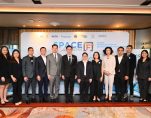
BANGKOK, THAILAND – Media OutReach Newswire – 1 May 2026 – Prof. Dr. Yodchanan Wongsawat, Deputy Prime Minister and Minister of Higher Education, Science, Research and Innovation (MHESI), led the National Innovation Agency (Public Organization) or NIA, along with Thai Union Group PCL, Mahidol University, and leading corporate partners including Thai Beverage PLC, Nestlé (Thai) Ltd., and new partner Foodland Ventures from Taiwan, to launch “SPACE-F Year 7”. This is Thailand’s first global foodtech startup incubator and accelerator program, continuing the success of solving food industry challenges through sustainable innovation.
SPACE-F Batch 7
Prof. Dr. Yodchanan spoke about elevating “SPACE-F Batch 7” to the policy level and building awareness, stating that MHESI aims to present food innovation products from the startups in this batch at the upcoming Cabinet meeting. This will allow the Prime Minister to taste them, raising awareness that FoodTech is the nation’s new future. The products will be presented to the Cabinet in the next two weeks.
Regarding the core concept of combining technology with “Thai taste,” Prof. Dr. Yodchanan emphasized that no matter how advanced the technology is, it must maintain the “Nice taste of Thailand.” He cited a “high-tech omelet” he previously tasted as an example, noting that there is still room for improvement to make it taste closer to an authentic Thai omelet so that the technology can truly win over consumers’ hearts.
The MHESI Minister continued that regarding food innovation under the Wellness Economy, this year focuses on using the Wellness Economy as a New Growth Engine. This is not limited strictly to food but includes AI, ICT, and software, aiming to push Thailand into a global Wellness Tourism Hub with support from the BOI in connecting investment opportunities.
Prof. Dr. Yodchanan further stated that regarding the use of biodiversity and quality ingredients (Biodiversity & GI), startups will be encouraged to utilize Thailand’s rich biodiversity and GI products as substitutes for imported raw materials. This will help reduce costs and create a unique identity.
“As for connecting the ‘Thinker’ with the ‘Doer,’ this program emphasizes linking startups with large industrial corporations and investors. This helps startups in the Accelerator group advance toward Series A or B funding, while helping the Incubator group learn business and pitching experiences from their seniors to cross the business ‘Death Valley.’ Furthermore, regarding food and nutrition security in the era of war: in the current global conditions facing wartime situations, Food Security and Nutrition Security are vital. This program is an opportunity for startups to create innovations that help solve problems for the whole world, with the government working closely with SPACE-F to create new services and products,” the MHESI Minister said.
However, “SPACE-F Batch 7” features 20 participating startups from 10 countries, focusing on the Proof of Concept (POC) strategy to ensure they can tangibly grow toward commercialization on an international scale.
Dr. Krithpaka Boonfueng, Executive Director of the National Innovation Agency (NIA), stated that NIA aims to strengthen the potential of startups and innovative entrepreneurs to overcome business crises and grow commercially in a tangible way. Over the past 6 years, the SPACE-F program has concretely reinforced its role as a regional food innovation hub by incubating and accelerating over 100 startups from 18 countries worldwide, generating a total funding value of over 5.1 billion THB. For the SPACE-F Year 7 program, it marks another major milestone of leapfrog growth, setting a new international record with an all-time high of 204 applicants, continuously increasing from 156 in Cohort 6 and 148 in Cohort 2, reflecting the confidence of global startups in the program’s potential. Concurrently, the program has significantly expanded its international reach, with applicants from 57 countries worldwide, up from 34 countries in the previous cohort, affirming that SPACE-F is a truly global platform connecting and driving world food innovation.
“The SPACE-F program is considered a vital mechanism in driving the development of a strong and comprehensive foodtech startup ecosystem by systematically connecting knowledge, technology, and the industrial sector together. Particularly, it provides opportunities for startups to co-develop and test real products (Proof of Concept: POC) with large corporate partners, as well as access expert networks and world-class infrastructure. This includes testing protein innovations focused on appearance, freshness, and taste with Thai Union; developing modern health and nutrition solutions with ThaiBev and Nestlé; utilizing deep-tech research laboratories from Mahidol University; and enhancing fundraising capabilities from Foodland Ventures, which plays a crucial role in reducing business risks and effectively increasing the chances of commercialization. For SPACE-F Year 7, it aims to elevate startup development through 2 main programs: the Incubator Program, which focuses on laying business foundations and developing prototypes into market-ready products, and the Accelerator Program, which focuses on accelerating business expansion through connections with strategic partners and investors. This covers 7 key areas of the food industry: 1) Personalized Nutrition, 2) Future Protein, 3) Circular Food Systems, 4) Smart Manufacturing, 5) Sustainable Production, 6) Food Safety, and 7) Novel Consumer Experience, to build high-potential startups capable of developing quality new products that directly meet market demands, ready to compete and grow sustainably on the global stage.”
Ms. Sirichit Jiraruangkiat, Senior Director – Group Innovation at Thai Union Group PCL, revealed, “As a co-founding partner of the SPACE-F program, Thai Union Group PCL continues to drive the development of Thailand’s foodtech startup ecosystem. We aim to support breakthrough growth by promoting the development and testing of innovations at the industrial level, particularly through the Proof of Concept (POC) process, to elevate the standards of future protein products to compete internationally. Thai Union prioritizes the application of modern food production and preservation technologies, covering everything from maintaining product quality and freshness and developing appealing appearances to sensory research to create textures and flavors that effectively meet the demands of global consumers. Simultaneously, the SPACE-F program remains committed to a ‘No Equity Taken’ approach, allowing startups to retain full ownership of their innovations, maintain business agility, and grow independently and sustainably in the long term.”
Assoc. Prof. Dr. Pasit Pakawatpanurut, Deputy Dean for Research and Innovation, Faculty of Science, Mahidol University, further added, “With expertise in food science, nutrition, biotechnology, and related fields, Mahidol University serves as an academic powerhouse and innovation infrastructure, providing startups with access to advanced laboratories, pilot plants, and modern research equipment. They also receive in-depth consultation from a team of expert researchers to successfully transition research into products that truly meet global market demands (Lab-to-Market). This collaboration is therefore a key mechanism in driving sustainable food innovation and enhancing Thailand’s competitiveness as a global foodtech hub. Mahidol University’s involvement in the SPACE-F program also plays a vital role in strengthening the country’s foodtech startup ecosystem in the long run.”
In addition, another key partner is Thai Beverage Public Company Limited, which places great importance on continuous research and development, believing it to be essential for startups. As a sponsor of the SPACE-F program, they are pleased to be part of an ecosystem that enhances the potential of foodtech startups and provides business and technological guidance to help startups discover solutions that truly meet the needs of the global food market.
Ms. Jenica Conde Cruz, Business Manager – Cereal Partners Worldwide & Incubator at Nestlé (Thai) Ltd., also stated, “Nestlé, a global leader in food and beverages, plays a vital role as a strategic partner of the SPACE-F program. We aim to elevate foodtech startups through the transfer of Research & Development (R&D) knowledge and product development experience under the ‘Good food, Good life’ concept. Nestlé also provides in-depth consultation to support the development of products that meet Nutrition, Health, and Wellness needs, while promoting the use of innovation to tackle global food industry challenges. In parallel, Nestlé also drives the development of innovations that align with sustainability goals by opening opportunities for startups to learn together with experts from our global research center network, in areas of food preservation technology, eco-friendly packaging, and responsible sourcing.”
Victor Chen, CEO of Foodland Ventures Co. closed with, “Foodland Ventures, a leading Venture Capital firm and Accelerator from Taiwan, has joined as a strategic partner in the SPACE-F program to push foodtech startups to expand their businesses into international markets. We aim to act as a bridge connecting innovation from Taiwan with food industry networks in Thailand and Southeast Asia. With expertise in key technologies such as Restaurant Automation, Alternative Protein, and Smart Supply Chain, Foodland Ventures is ready to support startups through access to the Taiwanese market and resources, providing investment and business strategy consultation, and connecting them with the industrial sector to test solutions in real-world environments. This collaboration marks a significant step in building a ‘FoodTech Corridor’ between Thailand and Taiwan to elevate startup potential and drive the food industry toward a sustainable global future.”
The “SPACE-F Year 7” program also introduced 20 startups from 10 countries worldwide: South Korea, Spain, Canada, USA/Argentina, Australia, Singapore, UK, Saudi Arabia, Taiwan, and Thailand, selected for this year’s program. All will have the opportunity to co-develop and test real innovations with leading industry partners, covering product development, industrial-level testing, and commercialization in the real market
Such collaboration is a key highlight of the program, providing startups the opportunity to test technology and innovations in real-world environments, reducing development limitations, and increasing the chances of creating business models that accurately meet market demands.
10 FoodTech Startups Joining the Accelerator Program
Terra Bioindustries Inc (Canada): Upcycles agricultural and food industry waste into high-value ingredients such as sugar, protein, and fiber for use in the food, biotech, and chemical industries.
Nucaps (Spain): Develops functional protein ingredients using microencapsulation technology to wrap active substances and probiotics, enhancing nutritional value, reducing costs, and improving taste to effectively promote consumer health.
BeNatureBioLab (South Korea): Develops functional ingredients using nano and microencapsulation technology from natural proteins to wrap active substances and probiotics, increasing the stability, absorption, and efficiency of substances in food, supplements, and health products.
Kinava (South Korea): Converts food waste into biofertilizer, biochar, and biogas within hours using HydroThermal Carbonization (HTC) technology, which reduces odor, energy use, and emissions.
ComexSoft (Spain): A near real-time market intelligence platform that collects and organizes retail data, matching similar products specifically developed for accurate decision-making.
PROTINOS (Thailand): High-protein noodles made from egg whites and soybeans containing complete essential amino acids, created using enzyme incubation techniques, serving as food to help care for and protect health.
SicPama (South Korea): A QR ordering and payment platform with a CRM system that links social media with actual service usage and repeat visits, helping restaurants measure returns and increase revenue.
Nourish Ingredients (Australia): High-performance animal-free fats created via precision fermentation to solve the taste and texture issues of plant-based alternative foods by mimicking the key fats found in meat and dairy products.
Kresko RNAtech (USA/Argentina): Nutrients from biological RNA found in natural foods, developed by AI and biotechnology to be more stable and better absorbed, for use in dietary supplements and health products.
Agrifreeze (Singapore): Develops freezing technology using Electromagnetic Fields (EMF) to control the formation of small ice crystals, reducing food damage and maintaining quality close to fresh products.
10 FoodTech Startups Joining the Incubator Program
Eatwellconcept (Thailand): An AI-powered personalized therapeutic diet platform for NCD patients, offering real-time nutritional guidance by dietitians to improve health and quality of life.
AmaranthLab (UK): Protein ingredients from amaranth for GLP-1 (Glucagon-Like Peptide-1) nutrition to control blood sugar levels and satiety, for use in various functional food products.
Openfarming (Saudi Arabia): An AI operating system for food distributors that converts orders from multiple channels into real-time data, enabling automated demand forecasting and dynamic inventory management without changing existing workflows.
Zuppar Reborn (Thailand): Biodegradable fruit and bakery stickers made from pineapple waste, replacing plastic labels with an alternative that can decompose into fertilizer.
VeriPura (Thailand/Singapore): An AI and Blockchain platform for automated document management and product traceability, making food exports to Europe easier and more compliant with regulations (EU).
YiXingYuan (Taiwan): A modular small-scale fruit processing factory (Factory-in-a-box) utilizing High Voltage Electric Field (HVEF) technology to process fruits directly at the source, preserving product quality while reducing energy use, costs, and spoilage.
JOLA (Thailand): Vitamin-infused jelly pet food that develops DIY treat products, such as jellies for dogs and cats, focusing on natural ingredients, good nutrition, and creating a shared experience between owners and pets.
UPLI (UK): A precision fermentation platform to create functional proteins with characteristics similar to human breast milk, used to increase nutritional value in food at an industrial scale.
Emerald Plast (Thailand): Biodegradable food materials and packaging made from starch and bioplastics to replace traditional plastics, reducing environmental impact and enhancing sustainability image.
Squizify (Thailand): A digital food safety platform integrating software and IoT devices to automatically track, monitor, and manage food business standards, complete with real-time data analysis.
NEGERI SEMBILAN, MALAYSIA – Media OutReach Newswire – 1 May 2026 – Methodist College Kuala Lumpur (MCKL) has formalised a strategic collaboration with MILA University through the signing of a Memorandum of Agreement (MoA), marking a significant step in enhancing academic progression pathways for students.
This partnership reflects a shared commitment to supporting diploma graduates in continuing their studies at degree level, while ensuring a smoother and more structured transition into higher education.
A Strategic Collaboration for Student Progression
The agreement was formalised by Dr. Chua Ping Yong, Chief Executive Officer of MCKL, and Mr. Cao Qi, Deputy Chief Executive Officer of MILA University, in the presence of representatives from both institutions.
Through this collaboration, a clear articulation pathway is established for MCKL students to continue their academic journey at MILA University, enabling a smoother transition into undergraduate studies with greater confidence and direction.
Expanding Opportunities Through Articulation Pathways
As part of this collaboration, students from selected MCKL diploma programmes have the opportunity to progress into MILA University’s bachelor’s degree programmes in Computer Science and Business Management.
The pathway covers diploma fields such as Computer Science, Information Technology, Digital Business, Digital Marketing, and Financial Technology, ensuring that students from diverse academic backgrounds have access to relevant progression pathways.
Strengthening Industry-Relevant Education Through Collaboration
Beyond academic progression, this collaboration underscores a mutual commitment to delivering industry-relevant education that equips students with practical skills and real-world competencies. By aligning curriculum pathways and fostering closer engagement between both institutions, MCKL and MILA University aim to ensure that graduates are not only academically prepared but also adaptable to evolving industry demands. This partnership creates opportunities for enhanced learning experiences, bridging the gap between classroom knowledge and professional application, and ultimately empowering students to thrive in a competitive global workforce.
For over four decades, MCKL has built a strong reputation for nurturing students who not only excel academically but also develop the values, character, and critical thinking skills needed to thrive in an ever-changing world. With a student-centred approach, the college emphasises holistic education, balancing academic rigour with personal growth, leadership development, and community engagement, so that graduates are well-prepared for both university and life beyond the classroom.
MCKL provides prospective students and parents with valuable opportunities to explore its diverse programmes, interact with lecturers, and gain insights into campus life and progression pathways. Whether students are seeking a strong academic foundation, clear progression routes, or a supportive learning environment, MCKL continues to position itself as a trusted launchpad for future success. To learn more, visit mckl.edu.my or connect with the MCKL team at upcoming events.
Original Source: MILA University Original Article: MILA University Strengthens Academic Pathways Through Collaboration with MCKL Website: https://www.mila.edu.my
The issuer is solely responsible for the content of this announcement.
Methodist College Kuala Lumpur (MCKL)
Methodist College Kuala Lumpur (MCKL) was founded by the Methodist Council of Education in 1983, its campus sitting in the heart of Kuala Lumpur and branch campus in Pykett, Penang, known as the MCKL College (Penang, Pykett Campus). MCKL is now an QA Approved Centre delivering Advanced Diplomas focusing on Business and Computing: Software Development. It also offers programmes in the pre-university pathway for subjects including Cambridge A-Level, Australian Matriculation; the American Degree Transfer, Diploma courses Digital Business, Digital Marketing, IT (Internet of Things Focused), Computer Science (data science focused), Early Childhood Education, Social Work, and Financial Technology. Over the years, MCKL has been highly recognised for its track record and gold standard achievements of its pre-university programmes and its overseas degree pathways.
Apple is turning restraint into a strategic advantage as rivals pour record sums into artificial intelligence infrastructure, betting that a narrower, device-centred approach can protect margins while keeping investors focused on earnings rather than data-centre bills. The iPhone maker’s latest quarterly performance has strengthened that argument. Apple reported March-quarter revenue of $111.2 billion, up 17 per cent from a year earlier, with diluted earnings per share rising […]
Arabian Post Staff -Dubai Ras Al Khaimah’s economic regulator has stepped up public and business awareness over counterfeit goods, warning that fake products threaten consumer safety, undermine legitimate traders and expose offenders to serious legal action. The Ras Al Khaimah Department of Economic Development, through its Commercial Control and Protection Department, carried out an awareness campaign titled “Protect Your Products from Counterfeiting” as part of wider efforts […]
Attackers are shifting credential theft campaigns towards QR codes, fake CAPTCHA pages and ClickFix-style prompts, turning familiar security checks into tools for large-scale account compromise. Fresh threat telemetry for the first quarter of 2026 shows email-based phishing remains vast in scale, with about 8.3 billion threats detected between January and March. Although monthly volumes eased from 2.9 billion in January to 2.6 billion in March, the composition […]
Arabian Post Staff -Dubai Uber Technologies has agreed to acquire FlyTaxi, strengthening its position in Hong Kong’s fast-changing point-to-point transport market as the city prepares to bring ride-hailing platforms under a formal licensing regime. The deal gives Uber control of one of Hong Kong’s main remaining independent taxi-hailing apps and adds to its earlier acquisition of HKTaxi, deepening its reach into the licensed taxi trade. FlyTaxi is […]
MILAN, ITALY – Media OutReach Newswire – 1 May 2026 – As the dynamic interplay of light and shadow along the Putuo District section of Suzhou Creek in Shanghai, known as the “Half Marathon Suzhou Creek,” met the artistic atmosphere of Milan Cathedral, a spring dialogue spanning continents opened warmly as part of the “Shanghai in My Mind · Spring Shanghai” pop-up event series in Milan. On April 25, the “Putuo Day” themed event was held at a newsstand in Largo Augusto, Milan. Centered on the theme “Half Marathon Suzhou Creek · Garden of Light,” the event offered local residents an immersive experience of the distinctive charm of Shanghai’s Putuo District.
Light as a Bridge: A Garden of Light in Miniature
Centered on the theme of “Garden of Light,” the pop-up event blended Putuo’s cultural heritage with Milan’s artistic aesthetic, transforming the compact newsstand into four themed spaces: the Light of Development, the Light of Vitality, the Light of Warmth and the Light of Craftsmanship. Together, they created a refined and richly layered exhibition of urban aesthetics.
The Garden Walk zone conveyed the “Light of Vitality,” with artificial greenery recreating the energy of the Suzhou Creek waterfront. Cultural and creative products from the “Half Marathon Suzhou Creek” collection, including sand-art magnets, liquid-motion coasters and custom scarves, added to the lively atmosphere. The Interactive Experience zone embodied the “Light of Warmth,” linking stamp collecting, message sharing and film screenings to create a welcoming space where every visitor could take part in the cross-cultural exchange. The Craftsmanship Heritage zone interpreted the “Light of Craftsmanship,” featuring century-old Hero pens, intangible cultural heritage bamboo weaving and pieces from the Shanghai Mint, highlighting the brilliance of Eastern craftsmanship through light and shadow. The Light and Shadow Window zone represented the “Light of Development.” Warm light passed through suspended golden bookmarks, casting colorful reflections across the walls and floor, echoing the stained-glass windows of Milan Cathedral.
At the event, local residents and visitors posed for photos with light-and-shadow bookmarks, wrote heartfelt messages on postcards, and captured joyful moments with instant cameras. They collected commemorative stamps as keepsakes, experienced the elegance of Eastern writing with Hero pens, and watched the VR film “HI, This Is Half Marathon Suzhou Creek” for an immersive introduction to Putuo. The pop-up event transcended barriers of language and distance, bringing the urban charm of Putuo to people in Milan through experiences that were tangible, engaging and memorable.
Spring Echoes: Suzhou Creek’s Story Continues in Light
The “Spring Shanghai” themed pop-up was not only a city showcase in Milan, but also a dialogue between two cities across Europe and Asia. To extend the memory of this celebration of light, Putuo has created a “Garden of Light” themed corner at the Half Marathon Suzhou Creek Café & Cultural Creative Store, allowing cultural exchanges between the two places to continue to grow.
Inside the store, white magnolias and azaleas feature throughout the décor, symbolizing friendship and dialogue between the two cities. Decorative decals inspired by the stained-glass windows of Milan Cathedral cast colorful patterns of light across the floor, creating an aesthetic connection between Shanghai and Milan. Messages from visitors collected during the Milan event, handwritten postcards and instant photos will be displayed in artistic installations, including a corridor of greetings and a light-and-shadow photo wall reflecting a blend of Chinese and Italian culture. Limited-edition light-and-shadow bookmarks and other themed merchandise will also be introduced, while messages written by Shanghai residents in response will be compiled into a collection, creating a two-way bond of mutual goodwill.
From Milan to Suzhou Creek, Putuo used light as a bridge to continue the friendship between China and Italy across the two cities, while enabling more people to see and understand the story of “Half Marathon Suzhou Creek.”
Vibrant Putuo: Half Marathon Suzhou Creek in Full Flow
Putuo District is actively participating in China’s Yangtze River Delta integration strategy. It supports the development of the Shanghai–Nanjing Industrial Innovation Belt, advances the “one belt, one core, one city” framework, and promotes a vision of a coordinated innovation zone and a high-quality Half Marathon Suzhou Creek area. A digital-driven upgrade of the bulk commodity trade supply chain is currently taking shape. Along the Suzhou Creek waterfront, ecological landscapes are increasingly being transformed into spaces for industrial development. The Zhenru sub-center is speeding up its digital transformation, combining heritage with modern urban functions and integrating cultural and commercial activity. Taopu Smart City is emerging as a hub for R&D and advanced manufacturing, as it moves toward becoming a model for integrated urban-industrial development. Together, these developments are helping drive Putuo’s high-quality growth.
Industrial growth brings urban vitality, and a vibrant city improves people’s quality of life. Building on a solid foundation of high-quality development, Putuo is shaping a livable and business-friendly district defined by energy and human warmth. It is both a hub for sports and an appealing place to live. Major events such as the Suzhou Creek Half Marathon, dragon boat races, the 10km Elite Race and the National Curling Championships showcase the district’s dynamism and competitive spirit. Daily life offers a different rhythm. TOP Central Park provides expansive green space, the RV Music Festival draws crowds with live performances, M50 Creative Park remains a center for arts and culture, and Hong Shou Fang blends Shanghai-style charm with the atmosphere of neighborhood street life. Putuo is working to build a district-wide “15-minute community living circle,” giving residents convenient access to education, healthcare, eldercare and retail services. It is advancing child-friendly urban development, expanding the silver economy to better serve seniors, and creating homes and support services for the city’s builders and frontline workers. Through these efforts, openness, inclusiveness and warmth have become defining features of the district.
Global internet reliability came under sharper pressure in the first quarter of 2026 as shutdowns, war damage, power failures and cable incidents disrupted connectivity across several regions, exposing a widening risk for enterprises that depend on cloud platforms, cross-border data flows and always-on digital services. Cloudflare’s review of disruptions from January to March showed that the most damaging incidents were not dominated by software faults alone. Political […]





 https://www.nia.or.th/


 https://www.linkedin.com/school/methodist-college-kuala-lumpur/
 https://www.facebook.com/share/19qkXtd7P7/?mibextid=wwXIfr
 https://www.instagram.com/methodistcollegekl?igsh=MTJzYzFkM203NGlzbg==





