

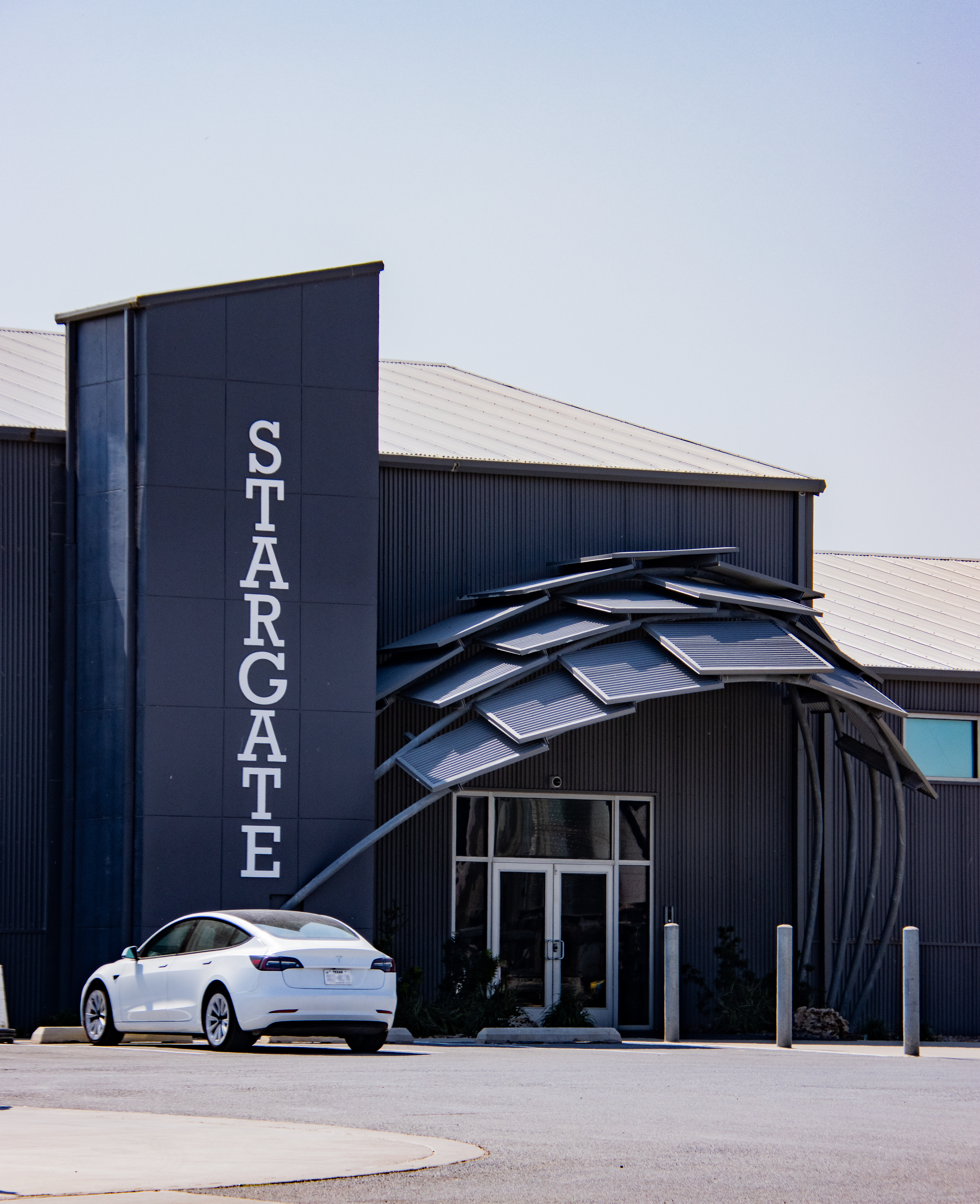
OpenAI, Oracle and SoftBank have unveiled plans for five new artificial intelligence data centres across the United States under their Stargate infrastructure initiative, pushing the programme’s capacity to almost 7 gigawatts and investment to over US$400 billion over the next three years.
Three of the new sites will be developed in partnership between OpenAI and Oracle, located in Shackelford County, Texas; Doña Ana County, New Mexico; and an undisclosed Midwest location. The remaining two centres, in Lordstown, Ohio, and Milam County, Texas, will be built through a joint effort of OpenAI and SoftBank’s SB Energy. These additions bring Stargate significantly closer to its original commitment of 10 gigawatts and US$500 billion pledged earlier this year.
At the flagship campus in Abilene, Texas, Oracle and OpenAI have made substantial progress. The Abilene site is already partially operational using Oracle Cloud Infrastructure, with early-stage AI training and inference running on newly delivered NVIDIA GB200 racks. There is also a planned nearby expansion of about 600 megawatts.
The newly selected centres are expected to create more than 25,000 onsite jobs, with additional employment effects across local economies. Some of the new sites, particularly the SoftBank-partnered ones, are set to scale rapidly—one in Ohio is expected to come online next year.
Hardware and energy remain key challenges. The scale of these data centres demands enormous electricity supply and cooling infrastructure. Abilene’s facility already draws about 900 megawatts of power, supported by a mix of gas-fired generation plus wind and solar sources. Designed features include closed-loop water cooling to reduce local water consumption.
Politically, Stargate is seen as central to the U. S.’s efforts to maintain leadership in AI, especially in competition with China. Federal backing and favourable regulation appear instrumental in fast-tracking approvals and infrastructure deployment. But critics caution that scale alone will not guarantee success. They point to concerns over environmental impacts, community pushback over land use, lighting, noise, and habitat disruption, as well as the rising costs of hardware and potential supply chain constraints.
Follow Arabian Post
Select Arabian Post as your preferred source on Google and MSN News for trusted business news and Arab politics and updates.



