Arabian Post Staff -Dubai
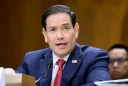
Speaking during a visit to Manila on Wednesday, Rubio said the United States was prepared to pursue a negotiated settlement if Iran demonstrated that it was ready to honour its commitments. He argued that Tehran’s military actions, restrictions on commercial navigation and support for armed groups across the region contradicted its stated interest in talks.
The diplomatic opening came as the conflict placed two of the world’s most important energy corridors under mounting pressure. Commercial traffic through the Strait of Hormuz has fallen sharply after Iranian forces intensified operations around the waterway, through which roughly a fifth of global oil consumption normally passes.
Disruption also spread to the southern entrance of the Red Sea after Yemen’s Houthis threatened to impose a naval blockade against Saudi Arabia. The group claimed missile and drone attacks on two Saudi oil tankers, identifying them as the Encelia and the Layla.
The Encelia transmitted a distress call after reporting that it had been struck near the Saudi port of Jizan. The vessel was hit about 70 nautical miles south-west of Al Shuqaiq, although details surrounding the projectile and the extent of the damage remained under assessment. The claimed attack on the Layla had not been independently confirmed.
Several tankers altered course or turned back rather than pass through Bab el-Mandeb, the narrow strait connecting the Red Sea with the Gulf of Aden. Five vessels changed direction on Wednesday, while three tankers carrying Saudi crude for customers in China and India reversed course a day earlier.
The movements highlighted the risk of simultaneous disruption at Hormuz and Bab el-Mandeb. Saudi Arabia has redirected millions of barrels of oil towards its western export terminal at Yanbu to reduce dependence on the Gulf route. Ships leaving Yanbu must travel south through the Red Sea or north through the Suez Canal.
A closure or prolonged security threat at Bab el-Mandeb would leave vessels facing longer and more expensive alternatives. Tankers could sail north through Suez before continuing around Europe, or avoid the Red Sea entirely by travelling around the Cape of Good Hope. Both options increase fuel costs, insurance premiums and delivery times.
Vessel traffic through Hormuz fell to nine crossings on Tuesday, while Bab el-Mandeb recorded 29 crossings, down from 44 two days earlier. Before attacks linked to the Gaza conflict began affecting Red Sea shipping, the southern strait commonly handled between 65 and 72 vessel movements a day.
Oil markets responded to the worsening security outlook. Brent crude rose above $94 a barrel after briefly approaching $95, while US crude gained nearly 4 per cent. Traders also factored in higher insurance charges, limited tanker availability and the possibility that regional producers could struggle to maintain export volumes.
Rubio blamed Iran for encouraging actions that threatened global energy supplies. Tehran has long provided political, financial and military support to the Houthis, although the group retains its own command structure and has demonstrated an ability to act according to its domestic and regional priorities.
Pakistan, which has been involved in efforts to mediate between Washington and Tehran, condemned threats against commercial shipping and Saudi Arabia. Islamabad said interference with navigation violated international law and warned that any threat to its maritime interests would be treated as a serious national security matter.
The United States also condemned the Houthi announcement, warning that a blockade could broaden the conflict and place additional demands on American forces already engaged against Iran. The campaign has stretched US air defence, naval and strike capabilities while military planners continue to protect bases, shipping lanes and partner countries across the Gulf.
President Donald Trump threatened retaliatory attacks on Iranian infrastructure for every strike against a ship in Hormuz. Iran’s joint military command responded by warning that attacks on its bridges, electricity facilities or other civilian infrastructure would prompt strikes against energy and economic assets across the region.
Washington has tied any settlement to limits on Iran’s nuclear and missile programmes, guarantees for freedom of navigation and an end to attacks on US forces and regional partners. Tehran has demanded an end to American strikes and sanctions relief, while insisting that its nuclear activities remain within its sovereign rights.
Also published on Medium.
Follow Arabian Post
Select Arabian Post as your preferred source on Google and MSN News for trusted business news and Arab politics and updates.