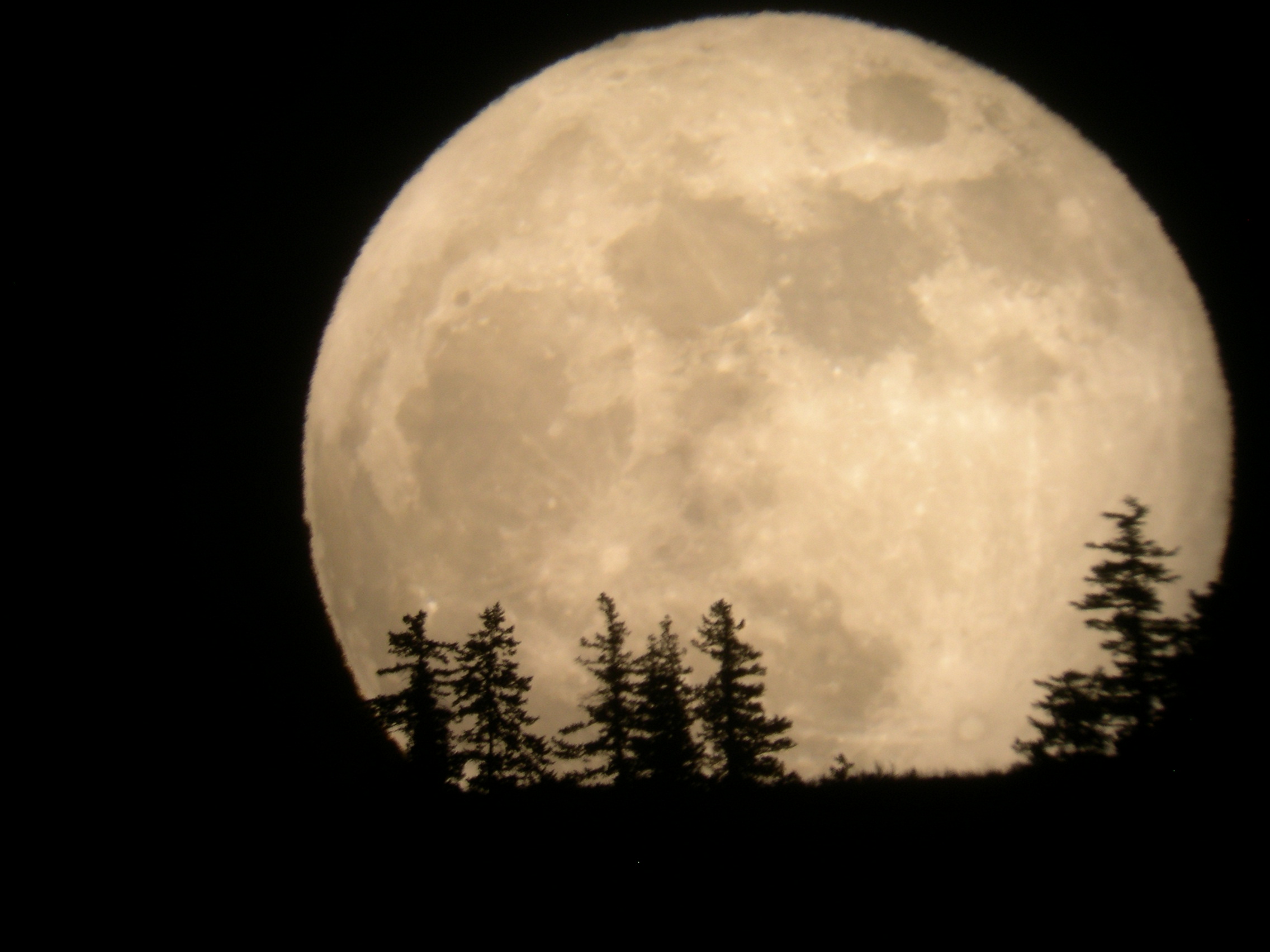
Sky enthusiasts worldwide are preparing for what scientists describe as the largest and brightest full moon of the year. On 5 November 2025, the moon will reach its full phase while positioned at perigee—its closest point to Earth—amounting to a lunar distance of approximately 356,980 km. This alignment marks the second in a series of three consecutive supermoons and the most extreme of the year.
Called the “Beaver Moon” in traditional North American lunar naming, the 5 November event will present a moon that appears about 14% larger and up to 30% brighter than a typical full moon. Although the magnitude of difference may not be dramatic to the casual eye, experts emphasise that the phenomenon still represents a notable celestial moment.
Astronomers at the Lowell Observatory and the United States Naval Observatory note that supermoons occur when the lunar orbit’s natural elliptical shape brings the moon into synchrony with a full-moon phase at perigee. The effect generates a subtly enhanced visual impression of size and brightness, and slightly stronger gravitational influence on Earth’s tides—though this increase remains insignificant for most coastal regions.
Observation conditions vary by location and time. For observers in the UK, moonrise on 5 November is projected to be around sunset, offering a vantage point where the so-called “moon illusion” makes the lunar disk appear larger along the horizon. Photographers are advised to select sites with unobstructed eastern or south-eastern horizons, include foreground objects to frame scale, and consider using telephoto lenses or time-lapse sequences to capture the full event.
Despite the grand framing as the “biggest and brightest moon of the year,” several seasoned skywatchers caution that the visual enhancement remains modest to the naked eye. As one astronomy guide notes: “You are unlikely to notice that the Moon is bigger or brighter than any other full Moon of the year.”
This November supermoon falls in the zodiac sign Taurus and traditionally coincides with Earth’s preparation for winter in the Northern Hemisphere. The nick-name “Beaver Moon” reflects the time when beavers—according to Indigenous and colonial North American naming traditions—gather food and build lodges ahead of freezing conditions.
The series of supermoons closing out 2025 underscores a trend in lunar-observation events. According to community science platform EarthSky, the sequence includes three full-moon perigee alignments: 7 October, 5 November, and 4 December 2025, followed by another in early 2026.
While the gravitational consequences for tides and seismic activity remain negligible, the event presents an opportunity for public engagement in astronomy. Local science centres, especially in regions such as western India, have announced viewing programmes to mark the moon’s approach.
Amateur photographers and night-sky enthusiasts are encouraged to treat the evening as more than a spectacle. Expert commentary highlights that the moon’s rising position aligns with notable celestial landmarks—specifically the star Aldebaran and the Pleiades cluster in Taurus—presenting a richer observational experience.
As night falls on 4 November and observers look eastward for the moon to ascend in twilight, the event offers more than aesthetics. It reconnects modern skywatchers with centuries of lunar lore and invites reflection on Earth’s place in the broader rhythm of celestial mechanics.
Follow Arabian Post
Select Arabian Post as your preferred source on Google and MSN News for trusted business news and Arab politics and updates.