

Arabian Post Staff -Dubai
The proposal would reopen the strait’s so-called middle passage, a route largely avoided by vessels since fighting disrupted maritime traffic in late February. Ships have instead relied on northern waters closer to Iran or southern passages near Oman’s Musandam peninsula, often under tightly controlled security arrangements.
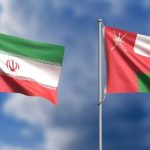
Tehran has confirmed that talks with Muscat are focused on establishing a single temporary route for two-way commercial traffic. Oman, which controls the southern side of the strait and has acted as a diplomatic intermediary during successive regional crises, is examining how vessel movements could be coordinated without raising the risk of collisions, mines or attacks.
The plan is part of wider negotiations aimed at stabilising the waterway following months of sharply reduced transit volumes. Commercial movements remain far below the estimated 130 to 140 daily passages recorded before the conflict began. Ship-tracking data showed only eight vessels crossing the strait on Tuesday, including five tankers and three bulk carriers.
Negotiators are considering a division of operational responsibility under which Iran would oversee ships entering the Gulf and Oman would manage outbound traffic. Proposals involving security, navigational and environmental service charges have also been discussed, although the terms remain contested.
Washington has opposed any arrangement that could give Iran authority to impose tolls or restrict international passage. US officials maintain that vessels must retain a non-discriminatory right of transit under international maritime rules. Iran argues that coastal states carry much of the burden of protecting the route and should have a defined role in administering any temporary framework.
The emerging middle-lane concept should not be confused with the Trans-Caspian trade route commonly called the Middle Corridor, which links China and Europe through Kazakhstan, the Caspian Sea, Azerbaijan, Georgia and Turkey. The Hormuz proposal refers instead to a central passage within the existing strait.
A recognised traffic separation scheme has operated in Hormuz since 1968. It was proposed by Iran and Oman and adopted through the International Maritime Organization to reduce collision risks by separating inbound and outbound traffic. That system became difficult to use after the conflict because of attacks, military activity and concerns over sea mines.
Maritime authorities have repeatedly pressed for the internationally recognised lanes to be restored once credible security guarantees are established. Any alternative arrangement would be expected to comply with global navigation and safety conventions, rather than create an exclusive national shipping zone.
The narrow strait connects the Gulf with the Gulf of Oman and the Arabian Sea. At its tightest point, it is about 33 kilometres wide, while the established shipping channels occupy only a small part of that space. Iran lies to the north, while Oman’s Musandam peninsula forms the southern boundary.
Hormuz carried an average 20.9 million barrels a day of oil and petroleum products during the first half of 2025. That represented about one-fifth of global petroleum liquids consumption and roughly a quarter of seaborne oil trade. Around one-fifth of worldwide liquefied natural gas shipments also normally pass through the strait, led by exports from Qatar.
Traffic disruption has forced Gulf producers and shipping companies to expand alternative routes. Saudi Arabia has increased reliance on its East-West crude pipeline to the Red Sea, while the UAE can move some oil through pipelines to Fujairah outside Hormuz. Those systems, however, cannot replace the strait’s full capacity.
Container carriers have also introduced combinations of sea, road and rail transport through ports including Jeddah, King Abdullah Port, Sohar, Fujairah and Khor Fakkan. Such services have maintained access to Bahrain, Kuwait, Qatar, Iraq, Saudi Arabia and the UAE but have added cost, handling requirements and transit time.
Oil markets have responded sharply to every indication of progress or breakdown in the negotiations. Prices fell after officials signalled that an interim agreement could be announced, reflecting expectations that a wider reopening would release delayed cargoes and support the restoration of regional production.
Security remains the main obstacle. A cargo vessel was struck while diplomatic contacts were under way, reinforcing concern among shipowners, crews and insurers that political commitments may not be sufficient without enforceable military safeguards. Some ships have also reduced identification transmissions, complicating efforts to calculate traffic accurately.
Qatar, Saudi Arabia and Pakistan have participated in broader efforts to bridge differences between Iran and the United States. Tehran says its direct discussions concern Oman and the management of the strait, while US officials have described the maritime issue as part of a wider process involving a ceasefire and Iran’s nuclear programme.
Also published on Medium.
Follow Arabian Post
Select Arabian Post as your preferred source on Google and MSN News for trusted business news and Arab politics and updates.



