News related to
Hong Kong

  • Kairos-HomeWorld is purpose built for embodied intelligence and represents the first unified framework capable of generating a complete, fully interactive home environment from a single text prompt. Extending indoor scene generation beyond individual rooms, it enables whole-home simulation in which every object is fully manipulable within an integrated simulation engine.
  • Kairos-HomeWorld employs a four-stage hierarchical architecture encompassing floorplan generation, 2D-to-3D lifting, recursive refinement, and manipulable object placement. This approach enables the production of globally coherent, physically accurate, and simulation-ready scenes. Each environment contains more than 15 manipulable objects and achieves a Footprint Object Density of 4.16, the highest among compared methods.
  • The accompanying open-source dataset is purpose-built for Chinese households, pairing 300,000 real residential floor plans with 5,000 fully furnished, simulation-ready homes and 50,000 physics-enabled interactive object assets. Already deployed in ACE ROBOTICS’ daily robot training, it significantly accelerates the simulation-to-reality transfer cycle.

SHANGHAI, CHINA – Media OutReach Newswire – 5 June 2026 – ACE ROBOTICS, in collaboration with the Multimedia Laboratory at The Chinese University of Hong Kong (CUHK) and Shenzhen Loop Area Institute, today announced the open-source release of Kairos-HomeWorld, the industry’s first unified World Model framework capable of generating full home-scale, object-level interactive 3D environments from a single text prompt. The solution addresses longstanding limitations in indoor scene generation, which has typically been restricted to single-room outputs with weak global consistency and limited interactivity. Kairos-HomeWorld overcomes these constraints by delivering structurally coherent, physically plausible, and functionally complete residential environments. These high-fidelity, large-scale simulations provide a robust foundation for advancing embodied intelligence applications and accelerating real-world robot training.

The long-term vision for embodied intelligence is the home environment. However, residential settings are inherently diverse and highly personalized, requiring robots to be trained across a broad range of realistic and differentiated scenarios before they can reliably operate in even a single household. High-fidelity simulation offers the most practical pathway to achieving this at scale, yet existing approaches typically involve a trade-off: synthetic environments lack realism, while scanned real-world scenes offer limited interactivity. Kairos-HomeWorld, together with its accompanying dataset, is designed to bridge this gap, delivering both realistic and interactive environments within a unified framework.

ACE ROBOTICS

A four-stage architecture for whole-home, object-level generation
Conventional approaches to indoor scene generation remain constrained to single-room outputs, often exhibiting weak global consistency, frequent physical inaccuracies, and limited or no interactivity. Kairos-HomeWorld takes a fundamentally different approach. It decomposes whole-home generation into a structured, four-stage process, redefining the underlying architectural paradigm from the ground up.

Stage 1 — Floor Plan Generation. A K-D tree-based approach translates real-world floor plans into a hierarchical text representation that can be efficiently processed by large language models (LLMs). This method mitigates common issues in conventional layout generation, including room overlaps and fragmented topologies, resulting in more coherent and structurally consistent spatial configurations.

Stage 2 — 2D-to-3D Lifting & Furniture Layout Generation. A “top-down global initialization combined with a first-person detail walkthrough” approach anchors the process to the 3D building shell generated in Stage 1. This methodology mitigates the geometric drift commonly associated with conventional 2D-to-3D lifting techniques, enabling more stable and spatially consistent scene generation.

Stage 3 — Recursive Refinement. A fine-tuned vision-language model performs iterative validation and correction, automatically identifying and resolving physical inconsistencies, such as obstructed doorways or object collisions. This recursive process materially reduces spatial errors, achieving among the lowest reported furniture-collision rates in the industry.

Stage 4 — Manipulable Object Placement. A surface-centric placement algorithm assigns each object detailed physical properties, including material composition, density, friction, and structural support relationships. Each generated scene incorporates an average of more than 15 manipulable objects and achieves a Footprint Object Density (FOD) of 4.16, a metric reflecting the concentration of items across furniture surfaces. All objects are natively compatible with simulation engines, enabling direct interaction for tasks such as grasping, movement, and stacking.

The resulting environments move beyond “viewable but not actionable” outputs. Their coherent spatial structure enables seamless, continuous navigation across multiple rooms, while objects embedded with realistic physical properties allow robots to simulate complex household tasks end-to-end. Taken together, this approach addresses key limitations in existing data pipelines, resolving the scarcity of high-quality 3D simulation data, the lack of realism in synthetic environments, and the limited interactivity of scanned scenes within a single unified framework.

The dataset: 300,000 real floor plans, 5,000 fully interactive homes, built for Chinese households
ACE ROBOTICS and CUHK are open-sourcing a dataset of 300,000 structurally annotated residential floor plans, sourced from real-world listings and processed through a multi-stage automated pipeline. The pipeline vectorizes and labels key spatial elements, including door and window positions, room geometry, functional zoning, and connectivity. By comparison, widely used benchmarks such as RPLAN and ResPlan contain approximately 80,000 and 17,000 floor plans, respectively, underscoring the scale and comprehensiveness of the Kairos-HomeWorld dataset.

Building on this foundation, the dataset also includes 5,000 fully furnished residential environments, each featuring a complete furniture layout and an average of more than 15 physics-enabled, manipulable objects, powered by the PhysX-Omni model. All assets are sim-ready and can be directly imported into a simulation engine, enabling immediate use in interactive training scenarios.

Most existing open indoor-scene datasets are centered on North American and European residential formats, typically featuring open-plan kitchens, the absence of service balconies, and layouts and design elements that capture only a narrow segment of global housing. As a result, robots trained on these datasets often exhibit limited transferability when deployed in environments outside their scope. Kairos-HomeWorld ‘s dataset is purpose-built for Chinese households, with deliberate coverage of historically under-represented housing typologies. It spans a wide range of unit sizes, from approximately 30 m² (around 320 sq ft) studio apartments to residences exceeding 200 m² (approximately 2,150 sq ft). The dataset accurately reflects key architectural features common in these settings, including north-south cross-ventilated layouts, enclosed kitchens, dedicated service balconies, wet-and-dry-separated bathrooms, and entryway storage, as well as the irregular room configurations often found in older housing stock.

The dataset is being openly released to both academic and industry communities. Going forward, the team plans to expand its scope to include additional regions, interior styles, and interaction scenarios, further lowering barriers to real-world-ready training for embodied intelligence.

See it in action: one prompt to a fully interactive home
Kairos-HomeWorld runs the full end-to-end pipeline, from initial text input to a fully interactive home environment, delivering global spatial consistency, physical realism, and seamless interactivity from a single prompt.

The system begins with a single-line prompt: “Generate a 90 m² (approximately 970 sq ft) two-bedroom apartment in neo-Chinese style.” Leveraging real floor plan data and its K-D tree representation, Kairos-HomeWorld first constructs an empty spatial layout aligned with real-world living patterns, incorporating cross-ventilation and well-defined functional zoning. Building on this foundation, a hierarchical “global layout plus first-person detail” approach furnishes the environment with stylistic coherence, while a PhysX-Omni rendering pass assigns full physical properties to all surfaces and objects, including articulated behavior, ensuring the scene is fully interactive and sim-ready.

A single natural-language instruction, “tidy the whole home”, is decomposed by the robot into a variety of discrete sub-tasks, executed sequentially along a complete navigation path spanning the living room, bedrooms, kitchen, bathroom, and dining area. The robot recognizes objects, plans efficient routes, and performs precise manipulation tasks, including articulated-object interactions for opening refrigerator and cabinet doors, fluid interactions for pouring laundry detergent, soft-body interactions for drawing curtains, irregular-object interactions for grasping apples, and gravity-based physical interactions for placing snacks.

Conventional simulation environments typically support navigation-focused training in isolation. By contrast, Kairos-HomeWorld integrates globally consistent spatial structures with objects that embody realistic physical properties. This enables robots to interact naturally with more than 15 object types, accurately modeling real-world dynamics such as collision, gravity, and friction, and to rehearse the full lifecycle of complex household tasks entirely within a virtual environment.

Across the industry, the same structural bottleneck, the scarcity of home-scale training data, is being addressed through multiple approaches. For example, Figure AI’s collaboration with Brookfield focuses on collecting human activity data across more than 100,000 residential units. Kairos-HomeWorld addresses this challenge through on-demand synthetic generation, delivering scalable training environments enhanced with object-level physical realism, capabilities that real-world data capture alone cannot fully provide.

In contrast, Kairos-HomeWorld delivers significantly lower costs and higher efficiency for household robot training. Powered by its world model, it can programmatically generate diverse Chinese home simulation scenes and physics-enabled interactive objects at scale.

Robots can complete a full range of household tasks training entirely within the virtual environment. New scene generation incurs near-zero marginal cost, eliminating substantial real-world testing expenses such as site operation and maintenance and furniture damage. Meanwhile, unconstrained by the limited stock of physical residential properties, it outperforms real-world data collection approaches in both training efficiency and scalable expansion.

Kairos-HomeWorld is already deployed in ACE ROBOTICS’ embodied intelligence training workflows, enabling full-pipeline simulation of long-horizon household tasks, including cross-room navigation and multi-room tidying. By allowing robots to rehearse complete task sequences in a virtual environment, the platform significantly shortens the simulation-to-reality transfer cycle. This approach lowers barriers to developing embodied intelligence systems and supports the accelerated, large-scale deployment of home robotics, particularly within the Chinese market. Kairos-HomeWorld is now available on GitHub.Hashtag: #ACEROBOTICS

The issuer is solely responsible for the content of this announcement.

About ACE ROBOTICS

Equipping robots with intelligent “brains” and engaging “souls”.

ACE ROBOTICS is a pioneering robotics company dedicated to advancing the field of embodied intelligence. Through breakthrough technological innovations and deep insights into embodied intelligence scenarios, we aim to empower robots with the ability to autonomously understand and explore the physical world, thereby accelerating their commercial implementation.

The company pioneered the ACE R&D paradigm and built a vision-based “environmental data engine, real-world cognition, embodied interaction generalization” technology chain. Using full spatiotemporal and multi-perspective environmental capture as its engine, along with Kairos 3.0 – China’s first open-source and commercially applicable world model – plus the Embodied Foundation Model as its technical backbone, ACE ROBOTICS addresses core industry challenges such as data scarcity, common sense gaps, poor generalization, and limited versatility. Simultaneously, the company unveiled its flagship A1 Embodied Super Brain Module, accelerating the large-scale commercial deployment of embodied intelligence across diverse scenarios.

ACE ROBOTICS is both a technology pioneer and an ecosystem builder. Through strategic cooperation with top hardware manufacturers, cloud service providers, and vertical scenario partners, we have broken through the “model-hardware-scenario” industrial deadlock, providing standardized and customized solutions that are driving the development of China’s embodied intelligence industry.

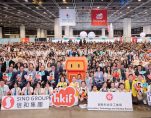
Over five years, nearly 9,000 teachers and students have participated in the Fair to drive youth engagement in innovation and technology

HONG KONG SAR – Media OutReach Newswire – 4 June 2026 – Organised by the Hong Kong Innovation Foundation (‘HKIF’), the Fifth Hong Kong Science Fair (‘Science Fair’) will take place from 27 to 28 June 2026 at the Hong Kong Convention and Exhibition Centre. The event will showcase around 120 shortlisted teams from primary and secondary schools across Hong Kong, presenting creative inventions that integrate artificial intelligence with a diverse range of technology applications. With Sino Group as Principal Patron, the Innovation, Technology and Industry Bureau of the HKSAR Government (ITIB) as the Supporting Bureau, and the Hong Kong Council for Testing and Certification (HKCTC) as Strategic Partner, HKIF is also honoured to have, for the first time, invited the Foundation for the Development of Science and Technology in China as an Advisory Organisation. Representatives from the Foundation will attend the award ceremony to witness the announcement of this year’s winning teams. Consistently a major draw for the community, the Science Fair is now open for online registration with free admission, and the public is warmly invited to attend in person.

Since its launch in 2021, the Science Fair has attracted participation from over 400 local schools, engaging nearly 9,000 students and teachers from Primary 4 to Secondary 6. To date, more than 2,200 creative invention submissions have been received, and the event has established itself as a key platform for youth I&T exchange.

Following Hong Kong’s first astronaut, Dr Lai Ka-ying, into space, the local innovation and technology ecosystem has attracted even greater attention. This year’s Science Fair has specially incorporated aerospace engineering elements, enabling the public to learn about the daily work and challenges of payload specialists, gain insight into the reality of aerospace research and development, and spark greater interest among young people in space exploration. Dr Lai launched aboard the Shenzhou-23 manned spacecraft and is expected to remain in space for approximately six months to conduct space science experiments and maintenance tasks. Visitors can express their support and encouragement by creating message cards for her. In addition, UBTECH Robotics, a globally leading enterprise in embodied AI robotics, will participate in the exhibition, showcasing multiple humanoid robots and offering visitors the opportunity to experience the appeal of embodied intelligence up close.

Professor Sun Dong, JP, Secretary for Innovation, Technology and Industry of the HKSAR Government, stated: ‘The Hong Kong SAR Government is fully committed to developing Hong Kong into an international innovation and technology (I&T) centre, with talent being a key driver of this growth. Now in its fifth edition, the Hong Kong Science Fair – organised by the Hong Kong Innovation Foundation – has become an annual flagship I&T education event. It offers students a valuable platform to turn their innovative ideas into practice, deepen their interest and confidence in I&T, and help bring I&T into schools and the wider community, thereby fostering a more innovation-friendly atmosphere. I look forward to seeing more young people unleash their potential through this platform, pursue careers in I&T, and contribute to the high-quality development of Hong Kong and our nation.’

Mr Daryl Ng, SBS, JP, Chairman of the Hong Kong Innovation Foundation and Chairman of Sino Group, said ‘Innovation and technology are key to Hong Kong’s long-term sustainable development and are integral to the country’s 15th Five-Year Plan. It is vital for Hong Kong to strengthen its I&T capabilities and actively contribute to national development, as underscored by the historic moment when Dr Lai Ka-ying became Hong Kong’s first astronaut. We are encouraged to see growing recognition of I&T opening up new opportunities for young people aspiring to pursue scientific research. As the Hong Kong Science Fair enters its fifth edition, its growth has been made possible by the support of the HKSAR Government, industry partners, tertiary institutions, research organisations, and our panels of judges. This year, we are grateful for the guidance and support of the Foundation for the Development of Science and Technology in China. Moving forward, the Science Fair will remain committed to nurturing talent from an early age, bringing together all sectors to promote I&T and inspire more young people to pursue careers in science and technology.’

Professor Anderson Shum, MH, Chairman of Judging Panel, Hong Kong Science Fair, President of The Hong Kong Young Academy of Sciences, said, ‘The Science Fair adopts the format of “integrating competition with exhibition,” enabling students to translate their learning into tangible and verifiable outcomes. This plays an important role in nurturing Hong Kong’s youth I&T ecosystem. I am delighted to have served as a judge for this major event over the years, witnessing students progressively enhance their presentation skills, build confidence, and broaden their horizons through exchanges with experts, participation in workshops and showcasing their work to the public. The standard of participating projects continues to improve each year, with increasing integration of artificial intelligence and diverse technological applications across different fields. Scientific research is a journey that demands passion and perseverance, and the growth of young scientists often begins with curiosity during their primary and secondary school years. Through these exchanges, we hope to leverage the role-model influence of young scientists, inspiring more students to pursue I&T as their lifelong career. I look forward to seeing our younger generation continue to grow and excel in scientific research and innovation, and officially join the community of scientists in the near future to jointly drive Hong Kong’s I&T development.’

Mr Michael Tam, Chief Brand Officer of UBTECH, said, ‘Humanoid robots are among the most promising real-world embodiments of artificial intelligence, reflecting a future in which intelligent systems are deeply integrated with the physical world. As a global pioneer in humanoid robotics, UBTECH has remained at the forefront of innovation for more than 14 years, with a long-standing commitment to I&T education. The company is dedicated to translating advanced technologies into practical, accessible educational resources. Through collaboration with like-minded partners such as the Hong Kong Innovation Foundation, we aim to inspire greater interest and engagement among both teachers and students in humanoid robotics and artificial intelligence. We are committed to supporting the development of Hong Kong’s I&T education ecosystem, helping to nurture future-ready talent and build a strong, sustainable foundation for long-term growth.’

Since its launch in 2021, the Science Fair has attracted participation from over 400 local schools, engaging nearly 9,000 Primary 4 to Secondary 6 students and their teachers. To date, more than 2,200 creative invention submissions have been received and total attendance has exceeded 120,000 visitors. The Science Fair has gradually established itself as a key platform for youth innovation and technology (‘I&T’) exchange and one of Hong Kong’s most representative I&T education initiatives. This year’s response has been enthusiastic, with over 500 project submissions received. Following preliminary judging, around 120 shortlisted teams took part in a series of workshops and mentorship sessions, and will present their projects at the exhibition in late June to compete for top awards. Gold award-winning teams from each category will have the opportunity to participate in the International Exhibition of Inventions Geneva in Switzerland, fostering idea exchange with global I&T talents.

The Hong Kong Science Fair draws tens of thousands of visitors each year. During the exhibition period, the venue will be transformed into a catalyst for city-wide I&T inspiration. In addition to student showcases, five interactive zones will offer hands-on experiences, including DIY bubble bath bomb workshops, freezer-free slushie making, themed games celebrating the Science Fair’s fifth anniversary, and modified remote-controlled cars made from upcycled household appliances, allowing visitors of all ages to explore science and innovation through engaging and enjoyable activities.


  • Bulu Bulu Bubble Factory: Blending science with sensory experiences, visitors can mix and mould from scratch to create a delightful ‘bathroom blind box’.
  • Shake Shake Ice Factory: Applying the principle of freezing point depression, participants will see how temperature can be rapidly lowered using only salt, ice and water to create personalised slushies — all without a freezer.
  • Scan2Play: Scan the QR Code on your phone to join the themed game celebrating the Hong Kong Science Fair’s Fifth Anniversary.
  • Racing Homey Kart 2.0: Showcasing the spirit of upcycling and upgrades, visitors can transform old, small household appliances into remote-controlled racing cars and compete on a dedicated track.
  • UBTECH Robotics Base: Featuring a wide range of robots, this zone provides a comprehensive showcase of the integration of artificial intelligence with mechanical engineering.

To celebrate the Science Fair’s fifth edition, various special experiences will be introduced. The venue will feature a hidden Science Fair character treasure hunt and check-in activity, through which visitors can redeem curated gifts upon completion. Limited-edition souvenirs, including the ‘HKSF-5 Metal Standee Collection’ and the ‘Special Edition Robo K’ blind boxes, will also be available in limited quantities. All proceeds from the HKSF Bazaar, with no deduction, will go directly to charity to support local community technology initiatives.

The Fifth Hong Kong Science Fair Details:

  • Date: 27 to 28 June 2026 (Saturday and Sunday)
  • Time: 10:00 am to 6:00 pm
  • Venue: Hong Kong Convention and Exhibition Centre, Hall 3FG
  • Admission: Free of Charge (Pre-registration online is required)
  • Registration Website: https://reghksciencefair.org.hk/public

Photos download: https://shorturl.at/mgawb

Hashtag: #HKIF #ScienceFair

The issuer is solely responsible for the content of this announcement.

Collaboration will support efforts to identify and remediate software vulnerabilities using advanced AI capabilities

HONG KONG SAR – Media OutReach Newswire – 4 June 2026 – TrendAI™, the enterprise AI security leader from Trend Micro Incorporated (TYO: 4704; TSE: 4704), today announced its participation in Project Glasswing, an initiative focused on helping organizations identify and address vulnerabilities in critical software systems.

As part of the program, TrendAI™ will use Anthropic’s Claude Mythos Preview to support the review and analysis of software code, helping threat intelligence researchers turn accelerated vulnerability discovery into coordinated disclosure, prioritized remediation, and measurable risk reduction through vulnerability shielding and virtual patching.

AI is dramatically accelerating vulnerability discovery. TrendAI™ views this as a positive signal for the industry – it is part of the broader, collaborative ecosystem TrendAI™ has been actively contributing to for decades alongside organizations like Anthropic.

Rachel Jin, Chief Platform and Business Officer, Head of TrendAI™: “We’re aligned with Anthropic’s goals of using AI to make all software more secure. Organizations increasingly depend on software that operates at tremendous scale and supports critical business functions. Project Glasswing represents an important opportunity to explore how advanced AI can help software providers identify vulnerabilities earlier and improve the security and resilience of the systems customers depend on every day.”

TrendAI™ joins a growing community of organizations participating in Project Glasswing to better understand how frontier and advanced AI models can support defensive security efforts and improve the security of critical software infrastructure.

Insights gained through the program will contribute to informing the broader industry efforts to strengthen the security of the digital ecosystem.

Hashtag: #trendai #trendmicro #trendvisionone #visionone #trendaivisionone


The issuer is solely responsible for the content of this announcement.

About Anthropic

Anthropic is an AI safety and research company dedicated to building reliable, interpretable, and steerable AI systems. Its Claude family of models enables advanced capabilities across a wide range of applications, including code understanding and security analysis.

About TrendAI™

TrendAI™, the global AI security leader and enterprise business unit of Trend Micro, empowers organizations with full AI visibility and consolidated security that inspires confidence, drives innovation, and eliminates risk. Trusted by the largest enterprises and governments across 185 countries, TrendAI™ secures the entire organization, from identities to infrastructure to data. Global Fortune 500 companies rely on TrendAI™ to cut risk and stop threats up to three months earlier, powered by world-leading threat and attack intelligence. Through deep ecosystem partnerships with market leaders like NVIDIA, Anthropic, AWS, Google, and Microsoft, TrendAI™ empowers your organization to securely drive forward at the speed of AI. AI Fearlessly. Learn more at trendaisecurity.com.

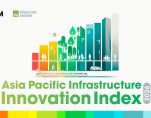
HONG KONG SAR – Media OutReach Newswire – 4 June 2026 – AECOM, the trusted global infrastructure leader, and the Urban Land Institute (ULI), today announced the launch of the Asia Pacific Infrastructure Innovation Index 2026, a new thought leadership report examining how the infrastructure industry across the region is prioritizing innovation in response to stakeholders’ needs, increasing system complexity, operational pressures and evolving delivery challenges.

AECOM and Urban Land Institute launch inaugural Asia Pacific Infrastructure Innovation Index, highlighting region's evolving infrastructure innovation priorities.
AECOM and Urban Land Institute launch inaugural Asia Pacific Infrastructure Innovation Index, highlighting region’s evolving infrastructure innovation priorities.

Developed in collaboration between AECOM and ULI, the report brings together perspectives from stakeholders across infrastructure, government, utilities, investment, planning and development sectors. It draws on a survey of more than 100 senior infrastructure professionals in Asia Pacific, alongside in-depth interviews with industry leaders. As the first edition of the Index, it establishes a baseline for understanding how infrastructure innovation is currently being prioritized and delivered across the region.

“This report highlights how organizations are moving beyond ideas and applying innovation in practical ways to improve delivery, resilience and system performance,” said Ian Chung, chief executive of AECOM’s Asia region. “Infrastructure leaders across Asia Pacific are responding to growing complexity by strengthening digital capabilities, improving coordination across interconnected systems and focusing on long-term operational performance.”

“Our collaboration with AECOM reflects a growing recognition that infrastructure and real estate are increasingly interdependent,” said Alan Beebe, CEO Asia Pacific, ULI. “As cities in Asia Pacific evolve, infrastructure is no longer just a technical consideration, but plays a critical role in shaping how places function, grow and perform. Understanding how innovation is being applied in this context is essential for those involved in the built environment.”

Among the top ten takeaways highlighted in the report, three key themes emerged consistently across both the survey findings and interview insights: the role of AI in infrastructure systems, the integration and growing demands on energy systems, and the need to design and operate infrastructure for climate resilience. Together, these themes highlight a broader shift toward enhancing how infrastructure systems are developed and perform under increasingly complex, real-world conditions.

Read the report here: Asia Pacific Infrastructure Innovation Index | AECOM Insights

Hashtag: #AECOM #AsiaPacificInfrastructureInnovationIndex

The issuer is solely responsible for the content of this announcement.

About AECOM

AECOM is the global infrastructure leader, committed to delivering a better world. As a trusted professional services firm powered by deep technical abilities, we solve our clients’ complex challenges in water, environment, energy, transportation and buildings. Our teams partner with public- and private-sector clients to create innovative, sustainable and resilient solutions throughout the project lifecycle — from advisory, planning, design and engineering to program and construction management. AECOM is a Fortune 500 firm that had revenue of $16.1 billion in fiscal year 2025. Learn more at aecom.com.

About the Urban Land Institute

The Urban Land Institute (ULI) is a non-profit education and research institute supported by its members. Its mission is to shape the future of the built environment for transformative impact in communities worldwide. Established in 1936, the Institute has more than 48,000 members worldwide and over 3,000 members in the Asia Pacific region representing all aspects of land use and development disciplines. For more information on ULI Asia Pacific, please visit , or follow us on , , , , and .

HONG KONG SAR – Media OutReach Newswire – 3 June 2026 – A large delegation, led by John Lee, Chief Executive of the Hong Kong Special Administrative Region (HKSAR), is visiting Kazakhstan and Uzbekistan (June 1-6) to forge closer ties with Central Asia.

Comprising over 70 business and professional representatives from Hong Kong and the Chinese Mainland, the delegation has already yielded significant results at its first stop in Kazakhstan.

Speaking at a business luncheon in Astana yesterday (June 2), Mr Lee highlighted that 43 memoranda of understanding (MOU) and agreements have been concluded by the visiting delegation with companies and organisations from Kazakhstan, with more agreements to come.

“They span aviation, finance and trade, innovation and technology, the digital economy, green development, and more,” Mr Lee said, adding that a Hong Kong airline plans to launch direct flights to Almaty in the first quarter of 2027.

“I believe that Kazakhstan can serve as a hub for Hong Kong to connect with the Central Asian market. In turn, Hong Kong can be Central Asia’s hub in the east and southeast Asian region,” Mr Lee said.

“By strengthening co-operation between our two hubs, we can construct a hub-to-hub co-operation model.”

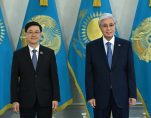
On his first day of visit in Astana (June 1), Mr Lee met with top government officials including the President of Kazakhstan, Kassym-Jomart Tokayev, Prime Minister Olzhas Bektenov, and Deputy Prime Minister and Minister of National Economy Serik Zhumangarin.

Hong Kong SAR's Chief Executive John Lee (left) meets with the President of Kazakhstan Kassym-Jomart Tokayev to exchange views on deepening bilateral relations.
Hong Kong SAR’s Chief Executive John Lee (left) meets with the President of Kazakhstan Kassym-Jomart Tokayev to exchange views on deepening bilateral relations.

Mr Lee noted that Kazakhstan has been actively promoting reforms on various fronts to bring about rapid economic growth.

“As one of the world’s three major financial centres, and the world’s largest cross-boundary wealth management centre and offshore Renminbi business hub, Hong Kong can provide diversified and flexible support including capital and asset allocation for Kazakhstan’s economic reforms and infrastructure development,” Mr Lee said.

The Chief Executive also encouraged companies in Kazakhstan to leverage Hong Kong’s advantages under the “one country, two systems” principle.

“Under this unique principle, Hong Kong has its own economic, social, legal, legislative and judicial systems. We are the only common law jurisdiction in China. We have our own currency, with no capital or foreign exchange controls. We are, as well, a separate customs territory,” Mr Lee said.

“The ‘one country, two systems’ principle ensures Hong Kong’s unparalleled access to the markets of the Chinese Mainland. Capitalising on our global connectivity and world-class professional services, Hong Kong is your ideal, two-way springboard for business expansion.”

Mr Lee also visited the Astana International Financial Centre and the Astana Hub, a local technology and innovation park, to respectively learn about Kazakhstan’s experience in promoting the development of the non-bank financial sector and the latest developments of the country in the field of AI.

Hong Kong SAR's Chief Executive John Lee (centre) witnesses the exchange of memoranda of understanding and co-operation agreements between organisations from both sides with the Governor of the Astana International Financial Centre Renat Bekturov (second right).
Hong Kong SAR’s Chief Executive John Lee (centre) witnesses the exchange of memoranda of understanding and co-operation agreements between organisations from both sides with the Governor of the Astana International Financial Centre Renat Bekturov (second right).

Before leaving Kazakhstan today (June 3), Mr Lee visited Nazarbayev University, underscoring the historic significance of the trip.

image-1.jpeg

“It was here, at Astana’s Nazarbayev University in 2013, that President Xi Jinping first raised the visionary initiative of jointly building the Silk Road Economic Belt – today’s Belt and Road Initiative (BRI),” Mr Lee said.

Last year, at the 10th Belt and Road Summit in Hong Kong, the university signed a MOU with the Hong Kong University of Science and Technology, demonstrating a shared commitment to advancing higher education co-operation under the BRI. It further reached MOUs with Hong Kong’s Education University and Polytechnic University today.

“These agreements will deepen academic and research collaboration.

“Hong Kong is the only city in the world with five of the top 100 universities. This talent environment is reinforced by our global standing: last year, Hong Kong ranked first in Asia, and fourth globally, in the World Talent Ranking,” he added.

Mr Lee will continue to lead the delegation to Uzbekistan for the second leg of the mission to Central Asia.

Hashtag: #hongkong #brandhongkong #asiasworldcity #opportunitieswithCentralAsia


The issuer is solely responsible for the content of this announcement.

Advancing Cross-Border Payments Across Latin America and Europe

AMSTERDAM, NETHERLANDS – Media OutReach Newswire – 3 June 2026 – XTransfer, the world’s leading B2B cross-border trade payment platform, and BBVA, a global financial group, have signed a Memorandum of Understanding (MOU) during Money20/20 Europe 2026 in Amsterdam to deepen cross-border payment infrastructure across Latin America and Europe.

The MOU was signed by Bill Deng, Founder and CEO of XTransfer, and Ksenia Nekrasova, Global Sector Co-Head of TMT at BBVA, at Money20/20 Europe 2026 in Amsterdam.

Under the MOU, XTransfer and BBVA will combine their respective strengths to explore the delivery of integrated cross-border financial solutions, spanning FX conversion, local payments and cross-border payments across Latin America, Europe and Hong Kong SAR.

The parties will also explore leveraging technology and innovation, including APIs, digital platforms, collection solutions and virtual accounts, to support more automated, real-time and seamless FX conversion and transaction processing. By streamlining payment flows and improving operational connectivity, the collaboration is expected to enhance the scalability, efficiency and reliability of cross-border financial services for SMEs engaged in international trade.

In recent years, trade between China and Latin America has grown closer. XTransfer data shows that in 2025, payment collections from Latin America on its platform rose 94% y-o-y. Yet many SMEs still face major cross-border settlement hurdles, including slow onboarding, FX constraints, and complex compliance. The partnership between XTransfer and BBVA is structured to tackle these barriers directly.

For XTransfer, the partnership strengthens the coverage and depth of X-Net, its global unified B2B cross-border settlement and risk management network, in two of the most important regions for its SME clients. With Latin America emerging as a high-growth corridor for Chinese exporter settlements, BBVA’s strong presence across Latin America and Europe further strengthens XTransfer’s reach and competitive position.

With XTransfer’s network of more than 897,000 SME clients worldwide, the partnership also strengthens BBVA’s position in global payments and expands its ability to serve a broader, more diverse client base across multiple regions.

Bill Deng, Founder and CEO of XTransfer, said, “Latin America remains an active but underserved B2B trade corridor, where SMEs still encounter significant challenges. We are pleased to sign this MOU with BBVA, enabling us to leverage their expertise to bring X-Net’s infrastructure directly into the region. Together, we aim to simplify cross-border finance and improve the efficiency and inclusivity for global traders.”

Ksenia Nekrasova, Global Sector Co-Head of TMT at BBVA, said: “Beyond the growth in flows, we are seeing a shift in how our clients operate: digital platforms with global, real-time and highly integrated needs. This agreement allows us to anticipate that evolution, strengthening our capabilities in the TMT space and supporting these clients in their international expansion with solutions designed for their scale and complexity.”
Hashtag: #XTransfer #BBVA #CrossborderPayments #SMEs


The issuer is solely responsible for the content of this announcement.

About XTransfer

XTransfer, the world’s largest B2B cross-border trade payment platform with over US$60 billion TPV in 2025, according to CIC. Founded in 2017 as one of the first payment platforms worldwide dedicated to B2B cross-border trade, we serve the largest customer base of over 800,000 registered SMEs globally as of March 31, 2026.

We connect top-tier financial institutions directly to SMEs, the backbone of global trade, giving businesses of every size access to the same secure, compliant and seamless payment infrastructure once reserved for multinationals. As of March 31, 2026, we provide payment services across more than 200 countries and regions through partnerships with financial institutions, including some of the most established international banks around the world.

XTransfer has obtained required licenses in major hubs, including the Chinese Mainland, Hong Kong, the United Kingdom, the United States, Singapore, the Netherlands, Australia and Canada.

For more information, please visit: https://www.xtransfer.com

Scientists have identified a link between biological changes present at birth, the development of gut bacteria during infancy and early signs of autism spectrum disorder and attention-deficit/hyperactivity disorder by age three, raising fresh questions about how brain development may be shaped before and after delivery. A large birth-cohort study led by researchers at The Chinese University of Hong Kong’s Faculty of Medicine found that epigenetic marks in […]

Advertisements
Mainland Chinese investors have turned net sellers of Hong Kong-listed equities through Stock Connect, marking a rare reversal in cross-border flows as enthusiasm for onshore artificial intelligence shares draws capital back towards Shanghai and Shenzhen.

The shift reflects a sharp change in investor preference after months of underperformance by Hong Kong equities against mainland peers. Mainland investors sold about HK$3.6 billion of Hong Kong shares through the trading links last month, the first monthly net outflow since June 2023 and one of only a small number of monthly selling episodes since the southbound channel became a key route for mainland money into the city’s market.

The move is striking because southbound buying has been one of the strongest supports for Hong Kong stocks over the past year. Mainland funds poured into high-dividend banks, telecoms groups, energy companies and internet platforms during earlier phases of the rally, helping offset caution among global investors. That support is now weakening as domestic funds chase companies tied to AI infrastructure, chips, optical modules, software and computing power.

Onshore AI shares have delivered a stronger performance than Hong Kong’s technology benchmarks this year. The CSI Artificial Intelligence Index has risen sharply, while the Hang Seng Tech Index has lagged, weighed down by concerns over platform margins, heavy spending on AI models and pressure from subsidy battles in e-commerce and online services. The divergence has encouraged active money managers and retail traders to reassess whether Hong Kong-listed internet giants still offer the most attractive exposure to China’s technology story.

The change in flows also comes as Beijing’s industrial policy continues to favour advanced manufacturing, domestic semiconductors, large language models and high-end computing. Companies linked to AI servers, data centres, optical communications, robotics and chip design have become favoured market proxies for China’s effort to reduce dependence on foreign technology. That policy backdrop has helped support valuations even as questions persist over earnings visibility, capital expenditure demands and competition.

Cambricon Technologies, Zhongji Innolight, Kingsoft Office, iFlytek and other mainland-listed technology names have been among the companies watched closely by investors seeking domestic AI exposure. Hong Kong still hosts major technology groups such as Tencent, Alibaba, Baidu, Meituan and Xiaomi, but the market’s heavyweight structure makes it more exposed to mature platform businesses than to the faster-growing AI hardware and infrastructure supply chain favoured by onshore traders.

Hong Kong’s role as a fundraising centre remains intact despite the outflow. The city has continued to attract listings from technology, healthcare, robotics and semiconductor-related companies, while mainland firms still view it as the most practical offshore venue for raising international capital. Several AI and chip-linked companies are preparing or considering Hong Kong share sales, suggesting the city remains central to China’s capital market architecture even as secondary-market money rotates elsewhere.

The weakness in southbound appetite also reflects broader caution over Hong Kong valuations after a strong earlier advance. Investors who bought the market for dividends and policy support are locking in gains while seeking higher-beta opportunities at home. The shift does not necessarily point to a structural rejection of Hong Kong stocks, but it does show that mainland money is becoming more selective after helping drive earlier momentum.

Regulatory pressure on offshore investment channels may also be influencing behaviour. Authorities have tightened scrutiny of unauthorised cross-border trading accounts and offshore brokerage activity, reinforcing the appeal of regulated domestic routes. While Stock Connect remains an approved mechanism, wider efforts to keep capital within supervised channels have added another layer of sensitivity around outbound allocations.

Market analysts say the key question is whether the AI-led onshore rally can broaden beyond a narrow group of highly valued companies. China’s AI supply chain is benefiting from state support, falling model costs and growing enterprise adoption, but investors face risks from crowded positioning, uneven profitability and rapid technological shifts. Several AI-linked companies still trade more on expectations than on proven earnings, leaving the sector vulnerable to volatility if sentiment turns.

  • FOMO Pay merchants in Singapore will soon be able to accept DuitNow QR payments, enabling Malaysian travellers and visitors to pay using familiar home-country banking and payment applications.
  • The rollout comes ahead of the Johor Bahru–Singapore RTS Link, expected to carry up to 40,000 passengers daily upon launch in January 2027.
SINGAPORE – Media OutReach Newswire – 3 June 2026 – FOMO Pay, a leading Singapore-headquartered payment institution, will launch DuitNow QR acceptance in Singapore, enabling Malaysian travellers and visitors to make payments using familiar banking and payment applications while merchants receive settlement in Singapore Dollars (SGD).
The rollout comes ahead of the opening of the Johor Bahru–Singapore Rapid Transit System (RTS) Link in January 2027, a landmark infrastructure project expected to carry up to 40,000 passengers daily. The rail link is expected to further strengthen travel and consumer activity between Singapore and Malaysia.

Supporting Singapore Merchants with Growing Malaysian Visitor Traffic
As travel between Singapore and Malaysia continues to increase, merchants are seeing a growing demand for payment experiences that are frictionless to regional consumers.
By enabling DuitNow QR acceptance in Singapore, FOMO Pay allows Malaysian visitors to pay using their local banking and payment apps in Malaysian Ringgit (MYR), while Singapore merchants receive full settlement in SGD. The rollout will simplify payment acceptance for merchants, removing the need for separate payment setups or manual foreign currency handling.
As cross-border consumer traffic continues to grow, seamless payment experiences are expected to play an increasingly important role in shaping consumer confidence and purchase behaviour, particularly in retail, dining, and lifestyle environments.

Enhancing Cross-Border Payment Experiences

“Cross-border commerce is no longer limited to large enterprises or international brands. Increasingly, everyday businesses are serving consumers who move frequently across markets,” said Rose Wang, Head of Digital Payments at FOMO Pay. “As travel and consumer movement across Southeast Asia becomes increasingly fluid, real-time payment rails like DuitNow are fast becoming part of the infrastructure powering everyday regional commerce. Enabling DuitNow QR acceptance in Singapore helps merchants better connect with Malaysian consumers in ways that feel natural to how they already transact in their daily lives.”
The rollout marks another step in FOMO Pay’s broader efforts to help merchants access Asia’s growing network of national instant payment systems through a unified multi-rail, multi-currency platform, better supporting increasingly cross-border consumer spending across the region.

Hashtag: #DigitalPayment #DigitalBanking #DigitalAsset #FinTech #AI


The issuer is solely responsible for the content of this announcement.

About FOMO Pay

Founded in 2015, FOMO Pay is a payment institution licensed in Singapore, Hong Kong and the Middle East. The firm has become a leading one-stop digital payment, digital banking, and digital asset solution provider. It is currently building Asia’s fully licensed financial platform, helping institutions and businesses connect between traditional and next-generation financial services. The firm offers its three flagship products:
* FOMO Payment – One-stop digital payment solution for merchants, corporates and financial institutions
* FOMO iBiz – Facilitate businesses’ everyday requirements for transactional banking needs
* FOMO Treasury – Corporate cash management and investment solutions for liquidity optimization and earning yield
Visit for more information. For media inquiries, contact .

Advancing Research Commercialization and Building a Vibrant I&T Ecosystem

HONG KONG SAR – Media OutReach Newswire – 2 June 2026 – The Hong Kong University of Science and Technology (HKUST) today successfully hosted its annual “Unicorn Day,” one of Hong Kong’s flagship innovation and entrepreneurship events. The event brought together over 1,800 participants, including students, faculty, and alumni, as well as international and local government representatives, industry partners, investors, innovation and technology entrepreneurs, and researchers. Participants exchanged insights on strategies to strengthen collaboration across the innovation ecosystem, foster cross-disciplinary partnerships, and accelerate the translation of research outcomes into real-world impact.

The event was officiated by Prof. SUN Dong, Secretary for Innovation, Technology and Industry of the HKSAR Government, alongside consuls-generals and senior officials from countries including Australia, Chile, France, Hungary, India, Japan, Malaysia, the Netherlands, Vietnam, and the United Arab Emirates. They were joined by Prof. Nancy IP, HKUST President; Prof. Lionel NI, HKUST (Guangzhou) President; and Prof. Tim CHENG, HKUST Vice-President for Research and Development; in touring over 100 HKUST-nurtured startups, showcasing innovations and applications spanning areas such as healthcare, electronics, and artificial intelligence systems, as well as new materials, green energy, and sustainability.

Prof. Sun Dong remarked, “Innovation and technology (I&T) has always been at the top of the Hong Kong SAR Government’s agenda. We fully recognise the crucial role of local universities — not only as key partners, but as the bedrock of Hong Kong’s I&T ecosystem. In just three and a half decades, HKUST has risen to become a global powerhouse in deep tech, entrepreneurship, and innovation as demonstrated by its ability to nurture unicorns and deep-tech ventures. Hong Kong is entering a golden era of I&T development. We are building new engines to drive Hong Kong’s high-quality development, focusing on research and development in key fields and leading industry applications. I am confident that Hong Kong will rise as a leading international I&T center and contribute meaningfully to our nation’s high-quality development, and that HKUST will continue to be a driving force in this amazing journey.”

President Ip said, “As we mark the 35th anniversary of HKUST this year, we also celebrate the spirit of innovation and entrepreneurship that has long been embedded in our DNA. Both the Technology Transfer Center and the Entrepreneurship Center were established in the University’s early years to support faculty and students in realizing their entrepreneurial aspirations and to promote the translation of research outcomes into practical solutions. Over the past 35 years, the University has forged ahead with determination, sowing the seeds of innovation and yielding remarkable achievements across multiple frontier fields. Today, HKUST continues to broaden its horizons, strategically positioning itself in key domains. One example is medical education. The establishment of the HKUST Medical School will integrate the life sciences with cutting-edge technologies to nurture a new generation of interdisciplinary medical professionals.

Concurrently, HKUST has been actively involved in national initiatives such as the Chang’E 8 lunar exploration mission and research projects for the Tiangong Space Station, and the launch of the first commercially viable aerospace project under the RAISe+ Scheme. These achievements exemplify HKUST’s enduring ‘can do’ spirit over the past decades and echo the theme of today’s event—’From Ideas to Miracles—35 Years of Impact and Beyond’. Looking ahead, HKUST will continue to nurture bold ideas and action, working hand in hand with partners across different sectors to cultivate a vibrant innovation ecosystem, ensuring that research achievements benefit society and create lasting global impact.”

To support startups in expanding into global markets and to promote cross-border collaboration, HKUST introduced an “International Pavilion,” featuring startups and innovation organizations from various countries and regions. Participants from Thailand, Singapore and Korea were among those represented, strengthening connections between Hong Kong, and countries and regions along the Belt and Road in technology application and industry development.

The event also saw the signing of multiple partnership agreements, including six strategic collaborations with:

  • GPTX Investment Management Limited
  • China Everbright Water Limited
  • Jiangsu Daotop Environmental Technology
  • Samsung R&D Institute China – Guangzhou
  • CalmCar Physical AI Innovation Center
  • InnoAngel

to advance talent development and industry–academia integration, and foster innovation-driven research and real-world technology translation.

HKUST’s I&T Strength Driving Economic Growth

In addition, HKUST also released the report Driving Socioeconomic Impact Through Research and Innovation: Insights from HKUST, commissioned by the University and prepared by the international research information analytics organization Elsevier. The report highlights HKUST’s outstanding performance in innovation and entrepreneurship. Over the past five years, research output has recorded an average growth of 10%, approximately 9% higher than that of other local institutions. More than 65% of the research is concentrated in engineering and computer science, while 6.2% involves academia-industry collaboration, significantly higher than the global average of 2.7%. These collaborations have translated into impactful intellectual property, with approximately 1,670 patent applications and 700 grants over the same period, and a high IP utilization rate of above 30%.

Prof. Tim Cheng noted that the findings demonstrate HKUST’s steadily strengthening capabilities in research translation and academia-industry collaboration. HKUST’s publications achieved a Field-Weighted Citation Impact of 4.40, indicating that their citation impact is 4.4 times the global average. This underscores HKUST’s significant contributions to advancing Hong Kong’s socioeconomic development and enhancing its competitiveness in innovation and technology.

In addition, a “Marketplace” was also featured, showcasing products already launched by startups, including AI analytics tools, healthcare technologies, and smart city solutions, demonstrating the progress of translating research into practical applications.

Hashtag: #unicorn #unicornday #HKUST #partnership #innovation #startup #tech #AI #space #robotics #materialscience

The issuer is solely responsible for the content of this announcement.

Swiss watch exports fell sharply in April as shipments to the United States slumped from a distorted high base created last year, when brands and distributors rushed inventory across the Atlantic before higher US tariffs took effect. Exports dropped 16.6 per cent year on year to CHF2.13 billion, with the United States accounting for the largest drag on the industry’s monthly performance. Shipments to the US, still […]

Tencent Holdings shares posted their strongest intraday gain in more than three years in Hong Kong after details emerged that the company is testing an artificial intelligence agent for WeChat, raising expectations that China’s most powerful consumer internet platform may become a launchpad for mass-market AI services.

The stock climbed about 6 per cent on Tuesday as investors reacted to signs that Tencent is moving closer to embedding a task-performing assistant inside WeChat, the messaging, payments and social platform used by more than 1.4 billion people. The prototype is designed to help users complete everyday actions within the app, including finding venues, interacting with mini-programmes and placing customised orders, rather than merely answering questions in chatbot form.

The planned agent would mark a significant step in Tencent’s push to convert its AI investments into consumer products at scale. WeChat already functions as a digital operating system for daily life in China, covering messaging, payments, shopping, food delivery, public services, entertainment, ride-hailing and enterprise communication. That reach gives Tencent an advantage that few rivals can match: a single platform with a vast user base, heavy daily engagement and a dense network of third-party services.

People familiar with the prototype have indicated that users would be able to access the AI agent through a swipe gesture on the main WeChat screen. Tencent is expected to begin the regulatory compliance process before wider testing, with a small group of external users likely to receive access before any phased public launch. A firm release date has not been set, reflecting both regulatory uncertainty and the technical demands of deploying agentic AI across a platform of WeChat’s size.

The market response underscores how investors are reassessing Tencent’s AI position after months of concern that the company was trailing Alibaba, ByteDance and Baidu in the race to commercialise generative AI. Tencent has promoted Yuanbao, its AI chatbot, developed its Hunyuan foundation model and introduced productivity-focused AI tools, but WeChat remains the asset most capable of turning those efforts into a daily consumer habit.

Tencent’s first-quarter earnings showed both the strength and the cost of that strategy. Revenue rose 9 per cent year on year to RMB196.5 billion, while IFRS net profit attributable to equity holders increased 21 per cent to RMB58.1 billion. Marketing services revenue rose 20 per cent to RMB38.2 billion, helped by AI-driven advertising improvements, while domestic games revenue grew 6 per cent and international games revenue climbed 13 per cent. Capital expenditure reached RMB31.9 billion, up 16 per cent, as spending on AI infrastructure continued to rise.

The company has told investors that new AI products are weighing on margins, even as core businesses continue to generate strong cash flow. Excluding new AI products, non-IFRS operating profit rose 17 per cent in the first quarter, compared with a 9 per cent increase overall. That gap highlights the near-term drag from AI investment, but also explains why investors are sensitive to any sign that Tencent can place AI directly into revenue-generating services.

Competition is intensifying across China’s technology sector. Alibaba has pushed Qwen into consumer and enterprise markets, ByteDance has expanded AI features across its content ecosystem, and Baidu continues to build around Ernie and AI cloud services. The key battleground is shifting from chatbots to agents that can perform tasks, connect with apps and act across digital services with limited user input.

WeChat’s mini-programme ecosystem could be central to Tencent’s approach. Millions of merchants, developers and service providers already operate within the platform, allowing an AI agent to navigate services without pushing users outside Tencent’s environment. For merchants, an effective agent could increase conversion rates by shortening the path from search to purchase. For Tencent, it could deepen engagement, improve advertising relevance and strengthen its fintech and business services ecosystem.

Regulation remains a critical constraint. China requires generative AI services offered to the public to comply with rules covering data security, content control and algorithmic governance. Any WeChat agent would need to satisfy those requirements before broad release, especially because it could interact with payments, commerce and public services.

UAE motorists are paying more for petrol in June, but pump prices remain below many major global markets, cushioning households and businesses from the full impact of higher international energy costs. The latest monthly adjustment raised Super 98 petrol to Dh3.95 a litre from Dh3.66 in May, while Special 95 increased to Dh3.83 from Dh3.55. E-Plus 91 moved up to Dh3.76 from Dh3.48. Diesel, however, fell to […]

HONG KONG SAR – Media OutReach – 28 May 2026 – Eternal Beauty Holdings Limited (Eternal Group; Stock Code: 6883.HK), for over four decades the preeminent strategic gateway for fragrance and beauty brands into China, including Hong Kong SAR and Macao SAR, today announced its official partnership with Esxence and the launch of a dedicated campaign titled “The Eternal Path to China.” Running from 3 to 6 June 2026 at Esxence 2026 in Milan, the campaign presents a comprehensive navigable roadmap for international fragrance brands —from niche artisan perfumers to established luxury heritage brands—seeking to enter or expand within one of the world’s most dynamic and fast-growing fragrance markets.

For details: https://www.eternal.hk/the-eternal-path-to-china/

Downloadable Photo: https://drive.google.com/drive/folders/1awiWHa161_BbmFiJVdW_dE8gIm7imaJV?usp=sharing

A Flagship Seminar with Industry Leaders

The flagship session, “Paving the Way to China Fragrance Market,” will take place on 5 June 2026 from 15:00 to 15:45 (CEST) at the Conference Hall on the Main Stage of Esxence 2026. A distinguished panel of industry experts will examine China’s economic landscape and fragrance market, offering practical and insight-driven perspectives on successful market entry strategies. The confirmed speakers are Mr. Stefano De Paoli, Italy Chief Representative of InvestHK; Mr. Haocong Weng, Director of the Xuelei Fragrance Museum; Ms. Wincy Tang, General Manager of Marketing and Partnership at Experience 11 Limited, and Ms. Cindy Chung, Director of General Affairs of Eternal Group.

Beyond the Seminar: A Full Suite of Brand Resources

Beyond the seminar, Eternal Group has curated a comprehensive suite of resources to equip brands with actionable intelligence and operational guidance. Six industry talks will be held at Business Lounge No. 8 with speakers from Hong Kong Productivity Council, PricewaterhouseCoopers, The Loops Hong Kong, as well as expertise from Eternal Group. Topics will cover regulatory compliance, emerging marketing trends, and brand storytelling tailored for Chinese consumers. One-on-one consultations will offer bespoke advisory sessions with Eternal Group’s senior experts. In addition, attendees will have access to The China Market Entry Blueprint, a proprietary guide featuring market insights and consumer trend analysis, NMPA compliance pathways and formula testing requirements, localization best practices, as well as marketing, PR, and retail channel strategies across shopping malls, pop‑ups, and museums.

“For more than 40 years, Eternal Group has served as a trusted bridge for international fragrance brands navigating the complexities of the China market,” said Ms Wendy Lau, Executive Director of Eternal Group.”With ‘The Eternal Path to China’ at Esxence 2026, we are transforming complexity into clarity—providing strategic insights, trusted partnership and a clear pathway to market success. Whether a brand is taking its first step or strengthening its existing presence, we are here to guide its journey into the China market.”

Registration & Inquiries

You are invited to attend the seminar, industry talks, and exclusive briefings. To register or schedule interviews with speakers or Eternal Group representatives, please contact the PR & Corporate Communication Department at [email protected]. To register for the seminar, please visit: https://bit.ly/3PRfOrM.

Remarks:

To access both the Conference Hall and Business Lounge, please purchase a standard Esxence ticket on VivaTicket.com. The ticket includes exhibition access (first 3 days are open to industry professionals only; the final day is open to the public). Consumers may register by contacting: [email protected].

Hashtag: #EternalGroup

The issuer is solely responsible for the content of this announcement.

About Eternal Beauty Holdings Limited (Stock Code: 6883.HK)

Eternal Beauty Holdings Limited (Eternal Group) is the largest perfume group (apart from brand-owner perfume groups) in China (including Hong Kong and Macao) in terms of retail sales in 2023*. It primarily sells and distributes products procured from third-party brand licensors, and deploys market for these brand licensors, offering such services as brand management, and designing and implementing customized market entry and expansion plans for their brands. The Group boasts large and diversified brand portfolios that include not only perfumes, but also color cosmetics, skincare products, personal care products, eyewear and home fragrances. As at 31 March 2026, it conducted product distribution and market deployment for a total of 75 external brands, including Hermès, Van Cleef & Arpels, Chopard, Albion and Laura Mercier, with products in different pricing tiers and of versatile features that meet the differentiated demands of consumers in Chinese Mainland, Hong Kong and/or Macao. Website:

*Data source: Frost & Sullivan

About Esxence

Esxence – The Art Perfumery Event has been the International Artistic Perfumery Event since 2009, it represents for professionals and enthusiasts the opportunity to meet the real protagonists of this fascinating world of fragrances, where history and tradition combine with innovation and research. An exhibition area dedicated to excellence, together with a rich and interesting calendar of meetings and events, which offer to the public – last edition reached more than 10,000 attendees – a unique and unmissable experience. Website:

FOSHAN, CHINA – Media OutReach Newswire – 31 May 2026 – As global travelers seek more diverse destinations, China has emerged as a top choice. In the first quarter of 2026, the country recorded 21.33 million border entries and exit checks involving international visitors. Among the growing array of destinations in the vast country, China’s villages have emerged as a compelling draw. To explore these gems, CGTN presents Village Voyage, a series following American host Julian Waghann and Namibian traveler Absalom Absalom through villages in Guangdong Province, located in the Pearl River Delta, north of Hong Kong. For Absalom, the journey offers what he sees as a replicable model of how villages can thrive without losing their “souls.”

IMG 8135

Ancestral halls and the scholars who never left

In Shunde’s Yang’e Village in southern Guangdong Province, Julian and Absalom step into the cultural space of a community – once the Lu Ancestral Hall, where scholar Lu Cang founded an academy after retiring from office. It is a small village but home to 14 civil and military jinshi scholars during the Ming (1368-1644) and Qing (1644-1911) dynasties, a reflection of its long-held reverence for education. A jinshi was the highest and most prestigious rank in China’s imperial civil service examination system – a scholar who passed the final court-administered exam. But the village’s living heritage does not stop at books. Here, the lion dance – an intangible cultural heritage item – passes down from old masters to children. “If they want to learn, we just provide the opportunity for the kids,” said lion dance coach Feng Jianhua. “So, they can carry forward our millennia-old culture.”

The village that gave the world kung fu

Few know Bruce Lee’s ancestral home stands in Jun’an, Shunde. Guangdong has long been the heartland of southern Chinese martial arts. Locals greet each other not with “Have you eaten?” but “Have you had your night porridge?” – a phrase that means “Have you been practicing kung fu?”

Luo Dezhi, a fifth-generation inheritor of Shaolin Wing Chun and Bruce Lee’s fellow disciple, has trained for over 50 years. “For a martial artist, virtue comes first, then a strong body,” he said. “Kung fu represents traditional Chinese culture – to strengthen the body, protect oneself, and help others.”

Soft gold from village waterways

A century ago, merchant He Mingshi shipped xiangyunsha – gambiered Canton gauze, known as “soft gold” – from Shunde’s villages down the Pearl River Delta to countries abroad, like Malaysia.

The saying goes: “A tael of gold for a tael of silk.” Today, this UNESCO-recognized intangible cultural heritage is still made by hand. “It’s way harder than it looks,” Absalom said as he tried the process. Inheritor Chen Hongfa watched and smiled. From Shunde, Guangdong, the craft reaches the world.

UNESCO gastronomy inside towns

Shunde is one of only a handful of UNESCO Cities of Gastronomy worldwide. Within Guangdong – a province famous for Cantonese cuisine – Shunde is widely regarded as its birthplace. “About ten years ago, they converted this place into a food street,” a fish skin vendor said. Now, visitors come for crispy African crucian carp skin, fried milk (a recipe unchanged since 2002), and Shunde raw fish slices. “This is the best choice I’ve made this year so far,” Absalom said. “I would never imagine tasting this in a village.”

More than a series – a travel companion

Village Voyage is more than a television feature. It is a living travel guide – a “road book” that maps Shunde’s hidden gems through detailed itineraries, rich photo essays, and short-form videos. The series expands beyond the screen with guest vlogs and first-person POV footage, placing viewers directly into the boat, the kung fu training hall, and the bustling food street. For armchair travelers and policymakers alike, it offers an immersive, replicable vision of rural development. Whether you seek cultural roots, martial arts legacy, merchant wisdom, or the simple warmth of a village meal, this series delivers it all, through the quiet rituals of daily life: a bowl of porridge, a punch practiced at dawn, a piece of silk dried in sunlight.

An open, confident rural China is not a relic. It is a flight or train ride away.

Hashtag: #CGTN

The issuer is solely responsible for the content of this announcement.

Arabian Post Staff -Dubai Oman has launched a $1 billion lithium-ion battery materials project in Sohar Free Zone, marking one of the Sultanate’s most significant moves into the clean-energy manufacturing supply chain and deepening its push to attract advanced industrial investment beyond oil and gas. The project centres on an anode materials production plant with planned annual capacity of up to 200,000 tonnes, a scale that places […]

Super Micro Computer Inc. has sought to turn a Taiwan enforcement action into evidence of active cooperation with authorities after three suspects were arrested and 50 servers were seized over an alleged attempt to divert advanced AI hardware towards restricted China-linked markets.

The California-based server maker said the equipment had first been sold through an authorised reseller before being deceptively acquired and targeted for illicit diversion. Its statement framed the case as a successful intervention rather than a failure of internal controls, stressing that it had worked with Taiwan authorities to stop the movement of high-value systems used in artificial intelligence data centres.

The case has drawn attention because Supermicro sits at the centre of the AI infrastructure boom, supplying servers that integrate advanced graphics processors and networking components used to train and run large AI models. Such systems have become strategically sensitive as Washington, Taipei and allied governments tighten oversight of technology flows to mainland China, Hong Kong and Macau.

Taiwan prosecutors have been investigating suspects accused of falsifying export documents for high-end AI servers containing Nvidia chips. The servers were allegedly routed through Japan as part of an attempt to move restricted technology onwards to China-linked buyers. The seizure of 50 systems, though small compared with global AI server demand, is significant because it shows authorities are now pursuing hardware diversions beyond the better-known routes through Southeast Asia.

Supermicro’s response is also shaped by a separate and larger US criminal case that has placed the company under scrutiny. In March, US prosecutors charged three people linked to Super Micro Computer, including co-founder Yih-Shyan “Wally” Liaw, in an alleged conspiracy to divert about $2.5bn worth of AI server technology to China in violation of export controls. Liaw and another defendant were arrested, while a third defendant was listed as a fugitive. Super Micro Computer itself was not named as a defendant.

That case alleged a sophisticated scheme involving shell companies, false shipping documents, repackaging and dummy servers designed to mislead compliance checks. Prosecutors said controlled AI server technology was moved from the United States to Taiwan before being redirected through intermediary locations to reach Chinese customers. The allegations intensified questions over how manufacturers, distributors and resellers monitor the final destination of advanced hardware once it leaves controlled channels.

Supermicro has denied institutional wrongdoing and has said the conduct alleged in the US case violated company policies. The latest Taiwan-linked statement attempts to reinforce that message by presenting the firm as a partner to investigators. It thanked law-enforcement and legal officials, while saying industry and government must work together to strengthen safeguards and improve supply-chain visibility.

The timing matters for investors. Supermicro has been one of the most closely watched hardware suppliers during the AI build-out, benefiting from surging demand for rack-scale servers used by cloud providers, enterprises and sovereign AI projects. That growth has made export-control compliance a material business risk. A single enforcement case can raise concerns about sales screening, reseller audits, customer identification and shipment tracking, even when the company is not accused of direct wrongdoing.

Nvidia’s position adds another layer to the issue. Its most advanced AI processors remain central to global data-centre expansion, and restrictions on sales to China have forced chipmakers and server companies to navigate a shifting regulatory environment. Nvidia has repeatedly said it follows export rules and does not support unlawfully exported products. Its chief executive, Jensen Huang, has also underlined that server vendors must maintain their own compliance standards when handling systems containing restricted chips.

The Taiwan action highlights a broader enforcement shift. Authorities are no longer focused only on chip shipments; fully assembled AI servers are now a priority because they can be more difficult to trace after integration. Servers may contain restricted processors, specialised networking, memory and cooling systems that together create the computing power needed for frontier AI workloads. Once such systems are broken into multiple shipments or passed through resellers, detecting diversion becomes more complex.

Professional seepage-inspection reports feed directly into civil claims, helping property owners recover repair costs

HONG KONG SAR – Media OutReach Newswire – 30 May 2026 – To address the persistent problem of building water seepage affecting Hong Kong property owners, HK Find Surveyor (香港搵公正行網) and Hong Kong Civil Claim Centre (香港民事索償中心) today announced a joint service that combines professional seepage detection with legal claims into a single, end-to-end process — helping affected owners move from identifying the source of a leak to recovering their losses with complete support.

The core difficulty of seepage disputes

Water seepage is a common problem in Hong Kong’s older and high-density housing, yet owners typically face three obstacles: difficulty proving the source of the seepage, responsible parties refusing to acknowledge or compensate, and a lack of sufficient evidence to bring a claim. Many cases reach a dead end simply because there is no professional inspection report.

How the end-to-end service works

  • Seepage detection (HK Find Surveyor) — Using methods such as infrared thermal imaging, moisture testing and water-pipe pressure testing, the source of the seepage and the responsible party are determined, and a credible written inspection report is issued.
  • Legal claims (Hong Kong Civil Claim Centre) — Using that inspection report as key evidence, owners are assisted in issuing a formal demand to the responsible party, negotiating, and where necessary pursuing repair costs and related losses through civil proceedings.

The key to the service: the seepage inspection report is precisely the core evidence required for a civil claim. By connecting the two stages, owners avoid shuttling between different organisations and can ensure a complete chain of evidence.

Representatives’ comments

A spokesperson for HK Find Surveyor said: “In many seepage cases, the dispute comes down to the difficulty of pinpointing the source. A rigorous, impartial inspection report provides a clear factual basis for everything that follows.”

A spokesperson for Hong Kong Civil Claim Centre added: “In the claims process, the quality of evidence often determines how the recovery progresses. A professional seepage report gives us a firmer basis to communicate with the responsible party when handling claims for seepage-related losses.”

(Note: This service provides legal consultation and claims assistance; the outcome of each case depends on its facts and evidence.)

Applicable situations

  • Seepage, mould or peeling on ceilings, walls or floors
  • Suspected seepage from an upstairs unit, external wall or common areas
  • The responsible party has been asked to act but has refused or delayed
  • A professional report is needed to support recovery of repair costs or losses

The issuer is solely responsible for the content of this announcement.

About HK Find Surveyor

(香港搵公正行網, hkfindsurveyor.com) provides professional seepage detection and building inspection services in Hong Kong, focused on determining the source and responsibility of seepage through objective technical methods. More: hkfindsurveyor.com

About Hong Kong Civil Claim Centre

(香港民事索償中心, hkcivilclaim.com) provides the public with legal information and assistance relating to civil claims, covering personal injury, property loss and property-related disputes. More: hkcivilclaim.com

Over 80% Optimistic About Overseas Trade, Yet Tariffs and Costs Pose Key Hurdles

HONG KONG SAR – Media OutReach Newswire – 29 May 2026 – To support small and medium-sized enterprises (SMEs) in expanding into international markets, the Hong Kong Productivity Council (HKPC) and DHL Express Hong Kong (DHL) will co-host the “Blueprint for Global Expansion: Market Entry, Logistics & Risk Management” Forum on 12 June.

Amid an increasingly complex and rapidly evolving global supply chain landscape, the forum will delve into market strategies, logistics optimization, and risk management —equipping local businesses with the insights needed to navigate challenges and capture opportunities in global trade. As the first SME-focused forum jointly launched by HKPC and DHL, the initiative marks the beginning of a series of collaborative efforts to share practical expertise and support businesses in strengthening their international presence.

From Data to Strategy: Addressing the Three Key Barriers for SMEs Going Global
According to the latest quarterly “DHL Hong Kong Air Trade Leading Index (DTI)” survey, commissioned by DHL and conducted by HKPC, the primary challenges faced by enterprises expanding overseas are: “Complex tariff and customs clearance procedures” (23%), “High logistics and delivery costs” (20%) and “lack of local sales channels/ business partners” (12%). Despite these hurdles, over 85% of air traders remain neutral or positive about overseas trade prospects. In terms of readiness, 68% of respondents reported moderate confidence, while a further 18% showed high confidence, indicating a pragmatic and risk-aware approach among businesses pursuing global expansion.

In light of these findings, the forum will address the three critical dimensions of market, logistics, and risk management, offering professional guidance and targeted resources to help SMEs formulate immediate and actionable go-global strategies.

Andy Chiang, Senior Vice President and Managing Director, DHL Express Hong Kong and Macau, said, “DHL has long been committed to supporting SMEs in navigating the complexities of international trade. Through our GoTrade programme, we provide practical tools and expertise to help businesses manage cross-border logistics and customs processes more effectively. Our collaboration with HKPC focuses on equipping SMEs with actionable insights and strengthening their operational capabilities for global expansion. We look forward to continuing our partnership to deliver knowledge-sharing and networking opportunities that empower businesses to grow internationally with confidence.”

Three Thematic Sessions: A Comprehensive Global Expansion Blueprint for SMEs
The forum is specifically designed to address the pain points identified in the survey, featuring three expert speakers offering targeted insights:

○ Professor Roy Liang TAN, Practitioner Professor of Management and Business Strategy at the HKU Business School will provide an in-depth analysis of how to assess target market maturity, avoid common pitfalls, and leverage government funding schemes to optimise financial planning — transforming the go-global vision into a concrete action plan.

○ Ms Julian Tsoi, Director, Marketing Communications and Direct Sales, DHL Express Hong Kong, will share insights on how businesses can leverage global logistics networks and technology to enhance customs clearance efficiency and improve operational performance, while navigating the complexities of cross-border logistics and addressing common challenges in international expansion.

○ Mr Kenneth POON, Assistant General Manager – Business Division at the Hong Kong Export Credit Insurance Corporation, will analyse export trade risks across different stages in emerging markets and guide enterprises on using credit insurance tools to guard against bad debts and strengthen financing capabilities.

Beyond expert presentations, the forum will feature interactive networking and Q&A sessions, allowing participants to exchange practical experiences directly with speakers and fellow SMEs, and explore business growth opportunities together.

Registration is now open. Seats are limited, first come first served!

“Blueprint for Global Expansion: Market Entry, Logistics & Risk Management” Forum

Date: 12 June 2026 (Friday)
Time:
3:00 PM – 5:00 PM
Venue: LG1, Future Manufacturing Hall, HKPC Building, 78 Tat Chee Avenue, Kowloon
Language: Cantonese and Putonghua
Registration Link: https://campaigns.hkpc.org/zh-hk/rsvp-blueprint-for-global-expansion

Hashtag: #HKPC

The issuer is solely responsible for the content of this announcement.

About Hong Kong Productivity Council

The Hong Kong Productivity Council (HKPC) is a statutory body established in 1967, dedicated to enhancing the productivity and competitiveness of Hong Kong enterprises through world-class applied R&D, innovative technology services, and integrated manufacturing solutions. As a market-oriented, international R&D organisation, HKPC leverages its deep expertise and extensive industry experience in key areas such as AI, advanced manufacturing, life and health technology, green technology and new energy to drive new industrialisation and support the growth of emerging and future industries.

HKPC focuses on addressing businesses challenges and industrial technology needs, promoting the full integration between technological and industrial innovation. Through technology transfer, product innovation, intellectual property protection and commercialisation of R&D outcomes, the Council fosters collaboration with the local business community as well as top global R&D institutions, delivering added value to industries and advancing the development of new productive forces. HKPC’s world-class R&D achievements have been widely recognised over the years, winning an array of local and overseas accolades, reinforcing Hong Kong’s role as an international innovation and technology centre and a smart city.

To help enterprises capitalise on Hong Kong’s strengths in international connectivity to expand into global markets, HKPC offers comprehensive overseas expansion services tailored to critical areas including product development, technology, manufacturing, and management, enabling businesses to successfully go global from Hong Kong.

HKPC is also committed to providing timely and practical support to SMEs and startups with timely and practical , assisting them in accessing Government funding programmes. Through its FutureSkills training initiatives, HKPC helps both industry and academia stay ahead in latest digital and STEM technologies, nurturing a future-ready talent pool for Hong Kong.

For more information, please visit HKPC’s website: .

DHL – The logistics company for the world

DHL is the leading global brand in the logistics industry. Our DHL divisions offer an unrivalled portfolio of logistics services ranging from national and international parcel delivery, e-commerce shipping and fulfillment solutions, international express, road, air and ocean transport to industrial supply chain management. With approximately 389,000 employees in more than 220 countries and territories worldwide, DHL connects people and businesses securely and reliably, enabling global sustainable trade flows. With specialized solutions for growth markets and industries including technology, life sciences and healthcare, engineering, manufacturing & energy, auto-mobility and retail, DHL is decisively positioned as “The logistics company for the world”.

DHL is part of DHL Group. The Group generated revenues of approximately 82.9 billion euros in 2025. With sustainable business practices and a commitment to society and the environment, the Group makes a positive contribution to the world. DHL Group aims to achieve net-zero emissions logistics by 2050.

The logistics company for the world.

HONG KONG SAR – Media OutReach Newswire – 28 May 2026 – Hong Kong has overtaken Switzerland as the world’s top cross-boundary wealth management centre, according to the latest Global Wealth Report 2026 published by the Boston Consulting Group (May 27).

Hong Kong has emerged as the world's largest cross-boundary wealth management centre
Hong Kong has emerged as the world’s largest cross-boundary wealth management centre

Hong Kong’s cross-boundary wealth rose 10.7% in 2025 to US$2.9 trillion, driven by Chinese Mainland flows and a vigorous stock market that delivered significant IPO (initial public offering) activity and strong gains in benchmark-heavy internet platforms, according to the report. It also projected that, from 2025 to 2030 the cross-boundary wealth managed by Hong Kong will grow by 9% on average annually and maintain first place globally, fully affirming Hong Kong’s position as a world-leading cross-boundary wealth management centre.

Paul Chan, Financial Secretary of the Hong Kong Special Administrative Region Government (HKSARG), highlighted that China’s National 15th Five-Year Plan clearly supports Hong Kong in strengthening its functions as an international asset and wealth management centre, which is also a key component of Hong Kong’s ‘Finance +’ development strategy.

“Over the past few years, the Government has worked closely with the financial sector to continuously improve the financial infrastructure and ecosystem, expand the range of investment products and risk management tools, and deepen the connectivity with capital markets around the world.

“Leveraging the advantages of ‘one country, two systems’, complemented by free, open, transparent, and predictable economic policies as well as a stable and secure investment environment, and cross-market connectivity, Hong Kong is attracting more and more ultra-high-net-worth individuals and family offices to establish a presence and invest in the city,” Mr Chan said.

Hong Kong rises to world's top cross-boundary wealth management centre (1).jpg

Christopher Hui, Secretary for Financial Services and the Treasury of the HKSARG, noted that the Government had issued the Policy Statement on Developing Family Office Businesses in Hong Kong in March 2023 and has since implemented various measures to encourage family offices to operate in Hong Kong. Such initiatives, he said, include providing profits tax concession to family-owned investment holding vehicles managed by eligible single family offices and introducing the New Capital Investment Entrant Scheme.

“The Government will introduce legislative proposals into the Legislative Council next month (June 2026) to further enhance the preferential tax regimes for funds, single family offices and carried interest, so as to further enhance the competitiveness of the tax regimes, and attract more funds and family offices to set up and operate in Hong Kong,” Mr Hui said.

According to a study commissioned by Invest Hong Kong and published in February 2026, there were over 3,380 single family offices operating in Hong Kong as of end-2025, representing an increase of more than 25%, over the past two years.

Hashtag: #HongKong #BrandHongKong #Global #Wealth #Management #Top


The issuer is solely responsible for the content of this announcement.

Highlights of FY25/26 Results

  • Group sales US$3,650 million – up 0.1% compared to the prior year; a decrease of 2% on a constant currency basis
  • Gross profit US$840 million or 23.0% of sales (compared to US$843 million or 23.1% of sales in the prior year)
  • Adjusted EBITA US$287 million or 7.9% of sales (compared to US$344 million or 9.4% of sales in the prior year)
  • Net profit attributable to shareholders totalled US$202 million – a decrease of 23% compared to the prior year
  • Net profit, excluding non-cash unrealized currency movements, restructuring costs, impairment of certain intangible assets, and adverse fair value movements in investments, declined by 13% to US$234 million
  • Free cash flow from operations totalled US$217 million compared to US$286 million in the prior year
  • A recommended final dividend of 44 HK cents per share (5.64 US cents)
  • As of 31 March 2026, cash reserves amounted to US$902 million (compared to US$791 million at the prior year end); and the ratio of total debt to capital was 10%

HONG KONG SAR – Media OutReach Newswire – 28 May 2026 – Johnson Electric Holdings Limited (“Johnson Electric”), a global leader in electric motors and motion subsystems, today announced its results for the twelve months ended 31 March 2026.

Group sales for the 2025/26 financial year were US$3,650 million, an increase of 0.1% compared to the prior year. Net profit attributable to shareholders decreased by 23% to US$202 million or 21.59 US cents per share on a fully diluted basis. Adjusted net profit, excluding the effects of non-cash foreign exchange rate movements, the impairment of intangible assets, restructuring charges, and adverse fair value movements in investments, declined by 13% to US$234 million.

Sales Performance

The Automotive Products Group (“APG”) achieved sales of US$3,054 million, which amounted to 84% of total Group sales. Excluding currency effects, APG’s sales decreased by 3%.

Global automotive industry production volumes increased slightly over the prior year, but growth remains lacklustre in most markets due to affordability concerns and the challenges faced by OEMs and suppliers in adjusting to geopolitical uncertainty, tariff pressures, and the shifting economics of battery electric vehicles that continue to be shaped by the level of government subsidies available to consumers.

APG’s sales are divided broadly equally across the three major geographic regions of demand, but performance over the past year reflected distinct variations in local market conditions, as well as APG’s own mix of OEM customers and the timing of new program launches.

In Asia, the division’s sales declined by 7% on a constant currency basis primarily due to the ongoing erosion in market share held by Sino-foreign joint venture OEM customers in China. APG has continued to win significant new business awards from Chinese domestic OEMs and their suppliers, which now account for the majority of its sales in China. However, the division’s historically large share among joint venture customers has acted as a drag on its recent sales performance that is taking time to reverse. The domestic passenger vehicle market in China itself experienced a sharp slowdown in sales in the first quarter of 2026 due to the phasing out of trade-in subsidies designed to encourage the purchase of electric vehicles.

APG’s sales to the Americas increased by 1% on a constant currency basis in a market that saw total light vehicle production volumes broadly flat. The predominant factor constraining new car sales in North America is cost of living concerns, with many low to middle income car buyers struggling to afford new vehicles that, on average, have increased in price by over 30% since 2020.

In Europe, APG’s sales decreased by 2% on a constant currency basis. The European auto market continues to experience sluggish consumer demand at the same time that OEMs are hampered by excess production capacity and the impact of shifting emissions regulations on their product model line-ups.

APG’s strategy in the context of the varied and unpredictable operating environment for component suppliers is, firstly, to focus on bringing to market innovative motion technologies that enable electrification, reduce emissions, and enhance passenger safety and comfort. Secondly, APG aims to offer its diverse base of customers an unrivalled total cost and value proposition that combines speed, scale, and reliability of production with an adaptable global operating footprint.

The Industry Products Group (“IPG”) achieved sales of US$596 million – an increase of 2% compared to the prior year on a constant currency basis. After three successive years of declining sales, this marks an important return to growth for the division. In more commoditized product application segments, new business development has been redirected towards the rapidly growing base of Chinese manufacturers who are capturing an increasing share of the global market for consumer and commercial hardware goods – particularly for low-priced, entry-level products. In parallel, IPG is focused on supplying motion subsystem solutions to more specialized, higher-growth segments, including humanoid robotics, warehouse automation, medical devices, semiconductor manufacturing equipment, and liquid cooling applications.

Gross Margins and Operating Profitability

The Group’s gross profit of US$840 million, or 23.0% of sales, was essentially flat compared to the prior financial year. Slight increases in production staff costs, depreciation, and raw materials were offset by savings in other production overheads and direct labour.

Reported earnings before interest, tax and amortization (“EBITA”) amounted to US$258 million, a decrease of 22% compared to US$331 million achieved in the prior year. The decline was due to a combination of factors, including higher selling and administrative staff costs and other provisions, an impairment of intangible assets arising from a past acquisition, and reduced other income due to an adverse net change in the fair value of certain investments.

Net Profit and Financial Condition

Net profit attributable to shareholders decreased by 23% to US$202 million or 21.59 US cents per share on a fully diluted basis. Adjusted net profit, excluding the effects of non-cash foreign exchange rate movements, the impairment of intangible assets, restructuring charges, and adverse fair value movements in investments, amounted to US$234 million compared to US$268 million in the prior year.

The Group’s overall financial condition remains robust with a total debt to capital ratio of 10%, an interest coverage ratio of 22 times, and year-end cash reserves of US$902 million.

Dividends

The Board considers it appropriate to recommend maintaining the final dividend of 44 HK cents (5.64 US cents) per share, which together with the interim dividend of 17 HK cents per share, represents a total dividend of 61 HK cents (7.82 US cents) per share.

Chairman’s Comments on the Annual Results and Outlook

Commenting on the annual results for the financial year 2025/26, Dr. Patrick Wang, Chairman and Chief Executive, said, “Operating conditions for global manufacturing businesses during the financial year 2025/26 remained challenging, with end-market demand in most regions subdued and geopolitical events and uncertainties placing upward pressure on input costs.”

Dr. Patrick Wang further commented: “In the face of these headwinds, Johnson Electric maintained its long-standing resilience with sales and gross profit margins both holding up comparatively well. The bottom-line result, however, was negatively impacted by the effects of higher overhead expenses on a flat sales base, adverse net changes in the fair value of investments, and a non-cash intangible assets impairment charge.”

Concerning the near-term financial outlook, Dr. Patrick Wang said: “The global economy demonstrated resilience over the past year, despite the protracted conflict between Russia and Ukraine and the geopolitical shock of tariffs being imposed on US imports of goods from almost all countries. Looking ahead, the unstable and unpredictable conditions for trade and global manufacturing have been made even more precarious by the outbreak of war in the Middle East.”

“Johnson Electric has a long-standing track record in successfully navigating volatile global markets. In the near term, with geopolitical and macro-economic dynamics impossible to forecast with precision, management remains focused on cost control, managing the effects of inflation, and maintaining a prudent financial risk profile.”

“In parallel, however, we are also committed to invest in adapting and scaling our business model to meet strong underlying demand for our motion subsystem solutions in several high-growth end-markets and new product applications. Included among these are: thermal management systems for electric and hybrid vehicles that depend on a combination of water pumps, valves and actuators to support optimal vehicle cabin temperature, extend electric vehicle driving range, and contribute to longer battery life; solid oxide fuel cell power generation systems that are becoming established as an important source of low-emission, on-site electricity supply to AI data centres; and AI-enabled humanoid robots, which are widely viewed as one of the most significant industrial and commercial opportunities over the next ten to twenty years.”

Forward Looking Statements

This news release contains certain forward looking statements with respect to the financial condition, results of operations and business of Johnson Electric and certain plans and objectives of the management of Johnson Electric.

Words such as “outlook”, “expects”, “anticipates”, “intends”, “plans”, “believe”, “estimates”, “projects”, variations of such words and similar expressions are intended to identify such forward looking statements. Such forward looking statements involve known and unknown risk, uncertainties and other factors which may cause the actual results or performance of Johnson Electric to be materially different from any future results or performance expressed or implied by such forward looking statements. Such forward looking statements are based on numerous assumptions regarding Johnson Electric’s present and future business strategies and the political and economic environment in which Johnson Electric will operate in the future.

Note to Editors and Securities Analysts: The full text of the Annual Results announcement, includingfinancial statements, is available through the Investors section of company’s website at www.johnsonelectric.com
Hashtag: #JohnsonElectric

The issuer is solely responsible for the content of this announcement.

About Johnson Electric Group

At Johnson Electric, our vision is to be the world’s definitive provider of innovation and reliable motion systems.

We are a global leader in electric motors, actuators, motion subsystems and related electro-mechanical components, serving a broad range of industries including Automotive, Liquid Cooling, Robotic Joints, Smart Metering, Business Equipment, Ventilation, Home Automation, Large Appliances, Power Tools, Medical Devices and Lawn & Garden Equipment. The Group is headquartered in Hong Kong and employes over 30,000 individuals in more than 20 countries worldwide. We are listed on The Stock Exchange of Hong Kong Limited ( Stock no. 179). For further information, please visit: .

HONG KONG SAR – Media OutReach Newswire – 28 May 2026 – AECOM, the trusted global infrastructure leader, has contributed to the successful delivery of Terminal 2 (T2) at Hong Kong International Airport (HKIA), a cornerstone of Airport Authority Hong Kong’s (AAHK) Three‑runway System (3RS). The project marks a significant milestone in strengthening HKIA’s position as a leading international aviation hub, with T2 serving as a critical gateway that enhances integration across passenger, transport and commercial nodes while activating surrounding developments.

AECOM celebrates successful delivery of the new Terminal 2 at Hong Kong International Airport (Photo credit: AAHK)

“Building on AECOM’s long-standing contribution to Hong Kong’s airport development and our partnership with AAHK since the 1990s, we helped deliver a world-class terminal that enhances connectivity and strengthens resilience, setting new benchmarks for aviation in a changing world,” said Dr. Johnny Cheuk, AECOM’s Hong Kong executive leader.

AECOM’s multi-disciplinary team brought together expertise in mega project management, engineering and passenger terminal design to deliver innovative, buildable solutions through phased construction, minimizing disruption within a live airport environment. A signature feature of T2 is its 63,000 m² ‘Feather Roof,’ supported by tree-like columns, combining architectural expression with operational performance. Leveraging multiple digital solutions such as BIM and Tekla, alongside phased modular construction significantly enhanced the precision, safety and delivery efficiency of this iconic roof structure.

Supporting HKIA’s pledge to become the world’s greenest airport, sustainability is embedded throughout the project. Key measures include implementing a high-performance façade that enhances thermal efficiency, natural daylighting and acoustic comfort. AECOM also helped define embodied carbon quantification standards at the outset of this project more than a decade ago. These are complemented by energy-efficient building services that reduce overall energy consumption, contributing to the award of BEAM Plus Provisional Platinum rating — the highest qualification level recognized by the Hong Kong Green Building Council (HKGBC).

Hashtag: #AECOM #Aviation #Terminal2

The issuer is solely responsible for the content of this announcement.

About AECOM

AECOM is the global infrastructure leader, committed to delivering a better world. As a trusted professional services firm powered by deep technical abilities, we solve our clients’ complex challenges in water, environment, energy, transportation and buildings. Our teams partner with public- and private-sector clients to create innovative, sustainable and resilient solutions throughout the project lifecycle – from advisory, planning, design and engineering to program and construction management. AECOM is a Fortune 500 firm that had revenue of US$16.1 billion in fiscal year 2025. Learn more at .

Prudent Risk Management Yields Solid Outcomes metrics, Core Pawn Business Demonstrates Resilient Growth with Proposed Final Dividend of HK$1.15 cents per share

Results Highlights:

  • Profit for the year attributable to shareholders increased by approximately 47.8% YoY to approximately HK$82.6 million
  • Net profit margin increased by approximately 16.2 p.p. YoY to approximately 50.2%
  • Impairment losses recognized on loan receivables decreased by approximately 72.6% YoY to HK$12.7 million
  • Revenue from pawn loan business increased by approximately 12.9% YoY to approximately HK$98.6 million
  • Proposed final dividend of HK$1.15 cents per share

HONG KONG SAR – Media OutReach – 27 May 2026 – The board of directors of Oi Wah Pawnshop Credit Holdings Limited (HKEx stock code: 1319.HK, the “Group” or “Oi Wah”) announced its annual results and its financial position. For the year ended 28 February 2026 (“FY2026“), the Group recorded revenue of approximately HK$164.4 million. Profit attributable to shareholders of the Company reached approximately HK$82.6 million, representing an increase of 47.8% compared to the year ended 28 February 2025 (“FY2025“). During the year, net interest margin expanded to approximately 17.2%.

As of 28 February 2026, the cash and cash equivalents (net of bank overdraft) amounted to approximately HK$376.9 million, representing a substantial increase of approximately 74.8% YoY. The net assets increased to approximately HK$1,155.7 million. Concurrently, the gearing ratio dropped to 4.1%. During the year, the earnings per share increased by approximately 48.3% YoY to HK 4.3 cents. The Board of Directors recommends a final dividend of HK 1.15 cents per share.

BUSINESS REVIEW

Mortgage loan business

In FY2026, the economy entered a phase of gradual recovery, leading to a steady resurgence in financing demand. The revenue from the mortgage loan business was approximately HK$65.8 million and accounted for approximately 40.0% of the Group’s total revenue during the year. The gross mortgage loan receivables were approximately HK$612.5 million as at 28 February 2026. During the year, net interest margin of the mortgage loan business was approximately 10.1%.

In FY2026, the Group maintained a disciplined and risk-sensitive approach in its lending activities. While we observed an encouraging stabilization in the residential property market, the Group exercised intensified vigilance toward the commercial and industrial sectors due to persistent supply overhangs and valuation pressures. Our underwriting strategy remained focused on building a resilient loan portfolio by prioritizing high-quality collaterals and prudent loan-to-value ratios. During the year, the average loan-to-value ratio for first mortgage was approximately 56.27%, while overall average loan-to-value ratio for subordinate mortgage was approximately 40.82% of which, average loan-to-value ratio of subordinate mortgage that the Group participated in was approximately 3.73%.

Reflecting our robust credit risk management, the charge for impairment losses recognized on loan receivables decreased from approximately HK$46.3 million to approximately HK$12.7 million, representing a decrease of approximately 72.6% or HK$33.6 million.

Pawn Loan Business

The revenue from the pawn loan business increased by approximately 12.9% to approximately HK$98.6 million in FY2026. The business’s profitability was further bolstered by a significant 73.0% increase in the gain on disposal of repossessed assets, which reached approximately HK$19.2 million as compared to approximately HK$11.1 million in FY2025. This performance was mainly attributed to the unprecedented strength of gold prices and a highly active secondary market for luxuries, particularly high-end timepieces. These factors have further solidified the pawn loan business as a resilient and strategic hedge against broader economic volatility.

During the year, the Group continued to channel resources to advertising and promotion to enhance the Group’s brand exposure. Such effort has generated demand for one-to-one pawn loan appointment services for pawn loans exceeding HK$0.1 million.

PROSPECTS

Looking ahead, the Group maintains a stance of cautious optimism regarding the global economic recovery. While macroeconomic and geopolitical uncertainties may persist, we remain dedicated to a proactive yet prudent strategy to ensure sustainable long-term growth and maximize returns for our shareholders.

Within the mortgage loan market, our strategy will be characterized by a calibrated and divergent approach. We continue to hold an optimistic outlook on the residential property segment, where we intend to capitalize on the stabilizing interest rate environment by identifying high-quality mortgage opportunities. Conversely, we maintain cautious and vigilant towards the commercial and industrial sectors. Given the structural challenges of inventory overhang and the increasing prevalence of distressed assets, the Group will exercise intensified oversight in its credit underwriting and collateral appraisal to mitigate valuation risks.

Regarding our core operations, we anticipate our pawn loan business to remain resilient, supported by a firm gold price trajectory and sustained demand for liquidity management. To further enhance operational efficiency, the Group is actively optimizing its pawn shop network. We are strategically identifying more cost-effective locations within our established service areas, aiming to relocate our pawn outlets to premises with more competitive lease terms to reduce operating overheads while maintaining our leading market presence.

Simultaneously, our strategic partnership with PACM Group remains a key driver for geographic diversification. By proactively exploring institutional credit opportunities in developed markets while maintaining rigorous investment oversight, the Group is well-positioned to navigate evolving industry dynamics and deliver stable value to all stakeholders.

Mr. Edward Chan, Chairman and CEO of the Company, said, “Global geopolitical and macroeconomic uncertainties intertwine, placing pressure on the global economic recovery and posing ongoing challenges to the local property market. In the face of a complex external environment, Oi Wah has consistently adhered to a proactive yet prudent management strategy. Our core pawn loan business has fully demonstrated its role as a strategic tool to hedge against macroeconomic fluctuations, showcasing the Group’s strong resilience amidst market challenges.

Looking forward, we will adopt a carefully calibrated differentiation strategy and continue to drive regional diversification. Under strict investment monitoring, we will actively explore business opportunities in developed markets to further expand our revenue streams and customer base, striving to deliver long-term, stable, and sustainable returns for our shareholders.”

Hashtag: #OiWah

The issuer is solely responsible for the content of this announcement.

About Oi Wah Pawnshop Credit Holdings Limited

Oi Wah is a financing service provider in Hong Kong, mainly providing short-term secured financing, including pawn loans and mortgage loans. The Group established its first pawnshop in 1975 and currently owns 10 pawnshops and one premium service center in various locations in Hong Kong. Oi Wah diversified into mortgage loan business in 2009. The Group is the first local pawn shop which successfully listed on the Main Board of The Stock Exchange of Hong Kong Limited on 12 March 2013.

Another significant step towards the success of ICVAX®

HONG KONG SAR – Media OutReach Newswire – 27 May 2026 – Immuno Cure Group (“Immuno Cure“), headquartered at Hong Kong Science Park, is pleased to announce the inauguration of the research facility for its HIV therapeutic DNA vaccine (“ICVAX®“) at the Center of International Innovation for Technology and Science (“CIITS”) located in Hetao, Shenzhen. The facility aims for the development and application of key technologies for the clinical research and commercialization of Immuno Cure’s ICVAX®. ICVAX® is developed by Immuno Cure with the aim of achieving antiretroviral therapy (“ART“)-free functional cure for HIV infection. This project is carried out in collaboration with Prof. Zhiwei CHEN, the Founding Director of the AIDS Institute of Li Ka Shing Faculty of Medicine, the University of Hong Kong (“HKU AIDS Institute“), and Prof. Hongzhou LU, President of the Third People’s Hospital of Shenzhen, in the capacity as advisors.

From left to right: Dr.Tengfei CAO, Deputy Director of CIITS; Mr. Tom LAU, Corporate Finance Director and Co-Founder of Immuno Cure; Dr. Renchen LIU, Executive Deputy Dean of Research Institute of Tsinghua University in Shenzhen and Director of CIITS; Dr. Xia JIN, CEO and Co-Founder of Immuno Cure; Prof. Zhiwei CHEN, Principal Scientific Advisor and Co-founder of Immuno Cure; Dr. Percy CHENG, Chairman and Co-Founder of Immuno Cure

CIITS is a national-level achievement transformation platform co-built by Guangdong Province, Shenzhen Municipality, and Tsinghua University, and is located at the Hetao Shenzhen-Hong Kong Science and Technology Innovation Co-operation Zone (“Hetao Co-operation Zone“). It is committed to building a world’s leading major technological innovation and industrialization platform with a global perspective. It focuses on key tracks including biomedicine, high-performance materials, and artificial intelligence (AI). It aims to aggregate global innovation resources, connect with leading enterprises, and conduct organized scientific research and achievement transformation to address national major strategic needs.

Since AIDS was first identified in 1981, 40.8 million people have died from HIV infection, with over 44.1 million people living with HIV globally. While antiretroviral therapy can effectively control HIV replication, it cannot cure the disease, highlighting the critical need for immunotherapies. Designed to enhance the host’s immune response, immunotherapies aim to achieve sustained viral control without lifelong ART, ultimately leading to complete viral suppression and functional cure. Immuno Cure’s proprietary innovative HIV therapeutic DNA vaccine, ICVAX®, induces broad-spectrum, polyfunctional virus-specific T cells to achieve the ultimate goal of ART-free functional cure of HIV infection.

Immuno Cure completed the first-in-human Phase I clinical trial of ICVAX® in November 2024, demonstrating excellent safety and promising immunogenicity. Two multi-center Phase II clinical trials—randomized, double-blind, and placebo-controlled—are scheduled to launch in Q2-2026 to evaluate the vaccine’s mechanism of action and efficacy. The trials will be conducted at Prince of Wales Hospital in Hong Kong, as well as eight top-tier hospitals in China, including the Shenzhen Third People’s Hospital, Beijing Ditan Hospital Affiliated to Capital Medical University, Beijing Youan Hospital affiliated to Capital Medical University, the Eighth People’s Hospital of Guangzhou, the Second People’s Hospital of Tianjin, the Sixth People’s Hospital of Zhengzhou, Chengdu Public Health Clinical Medical Center, and Chongqing Public Health Medical Center.

Notably, standardized testing systems for evaluating immunological and virological indicators are crucial for HIV vaccine clinical trials. However, the lack of domestic standard operating procedures (SOPs) for infectious samples in clinical trials hinders the clinical development and regulatory approval of novel infectious disease therapies like ICVAX®. The mission of this research facility at CIITS is to establish an internationally aligned standardized clinical testing system for T-cell immunogenicity and viral reservoirs, as well as identify core biomarkers associated with vaccine efficacy — filling a domestic technical gap. Immuno Cure will offer the ICVAX® Phase II clinical trial to facilitate the development of this standardized precision testing method for clinical sample analysis.

Dr. Xia JIN, CEO of Immuno Cure, stated, “I am delighted to be appointed to lead this key project of CIITS. I would also like to thank CIITS for the fully fitted modern laboratory space and the RMB10.0m funding support for this 2-year initial phase. My whole scientific team is committed to contributing diligently to the success of this project. I have no doubt that the development of a standardised testing regime would not only enhance the quality of our clinical trials for ICVAX® but would also eventually be adopted as industry and national standards for the clinical translation of medicine for HIV/AIDS and other infectious diseases.

Renchen LIU, Executive Deputy Dean of Research Institute of Tsinghua University in Shenzhen and Director of CIITS, stated, “Warmest congratulations on the inauguration of the research facility for ICVAX® at the CIITS. In the future, CIITS will continue to leverage its platform resources to implement full-chain incubation services. Project managers will provide service support throughout the entire project period, ensuring the smooth progress of the project through resource integration, talent recruitment and development, clinical collaboration, and achievement transformation. These efforts will safeguard the steady progress of the project.”

As the project advances, Immuno Cure’s ICVAX® is positioned to become the world’s first therapeutic DNA vaccine to deliver an ART-free functional cure for HIV infection, bringing new hope to people currently living with HIV. In parallel, the standardized testing platform and collaborative innovation model developed through this effort will provide a scalable, replicable blueprint for R&D of novel therapies targeting other major infectious diseases. Together, these outcomes will strengthen the global competitiveness of biomedicine development in GBA and contribute to the development of national biosecurity capabilities and a more resilient public health system.

Hashtag: #ImmunoCure


The issuer is solely responsible for the content of this announcement.

About the Center of International Innovation for Technology and Science (“CIITS”)

Center of International Innovation for Technology and Science (CIITS), as the international headquarter of the Greater Bay Area National Center of Technology Innovation (GBA NCTI), is operated by Research Institute of Tsinghua University in Shenzhen (RITS). CIITS actively promotes the commercialization of technology and scientific advances with overseas and domestic innovation institutions and teams, as well as industry partners, focusing on areas such as biomedicine, advanced materials and artificial intelligence.

To learn more about CIITS, please follow the WeChat official account: gh_425f503135d5

About Immuno Cure

Immuno Cure is a clinical-stage biotechnology group headquartered at Hong Kong Science Park. Immuno Cure is committed to the R&D of innovative DNA vaccines and antibody immunotherapies for infectious diseases, inflammations, and cancers. Immuno Cure possesses two technologies: the “PD-1 Enhanced DNA Vaccine Platform” and the “Anti-Δ42PD1 Antibody”.

To learn more about Immuno Cure, please visit:

VISHNU RAJA
RYO YAMADA
HITORI GOTOH
IKUYO KITA