News related to
Samsung

Arabian Post Staff -Dubai Samsung Electronics has lifted the curtain on the Freestyle Plus, a new generation of its portable projector range that pushes further into artificial intelligence-driven home entertainment. Revealed ahead of the CES 2026 technology show in Las Vegas, the device signals Samsung’s intent to blend mobility with smarter software, at a time when consumer electronics firms are racing to embed AI across everyday products. […]

Samsung is preparing a significant overhaul of its Bixby voice assistant by integrating technology from Perplexity AI, a move aimed at strengthening on-device intelligence across the Galaxy S26 smartphone range scheduled for 2026. The partnership reflects Samsung’s push to reposition Bixby as a practical, search-driven assistant capable of delivering clearer answers and tighter control over handset functions, as competition in mobile artificial intelligence intensifies. People familiar with […]

SK hynix has secured a significant validation for its enterprise memory portfolio after completing Intel’s Data Center Certified process for a 256GB DDR5 RDIMM designed for the Xeon 6 server platform, marking a first for a module built on 32-gigabit die technology. The certification positions the South Korean chipmaker at the forefront of high-capacity memory deployment for data centres facing sharp increases in workload density driven by […]

Smartphone makers in India have been instructed by the telecom ministry to preload a government-owned cybersecurity app on all new devices sold in the country, blocking users from deleting the application once installed. Under a directive issued on November 28, companies such as Apple, Samsung, Vivo, Oppo and Xiaomi have been given a 90-day window to ensure all handset models destined for India include the Sanchar Saathi app. For devices already in the retail pipeline or those awaiting sale, manufacturers must deliver the app via over-the-air software updates and ensure it appears prominently during first-use setup.

Authorities say the app plays a key role in telecom security by giving users tools to verify device authenticity through IMEI checks, report suspected thefts or fraud, and block lost or stolen phones. Since the app’s launch in January 2025, government data indicates it has helped recover over 700,000 lost devices and block millions of connections flagged as fraudulent. Officials argue that this move is critical to counter growing misuse of duplicate or tampered IMEI numbers—a problem that fuels scams and the resale of stolen phones across India’s vast second-hand device market.

This mandate marks the first time the government has required a permanently installed, non-removable application on all smartphones sold in the country. The decision reflects a broader tightening of regulatory oversight over telecom infrastructure and device authenticity, drawing parallels with security measures in other jurisdictions.

The requirement has triggered sharp criticism from technology companies and privacy advocates alike. For example, the policy of Apple prohibits pre-installation of third-party or government apps prior to device sale—an approach that could force the company to either seek exemptions or find workarounds. Industry representatives have warned that the mandate may strain compliance operations, increase production costs, and undermine relationships with handset vendors.

Beyond logistical concerns, digital rights groups argue the rule tramples on user consent and privacy. Critics contend that embedding a state-run app with potentially broad access on every phone amounts to unwarranted surveillance and sets a troubling precedent. Some lawmakers and civil liberties advocates dubbed the move “a Big Brother measure,” warning that once entrenched, such mandates could be expanded further, eroding individual privacy without adequate data-protection safeguards.

Samsung has announced a transformative investment strategy, committing $310 billion over the next five years to accelerate its artificial intelligence and technology development. This ambitious move is designed to meet the soaring demand for AI-driven innovations and strengthen Samsung’s position at the forefront of global tech advancements. The investment will be channelled primarily into developing cutting-edge AI technologies, next-generation semiconductors, and other advanced tech products. Samsung’s strategy […]

Apple is addressing one of the most prominent criticisms of its previous iPhone Air models by introducing a powerful camera upgrade in the upcoming iPhone Air 2. According to a top industry leaker, the iPhone Air 2 will feature a dual-camera system with two 48MP sensors, marking a significant leap in photography capabilities for the device. For years, iPhone Air users have complained about the device’s camera, […]

South Korean industry and government have secured a major hardware boost as Nvidia will deliver more than 260,000 of its flagship “Blackwell” AI chips to the Republic of Korea in a partnership spanning the public sector and major corporations. The deal, announced during the Asia‑Pacific Economic Cooperation Summit in Gyeongju on 31 October, positions South Korea as a rising artificial-intelligence hub and reflects Nvidia’s pivot amid shifting global semiconductor geopolitics.

The agreement covers deployments across multiple sectors: the government will obtain roughly 50,000 of Nvidia’s GPUs for its National AI Computing Centre; top chip-maker Samsung Electronics and conglomerate SK Group are each set to install about 50,000 units; automaker Hyundai Motor Group another 50,000; and internet-giant Naver Corporation around 60,000.

Nvidia’s chief executive, Jensen Huang, described the arrangement as an opportunity to “produce intelligence as a new export” for South Korea—drawing on its track record in electronics, ships and cars. He met President Lee Jae Myung and leading industrial executives during APEC’s leader-week, underpinning the deal’s strategic importance.

For South Korea the timing is critical. The country’s ambition to become one of the world’s top three AI powerhouses is tied to this surge in computing capacity. Officials estimate that the new GPU stock will raise South Korea’s installed AI-chip inventory from roughly 65,000 to over 300,000 units—more than a four-fold increase.

The motive spans multiple strands. Domestically, the government has signalled its intent through a budget push to triple AI-related spending to 10.1 trillion won in the 2026 fiscal year, with AI infrastructure now a key focus alongside semiconductors, autos and ship-building. Meanwhile, on the global stage, the transaction reflects Nvidia’s response to US export restrictions targeting China: by deepening partnerships with allied economies, Nvidia hedges market access and secures demand beyond geopolitical risk zones.

Industry commentators note the strategic value for South Korea’s private sector. Samsung’s aim to build an AI-factory on the back of these chips and Hyundai’s plan to apply them in autonomous driving and smart factories indicate a broad industrial integration of AI hardware. SK Group’s creation of an industrial-AI cloud, together with Naver’s scaling of its model-training infrastructure, further illustrate the ecosystem approach.

However, risks remain. The logistics of deploying such volumes of high-performance chips across multiple sectors present challenges in cooling, power supply and skilled workforce capabilities. Moreover, the influx of foreign hardware raises questions about long-term sovereignty of critical AI infrastructure—South Korea may become reliant on external chip providers even as it strives to build home-grown strength. Some analysts caution that building capacity alone does not always translate into global leadership in AI.

Another layer of uncertainty stems from the export environment. US policy is tightening its grip on shipments of Nvidia’s most advanced chips to China and other countries. While the South Korean deal has been approved, shifts in global regulation or export licences could affect timelines or chip-variants supplied.

For the key players in South Korea the stakes are substantial. Samsung and SK are leveraging this infusion to advance semiconductor development and edge-computing systems. Hyundai is tackling next-generation vehicle autonomy. Naver and Kakao increasingly rely on large-scale model training—now anchored to the new hardware. At a national level, the government aims to unlock innovation, jobs and exports through “sovereign AI” infrastructure under domestic control.

In global context, South Korea’s move places it firmly within the push by middle powers to stake out a significant role in the AI value chain, not merely as chip supplier but as a platform developer and services export economy. For Nvidia it reinforces its global reach and market dominance at a time when alternatives seek to challenge its position. The magnitude of the chip deployment and its industrial-strategic alignment make this one of the most consequential AI-hardware partnerships of the year.

Advertisements

Arabian Post Staff -Dubai Apple is reportedly ready to unveil a major revamp of its MacBook Pro line, introducing a touch-enabled OLED display and a hole-punch front camera in models expected during 2026 or early 2027, according to people familiar with the matter. The upgrade is slated for Apple’s high-end 14- and 16-inch Pro models, internally codenamed K114 and K116, and will be powered by the forthcoming […]

OpenAI has struck letters of intent with Samsung Electronics and SK Hynix to supply undiced DRAM wafers for its ambitious “Stargate” AI infrastructure initiative, with projected demand reaching as high as 900,000 wafers per month—potentially equivalent to 40 percent of global DRAM output. The agreements were announced during meetings in Seoul among OpenAI CEO Sam Altman, South Korean President Lee Jae-myung, Samsung Chairman Jay Y. Lee and […]

OpenAI chief executive Sam Altman is leading a high-stakes campaign across East Asia and the Middle East to secure investment and bolster chip supply for the company’s AI infrastructure push. He has held talks since late September in Taiwan, South Korea and Japan with leading hardware suppliers to prioritise OpenAI’s orders and expand capacity.

Altman has met with Taiwan Semiconductor Manufacturing Company and Foxconn, as well as Samsung and SK Hynix, pressing them to accelerate production and give OpenAI preferential access. In South Korea, Samsung and SK Hynix have signed letters of intent to supply memory chips for OpenAI’s data centres. Meanwhile, OpenAI plans further fundraising discussions in the United Arab Emirates.

The urgency of Altman’s mission reflects the intensifying global competition for advanced computing resources. OpenAI projects it will spend around US$16 billion this year on renting computing servers, with long-term forecasts stretching to US$400 billion by 2029 as AI models grow ever more complex.

Industry analysts note that the semiconductor supply chain remains highly constrained. TSMC dominates GPU chip production, and memory manufacturing is largely concentrated in East Asia, creating significant strategic leverage for the manufacturers approached by Altman.

As part of his tour, Altman is also pressing Japanese firms to contribute to infrastructure support. Hitachi has entered discussions to provide power transmission and distribution systems for OpenAI’s data centres, while sharing technical resources under joint development agreements.

Sources familiar with the process say Altman pushed for direct prioritisation in chip delivery schedules, asking that OpenAI receive top-tier production slots. In some cases, he proposed co-investment or co-development of next-generation AI hardware to bind partner incentives more closely.

In South Korea, early architecture proposals include planned data centres of 20 megawatts in collaboration with Samsung and SK Hynix. Altman is reportedly exploring “floating” data centre designs to manage land constraints and cooling demands.

The UAE leg of his mission is expected to involve negotiations with sovereign investment firms such as MGX and Mubadala, with the aim of funding both OpenAI’s expansion and joint infrastructure ventures in the region. In past rounds, UAE investors have already taken part in funding OpenAI operations.

Challenges remain significant. The sheer scale of chips and memory required for stacked AI model training is pushing the boundaries of global wafer fabrication capacity. Market watchers point to the high capital expenditure and long lead times in the semiconductor industry as obstacles to rapid scaling. Some of Altman’s proposals—for example, co-development of bespoke ASICs—are still in preliminary stages and face technical risk.

OpenAI’s valuation and investor backing give the company leverage. Earlier this year, it closed deals that valued it at about US$500 billion, with new capital injections from investors including SoftBank and UAE entities. Those moves have fortified its position in negotiating upstream deals with manufacturers.

Singapore — Google will begin enforcing age-based download restrictions in Singapore from March 2026, disallowing users estimated to be under 18 from acquiring apps offering dating services or explicit sexual content via the Google Play Store. Under the planned measures, Google will use an “age assurance” system across its products to estimate a user’s age via algorithmic signals—such as search history and content consumption—to impose default filters […]

Samsung is deepening its collaboration with Coinbase to integrate cryptocurrency services directly into its Wallet app. Users with Galaxy devices in the U. S. will now be able to make crypto purchases using Samsung Pay, and enjoy enhanced access to Coinbase’s premium offerings.

Wallet users will gain special access to a three-month subscription to Coinbase One, and early users may receive a $25 credit after placing their first trade. The alliance bridges Samsung’s digital wallet ecosystem with Coinbase’s crypto infrastructure to simplify onboarding for mainstream consumers.

The rollout begins with U. S. Galaxy customers, where Samsung says more than 75 million device owners could benefit. Samsung executives have signalled plans to extend the integration to other markets globally.

This isn’t the first foray for the two companies. The integration was first announced in July, enabling Samsung Pay within the Coinbase app, allowing users to fund crypto purchases without leaving the app or switching payment methods.

Under the new details, Samsung Wallet becomes a conduit not just for payments and identity, but also crypto trading, staking, and portfolio oversight. The partnership emphasises security, leveraging Samsung’s Knox platform and tokenisation to protect user assets and data.

Shan Aggarwal, Coinbase’s Chief Business Officer, said the tie-up aligns with the firm’s mission to bring “more than a billion people on chain” by meeting them on devices they already use. Drew Blackard, Senior Vice President at Samsung, noted that Galaxy users already rely on their phones for payments, identity verification and digital storage—and crypto access is a natural extension.

The push is part of Coinbase’s broader strategy of embedding crypto capabilities across consumer channels. In August, the company disclosed $1.5 billion in Q2 revenue and underscored its ambition to become what it calls “the everything exchange” — a unified gateway to trading, payments, and on-chain finance.

In parallel, Coinbase has struck partnerships with financial institutions. Notably, it is collaborating with JPMorgan Chase to let customers link their bank accounts to Coinbase wallets, enabling crypto trading and the conversion of credit card points into digital assets.

Industry observers view the Samsung integration as one of the most ambitious consumer-level crypto distribution moves to date. By embedding exchange functionality directly into a widely used mobile wallet, Coinbase and Samsung seek to lower structural barriers that often frustrate new crypto users.

That said, challenges remain. The U. S. regulatory environment around crypto remains volatile, with the SEC and other agencies scrutinising exchanges, token listings, and taxation. Skeptics warn that bundling crypto into everyday apps could expose users to market risk without full awareness.

Meanwhile, the phased rollout in the U. S. and Canada will test adoption rates, user behaviour, cross-border compliance, and competition from rival wallets like Apple Pay or Google Wallet, some of which may pursue their own crypto plans.


Apple is preparing to launch a MacBook Pro with an OLED display that also supports touch input, according to analyst Ming-Chi Kuo. Mass production is set to begin in late 2026, with a global release likely slipping into early 2027. The device will use “on-cell” touch technology, integrating touch sensors directly into the top layer of the display rather than adding a separate touch layer. This represents […]

Samsung Electronics has secured the largest exhibit space in its history for CES 2026, relocating its main showcase to the Wynn and Encore Las Vegas. The company’s pavilion will span approximately 4,628 square metres, about 40 per cent larger than its display at CES 2025, making it the biggest individual booth among all exhibitors. Taking place from 6 to 9 January in Las Vegas, CES is drawing […]

Greenlogue/AP QatarEnergy has awarded Samsung C&T’s Engineering & Construction Group the contract to build a mammoth solar power facility in Dukhan, around 80 km west of Doha. The plant will deliver 2,000 MW in two phases by mid-2029. Phase one will supply 1,000 MW to the Kahramaa grid by end-2028. The full plant is designed to support QatarEnergy’s drive to exceed 4,000 MW of renewable generation capacity […]

Samsung has introduced its newest Galaxy S25 FE handset and Tab S11 tablet series, underlining an ambition to deliver flagship-level features to a broader audience. The Galaxy S25 FE arrives at around $650, equipped with a 6.7-inch AMOLED display, Exynos 2400 chipset, 8GB of RAM, and a 4,900 mAh battery—paired with Galaxy AI enhancements such as Instant Slow-Mo, Generative Edit, and Audio Eraser. The Tab S11 models—the 11-inch base and the 14.6-inch Ultra—feature One UI 8, Android 16, S Pen support, 120Hz AMOLED screens, MediaTek Dimensity 9400+ chips, and AI-enabled enhancements including Samsung DeX’s new Extended Mode.

At the event held alongside IFA 2025, Jay Kim, one of Samsung’s corporate executive vice-presidents, noted that Galaxy AI is now live on more than 200 million devices, and the company expects to double that by year’s end. The Galaxy S25 FE delivers the longest battery life yet for an FE phone and debuts with improved cooling via a larger vapour-chamber system, alongside a build featuring Armor Aluminium and Gorilla Glass Victus+, with IP68 dust and water resistance.

The Tab S11 Ultra matches the iPad Pro’s 5.1 mm thinness and brings Wi-Fi 7 support, anti-reflective coating, enhanced DeX features, and promising multitasking capabilities. Together, these devices reflect Samsung’s approach to combine premium hardware with smart, AI-powered functionality at competitive prices.

Samsung’s announcement suggests a deliberate strategy: expanding access to its AI ecosystem, offering extended software support—seven years of OS and security updates for the S25 FE—and positioning these devices ahead of major rival launches.

The Galaxy S25 FE is now available and begins around $650 in the US, while the Galaxy Tab S11 line starts from $799 for the base model and $1,199 for the Ultra.

Samsung’s timing—introducing value-oriented yet AI-driven phones and tablets just before its biggest mobile competitor’s next launch—signals a sharp push to attract consumers with strong hardware, intelligent software, and long-term support.

In Bangalore and beyond, industry observers note that the S25 FE’s offering of Galaxy AI tools, robust support lifespan, and competitive price point could challenge rivals in emerging markets. The Tab S11 series, with its stylus-enabled productivity enhancements and tablet-as-laptop flair, appears aimed at professionals and creatives seeking seamless workflows on Android.

Echoing its messaging, Samsung is enhancing its Galaxy ecosystem, aiming to envelop users in its AI capabilities—whether through smartphones or tablets—while ensuring that cutting-edge features are no longer confined to its flagship devices alone.

HONG KONG SAR – Media OutReach Newswire – 3 September 2025 – Luxshare Precision (002475.SZ) released its 2025 Interim Report at the end of last month. Under the complex and ever-changing global economic environment, the company still maintained a steady growth. The report shows that the company achieved growth in both revenue and profit in the first half of the year: operating income reached RMB 124.503 billion, […]

Arabian Post Staff -Dubai Pre‑orders for Huawei’s second‑generation Mate XTs smartphone have begun in China, ahead of its unveiling scheduled for 4 September. The device does not have an official US release at this time. The Mate XTs, slated for presentation on 4 September at 14:30 China time, retains the tri‑fold, or “S‑style”, design of its predecessor while introducing refinements such as two new finishes—white and crimson purple—and a more […]

The UAE has unveiled the third edition of the Samsung Innovation Campus, a collaborative initiative between the UAE’s Artificial Intelligence, Digital Economy, and Remote Work Applications Office and Samsung Gulf Electronics. This new chapter is part of the broader UAE Artificial Intelligence Camp 2025, aiming to nurture a new generation of talent in artificial intelligence and related fields. The event marks another significant step in the UAE’s […]

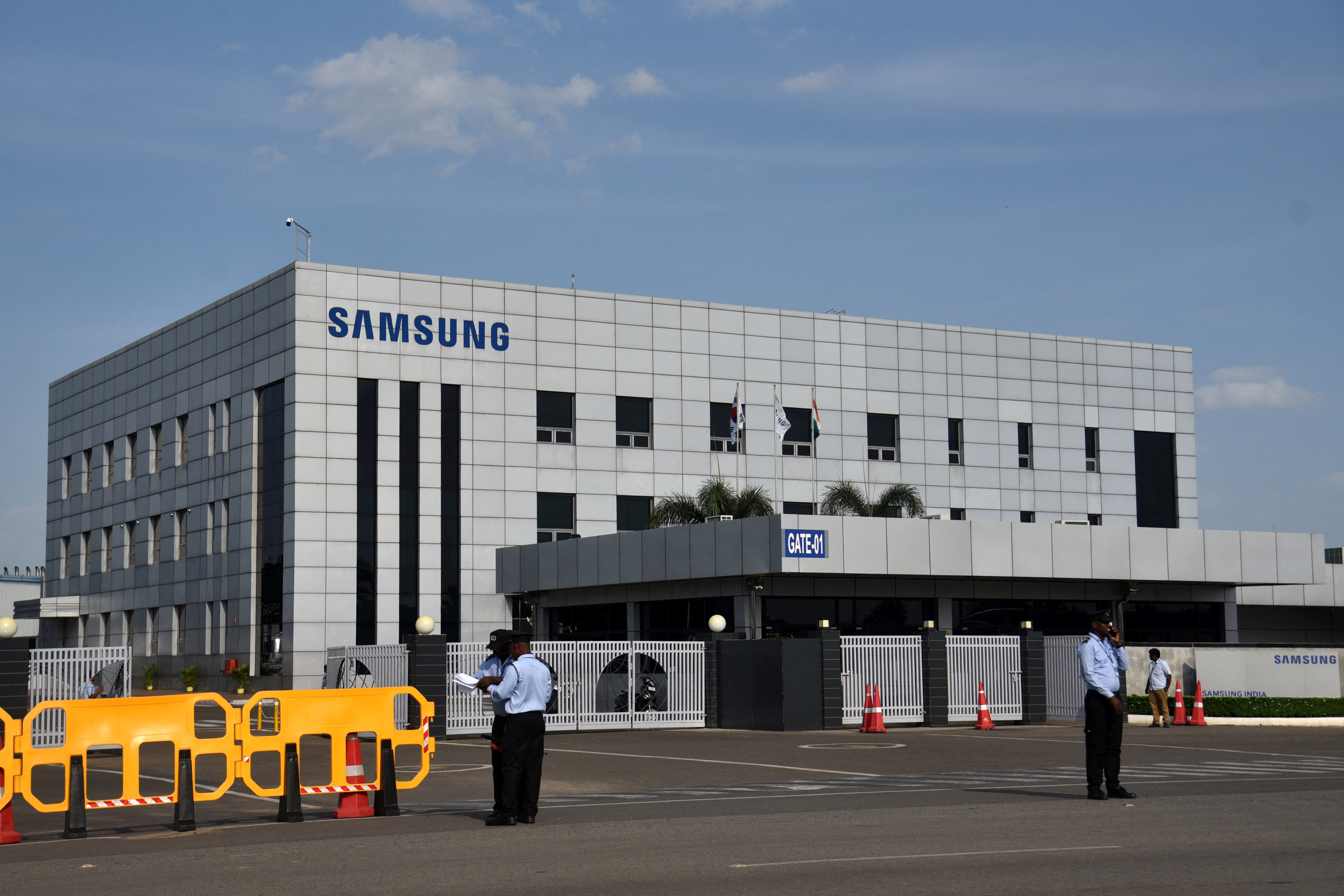
Samsung has commenced local production of laptops in India, marking a significant shift in its manufacturing strategy. The move follows growing trends in the global tech industry, where companies are increasingly decentralising their manufacturing to cater to regional markets and mitigate supply chain risks. The tech giant’s decision to set up its laptop assembly line in India comes as part of a broader push to diversify its production capabilities and tap into the country’s emerging manufacturing ecosystem.

The new facility, which is located in Noida, is expected to meet rising demand for Samsung laptops in India and other parts of Asia. The plant will focus on assembling a range of models, from entry-level to premium devices, with an emphasis on enhancing the supply of high-performance laptops. By doing so, Samsung aims to capitalise on the Indian government’s incentive schemes aimed at boosting local manufacturing and creating jobs in the sector.

India has become an increasingly attractive destination for global manufacturers due to its robust infrastructure, competitive labour costs, and a growing pool of skilled engineers and technicians. Samsung’s decision to invest in local laptop production highlights the country’s status as a strategic hub for tech companies looking to scale operations. The move also aligns with the Indian government’s vision of becoming a global manufacturing leader under the “Make in India” initiative, which encourages foreign companies to establish production bases in the country.

The South Korean company has been investing heavily in India over the past few years, with a significant focus on expanding its footprint in consumer electronics, particularly smartphones. The expansion of laptop production further strengthens its position in the Indian market, where the demand for personal computing devices has been steadily increasing. India, with its young population and rapid digitalisation, presents a lucrative market for tech companies. By establishing local manufacturing units, Samsung can not only meet this demand more effectively but also potentially lower the cost of its devices by reducing import duties and other logistical expenses.

Samsung’s Noida plant will be equipped with advanced manufacturing technology, allowing the company to ensure that its laptops meet international quality standards. The facility is expected to produce several million units annually, with an eye on both the domestic and export markets. This localisation strategy is expected to significantly cut down on shipping costs and delivery times, giving Samsung a competitive edge over other international brands that continue to import their devices into the country.

The move comes at a time when India is becoming increasingly attractive to global technology firms. Companies like Apple, Dell, and HP have already ramped up their manufacturing presence in India in recent years. India’s well-established electronics sector, supported by the government’s push to improve infrastructure and streamline regulatory processes, has led to a surge in foreign direct investment in the country’s tech manufacturing ecosystem.

Samsung’s expansion into laptop production also reflects the growing importance of India in the global supply chain. The country’s status as a low-cost production base, combined with its large consumer market, makes it an attractive location for companies looking to avoid the risks associated with heavy dependence on single countries, such as China. By shifting some of its manufacturing operations to India, Samsung can reduce its exposure to potential disruptions in China, which has long been the dominant player in global electronics manufacturing.

This shift is also likely to have broader implications for the Indian tech industry. With global giants like Samsung setting up local production lines, it is expected that the country will see an increase in the number of skilled jobs in the tech sector. Additionally, the growing demand for locally manufactured devices may spur innovation in the country’s tech ecosystem, encouraging the development of homegrown talent and technologies. This would not only strengthen India’s position as a manufacturing hub but also lay the foundation for the growth of its own tech startups.

The U. S. government is reportedly negotiating a potential stake in semiconductor giant Intel, as part of efforts to bolster the nation’s chip manufacturing capabilities. According to sources familiar with the matter, the deal could be a significant move in Washington’s ongoing strategy to strengthen domestic manufacturing of critical technologies, particularly semiconductors. Intel has been facing mounting challenges in the competitive semiconductor industry, with delays in its […]

Samsung Electronics has secured a significant contract with Tesla, valued at $16.5 billion, to produce the electric vehicle manufacturer’s next-generation AI6 chips. The chips will be manufactured at Samsung’s advanced fabrication facility in Taylor, Texas, marking a pivotal development in both companies’ strategic plans.

The eight-year agreement, confirmed by Tesla CEO Elon Musk, is set to commence in 2025 and extend through 2033. This deal represents a substantial commitment from Tesla to Samsung’s foundry capabilities, particularly as the semiconductor industry faces increasing demand for advanced chips.

The AI6 chips are designed to power Tesla’s Full Self-Driving systems, the Optimus humanoid robot, and future robotaxi fleets. This move follows Tesla’s decision to discontinue its in-house Dojo supercomputer project, redirecting focus towards optimized chip design and external partnerships for AI infrastructure.

Samsung’s Taylor facility, supported by $6.4 billion in U. S. CHIPS Act funding, will utilize the company’s 2-nanometer process technology to manufacture the AI6 chips. This collaboration aims to enhance Samsung’s foundry business, which has faced challenges in recent years, and to position the company as a competitive player in the advanced semiconductor market.

While the deal is a strategic win for Samsung, it also presents challenges. The production of 2nm chips is complex, and achieving high yield rates is critical. Additionally, the financial terms of the contract suggest that Samsung may initially operate at a loss, viewing the deal as an investment in long-term growth and industry positioning.

The partnership with Tesla is expected to bolster Samsung’s position in the global semiconductor industry, particularly in competition with Taiwan’s TSMC, a dominant player in the foundry market. The success of this venture will depend on the effective scaling of production capabilities and the ability to meet Tesla’s stringent performance requirements.

AWS has rolled out Kiro, an AI‑powered integrated development environment currently in preview, with features aimed at surpassing “vibe coding” tools like Cursor. The platform shifts the coding paradigm by structuring prompts into full project specifications, design blueprints, task lists and tests, helping developers move from prototype to production with consistency and speed. At the heart of Kiro is its spec‑driven development approach: when developers initiate a […]

Samsung has launched a new generation of Galaxy AI features embedded directly on its smartphones, combining cutting‑edge intelligence with enhanced privacy safeguards. Designed to rival Apple Intelligence and Google Gemini, Galaxy AI now performs tasks such as voice‑to‑text, photo editing, call transcription and real‑time translation entirely on device—only resorting to anonymised cloud support for complex jobs, thus protecting personal data. At the heart of this shift is […]

VISHNU RAJA
RYO YAMADA
HITORI GOTOH
IKUYO KITA