SK Hynix just posted one of the best quarters in its history, and the market punished it anyway. Operating profit surged 557% year-on-year to 60.5 trillion won, a number that would have been unthinkable two years ago. Yet because it fell short of the 64 trillion won analysts expected, the stock fell as much as 20% in Seoul before closing down 9.6%, and its US-listed shares dropped […]
InMobi’s unified intelligence engine delivers 2x revenue growth and a 40% improvement in ROAS, while the expanded InMobi Accelerate and Alliance network unlocks broader advertising reach
SHANGHAI, CHINA – Media OutReach Newswire – 29 July 2026 – InMobi Advertising, the agentic advertising platform from global technology company InMobi, today announced a major expansion of its China business, introducing new AI-powered cross-screen and full-funnel advertising capabilities to help Chinese brands and developers grow both domestically and internationally. The company will showcase its latest commerce and advertising monetisation solutions at ChinaJoy 2026.
InMobi joins ChinaJoy 2026, booth at W4F102
As Chinese enterprises transform into global brands, they face challenges on two distinct fronts. Domestically, navigating search, social and content ecosystems dominated by powerful closed platforms requires deep local relationships and market expertise. Internationally, consumer attention is increasingly fragmented across mobile devices, lock screens and connected TV, while advertising is often planned and bought in isolated silos, resulting in disconnected user experiences, higher churn and unpredictable returns on advertising spend.
New AI-Powered Cross-Screen Advertising CapabilitiesDrive Measurable Results
To support Chinese brands expanding globally, InMobi has introduced a unified advertising solution that combines its global programmatic exchange, strategic OEM partnerships with industry leaders including Samsung, Motorola and Google, and Glance, its flagship consumer platform. Together, these assets create an AI-optimised framework that connects mobile, lock screen and connected TV experiences, reaching more than 2.5 billion devices through 70,000+ apps integrated with the InMobi SDK.
Powered by InMobi’s unified intelligence framework, the framework is already delivering strong business outcomes, including over 2x revenue growth, and an almost 40% improvement in return on advertising spend (ROAS). Publishers integrating through the InMobi SDK are also achieving almost 3-5x greater revenue compared with API-only integrations.
At the centre of this ecosystem is Glance, which reaches approximately 250 million active users globally and provides Chinese advertisers with access to one of the world’s most engaged consumer surfaces through AI-powered discovery and commerce experiences.
Alongside its AI-powered cross-screen innovations, InMobi continues to expand InMobi Accelerate and Alliance business, through which advertisers can access search and social inventory through InMobi’s strategic partnerships with Microsoft Advertising, Baidu, and Yandex, among others, helping advertisers access premium inventory and audiences across domestic and international markets. Since 2023, media flow through InMobi Accelerate and Alliance has increased rapidly in China, reflecting growing demand from Chinese advertisers seeking growth opportunities across domestic and overseas markets. Globally, InMobi Accelerate and Alliance manages more than US$2.5 billion in media flow.
“Chinese enterprises are entering a new phase of growth, with ambitions that extend well beyond individual markets or channels,” said Abhay Singhal, Co-founder of InMobi. “Our role is to bring together the platform access, consumer reach and AI-led intelligence they need to grow with greater consistency. Through InMobi Accelerate and Alliance, and our cross-screen, full–funnel capabilities via agentic AI and Glance, we are helping businesses connect fragmented touchpoints and turn them into more meaningful consumer engagement and measurable outcomes.”
Abhay Singhal, Co-founder of InMobi
Expanding Support for China’s Booming Short-Drama Industry
InMobi is also expanding its focus on the fast-growing short-drama industry, one of China’s most dynamic digital content categories. According to National Radio and Television Administration in 2025, the market surpassed RMB100 billion (US$14.7 billion) in 2025 and now includes more than 800 Chinese short-drama apps operating internationally.
As competition intensifies, user retention has become as important as user acquisition. Leveraging AI-powered retargeting, lifecycle marketing and audience intelligence capabilities, InMobi helps publishers re-engage viewers, recommend relevant content and improve long-term monetisation. The company plans to deepen its engagement with the short-drama ecosystem through creator partnerships, joint marketing initiatives and proprietary audience solutions that support sustainable growth in global markets.
Meet InMobi at ChinaJoy 2026
Attendees, media and industry partners are invited to visit InMobi during ChinaJoy 2026 to learn how the company is helping Chinese brands and developers accelerate growth across domestic and global markets.
Dates: 31 July – 3 August 2026
Venue: Shanghai New International Expo Centre (SNIEC), Shanghai
Booth No.:W4F102
Hashtag: #InMobi
The issuer is solely responsible for the content of this announcement.
InMobi Advertising
InMobi Advertising, part of global technology company InMobi, is an agentic advertising platform helping brands and merchants achieve their business outcomes. Through its proprietary intelligence, AI-led solutions, and vast consumer reach — including flagship consumer platform Glance — InMobi Advertising delivers the omnichannel performance defining what’s next in advertising and commerce. Glance is owned and operated by Glance InMobi Pte. Ltd., a non-consolidated subsidiary of InMobi Pte. Ltd. To learn more, visit advertising.inmobi.com.
Get ready for juju’s Great Fluffy Summer at Pacific Place this July
HONG KONG SAR – Media OutReach Newswire – 27 July 2026 – Pacific Place is delighted to announce juju world, a summer collaboration with internationally acclaimed Australian artist CJ Hendry, running from 23 July to 16 August 2026. Conceived and produced in partnership with creative house Pen & Paper, the event marks Hong Kong’s first large-scale juju experience, transforming the shopping destination into an immersive world inspired by Hendry’s collectible character. The event will feature a Hong Kong exclusive merchandise collection, a wide range of interactive experiences, and seasonal shopping rewards. Pacific Place is set to be the city’s most talked-about cultural and retail destination this summer.
Pacific Place x CJ Hendry Unveil Hong Kong’s First Large-Scale juju Experience This Summer
Who is juju?
Created by CJ Hendry, juju is a collectible character recognised for its floppy ears, flower eye and playful personality. Occupying a unique space in contemporary collectible culture, juju is both an objet d’art and an emotional companion. This summer, juju arrives in Hong Kong in a spectacular new form.
A Planet Has Landed at Pacific Place
At the heart of this whimsical universe is the juju Planet, a vibrant centrepiece surrounded by a colourful wonderland of oversized trees and fluffy clouds of pom-poms, with larger-than-life juju characters welcoming you with open arms. Touch, explore and trigger surprises — every interaction transforms juju world into an unforgettable, multi-sensory adventure for dreamers of all ages.
juju world
Dates: 23 July – 16 August 2026 Time: 10am – 10pm Location: Garden Court, Level LG1 Entry: No registration required
Step into the Magic
juju Planet
Perched atop the planet is a gigantic juju, gently welcoming visitors into this surreal landscape.
Experience Pure Joy The Dreamy Swing
Embrace your inner child by sitting on the swing with juju. Snap a photo with the tall, colourful trees — their joyful appearance is sure to bring back lots of happy memories.
The Fluffy Hideaway
juju Room
Step inside an immersive circular chamber where over 400 juju plushies line the walls, surrounding visitors in a sea of fluff.
The Mirror of Dreams
juju Infinity Mirror
Inspired by juju’s signature flower eye, this mirrored installation creates endless reflections of the playful world around it.
Gentle Giant Meet the Giant juju
Standing an impressive two metres tall, the Giant juju welcomes visitors for an unforgettable up-close experience. Whether posing beside it, hugging it or capturing the perfect keepsake photo, this larger-than-life installation brings the beloved character to life.
CJ Hendry Unveils Hong Kong-Exclusive juju Collectibles
Created exclusively for Pacific Place, the shimmering collection introduces iridescent juju inspired by the city’s vibrant energy. On top of the nine standard versions, five additional secret versions will be added to the collection as a delightful surprise. Available in limited-edition blind boxes, each is housed in a specially designed shiny collectible tin, turning the act of unboxing into a unique experience. The fun continues as visitors unlock surprise accessories at the Capsule Toy Station and customise their juju with interchangeable flower eyes, outfits and more.
juju world Merchandise Store
juju world Merchandise Store & Capsule Toy Station
Dates: 23 July – 16 August 2026 Time: 11am – 9pm Location: Level L1, near Lane Crawford Entry: Through member entry booking or on-site queue tickets (see details below)
The Collector’s Dream
juju world Merchandise Store
This is the only place in the world to find the rarest new jujus — the Hong Kong-exclusive limited collection, including both the standard and secret versions, alongside loveable 12″ juju plushies dip-dyed in rainbow ombré, and many more limited-edition summer essentials. Quantities are limited, so come early and ready to collect!
Visitors are required to register as above members to receive an On-site Queue ticket, distributed daily from 10am. Existing above blue, above gold, above platinum and above black members may also reserve entry in advance via the Pacific Place Mobile App.
Availability is limited and offered on a first-come, first-served basis while stocks last.
Purchase a token, spin the capsule machine, and unlock a playful selection of accessories to style your juju exactly as you wish. Choose from clothing, hair ties, and earrings, alongside interchangeable flower eyes making their Hong Kong debut. Your juju will truly be like no other!
Stocks are available on a first-come, first-served basis.
A Summer Full of Rewards
juju world is the centrepiece of a summer season at Pacific Place designed to delight at every turn. From 23 July to 16 August, shopping at Pacific Place and Starstreet Precinct also unlocks the ‘Dreamlike Summer’ rewards programme, offering exclusive Pacific Place shopping e-Vouchers with designated same-day electronic spending, with eligible UnionPay cardholders enjoying additional rewards on top.
Accumulated Same-day Electronic Spending
General Rewards*
UnionPay Users Extra Rewards#
HK$5,000 – HK$34,999
HK$100 Pacific Place Shopping e-Voucher
HK$50 Pacific Place Shopping e-Voucher
HK$35,000 – HK$64,999
HK$600 Pacific Place Shopping e-Voucher
HK$600 Pacific Place Shopping e-Voucher
HK$65,000 – HK$119,999
HK$1,300 Pacific Place Shopping e-Voucher
HK$1,300 Pacific Place Shopping e-Voucher
HK$120,000 or above
HK$2,400 Pacific Place Shopping e-Voucher
HK$2,400 Pacific Place Shopping e-Voucher
*General shoppers and eligible UnionPay users are required to join the Pacific Place Loyalty Programme – above and meet the accumulated same-day spending requirement by electronic payment during the Promotion Period in order to be entitled to redeem General Rewards and UnionPay Users Extra Rewards.
#To redeem the UnionPay Users Extra Rewards, shoppers must settle the relevant transaction(s) with UnionPay Credit and ATM Cards with the UnionPay logo, UnionPay Mobile Payment (including but not limited to Apple Pay, Samsung Pay, Huawei Pay) or UnionPay QR Code (including UnionPay App or other App supporting UnionPay QR Code Payment), except the RMB cards issued by specific Hong Kong and Macau card issuing institutions. The qualified transaction(s) must be settled via the UnionPay network in full. WeChat Pay, Alipay and AlipayHK are not eligible for this Promotion. During the Promotion Period, UnionPay users are entitled to redeem the UnionPay Users Extra Rewards up to 5 times. UnionPay users must settle their payment by UnionPay when using the Shopping e-Vouchers from the Extra Rewards. Each shopper is entitled to a maximum of ONE redemption of Rewards per day. The Rewards are limited in quantity and are available on a first-come, first-served basis while stocks last.
Terms and Conditions apply.
Dates: 23 July – 16 August 2026 Time: 11am – 10pm Location: Gift Redemption Counter on Level L2 (near Joyce)
This summer, Pacific Place becomes something more than a destination. It becomes a world. And juju can’t wait to welcome you in.
The issuer is solely responsible for the content of this announcement.
About CJ Hendry
CJ Hendry is an Australian, New York-based contemporary artist renowned for her hyper-realistic drawings and large-scale immersive installations. Known for creating ambitious, experiential exhibitions that invite public participation, Hendry has developed a distinctive practice that combines fine art, spectacle, and play. Her projects often explore themes of materiality, consumer culture, value, and perception, turning galleries into fully realized environments that challenge traditional ways of viewing art.
Hendry’s work has been exhibited internationally and collected worldwide, attracting a global audience through her unique ability to merge technical mastery with humour, accessibility, and immersive storytelling.
About Pacific Place
Located in the heart of Admiralty, Pacific Place is the destination for exceptional service and unique experiences. As a pioneer of innovative retail concepts in Hong Kong, Pacific Place continues to transform the retail scene by delighting visitors with an array of curated experiences through diversified offerings. Since its inception in 1988, Pacific Place has established itself as Hong Kong’s premier lifestyle hub, a mixed-use development that continues to evolve and grow as the ultimate destination to shop, dine, work, stay, relax and play. It houses one of Hong Kong’s largest collections of luxury brands and diverse dining offerings, making every visit a memorable one. In addition to being a prime transportation hub, Pacific Place is home to five Grade-A office towers, 268 serviced apartments, and four five-star hotels: The Conrad, Island Shangri-La, JW Marriott and Upper House Hong Kong.
Customer enquiry hotline: (852) 2844 8988
Website: www.pacificplace.com.hk
Facebook: @Pacific Place Hong Kong
Instagram: @pacificplacehk
WeChat: @PacificPlaceHK
XiaoHongShu: @Pacific Place HK
About Pen & Paper
Pen & Paper is an established Hong Kong–based creative agency. As the creative and production partner for juju world at Pacific Place, Pen & Paper is bringing artist CJ Hendry’s whimsical universe to Hong Kong, continuing her creative journey in Asia Pacific.
Samsung Electronics has unveiled three new foldable smartphones, including a wider passport-sized model, while raising prices on two devices as higher memory-chip costs add pressure to its mobile business. The Galaxy Z Fold8, Galaxy Z Fold8 Ultra and Galaxy Z Flip8 were introduced at the company’s Galaxy Unpacked event in London on Wednesday. Samsung is expanding its foldable portfolio at a time when the wider smartphone market […]
Arabian Post Staff -Dubai Samsung’s Galaxy Watch can provide insights linked to long-term metabolic health without using a continuous glucose monitor, but it does not measure blood sugar or replace established diabetes-testing devices. The distinction centres on Samsung’s Advanced Glycation End-products Index, known as the AGEs Index. Available on the Galaxy Watch7 and newer supported models, the feature estimates the accumulation of compounds formed when sugars react […]
Markets rarely break for one reason. Right now there are four forces pulling at global equities simultaneously, and none of them has fully played out yet. Investors heading into next week need to understand all four, because treating any single one in isolation misses the bigger picture. Start with the rotation nobody predicted a month ago. Tech has stalled while old-economy value has caught a bid. The […]
Arabian Post Staff -Dubai ADNOC Logistics and Services has ordered four next-generation liquefied natural gas carriers for about $900 million, expanding its shipping capacity as Abu Dhabi seeks a larger role in global gas supply and trading. The vessels, each capable of carrying 175,000 cubic metres of LNG, will be built at Jiangnan Shipyard in Shanghai and delivered in 2029. The contract raises the company’s LNG newbuild […]
Samsung Group and SK hynix have laid out investment plans worth about $174 billion for South Korea’s Chungcheong region, expanding the country’s drive to secure a stronger position in artificial intelligence chips, advanced packaging, displays and next-generation battery materials.
The commitments, unveiled at a government-backed industrial development event in Asan, place Chungcheong at the centre of a broader strategy to spread high-technology manufacturing beyond the Seoul metropolitan area and existing semiconductor clusters. President Lee Jae Myung praised the companies’ “bold decision” and called for faster execution of major industrial projects, warning that global competition in semiconductors and artificial intelligence will reward countries that move with speed on permits, power, water and land.
Samsung plans to invest 140 trillion won, or about $90 billion, across the central region. The programme covers display panels, high-bandwidth memory-related capacity, semiconductor packaging substrates, batteries and other core materials. The group’s plan is expected to reinforce manufacturing links between Samsung Electronics, Samsung Display, Samsung SDI and Samsung Electro-Mechanics, whose operations span chips, OLED screens, batteries and electronic components.
SK hynix said it would invest 100 trillion won, or about $64 billion to $72 billion depending on exchange-rate calculations, in Cheongju, North Chungcheong Province. The plan includes the M17 NAND flash memory fabrication plant and P&T7, an advanced packaging and test facility. M17 is scheduled to break ground in 2026 and begin operations in the first half of 2029, while P&T7 is targeted for completion by the end of 2027.
The Cheongju expansion is intended to strengthen SK hynix’s NAND business and add back-end capacity at a time when artificial intelligence systems are raising demand for both high-performance memory and storage. While high-bandwidth memory has received the strongest investor attention because of its role in AI accelerators, large-scale data centres also require more NAND-based storage as models, user data and enterprise workloads expand.
The Chungcheong plan follows a wider national push in which Samsung Electronics and SK hynix are expected to invest hundreds of billions of dollars in new chipmaking hubs over the next decade. The government has framed the initiative as a “triple axis” strategy built around semiconductors, physical AI and data centres, with the aim of building industrial strength outside the traditional capital-area manufacturing corridor.
For Samsung, the Chungcheong investment gives the group a regional base for several linked supply chains. OLED production in Asan and surrounding areas can support premium smartphones, tablets, monitors and automotive displays. Battery investment strengthens Samsung SDI’s role in electric mobility and energy storage, while semiconductor materials and packaging substrates address one of the key bottlenecks in AI hardware production.
For SK hynix, Cheongju already has semiconductor infrastructure, making it a faster route for expansion than a greenfield project. The company has been one of the largest beneficiaries of the AI memory boom, helped by demand for high-bandwidth memory used with Nvidia graphics processors. Its latest investment signals that the company is also preparing for broader memory demand, including NAND and advanced packaging.
The scale of the commitments underlines the strategic importance of memory chips to South Korea’s economy. Samsung Electronics and SK hynix are the world’s two largest memory chipmakers, with dominant positions in DRAM and a major presence in NAND. Their investment decisions affect global supply, pricing expectations and the pace at which cloud companies can build AI infrastructure.
The programme also carries risks. Semiconductor investment cycles have often produced periods of oversupply after large capacity expansions. Investors have shown caution over whether the current AI-driven boom can absorb the output planned by the industry, especially if data-centre spending slows or if memory pricing weakens before new factories reach full capacity.
Infrastructure remains another challenge. Advanced chip plants require stable electricity, ultra-pure water, skilled engineers and rapid permitting. Lee’s comments on execution reflect concern that delays could undermine the industrial strategy. Local governments are expected to face pressure to accelerate utility connections, transport links and land-use approvals while managing environmental and community concerns.
Regional development is a central political theme of the initiative. By placing more advanced manufacturing in Chungcheong and other areas outside Seoul’s orbit, the administration is seeking to reduce economic concentration and create high-value jobs in provincial cities. That ambition will depend on whether new factories attract suppliers, research teams and service industries rather than functioning as isolated production sites.
postmarketOS has released version 26.06, a six-monthly update that strengthens one of the most active Linux-based alternatives for mobile devices and extends its testing reach to 254 devices, including phones, tablets, Chromebooks and single-board computers. The release, named Alpen Avocado, shipped on 21 June and is built on Alpine Linux 3.24. It brings GNOME 50, KDE Plasma Mobile 6.6.5, Phosh 0.55.0, systemd 261, Plymouth boot animation support, […]
BingX has launched a stock-focused trading campaign with a prize pool of more than $1m, stepping up its attempt to draw crypto users into global equity-linked markets through a single multi-asset platform. The Stock Trading Carnival runs from 15 June to 4 July 2026 and is positioned as the third edition of the exchange’s Global Capital Gala series. The campaign allows eligible users to share rewards by […]
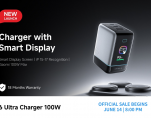
MANILA, PHILIPPINES – Media OutReach Newswire – 14 June 2026 – CUKTECH, the pioneer in high-performance charging, today announced that its flagship CUKTECH 6 Ultra Charger will officially hit the Philippine market on June 14 at 8:00 PM.
Blending massive power, intelligent interaction, and ultimate safety, this charger is tailor-made for Filipino young professionals, digital nomads, and heavy social media users who demand efficient multi-device charging.
100W Max Output & Universal Compatibility
Perfect for frequent island-hopping and mobile workflows, the CUKTECH 6 Ultra features a 2C1A triple-port design. It is 29% smaller than conventional 67W chargers and includes a premium 1-meter 6A 240W braided cable.
Equipped with intelligent dynamic power allocation and the ADC 2.0 protocol, it seamlessly supports both Android and Apple ecosystems:
Android Flash Charging: Powers the Xiaomi 17 Pro to ≈ 71% (100W Max) and the Samsung S26 Ultra to ≈ 78% (60W Max) in just 30 minutes.
Apple Fast Charging: Intelligently recognizes and displays real-time battery status for the iPhone 15–17 series, boosting a MacBook Air (M3) to ≈ 53% (65W Max) in 30 minutes.
“Cool Bot” AI Screen: A Fun, Visualized Experience
Catering to the vibrant nature of Filipino consumers, the charger debuts a 0.96-inch HD smart screen featuring an interactive mascot named “cool bot”. It dynamically shifts expressions—from napping (standby), to energetic (charging), to rocking sunglasses (fully charged soon)—based on the status. The UI also supports a 180° rotation, providing real-time data on power, voltage, and current to make charging genuinely fun.
In-House OPC 2.0 & Advanced Cooling
To combat tropical heat and local grid fluctuations, CUKTECH delivers robust safety. Powered by the in-house OPC (Optimized Charging 2.0) system, it auto-regulates current to prevent battery degradation on flagship devices. Combined with an industry-leading GaN architecture and 24-hour smart temperature control, it stays cool and maintains top speeds even during peak summer.
18-Month Warranty, Dropping June 14
The CUKTECH 6 Ultra 100W comes backed by a reassuring 18-month official warranty. The product launches at 8:00 PM (Manila Time) on June 14 via CUKTECH’s official stores on Shopee. Turn every charge into a moment of fun and efficiency with CUKTECH! Hashtag: #CUKTECH
The issuer is solely responsible for the content of this announcement.
Nvidia has signed a wide set of artificial intelligence and data centre agreements with major South Korean companies, placing the country at the centre of its next phase of AI infrastructure expansion across Asia.
The agreements involve SK Telecom, SK Hynix, Naver, Doosan Group, LG Group, Hyundai Motor Group and continued discussions with Samsung Electronics, linking Nvidia’s graphics processors, AI factory architecture and robotics platforms with South Korea’s strengths in memory chips, telecoms, manufacturing, cloud services and industrial automation.
The deals were unveiled during Nvidia chief executive Jensen Huang’s Seoul visit, which has underlined how South Korea is moving from being a supplier of critical memory chips to a broader AI infrastructure hub. The push comes as governments and large companies seek sovereign computing capacity, tighter control over data, and dedicated facilities capable of training and running advanced AI models.
SK Telecom plans to build a gigawatt-scale AI cloud in South Korea using Nvidia’s DSX platform, with the first AI factory expected to come online in 2027. The infrastructure is designed to support enterprise AI, robotics, industrial automation and agentic AI services, using SK Telecom’s network, data centre and corporate technology base.
Naver, one of South Korea’s leading internet and cloud companies, is expanding its sovereign AI infrastructure with Nvidia, starting with 55 megawatts of capacity and a plan to move towards gigawatt scale. The collaboration is aimed at serving businesses, public-sector users and industries seeking locally controlled AI platforms.
SK Hynix, already a key supplier of high-bandwidth memory for Nvidia’s AI accelerators, has entered a multi-year technology partnership to develop next-generation memory for global AI data centres. The agreement strengthens the role of high-bandwidth memory as one of the most important bottlenecks in the AI hardware supply chain, with demand rising sharply as large models require faster data movement between processors and memory.
Samsung Electronics remains part of the wider conversation around next-generation foundry and memory cooperation. Its semiconductor leadership held talks with Nvidia on advanced chip manufacturing and future high-bandwidth memory, including technologies beyond the current HBM4 generation. Samsung is also involved in manufacturing AI accelerator chips for other customers, keeping it central to Nvidia’s broader supply chain calculations even as SK Hynix maintains a strong position in premium memory.
Doosan Group’s cooperation with Nvidia extends the agreements beyond data centres into physical AI. Doosan Robotics is working with Nvidia’s simulation, robotics and on-device AI platforms to develop an agentic robot operating system, while Doosan Enerbility is expected to support power infrastructure for AI factories. Doosan Corporation’s electronics materials unit is also positioned to support next-generation data centre hardware through advanced materials used in AI accelerators.
LG Group is working with Nvidia on an AI factory focused on physical AI, mobility and data centre technologies. The partnership is expected to support LG’s work in robotics, autonomous driving, smart manufacturing and GPU cloud services, giving the conglomerate a platform for applying AI across consumer electronics, industrial systems and vehicle technologies.
Hyundai Motor Group’s cooperation with Nvidia is centred on mobility, manufacturing and robotics, including support for Hyundai’s AI Valley project in Saemangeum. The group’s ownership of Boston Dynamics gives it a strong position in humanoid and industrial robotics, while Nvidia’s platforms can support simulation, model training and factory deployment.
South Korea’s national AI strategy gives the corporate agreements wider significance. The country had already announced plans to secure more than 260,000 Nvidia GPUs, with more than 50,000 intended for public AI infrastructure and the rest allocated to major companies including Samsung, SK Group, Hyundai Motor Group and Naver. The latest agreements suggest that those commitments are moving into more defined industrial projects.
The expansion also reflects a shift in Nvidia’s business model. The company is no longer selling chips only as components; it is promoting full-stack AI factories that combine processors, networking, software, reference architecture and operations. That approach gives Nvidia deeper influence over how data centres are designed and operated, while offering partners faster deployment at a time when AI capacity remains constrained.
South Korea’s Science and ICT Ministry is also seeking priority access to Nvidia’s Vera Rubin GPUs, amid expectations that next-generation chip supply could face delays. The effort shows how advanced AI processors have become strategic assets for countries competing in model development, cloud infrastructure and industrial automation.
The agreements carry risks as well as opportunity. AI factories require vast power supplies, expensive cooling systems and long-term commitments from corporate customers. Heavy dependence on one US chip supplier may also raise questions over supply security and bargaining power, even for a country with world-class semiconductor companies.
For Nvidia, the South Korean partnerships strengthen memory access, broaden its AI factory customer base and create new demand in robotics, cloud services and industrial AI. For South Korean companies, the deals offer a faster route into high-value AI infrastructure at a time when global competition is shifting from model development to the computing systems needed to run them at scale.
Kioxia Holdings has moved within striking distance of Toyota Motor’s market value, underscoring how the artificial intelligence boom is reshaping Japan’s corporate hierarchy and lifting a memory-chip maker that listed in Tokyo less than two years ago into the country’s market elite.
The Tokyo-based maker of NAND flash memory and solid-state drives has become one of the most closely watched stocks on the Tokyo Stock Exchange after a sharp rally tied to demand for data-centre storage, AI servers and high-performance memory systems. Its market capitalisation has climbed into the tens of trillions of yen, placing it near Toyota and behind SoftBank Group in a reshuffled ranking that would have seemed unlikely when Kioxia priced its initial public offering at 1,455 yen a share in December 2024.
The shift marks a wider challenge to the long-standing dominance of Japan’s manufacturing champions. Toyota, the global carmaker that symbolised the strength of Japan Inc. for decades, has been displaced from the top position by SoftBank during the latest AI-led surge, while Kioxia has risen rapidly from a former Toshiba memory unit backed by Bain Capital into a central player in the market’s technology rotation.
Kioxia’s climb reflects investor expectations that memory will remain a bottleneck in AI infrastructure. Generative AI systems require vast amounts of storage and high-speed data movement, pushing demand beyond the older cycle driven mainly by smartphones and personal computers. Data-centre operators, cloud companies and chip designers are competing for components needed to train and run large AI models, giving memory producers stronger pricing power after years of volatility.
The company’s earnings have strengthened sharply. Kioxia has projected operating profit of about 1.3 trillion yen for the April-June quarter, a figure that puts it among the most profitable listed companies in Japan. Its latest annual results showed strong momentum in revenue, margins and cash generation, helping ease earlier concerns about debt and cyclicality. Rating upgrades to investment grade have added to the perception that the balance sheet is improving at a time when investors are rewarding semiconductor exposure.
Kioxia’s origins give its rise broader industrial significance. The company traces its roots to Toshiba’s memory business, which was sold to a Bain-led consortium in 2018 after Toshiba’s financial crisis. The group was renamed Kioxia in 2019, drawing on the Japanese word for memory and the Greek word for value. Its public listing in 2024 valued it below 800 billion yen, after earlier IPO attempts were delayed by weak valuation conditions and pressure in the memory market.
That cautious debut contrasts sharply with its current status. Shares have multiplied as investors reassessed the role of NAND flash in AI systems, especially as large-scale data centres require higher storage density, faster access and more energy-efficient hardware. Kioxia has also been developing advanced BiCS FLASH technology and promoting next-generation SSDs for AI storage infrastructure.
The rally has also lifted questions over valuation risk. Memory chips remain one of the semiconductor industry’s most cyclical segments, with prices exposed to shifts in capital spending, inventory levels and customer demand. A sharp rise in market value leaves Kioxia vulnerable if hyperscaler investment slows, if competitors add capacity faster than expected, or if customers push back against higher pricing.
Competition is intense. Samsung Electronics, SK Hynix, Micron Technology and SanDisk remain key players across memory markets, with SK Hynix holding a dominant position in high-bandwidth memory used in AI accelerators. Kioxia’s strength is more closely tied to NAND flash and SSDs, where demand from AI infrastructure has broadened the market but does not eliminate the risk of oversupply once new capacity comes on stream.
Toyota’s relative decline in the rankings does not point to operational weakness alone. The carmaker remains one of the world’s largest manufacturers by sales and a major profit generator, but investors have been rotating away from traditional industrial leaders towards companies with direct AI exposure. Concerns over electric-vehicle competition, currency movements and the cost of future technologies have weighed on auto valuations, even as Toyota continues to command global scale in hybrid vehicles and supply-chain management.
SoftBank’s ascent has further highlighted the changing market narrative. Its exposure to Arm and AI-related investments has drawn investors seeking Japan-based access to global AI infrastructure. Together, SoftBank and Kioxia now represent a market story centred on chips, data centres, software platforms and computing capacity rather than the export-led industrial model that long defined Japan’s equity market.
Foreign investor flows have amplified the shift. Japan’s equity market has benefited from corporate-governance reforms, stronger capital returns and renewed interest in companies linked to the AI supply chain. The Nikkei 225 has reached record territory, though the rally has been uneven, with gains concentrated in a limited group of technology-linked names while broader market performance has been more mixed.
Kioxia’s next test will be whether it can convert favourable pricing and sold-out capacity into durable earnings. Investors will look for clearer shareholder-return plans, disciplined capital expenditure and evidence that AI storage demand can remain strong beyond the current investment wave. The company’s contemplated US share listing would widen access to global technology investors and could further raise its profile if market conditions remain supportive.
Qatar Investment Authority has raised its exposure to Anthropic by joining the artificial intelligence company’s $65 billion Series H financing, marking its third consecutive investment in the Claude maker and signalling a deeper Gulf move into frontier AI infrastructure, enterprise software and advanced computing. The Series H round values Anthropic at $965 billion post-money, placing the San Francisco-based company among the most highly valued private technology groups […]
Advancing Research Commercialization and Building a Vibrant I&T Ecosystem
HONG KONG SAR – Media OutReach Newswire – 2 June 2026 – The Hong Kong University of Science and Technology (HKUST) today successfully hosted its annual “Unicorn Day,” one of Hong Kong’s flagship innovation and entrepreneurship events. The event brought together over 1,800 participants, including students, faculty, and alumni, as well as international and local government representatives, industry partners, investors, innovation and technology entrepreneurs, and researchers. Participants exchanged insights on strategies to strengthen collaboration across the innovation ecosystem, foster cross-disciplinary partnerships, and accelerate the translation of research outcomes into real-world impact.
The event was officiated by Prof. SUN Dong, Secretary for Innovation, Technology and Industry of the HKSAR Government, alongside consuls-generals and senior officials from countries including Australia, Chile, France, Hungary, India, Japan, Malaysia, the Netherlands, Vietnam, and the United Arab Emirates. They were joined by Prof. Nancy IP, HKUST President; Prof. Lionel NI, HKUST (Guangzhou) President; and Prof. Tim CHENG, HKUST Vice-President for Research and Development; in touring over 100 HKUST-nurtured startups, showcasing innovations and applications spanning areas such as healthcare, electronics, and artificial intelligence systems, as well as new materials, green energy, and sustainability.
Prof. Sun Dong remarked, “Innovation and technology (I&T) has always been at the top of the Hong Kong SAR Government’s agenda. We fully recognise the crucial role of local universities — not only as key partners, but as the bedrock of Hong Kong’s I&T ecosystem. In just three and a half decades, HKUST has risen to become a global powerhouse in deep tech, entrepreneurship, and innovation as demonstrated by its ability to nurture unicorns and deep-tech ventures. Hong Kong is entering a golden era of I&T development. We are building new engines to drive Hong Kong’s high-quality development, focusing on research and development in key fields and leading industry applications. I am confident that Hong Kong will rise as a leading international I&T center and contribute meaningfully to our nation’s high-quality development, and that HKUST will continue to be a driving force in this amazing journey.”
President Ip said, “As we mark the 35th anniversary of HKUST this year, we also celebrate the spirit of innovation and entrepreneurship that has long been embedded in our DNA. Both the Technology Transfer Center and the Entrepreneurship Center were established in the University’s early years to support faculty and students in realizing their entrepreneurial aspirations and to promote the translation of research outcomes into practical solutions. Over the past 35 years, the University has forged ahead with determination, sowing the seeds of innovation and yielding remarkable achievements across multiple frontier fields. Today, HKUST continues to broaden its horizons, strategically positioning itself in key domains. One example is medical education. The establishment of the HKUST Medical School will integrate the life sciences with cutting-edge technologies to nurture a new generation of interdisciplinary medical professionals.
Concurrently, HKUST has been actively involved in national initiatives such as the Chang’E 8 lunar exploration mission and research projects for the Tiangong Space Station, and the launch of the first commercially viable aerospace project under the RAISe+ Scheme. These achievements exemplify HKUST’s enduring ‘can do’ spirit over the past decades and echo the theme of today’s event—’From Ideas to Miracles—35 Years of Impact and Beyond’. Looking ahead, HKUST will continue to nurture bold ideas and action, working hand in hand with partners across different sectors to cultivate a vibrant innovation ecosystem, ensuring that research achievements benefit society and create lasting global impact.”
To support startups in expanding into global markets and to promote cross-border collaboration, HKUST introduced an “International Pavilion,” featuring startups and innovation organizations from various countries and regions. Participants from Thailand, Singapore and Korea were among those represented, strengthening connections between Hong Kong, and countries and regions along the Belt and Road in technology application and industry development.
The event also saw the signing of multiple partnership agreements, including six strategic collaborations with:
GPTX Investment Management Limited
China Everbright Water Limited
Jiangsu Daotop Environmental Technology
Samsung R&D Institute China – Guangzhou
CalmCar Physical AI Innovation Center
InnoAngel
to advance talent development and industry–academia integration, and foster innovation-driven research and real-world technology translation.
HKUST’s I&T Strength Driving Economic Growth
In addition, HKUST also released the report Driving Socioeconomic Impact Through Research and Innovation: Insights from HKUST, commissioned by the University and prepared by the international research information analytics organization Elsevier. The report highlights HKUST’s outstanding performance in innovation and entrepreneurship. Over the past five years, research output has recorded an average growth of 10%, approximately 9% higher than that of other local institutions. More than 65% of the research is concentrated in engineering and computer science, while 6.2% involves academia-industry collaboration, significantly higher than the global average of 2.7%. These collaborations have translated into impactful intellectual property, with approximately 1,670 patent applications and 700 grants over the same period, and a high IP utilization rate of above 30%.
Prof. Tim Cheng noted that the findings demonstrate HKUST’s steadily strengthening capabilities in research translation and academia-industry collaboration. HKUST’s publications achieved a Field-Weighted Citation Impact of 4.40, indicating that their citation impact is 4.4 times the global average. This underscores HKUST’s significant contributions to advancing Hong Kong’s socioeconomic development and enhancing its competitiveness in innovation and technology.
In addition, a “Marketplace” was also featured, showcasing products already launched by startups, including AI analytics tools, healthcare technologies, and smart city solutions, demonstrating the progress of translating research into practical applications.
Meta Platforms is preparing an AI-powered pendant and a broader line-up of smart glasses as it tries to turn wearable hardware from a costly experiment into a larger business focused on consumers and corporate users. The plan, outlined in internal discussions reported by technology industry outlets, centres on a small AI pendant that could be tested within the next year, alongside new smart glasses and a business […]
Odisha has secured a proposed $3.3 billion semiconductor substrate project involving Intel Corporation and 3D Glass Solutions Inc., marking one of the largest high-technology manufacturing commitments tied to India’s chipmaking ambitions.
The memorandum of understanding, signed by the Government of Odisha, Intel and 3DGS, covers an advanced packaging glass-core substrate manufacturing facility in the Bhubaneswar-Khurda region. The project is expected to focus on substrates used in next-generation chip packaging, a part of the semiconductor supply chain that has gained strategic importance as artificial intelligence, high-performance computing and advanced data-centre processors demand larger, faster and more power-efficient packages.
The agreement places Odisha in a stronger position within India’s semiconductor map, which has so far been led by assembly, testing, marking and packaging projects, outsourced semiconductor assembly facilities, compound semiconductor proposals and early-stage fabrication investments. The planned plant would add a specialised layer to that ecosystem by targeting glass-core substrates and high-density interconnect technologies, areas that are increasingly viewed as critical for advanced packaging.
Intel’s role is expected to centre on technology know-how, process expertise and ecosystem support, while 3DGS brings specialisation in glass-based integration platforms. 3DGS, a US-based company, has developed glass-centric technologies for radio-frequency, photonics and semiconductor packaging applications. Its involvement gives the Odisha plan a sharper focus than conventional electronics manufacturing projects, as glass-core substrates remain an emerging technology rather than a mature commodity segment.
Glass substrates are attracting industry attention because conventional organic substrates face physical limits as chip packages become larger and denser. Advanced processors now often combine multiple chiplets, memory stacks and interconnect layers in one package. That increases pressure on the base material to carry more power and data connections while reducing warpage, signal loss and thermal stress. Glass offers better dimensional stability, finer interconnect potential and the ability to support larger package sizes, though yield, tooling and commercial-scale production remain challenges.
Intel has publicly positioned glass substrates as a key packaging technology for the second half of this decade. The company has argued that glass could help extend system-level performance gains beyond the limits of transistor scaling, particularly for artificial intelligence accelerators and high-performance computing chips. For India, participation in this segment could move the country beyond back-end assembly into a more advanced part of the global chip supply chain.
The Odisha project is also politically significant. The signing was witnessed by Union electronics and information technology minister Ashwini Vaishnaw and Odisha chief minister Mohan Charan Majhi, alongside senior executives from Intel and 3DGS. The state has been pushing to attract electronics, data centre and semiconductor-linked investments as part of a broader industrial strategy aimed at diversifying beyond metals, mining and ports.
The proposed facility is expected to be developed over several years, with industry estimates placing the build-out period at five to six years. Employment projections point to high-skilled roles across engineering, materials science, process control, quality systems and equipment maintenance, while indirect jobs could emerge through chemicals, gases, logistics, clean-room services and precision component suppliers.
The investment comes as India seeks to reduce dependence on overseas semiconductor supply chains after pandemic-era shortages exposed vulnerabilities in electronics, automotive and defence manufacturing. The Union government’s semiconductor programme has already backed projects by Tata Electronics, Micron Technology, CG Power and Kaynes, while several states are competing to attract design, packaging and manufacturing facilities. Gujarat and Assam have emerged as early beneficiaries, while Odisha’s Intel-3DGS agreement signals a broader geographic spread of the chip ecosystem.
For Intel, the deal fits into a wider effort to strengthen its foundry and advanced packaging credentials at a time when the global chip industry is being reshaped by artificial intelligence demand. The company has been investing in packaging platforms such as EMIB and Foveros, while also promoting glass substrates as a future enabling technology. Its broader turnaround remains under scrutiny because of competitive pressure from Nvidia, AMD, TSMC and Samsung, but advanced packaging offers a route to relevance in custom accelerators and multi-die systems.
The project will still have to pass execution tests before it becomes a production anchor. Semiconductor substrate manufacturing requires tight process control, specialised equipment, stable utilities, skilled technical labour and reliable supply of materials. Glass-core technology also needs commercial validation at scale, as the industry has not yet shifted from established organic substrate supply chains in volume applications.
Samsung Electronics has begun shipping samples of its HBM4E memory chips to global customers, moving faster than rivals in the race to supply the next generation of high-bandwidth memory for artificial intelligence servers. The 12-layer HBM4E product delivers bandwidth of up to 3.6 terabytes per second per stack, with stable pin speeds of 14 gigabits per second and scalability to 16 gigabits per second. The chip is […]
Arabian Post Staff -Dubai Sony’s Bravia 7 II has emerged as one of the clearest signs yet that RGB LED television technology is moving from demonstration floors into premium living rooms, with the company using its latest 4K HDR set to challenge OLED’s colour reputation while retaining the brightness advantage of advanced LED displays. The new television sits below the flagship Bravia 9 II but carries the […]
Humanoid robots shared the catwalk with human models in Seoul as Galaxy Corporation turned a fashion show into a test of how artificial intelligence, entertainment and daily life may begin to overlap.
The Mach33 Physical AI Fashion Show, staged on May 28 at Galaxy Robot Park in Gangdong District, placed robots in coordinated outfits beside models wearing matching designs. The display was built around a simple proposition from the company: if robots are moving into public spaces, homes, workplaces and entertainment venues, they may also need a visual identity.
Galaxy Corporation, known for linking entertainment with technology, presented the event as more than a novelty performance. Its founder and chief executive, Choi Yong-ho, has described Mach33 as a marker for a “physical AI” era in which technology is no longer confined to screens but appears in bodies that walk, gesture and interact with people. The runway show sought to show that clothing could become part of that transition, shaping how humans perceive machines and how robots fit into social settings.
The event took place inside Galaxy Robot Park, a 16,500-square-metre venue that opened in eastern Seoul on May 5. The park features humanoid robots performing K-pop routines, mock boxing matches, interactive demonstrations and other entertainment formats. The company has positioned the site as a testing ground for robot-led performance, with ambitions that extend beyond Korea into touring shows and global entertainment products.
The fashion show reflected Galaxy Corporation’s broader attempt to build a cultural brand around robotics. The company manages high-profile entertainment names including G-Dragon and Taemin, while also promoting itself as an “enter-tech” business. That combination of pop culture, stagecraft and robotics has helped it attract attention in a field often dominated by industrial automation, warehouse systems and laboratory prototypes.
The robots that appeared on the runway were not presented as replacements for human models, but as co-performers. Their value lay in the spectacle of synchronisation, movement and visual contrast. Matching outfits reduced the distance between human and machine, while the robots’ mechanical gait reminded audiences that the technology still carries limitations. The result was less a conventional fashion presentation than a staged experiment in public acceptance.
The concept also raised practical questions. Robots designed for hotels, retail, care homes, theme parks or public-facing service roles may require clothing that does more than decorate. Garments may need to allow joint movement, protect sensors, signal function, reduce intimidation and make machines more approachable. Fashion for humanoids could therefore become a niche within industrial design, combining textiles, robotics engineering and brand strategy.
Seoul’s robot catwalk arrives as Korea deepens its push into humanoid robotics. The K-Humanoid Alliance, launched in 2025, brought together major companies, universities and research institutes with the aim of strengthening national capability in AI-driven robots by 2030. Samsung Electronics has increased its stake in Rainbow Robotics to 35 per cent, while Hyundai Motor Group has expanded its work with Boston Dynamics and outlined plans tied to large-scale robot production.
Global competition is also intensifying. Tesla’s Optimus, Figure AI’s humanoid systems, Agility Robotics’ Digit and Boston Dynamics’ Atlas have pushed humanoids into investor presentations, factory trials and public demonstrations. The race is no longer limited to whether robots can walk or lift objects. Companies are now trying to define where robots will be commercially useful, how they will be priced, and how people will respond when machines occupy spaces once reserved for human workers and performers.
Fashion may appear peripheral to that contest, but public trust could become a decisive issue. Humanoids must navigate human environments where appearance, motion and social cues matter. A robot dressed for a hospital will need to project cleanliness and calm. A retail robot may need to look welcoming. A performer may need costume, hair, lighting and choreography as carefully planned as any human act.
Galaxy Corporation’s Seoul event leaned heavily into spectacle, but it also exposed the unsettled state of humanoid design. Robots still move with visible constraints, and the emotional connection that human performers build with audiences remains difficult to reproduce. The company’s bet is that entertainment can accelerate familiarity, making robots less alien before they move into other parts of daily life.
Qualcomm has secured a major opening in artificial intelligence infrastructure through a deal to supply ByteDance with chips for AI data centres, giving the San Diego-based group a high-profile customer as it pushes beyond its traditional smartphone processor business. The agreement covers application-specific integrated circuits, or ASICs, designed to support AI workloads in ByteDance’s expanding data-centre operations. The chips are expected to be used for AI agent […]
Arabian Post Staff -Dubai OHO Sunshine has launched GlobeEar smart glasses as competition intensifies in AI-enabled eyewear, combining real-time translation, Bluetooth audio and everyday lens protection in a single lightweight frame aimed at travellers, commuters and multilingual users. The Cheyenne, Wyoming-based smart eyewear brand is positioning GlobeEar as a daily-use device rather than a specialist gadget. The glasses combine Bluetooth 5.2 open-ear audio, hands-free calling, an AI […]
Samsung Electronics is preparing one of the largest employee bonus packages in the global technology sector after a last-minute wage agreement with unions averted a threatened strike at its South Korean chip operations, where soaring demand for artificial intelligence memory has transformed the company’s earnings outlook. The tentative deal could channel about 40 trillion won, or roughly $26.6 billion, to semiconductor employees this year, implying an average […]
Samsung Electronics and its largest labour union will return to negotiations on Monday in a high-stakes attempt to prevent an 18-day strike that could disrupt semiconductor production, unsettle global technology supply chains and deepen pressure on South Korea’s export-led economy. The talks, to be held with government mediation, follow days of failed discussions over pay, performance bonuses and transparency in reward structures at the world’s largest memory […]