News related to
Samsung

Blender 5.0 is introducing experimental High Dynamic Range rendering support for Linux users working in a Wayland session with Vulkan acceleration. This enhancement aims to offer creators precise brightness, contrast, and colour fidelity in the viewport, mirroring the output of HDR‑enabled monitors. HDR viewport support in the alpha build of Blender 5.0 must be explicitly enabled under Developer > Experimental settings, requiring a Vulkan graphics backend on […]

Tenstorrent has acquired Blue Cheetah Analog Design, integrating the startup’s expert team and chiplet interconnect IP into its in‑house capabilities, advancing its strategy for high‑performance AI hardware. The Canadian‑based AI chipmaker announced on 1 July 2025 that it has secured Blue Cheetah, a Sunnyvale‑headquartered innovator specialising in analog and mixed‑signal IP for chiplet designs. The move brings Blue Cheetah’s BlueLynx die‑to‑die interconnect subsystem—compatible with Open Compute Project’s […]

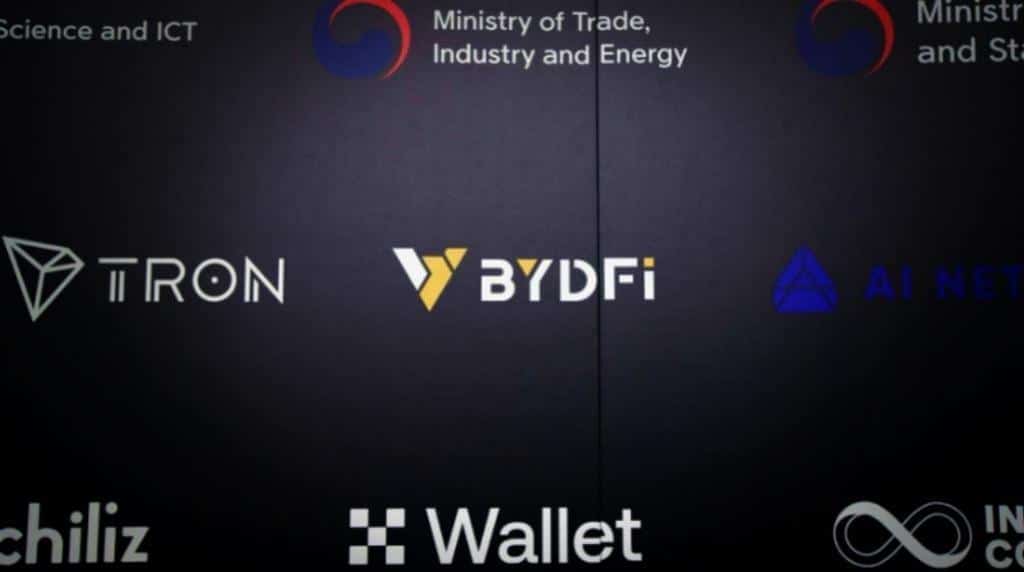
BYDFi, the Seychelles‑based crypto exchange, confirmed its role as an official partner at Seoul Meta Week 2025: METACON, held on 26–27 June at COEX’s third‑floor auditorium, joining industry giants such as Samsung, Google, Intel, Spotify, Kakao and GitHub.

Booth 11 at the event quickly emerged as a high‑traffic hub, drawing crowds eager to engage with BYDFi’s team and claim exclusive merchandise designed for attendees. Michael, co‑founder and CEO of BYDFi, praised Seoul Meta Week as “a venue to share our latest innovations and connect with forward‑thinking builders and traders from across the region”.

In tandem with its showcase, BYDFi announced its membership in South Korea’s CODE VASP Alliance. The move incorporates full integration of Travel Rule compliance technology, aligning with the nation’s Act on Reporting and Using Specific Financial Transaction Information. The exchange says this step strengthens transparency in cross‑platform asset transfers and positions BYDFi as a more secure and regulation‑aligned platform.

According to the company, this initiative forms part of a strategy to build a more unified global compliance framework, elevating industry standards and boosting user confidence.

In April, BYDFi launched MoonX at Paris Blockchain Week: a Web3 on‑chain trading platform integrated with Solana and BNB Chain. MoonX features real‑time market data, Smart Money tracking and copy‑trading for memecoin enthusiasts, signalling BYDFi’s evolution into a combined CEX‑DEX “dual‑engine” operator. Its presence at SMW 2025 emphasises this integration of centralised exchange speed with decentralised ecosystem transparency.

Founded in 2020, BYDFi serves over one million users in more than 190 countries. In 2025, Forbes named it among the best crypto exchanges and apps for beginners. Its platform spans spot and perpetual contracts, automated bots, copy trading and on‑chain tools, offering multi‑channel support for both novice and experienced traders.

Industry analysts note that compliance remains a central challenge for crypto exchanges seeking entry into regulated Asian markets. BYDFi’s involvement with CODE VASP and METACON suggests a strategic push to meld technological innovation with regional regulatory adherence. The Travel Rule technology integration is poised to set a precedent for exchanges aiming to enter South Korea’s tightly supervised financial landscape.

BYDFi’s CEX‑DEX model reflects a larger industry trend towards hybrid exchange services, catering to users demanding both liquidity and decentralised autonomy. MoonX’s Solana and BNB Chain alignment positions BYDFi in direct competition with other hybrid and on‑chain innovators such as dYdX and PancakeSwap.

Critics, however, caution that regulatory alignment alone doesn’t guarantee market penetration. Local adoption may depend on factors like fiat on‑ramps, customer support in Korean, and local partnerships. BYDFi’s prominent presence at SMW 2025 is a step towards building such ties, but the conversion of awareness into sustained user engagement will be the critical measure of success.

Across the exhibition halls at COEX, conversations centred on Web3’s real‑world applications—from decentralised identity to token‑based ecosystems. BYDFi’s booth became a focal point for these discussions, reinforcing its positioning not just as a trading venue, but as a Web3 infrastructure provider.

ImFact today unveiled its “Blockchain Anywhere” infrastructure, enabling 6.8 billion devices—from smartphones to IoT hardware—to operate individual blockchain instances. Dubbed Personal Blockchain and On‑Device Blockchain, the rollout promises cryptographic data verification embedded directly within devices, marking a pivotal shift in trust architecture for artificial intelligence applications. The launch was showcased through Korea’s DaeguChain deployment across Daegu city and supported by a global testnet.

Personal Blockchain runs as a standalone blockchain on smartphones via mobile apps such as MyChain and Fact Stamp, allowing users to verify image authenticity, certify legal documents and complete offline transactions. In parallel, On‑Device Blockchain embeds blockchain functionality into internet-connected hardware—security cameras, autonomous vehicles, industrial sensors—assuring tamper-evident data creation at the source. Together, they integrate with ImFact’s Layer‑1 mainnet through a proprietary Station protocol.

These innovations build on six years of development and have undergone trials within DaeguChain, the civic blockchain network of Daegu city—South Korea’s fourth largest—with a population of 2.5 million. ImFact confirmed the system has proven reliable at enterprise scale. A dual‑track Testnet 2.0 currently supports more than 50,000 users across 97 countries, with participants incentivised via device mining rewards and verification incentives. The team aims to launch the Layer‑1 mainnet in Q4 2025.

Driving ImFact’s initiative is a leadership team comprising Professor Minkyu Je from KAIST—previously with Samsung—as head of hardware blockchain integration; Professor Yasin Ceran of San Jose State University and Stanford Medical School, focusing on privacy-sensitive health data verification on-device; and David Woong Jin Yoon, ex‑CEO of Gravity, steering strategic market deployment. Senior Ecosystem Builder San Jun described the development as the group’s solution to embedding blockchain functionality wherever computing power exists.

The announcement arrives against a backdrop of broader technological investment in South Korea. The government has pledged 16.1 trillion KRW over five years to boost artificial intelligence infrastructure, including data centres and GPU capacity, as outlined in a policy paper presented to the Presidential Policy Planning Committee on 18 June 2025. Key objectives include constructing AI data centres and offering open‑model development to citizens.

Industry analysts suggest that while South Korea’s blockchain strategy originated in controlled, closed networks, the growth of AI demands public and verifiable data systems. Infrastructure such as ImFact’s aligns with this strategic shift, seamlessly enabling decentralised trust within traditionally siloed environments.

ImFact positions its infrastructure as DePIN, distinct from existing offerings that rely on external validation. Instead, their data integrity is assured at the point of generation—whether it be a camera capturing footage or a sensor logging readings—with cryptographic proof to prevent tampering. The embedded nature enhances security and auditability, crucial for sectors like healthcare, autonomous vehicles, legal systems, and industrial monitoring.

While ImFact’s public roadmap outlines the L1 mainnet launch in late 2025, it is already actively engaging early adopters through Testnet 2.0. Users are deploying personal blockchain nodes on smartphones and integrating on-device blockchain chips in IoT hardware, generating token rewards and engaging in verifiable proof tasks. These early-stage validators are cultivating a nascent ecosystem that could mature rapidly ahead of commercial stage.

South Korea’s public sector stance and investment in AI and related infrastructure create a favourable landscape for projects like ImFact. The 16.1 trillion KRW policy emphasises open‑source AI models and GPU availability—initiatives that align with ImFact’s objective to offload cryptographic verification tasks to the edge of the network. The convergence of national policy and device-level trust architecture underscores an ecosystem designed to support AI at scale.

ImFact’s strategy hinges on the deployment and interoperability of three layers: personal blockchains for users, on-device blockchains for hardware, and an L1 mainnet offering global anchoring. Success depends on adoption rates of its mobile apps and IoT kits, regulatory acceptance of on-device verification for legal and medical use cases, and demonstration of clear ROI for participants in device mining.

A coalition of South Korea’s top 100 firms generated an economic contribution of 1,615.2 trillion won in 2024, marking a 3.9 percent rise from the previous year, according to CEO Score data released on 18 June. Samsung Electronics led the charge with a 7 percent increase to 157.5 trillion won, accounting for 9.8 percent of the total haul.

This growth reflects an integrated model of wealth distribution across stakeholders—suppliers, workers, government, shareholders and communities. Total sales of these firms reached 2,122.4 trillion won, growing 6.6 percent year-on-year, underlining the deep economic interlinkages driving expansion.

Hyundai Motor secured the second position with a contribution of 115.2 trillion won, followed by Kia at 86.6 trillion won, which spectacularly posted the steepest increase thanks to surging supplier payments. Among the top ten contributors were LG Electronics, Hyundai Mobis, GS Caltex, SK Energy, Posco, Samsung C&T and LG Chem. In contrast, LG Energy Solution saw a pronounced drop of 28.3 percent to 19.2 trillion won, weighed down by lower stakeholder payouts.

Industry breakdown highlights that electronics and IT firms contributed about 370 trillion won, followed by petrochemicals at 312 trillion won and the auto sector at 303.5 trillion won. Construction, shipbuilding, steel and distribution made further sizeable additions, reflecting a diverse industrial base.

The dominance of chaebol giants—especially Samsung—continues unabated. Samsung and its affiliates, constituting nearly a quarter of national GDP, help drive national innovation and exports. Beyond scale, these conglomerates are embracing strategic shifts. Government figures show a record R&D investment of 83.6 trillion won by South Korean firms, with Samsung alone ploughing 30.2 trillion won into innovation, followed by SK hynix at 4.5 trillion won, Hyundai at 4.3 trillion won, and LG Electronics at 3.4 trillion won.

Despite stepping up R&D budgets by 15.3 percent, only 40 domestic firms made the global top 2,000 by R&D outlays, compared to 681 in the US and 524 in China—underscoring scope for further thrust in innovation. Within semiconductors, South Korea continues to hold a dominant global footprint, commanding approximately 60 percent of the DRAM market and 52.6 percent of NAND, led by Samsung and SK hynix. Notably, SK hynix claimed 36 percent of DRAM market share in Q1 2025, overtaking Samsung’s 34 percent.

This data reveals a dual narrative: chaebol behemoths remain the backbone of the economy, but a growing reliance on innovation and global competitiveness is reshaping the corporate landscape. Hyundai’s pivot to electric vehicles, Kia’s ramped-up supplier integration and LG’s diversification into chemicals and energy solutions are emblematic of this shift.

However, concentration risk persists. Samsung and its affiliates form a significant share of GDP and exports, but reliance on a limited set of heavyweights may expose the economy to global headwinds. The comparative lag in R&D-intensive mid-sized firms risks stifling long-term resilience.

Nevertheless, public policy is responding. Regulatory tweaks aimed at supporting corporate research and streamlining licensing protocols, alongside financial incentives and infrastructure development, suggest a proactive stance to broaden innovation beyond the chaebol core.

As South Korea navigates economic turbulence—from fluctuating global demand to supply chain uncertainties and U.S.–China tech tensions—the measured expansion of stakeholder-driven value and intensification of R&D efforts signal a strategic repositioning.

The Trump Organisation has unveiled Trump Mobile, featuring a $499 gold-hued T1 smartphone and a monthly “47 Plan” priced at $47.45. Designed to target conservative consumers disenchanted with mainstream providers, the offering promises an American‑branded telecommunications package with US‑based customer support and domestically produced handsets. Donald Trump Jr and Eric Trump introduced the venture on 16 June 2025 at Trump Tower, emphasising the use of US‑made phones […]

By K Raveendran In his relentless pursuit of what he calls economic nationalism, President Donald Trump’s ‘trade jihad’ is targeting newer and more diverse sectors of the global economy. The latest front in this campaign is the high-tech industry, with a particular focus on smartphone manufacturing. This marks a significant escalation both in terms of […]
Advertisements

KUALA LUMPUR, MALAYSIA – Media OutReach Newswire – 23 May 2025 – Asian countries are navigating uncertainty amidst the U.S. tariff pause. The region runs a large trade surplus with the U.S., and many countries’ economies rely heavily on exports. Now, the Asian states have about seven weeks left to negotiate new trade deals with the U.S. Octa Broker looks at the progress made so far and […]

Bithumb, South Korea’s second-largest cryptocurrency exchange, has significantly increased its market share, now handling approximately 25% of the nation’s crypto trading volume, up from under 10% in 2023. This surge positions the company for a planned Initial Public Offering in the latter half of 2025, with Samsung Securities appointed as the lead underwriter.

The exchange’s growth strategy included the elimination of transaction fees for all supported digital assets, a move that temporarily boosted its market share to a peak of 72% in early 2024. This aggressive approach allowed Bithumb to momentarily surpass its main competitor, Upbit, which has traditionally dominated the South Korean crypto market.

Bithumb’s decision to pursue an IPO is not primarily driven by a need for capital infusion. According to its semi-annual report, the company holds financial assets exceeding 400 billion won . Instead, the IPO aims to enhance corporate transparency and governance, thereby rebuilding public trust following past controversies involving its leadership.

The exchange has undergone significant leadership changes in preparation for the IPO. Former Chairman Lee Jung-hoon has returned as a registered director, while Jaewon Lee has been appointed as the new CEO of Bithumb Holdings. These changes are part of a broader effort to strengthen the company’s governance structure and align with regulatory expectations.

Bithumb has also shifted its banking partnership from NH Nonghyup Bank to KB Kookmin Bank, South Korea’s largest financial institution. This move is expected to enhance the exchange’s credibility and attract a broader customer base, including institutional clients.

Despite these advancements, Bithumb faces ongoing regulatory challenges. The Financial Intelligence Unit initiated an on-site inspection in March 2025 to assess the exchange’s compliance with anti-money laundering regulations. The outcome of this investigation could significantly impact the company’s IPO timeline and investor confidence.

Bithumb is considering listing options beyond South Korea, including a potential listing on the U.S. Nasdaq. This consideration arises from the complex regulatory environment in South Korea, where cryptocurrencies are not recognized as legitimate financial products, potentially complicating domestic listing procedures.

Financially, Bithumb reported a net profit of $110 million in 2024, reflecting its robust market position and operational efficiency. The exchange’s commitment to regulatory compliance and technological enhancements has contributed to its resilience in a volatile market.

VinFast, Vietnam’s electric vehicle champion, is steering into the Gulf with ambition and pride, transforming the nation’s global image from factory floor to innovation force. HANOI, VIETNAM- Media OutReach Newswire – 16 May 2025 – Ford means America. Toyota means Japan. And now VinFast – a name unfamiliar to most Westerners just 8 years ago – is becoming synonymous with Vietnam. The automaker, born from the Vingroup […]

Apple continues to hold its position as the world’s most valuable brand, maintaining a dominant lead in the annual Kantar BrandZ rankings. The technology giant’s brand value remains firmly ahead of its competitors, driven by sustained innovation, strong consumer loyalty, and expanding services. Among the global giants, Saudi Aramco stands out as the only company from the Gulf Cooperation Council and Middle East region to secure a spot within the Top 100, reflecting its growing international recognition amid shifting energy markets.

The Kantar BrandZ report evaluates thousands of brands worldwide based on consumer perceptions, financial performance, and market presence. Apple, which has consistently topped the rankings for several years, saw its brand value strengthen further due to its diversified product ecosystem and significant investments in augmented reality, artificial intelligence, and subscription services. Its ability to integrate hardware, software, and services continues to set it apart, contributing to record-breaking revenues and reinforcing customer engagement across the globe.

The inclusion of Saudi Aramco in the Top 100 highlights the resilience and strategic positioning of this energy giant amid global transitions. As the world accelerates its shift towards renewable energy, Saudi Aramco’s presence in the rankings underscores its efforts to diversify and adapt to evolving demands. The company has been investing heavily in cleaner energy technologies and sustainability initiatives, while still capitalising on its vast oil reserves and refining capabilities. This dual approach has helped maintain its strong financial standing and global brand stature.

Saudi Aramco’s entry into the list marks an important milestone for the GCC and the Middle East, regions that have been working to boost their global business profiles beyond the traditional hydrocarbon sector. The company’s brand value benefits from its critical role in global energy supply chains and its status as one of the largest integrated energy and chemicals companies worldwide. Its prominence in the BrandZ ranking reflects the ongoing transformation of the regional economy and the growing importance of Gulf-based enterprises in international markets.

Technology companies dominate the upper echelons of the BrandZ Top 100, with Apple’s closest rivals including Microsoft, Amazon, Google, and Samsung. These brands owe their high valuations to their broad global reach, innovation pipelines, and ability to capture consumer attention in a fast-evolving digital landscape. The report shows a marked increase in the value of brands involved in cloud computing, software services, and digital entertainment, signalling shifts in consumer behaviour and business investment.

Financial services and luxury goods brands also feature prominently, with firms such as Visa, Mastercard, and Louis Vuitton holding strong positions. These sectors benefit from sustained consumer demand and adaptation to digital channels, including e-commerce and fintech innovations. Luxury brands have further capitalised on expanding affluent markets in Asia and the Middle East, contributing to their steady brand valuation growth.

Saudi Aramco’s inclusion is particularly notable given the absence of other Middle Eastern brands in the Top 100, illustrating the challenging environment for regional companies in competing at this global scale. Despite high national revenues and significant economic influence, many Gulf firms have yet to establish the kind of global brand recognition needed to appear alongside the world’s largest multinational corporations. This reflects broader economic and strategic factors, including the diversification efforts underway across GCC countries and their focus on building competitive industries beyond energy.

The report also highlights evolving consumer expectations around sustainability and corporate responsibility, with brands that demonstrate genuine commitment to environmental and social governance increasingly favoured in valuation metrics. For energy companies like Saudi Aramco, this presents both challenges and opportunities, as stakeholders scrutinise their environmental impact and transition strategies. The company’s public commitments to reducing carbon emissions and investing in alternative energy projects are critical to its ongoing reputation and brand strength.

Among the factors contributing to Apple’s sustained brand leadership is its capacity to maintain premium pricing while expanding its user base globally. Its flagship products such as the iPhone, iPad, and Mac continue to enjoy strong demand, while services like Apple Music, iCloud, and the App Store generate consistent recurring revenue streams. Innovations in health technology, privacy features, and integration with smart home devices further deepen consumer engagement and brand loyalty.

The Kantar BrandZ rankings serve as a barometer for global business trends, reflecting shifts in consumer sentiment, technological advancement, and economic power distribution. Apple’s dominance underlines the continuing importance of technology innovation as a driver of brand value, while Saudi Aramco’s position signals the evolving role of energy companies in the global economy. As the world grapples with climate change and digital transformation, these rankings highlight how adaptability and strategic vision underpin the most valuable brands.

The presence of Saudi Aramco in the Top 100 is likely to inspire other Gulf-based companies to pursue greater international brand recognition through strategic investments, partnerships, and innovation. Governments across the region have increasingly prioritised economic diversification and global competitiveness, aiming to foster industries such as technology, finance, tourism, and renewable energy. Building strong, globally respected brands will be essential to this long-term vision.

This year’s BrandZ report underscores the growing concentration of brand value among a relatively small group of global leaders, with the top 10 brands accounting for a significant share of total valuation. While new entrants occasionally disrupt the rankings, the core list remains dominated by technology firms and consumer-focused corporations with expansive ecosystems and high consumer trust.

Saudi Aramco’s performance within this competitive context is a testament to its strategic management and financial robustness. It reflects its ability to navigate geopolitical uncertainties, market volatility, and the pressures of a shifting energy paradigm. As international investors and consumers become more conscious of sustainability, Saudi Aramco’s ongoing brand strategy will likely focus on balancing its traditional strengths with innovation in low-carbon energy solutions.

The Kantar BrandZ Top 100 also illustrates broader global economic trends, including the rise of Asian brands and the shifting influence of different markets. Chinese companies such as Tencent, Alibaba, and Huawei continue to climb the rankings, leveraging vast domestic markets and aggressive expansion strategies. Meanwhile, European brands have seen mixed fortunes amid economic challenges and regulatory shifts, emphasising the competitive pressures on established global players.


Arabian Post Staff -Dubai Samsung has launched its new flagship device, the Galaxy S25 Edge, designed to set a new benchmark in smartphone technology. The device features a remarkably slim 5.8mm titanium body, combining sleek aesthetics with cutting-edge performance. As part of its strategy to stay ahead in the competitive mobile market, Samsung has integrated advanced artificial intelligence capabilities, a powerful 200MP camera, and the latest Snapdragon […]

Mozilla’s Chief Financial Officer, Eric Muhlheim, has issued a stark warning about the future of the Firefox browser, stating that its survival is at risk if the U.S. Department of Justice’s proposed remedies against Google’s search monopoly are fully implemented. Muhlheim testified that losing Google’s default search engine payments would threaten the browser maker’s existence. “We would be really struggling to stay alive,” Muhlheim said during testimony […]

Arabian Post Staff -Dubai Unveiling its latest flagship devices at a grand event in Singapore, POCO made a strong statement with the launch of the POCO F7 Ultra and POCO F7 Pro, positioning itself more firmly within the premium smartphone segment. The UAE market, where young, tech-savvy consumers are increasingly demanding top-tier performance without exorbitant pricing, is poised to become a key battleground for these new devices. […]

Embark on a Scent-inspired Journey from Luxe Fragrance Wardrobe and Scent Bar Capture Delightful Moments in Life4Cuts Photo Booth, Enjoy a Complimentary Gift with Special Discount HONG KONG SAR – Media OutReach Newswire – 24 April 2025 – BEAUTY&YOU by The Shilla Duty Free Hong Kong, carrying over 200 cosmetic, skincare, perfume and fashion brands, with more than 2,600 fragrances items, is thrilled to unveil the “Shilla […]

Apple is advancing its mixed-reality ambitions with plans to introduce two new Vision Pro models and a separate line of augmented reality glasses designed for extended daily use. These developments reflect the company’s strategic shift towards a diversified product lineup in the spatial computing sector. The second-generation Vision Pro, internally codenamed N109, is slated for release between late 2025 and early 2026. This model is expected to […]

Hong Kong Students Pave the Future for Various Industries with AI After an 8-month innovation journey, with the record-breaking number of participating teams tripled compared to last year, the University of Hong Kong, Queen Elizabeth School Old Students’ Association Tong Kwok Wah Secondary School, and Tai Po Old Market Public School have been crowned champions, while Diocesan Girls’ School received the award for Most Active Participating School […]

The semiconductor industry experienced a remarkable surge in 2024, with annual revenues climbing approximately 25% to reach $683 billion. This growth was predominantly fueled by escalating demand for artificial intelligence applications, particularly high-bandwidth memory used in AI graphics processing units . The memory segment, buoyed by HBM, saw a 74% year-over-year increase, significantly contributing to the industry’s overall rebound from a challenging 2023. SK hynix reported record-breaking […]

Greenlogue/AP Carbon Clean has announced the successful completion of the world’s first industrial deployment of its modular carbon capture technology, CycloneCC. Over a six-month period, the system achieved approximately 4,000 operating hours, delivering a high-purity carbon dioxide product. CycloneCC is designed to address key challenges in industrial carbon capture by offering a fully modular solution that reduces both cost and space requirements. The technology utilises rotating packed […]

Featuring the revolutionary Odyssey 3D, the updated Odyssey OLED G8 with the industry’s first 4K 240Hz screen, and the new ultra-wide Odyssey G9, the new Odyssey monitor line-up is set to deliver unparalleled experiences for all gamers SINGAPORE – Media OutReach Newswire – 2 April 2025 – Samsung Electronics Singapore is bringing its 2025 Odyssey monitor line-up to Singapore. Featuring the revolutionary Odyssey 3D, the stunning Odyssey […]

HKSTP park company Laservall aims to advance high-precision laser technology with AI-driven automation, empowering advanced manufacturing through microelectronics innovation HONG KONG SAR – Media OutReach Newswire – 31 March 2025 – Laservall today announced a landmark HKD 300 million (USD 38 million) investment plan for the next five years. This strategic commitment focuses on R&D, manufacturing and technology enhancement, and tech talent development in Hong Kong. A […]

Samsung Electronics has announced the sudden passing of its co-chief executive officer, Han Jong-Hee, who died on Tuesday at the age of 63 due to cardiac arrest. Han was instrumental in overseeing the company’s consumer electronics and mobile devices divisions.

Han’s tenure at Samsung began in 1988, with a significant portion of his career dedicated to the television sector. Under his leadership, Samsung ascended to become the world’s leading TV manufacturer. In 2022, he was appointed as co-vice chairman and CEO, roles in which he continued to drive innovation and market dominance in consumer electronics.

His unexpected death comes at a challenging time for Samsung. The company has been grappling with declining earnings and a decrease in share prices, having lost its leading position in smartphone sales to Apple in 2024. Additionally, Samsung has faced setbacks in the advanced memory chip market, trailing behind competitors such as SK Hynix and TSMC.

The company’s leadership had previously acknowledged these difficulties, describing the current period as a “crisis” for Samsung. Factors contributing to this situation include losing AI chip supply contracts to rivals and ceding the top smartphone sales position to Apple.

In light of Han’s passing, co-CEO Jun Young-Hyun, who has been leading the semiconductor division, is set to assume the role of sole CEO. Jun’s leadership will be pivotal as Samsung navigates these turbulent times, aiming to reclaim its competitive edge in the technology sector.

Han’s contributions to Samsung were profound, particularly his efforts in transforming the company’s television business into a global powerhouse. His strategic vision and dedication have left an indelible mark on the company and the broader consumer electronics industry.

Netflix has expanded its high dynamic range offerings by integrating HDR10+ support into its streaming platform. This advancement aims to deliver improved picture quality, featuring enhanced clarity and more vibrant colours for viewers with compatible devices. Previously, Netflix’s HDR content was predominantly available in Dolby Vision, a format not supported by Samsung televisions. This limitation meant that Samsung users were restricted to the standard HDR10 format, which […]

The United Arab Emirates has introduced the Jaywan co-badge card, a significant advancement in the nation’s payment infrastructure, enabling residents to conduct transactions seamlessly both domestically and in over 180 countries worldwide.

Al Etihad Payments , a subsidiary of the Central Bank of the UAE , in collaboration with UnionPay International , has launched the “UnionPay – Jaywan” co-badge card. This initiative integrates the Jaywan domestic payment network with UnionPay’s extensive global reach, offering cardholders a unified payment solution.

Domestically, transactions made with the co-badge card are processed through the Jaywan network, ensuring efficient and secure payments within the UAE. For international transactions, the card leverages UnionPay’s global network, facilitating payments in over 180 countries and regions. This dual functionality provides UAE residents with a versatile payment method, catering to both local and international needs.

H.E. Saif Humaid Al Dhaheri, Assistant Governor for Banking Operations and Support Services at the CBUAE and Chairman of AEP, emphasized the strategic importance of this collaboration. He noted that integrating the Jaywan and UnionPay networks aligns with the UAE’s commitment to innovative and efficient payment solutions, offering consumers a premium card that facilitates seamless transactions both within and beyond the UAE.

Larry Wang, CEO of UnionPay International, highlighted the mutual benefits of the partnership, underscoring its role in enhancing payment convenience and security for UAE residents. He also pointed out that this collaboration strengthens the economic and financial ties between China and the UAE, fostering greater cooperation between the two nations.

The Jaywan co-badge card is part of a broader initiative to modernize the UAE’s payment infrastructure. AEP has established partnerships with other international payment networks, including Discover, Mastercard, and Visa, to expand the global usability of Jaywan cards. These collaborations aim to provide consumers and businesses with secure, efficient, and innovative payment solutions, reduce transaction costs by offering effective local alternatives, and support economic growth by stimulating innovation in the payments sector.

In addition to enhancing payment accessibility, the co-badge card initiative supports the UAE’s goal of increasing financial inclusion. By offering a secure and efficient payment alternative, the Jaywan card caters to diverse consumer needs, promoting e-commerce and providing financial services that meet the requirements of various segments of society.

The infrastructure for the Jaywan card has been prepared to operate both locally and globally. This readiness aligns with the UAE’s digital transformation strategy, aiming to strengthen the country’s position as a leading global hub for digital payments. The Jaywan scheme offers consumers and businesses a secure, efficient, and innovative payment solution, supporting economic growth and financial inclusion.

The Jaywan cards will be available in debit, prepaid, and credit variants and can be used across ATMs, point-of-sale terminals, and e-commerce platforms. This versatility ensures that cardholders have multiple options for managing their finances, whether they are conducting everyday transactions or making larger purchases.

To further enhance the user experience, AEP has signed a Memorandum of Understanding with Samsung Gulf Electronics to enable Jaywan cards to be integrated into the Samsung Wallet. This integration allows users to make payments seamlessly via their smartphones, reflecting the UAE’s commitment to adopting advanced technologies in the financial sector.

The rollout of the Jaywan co-badge card is expected to commence in the near future, with widespread availability across the UAE’s financial institutions. This development signifies a transformative milestone in the UAE’s evolving payments landscape, providing residents with a payment solution that is both locally rooted and globally connected.

The introduction of the Jaywan co-badge card underscores the UAE’s dedication to fostering a robust and inclusive payment ecosystem. By integrating domestic and international payment networks, the UAE is enhancing the convenience and security of payments for its residents, ensuring a seamless payment experience regardless of location.

VISHNU RAJA
RYO YAMADA
HITORI GOTOH
IKUYO KITA
Just in: