News related to
United States

Valve has acknowledged that the Steam Deck OLED handheld gaming device is facing intermittent stock shortages in several markets as supply constraints for memory and storage components intensify across the technology sector. A notice on the Steam Deck store page states that the 512GB and 1TB OLED configurations “may be out-of-stock intermittently in some regions due to memory and storage shortages,” underscoring mounting production challenges for the […]

Spot Bitcoin exchange-traded funds in the United States continue to hold around $85 billion in assets despite a sharp downturn in the price of Bitcoin, highlighting a divergence between investor behaviour in regulated funds and the broader cryptocurrency market. The resilience of these funds, which trade on regulated exchanges and offer exposure to Bitcoin without direct ownership of the digital currency, underscores both the growing institutional participation […]

Two of Abu Dhabi’s most influential investment vehicles significantly boosted their exposure to BlackRock’s iShares Bitcoin Trust during the fourth quarter of 2025, pushing their combined bitcoin exchange-traded fund holdings above the $1 billion mark at the close of the calendar year. The moves, disclosed through quarterly filings with the U. S. Securities and Exchange Commission, underscore a broader shift among sovereign players toward regulated digital assets […]

Bitcoin retreated ahead of the US market open, mirroring declines in equity futures as traders returned from a three-day break to a more fragile macro backdrop marked by geopolitical strain and shifting rate expectations. The world’s largest cryptocurrency fell below key technical levels in early trading, extending a pullback that began over the weekend. The move coincided with weakness in US stock-index futures and a firmer dollar, […]

United Arab Emirates and Saudi Arabia are set to dominate Middle East sustainable bond issuance this year, with total regional volumes projected to reach between $20 billion and $25 billion, according to S&P Global, as governments and corporations accelerate funding for climate and energy transition goals. The ratings agency estimates that the two largest Gulf economies already accounted for about 80 per cent of sustainable bond issuance […]

  An Iraqi-Emirati consortium is advancing plans for a $700 million subsea and terrestrial data cable connecting the United Arab Emirates to Turkey through Iraq, signalling intensifying competition among Gulf states to dominate regional digital infrastructure. One of the project’s backers confirmed that the system would run from the UAE across Iraqi territory before linking into Turkey’s networks, providing a new high-capacity route between the Gulf and […]

Arabian Post Staff -Dubai   China’s Belt and Road Initiative recorded $213.5 billion in engagement during 2025, the highest annual level since its launch more than a decade ago, as a wave of construction contracts and energy investments reshaped the geographic balance of the programme and propelled the Middle East into the top ranks of recipients. Data compiled in the China Belt and Road Initiative Investment Report […]

Advertisements

Arabian Post Staff -Dubai United Arab Emirates is advancing an ambitious programme to use laser pulses in clouds in an effort to increase rainfall, positioning the desert nation at the forefront of experimental weather modification as it seeks long-term water security. Scientists at the Technology Innovation Institute, the applied research arm of Abu Dhabi’s Advanced Technology Research Council, are testing ground-based laser systems designed to influence the […]

Iran has signalled progress in indirect negotiations with the United States over its nuclear programme, days after heightened tensions in the Gulf led to a partial disruption of traffic through the Strait of Hormuz, a critical artery for global energy supplies. Officials in Tehran said discussions aimed at easing sanctions and placing constraints on uranium enrichment had moved forward, describing the latest round of contacts as “constructive”. […]

Ripple has ranked ahead of Bitcoin and Ethereum in a global survey measuring emotional connection between consumers and cryptocurrency brands, underscoring how perception and trust are emerging as competitive factors in a volatile digital asset market. The San Francisco-based blockchain company placed fourth overall in MBLM’s Brand Intimacy Study for cryptocurrency projects, outperforming both Bitcoin and Ethereum in the latest assessment of how strongly users feel bonded […]

eToro Group Ltd delivered a stronger-than-expected set of financial results for the full year and fourth quarter of 2025, reporting record yearly profits and bolstering its multi-asset trading platform even as the cryptocurrency market faced sustained volatility. The trading and investment platform posted a net contribution of $868 million for the full year, up about 10 per cent on 2024, and net income under generally accepted accounting principles climbed […]

Europe has strengthened its push for technological sovereignty with the launch of the Euro Q Exa quantum computing system in Munich, marking a significant addition to the continent’s developing high-performance computing network. Unveiled on 12 February at the Leibniz Supercomputing Centre, part of the Bavarian Academy of Sciences and Humanities, Euro Q Exa is designed to integrate quantum processors into Europe’s broader supercomputing ecosystem. The system forms […]

Dragonfly Capital has secured $650 million for its fourth investment vehicle, pressing ahead with fresh commitments to digital asset infrastructure even as senior partners describe the current venture climate in crypto as a “mass extinction event”. The San Francisco and Singapore-based firm said the new capital will be directed towards foundational blockchain systems, stablecoins, on-chain financial services and tokenised real-world assets, signalling a long-term strategy despite persistent […]

Arabian Post Staff -Dubai Yango Group says its artificial intelligence-driven routing system saved users more than five million hours in 2025, with riders in Dubai and Abu Dhabi alone reclaiming over 34,000 hours through dynamic route optimisation. The mobility and technology company, which operates ride-hailing and delivery services across the Middle East, Africa, Europe and Latin America, reported that its AI models analysed billions of data points […]

Researchers tracking more than 400 toddlers have found no evidence that receiving an mRNA COVID-19 vaccine during or just before pregnancy increases the risk of autism spectrum disorder or developmental delays, offering what clinicians describe as strong reassurance for expectant mothers. The large prospective study, conducted across multiple clinical centres and involving detailed follow-up assessments of infants born during the pandemic, examined speech and language development, motor […]

Arabian Post Staff -Dubai   Indian authorities have seized three oil tankers that were under United States sanctions and linked to Iranian oil networks, intensifying surveillance of the country’s maritime zones to stem illicit trade and enforce sanctions compliance, officials familiar with the matter said. The vessels, operating under multiple identities to evade detection, were intercepted about 100 nautical miles west of Mumbai in the Arabian Sea […]

China is set to eliminate import tariffs on goods from 53 African nations from 1 May 2026, a sweeping policy shift that extends duty-free access to almost the entire continent and aims to deepen trade ties and economic cooperation between Beijing and Africa. The government announcement confirms that the move will apply to all tariff lines for countries with which China has formal diplomatic relations, excluding only […]

OpenAI’s chief executive Sam Altman has said that India now has 100 million weekly active users of ChatGPT, elevating the country to the position of the platform’s second-largest market globally after the United States and underscoring its growing influence in the artificial intelligence ecosystem. Altman disclosed the figure in an opinion piece published ahead of the Global AI Impact Summit 2026 in New Delhi, where government officials and global tech leaders are convening to discuss the future of AI and its integration into education, enterprise and public services.

This milestone reflects not just a vast user base but also a distinct pattern of adoption: students in India now represent the largest single demographic of ChatGPT users worldwide, according to Altman, who highlighted the role younger generations are playing in embedding generative AI into daily workflows for learning and productivity.

The 100 million figure forms a significant share of ChatGPT’s global weekly active user count, which stood at about 800 million as of October 2025 and is widely projected to edge closer to 900 million as platforms refine their offerings and expand reach. OpenAI’s decision to open an office in New Delhi in August 2025 and tailor pricing, including a lower-cost subscription tier later made free for a year, is seen as part of a strategy to deepen engagement in what many technology firms regard as a key growth market.

Altman underscored India’s demographic advantages, including a population exceeding one billion internet users and a large proportion of English speakers outside native English-speaking countries — factors that have made the country fertile ground for generative AI adoption. Many students have turned to ChatGPT for support with research, coding, examination preparation and language practice, reflecting a broader trend of digital tools being woven into educational routines.

Despite this surge, translating sheer user numbers into sustained economic returns poses challenges for AI firms. India’s price-sensitive market and uneven internet access complicate monetisation, causing some companies to adjust their strategies to balance affordability with revenue generation. OpenAI’s tailored pricing and promotional offers have helped lower entry barriers, but broader monetisation across emerging markets may require further innovation in business models.

The competitive landscape in India’s AI space is intensifying. Alphabet’s Google has made inroads with its Gemini AI suite, aggressively targeting younger users through free one-year subscriptions and partnerships with telecom firms to broaden adoption among students and professionals. These efforts are part of a broader contest among technology giants to capture share in a market that has vast potential due to its size and digital engagement.

The presence of global tech leaders and politicians at the New Delhi summit highlights the geopolitical and economic significance of India’s AI trajectory. Policy discussions span topics from responsible AI governance and equitable access to scaling infrastructure and boosting domestic innovation capacity. Indian policymakers, alongside industry executives, are advocating approaches that leverage technology to enhance education, public services and economic participation, while grappling with concerns over job displacement and digital divides.

Altman has outlined priorities for fostering inclusive AI growth in India, emphasising the need for practical digital literacy, robust computing infrastructure and frameworks that ensure ethical deployment. Such an approach, he argues, will empower users to harness AI’s potential effectively rather than just expanding access to tools.

The prominence of India’s student base on ChatGPT has broader implications for how AI products are developed and tailored. Feedback from a large and diverse user community helps shape feature enhancements and localisation efforts, influencing global development roadmaps. For companies like OpenAI, this dynamic underscores a strategic shift from traditional markets in Europe and North America toward regions where usage patterns reflect unique demographic and cultural needs.

By Nantoo Banerjee There is little to be excited about the defence ministry’s latest clearance for the acquisition of 114 Rafale fighter jets from France at a huge cost of Rs.3.25 lakh crore (nearly $40 billion), branded as ‘mother of all defence deals’. It is a matter of major concern that even 78 years after […]

The article India’s Reliance On Imported Arms For Defence Is A Concern appeared first on Latest India news, analysis and reports on Newspack by India Press Agency).

Metaplanet has reported a dramatic acceleration in earnings, posting a 738 per cent year-on-year rise in revenue and a 1,700 per cent jump in operating profit, underscoring the impact of its aggressive digital asset strategy and restructuring drive. The Tokyo-listed company, which has repositioned itself as a corporate holder of bitcoin, disclosed the figures in its latest financial update, signalling a sharp turnaround from its earlier years […]

India has emerged as the second-largest market globally for Claude, the generative artificial intelligence model developed by US-based start-up Anthropic, underscoring the country’s expanding influence in the global AI ecosystem.

Debjani Ghosh, who leads Anthropic’s operations and policy engagement in India, said the scale of adoption by developers, enterprises and start-ups has placed the country just behind the United States in terms of usage and integration of Claude’s models. She described India as a “strategic growth engine” for the company, citing strong demand from sectors including financial services, healthcare, education and software development.

Anthropic, founded in 2021 by siblings Dario Amodei and Daniela Amodei, has positioned Claude as a competitor to models from OpenAI and Google. The company has attracted substantial backing from Amazon and Google, with Amazon committing up to $4 billion as part of a strategic partnership to integrate Claude into Amazon Web Services infrastructure. The funding has enabled Anthropic to expand globally, with India becoming a focal point due to its developer base and digital economy.

India’s prominence in the AI adoption cycle reflects broader structural factors. The country has one of the world’s largest pools of software engineers, a fast-growing start-up ecosystem, and a government push towards digital public infrastructure. Enterprises across banking and fintech have begun embedding generative AI tools to automate compliance checks, summarise documents and enhance customer interaction. In healthcare, pilot projects are under way to use AI systems for clinical documentation and triage support, while education technology platforms are deploying AI-driven tutoring tools.

Ghosh indicated that India’s market dynamics differ from those of Western economies. Cost sensitivity and the need for scalable deployment across diverse languages and devices have shaped how enterprises experiment with large language models. Claude’s emphasis on constitutional AI — a framework designed to make outputs safer and more aligned with human values — has resonated with corporate clients concerned about regulatory risk and reputational exposure.

Regulatory considerations are central to the AI conversation in India. The Ministry of Electronics and Information Technology has signalled its intent to craft a framework that balances innovation with safeguards against misinformation, bias and misuse. While India has not enacted a standalone AI law, policy discussions have intensified around data governance and algorithmic accountability. Companies operating in the country must also comply with the Digital Personal Data Protection Act, which imposes obligations on data fiduciaries and processors.

Industry analysts note that India’s large English-speaking population has historically accelerated the adoption of global technology platforms. However, the next phase of growth in AI is expected to depend on multilingual capabilities. Claude’s ability to handle multiple languages is seen as an advantage in a country with 22 constitutionally recognised languages and hundreds of dialects. Developers are increasingly testing generative models for vernacular content generation and customer support.

Competition in the Indian market is intensifying. OpenAI’s ChatGPT has built a strong user base, while Google has integrated its Gemini models into productivity tools and cloud services. Domestic start-ups are also entering the field, building foundation models trained on local datasets. Analysts say that enterprise adoption, rather than consumer usage alone, will determine long-term market leadership.

Anthropic’s expansion strategy in India includes partnerships with cloud providers and enterprise software companies. By leveraging Amazon Web Services’ presence in major Indian cities, Claude is being offered as part of broader digital transformation packages. Ghosh emphasised that collaboration with academic institutions and start-up incubators is another priority, with the aim of fostering responsible AI research and skills development.

The rapid uptake of generative AI has also raised concerns. Experts warn of the risks of hallucinations, data leakage and overreliance on automated systems. In financial services, regulators have cautioned against using AI outputs without human oversight. Cybersecurity specialists highlight the potential for AI tools to be misused for phishing or deepfake generation. Anthropic has sought to address such issues by embedding guardrails into its models and conducting external safety evaluations.

Harvard Management Company has reduced its exposure to bitcoin-linked holdings by about 20 per cent while initiating a new position tied to ether, signalling a recalibration of its digital asset strategy amid shifting market dynamics and valuation pressures. Regulatory filings show that the endowment’s investment arm pared back its stake in BlackRock’s iShares Bitcoin Trust during the latest reporting period, cutting the value of its holding from […]

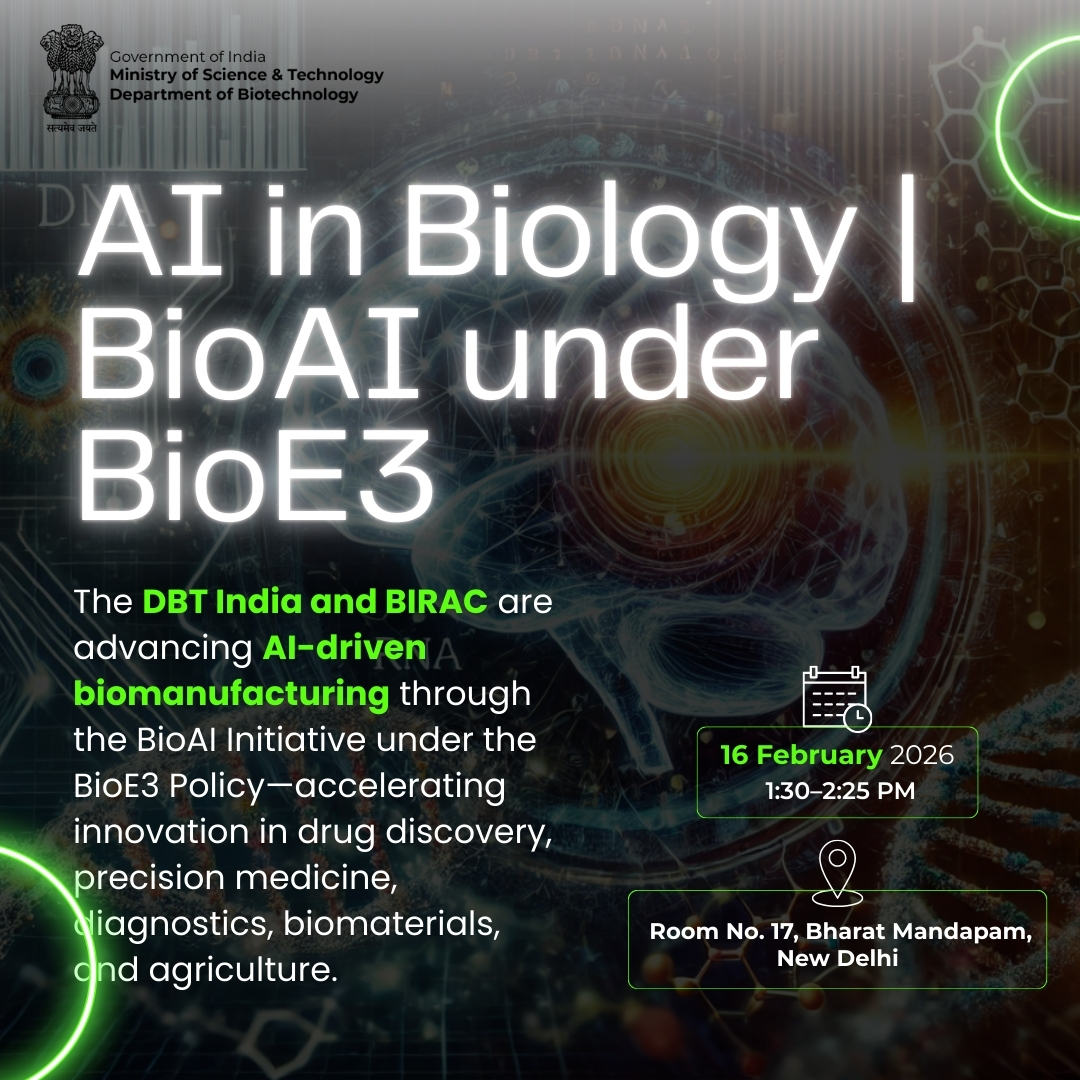
Artificial intelligence is being positioned as a catalytic force in reshaping biomanufacturing, with policymakers, scientists and industry leaders outlining a roadmap that blends computational power with biological science to accelerate drug discovery, industrial enzymes and sustainable materials. Discussions at the India AI Impact Summit placed BioAI at the centre of a strategy aimed at using genomics, in-silico modelling and closed data loops to build scalable and trusted production systems.

The convergence of AI and biology has moved from laboratory experimentation to commercial ambition. India’s biotechnology sector, valued at over $80 billion and targeting significant expansion by the end of the decade under the BioE3 policy framework, is seeking to harness machine learning tools to shorten development cycles that traditionally take years. Speakers at the summit argued that AI-enabled simulation and predictive modelling can reduce trial-and-error experimentation in fields ranging from vaccine development to precision fermentation.

BioAI refers to the integration of artificial intelligence techniques with biological data, particularly genomic sequencing, proteomics and metabolic engineering. The approach relies on large datasets and advanced algorithms capable of identifying patterns invisible to conventional research methods. Advances in protein structure prediction, including breakthroughs in computational biology over the past few years, have demonstrated how neural networks can model complex molecular interactions with remarkable accuracy.

At the summit, researchers described how generative AI systems are being trained to design novel proteins and enzymes tailored for industrial use. By feeding genomic datasets into predictive algorithms, scientists can simulate biological pathways in silico before conducting physical experiments. This method reduces costs and speeds up scaling, particularly in biopharmaceutical production and alternative protein manufacturing.

Government representatives outlined plans to expand national AI infrastructure to support such applications. IndiaAI Mission initiatives include the creation of high-performance computing resources and domain-specific data repositories to ensure that biotech firms and research institutes have access to secure and interoperable datasets. Officials emphasised that trust frameworks and regulatory clarity would be essential to encourage private investment while safeguarding data privacy and biosafety standards.

Industry leaders echoed that sentiment, highlighting that biomanufacturing requires rigorous validation. Unlike digital products, biological outputs interact with living systems, making quality control paramount. AI-driven feedback loops—where laboratory results continuously refine algorithms—were presented as a mechanism to maintain reliability while scaling up production. Data integrity, traceability and auditability were recurring themes, reflecting global debates about AI governance.

The global context underscores the strategic significance of BioAI. The United States and European Union have invested heavily in synthetic biology and AI-assisted drug discovery. China has also advanced computational genomics and large-scale fermentation capabilities. Analysts note that countries able to combine AI talent with robust biotech ecosystems stand to capture a growing share of the global bioeconomy, projected by several industry reports to exceed $4 trillion over the coming decade.

India’s strength in information technology services and pharmaceutical manufacturing offers a foundation for this convergence. The country is a major supplier of generic medicines and vaccines, supported by a network of research institutions and startups. By integrating AI tools into these value chains, stakeholders believe production timelines can be compressed and new therapeutic molecules identified with greater precision.

Academic voices at the summit stressed the importance of interdisciplinary training. Biologists must understand algorithmic thinking, while data scientists need grounding in molecular biology. Collaborative platforms linking universities, startups and established pharmaceutical firms were proposed to ensure knowledge transfer and talent development. Investment in computational biology curricula and shared research facilities is seen as critical to sustaining momentum.

Ethical considerations formed part of the dialogue. AI models trained on genomic data raise questions about consent, ownership and equitable benefit sharing. Experts argued for transparent governance structures aligned with international norms, noting that trust is fundamental when dealing with health-related information. Regulatory agencies are exploring how to evaluate AI-generated biological designs within existing approval pathways.

Private sector participation is accelerating. Venture capital funding in biotech startups leveraging machine learning has grown steadily, reflecting confidence in AI-assisted discovery platforms. Companies are experimenting with digital twins of biological systems, enabling simulation of fermentation processes before industrial deployment. Such capabilities can enhance efficiency and reduce resource consumption, aligning with sustainability goals.

Sustainability featured prominently in discussions on biomanufacturing. AI-optimised microbes can produce bio-based chemicals and materials that substitute fossil-derived inputs. Precision fermentation techniques, guided by predictive analytics, may lower energy use and waste. As global supply chains face pressure to decarbonise, the combination of AI and biotechnology is viewed as a pathway to cleaner industrial production.

Participants also highlighted challenges. High-quality biological datasets remain fragmented, and interoperability across laboratories is uneven. Ensuring cybersecurity in research networks is another concern, given the sensitivity of genetic information. Scaling laboratory successes to commercial volumes demands capital expenditure and regulatory compliance that can deter smaller enterprises.


Mercedes-Benz USA has recalled nearly 12,000 electric sport utility vehicles in the United States after identifying a defect in high-voltage battery cells that could trigger a fire, either while driving or when parked. The recall covers 11,895 EQB vehicles across three variants: 1,708 EQB 350 4Matic models from the 2022 to 2024 model years, 3,674 EQB 250+ units from 2023 and 2024, and 6,513 EQB 300 4Matic […]

VISHNU RAJA
RYO YAMADA
HITORI GOTOH
IKUYO KITA