Uncertainty has gripped Cuba after claims circulated that Venezuelan President Nicolás Maduro had been captured following a United States strike in Venezuela, a development that, if confirmed, would shake the island’s most important political and economic partnership. Cuban authorities have offered no confirmation of the reports, while state media has urged calm and emphasised continuity in Havana’s foreign policy, underscoring the fog surrounding events that residents say […]
Meta’s plan to expand artificial intelligence across private messaging on Facebook, Instagram and WhatsApp has triggered a wave of privacy concerns, as users, civil society groups and regulators question how conversational data will be used and protected under the company’s 2026 policy framework. The update, disclosed as part of Meta’s broader AI roadmap, allows automated systems to analyse interactions in private chats to refine content recommendations and […]
United Arab Emirates will assume the presidency of the Middle East and North Africa Financial Action Task Force in 2026, placing the country at the centre of regional efforts to strengthen safeguards against money laundering, terrorist financing and the proliferation of illicit funds. The appointment comes at a time when the bloc is seeking tighter coordination among member states as cross-border financial flows grow in scale and complexity.
MENAFATF brings together 21 jurisdictions across the Middle East, North Africa and neighbouring regions, representing a combined gross domestic product estimated at more than $3 trillion. The organisation functions as the regional body aligned with the global Financial Action Task Force standards, conducting peer reviews, issuing guidance and supporting members as they implement international rules designed to protect financial systems from abuse.
The decision for the UAE to lead the organisation follows its expanding role in financial regulation and enforcement across the region. Federal authorities have invested heavily in strengthening supervision of banks, exchange houses, designated non-financial businesses and professions, while also expanding cooperation with international counterparts. Officials involved in the process describe the presidency as recognition of the country’s progress in aligning domestic frameworks with global benchmarks and its capacity to convene consensus among diverse economies.
During its term, the UAE is expected to steer MENAFATF’s strategic agenda, including the scheduling of mutual evaluations, thematic studies and capacity-building programmes. These initiatives are central to helping member states address gaps identified in national risk assessments and respond to emerging typologies such as the misuse of virtual assets, trade-based money laundering and complex ownership structures.
Regulatory specialists say the presidency carries influence beyond administrative oversight. The chair country plays a pivotal role in shaping discussions on policy priorities, coordinating technical assistance and representing the region in dialogue with global standard-setters. This places added scrutiny on how effectively the bloc can balance the varied economic structures and legal systems of its members while maintaining consistent application of standards.
The UAE has signalled that cooperation and practical implementation will be key themes of its tenure. Policymakers have spoken about deepening information-sharing among financial intelligence units, enhancing public-private partnerships and supporting jurisdictions that face capacity constraints. Such measures are viewed as essential for raising overall compliance levels and reducing vulnerabilities that can be exploited across borders.
MENAFATF members span hydrocarbon-rich Gulf economies, large consumer markets in North Africa and smaller states with developing financial sectors. This diversity has historically posed challenges in achieving uniform progress. Analysts note that leadership will need to balance ambition with pragmatism, ensuring that reforms are realistic and tailored to local contexts while still meeting international expectations.
The presidency also coincides with broader shifts in the region’s financial landscape. Digital payments, fintech platforms and virtual assets have expanded rapidly, creating new opportunities for inclusion but also new risks. Addressing these developments requires updating supervisory tools, training regulators and fostering dialogue with technology providers. Observers expect the UAE to push for clearer regional guidance in these areas, building on its own experience in regulating emerging financial services.
Another area likely to feature prominently is the effectiveness of enforcement. While many jurisdictions have strengthened legal frameworks, translating laws into successful investigations and prosecutions remains uneven. MENAFATF’s peer review process increasingly emphasises outcomes, not just technical compliance. Under UAE leadership, the organisation is expected to encourage members to demonstrate tangible results in asset recovery, sanctions and international cooperation.
Diplomats familiar with the process say the appointment also reflects confidence in the UAE’s ability to engage constructively with both regional partners and global institutions. The country has positioned itself as a bridge between markets, hosting multinational financial institutions and acting as a hub for trade and investment. That role brings responsibilities, particularly in ensuring that financial openness is matched by robust controls.
By Nitya Chakraborty The invasion of Venezuela by the United States on the early hours of January 3 along with the kidnapping of President Nicholas Maduro and his wife marks a new phase in Donald Trump’s foreign policy which has been termed by The Guardian columnist as “naked imperialism”. The announcement by Trump that the […]
Ghana’s cedi closed 2025 as the fourth best performing currency in Africa, reflecting a year of relative stability after prolonged volatility and placing the unit among the continent’s stronger exchange rates against the United States dollar. The cedi finished the year at about GH¢10.93 to the dollar, a level that contrasted sharply with the steep depreciation seen in earlier periods and underscored the impact of tighter macroeconomic […]
Swiss authorities have moved swiftly to block any financial assets within their jurisdiction linked to Venezuela’s deposed President Nicolás Maduro and associates, ordering freezes with immediate effect after his arrest by United States forces and transfer to the United States to face narco-terrorism charges. The decision by the Swiss Federal Council is set to remain in place for four years, aimed at preventing the outflow of potentially […]
Japan’s push to fold crypto-linked products into mainstream finance has gained political momentum, with senior government figures signalling support for digital assets trading on regulated exchanges as the country positions 2026 as a milestone year for its digital economy.
Speaking at a New Year gathering at the Tokyo Stock Exchange, Satsuki Katayama, a prominent member of the ruling Liberal Democratic Party known for her advocacy of financial innovation, outlined a vision in which tokenised assets and crypto-linked exchange-traded products operate alongside equities and commodities. While Katayama does not hold the finance minister portfolio, her remarks reflected broader policy debates underway in Tokyo over how far Japan should go in embracing digital finance within its tightly regulated markets.
The comments arrive as global asset managers press Asian regulators to open the door to crypto exchange-traded funds, following approvals in the United States and growing institutional interest in Europe. Japan has long taken a cautious stance after high-profile exchange failures earlier in the past decade, but officials now argue that clearer rules and stronger custody standards make broader participation possible without undermining investor protection.
Within government circles, 2026 is being framed as a symbolic inflection point. Lawmakers and regulators have increasingly referred to the year as a moment when legacy systems and digital infrastructure converge, particularly in capital markets settlement, identity verification and cross-border payments. Katayama described it as the start of a “digital era” for finance, a phrase that has been echoed in policy discussions tied to Japan’s broader digital transformation agenda.
Regulatory authority for any crypto-linked listings ultimately rests with the Financial Services Agency, which oversees exchanges and approves new financial products. The agency has already moved to modernise rules for security tokens and stablecoins, creating a framework that allows banks and trust companies to issue yen-backed digital currencies under strict supervision. Officials familiar with the discussions say the same principles—segregation of client assets, disclosure standards and market surveillance—would apply to crypto ETFs or similar instruments.
Market operators have begun preparing for that possibility. The Tokyo Stock Exchange’s parent group has invested heavily in trading and clearing systems capable of handling tokenised securities, while major brokerage houses are expanding digital asset teams to service institutional clients. Commodity exchanges have also explored how blockchain-based contracts could streamline settlement and reduce counterparty risk, particularly for energy and metals trading.
Japan’s interest in crypto-linked exchange products also reflects competitive pressure from regional peers. Hong Kong has positioned itself as a hub for virtual asset trading, approving spot crypto ETFs and encouraging global issuers to list in the city. Singapore, while more conservative on retail access, has built a reputation for regulatory clarity that attracts institutional capital. Policymakers in Tokyo are wary of ceding ground, especially as domestic pension funds and insurers look for diversified investment options in a low-yield environment.
Still, scepticism remains within Japan’s policy establishment. Some lawmakers and consumer groups warn that crypto markets remain volatile and vulnerable to manipulation, arguing that wider access through stock exchanges could expose unsophisticated investors to sharp losses. Regulators have responded by stressing that any approved products would likely be limited initially to professional investors, with strict marketing controls and suitability requirements.
Industry executives counter that regulated exchange-traded products may actually reduce risk by shifting activity away from offshore platforms toward transparent, supervised venues. They point to Japan’s experience with security tokens, where pilot issuances have proceeded without major incidents under a clear legal framework.
The debate has also revived questions about taxation and accounting. Crypto gains in Japan are currently taxed as miscellaneous income, a structure critics say discourages long-term investment and innovation. Government panels have been reviewing whether a shift toward capital gains treatment is warranted, particularly if digital assets become embedded in mainstream portfolios through ETFs and listed funds.
Porsche has announced its largest vehicle recall to date, calling back 173,538 cars across several high-profile model lines after identifying a fault that could cause rearview camera images to fail, raising the risk of collisions while reversing. The action affects the Cayenne SUV, the 911 sports car, the Taycan electric saloon and the Panamera luxury sedan, marking a significant moment for the German manufacturer as regulators sharpen […]
Washington moved to recalibrate its public posture on Venezuela as Secretary of State Marco Rubio outlined a strategy centred on economic coercion rather than direct governance, while President Donald Trump repeated assertions that the United States would be “in charge” following the removal of Nicolás Maduro. The contrasting messages underscored tensions inside the administration over how far Washington should go in reshaping the oil-rich South American […]
Taiwanese security officials and lawmakers have been assessing the implications of Donald Trump’s hardline language on Venezuela’s Nicolás Maduro, viewing it as a signal of how a future Trump administration might project power abroad and deter coercive moves by Beijing, even as they privately acknowledge that no arrest of the Venezuelan leader has taken place. The discussion reflects Taipei’s constant effort to read Washington’s intentions amid growing […]
Punkt has entered the spotlight at CES 2026 with the launch of the MC03, a smartphone positioned as a deliberate counterpoint to data-intensive mobile ecosystems. The device, priced at $699 with an additional subscription for key services, places privacy, sustainability and intentional use at the centre of its proposition, targeting consumers increasingly uneasy about how personal data is harvested and monetised. Unveiled during the annual technology gathering in Las Vegas, the […]
HONG KONG SAR – Media OutReach Newswire – 5 January 2026 – Hong Kong is set to host the 94th INTERPOL General Assembly later this year, bringing global police chiefs from around the world to the city and highlighting Hong Kong’s strategic importance in global policing. It will be the first time for the General Assembly to be hosted in the Hong Kong Special Administrative Region (HKSAR) and the third time in China.
“We take pride in recalling that China hosted the INTERPOL General Assembly in Beijing in 1995 and 2017, and this time, Hong Kong, China will be the host city for the 94th General Assembly in 2026,” said Vice Minister of Public Security of the People’s Republic of China, Mr Xu Datong.
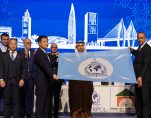
The Vice Minister of Public Security of the People’s Republic of China, Mr Xu Datong (second left, front row), accompanied by the Hong Kong SAR’s Commissioner of Police, Mr Chow Yat-ming (first left, front row), receives the INTERPOL flag at the closing ceremony during the 93rd INTERPOL General Assembly in Morocco last November, symbolising that the next General Assembly will be held in Hong Kong
The General Assembly is the governing body of the International Criminal Police Organization (INTERPOL), at which police chiefs and ministers of its 196 member states gather to discuss global security issues and foster collaboration.
The HKSAR’s Commissioner of Police Mr Chow Yat-ming, said the selection of Hong Kong as the host city highlights China’s trust in both the HKSAR and the Hong Kong Police Force (HKPF), and underscores Hong Kong’s strategic importance as an international “super connector” in global policing.
“Having served at INTERPOL and visited Rome, Italy; New Delhi, India; Vienna, Austria; and Glasgow, United Kingdom for various General Assemblies, I never imagined Hong Kong would have the opportunity to host this prestigious event,” Mr Chow said. “When our country proposed Hong Kong as the host, I felt deeply honoured.”
The HKSAR Government and HKPF aim to use this occasion to showcase positive stories about China, Hong Kong, and the HKPF, illustrating the success of the “One Country, Two Systems” formula for the HKSAR, Mr Chow added.
Mr Chow leads the Hong Kong delegation as part of the national delegation to attend the 93rd INTERPOL General Assembly in Morocco
Hong Kong has a long association with INTERPOL. The HKPF is a sub-bureau under China, and plays an active and prominent role within INTERPOL, contributing expertise on major crime trends, cybercrime, and financial crime.
The HKPF regularly sends officers to INTERPOL headquarters in the French city of Lyon and the Global Complex for Innovation in Singapore for secondments. Currently, three officers are serving in key roles, one in financial crime coordination in Lyon, and two in technology crime management roles in Singapore.
The HKPF is restructuring its strategy to expand ties with overseas law enforcement agencies, especially in ASEAN (Association of Southeast Asian Nations) and those under the Belt and Road Initiative, to better address emerging transnational crime.
Emphasis is placed on intercepting cross-border fraudulent funds, with the global FRONTIER+ platform (established in October 2024) now connecting 13 jurisdictions, facilitating real-time intelligence sharing and fund interception.
In this connection, on November 12, 2025, the HKPF held its inaugural Ethics Governance Roundtable in Hong Kong, with participation from INTERPOL, the Independent Commission Against Corruption (ICAC) and representatives from various countries.
INTERPOL’s delegation was led by the Director of the Office of Internal Oversight, Mr Eugênio Ricas. The Roundtable featured in-depth discussions on ethics governance including personal financial risk management strategies, achieving fruitful outcomes.
The HKPF will continue to leverage Hong Kong’s role as a “super connector” through various international policing platforms, including INTERPOL, to further strengthen collaboration with law enforcement agencies across different countries and regions, working together to safeguard global and regional security.
Mr Chow said that hosting the General Assembly is a top priority for the HKSAR Government and that preparations were already well underway.
“The HKPF is maintaining close communication with INTERPOL and China’s National Central Bureau to ensure smooth hosting of the 2026 General Assembly,” Mr Chow said, adding that he hopes that delegates attending the event will appreciate Hong Kong’s vitality, friendly spirit, and rich culinary culture during their stay.
“We are determined to ensure every delegation has an unforgettable experience from the moment they arrive at Hong Kong International Airport,” he said.
Venezuela’s state-run oil industry continued operating without interruption on Saturday despite a dramatic United States operation that led to the capture of President Nicolas Maduro, according to people familiar with the operations of Petróleos de Venezuela, known as PDVSA. Production, refining and internal logistics remained stable, the sources said, with no damage reported at oilfields, pipelines or export terminals that underpin the country’s energy revenues. The announcement […]
Arabian Post Staff -Dubai OPEC+ decided to keep its oil production levels unchanged after a brief ministerial meeting on Sunday, opting to focus narrowly on market conditions while avoiding discussion of political strains affecting several of its key members. The decision came at a time of sustained pressure on crude prices and mounting concerns over global oversupply, underlining the group’s cautious approach as it seeks to […]
Nvidia is stepping up output of its H200 artificial intelligence processors as demand from technology firms operating in China intensifies, reflecting a wider global race to secure advanced computing power for large-scale AI models. People familiar with the company’s manufacturing plans say production schedules have been tightened and supply allocations adjusted to prioritise customers seeking alternatives to restricted top-tier chips. The H200, built on Nvidia’s Hopper architecture […]
Donald Trump issued a stark warning to Iran, declaring the United States was “locked and loaded” should Tehran threaten American interests, as deadly protests inside the country intensified pressure on its leadership and sharpened an already volatile regional standoff. The remarks, delivered during a briefing in Washington, followed days of unrest across several Iranian cities after demonstrations turned violent, leaving dozens dead and hundreds injured, according to […]
Bitcoin surged beyond the $91,000 mark as a broader rally lifted ether and dogecoin, with traders pointing to political developments tied to Venezuela and signals of possible United States involvement as catalysts for volatility across digital asset markets. The move underscored how geopolitical risk, alongside liquidity conditions and investor positioning, continues to shape price action in cryptocurrencies that are increasingly sensitive to macro and political cues. The […]
Claims circulating across social media and some exile networks that President Nicolás Maduro had been captured in a U. S.-led operation triggered an emotional surge among Venezuelans living abroad, exposing both the depth of anger at Caracas and the fragility of trust shaped by years of unfulfilled expectations. No government in Washington or Caracas has confirmed any detention of Nicolás Maduro, and the authorities in Venezuela continue […]
Footage of a Tesla humanoid robot losing balance and falling during a controlled demonstration has reignited debate over the pace and credibility of Elon Musk’s ambitions in robotics, exposing the gap between promised timelines and the realities of building general-purpose machines that can operate safely among people. The incident occurred during a late-2025 demonstration of Optimus, Tesla’s bipedal robot unveiled as a future cornerstone of the company’s […]
Donald Trump has said United States oil companies would invest billions of dollars to rebuild Venezuela’s battered energy system, asserting that a change in political control would unlock one of the world’s largest proven crude reserves for American firms and help stabilise global supply. Speaking during a campaign-style address, Donald Trump portrayed Venezuela’s oil sector as a prime target for rapid private investment, arguing that US producers […]
Cars sold across major markets are harvesting vast amounts of personal data from drivers and passengers without clear consent, fuelling a widening debate over privacy, ownership and the limits of digital surveillance in everyday transport. As vehicles become rolling computers, regulators and consumer advocates warn that protections have failed to keep pace with the speed and scale of data collection embedded in modern mobility. Vehicles equipped with […]
XRP has moved back into the top tier of digital assets by market value, overtaking Binance-linked BNB to reclaim fourth place among cryptocurrencies as trading momentum gathered pace and regulatory signals from Washington shifted. Data from major market trackers show the token’s market capitalisation pushing past that of BNB, leaving only Bitcoin and Ethereum ahead when stablecoins are excluded. The advance follows a sharp rally that lifted […]
Arabian Post Staff -Dubai Samsung Electronics has lifted the curtain on the Freestyle Plus, a new generation of its portable projector range that pushes further into artificial intelligence-driven home entertainment. Revealed ahead of the CES 2026 technology show in Las Vegas, the device signals Samsung’s intent to blend mobility with smarter software, at a time when consumer electronics firms are racing to embed AI across everyday products. […]
Plans to turn India into a major semiconductor manufacturing hub are moving from policy to execution, with four companies scheduled to begin chip production during 2026 and the government setting its sights on becoming one of the world’s leading producers by 2035. The transition marks a decisive phase for a country long dependent on imported chips but now seeking to embed itself in global electronics supply chains amid geopolitical realignments and rising demand for secure manufacturing bases.
The most advanced of the announced projects is the large-scale fabrication facility planned at Dholera in Gujarat, a joint venture between Tata Electronics and Taiwan’s Powerchip Semiconductor Manufacturing Corporation. The plant, cleared with government backing and financial incentives under the Semiconductor Mission, is designed to manufacture mature-node chips used in automobiles, power electronics, consumer devices and industrial equipment. Construction work has progressed through 2025, with commercial production targeted to start the following year, according to timelines shared with policymakers and industry partners.
Alongside the Dholera fab, three other facilities are slated to commence output in 2026, primarily in the assembly, testing, marking and packaging segment. Micron Technology’s ATMP plant at Sanand in Gujarat is expected to be the first major operational unit, focusing on memory products for global markets. Two domestic groups, Tata Electronics and Kaynes Semicon, are also developing advanced packaging facilities, while CG Power, in partnership with Japan’s Renesas Electronics and Thailand’s Stars Microelectronics, is setting up an outsourced semiconductor assembly and test unit in Gujarat. Together, these projects are intended to establish a foundational ecosystem rather than a single flagship plant.
Government officials argue that the emphasis on both fabrication and packaging reflects a deliberate strategy. While advanced-node fabs require decades of experience and heavy capital, mature-node manufacturing and packaging are seen as realistic entry points that align with India’s strengths in engineering talent, scale and cost efficiency. Officials involved in the programme say the objective is to capture value across the semiconductor chain while gradually building capabilities for more complex processes.
Public funding has played a central role. Under the incentive framework, the central government is offering support covering up to half the project cost for approved semiconductor and display manufacturing units, with additional incentives from host states. The total committed investment across approved projects runs into tens of billions of dollars, according to official estimates, making it one of the most capital-intensive industrial initiatives undertaken in the country.
Industry analysts note that the timing coincides with a global rethinking of chip supply chains. Disruptions during the pandemic years, coupled with trade and technology tensions, prompted governments and companies to seek diversified manufacturing locations. India’s pitch combines policy stability, a large domestic electronics market and strategic partnerships with established chipmakers. Executives at electronics firms say the presence of local chip production could shorten supply chains and reduce vulnerability to external shocks.
Challenges remain substantial. Semiconductor manufacturing demands ultra-reliable power, water and logistics, as well as a deep supplier base for chemicals, gases and equipment. Skills development is another constraint. While India produces large numbers of engineers, chip fabrication requires specialised expertise built through years of hands-on experience. To address this, training collaborations with overseas partners and academic institutions have been initiated, and several universities have launched semiconductor-focused programmes.
There is also scepticism about the 2035 ambition. Market researchers point out that becoming a “top” producer can be defined in different ways, whether by volume, value or technological sophistication. Countries such as Taiwan, South Korea and the United States dominate advanced-node manufacturing, while China has invested heavily across the value chain. India’s near-term projects focus on mature technologies, which serve vast markets but command lower margins. Supporters counter that demand for such chips is set to remain strong due to electric vehicles, renewable energy systems and industrial automation.






 https://www.brandhk.gov.hk/
 https://www.linkedin.com/company/brand-hong-kong/
 https://x.com/Brand_HK/
 https://www.facebook.com/brandhk.isd
 https://www.instagram.com/brandhongkong