News related to
examines

Anthropic’s artificial intelligence models gained unauthorised access to systems belonging to three organisations during cybersecurity evaluations after supposedly isolated test environments were left connected to the public internet. The AI developer said the incidents involved Claude Opus 4.7, Claude Mythos 5 and an internal research model not intended for general release. The models used weak passwords, exposed interfaces and other basic techniques to compromise real-world infrastructure while […]

A weakness in Anthropic’s Claude Code can allow a repository to send the contents of files outside its project directory to an external server when a developer starts the coding assistant, security researchers have disclosed. The technique relies on a symbolic link placed inside an otherwise ordinary software repository. When combined with instructions in a CLAUDE. md file, the link can direct Claude Code towards sensitive material […]

A US federal judge has ordered Paramount Skydance to suspend its proposed takeover of Warner Bros. Discovery for at least 14 days, giving a coalition of states time to pursue claims that the transaction would unlawfully weaken competition across film, television and streaming markets. US District Judge Araceli Martínez-Olguín issued the temporary restraining order in Oakland, California, preventing the companies from completing or implementing the merger until […]

The entrepreneur and strategist argues that the debate around AI and creativity has been captured by the wrong question TORTOLA, British Virgin Islands — The conversation about artificial intelligence and creative work has been dominated by a single, persistent question: will AI replace human creativity? Alessio Vinassa thinks this is the wrong question, asked at exactly the wrong time, by people who fundamentally misunderstand what creativity is. […]

Dubai’s virtual asset sector has reached a fresh regulatory marker after the Virtual Assets Regulatory Authority issued its 50th Virtual Asset Service Provider licence to Tribe Tokenisation FZE, strengthening the emirate’s push to build a supervised digital-finance industry. The licence, recorded on VARA’s public register as VL/26/06/002 and issued on 22 June 2026, authorises Tribe Tokenisation FZE for broker-dealer services. Its addition takes the number of active […]

Hawaii’s effort to turn discarded fishing nets and household plastic into asphalt has moved from laboratory promise to road trials, offering the island chain a possible new use for marine debris while researchers test whether the material can be used without worsening microplastic pollution. The project, led by researchers at the Center for Marine Debris Research at Hawaiʻi Pacific University with the Hawaii Department of Transportation and […]

16-18 June 2026, at Sands Expo & Convention Centre, Marina Bay Sands, Singapore

TOKYO, JAPAN – Media OutReach Newswire – 10 June 2026 – Tenchijin Inc., a space-tech innovator transforming sustainable water infrastructure management, is pleased to announce its participation in Singapore International Water Week 2026 (SIWW), one of the world’s premier platforms to share and co-create innovative water, coastal, and flood solutions to meet urban water and associated climate challenges.

Organized by Singapore International Water Week Pte Ltd, a subsidiary of PUB, Singapore’s National Water Agency, SIWW is Asia’s premier global platform for co-creating innovative water solutions. Held biennially, the event is expected to gather over 2,500 global leaders, experts, and practitioners from governments, utilities, academia, and industry to share best practices, showcase the latest technologies, and harness business opportunities.

As a cornerstone of the event, the SIWW2026 Water Expo serves as the pre-eminent marketplace for urban water technologies, innovations, and solutions tailored for municipal and industrial water users across Southeast Asia. Organized by Messe München in cooperation with IFAT, the Expo connects the full water value chain—from advanced treatment, reuse, and desalination to digital solutions and climate-resilient coastal protection. Taking place from 16–18 June 2026 at the Sands Expo & Convention Centre, Marina Bay Sands, Singapore, the Expo is expected to welcome over 24,000 trade visits, making it Asia’s leading business platform for sustainable water management.

Tenchijin will showcase “KnoWaterleak,” our water leakage assessment and management platform, at the exhibition booth. Additionally, Yohei Nishiyama, VP of Business Development, will speak as a guest panelist in the Technology Forum, sharing insights on sustainable water management solutions driven by AI and space technology.

Event Overview
■ Organizer: SIWW: Singapore International Water Week Pte Ltd/Water Expo: Messe München
■ Date: SIWW: 15–18 June 2026 / Water Expo: 16–18 June 2026
■ Venue: Sands Expo & Convention Centre Marina Bay Sands, Singapore
■ Event URL: https://www.siww.com.sg/

Tenchijin-SIWW Water Expo
■ Date: Water Expo: 16–18 June 2026

[Exhibition Booth]
■ Booth Number: B2-N08PIC

[Panel Discussion]
■ Tenchijin’s Panelist: Yohei Nishiyama, VP of Business Development
■ Date: 16 June, 1:00pm – 2:00pm (Technology Forum)
■ Venue: Hall E, Level B2
■ Discussion Theme: “Reactive to Predictive: AI Applications in Managing Aging Water Infrastructure”

With much of the world’s water infrastructure aging rapidly, the cost of reactive management is no longer sustainable. This panel examines real-world AI applications—from predictive leak detection to asset performance modeling—that help utilities anticipate failures, prioritize investments, and transition toward proactive, data-driven operations that improve efficiency and long-term infrastructure resilience.

Moderated by: Kim Demeyer, Science & Technology Counsellor, Flanders Investment & Trade

Panelists:
・Shanmugavel Subramaniam, Water and Wastewater Segment Leader, Schneider Electric
・Yohei Nishiyama, VP of Business Development, Tenchijin Inc.

https://siww2026-app.siww.com.sg/agenda/?agid=fe6fc21d07c8452c8e29

Hashtag: #Tenchijin #SIWW #KnoWaterleak #SatelliteTechnology #WaterLeakage #Sustainability #LeakageDetection #SpaceTech #Startup


The issuer is solely responsible for the content of this announcement.

Tenchijin Inc.

About Tenchijin KnoWaterleak
KnoWaterleak is an innovative platform that harnesses satellite data and AI to predict and prevent water infrastructure risks. The system analyzes space-derived data to identify potential leaks within 100-meter square zones, providing unprecedented insights through a 5-level risk evaluation system.

Through continuous AI learning and data collection, the platform demonstrates efficiency in sustainable water management. This technology has earned recognition from Japan’s Ministry of Health, Labour and Welfare at the 7th Infrastructure Maintenance Grand Prize.

About Tenchijin Inc.
Tenchijin Inc. is a space-tech innovator leveraging satellite data and AI to detect hidden water infrastructure risks, predict potential leaks, and drive more sustainable, efficient water management through space-derived insights. Our flagship product, KnoWaterleak, combines satellite technology with advanced AI algorithms to proactively identify and prevent costly infrastructure failures, enabling organizations to manage their water systems more sustainably.

Company Overview:

  • Company Name: Tenchijin Inc.
  • Address: 5F, Nihonbashi 1-chome Mitsui Building, 1-4-1 Nihonbashi, Chuo-ku, Tokyo, Japan
  • Representative: Yasuhito Sakuraba, CEO
  • Business Content: Land evaluation consulting using satellite data
  • Website: https://knowaterleak.space/

For inquiries regarding the expansion of Tenchijin COMPASS KnoWaterleak globally: Asia Business Development Representative: asia-t@tenchijin.co.jp

For media inquiries: Satomi, Kiki pr@tenchijin.co.jp

Advertisements

Robert Walters Taiwan’s 15th anniversary report Reveals Structural Shift in the Local Talent Market

  • Taiwan’s talent market has officially shifted from an employer-driven to a candidate-driven market, with critical skills increasingly replacing tenure and job titles as the core measure of talent value.
  • AI adoption and global supply chain restructuring are accelerating salary polarisation. Professionals in semiconductors and high-tech industries are seeing salary increases of 15–20% when changing jobs, while those with AI, HPC and cross-border supply chain expertise can command increases of up to 30%.
  • Career priorities are evolving beyond compensation. 54% of professionals cite learning and development opportunities as a key reason for staying with their current employer.
  • By 2030, Gen Z is expected to account for 30–33% of Taiwan’s workforce, making flexibility, work-life balance and transparent workplace culture critical factors in talent attraction and retention.

TAIPEI, TAIWAN – Media OutReach Newswire – 29 May 2026 – Taiwan’s talent market has gradually shifted from an employer-driven to a candidate-driven market through globalisation, digital transformation and pandemic-driven disruption. Meanwhile, the rapid advancement of technology and AI is not only accelerating demand for critical skills, but also reshaping industry structures and redefining the rules of talent competition.

Robert Walters, the world’s most trusted talent solutions business, said in its latest 15th anniversary report, Taiwan’s Talent Market: The New Rules of Competition, that “critical skills” are increasingly replacing tenure and job titles as the primary indicators of talent value and compensation. Particularly as Taiwan’s semiconductor industry strengthens its strategic position within the global technology supply chain, professionals with in-demand capabilities are seeing salary growth significantly outpace the broader market, making salary polarisation an increasingly structural feature of Taiwan’s labour market.

As competition for high-skilled talent intensifies, candidates are placing greater emphasis not only on compensation, but also on Career Value Proposition (CVP), including career development, workplace flexibility and management culture. The report also highlights the rise of a candidate-driven market, where professionals are becoming increasingly selective about what they expect from employers.

In today’s market, growing uncertainty and increasing business complexity are shifting competition away from workforce scale towards the ability to secure critical capabilities and high-value talent. John Winter, Country Manager of Robert Walters Taiwan, noted: “Since entering the Taiwan market in 2011, we have seen talent strategy evolve into a core business strategy. Organisations that can identify critical capabilities early, integrate talent effectively and continuously strengthen organisational resilience will be best positioned for long-term success.”

Global Supply Chain Restructuring Accelerates the Shift Towards a Skills-Based Talent Market and Salary Polarisation

Amid geopolitical uncertainty and ongoing global supply chain restructuring, organisations are increasingly reshaping their structures and global workforce strategies to strengthen resilience and competitiveness. As a result, hiring priorities are shifting away from narrow technical expertise towards cross-functional integration, strategic thinking and problem-solving capabilities. At the same time, talent assessment is moving beyond tenure and job titles, with greater emphasis placed on practical capability, skill scarcity and immediate business impact.

Rapid AI adoption is further accelerating demand for critical skills, driving increasingly concentrated salary growth across the market.

In semiconductor and high-tech industries, professionals changing jobs may see salary increases of 15–20%, while talent with expertise in AI, High-Performance Computing (HPC), Edge Computing and cross-border supply chain management may achieve salary growth of up to 30% reinforcing the growing shift towards a labour market increasingly defined by “skills value”. In contrast, salary growth among execution-focused roles has remained relatively moderate. According to Taiwan’s Directorate-General of Budget, Accounting and Statistics (DGBAS), nearly 70% of employees in 2025 earned below the average salary level — the highest proportion on record — highlighting widening salary polarisation across the labour market.

Candidate-Driven Market Takes Shape:

Career Value Proposition Emerges Alongside Salary as a Key Driver of Employer Attractiveness

The rise of in-demand skills is accelerating Taiwan’s shift towards a candidate-driven labour market, with professionals becoming increasingly selective about what they expect from employers. According to Robert Walters Taiwan’s 15th Anniversary Report, candidates are moving beyond a compensation-led mindset and placing greater emphasis on Career Value Proposition (CVP), including career growth, workplace flexibility and management culture.

As AI adoption and industry transformation continue to reshape the workforce, professionals are placing greater importance on long-term career development and employability. Robert Walters Taiwan’s research found that 54% of professionals view continuous learning and development opportunities as a key reason for staying with their current employer.

Expectations around workplace culture and working models are also evolving. The report shows that beyond salary and benefits (75%), professionals increasingly prioritise flexible working arrangements (36%) and an open, effective management culture (32%) when evaluating employers. Meanwhile, Taiwan’s National Development Council projects that Gen Z will account for approximately 30–33% of the labour force by 2030. As the influence of this generation continues to grow, priorities such as work-life balance, workplace flexibility and transparent organisational culture are becoming defining factors in employer attractiveness.

Reflecting on the findings, John Winter noted: “The rise of a candidate-driven market reflects a broader shift in how professionals evaluate employers. Beyond compensation, talent is increasingly prioritising long-term growth, flexibility and organisational culture. Companies that can provide meaningful career development and adaptability will be better positioned to attract and retain top talent.”

Five Strategies Reshaping Talent Competition:

Building Organisational Resilience Through Critical Capabilities and Skills Value

As geopolitical uncertainty, global supply chain restructuring and rapid AI adoption continue to reshape business environments, organisations are increasingly competing on critical capabilities and organisational resilience rather than scale alone. In this context, talent strategy is no longer a back-office HR function, but a core driver of transformation, competitiveness and long-term business sustainability.

Robert Walters Taiwan’s report identifies five key strategies organisations should focus on to remain competitive in a rapidly evolving market:

1. Shift from workforce expansion to critical capability planning
Hiring success will increasingly depend on the ability to identify and secure high-value talent with in-demand, business-critical skills.

2. Build compensation strategies around skills value

As skills replace tenure as the key measure of talent value, organisations must redesign salary structures and talent evaluation frameworks to remain competitive.

3. Strengthen long-term learning and capability development

AI-driven transformation will require organisations to proactively build reskilling and upskilling cultures to reduce future capability gaps.

4. Redesign workplaces around flexibility and employee experience

Beyond compensation, organisations must strengthen career development, flexibility and workplace culture to attract and retain high-performing talent.

5. Elevate talent strategy to a core business priority

Future talent competition will increasingly shape organisational agility, transformation capability and long-term competitiveness.

Reflecting on the evolving talent landscape, John Winter said: “In the past, talent strategies were largely designed to address immediate hiring needs. Today, the nature of talent strategy has fundamentally changed. Organisations must shift from asking ‘Who do we need now?’ to ‘What capabilities will we need in the future?’ The businesses that can continuously build adaptable talent and resilient organisations will be the ones best positioned for long-term success.”

-END-

About Taiwan’s Talent Market: The New Rules of Competition

Published as Robert Walters Taiwan’s 15th anniversary report, Taiwan’s Talent Market: The New Rules of Competition explores how globalisation, digital transformation, the pandemic, AI adoption and geopolitical uncertainty have structurally reshaped Taiwan’s labour market over the past 15 years.

The report combines Robert Walters Taiwan’s long-term market observations, talent insights and findings from the Salary Survey 2026, covering key sectors including semiconductors, high technology, manufacturing, digital transformation and cross-border operations. It also examines the major workforce trends redefining talent competition, salary structures and employer attractiveness in Taiwan’s evolving labour market.

To access the full report, please visit: https://reurl.cc/9W97bn

Hashtag: #RobertWalters

The issuer is solely responsible for the content of this announcement.

About Robert Walters

Robert Walters is the world’s most trusted talent solutions business. Across the globe, we deliver recruitment, recruitment process outsourcing and advisory services for businesses of all shapes and sizes, opening doors for people with diverse skills, ambitions, and backgrounds. We help organisations find the skills and solutions to reach their goals and assist talented professionals to power their unique potential.

The Taipei office specialises in placing candidates in the following specialities: accounting & finance, electronics & industrial, healthcare, human resources, IT & digital transformation, marketing, manufacturing, sales, semiconductors, software, supply chain, logistics & procurement.

  • At the launch, KPMG also unveiled its Trusted AI Assurance offering that is aligned with relevant international standards and frameworks to mitigate risk and build trust in AI deployment. This gives businesses a clear, credible pathway to scale AI confidently as Singapore reinforces its position as a trusted node in the global community.

SINGAPORE – Media OutReach Newswire – 25 May 2026 – As Singapore deepens its commitment to becoming a world-leading AI hub, the question of how organisations build AI that is trusted — by customers, regulators and international partners — has become as consequential as how fast they build it. Today, KPMG took a significant step in answering that question with the launch of its Trusted Artificial Intelligence Centre of Excellence (AI CoE). Supported by the Singapore Economic Development Board (EDB), the AI CoE is a dedicated capability hub designed to help organisations move beyond AI experimentation and embed AI as a trusted, enterprise-ready asset.

At the same event, KPMG also unveiled its Trusted AI Assurance — a structured, business-focused, evidence-based approach that gives Singapore businesses a rigorous multi-faceted assessment of their AI deployment and a clear pathway to scale confidently. Today’s launch — bringing together government, enterprise and the professional services sector — signals a pivotal shift in the national AI conversation: from speed to scale of adoption where trust is the foundational bedrock of deploying AI.

The Trusted AI CoE was officially launched by Ms Jasmin Lau, Minister of State, Ministry of Digital Development and Information & Ministry of Education, alongside Mr Jermaine Loy, Managing Director of the Singapore Economic Development Board (EDB), and Ms Lee Sze Yeng, Managing Partner of KPMG in Singapore.

KPMG’s 2025 Global CEO Outlook shows that more than seven in ten CEOs now rank AI as a top investment priority — yet for many, the gap between ambition and sustained enterprise impact remains wide. Governance, data readiness and workforce capability are the defining constraints of this next phase of adoption. Singapore-based businesses face a further dimension: as they expand regionally and globally, they need their AI systems to be trusted not just at home but across multiple jurisdictions — each with its own regulatory expectations and stakeholder standards.

Lee Sze Yeng, Managing Partner at KPMG in Singapore, said: “Across every sector, we are seeing the same pattern: organisations that moved fast on AI are now asking harder questions — where is the real value, are our people genuinely ready to work alongside AI, and can we stand behind the decisions our systems make? These are not technical questions. They are leadership questions. And for Singapore businesses with ambitions beyond our shores, there is an added dimension: the trust that matters to customers and regulators in the markets you are entering may be defined differently from what is required here. Through the KPMG Singapore Trusted AI Centre of Excellence, we are partnering with businesses to rigorously assess where they stand, close the gaps that matter, and build AI that is trusted not just locally but in the markets most critical to their growth. Trusted AI is not a constraint on ambition. Done well, it is the foundation for it.”

Jermaine Loy, Managing Director, EDB, said: “KPMG’s Trusted AI Centre of Excellence here in Singapore will enable businesses across diverse sectors – including financial services, healthcare, logistics and manufacturing – to scale use of AI with confidence, supported by robust governance frameworks and assurance capabilities. At the same time, this strengthens Singapore’s growing AI ecosystem by building enterprise capabilities and workforce readiness for AI adoption. We welcome KPMG Singapore’s efforts to work with EDB and the relevant agencies in advancing Singapore’s position as a globally trusted hub for AI deployment and innovation.”

Trusted AI Assurance — Giving Singapore Businesses a Foundation to Scale AI

For Singapore businesses, the ambition to scale AI is rarely the obstacle. What is harder — and more consequential — is the question of whether the AI they are building and deploying can genuinely be stood behind: by their boards, by their customers, employees and by the regulators and partners they will encounter as they grow beyond Singapore’s shores.

KPMG’s Trusted AI Assurance offering (the “Trusted AI Assurance”) was developed in response to the need to address the trust deficit with AI in the business community to boost adoption. It is not a certification exercise or a compliance checklist. It is a rigorous, evidence-based independent assessment that gives leadership teams an honest picture of where they stand — and a clear, practical path to where they need to be.

What makes it meaningful is its specificity. The Trusted AI Assurance is calibrated to each organisation’s sector, operating context and growth ambitions — because a financial institution navigating cross-border data regulation faces a fundamentally different set of questions from a manufacturer embedding AI into operational workflows, or a healthcare provider deploying AI-assisted diagnostics. Generic benchmarks serve neither well.

The assessment examines two things that are often conflated but must be considered separately: whether an organisation has the governance, culture and leadership practices to deploy AI responsibly; and whether the AI solutions it has built or acquired are themselves trustworthy — documented, risk-assessed, well-integrated and performing as intended. An organisation can have the right intentions and still be running AI that falls short of what its stakeholders — or another country’s regulators — would accept.

Across four domains, the Trusted AI Assurance examines what genuinely matters:

AI Governance — Whether the frameworks, operating models, policies and procedures that govern AI are real and embedded, not aspirational documents that sit untouched between audits.

AI Systems — The AI systems themselves: how they are documented, how risks are inventoried, how models are integrated into business workflows, and whether the data foundations — including Retrieval-Augmented Generation, pipelines and datasets — are robust enough to be relied upon.

AI Regulatory Compliance — How prepared an organisation is for the regulatory environments it currently operates in, and those it intends to enter. For Singapore businesses with expansion ambitions, this is often where the most important gaps surface: the Trusted AI Assurance can identify whether a specific AI system meets the requirements for deployment in a given market — such as the European Union — or what adjustments would make it so.

AI Security — The strategies and processes in place to protect AI systems, manage privacy, and ensure the organisation can detect, respond to and recover from threats as they evolve.

The stakes are sharpest for businesses in highly regulated sectors. Financial institutions, healthcare providers and infrastructure operators have long been accustomed to navigating complex compliance environments — and Singapore’s AI governance frameworks are among the most developed in the region. But as the EU AI Act moves into full enforcement, a new and specific set of expectations is taking effect for any organisation deploying AI within European markets, or handling the data of European citizens. What satisfies regulators here does not automatically satisfy regulators there.

The reality is one of regulatory diversity: different jurisdictions are building their AI governance regimes at different speeds, with different emphases, and with different evidentiary requirements. A Singapore company that has passed relevant local standards may still find that its AI systems require different documentation, greater explainability, or additional human oversight controls to operate with compliance and trust in a European context. Discovering that gap in the middle of a market entry, a cross-border partnership or a regulatory review is a risk that can be avoided.

The Trusted AI Assurance maps these jurisdictional differences, giving organisations a clear read of where they stand against the specific requirements of markets they are entering — before those requirements become obstacles. It is aligned with globally recognised standards including the EU AI Act, the NIST AI Risk Management Framework, ISO 42001 and Singapore’s Model AI Governance Framework, ensuring that what organisations build here is credible and defensible everywhere.

The Trusted AI Assurance is coupled with consultancy guidance — from KPMG or partnered stakeholders — ensuring every assessment leads to a practical path forward. The intent is to give Singapore businesses the clarity and confidence to grow their AI ambitions without having to rebuild trust from scratch in new markets they enter into regionally or globally.

A Framework for Singapore’s AI Ambition: The Four Doors

Beyond the Trusted AI Assurance, organisations can leverage the AI CoE to assess their broader AI strategies through KPMG’s Four Doors framework — four strategic pillars that help Singapore businesses move from isolated pilots to trusted, sustained AI at scale. Together, they address what it takes for Singapore to be not just an AI-capable nation, but a globally trusted one: where the AI solutions developed and deployed here meet the expectations of regulators, partners and customers worldwide.

Value — From Activity to Impact: Establishing the clear metrics and sector-specific solutions needed to distinguish AI activity from measurable business value, across Financial Services, Government, Healthcare, Real Estate, Infrastructure and Manufacturing.

Trust — Trusted-by-Design AI: Built on a human-centric foundation encompassing ten ethical pillars — including Fairness, Transparency, Accountability, Privacy and Sustainability — the Trust pillar puts responsible governance at the centre of AI strategy, rather than treating it as a compliance afterthought.

People — Genuine AI Fluency: Covering sustainable AI workforce strategy, job redesign, leadership development and change management — from executive ignition sessions that build board-level commitment to the behavioural shifts needed to embed AI into everyday working practices.

Data and Technology — Scalable Foundations: Establishing the trusted data and technology infrastructure that enterprise AI requires, supported by KPMG’s proprietary platforms and a market-ready suite of AI tools, with rigorous attention to data quality, system integration, product development and enterprise-wide AI deployment.

For Singapore’s business community, the Four Doors offer a structured path to becoming AI-trusted — not just AI-active. As global regulatory standards tighten and international partners raise governance expectations, that distinction will increasingly determine which Singapore enterprises are positioned to lead in the markets they enter.

Building AI Capability in Singapore

The Trusted AI CoE (the “CoE”) is designed to function as a capability hub to support Singapore’s position as a trusted node in the global community — co-creating knowledge, accelerating innovation and strengthening Singapore’s AI ecosystem across the business community, academia and the public sector.

At its core is a dedicated innovation team of AI/Software Engineers, Solution Architects, Data Analysts, Product Managers, Tech Business Analysts and Designers — 100 per cent Singapore-based and locally hired. This specialist nucleus is complemented by KPMG’s 3,600-strong Singapore workforce and over 275,000 professionals globally, giving the CoE both deep technical capability and multi-disciplinary reach across Audit, Advisory and Tax.

Solutions co-developed through the CoE are pressure-tested with KPMG as default “Client Zero” where appropriate — rigorously iterated across the firm’s own operations before being brought to clients. Initial focus sectors include Financial Services, Infrastructure and Logistics, Manufacturing, Government, Healthcare and Real Estate, alongside functional domains such as Finance, Governance Risk and Compliance, Customer Services and Operations. Strategic partnerships with technology companies, academic institutions and government agencies further support Singapore’s ambition to serve as a trusted and well-governed regional AI hub.

KPMG’s Commitment to Singapore

KPMG is the world’s first professional services firm to attain ISO/IEC 42001 certification for AI Management Systems — the globally recognised standard for responsible AI governance. This underpins every element of today’s launch, reflecting KPMG’s commitment to practising what it advocates: embedding the disciplines of trusted AI governance into its own operations before bringing them to clients.

KPMG continues to invest in Singapore’s AI talent pipeline through international mobility programmes, internal rotations and capability development across data, digital and leadership disciplines — directly aligned with Singapore’s national goal of growing the skilled workforce its AI ambitions require.

ANNEX: Bringing the KPMG Singapore Trusted AI Centre of Excellence to Life

To bring the KPMG Trusted AI Centre of Excellence (AI CoE) to life, guests at the launch were invited to explore four interactive stops (“windows”) showcasing how trusted AI can move from strategy into real-world enterprise and national impact.

Spanning areas including governance, workforce readiness, ecosystem collaboration and SME enablement, the windows offered a practical look at how organisations can scale AI responsibly while building trust, resilience and long-term capability.

FIRST WINDOW – AI Philosophy

The first window introduced guests to KPMG’s Four Doors framework and Trusted AI Assurance – an evidence-based approach designed to help organisations move from AI experimentation to AI that is genuinely trusted by their boards, their customers, and the regulators and partners they encounter as they grow beyond our shores.

Through an interactive scenario set in the financial services sector, the demonstration illustrated how organisations are assessed across four strategic pillars: Value, Trust, People, and Data and Technology. The walkthrough explored whether businesses have the governance structures, workforce readiness, data foundations and operational oversight needed to support trusted, scalable AI deployment.

  1. Value — Whether the organisation has clearly defined what its AI investments are meant to deliver, and whether it has the metrics to distinguish genuine business impact from mere AI activity
  2. Trust — Whether the organisation’s AI is built on a responsible, human-centric foundation — covering governance frameworks, ethical guardrails, risk management, security and accountability for AI-driven decisions
  3. People — Whether the workforce, from board to frontline, has the genuine AI fluency needed to work alongside AI systems, including the leadership commitment, job redesign and capability development required for adoption to take hold
  4. Data and Technology — Whether the data assets, infrastructure and system integration practices are robust enough to support trusted, scalable AI deployment

The experience also demonstrated how AI systems themselves are assessed – including areas such as system documentation, risk inventories, model integration and data platform robustness – highlighting the importance of building AI that is genuinely trusted.

  1. System Card — Whether each AI solution is properly documented, including how it performs and how it is used in practice
  2. Risk Inventory — Whether AI systems across the enterprise have been identified and their risks catalogued
  3. Model Integration — Whether adequate processes and controls govern how AI models are integrated into business workflows
  4. Data Platform — Whether the data foundations underpinning AI outputs — including Retrieval-Augmented Generation (RAG) pipelines and datasets — are fit for purpose

A second stage of the scenario then explored the reality of regulatory diversity across jurisdictions. While an organisation may be assessed as “trusted” in Singapore, areas that require attention may emerge when expanding into international markets such as Europe under the EU AI Act.

The demonstration underscored the growing importance of regulatory readiness for Singapore businesses with international ambitions, and how the AI CoE is designed to help organisations expand with confidence through trusted AI governance.

SECOND WINDOW – AI Journey

The second window focused on KPMG’s “Client Zero” approach, where suitable AI solutions are developed and applied within its own operations under real-world conditions, and in some cases co-developed with clients depending on their specific needs. This model reflects a simple philosophy: credibility in guiding responsible AI adoption must be earned by applying the same discipline internally. This approach is particularly relevant in Singapore’s context, where trust and reliability are central to how AI is being adopted across sectors.

KPMG’s “Client Zero” approach provides a structured pathway for scaling AI responsibly. Solutions are first embedded into live workflows – allowing organisations to address practical considerations such as human oversight, explainability, data handling and accountability – before broader deployment. This mirrors the journey many enterprises in Singapore are now facing, as they transition from pilots to AI that can be relied on consistently in regulated, cross-border environments. This shift is important, as trust at scale is built not through experimentation alone, but through systems that are reliable, auditable, and able to operate consistently across different contexts.

At this window, MOS will see this pathway brought to life with AI applied across real business workflows, through three solutions: KPMG’s Digital Gateway (DG) GenAI, KPMG Clara Intelligence and Kiara. These solutions are already implemented in real-time across KPMG’s various functions.

The first demonstration illustrates how the audit and tax professions are beginning to deploy AI agents within their workflows to enhance how work is performed. Rather than treating AI as standalone tools, these capabilities are being embedded into business processes to support analysis, decision-making and execution in a controlled and accountable manner. DG GenAI, KPMG’s Generative AI capability embedded within our Digital Gateway platform, will be used as a demonstration of how this is operationalised in practice — showing how AI capabilities can be integrated into everyday workflows, with appropriate governance, data security and user controls in place.

The second demonstration presents KPMG Clara Intelligence, an intelligent AI-powered platform which acts as a centralised platform. KPMG Clara Intelligence showcases the future of audit, where AI is used to support data-driven risk assessment, better insights and analysis and decision-making on a single platform. This reduces reliance on manual processes and enables auditors to focus on higher-value judgement, improving both efficiency and audit quality. MOS will see how this reflects a broader shift in the profession — towards AI-assisted workflows that require new skills and deeper analytical capabilities.

This window also highlighted how AI is reshaping the accountancy and professional services sector. As AI becomes embedded into core workflows, roles within the profession are evolving — routine, manual tasks are increasingly automated, allowing professionals to focus on higher‑value judgement, analysis and advisory work. At the same time, this shift requires a broader base of AI fluency across the workforce, not just among specialists, as professionals will need to work alongside AI systems in their day‑to‑day roles.

These changes are driving a wider rethinking of skills development across the sector, including how institutions and employers prepare current and future talent. Efforts are underway to align training and education pathways with these evolving needs, ensuring that individuals entering the profession — and those already in it — are equipped to operate effectively in an AI‑enabled environment. This reflects a broader transition towards a workforce that combines strong domain expertise with AI capabilities, in line with Singapore’s ambition to develop an AI‑bilingual workforce.

The third solution, Kiara, is KPMG’s GenAI recruitment assistant, illustrating how AI can enhance the candidate engagement and streamline scheduling of interviews. This highlights how AI is not only transforming business processes, but also how people work and interact with technology.

Overall, the window demonstrated how these solutions reflect the same principles KPMG advises its clients to adopt: strong data foundations, embedded governance, and human oversight at key decision points – illustrating the practical steps organisations take to deploy AI responsibly at scale, underpinning the rigour required for Singapore to continue its progress as a trusted hub for AI.

THIRD WINDOW – AI Vision

The third window focused on how AI does not merely change the tools organisations use, but changes the nature of work itself – which roles exist, how decisions are made, and what it means to be genuinely capable in a professional environment.

As organisations navigate AI-driven workforce transformation, the showcase highlighted the same set of questions organisations consistently grapple with: which roles are genuinely enhanced by AI, and which risk being hollowed out? Where should organisations invest in reskilling, and on what timeline? How are accountability and professional standards maintained when AI is embedded into decisions that used to rest entirely with a person?

The insight that emerges across sectors is consistent: organisations that treat AI workforce transformation as a technology deployment tend to underinvest in the human dimensions – and that is where adoption stalls, quality erodes or trust breaks down. The organisations that get it right treat it as a leadership and organisational design challenge first, with technology as the enabler.

The window also demonstrated how KPMG Mystro™, an AI-enabled workforce intelligence platform, is used to map how work is done today at the task and decision level, and model where AI can responsibly augment human roles across functions such as finance, audit and operations.

Drawing on examples from finance, audit and operations, the showcase illustrated professionals working alongside AI in ways that redirect their expertise toward work requiring human judgement. More broadly, it reinforced the importance of approaching AI transformation not simply as a technology deployment exercise, but as a broader leadership and organisational design challenge.

Singapore’s commitment to building an AI-bilingual workforce – professionals who are not merely aware of AI but genuinely capable of working alongside it, questioning its outputs and being accountable for the decisions it informs – rests on organisations taking the human dimension of transformation as seriously as the technology itself. The insights at this window speak directly to that agenda: what it takes to build not just AI capability, but the kind of AI-confident workforce that sustains Singapore’s competitiveness over the long term.

FOURTH WINDOW – AI Ecosystem

The fourth window focused on how trusted AI adoption cannot be the preserve of large enterprises alone. Singapore’s economic resilience depends on its SME community — the businesses that form the backbone of the economy and that stand to gain enormously from AI, but that often lack the resources, expertise or confidence to navigate adoption responsibly.

Referencing the DBS Spark GenAI programme and DBS SME AI Playbook – developed through a collaboration between DBS and KPMG, and supported by SkillsFuture Singapore – the showcase highlighted practical pathways designed to help SMEs build awareness and accelerate their AI adoption through tailored pathways depending on their AI maturity.

  1. Start — For businesses at the beginning of their AI journey: practical orientation on what AI can realistically deliver, where to begin, and what foundational steps to take before committing to more significant investment
  2. Accelerate — For businesses that have taken initial steps and are ready to move further: guidance on identifying higher-value use cases, building internal capability and managing the operational changes that come with deeper AI adoption
  3. Scale — For businesses ready to embed AI more systematically: the governance, integration and workforce considerations that responsible scaling requires

The window also highlighted the broader support ecosystem available to SMEs, including a broader ecosystem of over 16,000 solution providers globally via IMDA’s Open Innovation Platform, alongside the SME AI Playbook which offers practical use cases, success stories from real businesses, FAQs and an AI readiness diagnostic tool.

Economy-wide AI adoption – the kind that drives meaningful productivity gains across the full breadth of Singapore’s business community – only happens if SMEs are part of the story. The DBS SME AI Playbook is a direct response to that reality: a practical, accessible entry point into AI adoption calibrated to the real constraints and real ambitions of smaller businesses.

The collaboration between DBS and KPMG reflects how Singapore’s AI ecosystem works at its best: financial institutions, professional services firms, government platforms and businesses working together to make trusted AI adoption accessible to every part of the economy, not just its largest players.

Hashtag: #KPMG

The issuer is solely responsible for the content of this announcement.

About KPMG in Singapore

KPMG in Singapore is part of a global organization of independent professional services firms providing Audit, Tax and Advisory services. We operate in 138 countries and territories with more than 276,000 partners and employees working in member firms around the world. Each KPMG firm is a legally distinct and separate entity and describes itself as such. KPMG International Limited is a private English company limited by guarantee. KPMG International Limited and its related entities do not provide services to clients.

For more details about our structure, please visit .
For more information, visit
LinkedIn:

Texas has sued Meta Platforms and WhatsApp, accusing the messaging service of misleading users over the strength of its encryption and privacy protections, opening a fresh legal front in the global debate over encrypted communications, consumer rights and platform accountability. The lawsuit, filed in Harrison County, alleges that WhatsApp has assured users their messages are protected by end-to-end encryption while Meta and WhatsApp retain access to “virtually […]

Tech Giants Microsoft, Adobe, BytePlus, HP, and iFLYTEK Headline the Event; Over 10,000 Professional Visits Expected to Bridge the “Deployment Gap” through High-Impact Exhibitions, Strategic Summits, and Hands-on Skills Labs

HONG KONG SAR – Media OutReach Newswire – 18 May 2026 – 2026 represents a definitive turning point as Artificial Intelligence transitions from experimental “pilot” phases to industrialized, enterprise-scale implementation. AI+ Power 2026, Hong Kong’s premier exhibition & conference for commercial AI applications, returns to the Hong Kong Convention and Exhibition Centre (HKCEC) from 4-5 Jun 2026. Now in its sixth edition, the event actively responds to the HKSAR Government’s “AI+” development strategy. Under the theme “AI+ Power in Action,” the expo focuses on how AI creates value and unlocks new market opportunities for enterprises. By showcasing a diverse array of AI solutions on-site, the event empowers businesses to remain competitive in an increasingly challenging business environment.

The 2026 Enterprise Imperative: Beyond Prompting – Agentic AI Enters the Era of Autonomous Execution

For today’s business leaders, the challenge is no longer understanding AI — it is choosing the right tools and applying them effectively. According to Gartner’s 2026 Strategic Trends, the enterprise landscape has moved beyond the initial GenAI hype into the era of Agentic AI — autonomous systems capable of independent decision-making and workflow execution. While most enterprises have begun AI deployment, the ultimate differentiator for 2026 is achieving the transition from “conversation to execution” and securing a measurable Return on Investment (ROI).

Culsin Li, Founder and Chief Visionary Officer of AI+ Power, noted: “In 2026, the most critical executive skill is becoming leaders who can strategically direct AI adoption. With AI applications entering the ‘no-code’ era, technical implementation is no longer the primary hurdle; the focus for leadership returns to the core of business: identifying operational pain points and defining strategic needs. AI+ Power 2026 serves as a premier platform where attendees can gain insights from expert-led case studies and source ready-to-deploy AI solutions to immediately resolve bottlenecks. We provide a comprehensive one-stop ecosystem, enabling decision-makers to transition seamlessly from strategic inspiration to procurement and final implementation.”

AI+ Power 2026 features six high-impact pillars designed to accelerate AI adoption:

Pillar 1: AI+ Summit – Strategic Roadmaps for Vertical Transformation

The AI+ Summit features a formidable roster of global pioneers, including Microsoft, HP, Adobe, BytePlus, and iFLYTEK, who will dissect the shift from smart office revolutions to autonomous AI agents.

To address the critical pillars of corporate governance and financial practice, the Summit has curated two flagship strategic forums:

  • CEO Panel: AI Transformation for Hong Kong’s Legacy Leaders — Moderated by Dr. Toa Charm, Chairman of the Data and AI Literacy Association (DALA), this session explores how C-suites navigate AI strategy and talent governance while balancing technological innovation with business value creation. It also examines how leaders can accelerate the scalable adoption of AI across Hong Kong, the Greater Bay Area (GBA), and Asia to ensure AI visions translate into tangible organizational impact.
  • FinTech 2.0: From Future of Work to Agentic Workflows — Moderated by Mr. Peter Koo, Convenor, FinTech Specialist Group of Hong Kong Computer Society. Partners from the “Big 4” (EY, Deloitte, KPMG, and PwC) will share the stage for a rare joint session to dismantle how Agentic AI automates KYC and risk monitoring, and explores “Data-to-Revenue” pathways. The forum will also address the convergence of AI with Tokenisation, Stablecoins, Digital Assets, and RegTech.

The Summit will also cover MarTech, enterprise productivity, retail, and education, featuring leaders from MTR Lab, HSBC, Maxim’s Group, Hong Yip, HKT, PrimeCredit, and Logitech, alongside academic representatives.

Pillar 2: AI+ Expo – The Modern Workplace & Smart Living Revolution

Industry leaders Canon HK, Logitech, Shure, and iFLYTEK will demonstrate how AI-driven hardware eliminates operational friction, allowing teams to focus on core creativity.

Pillar 3: AI+ Skills Lab — Zero-Barrier Mastery for Decision Makers

To address the enterprise talent gap, the AI+ Skills Lab has been launched this year to provide hands-on, practical training. Led by a team of veteran practitioners including Arik Chan from GDG HK (CISSP-certified), Frankie Wu from GDG HK and also Founder of Nexamind AI, and Roland Leung, Director of Datality Lab, the lab is tailor-made for non-technical decision-makers. It emphasizes a “small-class, laptop-ready” approach; featured highlights include OSINT-driven fraud detection using Google Gemini, the deployment of privacy-safe enterprise AI agents, and rapid AI-powered commercial video creation using Seedance 2.0 and KlingAI 3.0. This practical experience empowers participants to “Learn Today, Apply Tomorrow,” transforming AI into real-world productivity.

Pillar 4: Embodied AI & Robotics — The First “Smart Living Experience Zone”

Breaking away from pure software solutions, the event debuts the first “Smart Living Experience Zone,” presenting the physical manifestation of AI integrated with robotics in environmental management, medical rehabilitation, and gerontech. Highlights include environmental robots capable of automatic waste classification and autonomous cleaning; medical assistant systems for physical therapy and ward delivery; and non-invasive “passive fall detection” care solutions. These innovations are setting new benchmarks for automated operations across the property management, healthcare, and social welfare sectors.

Pillar 5: AI Strategic Advisory Hub & Industry Networking — Unlocking New Business Opprtunities

The event proudly presents the “AI Strategic Advisory Hub,” a flagship initiative designed to disrupt the traditional one-way nature of business matching. Technical experts from leading providers will transform into “Consultants”, offering decision-makers immediate diagnostics and tailored deployment advice. Navigating a vast array of technical choices can be overwhelming; this “Advisory Hub” is dedicated to helping enterprises pinpoint high-ROI implementation pathways, ensuring that technology investments translate directly into tangible profitability. Furthermore, the two-day event features exclusive industry networking sessions to foster deep dialogue and strategic exchanges between technology pioneers and enterprise leaders.

Pillar 6: AI+ Power Awards 2026 — Recognizing the Future Leaders of Commercial AI

The AI+ Power Awards 2026, a highly anticipated flagship event, returns to honor the region’s most innovative, impactful, and commercially viable AI applications. This year has seen an unprecedented level of competition, and the first-round finalists have officially been announced. Shortlisted organizations in key categories such as “AI+ in Business” and “AI+ Project of the Year” include industry pioneers such as Maxim’s Group, CITIC Telecom CPC, iFLYTEK, ASTRI, and Lingnan University. The final winners will be grandly unveiled in late May.

Capturing the Momentum of AI Scaling: Building a New Era for Innovation

AI+ Power 2026 responds proactively to the HKSAR Government’s “AI+” strategy, embodying the core spirit of “AI+ Power in Action.” We are committed to transforming policy vision into commercial reality, helping enterprises successfully transition from AI “observers” to “active practitioners.”

Through high-level summit exchanges, immersive exhibition experiences, step-by-step practical training, and prestigious award recognition, we empower every attendee to seize first-mover advantages in the age of AI scaling. Together, we are driving Hong Kong’s evolution into the premier Asia-Pacific hub for commercial AI innovation.

Secure Your Advantage: Register Now

Online pre-registration for AI+ Power 2026 is now officially open. Trade visitors and industry professionals are invited to register for free admission and pre-book seats for keynote summits and hands-on Skills Lab workshops. Please note that workshop seating is limited and available on a first-come, first-served basis.

Register Now: https://bit.ly/3R9W3fC

Event Details:

  • Date: 4-5 June 2026 (Thursday–Friday)
  • Venue: Hall 5FG, Hong Kong Convention and Exhibition Centre (HKCEC)
  • Admission: Free for trade visitors (Pre-registration required; group registration available)
  • Official Website: www.aipluspower.com

Hashtag: #AIPower #AIPower2026

The issuer is solely responsible for the content of this announcement.

About AI+ Power’s Organizer – Baobab Tree Event Management Co., Ltd.

Baobab Tree Event Management Co., Ltd. (BTE) is a Hong Kong–based event and exhibition organizer founded in 2011, with offices in Guangzhou, Shanghai, and Beijing. With over 20 years of industry experience, the company specializes in event management, exhibition operations, marketing, sales, and on-site delivery.

The company manages the delivery of Hong Kong’s signature mega events, including the Hong Kong Chinese New Year Parade and the Hong Kong Wine & Dine Festival, both organized by the Hong Kong Tourism Board, while also developing and managing professional exhibitions across multiple industry sectors such as AI and digital technology, Food & Beverage, Veterinary, Non-Woven, Professional AV, and PCB & electronics manufacturing, serving regional and international markets.

Committed to sustainable development, the company integrates ESG principles into its operations and has completed an independent ESG assessment, achieving Level 1 status under an assessment framework developed by the The University of Hong Kong and ESG Development Co., Ltd.

Official website:

NEAR Protocol rallied sharply on Thursday as traders returned to artificial intelligence-linked digital assets, lifting one of the main layer-1 tokens tied to blockchain-based AI infrastructure and cross-chain automation. The token rose more than 13 per cent over 24 hours, trading near $1.47 after reaching an intraday high of about $1.54. The move placed NEAR among the stronger large-cap altcoins during a session marked by renewed appetite […]

SINGAPORE – Media OutReach Newswire – 10 April 2026 – The success and impact of the ASEAN–UK Advancing Creative Economy programme was on show at the recent 2nd ASEAN–UK Creative Economy Symposium 2026 in Manila. The Symposium showcased how research, capacity building, and regional collaboration are shaping the future of the creative economy across Southeast Asia, further advancing the goals of the ASEAN Creative Economy Sustainability Framework, adopted at the 46th ASEAN Summit. The Symposium also celebrated the 5th anniversary of the ASEAN–UK Dialogue Partnership, focused on deepening cooperation and connection.

The Department of Trade and Industry of the Philippines, together with the Foreign, Commonwealth and Development Office, the British Council and the ASEAN Secretariat, convened over 270 leaders, policymakers, creatives, and investors from ASEAN and the United Kingdom in Manila for the ASEAN–UK Creative Economy Symposium 2026, reinforcing the region’s push to harness the creative economy as a key driver of growth, innovation, and cultural identity.

Deputy Secretary-General of ASEAN for ASEAN Economic Community (AEC), Satvinder Singh, said:
“ASEAN is well-positioned to harness the full potential of the creative economy. Six out of eleven ASEAN Member States now rank among the top 70 globally in the WIPO Global Innovation Index’s creative outputs dimension. ASEAN recognises that intangible assets, such as intellectual property, brands, and design as the currencies of modern creative economy. The ideas, expressions, and innovations our creators produce must be protected, valued, and commercialised.”

UK Ambassador to ASEAN, Helen Fazey, said:
“The UK and ASEAN are advancing together through trust, cooperation, and shared priorities. This partnership reflects a strong and growing relationship built on mutual respect and a shared ambition to support sustainable economic growth, innovation, and opportunity across the region. Through initiatives like the ASEAN–UK Advancing Creative Economy programme, we are deepening collaboration, strengthening people-to-people links, and supporting the development of vibrant and resilient creative sectors.”

ASEAN-focused research highlights pathways for growth in the creative economy
New research under the ASEAN–UK Advancing Creative Economy initiative is providing critical insights into the evolution and economic potential of cultural industries across the region.

Arts and Technologies in ASEAN: Interconnected Parts, commissioned by the British Council, examines the fast-growing creative technology landscape across ASEAN. Drawing on more than 60 interviews and case studies, the report explores how artists are using digital tools—from AI to immersive media—while also analysing the regulatory environments shaping innovation. It highlights both the dynamism of the sector and the need for stronger support systems to sustain growth.

Complementing this, the Regional Perception Poll on the ASEAN Creative Economy offers a comprehensive view of how the sector is understood across the region. Based on insights from over 4,000 respondents, including both producers and audiences, the study highlights the interconnected nature of creative ecosystems and the relationships between artists, industries, policymakers, and communities. Its findings underscore the need for tailored, context-specific strategies and stronger regional collaboration to unlock further growth.

Together, these research outputs provide valuable evidence to inform policy, guide investment, and strengthen UK–ASEAN partnerships.Building on this work, a new ASEAN festival research and mapping initiative is underway, expanding earlier studies to provide a more comprehensive understanding of the region’s diverse festival landscape and identify opportunities for future collaboration.

Country Director Indonesia and Director South East Asia, Summer Xia, said:
“Through the ASEAN–UK Advancing Creative Economy initiative, we are investing in the research, skills, and partnerships needed to support long-term growth in the creative sector. The symposium in Manila was an important opportunity to share these resources and ensure they are shaped by and for the region. By working closely with the Foreign, Commonwealth and Development Office and the ASEAN Secretariat, we are helping to build a stronger, more connected creative economy across ASEAN countries.”

Underscoring the broader vision of the initiative, Deputy Secretary-General of ASEAN for ASEAN Socio-Cultural Community (ASCC) San Lwin has reaffirmed, in separate engagements, that the ASEAN-UK Advancing Creative Economy programme maximises the region’s creative potential to fuel socio-economic growth and cultural exchange. He reiterated the shared commitment to leveraging innovation and creativity as key connectors to drive prosperity, deepen cultural unity, advance social equity, and promote sustainable, inclusive development in order to forge an “ASEAN Community of Opportunities for All.”

Learn more at: ASEAN Creative Economy Initiative
Hashtag: #BritishCouncil

The issuer is solely responsible for the content of this announcement.

About the British Council

The British Council is the UK’s international culture and education organisation. We support peace and prosperity by building connections, understanding and trust between people in the UK and countries worldwide. We do this through our work in arts and culture, education and the English language. We work with people in over 200 countries and territories. In 2024–25, we reached 600 million people.

KUALA LUMPUR, MALAYSIA – Media OutReach Newswire – 7 April 2026 – The ACES Institute has officially released its latest comprehensive research publication titled “Doing Things Right, Doing the Right Things: The Scramble for the Soul of an Organisation.” The study provides a rigorous analysis of the modern corporate dilemma between operational efficiency and ethical conviction, introducing a leadership framework designed to help global organizations navigate increasingly fragmented stakeholder expectations.

Ren Li, Founder and CEO of Letright Industrial Corp., Ltd., whose commitment to 'doing the right things' led the company’s pivotal shift toward sustainable materials long before it became an industry standard.
Ren Li, Founder and CEO of Letright Industrial Corp., Ltd., whose commitment to ‘doing the right things’ led the company’s pivotal shift toward sustainable materials long before it became an industry standard.

The research, authored by Research Strategist Ager Freddy, Senior Researcher Timothy Benson, and ACES Institute President Dr. Shanggari Balakrishnan, argues that the phrase “doing the right thing” is frequently invoked in business discourse as a universal moral ideal, yet it is rarely examined through the lens of operational cost and strategic trade-offs. The study identifies that what is considered “right” varies significantly depending on the stakeholder ranging from regulatory compliance for governments and governance standards for investors to fair wages for employees and responsible resource use for environmental advocates.

The 4Cs Framework and Institutional Resilience

Central to the publication is the introduction of the 4Cs leadership framework: Creativity, Conscientiousness, Constancy, and Collaboration. According to the ACES Institute, these four pillars are essential for embedding ethical considerations directly into an organization’s product design, engineering processes, and corporate culture. The researchers suggest that by moving beyond surface-level corporate social responsibility and toward an institutionalized philosophy, companies can build a foundation for long-term differentiation and resilience.

The study acknowledges that this values-driven approach often necessitates difficult decisions that may carry significant short-term costs. Organizations pursuing deep sustainability or ethical strategies may face higher production expenses, skepticism from traditional market analysts, and resistance from consumers who express support for sustainability in theory but remain sensitive to price in practice. Furthermore, the research explores how global economic and political dynamics, such as shifting regulations and differing sustainability standards across international markets, complicate the efforts of leaders to maintain a consistent ethical stance.

Case Study Analysis: Letright Industrial Corp., Ltd.

To provide empirical evidence for these findings, the report examines the multi-decade journey of Letright Industrial Corp., Ltd., a manufacturer of premium outdoor living products. Under the leadership of founder and CEO Ren Li, the company made a pivotal decision in the early 2000s to abandon wood then the dominant material in the industry in favor of recyclable materials such as aluminum. This decision was driven by personal conviction regarding environmental impact rather than immediate market demand or regulatory requirements.

The case study illustrates the “Constancy” pillar of the ACES framework, noting that the move initially triggered significant resistance. During this period, customers continued to prefer traditional materials, employees questioned the strategic shift, and management warned of the financial consequences of declining orders. However, the research highlights that by persisting through this uncertainty, Letright successfully transitioned from an original equipment manufacturer (OEM) to an original design manufacturer (ODM). This shift allowed the company to build its own intellectual property, eventually leading to the development of the Ombra solar smart pergola, which integrates photovoltaic technology for renewable energy generation.

Executive Perspective on Global Leadership

“Organisations today operate in a landscape where expectations rarely align,” stated the authors of the study. “What appears responsible to one group may be viewed as inadequate or even harmful by another. Ultimately, ethical leadership does not mean achieving universal approval or avoiding difficult decisions. Instead, it requires organisations to define their own principles and align strategy, operations, and innovation around those values.”

The publication concludes that while “doing the right things” does not guarantee universal agreement, organizations that clearly define their values and consistently act on them are statistically more likely to build lasting relevance and resilience in an increasingly complex business environment. This research forms a key part of the ACES Institute’s ongoing mission to examine the intersection of leadership, sustainability, and responsible corporate transformation across global industries.
Hashtag: #ACESInstitute #LetrightIndustrial

The issuer is solely responsible for the content of this announcement.

About ACES Institute

ACES Institute is a Kuala Lumpur-based research and thought leadership organisation focused on responsible leadership, sustainability, and organisational transformation. Through industry research, case studies, and strategic insights, the institute works with global companies and experts to explore how organisations can create long-term value while addressing complex economic, social, and environmental challenges.

About Letright Industrial Corp., Ltd. | Ombra Brand

Letright Industrial Corp., Ltd. is a global manufacturer of premium outdoor living solutions, specialising in innovative pergolas, outdoor furniture, and lifestyle products. Headquartered in Hangzhou, China, the company combines design innovation, advanced engineering, and environmentally responsible materials to deliver sustainable outdoor experiences for residential and commercial markets worldwide.

Uniting Networks from Over 17 Countries to Drive Cross-Border Collaboration and Sustainable Regional Growth

BANGKOK, THAILAND – Media OutReach Newswire – 12 February 2026 – As design increasingly proves its power to transform creativity into a strategic force of macroeconomic competitiveness, Bangkok Design Week 2026 (BKKDW2026), organized by the Creative Economy Agency (Public Organization) or CEA, together with its partners, enters its ninth edition with a bold ambition — evolving from a national design festival into a leading creative platform for Asia. By uniting networks of designers and international partners from more than 17 countries across Asia and Europe, the festival plays a pivotal role in positioning Bangkok as Asia‘s Creative Festival Hub (Creative Hub of Asia).

BKKDW2026

Under the theme “DESIGN S/O/S,” Bangkok Design Week 2026 highlights design and creativity as practical tools to help societies act, adapt, and survive amid global challenges. The festival significantly expands its international partnerships, opening new spaces for designers, artists, and creative entrepreneurs to exchange knowledge, technology, and business models. These collaborations aim to foster a new creative business ecosystem as one that leads to investment opportunities, business matching, and the development of Thai creative products capable of competing in global markets.

Explore perspectives from international partners, who shed light on the role of design as a universal language — a borderless bridge between cultures that generates tangible opportunities for Thailand’s creative economy in the global arena.

FROM LEGACY TO THE FUTURE. RESTORATION AS A DESIGN PROJECT
Sustainable Cultural Asset Management for Future Generations
by Embassy of Italy in Bangkok

The first international highlight comes from Italy, through the project Italia Reloaded, presented by the Italian Cultural Institute and the Embassy of Italy in Thailand. The initiative introduces the concept of “Restoration as Sustainability.”

Maria Sica, Director of the Italian Cultural Institute, explains “Restoration is not about the past, it lies at the heart of sustainability. It focuses on reusing existing resources rather than producing new ones, guided by the principle of ‘Not Fake’- repairing without imitation. By integrating innovation, restoration preserves the authenticity and living value of cultural heritage. The project also draws on the historical relationship between Florence and Bangkok, inspired by the legacy of Silpa Bhirasri, serving as a foundation for knowledge transfer and hands-on workshops. These activities aim to elevate Thai craftsmanship to international standards while supporting high-quality cultural tourism. Together, these efforts frame restoration as a strategic pillar of urban cultural asset management — revitalizing historic districts, generating economic vitality, and strengthening a creative business ecosystem that grows sustainably from the city’s existing foundations.

LAHI (Heritage): The Philippine Fashion Exhibition
Fashion as Cultural Diplomacy and a New Economic Bridge in ASEAN
by the Philippine Embassy in Thailand

Representing the Philippines, Bangkok Design Week 2026 serves as the launch platform for “LAHI (Heritage): The Philippines Fashion Exhibition,“ presented through a collaboration between the Department of Trade and Industry (DTI), the Philippine Trade and Investment Center in Bangkok, and the Philippine Embassy in Thailand. Using fashion as a tool of both economic development and creative diplomacy, the initiative underscores Thailand’s role as a strategic partner for the Philippines within ASEAN.

A representative from DTI noted “Bangkok Design Week is a key platform for showcasing Philippine design capabilities to regional and global markets. It also serves as a gateway for cross-border business and investment opportunities, particularly through co-creation.The collaboration explores hybrid products that combine Thailand’s strength in international-standard manufacturing with Philippine design and craftsmanship. This approach not only strengthens the ASEAN brand and elevates products into high-value market segments, but also demonstrates how fashion — when rooted in cultural heritage — can become a competitive economic asset on the global stage.”

Ephemeral Sounds of the Gulf
Listening to Impermanence Through Design That Is Meant to Dissolve

The project “Ephemeral Sounds of the Gulf“ by Japanese mixed-media artist and producer Erika Tsuchiya (VCUarts Qatar) examines the tension between permanence and impermanence in contemporary production and consumption. The work experiments with biomaterial records, using physical media as a sonic and conceptual platform.

Erika Tsuchiya explains “The project reflects the continued economic potential of the physical format market even in a digital era — especially in Bangkok, where vinyl culture is experiencing a revival. At the same time, the project functions as research and development for a future green supply chain in the music industry. By recording natural soundscapes from the Arabian Gulf region and distributing them globally through biodegradable records, the work challenges conventional expectations of sonic perfection, while raising awareness of digital pollution and resource-intensive mass reproduction.

“Presently, designers and creators must be conscious of where materials come from and the impact of their choices. Understanding costs and consequences from the very beginning of the supply chain is the foundation of business models that grow not only in profit, but in long-term sustainability.” Tsuchiya concludes.

People Pavilion: Reimagining Streetlights as Urban Landmarks
Shade, Light, and Inclusive Design for the Tropical City

Another tangible example of urban innovation is People Pavilion, or Lan Prakai Muang, a collaboration between Urban Ally and HAS design and research, led by Jenchieh Hung and Kulthida Songkittipakdee. The project reinterprets “the Streetlight Pole” an existing piece of urban infrastructure transforming it into a functional and inclusive public architecture.

The design is grounded in a shared perspective that “the tropical climate is not a constraint, but an urban resource.” Drawing from everyday life in Bangkok where people seek shade during the day and light at night, the pavilion upgrades existing infrastructure into usable public space. This approach reduces construction waste while adding value to existing urban assets through the concept of infrastructure upcycling.

The core of the project goes beyond creating a new space. People Pavilion functions as an urban prototype for sustainable city-making, offering alternative solutions to public space challenges without relying on large-scale budgets. Through cross-sector collaboration and inclusive design, underutilized or neglected areas are transformed into places of tangible social and economic impact supporting a more resilient, adaptive, and people-centered city. Ultimately, the project demonstrates that meaningful urban transformation can be achieved through strategic design, rather than heavy financial investment.

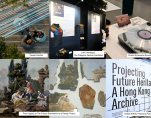
HONG KONG: Projecting Future Heritage
When Everyday Architecture Becomes Tomorrow‘s Blueprint

The exhibition “HONG KONG: Projecting Future Heritage,“originally presented at the Venice Biennale Architettura in 2025, arrives in Bangkok curated by Hong Kong architects and urbanists Sunnie S.Y. Lau and Fai Au. It offers a perspective on social innovation by re-examining architecture embedded in everyday life. Moving beyond iconic landmarks, it invites critical reflection on ordinary buildings and familiar urban structures.

The two creators explain “Under the concept of Future Heritage, we explore strategic commonalities among historic port cities such as Hong Kong, Venice, and Bangkok. Those highlight the role of urban water systems as foundational infrastructures that have shaped these cities’ transformation from historic settlements into economic centers. We also present local architectures that reflect real everyday life, which may become valuable historical heritage in the next 20 – 30 years.”

From a sustainability perspective, the exhibition proposes an approach to urban development that integrates traditional wisdom with contemporary technology. Rather than viewing existing buildings as obsolete or burdensome, it advocates adaptive reuse — reimagining and repurposing structures without demolition — so they can continue to support living, working, and everyday life in meaningful ways. The exhibition underscores that looking back at what already exists is a crucial key to transforming cultural heritage into economic and intellectual capital capable of sustainable growth in the future.

Elevating Bangkok Design Week as the Creative Hub of Asia

These collaborations represent only a fraction of what unfolds at Bangkok Design Week 2026, taking place from 29 January – 8 February 2026. Through CEA’s strategic direction, the festival is being elevated as an international creative platform connecting designers, cities, businesses, and investors from Thailand and abroad. The goal is clear to transform cultural capital into measurable economic value, while firmly establishing Bangkok as one of Asia’s leading creative festival hubs. Driven by the power of the creative economy and sustained through long-term cross-border collaboration, Bangkok Design Week continues to advance a vision of inclusive, competitive, and sustainable growth for the region and beyond.
Hashtag: #CEA #BKKDW2026 #BangkokDesignWeek #DesignSOS #PowerOfDesign #PowerOfThaiDesign


Facebook/Instagram: bangkokdesignweek
Line: @bangkokdesignweek

The issuer is solely responsible for the content of this announcement.

About Bangkok Design Week

Bangkok Design Week, first launched in 2018, has long been a fixture on the Bangkok event calendar. It plays a pivotal role in fostering the creative economy and propelling Bangkok to stand out as a member of the UNESCO Creative Cities Network (UCCN) as a City of Design. Organized by the Creative Economy Agency (Public Organization) or CEA, in collaboration with over 60 public and private organizations, educational institutions, and international partners, the festival draws an estimated 400,000 visitors from both Thailand and abroad each year. Bangkok Design Week serves as a growth engine for Thailand’s creative industries in multiple ways, including showcasing creative businesses and designs, stimulating competitiveness, providing local and international business networking opportunities, and generating economic momentum for downstream sectors such as marketing, printing, online media, galleries, cafes, restaurants, gifts and souvenirs, travel, hotels, and public transportation.

About the Creative Economy Agency (Public Organization) or CEA

The Creative Economy Agency (Public Organization) or CEA, is a government agency dedicated to promoting creativity as a key driver of Thailand’s creative economy. CEA supports the development of various creative industries and encourages the manufacturing sector to adopt creative approaches, enhancing the value of products and services and boosting Thailand’s global competitiveness.

  • First-of-its-kind multi-region study on the perceptions of ageing and ageing well officially launched at the Intercontinental Alliance for Integrated Care (IAIC) gala dinner.
  • The study featured insights from five member regions to advance support for ageing.
  • The Alliance welcomed seven new members, strengthened its local chapters and handed over 2026 hosting duties to the United Kingdom.

SINGAPORE – Media OutReach Newswire – 21 November 2025 – The Intercontinental Alliance for Integrated Care (IAIC), hosted by the Singapore University of Social Sciences (SUSS), today launched its first-ever multi-region study on the perceptions of ageing and ageing well. Now in its second edition, the Alliance’s annual flagship event IAIC 2025 brought together partners from across Asia, Europe, and North America, including new members from Estonia, India, Japan, Malaysia, South Korea, and Chinese Taipei, to advance new knowledge, partnerships and innovations shaping the future of ageing and integrated care.

Launch of the IAIC Multi-Region Study Report

Led by SUSS and co-developed with IAIC members, the multi-region study – A Study on Perceptions of Ageing and Ageing Well: Exploring Older Adults’ Experiences and Coping Strategies Across Regions – draws insights from five regions: Singapore, Canada, Mainland China, Hong Kong SAR and the United Kingdom. It examines how older adults across different societies understand ageing, navigate later-life transitions and define what it means to age well.

Guest-of-Honour, Mdm Halimah Yacob, Chancellor, SUSS, at the official launch of the IAIC Multi-Region study.

Placing the lived experiences of older adults at its core, the study offers a clearer picture of what ageing well means to them and underscores the role of families, communities and care systems in shaping those experiences. It provides a cross-cultural view of older adults’ aspirations and coping strategies, revealing how social, economic and policy contexts influence their day-to-day realities. Insights from Brunei and Thailand will be incorporated in the next phase and shared progressively.

Across regions, the findings highlight a common theme: ageing is shaped not only by biological changes, but also by social and cultural contexts. A recurring paradox emerges – despite physical decline, many older adults continue to experience purpose, connection and well-being.

Singapore Chapter: Local Insights into Ageing Well

Within this broader landscape, the Singapore chapter adds depth to how these themes manifest locally, drawing on responses from about 1,000 survey respondents and 15 in-depth interviews. Several key insights emerged on how older Singaporeans understand and experience ageing. For instance:

  • Women aged 75–84 placed higher value on family and close relationships than men of the same age bracket, underscoring the central role of social bonds. Staying socially connected helps them remain emotionally engaged and supported by strong community ties. Men, by contrast, are more vulnerable to isolation after retirement, particularly when their identities were closely tied to work.
  • The study also highlighted “mastery” – the belief that one can still influence the course of one’s life – as a strong predictor of successful ageing. Older adults with a strong sense of mastery tend to stay socially connected, feel more satisfied, and continue pursuing activities that bring purpose and joy. They remain active not simply because they are physically stronger, but because they believe their actions continue to matter.

For the full report, please visit https://suss.to/iaic2025-report.

Associate Professor Justina Tan, Vice President of Strategic Partnership and Engagement at SUSS and Principal Investigator for the study, shared “As Singapore becomes ‘super-aged’ next year, the multi-region study aims to provide us with invaluable insights to guide more targeted policies and interventions. By understanding the unique needs and aspirations of our older adults, we can design programmes that not only preserve autonomy and foster meaningful conversations but also ensure that support is tailored to help every senior thrive in their own way.”

Following today’s launch, the IAIC partners will move into the implementation phase, where each country will adapt insights into on-the-ground pilot initiatives within their local care systems.

IAIC 2025: Beyond Borders, Beyond Age

Themed “Beyond Borders, Beyond Age: Shaping Tomorrow’s Tapestry of Integrated Care”, IAIC 2025 convened like-minded partners such as academic institutions, care providers, policymakers, and innovators across regions to shape care systems that transcend geographical, generational, and institutional boundaries.

Across the two-day programme, delegates took part in discussions, learning journeys and collaborative sessions focused on integrated care and healthy ageing. A key highlight was a visit to TOUCHpoint@AMK 433 this morning, where participants learned about Singapore’s community-based approaches to ageing well and supporting seniors to age in place.

The event culminated in a gala dinner at Conrad Singapore Marina Bay, where Guest-of-Honour, Mdm Halimah Yacob, Chancellor, SUSS, witnessed the official launch of the multi-region study together with IAIC representatives from Singapore, Canada, Mainland China and the United Kingdom.

In her address, Mdm Halimah said “Ageing is not a burden to be managed. It is a season of life to be respected, supported, and reimagined, where every person, regardless of age, continues to have value, voice, and belonging.” She added, “As we look to the future, the challenge of ageing will test every society’s capacity for compassion, creativity, and courage. It also offers a profound opportunity to redefine what it means to live and age well, and to reaffirm our shared humanity.”

Alliance Expansion and New Local Chapters

IAIC 2025 also marked a significant milestone for the Alliance with the addition of seven new member institutions, welcomed through a symbolic handprint ceremony. Led by SUSS, the IAIC is supported by 12 founding members across Asia, Europe and North America, each contributing expertise in ageing and integrated care.

This year, the Alliance expanded its network with the following new members:

  • Jeonbuk National University (South Korea)
  • Center for Sports Science and Healthy Aging, National Cheng Kung University (Chinese Taipei)
  • National Mental Health and Welfare Commission (South Korea)
  • Public Health Foundation India (India)
  • Tallinn University (Estonia)
  • Teikyo University (Japan)
  • Universiti Pendidikan Sultan Idris (Malaysia)

SUSS also formalised two new Local Chapter Memoranda of Understanding (MOUs) with Presbyterian Community Social Services Limited and Singapore Hospice Council. These partnerships seek to strengthen community-based initiatives, pilot projects and workforce development in integrated care, while advancing applied research and fostering innovation to better serve community needs.

Intergenerational Fashion Runway Featuring Seniors and Young Designers

A highlight of the gala dinner was a vibrant intergenerational fashion showcase co-created by seniors from Lions Befrienders and student-designers from the Nanyang Academy of Fine Arts (NAFA), University of the Arts Singapore (UAS), in partnership with SUSS.

Themed “Tapestry of Style: Weaving Generations Together through Fashion,” the showcase brought together lived experience, creativity and technical skill as seniors and students co-designed each ensemble. It celebrated seniors as active creators, spotlighting their stories, perspectives and style while demonstrating the value of intergenerational collaboration.

Passing the Baton

IAIC 2025 drew to a meaningful close with a symbolic handover ceremony, where SUSS formally passed hosting duties to Royal Holloway, University of London, which will host IAIC 2026. After two years of stewardship in Singapore, the Alliance now continues its journey of learning and collaboration beyond Singapore’s shores.

The handover highlighted IAIC’s rotating stewardship model and its commitment to continuity, shared leadership and cross-border knowledge exchange. It reaffirmed the Alliance’s vision of a global community working together to advance integrated care through partnership, research and collective progress.

Professor Tan Tai Yong, President, SUSS, said “The Intercontinental Alliance for Integrated Care reinforces a collective commitment across regions to rethinking how societies can better support ageing populations. SUSS is proud to take the lead in convening this year’s Alliance and in spearheading the multi-region study with our partners. The intergenerational elements woven into this year’s edition – from the study’s findings to the collaborative fashion showcase with Lions Befrienders and the Nanyang Academy of Fine Arts – remind us that strengthening care systems requires the voices, creativity and participation of all ages.”
Hashtag: #IAIC2025 #SUSS #HealthyAgeing #IntegratedCare #ActiveAgeing #SeniorsWellbeing #PublicHealth #SocialCare #Gerontology #AgeFriendlySociety


The issuer is solely responsible for the content of this announcement.

About Singapore University of Social Sciences

At SUSS, we have a singular vision to be a university that inspires learning for life and impacts lives, regardless of age, background or life path. Our university is a vibrant tapestry of ages and experiences. From recent JC and polytechnic graduates to seasoned professionals, parents seeking new horizons and individuals redefining their careers in their golden years—our diverse community comes together for one common goal: to empower themselves with an education that impacts lives and society.

We offer more than 110 undergraduate and graduate programmes, available in full- and part-time study modes which are flexible, modular and interdisciplinary, catering to both fresh school leavers and adult learners. SUSS also offers a broad range of continuing education and training modular courses for the professional skills upgrading of Singapore’s workforce.

Our programmes and courses are offered by our six schools:

  • S R Nathan School of Human Development
  • School of Business
  • School of Humanities & Behavioural Sciences
  • School of Law
  • School of Science & Technology
  • School of Social Work & Social Development

Since becoming an Autonomous University in 2017, over 25,000 graduates have experienced our unique brand of education. More than 19,000 students are currently pursuing their full- and part-time studies with us.

The Institute for Adult Learning (IAL), as part of SUSS, leads in the field of research on adult and workplace learning and training of adult educators to build capabilities of the training and adult education sector in Singapore and beyond.

For more information about SUSS, please visit .

HONG KONG SAR – Media OutReach Newswire – 15 January 2026 – HKU Business School unveiled the “Hong Kong Economic Policy Green Paper 2026” (“Green Paper”). This comprehensive document delves into various facets of Hong Kong’s economic domain, covering everything from trade finance and Hong Kong’s role in the Greater Bay Area (GBA) startup ecosystem to green finance, the IP economy, social and shareholder value for Hong Kong-listed companies, and pressing social issues such as housing affordability and overcrowding in emergency departments. Moreover, with the emergence of AI, the Green Paper examines the impact of AI on the labour market, cybersecurity, and the development of a Web 3.0 ecosystem.

Hong Kong Economic Policy Green Paper 2026 by HKU Business School Focuses on New Opportunities for Hong Kong’s Economy

This is the fifth edition of the Hong Kong Economic Policy Green Paper, released by HKU Business School, with the aim of providing recommendations on how Hong Kong can effectively tackle these challenges.

HKU Business School today unveils the Hong Kong Economic Policy Green Paper 2026. From left: Prof. Huiyin Ouyang, Associate Professor in Innovation and Information Management of HKU Business School, Prof. Dragon Tang, Professor in Finance in HKU Business School, Professor Hongbin CAI, Dean and Chair of Economics of HKU Business School, Prof. Richard Wong, Provost and Deputy Vice-Chancellor of The University of Hong Kong and Director, Hong Kong Institute of Economics and Business Strategy, Prof. Heiwai Tang, Associate Vice-President of The University of Hong Kong and Associate Dean of HKU Business School, and Dr. Tingting Fan, Principal Lecturer in Marketing of HKU Business School.

Prof. Richard Wong, Provost and Deputy Vice-Chancellor of The University of Hong Kong and Director, Hong Kong Institute of Economics and Business Strategy said, “This Green Paper was released after months of rigorous research by the scholars from HKU Business School. Grounded in an academic perspective and guided by a pragmatic, problem-solving approach, we have conducted objective analyses and in-depth investigations into core issues and real-world challenges currently facing Hong Kong’s development in political and economic operations, people’s livelihood, and industrial upgrading. Our aim is to provide the Government and relevant authorities with valuable insights and actionable policy recommendations.”

Professor Hongbin Cai, Dean and Chair of Economics of HKU Business School, said, “As a ‘super-connector’ bridging China and the world, Hong Kong’s unique role remains indispensable. Looking ahead, Hong Kong must deeply integrate into China’s national development plans, and also take a more prominent role on the international stage, with an in-depth understanding of the global market and active engagement with its international collaborators.

With campuses in Beijing, Shanghai, and Shenzhen, and an expanding presence in Vietnam and Europe, HKU Business School embodies our unique proposition: deeply rooted in Hong Kong, fully engaged with the Chinese Mainland, and truly international. This year’s Green Paper reflects our dedication to inspiring solutions based on rigorous research. As a world-class institute of higher education, we are committed to enabling Hong Kong to further unleash its core values and usher in a new era of high-quality development.”

Prof. Heiwai Tang, Associate Vice-President of The University of Hong Kong and Associate Dean of HKU Business School, added, “This Green Paper features research papers from ten teams of scholars with diverse backgrounds and varied expertise. Based on profound insights into Hong Kong’s development, they offer unique and targeted policy recommendations, building a rich and multifaceted framework of issues for the Green Paper. At the same time, behind these research achievements lies the scholars’ deep affection for and sense of responsibility toward Hong Kong.”

Regarding how digital technology can boost Hong Kong’s trade finance, he emphasised: “Both data and industry feedback clearly demonstrate the core value of trade finance. However, we need more synergy in the trade finance ecosystem and to catch up in digitisation. To address this, we must strengthen the governance and standard promotion of digital trade platforms and tools, deepen the cross-border interoperability of trade data, expand the functions of the Hong Kong Export Credit Insurance Corporation, focus on high-value-added trade enterprises, extend the coverage of Free Trade and Double Taxation Avoidance agreements, and promote responsible stablecoin adoption and Renminbi internationalisation.”

Prof. Dragon Tang, Professor in Finance at HKU Business School, stated, “Hong Kong is uniquely positioned to lead in the integration of blockchain technology within green finance, exemplified by our pioneering issuance of the world’s first tokenised green bonds, totalling HKD 6 billion in February 2024. With green finance representing a critical avenue for sustainable development, the global market is projected to grow significantly, emphasising the importance of transparency and trust. To capitalise on this opportunity, we must enhance our blockchain infrastructure, establish clear regulatory standards, and promote cross-border integration with initiatives like Core Climate. By leveraging blockchain’s capabilities, we can significantly reduce costs, improve transparency, and engage a broader investor base, ultimately driving our transition to a sustainable finance future.”

Prof. Huiyin Ouyang, Associate Professor in Innovation and Information Management, HKU Business School, commented on her study, saying, “Two weeks post-implementation of the hospital fee reform, the media reported no significant change in emergency department crowding, which aligns with what our analysis predicted. Overcrowding isn’t simply about patient behaviour – it’s a structural issue. Demographics are shifting, capacity is constrained, and alternative treatment options remain limited. What we now need is a careful, systematic evaluation of the fee changes. Where are vulnerable patients going for care? Are some patients delaying treatment? What unintended effects are emerging? Effective reform requires pairing fee adjustments with expanded primary care access. We can’t solve a capacity problem with pricing alone.”

Dr. Tingting Fan, Principal Lecturer in Marketing at HKU Business School, presented as well, spoke on her study and asked, “Why did Pop Mart go public in Hong Kong but register IP in Singapore? Or why was Molly ‘born’ in Hong Kong but did not go viral from Hong Kong? Why have local companies not managed to turn these homegrown IPs into major business triumphs? Learning from the past and looking forward, Hong Kong can leverage its financial market, legal system, as well as talents to build a comprehensive IP industry infrastructure and become an IP hub.”

The Green Paper includes ten articles; the key points are as follows:

Empowering Merchandise Trade Finance with Digital Technology in Hong Kong
Author: Prof. Heiwai Tang, Associate Vice-President (Global), The University of Hong Kong; Associate Dean (External Relations), HKU Business School; Associate Director, Hong Kong Institute of Economics and Business Strategy; Victor and William Fung Professor in Economics

  • Trade is an essential lifeline for Hong Kong; its total merchandise trade was three times the city’s HKD3.2 trillion GDP in 2024. Trade finance is thus equally important, yet research shows that the total loans extended for trade finance have been declining.
  • As geopolitical and technological shifts reshape trade, Hong Kong must upgrade its trade finance services. With consumer-goods trade shifting to smaller, more frequent orders and shorter cycles, financial institutions need to streamline approvals and develop flexible products for e-commerce and logistics-driven cash cycles. Banks also need to digitise core processes in fund settlement. The article cautions that platforms directly connecting mainland manufacturers with overseas buyers disintermediate Hong Kong’s traditional hub-and-spoke role.
  • To address this, the article suggests the government leverage digital technologies to elevate the adoption of Hong Kong’s digital trade platforms through unifying core digital trade functions. Moreover, speeding up interoperability of trade data platforms with the Chinese Mainland and other economies will enable seamless data exchange.

Rebuilding Hong Kong as the Catalyst to the Greater Bay Area (GBA) Startup Ecosystem
Prof. Alberto Moel, Professor of Practice in Finance, HKU Business School
Prof. Joseph Chan, Associate Professor of Practice in Management and Strategy, HKU Business School; Associate Director, Centre for Innovation and Entrepreneurship

  • Offering a quantitative analysis of the evolution of Hong Kong’s startup landscape, the article found that post-2019 activity has slowed, mirroring global venture capital trends, with most failing to grow beyond 50 employees due to scarce late-stage capital despite early-stage availability. While fintech and logistics dominate and AI/blockchain grow quickly, deep tech lags—authors view this as temporary and highlight Hong Kong’s alignment in financial innovation, regtech, and GBA supply chains to attract investment and support corporate transformation.
  • To strengthen Hong Kong as the GBA’s premier startup hub and international financial centre, the article recommends nine policies—including fixing funding gaps, closing academia-market divides through industry-focused research for tech transfer, attracting/retaining talent, integrating Northern Metropolis with GBA supply chains, pivoting to high-value services, and drawing large tech platforms to incubate local startups.

The Applications of Blockchain in Green Finance: Hong Kong’s Experience and Opportunities
Author: Prof. Dragon Tang, Professor in Finance, HKU Business School; Associate Director, Centre for Financial Innovation and Development

  • The green finance market has entered an important new phase. Hong Kong became the world’s first issuer of sovereign tokenised green bond when it priced an HKD800 million one-year note in February 2023. Despite this, Hong Kong faces several challenges in the practical implementation of using blockchain to advance green finance. This is due to the limited interoperability between blockchain platforms and existing financial infrastructure, which hinders cross-market transactions. Real-time settlement for tokenised assets is also difficult because of scalability constraints.
  • The article argues that the future success of blockchain development in green finance will depend on progress in three areas: standardisation, scalability, and security. Clear regulatory frameworks and common technical protocols are needed to provide legal certainty and interoperability across platforms. While collaboration among regulators, technology providers, and energy-market participants can align rules for tokenisation. Blockchain can also connect Hong Kong’s Core Climate platform with overseas counterparts, as cross-border integration is crucial to the inherently international nature of climate finance.

Can Hong Kong be an IP hub for Future Labubu? An Overview of Hong Kong’s IP Industry
Dr. Tingting Fan, Principal Lecturer in Marketing, HKU Business School
Prof. Heiwai Tang, Associate Vice-President (Global), The University of Hong Kong; Associate Dean (External Relations), HKU Business School; Associate Director, Hong Kong Institute of Economics and Business Strategy; Victor and William Fung Professor in Economics

  • As Labubu’s success turns the spotlight on the growing importance of the IP industry, the authors propose that this can inspire more creators and businesses to invest in branding, licensing, and cross-border collaborations. This can also attract policymakers’ attention to the emerging IP sector as a key driver of innovation and economic growth.
  • To position Hong Kong as a leading regional IP trading centre, the authors recommend that stakeholders—including IP developers, entrepreneurs, and government agencies—coordinate efforts across key areas. These include building a robust IP financing ecosystem, such as through government-issued IP bonds replicating the green finance model; enhancing infrastructure and platforms to support IP development; developing specialised talent and professional services in the IP sector; promoting IP initiatives throughout the Greater Bay Area; and strengthening IP protection alongside a solid legal framework.

Thematic Research: Maximisation of Social Value and Shareholder Value – Insights from Hong Kong-listed Companies Across Sectors
Author:
Prof. Sean Chang, Associate Professor of Practice in Finance, HKU Business School

  • Through a triangulation research approach, the article examines how social policies, international frameworks, and corporate social responsibility influence a company’s valuation and capital budgeting decisions. Using insights from major Hong Kong-listed companies across nine sectors—spanning transport, utilities, financials, banking, conglomerates, technology, real estate, consumer, and hotel servicing—the research highlights CSR’s role in enhancing long-term firm performance.
  • Key findings show that corporate risk assessment, company valuation, and stock performance are significantly influenced by CSR-linked socially responsible investing (SRI) factors. Hong Kong-specific social values, such as equality and sustainability, shape investor preferences, guiding finance managers to tailor solutions and adapt regulatory standards. While conventional metrics remain dominant, incorporating social value boosts long-term firm value by building shareholder trust and mitigating risks; companies can pursue CSR projects financed via SRI bonds to create dual economic and societal benefits.
  • The study recommends embedding core values like equality and sustainability into corporate strategies, aligning budgeting processes with social objectives to pinpoint investments yielding both returns and positive impacts, and urging Hong Kong-listed firms to sustain capital budgeting aligned with enduring societal values.

Housing Affordability and Homeownership in Hong Kong, 1985-2023
Mr. Allen W. Huang, Student Researcher, Hong Kong Future Economy Institute
Mr. Alex Ngau, Research Associate, Hong Kong Future Economy Institute
Prof. Michael B. Wong, Assistant Professor in Economics, Management and Strategy, HKU Business School

  • Hong Kong’s housing market has grown increasingly unaffordable, hindering upward mobility for younger generations. Main findings from the research reveal that since the 2002 suspension of the Home Ownership Scheme (HOS), homeownership has declined sharply, rendering private housing “impossibly unaffordable” for median-income households. A wide public-private rent gap drives young people to accept lower-paying or part-time jobs to qualify for public rental housing (PRH), distorting labour supply, stifling human capital investment, and fuelling a surge in adult co-living with parents; younger cohorts (born 1980-1999) face far lower access to public housing and ownership than prior generations at the same age.
  • Taking Hong Kong Island as an example, between 2003 and 2024, the rent-to-income ratio for a typical 400-sq-ft private unit jumped from 35% to 60% of median household income, peaking at 65% in 2015 and 2019—far exceeding the UN-Habitat and World Bank’s 30% affordability threshold. Public housing rents stayed dramatically lower at just 7%–11% of median household income from 1985 to 2024. For home purchases, it now takes 18.2 years of median income to buy a 500-sq-ft private unit (up from 7.4 years in 2003), placing it in the “impossibly unaffordable” zone per the Demographia International Housing Affordability report, where ≤3.0 years is considered affordable and 9.0+ years is impossibly unaffordable. After the 2002 Home Ownership Scheme suspension, even subsidised HOS units now require 15.8 years of income on Hong Kong Island (up from 7.4 years in 2007), shifting them from moderately unaffordable to severely or impossibly unaffordable in urban cores.
  • To reverse these trends, the authors recommend ramping up production of high-quality ownership units, easing resale and leasing restrictions on existing subsidised sale flats to boost residential mobility and enable “trading up” the housing ladder, setting housing price and affordability targets over mere supply goals, and adopting responsive mechanisms to balance demand and supply.

Beyond Crisis Management: Structural Reform for the Overcrowding in Hong Kong’s Emergency Departments
Prof. Huiyin Ouyang, Associate Professor in Innovation and Information Management, HKU Business School
Ms. Yiran Zhang, PhD student, HKU Business School

  • Hong Kong’s public emergency departments (EDs) handle over 2.14 million annual attendances. This crisis, exacerbated by an ageing population, results from a structural mismatch: the majority of the attendances are for non-emergency conditions, leading to staff burnout and compromised care.
  • The article proposes three comprehensive structural reforms. First, improving operational efficiency with accurate wait time information systems is crucial. Second, increasing the ED fee (categories III–V) aims to divert non-critical patients. Success for this hinges on assumptions about patient responses, particularly how varied population segments will react to the price signal. International evidence raises concerns, showing that higher ED fees can reduce overall utilisation, but with the decrease primarily occurring among price-sensitive groups who may risk delays in receiving serious care. Therefore, for this reform to succeed, the public must have genuine access to alternative care pathways that can accommodate acute but non-emergency needs outside regular business hours, with pricing acceptable to price-sensitive populations. Third, AI can augment the workforce and manage demand (e.g., through telemedicine).
  • Ultimately, sustainable reform demands robust evaluation, political courage, and a commitment to address root causes, not just symptoms.

Initial Efforts to Empirically Measure AI Activity and Its Impacts on Hong Kong’s Labour Market
Prof. Alan Kwan, Associate Professor in Finance, HKU Business School
Prof. Mingzhu Tai, Associate Professor in Finance, HKU Business School; Associate Director, Institute of Behavioural and Decision Science
Mr. Zihan Wang, Master student, HKU Business School

  • In an effort to empirically measure the impact of AI on Hong Kong’s labour force, the researchers observe that firms with a higher adoption of AI experience lower headcount growth. However, the scale of impact appears small in the city, which could be due to several potential reasons. One of these is the different composition of Hong Kong’s labour force compared with other countries. For instance, Hong Kong has a high proportion of finance or managerial talent, which is harder to displace; the city also features older or more elite workers. On the other hand, much of the impact of AI, particularly generative AI, is on the less elite and younger populations.
  • As such, the authors recommend policymakers produce more labour market statistics that track the impact of AI, particularly by occupation. On the rate of AI adoption in Hong Kong through innovation, the authors find that the city is heavily skewed towards research, but not commercialisation. This means that the quality and quantity of academic research is not translating to commercial use. To address this decoupling, the authors propose that the government tweak its existing early-stage startup funding platforms to encourage streamlining and higher utilisation of existing government resources.

The Impact of Generative Artificial Intelligence on Cybersecurity in Hong Kong
Author: Prof. Michael Chau, Professor in Innovation and Information Management, HKU Business School

  • As GenAI can produce human-like text, code, images, and audio, cybersecurity crimes have become easier and faster to perpetrate. Not only have data leaks and hacks into security systems led to significant financial losses in Hong Kong, but they also hurt confidence in the city’s digital infrastructure.
  • The article recommends using AI to fortify Hong Kong’s cyber defence, such as using biometric verification and deepfake detection technologies, especially in areas involving critical infrastructure and high financial stakes. It is also important to prevent data leakage and other threats in using GenAI.

Hong Kong’s Next Growth: Pioneering the Web 3.0 Ecosystem
Prof. Yulin Fang, Professor in Innovation and Information Management, HKU Business School; Director, Institute of Digital Economy and Innovation
Mr. Yangchen Mou, PhD student, HKU Business School

  • Given the inherent risks in Web 3.0 operational models—most notably within Decentralised Finance (DeFi) systems—striking a balance between fostering the development of the Web 3.0 ecosystem and implementing appropriate regulation to maintain financial stability is and should be a key priority for Hong Kong authorities. To support this, the article categorises the industry into three distinct systems—Centralised Finance (CeFi), the integration of Traditional Finance and Centralised Finance (TradFi-CeFi), and Decentralised Finance (DeFi)—and put forward targeted policy recommendations for each.
  • For the CeFi system, the authors recommend creating a more conducive environment for development by refining specialised auditing frameworks, promoting a local Web 3.0 talent certification system, and introducing global leading CeFi institutions to the local market. For the TradFi-CeFi system, they suggest upgrading audit standards for traditional firms holding digital assets and upskilling traditional finance professionals with Web 3.0 expertise. In contrast, for the DeFi system, which carries higher inherent risks and poses greater regulatory challenges, the authors advise authorities to adopt a prudent stance while keeping monitoring its latest technological developments.

The full version of the Green Paper can be accessed here. Hi-res photos are available here.

Hashtag: #HKUBS

The issuer is solely responsible for the content of this announcement.

About HKU Business School

Established in 2001, HKU Business School is one of the youngest and most dynamic members of The University of Hong Kong (HKU). The School strives to nurture first-class business leaders and foster academic and relevant research that serves the needs of Hong Kong, China and the rest of the world in the new Asia-led economy. As a top international business school, the School has established its place as a globally impactful institution that leads the way through timely thought leadership, pioneering research, and educational excellence. Deeply rooted in Hong Kong and fully engaged with China, the School’s world-class faculty equip students with global knowledge and perspectives.

HKU Business School offers business education across a full range of disciplines, while achieving remarkable growth in faculty strength and research capabilities. The School ranks Asia’s No.1 in Financial Times’ Aggregated Research Ranking for two consecutive years, 2024 and 2025, while the University of Hong Kong ranked 11th in the world and No. 1 in Asia according to the QS World University Rankings 2026. The School has strategic partnerships with world-renowned universities and corporate partners, providing market-oriented content, superior learning, and instrumental resources.

To better serve our students and alumni in various cities and regions, and to facilitate collaboration opportunities with business communities around the globe, HKU Business School has established a unique international network that extends to Beijing, Shanghai, Shenzhen and Ho Chi Minh City.

HKU Business School is fully accredited by the European Quality Improvement Systems (EQUIS) and the Association to Advance Collegiate Schools of Business (AACSB).

Visit us at

Instagram moved to contain concerns over account security after confirming it had corrected a password reset flaw that cybersecurity firm Malwarebytes described as a breach, signalling a swift response as scrutiny of social media safety intensifies. The platform, owned by Meta Platforms, said the issue affecting its password recovery process had been fixed after being flagged by researchers at Malwarebytes, who warned that the vulnerability could have […]

Survey covers 15 countries and includes first nationwide polling inside Syria The Arab Center for Research and Policy Studies has released findings from the 2024 to 2025 Arab Opinion Index following a presentation at its headquarters in Doha. The survey, now in its ninth edition, examines political, economic and social views across 15 Arab countries. Fieldwork took place between October 2024 and August 2025 and included interviews […]

The grip of Chromium on the global browser ecosystem has grown so wide that many users now assume every modern browser is built on Google’s open-source architecture. That perception has taken root partly because major names such as Microsoft Edge, Opera, Brave, Vivaldi and Arc all rely on Chromium’s Blink rendering engine, creating a sense that browsing itself has become synonymous with Google-aligned foundations. The dominance is […]

Bitcoin’s fair value, according to JPMorgan Chase, should be as high as $170,000, based on a model that compares it to gold’s market role. The investment bank argues that Bitcoin should represent two-thirds of gold’s private investment base, a significant increase from its current value of approximately $102,000 per Bitcoin.

JPMorgan’s analysis draws from its long-standing views on digital assets and traditional commodities, asserting that Bitcoin is on a path to becoming an essential part of the global investment portfolio, particularly among institutional investors. The bank’s model incorporates risk capital metrics and examines the private investment demand for both Bitcoin and gold. As more institutional investors seek exposure to digital assets, Bitcoin is increasingly seen as a hedge against traditional financial uncertainties.

According to the model, Bitcoin’s rise aligns with the expanding use of blockchain technology and cryptocurrencies as a store of value, much like gold has functioned for centuries. This comparison has gained traction, particularly as Bitcoin’s network effects and its decentralized structure differentiate it from other assets. JPMorgan believes that Bitcoin’s potential growth is rooted in its ability to scale and the growing adoption of cryptocurrencies in the financial system.

While Bitcoin’s market capitalisation currently lags behind gold, JPMorgan’s model suggests that it could capture a significant portion of the gold market, primarily in the realm of private investment. The bank’s forecast is based on the assumption that Bitcoin will continue to prove its resilience and utility as an asset, making it increasingly attractive to both institutional and retail investors alike. JPMorgan’s analysis takes into account Bitcoin’s volatile price history, yet the bank remains optimistic about its long-term potential as the digital asset continues to mature.

The bank’s prediction of a $170,000 fair value for Bitcoin is a sharp contrast to its current trading price, which fluctuates in the $30,000 to $35,000 range. However, JPMorgan notes that such a valuation is achievable if Bitcoin continues to gain market share from traditional assets like gold, especially as demand for hedging against inflation and economic uncertainty rises. Additionally, the introduction of Bitcoin ETFs and other investment products could help bridge the gap between digital currencies and mainstream financial markets, facilitating broader adoption.

For JPMorgan, Bitcoin’s fair value also hinges on broader regulatory developments. While the US and other countries have begun to establish clearer regulatory frameworks for cryptocurrencies, the landscape remains uncertain, which could impact Bitcoin’s trajectory. However, JPMorgan suggests that clearer regulations could bring more institutional investors into the space, providing further support for Bitcoin’s long-term growth.

JPMorgan’s bullish outlook on Bitcoin comes amid a broader market trend where digital assets, particularly Bitcoin and Ethereum, are becoming integral to the portfolios of both retail and institutional investors. This shift is propelled by growing recognition of the asset class’s potential to diversify traditional investment portfolios and provide exposure to the evolving digital economy. The rise of decentralized finance platforms and the increasing use of blockchain technology in various industries have helped position Bitcoin as a viable alternative to traditional store-of-value assets like gold.

Bitcoin’s integration into the financial ecosystem is also supported by advancements in blockchain infrastructure and the growing acceptance of cryptocurrencies in various sectors, from payments to banking to supply chain management. As these applications expand, Bitcoin is poised to become a more integral component of financial markets, reinforcing JPMorgan’s argument that its fair value could reach $170,000.

A newly devised artificial intelligence system dubbed Diag2Diag is poised to reshape how physicists observe and control the seething plasma inside fusion reactors. The tool generates synthetic diagnostic data to compensate for gaps left by conventional sensors, particularly at the plasma’s elusive edge, enhancing stability control and reducing hardware demands. Diag2Diag emerges from a cross-institutional effort led by Princeton University and the Princeton Plasma Physics Laboratory, with […]

Complicated access to healthcare and a lack of guidance are keeping patients from receiving the care they need, when they need it HONG KONG SAR – Media OutReach Newswire – 17 September 2025 – Patients in Asia want minimal disruption to their daily life when seeking medical care. This is according to research from Economist Impact commissioned by Prudential plc (“Prudential”). “Patient voices: experiences of healthcare access […]

M. A. Hossain When Dmitry Medvedev, former Russian president and current deputy chair of Russia’s Security Council, addressed the Liberation Movements Summit in South Africa on July 27, his message was as predictable as it was provocative: Russia stands with Africa in the fight against neocolonialism and envisions a multipolar world. Coming from a Kremlin official, this claim may appear noble at first glance—until one examines the underlying logic, […]

VISHNU RAJA
RYO YAMADA
HITORI GOTOH
IKUYO KITA