News related to
extending

By Nitya Chakraborty Prime Minister Narendra Modi’s bilateral talks with the Chinese President Xi Jinping on Sunday at Tianjin in China on the sidelines of Shanghai Cooperation Organisation (SCO) summit have sent some very positive signals which may herald the evolution of an independent foreign policy of India voicing the interests of the Global South. […]

UAE companies are recalibrating their compensation strategies amid evolving market pressures, rising costs, and intensifying competition for skilled professionals.

Salary growth across the board is projected at a modest 4 per cent in 2025, reflecting economic moderation rather than exuberance. Mercer’s Total Remuneration Survey indicates that more than 28 per cent of firms plan to increase headcount, signalling a continuing demand for talent despite budgetary constraints. In-demand sectors such as technology, life sciences, and consumer goods are expected to see slightly higher increases—around 4.2 to 4.5 per cent—while energy and financial services align with the broader average.

MaxHR’s projections paint a slightly more optimistic picture for key verticals: salary hikes for technology roles could reach 8–12 per cent, while finance and banking roles may grow by 5–7 per cent, significantly outpacing other industries.

Employers are embracing variable compensation as cash-strapped budgets and workforce expectations diverge. There is a growing preference for pay-for-performance models, personalised benefits, and flexibility—designed to engage younger professionals who prioritise purpose and work-life integration alongside financial reward.

These shifts align with broader market signals. Tuscan Consulting notes that after post‑pandemic salary surges, firms are now reassessing compensation strategies, balancing retention needs with cost control. Executive packages increasingly include sign‑on or retention bonuses, deferred incentives, and more nuanced benchmarking—often comparing pay between UAE and KSA to remain competitive.

Yet not all data points suggest growth. Business Insider reports that salaries across the UAE may remain flat in 2025, attributed to a swelling expat population that expands the available talent pool and reduces pressure on employers to offer premium pay. Meanwhile, exponential increases in living costs—rent rose 16 per cent in the prior year—have squeezed middle-income professionals, eroding disposable income despite tax‑free earnings.

At the same time, the Dubai government is extending a labour-market lifeline to targeted expatriates, offering roles with monthly salaries up to Dh 50,000. This contrasts with the broader cautious recruitment trends in the private sector, where AI, automation, and tax uncertainties are prompting a more measured approach to hiring.

Dubai’s finance sector is expanding—hiring regulators, investment bankers, and compliance professionals to match its rapid growth. Compensation packages often exceed those in London by up to four times once tax advantages and relocation benefits are included, although professionals note that reward expectations and infrastructure pressures are testing the city’s appeal.

A cohesive picture emerges: employers are shifting from purely salary-driven offerings to total-reward packages that integrate flexibility, performance incentives, and career development. While headline salaries may be easing off, especially for mid-tier roles, specialized sectors and public entities continue to push compensation envelopes to secure talent and drive strategic priorities.

Saudi Arabian Oil Company disclosed net profit of $22.67 billion for the second quarter of 2025, marking a 22 per cent year‑on‑year decline and extending the downturn to its tenth straight quarter. The drop coincided with a missing of the $23.7 billion analyst consensus estimate, underscoring pressure from weakening crude prices and softer demand. Revenue downturn was central to this performance. Total income fell to $101.02 billion, down 11 per cent from the same […]

A surge in U. S. import duties has swiftly altered the economic landscape, with substantive implications for oil markets, trade dynamics and strategic alliances. U. S. President Donald Trump has enacted additional tariffs of up to 50 percent on imports from India in response to New Delhi’s continued purchases of discounted Russian crude. The escalation, applied in two stages and bringing tariffs from 25 percent to 50 percent, took effect on Wednesday, disrupting both markets and diplomatic ties.

Oil prices slipped as traders absorbed the news, with crude extending its decline as markets weighed the ripple effects of the heightened tariffs. The move is expected to erode India’s export earnings while simultaneously undermining the financial benefit of cheaper Russian oil.

Analysts calculate that India has saved around $17 billion by ramping up imports of Russian crude since early 2022. Now, with the tariffs in place, export revenues could shrink by more than $37 billion this fiscal year—nearly halving the gains previously made in energy procurement. The most vulnerable sectors include labour-intensive industries such as textiles, gems, jewellery, seafood and organic chemicals, where job losses may be significant.

New Delhi has resisted external pressure to cease its oil trade with Russia, citing national interest and energy security. Refiners and government officials have indicated that the message from the centre is clear: strategic autonomy takes precedence over commercial coercion. At the same time, discussions are in progress through virtual channels, encompassing trade, energy and critical mineral collaboration.

The tariffs are not only triggering economic recalibration but also intensify diplomatic friction. Experts warn this could become the most serious crisis in U. S.–India relations in decades. The uneven application—targeting India while China remains largely exempt—has heightened perceptions of hypocrisy and could push India closer to alternative partners such as Russia or China.

Domestic responses are underway. Authorities are exploring measures to cushion the blow, such as reducing tax burdens, providing credit support to exporters, and diversifying trade destinations towards Latin America, Africa, Southeast Asia and the EU. On the U. S. side, certain sectors—including pharmaceuticals and electronics—remain exempt from the higher tariffs, partly shielding U. S. companies such as Apple which have investments in Indian manufacturing.

Currency markets and investor sentiment reacted sharply, with Indian stock indices tumbling as concerns mounted over export disruption and broader economic repercussions.

SINGAPORE – Media OutReach Newswire – 27 August 2025 – Genius Mind, one of Singapore’s trusted names in home-based education matching, has announced the expansion of its offerings to include coding, financial literacy, and artificial intelligence (AI) skills. With this move, the agency aims to go beyond traditional academics, equipping children with future-ready skills that are both practical and essential in today’s digital-first world. Catering to this […]

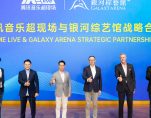
MACAU SAR – Media OutReach Newswire – 25 August 2025 – Galaxy Macau™’s world-class Galaxy Arena is proud to announce the renewal of its three-year strategic partnership with TMElive, extending its existing three-year run of its successful partnership. Under the newly extended agreement, both parties will continue supporting Macau’s quality development in culture and tourism and presenting multifaceted musical spectacles to music lovers, by leveraging shared resources […]

HONG KONG SAR – Media OutReach Newswire – 22 August 2025 – As the Mid-Autumn Festival approaches, sharing mooncakes with family and friends remains a cherished tradition that brings loved ones together. This year, Yung Kee embraces this spirit with its “Indulging in Moonlit Delights, Embracing the Joy of Reunion” collection, featuring exquisitely crafted gift boxes that honor heritage while embracing modern innovation. In collaboration with its […]

Advertisements

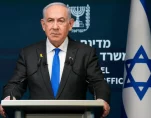
A senior aide to Israeli Prime Minister Benjamin Netanyahu has been dispatched to the United Arab Emirates in a discreet diplomatic move aimed at resolving strains between the two nations. This development marks a critical step in addressing the ongoing challenges faced by the UAE-Israel relationship, particularly in the aftermath of regional shifts and political tensions.

The aide’s visit, which has been kept under wraps to avoid further complicating the delicate diplomatic situation, underscores Israel’s desire to reassert its relations with the UAE following some setbacks in the past year. While the specifics of the discussions remain largely confidential, sources suggest the key focus is on reaffirming the normalization of ties, which was first achieved through the Abraham Accords in 2020. These accords established full diplomatic relations between Israel and the UAE, a historic shift in the Middle East, and the Netanyahu administration has been under pressure to maintain the momentum of these agreements despite regional turbulence.

Diplomatic sources point to a combination of political disagreements, security concerns, and international pressures that have strained the UAE-Israel partnership. One of the main issues is the growing unease in the Gulf over Israel’s stance on Palestinian issues and its handling of tensions in Gaza. While the UAE has remained committed to the Abraham Accords, there has been mounting public and political disquiet over Israel’s domestic policies, especially in relation to its stance on Palestinian sovereignty and peace efforts.

Experts suggest that Netanyahu’s decision to send a trusted aide is a direct response to growing concerns in Abu Dhabi about Israel’s domestic trajectory and its regional posture. This diplomatic outreach is seen as a move to reassure the UAE that Israel remains committed to cooperation, particularly in areas such as trade, technology, and security, which have flourished since the signing of the Abraham Accords.

There is speculation that the UAE has been considering a recalibration of its foreign policy, especially with the changing dynamics in the broader Middle East. With the shifting alliances and new players emerging in the region, including the growing influence of China and Russia, the UAE finds itself needing to maintain a balance between its Western ties, particularly with the United States, and its more recent alignment with Israel.

The UAE-Israel relationship, though officially cordial, has been fraught with complexities. The leadership in Abu Dhabi has long prioritised stability and economic growth, factors which drove the decision to engage diplomatically with Israel. However, regional developments, including the ongoing situation in Gaza and the broader Israeli-Palestinian conflict, have put these relations to the test.

Israel’s efforts to build and sustain relationships with Gulf states have been a key feature of Netanyahu’s foreign policy. The normalization agreements brokered by the Trump administration in 2020 were seen as a major victory for Israel, but they have not been without their challenges. The UAE has been wary of the potential fallout from these ties, particularly in the Arab world, where public sentiment on Israel remains divided.

Despite these challenges, there is a shared interest in several areas. Both countries are looking to advance economic collaborations, particularly in the fields of technology, energy, and defence. Israeli businesses have already established a foothold in the UAE, with cooperation extending to key sectors such as cybersecurity and artificial intelligence. These partnerships are expected to grow further as both nations seek to capitalise on new opportunities.

Israel’s relationship with the UAE has also allowed for greater security cooperation, particularly in the context of regional threats posed by Iran. Both countries share concerns over Iran’s nuclear ambitions and its influence across the region. This shared security interest has provided a basis for increased intelligence-sharing and military coordination, despite the undercurrent of political tensions.

Key highlights include: The Integrated Facility Management Control Tower (IFMCT) unifies over 20 standalone building systems into a single AI-powered command centre and is poised for wider implementation, with plans to expand across Hongkong Land’s regional portfolio. The transition from reactive to proactive maintenance, powered by AI health analytics, has significantly reduced servicing frequency. 66% of work orders have been automated, boosting operational efficiency and reducing disruptions. […]

  LibreOffice now supports AI-driven image generation via a new extension that bridges the office suite with the Stable Diffusion system, enabling users to create visuals directly from textual descriptions without leaving the application. A compact, purpose-built introduction prompts users to describe a scene, then uses Stable Horde, a collaborative network of volunteer-run Stable Diffusion servers, to generate an image. This functionality allows immediate integration of visuals […]

Greenlogue/AP Oman Data Park has formed a strategic alliance with Solar Wadi to establish the Sultanate’s inaugural green energy data centre, powered by solar generation. The collaboration marks a significant step in aligning ODP’s technological infrastructure with Oman’s net-zero ambitions, as the data centre is set to harness sustainable energy to lower operational emissions and improve grid resilience. ODP, long regarded as the nation’s leading provider of […]

Dubai’s Burj Khalifa illuminated the night sky on Friday, August 15, 2025, with the vibrant hues of the Indian flag—saffron, white, and green—to commemorate India’s 79th Independence Day. The world’s tallest building became a beacon of unity and cultural pride, drawing large crowds of Indian expatriates and residents who gathered to witness the spectacular light show.

The Indian Consulate in Dubai confirmed that the display commenced at 7:50 PM local time, marking the occasion with a visual tribute that resonated deeply with the Indian community in the UAE. The illumination was accompanied by the instrumental rendition of India’s national anthem, “Jana Gana Mana,” amplifying the emotional significance of the moment.

Spectators, many of whom were capturing the event on their smartphones, expressed their pride and joy through cheers and applause. The display not only celebrated India’s independence but also underscored the strong and enduring ties between India and the United Arab Emirates. Social media platforms were abuzz with videos and messages, with many sharing the experience and extending their Independence Day wishes.

The Burj Khalifa’s annual tribute to India’s Independence Day has become a cherished tradition, symbolising the deep-rooted friendship between the two nations. This gesture is part of a broader initiative where the UAE’s landmarks light up in the colours of various countries’ flags to honour their national days, reflecting the UAE’s commitment to fostering international camaraderie and cultural appreciation.

In addition to the Burj Khalifa’s illumination, the Indian missions in the UAE organised flag-hoisting ceremonies and cultural events to mark the day. The Indian Consulate in Dubai held its flag-hoisting ceremony at 6:30 AM, while the Indian Embassy in Abu Dhabi conducted theirs at 7:15 AM, accommodating the early morning hours to avoid the intense summer heat. These ceremonies were attended by members of the Indian community, dignitaries, and friends of India, all coming together to celebrate the nation’s journey towards independence and its achievements over the years.

The celebrations were further enriched by cultural performances showcasing India’s diverse heritage, including traditional dances, music, and art exhibitions. These events provided an opportunity for attendees to connect with their cultural roots and share in the collective pride of India’s progress and unity.

President Donald Trump has authorised Nvidia and AMD to resume limited sales of artificial intelligence chips to China, marking a significant shift in U. S. trade policy. The agreement allows the companies to sell specific AI chips in exchange for a 15% revenue share paid to the U. S. government. This move deviates from previous strategies aimed at restricting China’s access to advanced semiconductors due to national […]

Deepening “One Core and Two Wings” Strategic Layout Steady Improvement in Business Quality Continuously Enhancing Shareholder Returns HONG KONG SAR – Media OutReach Newswire – 5 August 2025 – The world’s largest telecommunications infrastructure service provider China Tower Corporation Limited (“China Tower”, or the “Company”) (Stock Code: 0788.HK) is pleased to announce its interim results for the six months ended 30 June 2025. Performance Highlights RMB Million […]

KUALA LUMPUR, MALAYSIA – Media OutReach Newswire – 3 August 2025 – In an effort to deepen cultural and tourism cooperation between China and Malaysia and further expand into the Southeast Asian market, the Guizhou Culture and Tourism Promotion Conference, hosted by the Department of Culture and Tourism of Guizhou Province, was successfully held in Kuala Lumpur on August 1. “Colorful Guizhou” Shines in Kuala Lumpur – […]

HONG KONG SAR – Media OutReach Newswire – 24 July 2025 – Recently, DL Holdings Group (1709.HK) has entered into strategic cooperation agreements with ViaBTC, Asseto, and Rich Dragon Consultants, while actively advancing the tokenization of HK$500 million in assets for the DL Tower. These initiatives have sparked significant market attention, with the stock price surging over 70% in a single day. On July 23, DL Holdings […]

Apple has introduced a fresh feature in its Apple News+ app in the U. S. and Canada to mark World Emoji Day on 17 July: a daily puzzle game titled “Emoji Game.” Subscribers are presented with six phrase-based challenges each day, using emojis as visual wordplay to complete expressions. The launch stands alongside existing puzzle offerings like Crossword, Mini Crossword, Sudoku and Quartiles, and includes stats tracking, streaks […]

digiKam’s 8.7.0 update foregrounds artificial intelligence enhancements, integrating tools that tackle everyday pain points in photo management. Key features include bolstered facial recognition workflows, hardware‑accelerated processing, and a novel AI‑driven image auto‑rotation utility — moves that position digiKam as a free contender in the AI photo management space. Face recognition has undergone targeted refinement. The system now initiates automatic scans when a user confirms or tags a […]

HEFEI, CHINA – Media OutReach Newswire – 11 July 2025 – On July 10, Anhui officially released the teaser for the upcoming 2025 World Manufacturing Convention, setting the stage for this premier gathering of the global manufacturing community. Under the theme “Intelligent Manufacturing, Better Future,” the teaser opens with a creative invitation addressed to an AI robot, symbolizing Anhui’s ambitions to build itself into a leading manufacturing […]

OPEC+ plans to finalise a 2.2 million-barrel-per-day supply restoration by September and is deliberating halting further production increases from October onwards, delegates have indicated. Source participants say the cartel has scheduled a final monthly increment of approximately 550,000 bpd in September, completing the planned unwinding of cuts. Following that, discussions have begun around suspending additional increases—especially the roughly 1.66 million bpd tied to later phases of the rollback—potentially pausing as early […]

Stringent new visa rules now govern travel from Nigeria to the United Arab Emirates, marking a sharp increase in restrictions. Transit visas have been fully suspended, while tourist visas for solo applicants aged 18 to 45 are no longer allowed. Those aged 45 and above must now demonstrate a six-month bank balance of at least USD 10,000 to qualify. A directive communicated to travel agents in Dubai on Tuesday […]

Blender 5.0 is introducing experimental High Dynamic Range rendering support for Linux users working in a Wayland session with Vulkan acceleration. This enhancement aims to offer creators precise brightness, contrast, and colour fidelity in the viewport, mirroring the output of HDR‑enabled monitors. HDR viewport support in the alpha build of Blender 5.0 must be explicitly enabled under Developer > Experimental settings, requiring a Vulkan graphics backend on […]

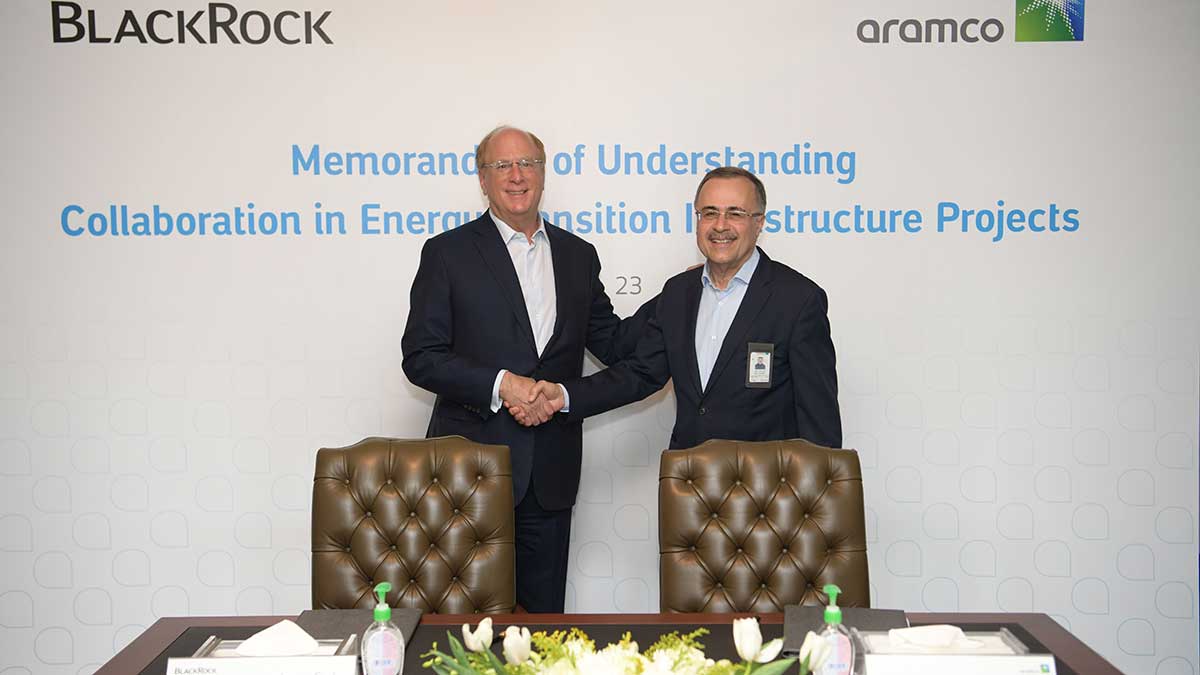
BlackRock Inc is reportedly engaged in discussions with Saudi Aramco over the future ownership of its stake in the leasing rights of a major natural gas pipeline network. The asset manager, which entered the arrangement in 2021, acquired the rights as part of a $15.5 billion lease-and-leaseback agreement. Sources close to the matter indicate BlackRock now values its position at several billion dollars and is considering divesting the stake back to the state oil major.

In 2021, BlackRock joined a consortium to purchase a 49 per cent interest in an entity known as Aramco Gas Pipelines Co under a lease-and-leaseback deal, financing the project with bridge loans and later issuing bonds to refinance the structure. The network comprises critical infrastructure integral to Saudi Arabia’s petroleum operations, serving both domestic consumption and export logistics.

Financial analysts highlight that BlackRock’s move represents a shift in strategy for pipeline investments. As bond markets recover from turbulence and the global energy transition reshapes demand, investors are recalibrating their exposure to long-cycle fossil fuel assets. One advisor noted that BlackRock will “weigh other options if discussions don’t lead to agreement,” indicating the firm might pursue third‑party sales or stake dilution.

Saudi Aramco’s interest in regaining full control aligns with its broader strategy of asset consolidation. Reacquiring the lease rights would enhance its operational sovereignty and reduce dependency on external partners in a sector that underpins national energy security. Aramco’s share in regional indices has already seen modest gains, supported by optimism over non-oil growth; the company itself has been trading up by around 0.9 per cent in recent sessions.

The bonds issued by the consortium in 2024—worth $3 billion across tranches due in 2036 and 2042—were aimed at refinancing initial acquisition debts. Demand for those bonds was robust, with subscription levels significantly exceeding issuance. BlackRock’s majority ownership of Greensaif Pipelines Bidco grants it leverage in shaping any transaction, whether through direct sale or restructuring of lease terms.

Market observers note that BlackRock’s pivot may be driven as much by strategic repositioning as by financial calculation. With global pressure building on climate policy and energy transition commitments, large institutional investors are under increasing scrutiny over holdings tied to fossil fuel extraction and transport. Divesting from pipeline leases allows BlackRock to reallocate capital to renewable infrastructure or alternative energy real estate, while still preserving long-term client relationships.

However, the sale would mark a significant return on investment. The original acquisition and bond refinancing positioned BlackRock to gain from stable, long-duration lease revenues pegged to volume throughput. Exiting now at a multi-billion-dollar valuation ensures a profitable wind-down of exposure while the asset remains robust. Some of the stakeholders in the consortium may view this as a precedent for handling similar assets in other jurisdictions.

Observers anticipate a negotiation process extending into the next quarter, with both parties likely to focus on valuation frameworks, lease renewal terms, and host‑country regulatory approvals. Any agreement may set a template for future transactions between global asset managers and sovereign energy entities, particularly in the Gulf region. While details of the discussions are confidential, the size and strategic nature of the pipeline network suggest that a deal could shift later this year.

Investment flows in the Middle East have showed renewed strength. Saudi and Emirati stock markets climbed this week, powered by stronger service-sector indices and easing of global trade tensions. Against this backdrop, Aramco’s potential repurchase aligns with sovereign objectives to consolidate energy assets in the hands of national champions.

Should talks falter, analysts predict BlackRock may explore secondary-market sales to other infrastructure investors, or retain partial control under renegotiated terms. A phased exit or continued minority stake is also plausible, contingent on pricing, return targets, and geopolitical sensitivities.

The European Central Bank has green‑lit a pioneering dual‑track framework to enable settlement of transactions on distributed ledger technology platforms using central bank money. The Governing Council’s initiative combines a short‑term pilot, dubbed Pontes, scheduled to interface DLT platforms with TARGET Services by the end of the third quarter of 2026, and a longer‑term initiative, Appia, which seeks to establish a future‑proof global DLT infrastructure.

Pontes represents the near‑term goal: creating a secure link between existing DLT platforms and the Eurosystem’s TARGET services—namely TARGET2, T2S and TIPS—through a unified Eurosystem solution. It builds directly on exploratory work carried out between May and November 2024, where 64 participants explored over 50 experimental setups that used intraday escrow and liquidity tokens. The ECB has indicated its intention to invite expressions of interest from the market to join Pontes’ pilot phase, expected to commence by Q3 2026.

The longer‑term Appia track explores integration of DLT in a broader ecosystem, extending into global payment and securities infrastructures. This initiative aims to support international use cases such as cross‑border foreign exchange settlements and compliance with global standards, collaborating with public and private sector stakeholders to assess interoperability, scalability and legal frameworks.

During the 2024 discovery phase, experiments featured diverse approaches, including trials led by the Banque de France and Banca d’Italia. These trials used escrow-based intraday liquidity provision mechanisms that participants later advocated to evolve into overnight capabilities, shedding light on liquidity management inefficiencies. Officials noted the potential for simultaneous settlement and collateral automation to cut credit and liquidity risks, while potentially reducing operational costs.

Piero Cipollone, a member of the ECB’s Executive Board, remarked that although DLT and tokenisation remain nascent, they “are likely to offer new ways of improving the settlement of financial transactions.” He emphasised that the dual‑track approach serves innovation while maintaining security and efficiency in financial market infrastructure.

Pontes and Appia will operate under dedicated market contact groups. The ECB intends to outfit each with analysts and market participants to ensure operational robustness and collect stakeholder feedback as integration proceeds. With Pontes launching a Q3 2026 pilot, the ECB is concurrently reviewing additional trial proposals for integration within existing TARGET services frameworks.

The initiatives support the Eurosystem’s wider ambition to modernise wholesale settlement systems. Appia is envisioned as an evolution towards integrated ecosystems that support global operations and stimulate interoperability with other jurisdictions, thereby elevating Europe’s position in the digital infrastructure space.

European authorities have signalled enduring commitment to innovation since experimental work in 2024. The report released today, aligned with Pontes and Appia’s dual‑track launch, highlights how central banks across the continent are balancing emerging technologies with systemic resilience goals—managing legal, technical and liquidity implications harmoniously.

Market analysts believe the Pontes initiative addresses immediate demand from DLT innovators for central bank money settlement in familiar frameworks, while Appia opens the door to more ambitious, globally interoperable DLT ecosystems. Senior banking figures in Frankfurt have described the move as a “critical turning point” in central banks embracing digital transformation to reduce transaction costs and boost cross-border efficiency across Europe.

The ECB’s decision signals readiness to bridge traditional financial infrastructure with blockchain-based innovations without compromising safety or oversight. Through Pontes, the Eurosystem seeks to preserve market standards for liquidity and settlement, building confidence among banks and fintechs in central bank money λ integration. Appia, in turn, presents a vision of digital finance aligned with evolving global regulation and technological standards.

This marks the first time the ECB has approved a formal pilot to connect central bank money with DLT platforms. The outcomes of Pontes will help shape future integrations—potentially serving as a template for central bank digital currencies and wholesale tokenised ecosystems. The experiments under Appia could establish key precedents for global interoperability standards and regulatory coordination, reinforcing the Eurosystem’s role as a leader in secure, innovative payment infrastructures.


VISHNU RAJA
RYO YAMADA
HITORI GOTOH
IKUYO KITA