News related to
extending

A major cross-border deal is underway as Abu Dhabi’s International Holding Company will invest about ₹8,850 crore to acquire a 43.5 per cent stake in Sammaan Capital, formerly Indiabulls Housing, making IHC the company’s key promoter and granting it control over board appointments. Sammaan Capital, a publicly listed non-bank financial company specialising in mortgage lending, will issue 330 million equity shares and 306.7 million convertible warrants to […]

MUNICH, GERMANY – Media OutReach Newswire – 5 October 2025 – COOFANDY, EKOUAER, and Zeagoo have made a memorable entrance into the German market with their first-ever pop-up event in the country, held during the 2025 Munich Oktoberfest at Substanz Club. More than just a brand activation, the three-day celebration became a cultural moment—drawing in festival-goers, inspiring live coverage from influencers such as @krisstyle_munich_ and @adembayalan, and […]

Baku, Azerbaijan — Cüzdan LLC has launched a nationwide payment orchestration platform built on the technology of PayTabs Group, aiming to streamline payments for merchants and consumers across Azerbaijan. The new infrastructure enables live pay-in and pay-out transactions and seeks to boost digital inclusion by offering enhanced speed, security and flexibility in payment processing.

The platform is designed to allow merchants to onboard quickly, route payments intelligently across multiple payment service providers, and offer consumers a broader choice of payment methods. Cüzdan says the system is live and integrated with the country’s major acquiring banks. The partnership combines Cüzdan’s local network in sectors such as retail, manufacturing and consumer finance with PayTabs’ proprietary orchestration backbone.

Mustafa Baltacı, Chief Executive Officer of Cüzdan, described the launch as a pivotal moment in Azerbaijan’s shift toward a digital economy. He said the platform “serves the full spectrum of our economy — from neighbourhood shopkeepers to growing SMEs to major enterprises — with modern, secure payment solutions that drive growth and financial inclusion.” PayTabs’ growth-and-development officer, Hany Soliman, added that the firm is “proud to power Cüzdan’s payments journey” by supplying the technological architecture underpinning the rollout.

This launch marks PayTabs’ entry into Azerbaijan, extending its operational footprint beyond the GCC, Levant, North Africa and Central Asia regions into the Caucasus. Abdulaziz Al Jouf, CEO and founder of PayTabs, affirmed that this “hallmark partnership” reinforces the group’s goal to support digital transaction infrastructure across wider geographies.

Industry observers see this move as timely. Azerbaijan’s economy is pushing to modernise its payments infrastructure, support small and medium enterprises in digital adoption, and reduce friction in cross-border and domestic e-commerce flows. The flexibility offered by orchestration platforms — which manage routing, fallback, reconciliation, fraud checks and settlement across multiple payment providers — is now viewed as essential in markets with fragmented banking and payments systems.

Yet challenges remain. Success will depend on how quickly local merchants adopt the platform, the reliability of the supporting payments infrastructure, and the alignment of regulatory oversight. Ensuring interoperability with regional and international payment rails will also be vital if Cüzdan aims to facilitate cross-border commerce.

HONG KONG SAR – Media OutReach Newswire – 29 September 2025 – Cushman & Wakefield, a leading global real estate services firm, today released its annual Greater China Retail Supply/Demand Trends report. According to the report, by Q2 2025, the total prime retail property stock in the core markets of the 15 major cities we track in Greater China reached 116.7 million sq m. During the past […]

UAE e-invoicing is becoming a cornerstone of digital transformation in the United Arab Emirates. With the Federal Tax Authority rolling out EmaraTax, businesses must adapt their invoicing processes to meet new compliance requirements. For many organizations relying on ERP systems, this poses a challenge — traditional ERPs are not built to handle complex, fast-changing tax regulations. Infinite GIP provides a smarter alternative, ensuring seamless UAE eInvoicing compliance, […]

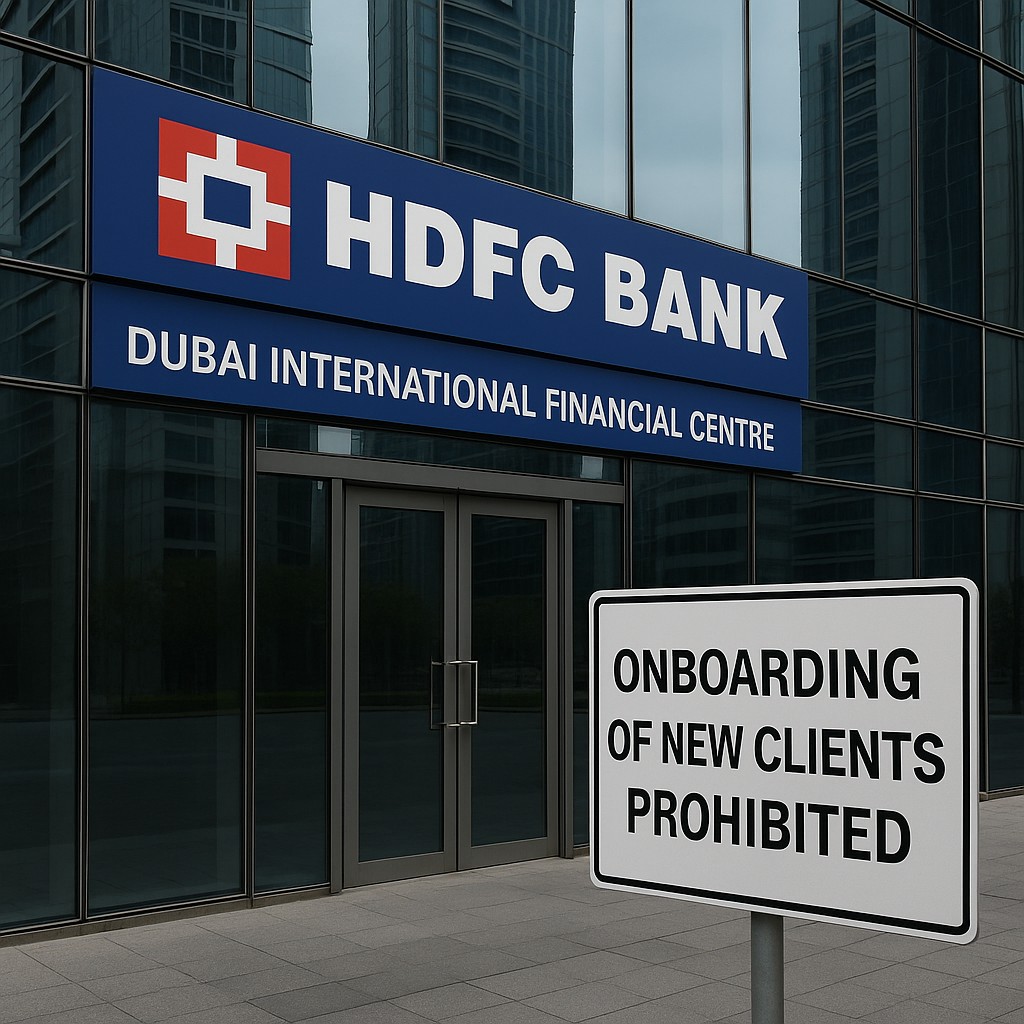
Dubai’s financial regulator has barred HDFC Bank’s Dubai International Financial Centre branch from soliciting, onboarding or servicing new clients, citing compliance lapses.

The order, issued by the Dubai Financial Services Authority and effective from 26 September, remains in force “until otherwise amended or revoked,” the bank stated. HDFC said it is taking steps to comply with the directive while engaging with the DFSA to address concerns.

HDFC clarified that the restriction does not apply to existing clients of the DIFC branch, nor to those who had already been offered services prior to the notice. As of 23 September, the branch had 1,489 customers, including joint holders.

According to HDFC, the bank does not expect this to materially affect its overall operations or financial position, noting that the Dubai branch’s business is not significant relative to its global activities.

The DFSA’s decision notice accuses the branch of servicing clients who were not properly onboarded, deficiencies in client onboarding processes, and other unspecified compliance shortcomings. The prohibition extends to advising on financial products, arranging deals, extending credit, custodial services, and financial promotions for new clients.

Analysts point to a backdrop of scrutiny over HDFC’s role in selling risky instruments—particularly Credit Suisse additional tier-1 bonds—to retail investors in the UAE. Those clients accused the bank of misclassification and inadequate risk disclosures. Investor accounts allege that KYC records were manipulated to designate them as “professional clients,” a requirement under DIFC rules for high-risk products.

Some UAE-based investors welcomed the DFSA’s move but urged stronger action, stating the suspension of new client intake is a limited measure given potential damage already done.

HDFC has a broader international presence including representative offices in Abu Dhabi, Kenya, London and Singapore, and branches in Bahrain and Hong Kong. The bank faces parallel scrutiny in India regarding related sales practices, prompting investigations by Indian enforcement agencies.

As the DFSA and HDFC engage in remediation talks, markets will closely watch whether the regulator escalates sanctions or lifts the ban after compliance is demonstrated.

HANGZHOU, CHINA – Media OutReach Newswire – 25 September 2025 – From September 25 to 29, Hangzhou, capital city of east China’s Zhejiang Province, will play host to the 4th Global Digital Trade Expo. As the world’s gaze turns to eastern China, the city is using this premier digital trade gathering to paint a vivid picture of the “AI +” era. Official picture of the 4th Global […]

Advertisements

Abu Dhabi has finalised a major agreement to enforce greater transparency in crypto-asset taxation by signing the Multilateral Competent Authority Agreement under the Crypto-Asset Reporting Framework. The deal mandates automatic exchange of tax-related data on crypto transactions across jurisdictions, aligning the UAE with rising global norms on financial disclosure. The Ministry of Finance confirmed that CARF will start operating in the UAE in 2027, with the first […]

U. S. regulators have approved Grayscale’s Digital Large Cap Fund conversion into an exchange-traded fund that will hold multiple cryptocurrencies in a single product. The fund will allocate more than 70% to Bitcoin and about 17% to Ether, with the remainder distributed among XRP, Solana, and Cardano.

The Securities and Exchange Commission adopted new generic listing standards for commodity-based spot crypto ETFs, allowing exchanges such as NYSE Arca, Nasdaq, and Cboe BZX to list qualifying funds without bespoke approval filings. These rules cut the maximum approval time from several months to as little as 75 days.

Grayscale Investments will be the first asset manager to launch a multi-crypto ETF under this framework. The GLDC product offers regulated exposure through traditional securities structures, permitting investors to access these broad crypto assets in a single fund rather than holding individual tokens. GLDC had existed before as an investment product but lacked ETF status until this regulatory shift.

Industry analysts consider this a pivotal moment for the broader digital asset market, extending beyond the earlier wave of Bitcoin-only or Ether-only products. The decision formalises recognition by regulators that crypto portfolios comprising major altcoins may be viable under oversight and regulatory expectations. It also reflects growing institutional demand for diversified exposure as volatility remains high among lesser-known tokens.

Some market participants caution that, despite its multi-asset nature, the heavy weighting toward Bitcoin and Ether means the fund’s performance may still be strongly driven by those two assets. Questions remain about how XRP, Solana, and Cardano portions will perform in different market environments, and how liquidity, custody, and valuation will be managed for the less dominant tokens.

SHANGHAI, CHINA – Media OutReach Newswire – 19 September 2025 – Huawei’s acoustic experts shared insights into the advanced technology chain behind the HUAWEI SOUND ULTIMATE Series, and shares the R&D journey that shaped its signature sound quality at the HUAWEI SOUND In-Car Audio Experience Event. Held at Huawei’s Shanghai Acoustics R&D Center, the event invites media guests to tour the labs and experience the system first-hand […]

HONG KONG SAR – Media OutReach Newswire – 17 September 2025 – Response to the Policy Address 2025/26 by KK Chiu, International Director, Chief Executive, Greater China of Cushman & Wakefield: Housing Supply and Land Policy Optimize land resource allocation and accelerate public housing supply Hong Kong’s land allocation policies have a profound impact on people’s lives. We are pleased to see the government actively promoting Light […]

HONG KONG SAR – Media OutReach Newswire – 15 September 2025 – MINT Incorporation Limited (NASDAQ: MIMI) (“MINT” or the “Company”), a leading Hong Kong-based provider of integrated interior design and fit out works, today announced the official launch of its wholly owned subsidiary, Axonex Intelligence Limited (“Axonex”), a company incorporated with limited liability under the laws of Hong Kong, marking MINT’s expansion into the technology realm […]

SINGAPORE – Media OutReach Newswire – 11 September 2025 – Singapore has long been recognized as a pivotal hub in Gree’s Southeast Asia growth strategy. With its advanced infrastructure, strong sustainability agenda, and dynamic role in the Asia-Pacific market, Singapore provides the ideal platform for Gree to showcase cutting-edge technologies that combine comfort, energy efficiency, and environmental responsibility. This vision was further reinforced at the recent event, […]

Microsoft and LG have unveiled plans to add Xbox Cloud Gaming to select internet-connected vehicles, enabling Game Pass Ultimate subscribers to stream and play games directly via the in-car Xbox app. Streamable titles include favourites such as Forza Horizon 5, Gears of War: Reloaded and forthcoming blockbusters like The Outer Worlds 2 and Call of Duty: Black Ops 7. Passengers will need a compatible Bluetooth controller, a […]

Astana International Exchange and Abu Dhabi Securities Exchange have activated a direct connection between their central securities depositories, enhancing post-trade infrastructure and extending investor access across markets. The move, under the October 2021 memorandum of understanding that brought AIX into the Tabadul digital hub, expands on the existing Tabadul network and enables fully operational CSD-to-CSD communication.

The newly established arrangement builds on Tabadul’s digital trading network, which launched in mid-2023 when AIX formally joined and began enabling bilateral trading with ADX. Tabadul, introduced in 2022, operates on a mutual market access model, facilitating cross-exchange trading across member markets.

Under the framework established in October 2021, AIX had integrated into Tabadul, paving the way for today’s deeper integration via its direct CSD link with ADX.

Assel Mukhanova, chief executive of AIX, welcomed the formalisation, noting that this will bring tangible benefits to participants through more efficient trading corridors and deeper cross-border investment flows. Abdulla Salem Alnuaimi, group chief executive of ADX, emphasised that the direct CSD connection supports capital markets accessibility, post-trade connectivity, and opens new avenues for both global and regional investors.

This development underscores a strategic commitment from both exchanges to deepen connectivity, bolster liquidity, and accelerate regional capital market integration. By complementing the stronger ties forged through Tabadul, the new ADX–AIX direct CSD link strengthens market access for issuers and investors alike.

A federal court’s latest decision in the U. S. v. Google antitrust case means Mozilla can maintain its critical financial arrangement with Google. Judge Amit Mehta has allowed Google to continue making payments to browser makers—among them Mozilla—ensuring that Firefox’s principal revenue stream remains intact. Judge Mehta’s remedy ruling clarifies that while Google must cease exclusive contracts, it may still engage in non‑exclusive deals to position its […]

Toyota and BYD have formalised a watershed collaboration anchoring future battery‑electric vehicle innovation. The joint venture, BYD Toyota EV Technology Co., Ltd., began operations in Shenzhen in 2020, equally owned by Toyota Motor Corporation and BYD Company Ltd. Their combined expertise aims to reshape BEV design, performance, comfort and intelligence for discerning Chinese consumers—and potentially beyond. BTET emerged from a partnership agreement signed in November 2019, with formal registration […]

Spot gold surged past the $3,500 mark, reaching new record highs amid mounting anticipation of Federal Reserve interest rate reductions and a weakening dollar. Bullion briefly traded near $3,508 an ounce, extending its year-to-date gains to around 30%, as markets grow increasingly uneasy over central bank independence and geopolitical stress.

Markets are pricing in a high likelihood—approaching 90%—that the Fed will proceed with a 25-basis-point cut at its upcoming meeting in mid-September, following dovish signals from Fed Chair Powell and softening macro data. A key US non-farm payrolls release this Friday is expected to reinforce the case for monetary easing, given signs of cooling in the labour market. Lower rates would reduce the appeal of interest-bearing assets, boosting demand for non-yielding gold.

The US dollar’s decline has played a significant role in elevating gold’s appeal, making bullion more attractive to global buyers. Safe-haven flight intensified after mounting investor concern regarding the Fed’s autonomy, stemming from high-profile political pressure, including moves to dismiss Governor Lisa Cook—actions perceived as jeopardising monetary policy credibility.

Investor sentiment has translated into tangible market flows: holdings in gold-backed ETFs have climbed steadily, piling pressure on available stockpiles and raising lease rates, especially in London’s bullion markets. Central banks, including those in emerging economies, continue to accumulate gold, adding institutional momentum to the rally. As a result, gold is increasingly viewed as a strategic hedge amid persistent inflation uncertainty, trade tensions, and an unpredictable global political landscape.

Strategists at UBS have noted that softer economic indicators, lower interest-rate environments, and elevated macro-geopolitical risks enhance gold’s function as a portfolio diversifier. Their outlook anticipates continued upward price movement into the coming quarters. Likewise, Goldman Sachs has raised its year-end target, citing strong central bank demand and ETF inflows despite broader market volatility.

A striking nebula shaped like a cosmic hand has emerged even more mysterious in a newly released composite view that blends X‑ray and radio data. At its centre lies the pulsar B1509‑58—an intensely rotating neutron star barely 12 miles across—which drives a vast nebula, MSH 15‑52, extending some 150 light‑years. Astronomers, led by Shumeng Zhang of the University of Hong Kong, have juxtaposed imagery from NASA’s Chandra X‑ray […]

Apple has moved three MacBooks—the MacBook Air, the MacBook Pro and the MacBook Pro —to its obsolete products list. This change ends all hardware service support, including repairs and parts availability. Meanwhile, the iPhone 8 Plus has been reclassified as vintage, extending its limited repairability for up to two more years, depending on parts availability. Apple’s classification system allows only battery service for obsolete MacBooks up to ten years after discontinuation—subject to […]

By Nitya Chakraborty Prime Minister Narendra Modi’s bilateral talks with the Chinese President Xi Jinping on Sunday at Tianjin in China on the sidelines of Shanghai Cooperation Organisation (SCO) summit have sent some very positive signals which may herald the evolution of an independent foreign policy of India voicing the interests of the Global South. […]

UAE companies are recalibrating their compensation strategies amid evolving market pressures, rising costs, and intensifying competition for skilled professionals.

Salary growth across the board is projected at a modest 4 per cent in 2025, reflecting economic moderation rather than exuberance. Mercer’s Total Remuneration Survey indicates that more than 28 per cent of firms plan to increase headcount, signalling a continuing demand for talent despite budgetary constraints. In-demand sectors such as technology, life sciences, and consumer goods are expected to see slightly higher increases—around 4.2 to 4.5 per cent—while energy and financial services align with the broader average.

MaxHR’s projections paint a slightly more optimistic picture for key verticals: salary hikes for technology roles could reach 8–12 per cent, while finance and banking roles may grow by 5–7 per cent, significantly outpacing other industries.

Employers are embracing variable compensation as cash-strapped budgets and workforce expectations diverge. There is a growing preference for pay-for-performance models, personalised benefits, and flexibility—designed to engage younger professionals who prioritise purpose and work-life integration alongside financial reward.

These shifts align with broader market signals. Tuscan Consulting notes that after post‑pandemic salary surges, firms are now reassessing compensation strategies, balancing retention needs with cost control. Executive packages increasingly include sign‑on or retention bonuses, deferred incentives, and more nuanced benchmarking—often comparing pay between UAE and KSA to remain competitive.

Yet not all data points suggest growth. Business Insider reports that salaries across the UAE may remain flat in 2025, attributed to a swelling expat population that expands the available talent pool and reduces pressure on employers to offer premium pay. Meanwhile, exponential increases in living costs—rent rose 16 per cent in the prior year—have squeezed middle-income professionals, eroding disposable income despite tax‑free earnings.

At the same time, the Dubai government is extending a labour-market lifeline to targeted expatriates, offering roles with monthly salaries up to Dh 50,000. This contrasts with the broader cautious recruitment trends in the private sector, where AI, automation, and tax uncertainties are prompting a more measured approach to hiring.

Dubai’s finance sector is expanding—hiring regulators, investment bankers, and compliance professionals to match its rapid growth. Compensation packages often exceed those in London by up to four times once tax advantages and relocation benefits are included, although professionals note that reward expectations and infrastructure pressures are testing the city’s appeal.

A cohesive picture emerges: employers are shifting from purely salary-driven offerings to total-reward packages that integrate flexibility, performance incentives, and career development. While headline salaries may be easing off, especially for mid-tier roles, specialized sectors and public entities continue to push compensation envelopes to secure talent and drive strategic priorities.


Saudi Arabian Oil Company disclosed net profit of $22.67 billion for the second quarter of 2025, marking a 22 per cent year‑on‑year decline and extending the downturn to its tenth straight quarter. The drop coincided with a missing of the $23.7 billion analyst consensus estimate, underscoring pressure from weakening crude prices and softer demand. Revenue downturn was central to this performance. Total income fell to $101.02 billion, down 11 per cent from the same […]

A surge in U. S. import duties has swiftly altered the economic landscape, with substantive implications for oil markets, trade dynamics and strategic alliances. U. S. President Donald Trump has enacted additional tariffs of up to 50 percent on imports from India in response to New Delhi’s continued purchases of discounted Russian crude. The escalation, applied in two stages and bringing tariffs from 25 percent to 50 percent, took effect on Wednesday, disrupting both markets and diplomatic ties.

Oil prices slipped as traders absorbed the news, with crude extending its decline as markets weighed the ripple effects of the heightened tariffs. The move is expected to erode India’s export earnings while simultaneously undermining the financial benefit of cheaper Russian oil.

Analysts calculate that India has saved around $17 billion by ramping up imports of Russian crude since early 2022. Now, with the tariffs in place, export revenues could shrink by more than $37 billion this fiscal year—nearly halving the gains previously made in energy procurement. The most vulnerable sectors include labour-intensive industries such as textiles, gems, jewellery, seafood and organic chemicals, where job losses may be significant.

New Delhi has resisted external pressure to cease its oil trade with Russia, citing national interest and energy security. Refiners and government officials have indicated that the message from the centre is clear: strategic autonomy takes precedence over commercial coercion. At the same time, discussions are in progress through virtual channels, encompassing trade, energy and critical mineral collaboration.

The tariffs are not only triggering economic recalibration but also intensify diplomatic friction. Experts warn this could become the most serious crisis in U. S.–India relations in decades. The uneven application—targeting India while China remains largely exempt—has heightened perceptions of hypocrisy and could push India closer to alternative partners such as Russia or China.

Domestic responses are underway. Authorities are exploring measures to cushion the blow, such as reducing tax burdens, providing credit support to exporters, and diversifying trade destinations towards Latin America, Africa, Southeast Asia and the EU. On the U. S. side, certain sectors—including pharmaceuticals and electronics—remain exempt from the higher tariffs, partly shielding U. S. companies such as Apple which have investments in Indian manufacturing.

Currency markets and investor sentiment reacted sharply, with Indian stock indices tumbling as concerns mounted over export disruption and broader economic repercussions.

VISHNU RAJA
RYO YAMADA
HITORI GOTOH
IKUYO KITA