News related to
political

Iran is allowing exporters and importers greater use of cryptocurrencies, including Tether’s USDT and Bitcoin, for cross-border settlements as tighter US sanctions intensify pressure on trade and foreign-currency flows. The policy shift gives businesses more flexibility to repatriate export earnings outside the central bank’s official foreign-exchange platform and use those proceeds directly to pay for imports. Crypto transactions have become one route for moving value across borders […]

President Lee Jae Myung’s approval rating has fallen to a new low as opposition hardens against sending South Korean military assets to the Strait of Hormuz, intensifying pressure on his government while Washington urges Seoul to contribute to maritime security.

A National Barometer Survey released Thursday showed 43 per cent of respondents approved of Lee’s handling of state affairs, down seven percentage points from two weeks earlier, while 48 per cent disapproved. It was the first time disapproval exceeded approval in the biweekly poll since Lee took office in June 2025.

The same survey found 45 per cent opposed deploying military assets, including maritime patrol aircraft and support ships, to Hormuz, compared with 36 per cent who supported such a move. Opposition was strongest among respondents in their 40s and 50s and among supporters of Lee’s ruling Democratic Party, underscoring the domestic political risk surrounding any military contribution.

Seoul has repeatedly said no final decision has been made. Seong Ghi-hong, senior presidential secretary for public relations and communication, said Wednesday that the government had not finalised its policy and was “cautiously assessing” the issue. A Defence Ministry inspection team sent to the United Arab Emirates to examine conditions returned on Thursday.

The government has described the mission as an assessment rather than preparation for deployment. National Security Adviser Wi Sung-lac also said talks between Lee and French President Emmanuel Macron in Paris focused on possible contributions to maritime security and freedom of navigation, not on an agreement to send troops.

The debate has sharpened as US President Donald Trump presses allies to help secure Hormuz during the prolonged conflict with Iran. Trump has publicly criticised Seoul over its reluctance to support US efforts in the waterway, which carries a major share of the energy supplies used by South Korea and other Asian economies.

South Korean officials have denied that Washington imposed a deadline for a deployment. The presidential office has said Seoul is discussing practical ways to support peace, stability and free navigation with international partners, while weighing military readiness, legal requirements and the risks of deeper involvement in the conflict.

Any dispatch of troops would require approval from the National Assembly, where Lee’s Democratic Party holds a majority. That gives the government procedural room but does not remove the political cost of acting against a sizeable share of public opinion, including voters aligned with the ruling camp.

A separate Hangil Research survey conducted from September 5 to 7 found 47.1 per cent opposed deployment and 43 per cent supported it, a difference within the poll’s margin of error. Opposition rose to 55.5 per cent among Democratic Party supporters and 62.4 per cent among self-described liberals.

Lee’s broader ratings have also weakened for domestic reasons. A Realmeter survey released Monday put his approval at 37.4 per cent, down 1.5 percentage points over the week and the eighth consecutive weekly decline. The pollster linked the fall primarily to disputes over a cabinet reshuffle and housing-related policy changes rather than the Hormuz question alone.

Gallup Korea last week placed Lee’s approval at 40 per cent, with 51 per cent disapproving. Respondents who viewed him negatively most often cited real estate policy, followed by concerns about the economy and livelihoods and dissatisfaction with personnel appointments.

The Hormuz issue nevertheless adds a foreign-policy dilemma at a sensitive moment. South Korea depends heavily on imported energy, and disruption in the strait has already increased the strategic importance of keeping shipping routes open. At the same time, Iran has warned Seoul against military participation, saying such a move could be viewed as siding with US military action.

Shipping through Hormuz remains sharply below pre-war levels as the United States and Iran continue military and economic pressure around the waterway. The conflict has pushed oil prices higher and complicated supply planning across Asia, giving Seoul a direct economic interest in restoring safer passage without becoming drawn further into hostilities.

Arabian Post Staff -Dubai Saudi Arabia told OPEC that its crude production fell to 6.238 million barrels a day in August, the kingdom’s lowest monthly level since 1990, as renewed fighting involving the United States and Iran disrupted export routes. The figure, contained in OPEC’s September monthly oil market report, was almost 1.9 million barrels a day below the 8.135 million barrels reported for July. It also […]

  By R. Suryamurthy India’s trade with BRICS has expanded dramatically, but the numbers reveal an uncomfortable imbalance beneath the rhetoric about a multipolar world and alternative financial architecture. Between FY2021 and FY2026, India’s total merchandise trade with the 11-member grouping more than doubled, from $203.1 billion to $417.5 billion. Yet the expansion was overwhelmingly […]

The article Bricks cannot de-dollarise its way out of India’s huge trade imbalance appeared first on Latest India news, analysis and reports on Newspack by India Press Agency).

Algeria has ended diplomatic relations with the United Arab Emirates after saying all efforts to preserve bilateral ties had been exhausted, marking a sharp escalation in a dispute that had already damaged political and transport links between the two Arab states. The decision was announced on Thursday by Algerian state television, which cited the authorities as saying Algeria had exhausted every avenue available to maintain relations with […]

Arabian Post Staff -Dubai DP World has priced a dual-tranche international bond offering comprising €750 million of six-year green notes and $750 million of 10-year conventional notes, extending the Dubai-based ports and logistics group’s access to both sustainable and conventional debt markets. The transaction follows a global investor roadshow arranged under DP World’s $10 billion Global Medium Term Note Programme. The euro-denominated tranche is structured as green […]

Canada has used its lead-nation role at Poland’s MSPO arms fair to push its defence industry more forcefully into European markets, pairing a large trade mission with a renewed defence agreement with Warsaw. Defence Minister David McGuinty and International Trade Minister Maninder Sidhu led Ottawa’s presence at the International Defence Industry Exhibition in Kielce, where Canada was designated the 2026 lead nation. The government said its mission […]

Advertisements
India is preparing to press BRICS partners to deepen the use of central bank digital currencies for cross-border payments while avoiding support for a single bloc-wide payments network that could be portrayed as an alternative to the dollar-dominated financial system.

The proposal is expected to feature at the BRICS leaders’ summit in New Delhi on September 12 and 13, where India, as this year’s chair, is seeking agreement on ways to lower the cost and speed up the settlement of trade, tourism and remittance payments among member states.

Reserve Bank of India Governor Sanjay Malhotra said last month that BRICS members were examining links between their fast-payment systems and central bank digital currencies, with a payments task force considering several options. He stressed that discussions remained at an exploratory stage and that no model had been agreed.

India’s preference is for interoperable national systems rather than either a common currency or centrally controlled BRICS payments architecture. Officials have framed the initiative around efficiency, cheaper transactions and use of sovereign currencies, distancing it from proposals that could be interpreted as an organised campaign to displace the US dollar.

That distinction has become politically important as BRICS members debate how far financial cooperation should go. Russia and some other members have advocated stronger alternatives to Western-dominated payment channels, while India has repeatedly ruled out backing a common BRICS currency and has resisted presenting financial initiatives as a de-dollarisation project.

The RBI earlier recommended that linking BRICS members’ digital currencies be placed on the summit agenda. Such an arrangement could allow transactions to be settled directly through participating central banks or financial institutions, reducing dependence on multiple correspondent banks and potentially cutting foreign-exchange and processing costs.

Central bank digital currencies are electronic forms of sovereign money issued by monetary authorities. Unlike privately issued stablecoins, their value and settlement are backed by central banks. India has been testing the digital rupee since 2022 and has added features including programmability and offline functionality as the RBI studies how it can complement payment methods.

Malhotra has said cross-border payments offer scope for lower costs, particularly in retail transactions. He has also said the RBI will continue efforts to promote greater international use of the rupee and encourage settlement in local currencies where commercially viable.

India is pursuing payment connectivity on a parallel track through the Unified Payments Interface, its instant retail payments platform. Prime Minister Narendra Modi this week called for UPI to be connected with payment systems in more countries. UPI is already available or linked with services in several overseas markets, including Singapore and the United Arab Emirates.

The BRICS discussions nevertheless extend beyond retail payment links. Officials have also been examining whether digital currencies issued by central banks can provide a secure settlement layer for transactions between member economies without requiring the creation of a shared currency or new supranational monetary authority.

Technical and policy obstacles remain. CBDC systems across BRICS countries are at different stages of development, and any cross-border arrangement would require agreement on interoperability, cybersecurity, data standards, foreign-exchange conversion, liquidity, governance and legal responsibility when transactions fail or disputes arise.

Trade imbalances pose another complication because a country receiving more of another member’s currency than it can use may be reluctant to accumulate balances. Policymakers have therefore also discussed mechanisms involving currency swaps and other settlement arrangements to deal with mismatches in bilateral trade.

The BRICS grouping now comprises 11 members, making consensus more difficult than when it consisted only of Brazil, Russia, India, China and South Africa. The expanded membership includes Egypt, Ethiopia, Iran, the United Arab Emirates and Indonesia, while Saudi Arabia has participated in BRICS meetings as its membership status has remained subject to clarification.

The International Atomic Energy Agency’s board has reported Iran to the UN Security Council over nuclear safeguards failures, marking the first such referral in two decades and widening the diplomatic confrontation between Tehran and Western governments. The 35-member Board of Governors adopted the resolution on Wednesday by 23 votes to three, with eight abstentions. China, Russia and Niger voted against the measure, while one member did not […]

President Donald Trump warned Iran on Wednesday that the United States could strike Pickaxe Mountain after Washington detected activity at the deeply buried site near the damaged Natanz uranium enrichment complex. “We notice there’s a little activity at Pickaxe. I would advise Iran not to get cute because we will have to hit them very hard,” Trump told a Republican midterm convention in Dallas, sharpening warnings he […]

By K Raveendran India has spent the past four years demonstrating that energy security can sometimes be protected by refusing to choose sides. Russian crude offered discounts when Western sanctions rearranged the global oil market, Gulf producers remained indispensable despite the new relationship with Moscow, and purchases from the United States and other distant suppliers […]

The article India’s oil cushion faces two-front squeeze amidst Trump’s tariff threat appeared first on Latest India news, analysis and reports on Newspack by India Press Agency).

Hunter Biden’s newly launched LAPTOP memecoin lost about 99 per cent of its value within its first hour of trading on Wednesday, turning a hypothetical $1,000 purchase near its early peak into roughly $10 as prices collapsed below $2. The token, launched on Coinbase’s Base blockchain, traded near $190 to $200 shortly after opening before plunging to below $4 within minutes and later falling under $2 on […]

By Dr. Gyan Pathak Guwahati High Court’s September 3, 2026 order to bring the woman pushed into Bangladesh as infiltrator back to India and to give interim compensation of ₹2 lakh to her husband has brought the BJP’s infiltrator politics on test for accountability. The order has already made the BJP led Government of Assam […]

The article BJP’s infiltrator politics in Assam on test appeared first on Latest India news, analysis and reports on Newspack by India Press Agency).

North Korea’s newly appointed defence minister has warned that Pyongyang will take strong countermeasures if the United States and its allies provoke a new military confrontation, as Washington, Seoul and Tokyo conduct their five-day Freedom Edge exercise. Kim Song-gi, appointed defence minister late last month, issued the warning in a statement carried by the Korean Central News Agency on Monday. He said the US-led exercises were creating […]

By Dr. Gyan Pathak The truthfulness of the BBC documentary “The Modi Question” was never put on trial and now the plaintiff NGO from Gujarat, Justice on Trial, withdrew its ₹10,000 crore defamation lawsuit against BBC on September 3, 2026, with liberty to file a fresh suit on the same cause of action. BBC was […]

The article The Modi Question: Truthfulness was never put on trial appeared first on Latest India news, analysis and reports on Newspack by India Press Agency).

Deputy Prime Minister Ekniti Nitithanprapas outlined an investment-led blueprint anchored by an upgraded Joint Public Private Committee (JPCC), private-sector syndication, and World Bank alignment ahead of the 2026 Annual Meetings and 2028 ASEAN Chairmanship.

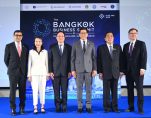
BANGKOK, THAILAND – Media OutReach Newswire – 7 September 2026 – Thailand is ready to cross into “new horizons” — achieving high-income status and driving a more resilient ASEAN, declared Deputy Prime Minister and Minister of Finance Dr. Ekniti Nitithanprapas as he delivered the closing address at the Bangkok Business Summit 2026 today,

Public and private sector leaders at the closing of the Bangkok Business Summit 2026, Queen Sirikit National Convention Center.

Detailing the strategic “why, how, and design” of the national transition, Dr. Ekniti stated that entering new horizons is an unavoidable global imperative. While ASEAN is uniquely positioned to capture emerging opportunities, the region must guard against severe geopolitical, technological, and climate risks with proactive, unified action.

Dr. Ekniti Nitithanprapas, Deputy Prime Minister and Minister of Finance, at the closing panel of the Bangkok Business Summit 2026.

“The goals must be clear, and we are completely on the same page: Thailand must achieve high-income status,” said Dr. Ekniti.

“The recipe provided by the World Bank aligns directly with what our business leaders have outlined. An investment-led growth policy, private-sector-centred endeavours, and persistent implementation are what the government and business community are now executing together. Think of the seven new growth engines as our forwards on the pitch. The government acts as both coach and midfielder — spearheading investment, driving trade, empowering SMEs, unlocking regulatory friction, and cultivating human capital. Meanwhile, fiscal and financial stability serves as our steadfast defensive backline.”

Dr. Ekniti affirmed that the Joint Public and Private Committee (JPPC) will no longer function as a purely advisory body, but will operate as an executive economic steering council mandated to enact structural reforms and track execution against the World Bank’s recommendations.

“We will not be the same old Thailand. We will be driving the global agenda. Thailand will enter new horizons, empower people, and build resilience,” Dr. Ekniti emphasised. “In the next two years, Thailand will assume the Chairmanship of ASEAN. We will establish a long-term, multi-year agenda for a stronger, more resilient ASEAN. If this new model of public-private partnership carries on, we will decisively reinvent Thailand.”

Key leaders representing the Joint Standing Committee on Commerce, Industry, and Banking (JSCCIB) delivered strategic sector priorities to anchor the transition.

Representatives of the Joint Standing Committee on Commerce, Industry and Banking (JSCCIB) share Thailand's strategic economic direction.
Representatives of the Joint Standing Committee on Commerce, Industry and Banking (JSCCIB) share Thailand’s strategic economic direction.

Payong Srivanich, Chairman of the JSCCIB and the Thai Bankers’ Association, underscored that reinventing the economy requires modernising legacy industries while creating space for future engines.

“From three core challenges – structural, competitiveness, and public-sector efficiency – came the White Paper outlining the seven industries of the future,” stated Mr. Payong. “This time, the government has presented a credible policy framework based on collaborative public-private partnership. Thailand must address fundamental security—whether in food, energy, or low-carbon growth. We are declaring to the world that we are done with planning and on the same page. Now we are geared up for execution.”

Dr. Poj Aramwattananont, Chairman of the Thai Chamber of Commerce and Board of Trade of Thailand, stressed that amid geopolitical friction, geoeconomics, and regional conflict, growth must be anchored in ASEAN’s 600-plus million people which serve as both supply and demand networks.

Adapting to international trading rules is inseparable from Thailand’s targeted accession to the OECD by 2028. The accession process acts as the structural catalyst to modernise domestic legislation, corporate governance, transparency, and fair market competition to premier global standards—lowering compliance costs and solidifying investor confidence.

Pimjai Leeissaranukul, Chairwoman of the Federation of Thai Industries, insisted that Thailand must build its own brand; it can no longer afford to be just the world’s OEM. She called for a decisive departure from labor-cost competition toward high productivity, automation, AI, and green sustainability. She advocated expanding target sectors—such as next-generation electric vehicles, smart electronics, automation, and wellness—while enforcing enhanced public procurement.

Carlos Felipe Jaramillo, Vice President for East Asia and Pacific at the World Bank, observed that the eyes of the financial world will be on Bangkok next month as it hosts the 2026 IMF–World Bank Group Annual Meetings, providing Thailand with a premier global stage to show that it is advancing on a credible pathway to attain high-income status by 2037.

“The World Bank has presented a series of structural reforms that Thailand can pursue to reach high-income status, creating more and better-paying jobs for young Thais in the future,” Mr. Jaramillo stated. “The plan deliberately puts the private sector at the center, because experience has taught us that the private sector is the primary engine of employment. This reform agenda is multifaceted, requiring coordinated national effort, and, more importantly, relentless persistence in implementation.”

The Bangkok Business Summit 2026 concluded with a clear consensus: today’s closing discussions mark the formal launch of sustained, institutionalised execution across the public sector, private enterprise, and multilateral institutions to ensure Thailand stands as a resilient economic anchor for the wider ASEAN region.

Hashtag: #JSCCIB

The issuer is solely responsible for the content of this announcement.

Tether chief executive Paolo Ardoino has attributed Bitcoin’s failure to match gold’s global reach to a generational divide among financial decision-makers, arguing that the cryptocurrency remains poorly understood by many of the people who control pools of capital. Ardoino said Bitcoin is still at an early stage of adoption compared with gold, whose role as a store of value and reserve asset has been embedded in financial […]

Singapore’s government will not intervene in Singapore Airlines’ decisions on whether to provide further capital to Air India, Senior Minister K. Shanmugam said on Saturday, stressing that commercial judgments must remain with the carrier’s board and management.

Shanmugam, who is also Coordinating Minister for National Security and Home Affairs Minister, said the government maintains a strict principle of not directing individual investment decisions by Temasek portfolio companies. Singapore Airlines, rather than state investor Temasek, is the shareholder in Air India and must decide whether additional funding is commercially justified, he said.

Air India is seeking about $1.5 billion in fresh equity from its owners, Tata Sons and Singapore Airlines, after losses widened sharply in the financial year ended March 2026. Singapore Airlines owns 25.1 per cent of the carrier, while Tata Sons holds the remaining 74.9 per cent.

Singapore Airlines said last week that its board would “carefully consider” any request for additional capital, taking account of the group’s other funding requirements and Air India’s business strategy. The airline said it works with Tata Sons to support Air India’s transformation programme as a significant minority shareholder.

The funding question has prompted political scrutiny in Singapore because Temasek, which is owned by the Ministry of Finance, is the majority shareholder in Singapore Airlines. Workers’ Party MP Kenneth Tiong has questioned whether Temasek funds should ultimately be used to support Air India and has filed a question for the September 8 sitting of Parliament.

Shanmugam said shareholders and the public were entitled to expect rigorous assessment, accountability and transparency from Singapore Airlines. Shareholders could question management and directors at the company’s annual general meeting, but political views should not replace the professional judgment of its board, he said.

“Neither his views nor those of any minister or any other MP should substitute for the commercial judgment of SIA’s management and board of directors,” Shanmugam said, referring to Tiong.

He said Temasek is accountable to the government for its overall portfolio and long-term performance, but not for individual investments made by its portfolio companies. The government’s role, he added, was to ensure professional management and give companies sufficient independence to make properly considered decisions without political pressure.

Shanmugam warned that directing specific investments could weaken commercial discipline by allowing political considerations to shape corporate decisions. He said companies must be able to accept that some investments will produce gains and others losses, with performance judged across portfolios and over appropriate time horizons.

The debate follows Air India’s continuing financial and operational pressures during its overhaul under Tata ownership. The airline group posted a record loss of more than $2 billion for the last financial year, while its transformation has required extensive investment in aircraft, systems, customer service, maintenance and staffing.

Singapore Airlines became an Air India shareholder after the merger of Vistara with Air India was completed in November 2024. It received a 25.1 per cent stake in the enlarged carrier, combining its former Vistara interest with a cash investment agreed as part of the transaction.

Singapore Airlines subsequently injected further capital into Air India. By the end of March 2025, the total cost of its investment in the carrier stood at about S$2.1 billion, according to its disclosures.

The airline has repeatedly described its exposure to Air India as a long-term strategic investment, giving it direct participation in India’s large domestic aviation market and international traffic flows beyond its Singapore hub. It has also acknowledged that the turnaround will take time and that Air India faces both company-specific and wider industry challenges.

More than 1,600 migrant children have been registered in Ceuta as Spain struggles to move minors from streets and makeshift camps into adequate care more than a month after the mass crossing from Morocco. Spain’s Ministry of Youth and Children said 1,612 minors were registered in the North African enclave by September 1, including 1,129 identified after the July 30-31 influx. Officials acknowledge that the true number […]

LSAF Global, in partnership with ISCA and the Professional Services (PS) Centre Alliance, brings the PS Centre ecosystem to businesses in Indonesia.

SINGAPORE – Media OutReach Newswire – 4 September 2026 – A business expanding into another country may need an accountant, lawyer, tax adviser, talent specialist and local business partner before it can make its first move.

The challenge is often not finding advisers. It is knowing where to start.

LSAF Global, in partnership with the Institute of Singapore Chartered Accountants (ISCA) and the Professional Services (PS) Centre Alliance, is bringing the PS Centre ecosystem to businesses in Indonesia, connecting them with professional expertise, trusted networks and opportunities across Singapore, Indonesia and the region.

The PS Centre is a collaborative network that aims to make that easier by giving businesses a trusted starting point to find professional expertise, local market knowledge and business connections when expanding across the region.

Businesses in Indonesia can tap on the wider PS Centre network, which currently spans Hongqiao in Shanghai, Ho Chi Minh City, Nanjing and Singapore.

The network is set to grow further, with Johor, Shenzhen and Bangkok among the next locations being developed.

Together, the PS Centres and wider ecosystem are intended to create trusted business corridors across the region so that companies entering a new market do not have to start from zero.

Cross-border business is getting harder

The collaboration in Indonesia comes at a time when companies are looking overseas for growth while facing a more complicated business environment.

Tariffs and geopolitical tensions are changing where companies manufacture and source their products. Supply chains are being redesigned. AI and cyber risks are creating new business questions. Sustainability requirements are changing how companies operate and report.

Increasingly, these problems do not sit neatly within one profession.

A company may start with a tariff question only to discover that it also needs tax, legal and supply chain advice. Another may see an opportunity in Indonesia but need help finding local partners and understanding how best to enter the market.

The PS Centre ecosystem brings different forms of expertise and business networks together so companies do not have to navigate these issues alone.

The collaboration comes amid strong economic links between Singapore and Indonesia.

From Singapore to Indonesia and from Indonesia to the region

The PS Centre ecosystem is designed to work across markets.

Singapore businesses entering Indonesia can connect with local professional advisers, business networks and partners on the ground through LSAF Global and the wider PS Centre ecosystem.

Indonesian businesses looking towards Singapore can tap the Singapore PS Centre and Singapore’s professional services ecosystem.

A business looking beyond Indonesia and Singapore can tap the wider network for support in Vietnam and China. As new centres open, the network will extend into more markets.

Across its existing locations, the PS Centre network has already facilitated more than 90 business connections, supported 100 companies and engaged over 700 businesses and professionals.

The ambition goes beyond opening centres in different cities.

It is to build a connected ecosystem and trusted business corridors that connect opportunities in one market with trusted expertise and networks in another.

Helping businesses solve cross-border challenges

A key initiative being expanded across the PS Centre network is the Business Growth Clinic.

Its premise is simple.

Businesses do not always know which professional they need. They simply know they have a problem to solve.

A manufacturer may produce different parts of the same product across several countries and need help understanding how changing tariffs affect its business.

A professional services firm may want to access talent in another market but is unsure how to structure its operations.

Another business may be looking for an overseas partner, considering an acquisition or trying to understand how geopolitical changes could affect where it invests next.

Instead of figuring out which adviser to approach first, businesses can bring their problem to the Business Growth Clinic.

Depending on the issue, accountants, lawyers, tax specialists, valuers, consultants and other professionals can come together to understand the problem and connect the business with the expertise it needs.

Businesses in Indonesia will also be able to tap the Business Growth Clinic through the PS Centre ecosystem. A Singapore company facing a business issue in Vietnam can tap expertise through the Ho Chi Minh City PS Centre. An Indonesian business looking to establish operations in Singapore can connect with professionals through the Singapore PS Centre. A business exploring China can access support through Hongqiao.

As the PS Centre network expands, the reach of the Business Growth Clinic will expand with it.

Mr Lee Boon Teck, President of the Institute of Singapore Chartered Accountants (ISCA), said: “Businesses do not always know which professional they need. They simply know they have a problem to solve. The strength of the PS Centre lies in the network we are building together: connecting businesses with professional expertise, trusted networks and opportunities across markets. The PS Centre Alliance can help businesses in Singapore and Indonesia make the connections they need to grow across the region.”

Connecting businesses with professional expertise

The initiative is led by the PS Centre Alliance, comprising the Association of Small & Medium Enterprises, Institute of Valuers & Appraisers Singapore, Singapore Business Federation, Singapore Chinese Chamber of Commerce & Industry, Singapore Manufacturing Federation, Tax Academy of Singapore, The Law Society of Singapore and ISCA.

The Alliance brings together organisations representing both sides of the equation: businesses looking for opportunities and professional services firms with the expertise to help them pursue those opportunities.

In Indonesia, this gathering of the PS Centre Alliance partners to build relationships with local business and professional organisations, including the Indonesian Employers Association (APINDO), Singapore Chamber of Commerce Indonesia, The Indonesia Capital Market Institute (TICMI) and Kongres Advokat Indonesia (KAI).

These relationships will help connect businesses with people who understand the local market while linking them to the wider PS Centre network.

Building sustainability capabilities in Indonesia

ISCA and Universitas Sahid (USAHID) will enter a three-year collaboration to strengthen sustainability capabilities in Indonesia.

The collaboration will facilitate access to the ISCA Sustainability Professional Certification for eligible USAHID students, faculty members, alumni and other participants. It will also support learning and knowledge sharing in sustainability reporting and related areas.

The collaboration aims to connect academic learning with professional practice and build a stronger pool of professionals who can support businesses as sustainability requirements evolve.

Prof. Dr. Ir. Giyatmi, M.Si., Rector of Universitas Sahid, said: “Bringing the Professional Services Centre ecosystem to businesses in Indonesia represents an important step in strengthening collaboration between Indonesia and Singapore’s professional and business communities. We believe the ecosystem can serve as a valuable platform for knowledge exchange, professional development, and stronger connections between academia and industry. Universitas Sahid is pleased to support this initiative and looks forward to contributing to the development of future-ready professionals who can support sustainable and regional economic growth.”

The collaboration in Indonesia marks another step in building a regional network where businesses, professional services firms and local partners can connect across markets.

As businesses increasingly look beyond their home markets for growth, the aim is simple: when a business sees an opportunity across borders, it should not have to start from zero.

For additional quotes from PS Centre Alliance partners, please refer to the attached Annex.

ANNEX

Ms Hamidah Aidillah, Vice President, Association of Small & Medium Enterprises, said: “For Small & Medium Enterprises (SMEs) looking to grow overseas, finding the right connections and trusted support in a new market can be challenging. Through the PS Centre Alliance’s collaboration in Indonesia, businesses can gain access to professional expertise and local networks, helping Singapore SMEs better navigate the Indonesian market and pursue opportunities for growth across the region. This move is also in line with ASME’s internatiolisation efforts across ASEAN. ”

Mr Lie Kok Keong, Council Chairperson, Institute of Valuers and Appraisers Singapore, said: “Bringing the PS Centre ecosystem to businesses in Indonesia creates meaningful new opportunities for Chartered Valuers and Appraiser (CVA) holders to connect with a wider network of professionals in Indonesia through fostering knowledge exchange and capacity building. We encourage CVA holders to leverage on the wider network to build ties with their Indonesian counterparts to grow and create opportunities together.”

Mr Mark Lee, Chairman of Singapore Business Federation, said: “Businesses today need to remain agile and diversify their markets to build long-term resilience. Indonesia’s long term growth prospects and close ties with Singapore offer significant opportunities for our companies. By bringing PS Centre Jakarta and SEC@Jakarta together, we can make it easier for businesses to access our collective networks, advisory expertise and facilitation support, and help them turn these opportunities into meaningful partnerships and growth.”

Mr Ernie Koh, Council Member, Singapore Chinese Chamber of Commerce & Industry (SCCCI), said: “Indonesia is an important market for many Singapore businesses seeking to expand their regional presence. Through the PS Centre Alliance’s collaboration in Indonesia, enterprises can access trusted professional support and local networks, helping them better navigate the market and build the connections needed for cross-border growth.”

Mr Wayne Yap, Chief Executive Officer of the Singapore Manufacturing Federation, said: “Professional services firms are important partners in helping manufacturers understand new markets, manage business requirements and expand with confidence. Through the PS Centre ecosystem, businesses will bring together professional expertise, industry networks and local market connections to support manufacturers and other businesses pursuing opportunities in Indonesia and across the region.”

Mr Dennis Lui, Chief Executive Officer, Tax Academy of Singapore, said: “Tax is not a footnote to cross-border investment – It can determine whether opportunity becomes reality. Tax Academy of Singapore sits at the intersection of government, industry, and academia, enabling us to translate policy into practical capability and connect the people who make investment happen. Through the PS Centre Alliance’s collaboration in Indonesia, we want to bring that strength to the Singapore-Indonesia corridor – helping businesses move from opportunity to execution.”

Ms Peggy Yee, Treasurer and Council Member of The Law Society of Singapore said: “With more businesses expanding across borders and industries, the ability to navigate legal and regulatory complexities will become a critical skill for both businesses and firms. Bringing the PS Centre ecosystem to businesses in Indonesia will further provide valuable and trusted support for enterprises in the region, ensuring access to trusted legal expertise along with other professional services.”

Hashtag: #ISCA #CharteredAccountants #ProfessionalServices #ProfessionalServicesCentre #DifferenceMakers #Accounting #Accountancy

The issuer is solely responsible for the content of this announcement.

About the Institute of Singapore Chartered Accountants (ISCA)

The Institute of Singapore Chartered Accountants (ISCA) is the national accountancy body of Singapore. Established in 1963, ISCA administers the Singapore Chartered Accountant Qualification programme and is the designated entity by the Singapore Ministry of Finance to confer the Chartered Accountant of Singapore [CA (Singapore)] designation.

ISCA supports over 46,000 members across industries in Singapore and globally, with members in more than 40 countries. With a growing international presence, ISCA has 12 overseas chapters, 7 offices across 10 countries and a network of over 150 strategic partners, strengthening professional connections and opportunities across borders. ISCA is also a member of Chartered Accountants Worldwide, a global network representing more than 1.8 million Chartered Accountants and students across over 190 countries.

ISCA advances professional development and lifelong learning through ISCA Academy, its training arm and drives community impact through ISCA Cares, its charity arm.

For more information, visit .

Iran’s worsening fiscal squeeze is spilling into daily life as collapsing oil revenue, a record-low currency and surging prices force Tehran to balance military demands against the cost of keeping fuel, food and other essentials affordable. The pressure has sharpened after Iranian crude exports fell to roughly 260,000 barrels a day in August from about 1.7 million before the latest tightening of US economic pressure, draining the […]

The Federal Ministry of Solid Minerals Development is partnering with EnergyNet to deliver the first Nigeria NOW

ABUJA, Nigeria – EQS Newswire – 3 September 2026 – The Nigeria NOW! takes place on 19 and 20 November at the Bola Ahmed Tinubu International Conference Centre, under the patronage of the Honourable Minister of Solid Minerals Development, Dr Dele Alake. Between 500 and 600 delegates are expected across energy, infrastructure and mining.

The Federal Ministry of Solid Minerals Development is partnering with EnergyNet to deliver the first Nigeria NOW!, and has committed to remain involved through the preparatory period rather than at the event alone. The Ministry hosted the Abuja launch, secured the patronage of the Honourable Minister, and convened three further federal ministries as deliberate participants.

Speaking at the launch through Engr. Obadiah Simon Nkom, Director-General of the Mining Cadastre Office, Dr Alake set out why four ministries participate rather than one. Infrastructure, licensing, financing, technology, security and market access fall across several mandates, and no single ministry can answer an investor’s questions on all of them.

Why Nigeria

Nigeria now issues no mining licence without a plan for a local processing plant. The rule has been applied consistently and the investment following it includes a $1.3 billion partnership with the Africa Finance Corporation covering an alumina refinery, geological mapping and exploration support, a $600 million lithium processing plant near the Kaduna-Niger border, and a $200 million lithium refinery outside Abuja.

The first working demonstration is already running. A lithium plant at Endo in Nasarawa State, commissioned on 2 July, processes 6,000 tonnes of ore a day on around $250 million of investment. Sector revenue reached over 38 billion naira in 2024 against 6 billion the previous year. A memorandum signed with Türkiye in May covers exploration, technology transfer, digitalisation and training, and the Solid Minerals Development Fund began awarding exploration grants in July under its new EMERGE endowment.

Nigeria’s power sector is moving on the same principle of decentralised decision-making. Two years into the Electricity Act 2023, the Nigerian Electricity Regulatory Commission has transferred regulatory oversight to sixteen subnational commissions, giving states authority over their own electricity markets for the first time. The Nigerian Sovereign Investment Authority has put domestic capital behind distributed renewable energy, and industrial self-supply has reached 200MW, with a steel plant among the projects breaking ground against it.

Dr Alake’s own formulation is that the days of exporting raw minerals from pit to port are over.

What the Expo covers

Nigeria NOW! brings government, investors, project developers, financial institutions and development partners together around three sectors, energy, infrastructure and mining, with a focus on projects, capital and partnerships rather than announcements alone. The programme runs across two days at the Bola Ahmed Tinubu International Conference Centre in Abuja.

“This is the first Nigeria NOW! held in Nigeria, and the Ministry’s commitment to stay involved through the preparatory period is what makes it different from a conference that arrives and leaves,” said Abdoulaye Sylla, Portfolio Manager and Head of Corporate Development at EnergyNet. “We expect between 500 and 600 delegates, and the Ministry has asked that the Expo be judged on what is delivered after it closes.”

Partners

Nextier joins the Expo as Official Advisory Partner, providing strategic advisory and media support across the programme.

The Nigerian Indigenous Women in Mining and Natural Resources Organisation (NIWIMNRO) joins as Women in Mining Partner. The network was recognised at the Abuja launch with EnergyNet’s Leadership Award and a $25,000 grant, following a year in which it took its work with women artisanal miners from three states to all six of Nigeria’s geopolitical zones, adding protective equipment, mobile medical visits and cooperative registration to the training programme it began with.

Women in Mining joins as Women in Mining in Nigeria Partner; The Lagos State Ministry of Energy and Mineral Resources joins as Lagos State Sponsor; The Electricity Hub joins as Official Podcast Partner.

YES! Nigeria

The Youth Energy Summit runs alongside Nigeria NOW! on 20 November at the same venue, bringing young professionals and entrepreneurs into the same building as the investors and ministries. The Youth Sustainable Development Network joins as a partner for the Nigerian edition, alongside the University of Abuja’s Centre for Entrepreneurship Development and Students as YES! Supporting Partner.

Distributed by APO Group on behalf of EnergyNet Ltd.

Download Image (1): https://apo-opa.co/4gIB9gr (Four Nigerian ministries convene global investors in Abuja for the maiden Nigeria NOW! Launch (1))

Download Image (2): https://apo-opa.co/4x1g0o5 (Four Nigerian ministries convene global investors in Abuja for the maiden Nigeria NOW! Launch (2))

Download Image (3): https://apo-opa.co/4gV7u42 (Four Nigerian ministries convene global investors in Abuja for the maiden Nigeria NOW! launch (3))

Media and partnership enquiries:
Poliana Sperandio
Director
Marketing Strategy & Performance
EnergyNet
[email protected]
+44 (0) 207 384 8191

The issuer is solely responsible for the content of this announcement.

About EnergyNet

EnergyNet produces investment forums and digital dialogues across energy, mining and infrastructure in Africa, bringing governments, investors, developers and utilities together around investment, policy dialogue and project delivery. Best known for the Africa Energy Forum, EnergyNet has worked in Nigeria for fifteen years. EnergyNet owns and operates the Energy News Network, its independent editorial platform, and is part of Clarion Events.

Pessimism sells. It always has. But investors who let fear set their strategy this year are, I believe, about to miss one of the more compelling setups markets have offered in some time. Eveywhere I look, the mood among investors feels heavier than the numbers actually justify. There is talk of central bank brinkmanship, and a market supposedly one bad news day away from falling apart, among […]

Chevron will invest more than $7 billion through its Venezuelan joint ventures over five years, aiming to more than double production to about 600,000 barrels a day as it enlarges its position in the country’s oil sector. The Houston-based company said agreements reached with Venezuela provide updated fiscal, commercial and legal terms intended to support long-term investment, project development and higher production. Chevron was also assigned additional […]

VISHNU RAJA
RYO YAMADA
HITORI GOTOH
IKUYO KITA