News related to
political

Arabian Post Staff -Dubai Deadly Houthi attacks on Saudi Arabia have increased pressure on President Donald Trump to expand American military assistance to Riyadh, as Washington weighs direct action against the Iran-backed group in Yemen. Missile strikes on King Khalid International Airport over the weekend killed civilians, including a United States citizen, and injured hundreds. Saudi Arabia’s civil aviation authority confirmed 12 deaths and 309 injuries from […]

By Arun Srivastava Antonio Gramsci in his Prison Notebooks (written between 1929 and 1935) explains how a ruling class maintains power not through military or physical force (coercion), but through ideology, culture, and consent (hegemony). He argued that the capitalist state is divided into two spheres: political society (which uses force, like the police and […]

The article Full Collaboration Of INDIA Bloc And CJP Needed To Fight Modi Govt appeared first on Latest India news, analysis and reports on Newspack by India Press Agency).

Britain’s Chancellor John Healey has ruled out extending the planned mansion tax to homes worth £1.5 million, preserving the £2 million threshold despite mounting pressure to raise revenue ahead of this month’s Budget. The decision follows concerns among Labour MPs that widening the levy would capture substantially more households in expensive neighbourhoods, particularly London, and intensify opposition to a tax intended to target the wealthiest property owners. […]

Jeffrey Epstein spent years cultivating filmmaker Woody Allen through expensive gifts, private travel and carefully arranged social encounters, using their relationship to gain access to influential figures, particularly in France, newly examined correspondence shows. Emails released by the US Department of Justice trace a relationship that began at a New York dinner on 2 December 2010 and continued until Epstein’s death in August 2019. The records show […]

BERLIN, GERMANY – Newsaktuell – 11 October 2026 – The World Health Summit (WHS) 2026, the leading platform for global health, brings together more than 4,000 participants from 130 countries in Berlin and tens of thousands more online from October 11 to 13. Under the theme “From Crisis to Resilience: Innovating for Health,” the Summit convenes leaders from politics, science, civil society, and the private sector. Discussions address Ebola and other infectious diseases, antibiotic resistance, pandemic preparedness, resilient health systems, health care in conflict settings such as Ukraine, and climate-related health threats. The Summit will also address WHO leadership through a conversation with prospective candidates for the next WHO Director-General.

Against this backdrop, WHS President Axel R. Pries emphasized the need for innovation and collaboration: “Past achievements and continued progress in global health are increasingly challenged by multiple and overlapping crises. To build resilient, effective, and equitable health systems, we need innovation across biomedicine and technology, financing, delivery, and political coordination. This requires partnership and trust within and beyond the health sector and is at the heart of the World Health Summit 2026 leitmotif.”

Announcements and new pledges during the official WHS press conference:

  • Diene Keita, Executive Director of UNFPA, highlighted the Government of Bangladesh’s landmark investment of 250 million euros in women’s health, supported by the European Investment Bank.
  • John-Arne Røttingen, CEO of Wellcome, launched the Wellcome Global Monitor 2026, which shows trust in science has fallen since the COVID-19 pandemic.
  • Ilana Ron Levey, Managing Director at Gallup, shared findings from the State of the World’s Emotional Health 2026 Report, examining the relationship between social media use and emotional well-being.
The entire main program is livestreamed free of charge: https://www.youtube.com/@WorldHealthSummit/streams

The issuer is solely responsible for the content of this announcement.

By Dr. Gyan Pathak Hundreds of protesters ultimately were able to reach near Jantar Mantar on October 10 to protest against CEC Gyanesh Kumar despite the Union Government’s unprecedentedly locking off the venue and the entire Central Delhi, heavy deployment of police force in entire Delhi, internet shut down, erecting blockades across Delhi and its […]

The article Opposition Bloc Is Upbeat Despite Suppression Of Its Dharna By Delhi Police appeared first on Latest India news, analysis and reports on Newspack by India Press Agency).

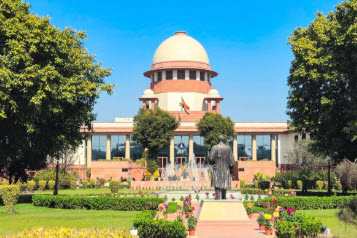
By K Raveendran India’s electoral democracy has reached a critical juncture where judicial intervention can no longer remain confined to procedural scrutiny and expressions of concern. The mounting controversy surrounding Chief Election Commissioner Gyanesh Kumar, the unprecedented scale of voter deletions under the Special Intensive Revision (SIR), and the government’s increasingly coercive response to public […]

The article Supreme Court Must Act Decisively To Restore Electoral Democracy appeared first on Latest India news, analysis and reports on Newspack by India Press Agency).

Advertisements
Delhi police detained more than 1,500 people, including prominent youth movement leaders, on Saturday as authorities imposed extensive security restrictions across the capital to prevent a demonstration demanding the resignation of Chief Election Commissioner Gyanesh Kumar.

Cockroach Janta Party (CJP) founder Abhijeet Dipke and senior organisers Saurav Das and Ashutosh Ranka were detained at Indira Gandhi International Airport after arriving from Mumbai. Their detention followed overnight police operations targeting supporters preparing to assemble at Jantar Mantar.

Thousands of police and paramilitary personnel were deployed across New Delhi, with barricades, vehicle inspections, transport restrictions and mobile internet disruptions affecting movement through several districts. Security arrangements extended to railway stations, major intersections and roads leading towards the proposed demonstration.

Police maintained that the gathering had not received official permission and that preventive measures were necessary to protect public order. Organisers accused authorities of attempting to suppress peaceful dissent over disputed revisions to electoral rolls.

The protest, organised under a campaign to safeguard democracy, sought Kumar’s removal following allegations that the Election Commission’s Special Intensive Revision of voter lists had excluded substantial numbers of eligible voters.

The commission has rejected accusations of partisan manipulation, maintaining that electoral roll verification is intended to identify inaccuracies and ensure that voter registers remain accurate. It has also pointed to procedures allowing eligible citizens to challenge exclusions and seek reinstatement.

Police confirmed that detentions occurred across several districts, including areas near transport terminals and Delhi’s borders. The number of people detained increased throughout Saturday as officers intercepted groups attempting to reach central Delhi.

Dipke, Das and Ranka were subsequently taken to separate locations. Dipke was moved towards Gurugram, Ranka to Dwarka and Das to another location within Delhi, according to information emerging after their detention.

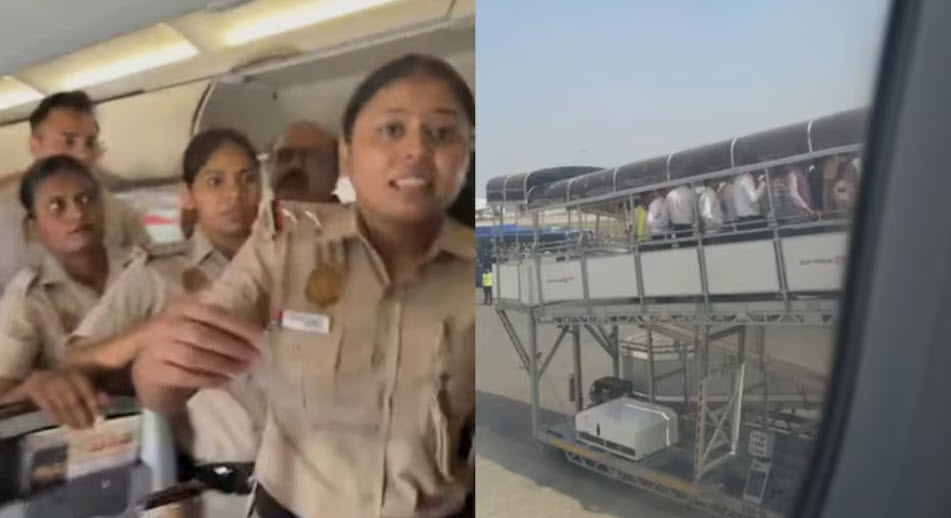
The CJP condemned the action against its leadership and maintained that its supporters were exercising their constitutional right to protest. Videos circulated by the organisation showed its leaders confronting officers aboard an aircraft and raising slogans before being escorted away.

The Delhi Police had refused permission for the Jantar Mantar gathering, citing concerns about public safety, traffic disruption and compliance with regulations governing demonstrations. Authorities said previous conduct by organisers had contributed to their assessment of potential risks.

The Union Ministry of Home Affairs had alerted state governments and Union Territories to possible disturbances associated with the planned mobilisation. Its communication called for coordination with Delhi Police, intelligence sharing and preventive action under applicable laws.

Security personnel established checkpoints along major approaches to the capital, while restrictions at metro stations complicated journeys for commuters. Traffic diversions were introduced around sensitive government installations and routes associated with the proposed rally.

Mobile internet services were suspended in parts of central Delhi, adding to disruption caused by transport controls. Railway operations also faced restrictions, with some services delayed or cancelled amid the security arrangements.

Opposition politicians criticised the detentions, arguing that denying permission for the gathering and restricting movement undermined the right to peaceful assembly. Government supporters defended the precautions as necessary to prevent disorder and disruption to essential services.

The controversy centres on the Special Intensive Revision, an electoral verification exercise that opposition parties allege has resulted in the removal of legitimate voters from official lists.

Critics have cited figures suggesting that approximately 130 million electoral entries were affected by revisions, although the circumstances and validity of individual deletions remain contested. The figure does not establish that an equivalent number of eligible citizens were unlawfully disenfranchised.

Opposition parties contend that the exercise could disadvantage particular communities and alter electoral competition. The Election Commission denies political bias and maintains that verification procedures operate within the established electoral framework.

The dispute has sharpened scrutiny of election administration ahead of state assembly contests scheduled for 2027. Opposition representatives have demanded greater transparency concerning deletions, verification procedures and opportunities for affected voters to appeal.

The CJP has attracted support from students, activists and digital campaigners who have questioned the handling of electoral records. Its mobilisation has also drawn participation from opposition groups, although their political affiliations and demands are not identical.

Police deployments included specialised units assigned to crowd management and the protection of sensitive locations. Officers used loudspeakers to warn prospective demonstrators against entering restricted areas without authorisation.

Jantar Mantar, a designated venue for public demonstrations near Parliament, remained under heavy security throughout Saturday. Small groups nevertheless attempted to assemble at scattered locations, prompting further interventions by police personnel.

Authorities also monitored movement around accommodation facilities and transport hubs used by visitors arriving for the demonstration. Additional security checks remained in place at major entry points to central Delhi.

By Dr Arun Mitra The unprecedented security arrangements in Delhi, which have virtually turned the capital into a cantonment, are reminiscent of the British Raj, when colonial rulers resorted to brute force to suppress popular movements and crush dissent. The arrests of leaders and activists of CJP, AISF, SFI and AISA, along with students and […]

The article In Delhi, The Battle Is Between The Powerful State And Its Citizens appeared first on Latest India news, analysis and reports on Newspack by India Press Agency).

New Delhi was placed under heightened security on Saturday as authorities imposed sweeping restrictions to prevent a mass demonstration by the Cockroach Janta Party (CJP), which is demanding the resignation of Chief Election Commissioner Gyanesh Kumar over controversial electoral roll revisions.

Thousands of police and paramilitary personnel were deployed across the capital, with barricades, surveillance equipment and detention facilities positioned around Jantar Mantar, where the youth-led movement planned to assemble despite being denied permission.

Delhi Police strengthened checkpoints at major entry routes, restricted access to sensitive areas and warned that unauthorised gatherings would face action. Security arrangements included drones, closed-circuit television cameras, body-worn cameras and additional personnel assigned to monitor crowd movements.

The authorities prepared for approximately 7,000 demonstrators, although organisers have claimed substantially wider support. Police officials said their priority was maintaining public order while preventing confrontations between protesters and security personnel.

The Ministry of Home Affairs instructed police chiefs across states and Union Territories to remain vigilant, citing possible law-and-order consequences arising from the mobilisation. Union Home Secretary Govind Mohan communicated the concerns after Delhi Police rejected the organisers’ application.

Police said the request had not complied with the prescribed ten-day advance notice requirement. Authorities also cited alleged failures to follow lawful instructions during an earlier demonstration and concerns about traffic disruption and public safety.

CJP representatives challenged the restrictions, arguing that peaceful assembly was a constitutional right. Founder Abhijeet Dipke maintained that the demonstration would proceed despite the security measures, accusing the government of attempting to suppress public opposition.

The planned protest centres on allegations that the Election Commission’s special intensive revision of electoral rolls has resulted in widespread exclusion of eligible voters. Organisers accuse the commission of conducting the exercise in a manner that benefits the ruling Bharatiya Janata Party.

The Election Commission and the BJP have rejected allegations of electoral manipulation. The dispute has nevertheless drawn opposition parties, student organisations and civil society campaigners into demonstrations demanding greater transparency and accountability.

The confrontation has intensified following claims by opposition groups that more than 130 million names were removed from electoral registers during the revision exercise. The figure remains politically contested, while the commission maintains that electoral roll verification follows established procedures.

Security officials said approximately 35,000 police and paramilitary personnel were available for deployment. Additional forces were mobilised from outside Delhi, while officers established multiple layers of security around government buildings, transport hubs and approaches to the proposed protest venue.

Preventive detentions began before the scheduled gathering. Police acknowledged detaining hundreds of people as part of security operations, while CJP leaders alleged that substantially larger numbers of supporters had been stopped or taken into custody across several states. The organisers’ figures could not be independently established.

Transport restrictions compounded the disruption. Delhi Metro authorities curtailed access to several stations, while railway services connecting the capital with neighbouring states faced cancellations and rescheduling. The restrictions affected commuters travelling for purposes unrelated to the demonstration.

Mobile internet access was also restricted in parts of central Delhi, alongside heightened monitoring of roads leading towards government offices. The measures attracted criticism from civil liberties campaigners concerned about their impact on communication and freedom of movement.

The Supreme Court’s intervention over the extent of transport restrictions prompted authorities to reconsider some closures, reflecting concerns about the consequences for ordinary passengers. Police nevertheless retained powers to regulate access to areas considered vulnerable to large gatherings.

Delhi Traffic Police issued an advisory identifying 30 locations where diversions could be imposed from 6 am. These included Connaught Place, Mandi House, Dhaula Kuan, Patel Chowk and roads approaching Jantar Mantar.

Commuters were advised to allow additional travelling time, particularly when heading towards railway stations, interstate bus terminals and the airport. Traffic arrangements were to be adjusted according to conditions on the ground.

Joint Commissioner of Police Madhur Verma urged officers to exercise restraint and maintain professional standards while handling demonstrators. The instructions emphasised minimum force, discipline and the protection of public safety during crowd-control operations.

Student organisations supporting the CJP maintained that their campaign would remain peaceful. The All India Students’ Association and other groups joined calls for accountability over electoral roll changes, while organisers appealed to participants to avoid confrontation.

Police also sought information from authorities outside Delhi about planned journeys, accommodation arrangements and organisers coordinating the mobilisation. Intelligence-sharing arrangements covered railway stations, road transport routes and potential assembly points.

Hotels and guest houses around central Delhi were asked to restrict bookings where necessary, while security personnel monitored arrivals at transport terminals. Police established designated detention facilities to accommodate people taken into preventive custody.

The traffic advisory identified additional possible restrictions around Lodhi Road, Sardar Patel Marg, Moti Bagh and the Ram Manohar Lohia Hospital roundabout, with diversions subject to operational assessments by traffic officers.


The UAE will participate in the World Bank Group and International Monetary Fund Annual Meetings in Bangkok from 12 to 18 October, with senior financial officials pursuing discussions on global economic stability, development financing and international cooperation.

Mohamed bin Hadi Al Hussaini, Minister of State for Financial Affairs, will lead the Ministry of Finance delegation, which is scheduled to attend ministerial discussions, multilateral consultations and bilateral meetings with representatives of participating countries.

The Ministry of Finance announced the participation on Friday, identifying financial resilience, sustainable development funding and stronger institutional partnerships as principal priorities. The meetings come amid mounting concerns over sovereign debt, borrowing costs, geopolitical tensions and uneven economic growth.

Khaled Mohamed Balama, Governor of the Central Bank of the UAE and the country’s governor to the IMF, will separately lead the central bank delegation. Assistant governors and senior officials will participate in discussions covering monetary policy, financial stability and emerging challenges affecting international markets.

Al Hussaini said the annual gathering offered an opportunity to coordinate economic positions and strengthen dialogue among governments and international financial institutions. The UAE would seek partnerships supporting inclusive development while examining financing mechanisms capable of improving economic resilience.

The Ministry of Finance delegation will attend the meeting of finance ministers and central bank governors from the Middle East, North Africa, Afghanistan and Pakistan with IMF Managing Director Kristalina Georgieva. Regional economic developments, financing requirements and financial stability are expected to feature in those discussions.

Its programme also includes the G20 Finance Ministers and Central Bank Governors Meeting, the annual plenary session and consultations involving the International Monetary and Financial Committee, which advises the IMF on the international monetary and financial system.

A separate meeting of Arab governors with World Bank Group President Ajay Banga will provide another forum for discussing development priorities and cooperation with multilateral lenders. UAE officials will also hold bilateral engagements with representatives of partner countries.

The central bank has identified digital transformation, artificial intelligence, financial inclusion and climate resilience among its priorities. Its delegation intends to examine how technological developments can support economic growth while strengthening financial systems against emerging risks.

These discussions will take place against a difficult international economic backdrop. IMF Managing Director Georgieva has warned governments about mounting public debt and the need for credible fiscal policies, particularly as higher borrowing costs constrain spending and investment.

Geopolitical disruptions and pressure on energy markets have added uncertainty to economic forecasts. Policymakers attending the Bangkok meetings will face questions about balancing inflation control, financial stability and growth while addressing the financing needs of developing economies.

The World Bank Group has placed employment, private investment and development opportunities among the central themes of its programme. Scheduled discussions include mobilising private capital for jobs and examining how artificial intelligence can support employment and economic development.

For the UAE, these subjects intersect with its stated priorities of expanding international financial cooperation and supporting development financing. The Ministry of Finance said its delegation would examine opportunities for practical collaboration with governments and international institutions.

Bangkok will also provide the setting for preparations linked to the UAE’s hosting of the institutions’ 2029 Annual Meetings in Abu Dhabi. The World Bank Group and IMF announced that decision in April following approval by their boards of governors.

An official signing ceremony associated with the 2029 hosting arrangements is scheduled during the Bangkok gathering. Abu Dhabi’s selection will bring the meetings back to the UAE after Dubai hosted them in 2003.

The annual meetings bring together finance and development ministers, central bankers, institutional leaders, private sector representatives and civil society organisations. Their principal forums address the world economic outlook, monetary cooperation, development challenges and the operations of the two institutions.

The main venue this year is Bangkok’s Queen Sirikit National Convention Center. The formal plenary session is scheduled for 16 October, while the International Monetary and Financial Committee plenary is scheduled for 17 October.

The UAE programme also includes a reception bringing together banks from the country and their regional and international counterparts. The Ministry of Finance said the gathering was intended to strengthen institutional relationships and create opportunities for financial cooperation.

Other scheduled engagements include discussions with partner governments on bilateral economic relations and possible areas of collaboration. The ministry has not announced individual bilateral agreements or financing commitments ahead of the meetings.

Public sessions will accompany the ministerial programme, including discussions on artificial intelligence, private investment and development. Selected events will be streamed internationally, with interpretation available in several languages, including Arabic.

India’s communications minister has rejected suggestions that powerful business interests are preventing Elon Musk’s Starlink satellite internet service from launching, insisting that the country does not permit monopolies and applies common regulatory requirements to competing operators.

Jyotiraditya Scindia responded on Friday after Musk questioned billionaire Mukesh Ambani’s influence over the approval process, escalating a dispute over Starlink’s prolonged wait to begin commercial operations in one of the world’s largest telecommunications markets.

“India does not allow a monopoly in any sector,” Scindia told a media briefing, defending the government’s handling of satellite communications licences and its approach to competition.

The intervention followed Musk’s question on his social media platform X on Thursday: “Is Ambani the real boss of India?” Musk suggested that Starlink’s difficulties reflected the influence of established business interests but offered no evidence that Ambani had interfered with regulatory decisions.

The Ministry of Communications had already dismissed Musk’s earlier allegation that unnamed oligarchs were obstructing Starlink to protect their market position. It described the regulatory framework as fair and non-discriminatory and called suggestions of unequal treatment “baseless and misconceived”.

Officials said three licensed satellite communications operators were undergoing security assessments and remained at broadly comparable stages of the approval process. Those operators are Starlink, Reliance Jio’s satellite venture and Eutelsat OneWeb, which has links with Bharti Airtel.

Starlink has obtained a licence to provide satellite services, but that authorisation does not itself permit an immediate commercial launch. The company must satisfy security conditions before proceeding to spectrum assignment, another requirement for starting operations.

The distinction has become central to the disagreement. Musk has questioned why his company cannot begin serving customers after years of work to meet regulatory requirements, while the government maintains that obtaining a licence is only one stage of a process applicable to every provider.

Security scrutiny covers issues arising from satellite networks’ ability to deliver communications across borders and from the need for operators to comply with domestic interception, monitoring and other lawful requirements. The government has not announced a date for completing the assessments or assigning spectrum to Starlink.

Musk initially accused unnamed influential figures of seeking to preserve what he described as a monopolistic hold over connectivity. He argued that delays harmed people without adequate internet access, particularly communities that could benefit from satellite connections where terrestrial networks are difficult to extend.

His subsequent reference to Ambani made the dispute more personal. Reliance Jio, part of the conglomerate led by Ambani, is among the dominant providers of mobile connectivity in India, alongside Bharti Airtel. Neither the size of those businesses nor their presence in the satellite sector establishes the interference alleged by Musk.

Reliance Jio had not publicly answered the accusation by Friday. The absence of a response leaves Musk’s specific suggestion about Ambani unsupported, while the government’s explanation addresses the formal approval process rather than every concern raised about its duration.

The controversy has also drawn political attention. Opposition leader Rahul Gandhi joined the exchanges on X, responding to Musk’s remarks with a pointed comment about the influence of powerful figures. His intervention widened a disagreement initially centred on satellite licensing into a debate about corporate power and government decision-making.

Starlink’s proposed service differs from conventional mobile broadband. Its network uses low-Earth-orbit satellites to connect customer terminals, potentially extending internet access to remote locations without the same dependence on ground-based fibre or mobile towers.

That potential has made the timing of market entry important for Starlink, although affordability, equipment costs and regulatory obligations will also shape the service’s commercial prospects. No confirmed nationwide launch date or final retail pricing has been announced for customers in India.

The regulatory dispute follows years of preparations by SpaceX to enter the market. Starlink has also explored distribution partnerships with established telecommunications companies, including Reliance Jio and Bharti Airtel, demonstrating that competition in satellite broadband can coexist with commercial cooperation.

India’s satellite spectrum framework envisages administrative assignment rather than conventional auctions, subject to prescribed charges and conditions. Operators still require individual approvals before they can activate services, and holding an authorisation does not remove obligations connected with network security.

The Ministry of Communications has said a licensee may move towards spectrum assignment once its security assessment is completed. That sequence applies to the three companies currently seeking to introduce satellite broadband services under the government’s approval framework.

By Dr. Gyan Pathak The byelection results of the five assembly constituencies – Thattanchavady in Puducherry, Madurantakam and Dharapuram in Tamil Nadu, and Rejinagar and Nandigram in West Bengal, along with Nagaon Lok Sabha constituency in Assam, have given clear signal that regional parties of the country still hold central position in the Indian politics. […]

The article Bypoll Results In Bengal And Assam Underline BJP’s Expansion In Eastern Region appeared first on Latest India news, analysis and reports on Newspack by India Press Agency).

By Tirthankar Mitra KOLKATA: By-poll results are usually predictable going in favour of the ruling party but the victory margin of twin electoral contests at Rejinagar and Nandigram declared on Friday, October 9 came as surprises. Even as a motley Opposition cried itself hoarse alleging electoral malpractices, thumping victories were registered by BJP candidates in […]

The article Two Bypoll Results In Bengal Vindicate State BJP’s Success In Courting Minorities appeared first on Latest India news, analysis and reports on Newspack by India Press Agency).

By Rahil Nora Chopra Leader of Opposition in the Lok Sabha Rahul Gandhi stole the spotlight with a display of athleticism, seamless climbing over a police barricade during the Opposition MPs’ march to the Election Commission headquarters. Dressed in his trademark white collared T-shirt, Rahul stood atop the barricade, waving the Tricolour in the face […]

The article Anti-Election Commission Protest: Athletic Rahul Steals The Show appeared first on Latest India news, analysis and reports on Newspack by India Press Agency).

By Dr. Gyan Pathak The first week of anti-CEC agitation – 2 to 8 October, originally called by 19 political parties of INDIA bloc on September 30, now looks like the beginning of a broader electoral-rights movement in India. Several streams are converging: INDIA bloc parties, the youth-led by Cockroach Janata Party (CJP), student organisations, […]

The article First Week Of Anti-CEC Agitation Turns Into Electoral Rights Movement appeared first on Latest India news, analysis and reports on Newspack by India Press Agency).

By Ashok Nilakantan Ayers NEW YORK: The latest Donald Trump–Gavin Newsom confrontation began, as many of their earlier clashes have, with California. Trump has done it before and he has done it again and he will do it again. Trump is known to make off the cuff remarks, knowingly or unknowingly, of the impact it […]

The article Trump-Newsom Clash Assumes Special Significance Before Nov 3 Polls appeared first on Latest India news, analysis and reports on Newspack by India Press Agency).

Dubai’s residential property market has recorded a sharp decline in transactions as the Middle East war dampens demand, while moderate price corrections have emerged in several segments, S&P Global Ratings said. The credit ratings agency warned that continuing regional instability, combined with substantial housing deliveries scheduled for 2027 and 2028, could intensify downward pressure on prices, particularly apartments purchased primarily for investment. S&P Global Ratings credit analyst […]

The Netherlands’ Tax and Customs Administration has abandoned its planned migration to Microsoft 365 cloud services, opting instead for government-controlled servers and European open-source software following concerns over data security, digital sovereignty and dependence on foreign technology providers. State Secretary for Finance Eelco Eerenberg confirmed the policy reversal in a letter to parliament, outlining a phased replacement programme covering the tax authority, Dutch Customs and the Benefits […]

By K Raveendran India’s escalating confrontation over the Election Commission is no longer merely a dispute about electoral rolls or the conduct of Chief Election Commissioner Gyanesh Kumar. It has become an institutional crisis touching the credibility of elections themselves. As opposition parties, activists and youth groups demand Kumar’s resignation over allegations of voter-list manipulation, […]

The article Supreme Court’s Indecision Has A Big Role In Today’s Constitutional Crisis appeared first on Latest India news, analysis and reports on Newspack by India Press Agency).

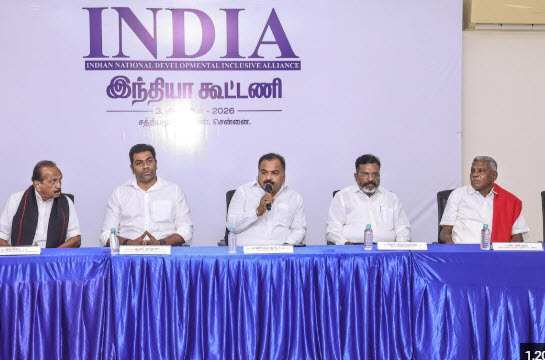
By Dr. Gyan Pathak Tamil Nadu politics is undergoing a great churning. Tamilaga Vettri Kazhagam (TVK) led by CM Chandrasekaran Joseph Vijay has formally joined the INDIA bloc on October 3, 2026. It is indeed the biggest strategic shift in Tamil Nadu politics in recent times, which the Tamil Nadu Congress Committee president Manickam Tagore […]

The article TVK Joining INDIA Bloc Is The Biggest Strategic Shift In Tamil Nadu Politics appeared first on Latest India news, analysis and reports on Newspack by India Press Agency).

By Arun Srivastava The political economy of a state is the interdisciplinary study of how a government’s political institutions, laws, and power dynamics interact with its economic system to produce, distribute, and manage wealth and public policy. The political economy of Uttar Pradesh is shaped by its massive electoral weight, profound caste-class cleavages, and a […]

The article Top BJP Leadership Is Leaving No Stone Unturned To Win Uttar Pradesh Assembly Polls appeared first on Latest India news, analysis and reports on Newspack by India Press Agency).

Arabian Post Staff -Dubai Oil prices climbed on Wednesday as traders assessed the risk of supply disruption from a developing Gulf of Mexico storm and escalating Houthi attacks on Saudi Arabia, offsetting signs that more Middle East crude was reaching global markets. Brent crude futures rose 93 cents, or 0.92%, to $101.51 a barrel by 0022 GMT, while US West Texas Intermediate crude gained 82 cents, or […]

U. S. forces have imposed a curfew, alcohol ban and temporary operational pause in Okinawa after a Marine was arrested on suspicion of robbing and killing a local woman, intensifying anger over the American military presence on the Japanese island. The measures followed the arrest of Lance Corporal Devin Jacob Ballard, 20, who is suspected of killing 39-year-old Anna Yagi at a hotel in Naha, Okinawa’s capital, […]

VISHNU RAJA
RYO YAMADA
HITORI GOTOH
IKUYO KITA