Arabian Post Staff -Dubai Gold edged higher on Tuesday but remained on course for its sharpest monthly decline since October 2008, as investors weighed a powerful mix of delayed hopes for US rate cuts, a surge in energy prices linked to the Iran war and a stronger dollar through much of March. Spot gold was up about 3.2% at $4,652.31 an ounce by Tuesday, yet still showed […]
Nigeria has forfeited a potential revenue surge from elevated crude prices during the Iran war because it could not raise production enough to match the market opportunity, according to Dele Oye, chairman of the Alliance for Economic Research and Ethics, who said the lost upside could amount to about $20.2 billion a year. He argued that Brent’s climb far above Nigeria’s budget benchmark should have delivered a […]
Arabian Post Staff -Dubai Emirates NBD Group has closed $2.25 billion in long-term financing, in a deal that ranks among the largest syndicated borrowings in the Gulf and underscores the lender’s ability to attract offshore funding even as markets navigate geopolitical tension and higher funding costs. The package comprises a $1.75 billion five-year sustainability-linked syndicated term loan and a $500 million five-year club commodity murabaha facility. […]
Volvo Cars is moving towards tighter operational links with its Chinese parent group as chairman Li Shufu presses for closer co-operation across brands to cut costs and make better use of factory capacity in an industry weighed down by weak electric-vehicle demand, trade barriers and mounting price pressure. At Volvo’s annual general meeting, Li said the company should work more closely with sister marques including Polestar, Geely […]
Vessel traffic through the Strait of Hormuz has begun to edge higher for ships deemed acceptable by Tehran, but the Gulf’s main maritime chokepoint remains tightly controlled and effectively shut to most commercial operators without Iranian clearance. Tracking data cited by Bloomberg showed a gentle rise in signal-on transits, while Reuters and other maritime reports indicate that only a narrow stream of ships linked to countries Iran […]
South Africa will cut a fuel tax for April to soften the hit from surging global oil prices, as Finance Minister Enoch Godongwana moves to contain a steep rise in petrol and diesel costs that threatens to feed inflation across Africa’s most industrialised economy. The step comes as oil markets remain under strain from conflict-linked supply disruption in the Middle East and as the rand has weakened […]
Australia has moved towards court action against Facebook, Instagram, Snapchat, TikTok and YouTube after officials said the platforms may have failed to keep children under 16 off their services, escalating a world-first test of how far governments can force technology groups to police the age of their users. The warning follows the first compliance review of the law, which took effect on 10 December 2025 and allows […]
Blackstone has opened talks with investment banks over a possible Mumbai listing of AGS Health that could raise as much as $500 million, according to reports on Tuesday, putting another sizeable healthcare-linked offering on the radar even as the primary market remains more selective than it was a year ago. The discussions are at an early stage, and the proposed float has yet to move into formal filing territory, but people familiar with the matter have said the firm is considering a mix of fresh shares and secondary sales and is seeking a valuation of as much as $3 billion.
AGS Health sits in a part of the healthcare economy that has drawn strong financial interest: revenue cycle management, the business of helping hospitals, physician groups and health systems handle billing, coding, claims, collections and data-led workflow improvement. The company describes itself as a technology-enabled operator serving major healthcare providers in the United States, with intelligent automation and AI woven into those services. On its website, AGS says it processes tens of billions of dollars in accounts receivable annually and supports clients through a large coding and back-office workforce spread across multiple geographies.
The mooted flotation would fit a broader pattern in which buyout firms are trying to crystallise gains from businesses built around outsourced healthcare administration and software-supported services. AGS had already been seen as a prized asset before Blackstone took control, with deal reporting last year and in 2025 pointing to intense interest from private equity groups in the company as well as in peers serving the same market. That activity underlined how investors view healthcare operations platforms as steadier, more scalable assets than many consumer-facing businesses, especially when they are tied to recurring work for hospitals and insurers.
Blackstone’s interest in AGS also reflects the continuing attraction of cross-border healthcare services models anchored in delivery centres in South Asia and the Philippines while selling into the US healthcare system. AGS says it operates globally and markets itself as a strategic growth partner for provider organisations facing rising administrative costs, denial management pressures and a growing need for automation. Its own recent company material has placed heavy emphasis on AI-powered coding, denial management and compliance support, showing how the pitch to clients has shifted from labour arbitrage alone to a combination of software, analytics and domain expertise.
Whether the listing proceeds on the terms being discussed will depend not only on AGS’s financial profile but also on market mood. Reuters has reported that the domestic IPO pipeline remains active, with large names such as Zetwerk and INOX Air Products advancing plans, yet it has also noted that sentiment has been weaker in 2026 after underperformance in some new-age and technology listings and amid heavy foreign outflows from equities linked to geopolitical tensions and oil-price shocks. That makes valuation discipline more important for sponsors seeking exits through public markets.
Healthcare, however, is one of the areas where issuers still believe they can command investor attention. Reuters reported last week that Manipal Health Enterprises filed for an IPO of up to $1.17 billion, betting on demand for specialised care, consolidation and higher insurance coverage. Against that backdrop, AGS would offer investors a different healthcare angle: not hospitals or pharmaceuticals, but the infrastructure of billing, coding and claims management that sits behind care delivery. For fund managers looking for healthcare exposure without direct clinical risk, that model may prove easier to value, though the dependence on US reimbursement systems and hospital spending cycles will remain a point of scrutiny.
Another factor in AGS’s favour is that revenue cycle management has stayed a live consolidation theme. Reuters reported in 2024 that EQT agreed to acquire GeBBS Healthcare Solutions for more than $850 million, while other reports have highlighted interest from major investors in comparable healthcare outsourcing assets. Those transactions suggest that buyers are still willing to pay for scale, client retention and workflow technology in a sector where providers are under constant pressure to improve cash collection and reduce administrative leakage. If Blackstone can pitch AGS as a business with strong client stickiness and growing automation capability, the company may find a receptive audience despite choppier equity conditions.
By Nantoo Banerjee The central excise duty cut on petrol and diesel oil to help petro-fuel producers and marketeers partly cover their losses on account of the rising crude oil import prices is an internal government matter. It is not meant to have any impact on retail prices which continue to be very high and […]
Oil is repricing fast. Markets aren’t pricing the consequences. Brent crude has surged more than 55% in March to around $115 a barrel, one of the sharpest monthly moves on record, as conflict involving the US, Israel and Iran intensifies and threats to energy infrastructure escalate. Yet across equities, bonds and currencies, positioning still reflects the belief that this is temporary and reversible. Markets are underestimating what […]
By Dr. Gyan Pathak On the very onset of the Financial Year 2026-27, beginning from April 1, 2026, India faces a multi-layered set of risks, given its position as a major energy importer with strong trade, investment, and remittance linkages with the West Asia region, which has turned into a war zone since the United […]
France is expanding its annual energy cheque scheme to an additional 700,000 households, widening a support measure that Prime Minister Sébastien Lecornu said would begin reaching 3.8 million households from this week as pressure on household budgets intensifies. The extra recipients are due to start receiving the aid from 1 May after the government used broader data matching to identify more eligible homes. Lecornu said the programme […]
Electronic interference that had scrambled vessel tracking across the Persian Gulf eased over the weekend, allowing ships stranded in the war-affected waterway to show positions closer to their true locations and giving operators a clearer picture of navigation risks in one of the world’s most important energy corridors. Maritime security guidance issued on 29 March said GNSS, GPS and AIS disruption had moderated over the previous 24 […]
Arabian Post Staff -Dubai European shares held their ground on Monday as investors waited for German and euro zone inflation readings that could show how sharply the Middle East war is feeding through into prices, after a surge in oil left the STOXX 600 heading for its worst month since the first pandemic shock of March 2020. The pan-European STOXX 600 was up about 0.2 per cent […]
Omniyat Holdings has said it has enough liquidity to handle its debt obligations after Fitch placed the Dubai ultra-luxury developer on Rating Watch Negative, citing geopolitical risk linked to the Iran war and the potential for weaker buyer demand in Dubai and across the Gulf. The company said it held more than AED 5.3 billion in cash, cash equivalents and other financial assets at the end of […]
Arabian Post Staff -Dubai Rosatom has agreed to form a logistics joint venture with DP World in a deal that would place Russia’s state nuclear corporation in majority control while bringing one of Dubai’s biggest global trade operators deeper into a strategically sensitive transport network centred on FESCO and Arctic shipping lanes. Under the proposed structure, Rosatom will hold 51% and DP World 49%, with Rosatom contributing […]
Arabian Post Staff -Dubai Donald Trump has triggered fresh controversy after using crude language about Saudi Crown Prince Mohammed bin Salman at the Future Investment Initiative Institute summit in Miami Beach, telling the audience the Saudi leader had not expected to “be kissing my a” and adding that “now he has to be nice to me.” The remarks, delivered on 27 March at the Saudi-backed forum, drew […]
TAIPEI, TAIWAN – Media OutReach Newswire – 30 March 2026 – More than half of Taiwan’s small businesses recorded growth in 2025, while confidence heading into 2026 climbed to its highest level since 2020, according to the Asia-Pacific Small Business Survey 2025–26 conducted by global professional accounting body CPA Australia.
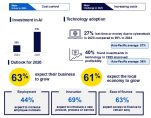
The survey found that 53 per cent of Taiwanese small businesses grew in 2025, slightly below the 57 per cent recorded in the previous survey. Looking ahead, business sentiment strengthened notably. In 2026, 63 per cent of respondents expect their business to grow, while confidence in the local economy also improved, with 61 per cent anticipating economic growth, the highest level recorded since Taiwan was first included in the survey in 2018.
Taiwan’s small and medium‑sized enterprises (SMEs) continue to play a vital role in creating new jobs. In 2025, 31 per cent of SMEs increasing staff numbers, while 44 per cent plan to hire additional employees in 2026.
With rising costs identified as the biggest challenge facing Taiwan’s SME in 2025, many businesses identified cost control as the most positive contributor to business performance last year.
Mr Elic Lam FCPA (Aust.), Honorary Taiwan Advisor at CPA Australia, said Taiwan’s economic fundamentals continue to support small business resilience, “Rising global demand for semiconductors and AI related chips continues to create opportunities for exporters and suppliers across Taiwan’s value chain,” Mr Lam said. “While geopolitical tensions and intensifying competition are adding uncertainty, government support measures for SMEs, including targeted subsidies and tax incentives, together with Taiwan’s resilient domestic demand, are helping to lift business confidence.”
Technology adoption, particularly artificial intelligence (AI), is becoming increasingly widespread among Taiwanese small businesses. The survey found that 33 per cent of small businesses identified AI as the technology they invested in most heavily invested in 2025, up from 29 per cent in the previous year.
Cyber risk among Taiwanese small businesses fell markedly. The share of small businesses reporting losses of time or money due to cyber incidents declined sharply from 59 per cent in 2024 to 27 per cent in 2025, reflecting stronger awareness and the uptake of basic protective measures across the sector.
However, the survey also indicates there is room to strengthen the returns from digital investment. Only 40 per cent of respondents reported that their technology investment in 2025 improved profitability, compared with the survey average of 56 per cent.
Mr Lam noted that Taiwan’s SME sector is undergoing a generational transition that is influencing technology adoption patterns, “Many SMEs in Taiwan are moving from first generation ownership to second or third generation leadership, and technology adoption remains cautious and practical,” he said. “The increase in AI investment reflects both external drivers, such as changing customer expectations and government policy support for digital transformation, as well as internal factors, including younger owners’ familiarity with AI tools and rising operating and staffing costs.”
“To improve profitability, SMEs should focus on applying digital solutions in areas with the greatest impact. For example, as rising costs were identified as the most negative factor affecting performance in 2025, investing in ready-to-use and AI enabled accounting or financial management tools can help reduce operating expenses and lift productivity.”
Access to finance is another notable finding. Financing conditions in Taiwan improved significantly in 2025, even as borrowing softened. Two-thirds of businesses (66 per cent) I said it was easy to access external finance, placing Taiwan among the top three surveyed markets and representing a sharp increase from 28 per cent in 2024. Looking ahead, financing conditions are expected to remain supportive, with 63 per cent anticipating easy access to finance in 2026.
Despite the marked improvement in financing conditions, demand for finance was more subdued. In 2025, 54 per cent of SMEs sought external finance, down from 72 per cent in 2024.
“The Taiwan government has expanded inclusive and guaranteed financing mechanisms to support SMEs, including higher guarantee ratios under the SME Credit Guarantee Fund and preferential loans offered through state affiliated banks,” Mr Lam said. “These measures have made bank financing more accessible for small businesses.”
“Even so, many SMEs remain cautious about taking on new debt. In a stable domestic environment, businesses can maintain steady growth, but external uncertainties drive them to take a prudent approach to borrowing. This aligns well with the government’s policy focus on gradual and resilient SME transformation rather than rapid, high risk expansion.”
Lam concluded, “To navigate international uncertainty and intensifying market competition, Taiwan’s small businesses should make better use of government policy support to upskill their workforce through AI adoption, foster innovation, and diversify export markets by strengthening online sales channels.”
The Asia Pacific Small Business Survey 2025–26 gathered views from 4,166 small businesses across 11 markets in the region, including Singapore, Chinese Mainland and Australia. The Taiwan survey sample comprised 311 small businesses.
Hashtag: #CPAAustralia
The issuer is solely responsible for the content of this announcement.
About CPA Australia
CPA Australia is Australia’s leading professional accounting body and one of the largest in the world. We have more than 176,000 members in over 100 countries and regions, including more than 22,500 members in Greater China. Our core services include education, training, technical support and advocacy. CPA Australia provides thought leadership on local, national and international issues affecting the accounting profession and public interest. We engage with governments, regulators and industries to advocate policies that stimulate sustainable economic growth and have positive business and public outcomes. A CPA is a Certified Practising Accountant. More at cpaaustralia.com.au
Arabian Post Staff -Dubai Nabil Fahmy is set to become the next secretary-general of the Arab League after Arab foreign ministers unanimously backed Egypt’s nominee in a virtual meeting on 29 March, clearing the way for the veteran diplomat to take over in July when Ahmed Aboul Gheit’s second term ends. The ministers’ decision still requires formal endorsement at the next Arab summit in Saudi Arabia, but […]
India has cut special excise duties on petrol and diesel after a sharp rise in global crude prices, seeking to shield consumers from a broader inflation shock as the Iran war and disruption around the Strait of Hormuz continue to unsettle energy markets. A government order issued late on Thursday reduced the special excise duty on petrol to Rs 3 a litre from Rs 13, while the levy on diesel was removed entirely from Rs 10 a litre. At the same time, New Delhi imposed fresh windfall taxes on diesel and aviation turbine fuel exports to recover part of the revenue loss and manage the fiscal hit.
The move underlines the pressure facing policymakers as oil prices remain volatile and the rupee weakens, raising the cost of imports for one of the world’s biggest crude buyers. Brent crude climbed above $112 a barrel on Friday, extending a rally driven by doubts over any near-term ceasefire and persistent fears that supply disruptions in the Gulf could deepen. Traders and analysts have said the risk premium now reflects not only lost barrels but also the strategic importance of Hormuz, through which a large share of global oil and liquefied natural gas flows.
For India, the tax cut is as much about inflation management as political optics. Retail prices at state-run fuel retailers have been largely held steady even as global crude costs have climbed, forcing public-sector oil marketing companies to absorb losses on every litre sold. Reuters reported that those losses were running at about Rs 24 a litre on petrol and Rs 30 on diesel at the time of the duty cut, a burden that had begun to raise concerns about the financial strain on the country’s dominant fuel retailers. By lowering excise duties, the government creates room for those companies to keep pump prices stable without taking the full blow on their balance sheets.
That relief, however, comes with a cost. The excise reduction is expected to trim government revenue by roughly Rs 70 billion every fortnight, with the net impact estimated at about Rs 55 billion after accounting for the new export levies on diesel and jet fuel. Those numbers matter because New Delhi is already balancing slower growth risks, higher import costs and sensitivity in bond markets. India’s 10-year government bond yield rose as investors weighed the inflationary impact of oil and the possibility that fiscal targets may come under pressure if energy turbulence persists.
Currency markets have been sending a similar warning. The rupee slipped beyond 94 to the US dollar, marking a record low and capping its weakest fiscal-year performance in more than a decade. Higher oil prices have compounded external pressures by widening import costs and fuelling worries over inflation, while signs of reduced support from the Reserve Bank of India have added to volatility in both the currency and government debt markets. The combination of a softer rupee and expensive crude intensifies the urgency for measures that can prevent fuel inflation from feeding into transport, food and manufacturing costs.
The government has paired the tax changes with broader supply assurances. Officials have said retail fuel prices will remain stable and that supplies of fuel, fertiliser and coal are adequate. India has also increased the availability of liquefied petroleum gas for industrial use, an indication that authorities are trying to prevent energy stress from spilling into factories and power demand. That broader messaging is aimed at containing panic in a market already on edge over whether the Middle East conflict could trigger a more prolonged energy shock.
The burden of holding down prices has not been distributed evenly across the sector. State-run retailers, which control more than 90 per cent of the country’s fuel stations, have largely refrained from raising pump prices, while private players have begun adjusting. Nayara Energy, for example, increased gasoline and gasoil prices this week, citing the combined impact of a weaker rupee and surging global crude prices. The divergence highlights the structural challenge for the government: keeping inflation contained without unduly damaging the finances of state-backed refiners and marketers.
Arabian Post Staff -Dubai Motorists in the UAE are likely to pay more for petrol and diesel in April after the Iran war sent crude prices sharply higher and intensified disruption across the Gulf’s main energy and shipping routes, raising the cost base that feeds into the country’s monthly fuel-price adjustment. April rates were due to be announced on March 31, and local pricing remains tied […]
Artificial intelligence is redrawing the economics of data centres at a speed that is forcing developers, utilities and investors to rethink where digital infrastructure can be built and how it can be financed. A new 2026 marketplace report from Colliers says global investment in data centres topped $580 billion in 2025, up 27 per cent from a year earlier, as hyperscalers and infrastructure groups poured money into […]
Distributed denial-of-service attacks gathered dangerous momentum in the second half of 2025, with a new industry report showing incidents rising 150 per cent year on year as both volume and velocity increased, underscoring how quickly cyber disruption is moving from episodic nuisance to board-level operational risk. The findings point to a sharp escalation in late 2025, when total attacks climbed to about 1.3 million in the fourth […]
Arabian Post Staff -Dubai Gold prices climbed sharply on Friday, reversing part of this week’s slide as investors stepped back into the market after bullion fell to a four-month low, while traders also watched for any sign that tensions in the Middle East might ease. Spot gold rose more than 3% at its intraday peak before trading about 2.6% higher at $4,491.78 an ounce by afternoon dealings […]





 cpaaustralia.com.au