Just in:
Balagopal challenges CM over tax revenue // Egypt’s African Union trade climbs to $8.2 billion // Diabetes Malaysia And Alpro Pharmacy Set National Record With 11,007 Most Blood Glucose Screenings Conducted Across Malaysia In Just 48 Hours // Fungal toxins detected across 212 UK plant-based products //
Rahul addresses League’s INDIA bloc grievances
// UN arms talks sidestep binding autonomous weapons rules // Yeebo Announces Interim Results for FY26/27 Revenue Increases by 45.5% to HK$806.7 Million Profit Attributable to Owners Surges 87.6% to HK$2,284.7 Million // Promoting Common Human Development Through Exchanges and Mutual Learning Among Civilizations // Saudi defences destroy three Houthi missiles targeting Riyadh // CrowdStrike explores Zscaler takeover amid cybersecurity dealmaking // Singapore regulator cautions against AI access to bank logins // Ex-minister named accused in Messi visit fraud case // Vinhomes Green Paradise: An ESG++ Megacity and the Future of Sustainable Urban Living // Technology at Work, Heritage for All: The “Chinese Approach” to Safeguarding the Leshan Giant Buddha // Padmini follows Padmaja for ‘ghar vapsi’ // US military rebuts Iran’s Gulf F-16 strike allegation // California examines possible criminal breaches in Nvidia investigation // Crypto market loses $150 billion amid broad sell-off // PayerMax and ShopeePay Strengthen Strategic Partnership to Advance Digital Payment Collaboration in Southeast Asia // Abu Dhabi boat show seals manufacturing partnership on Saturday //

News related to
political

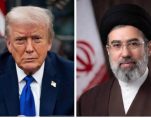
  White House officials said diplomatic channels with Iran remain active despite Tehran’s public rejection of US overtures, underscoring a widening disconnect between rhetoric and back-channel engagement as tensions ripple across the Middle East and global markets. The White House has sought to project continuity in negotiations, signalling that intermediaries and indirect communications are still in play even as Iranian officials outline new preconditions for any de-escalation. […]

Escalating conflict across key maritime corridors has exposed the Middle East’s dependence on imported food, with shipping disruptions forcing governments and logistics firms to reassess supply chains under mounting pressure. The warning comes from Vincent Clerc, chief executive of A. P. Moller-Maersk, who signalled that instability in the Gulf is tightening global shipping capacity and complicating the steady flow of essential commodities into the region. He described […]

Emaar Properties has approved a dividend payout of AED8.8 billion following a strong financial performance for 2025, signalling confidence in its cash flows and long-term growth strategy. The decision was endorsed at the company’s annual general meeting, where shareholders backed a distribution equivalent to 100 per cent of capital. The approval underscores Emaar’s position as one of the Gulf’s most profitable real estate developers, supported by sustained […]

Liquidity conditions in Gulf Cooperation Council dollar-denominated debt markets have deteriorated sharply as geopolitical tensions tied to the US-Israel and Iran conflict weigh on investor sentiment and trading activity, according to new assessments by Fitch Ratings. The agency reported that the average liquidity assessment score for GCC US dollar sukuk dropped to 45 on March 23, 2026, from 56 at the end of 2025. Conventional US dollar […]

Arabian Post Staff -Dubai Repair and restoration costs for damaged Gulf energy infrastructure are projected to reach at least $25 billion, with further increases likely as the scale of disruption becomes clearer, according to new industry assessments that underline the financial and operational strain on one of the world’s most critical energy hubs. The estimate, compiled by Rystad Energy, highlights a complex recovery process driven largely by […]

Arabian Post Staff -Dubai   Jazeera Airways is preparing to restore a significant portion of its network, planning to operate about 200,000 seats in April as it attempts to stabilise operations disrupted by a widening regional conflict that has rattled aviation and energy markets. The Kuwait-based low-cost carrier said the planned capacity would amount to roughly 40 per cent of its pre-conflict network, reflecting a cautious but […]

Arabian Post Staff -Dubai Free navigation through the Strait of Hormuz remains the only sustainable way to restore stability to global energy markets, Abu Dhabi National Oil Company chief Sultan Al Jaber told US Vice President JD Vance, as conflict-linked disruptions choke a vital artery for crude and liquefied natural gas shipments. Al Jaber’s remarks come amid escalating tensions tied to the U. S.-Israeli war against Iran, […]

Advertisements

By Dr. Gyan Pathak Union Government of India under PM Narendra Modi has given enough hints by proposing to bring an amendment Bill purportedly to fast-track women’s quota rollout that it is seriously working on its earlier plan to complete the delimitation process by 2028. However, the most surprising element that has emerged is that […]

The article Redrawing Political Map Of India On Census 2011 Will Be A Grave Mistake appeared first on Latest India news, analysis and reports on Newspack by India Press Agency).

A surge in cryptocurrency fraud is being fuelled by coordinated social media campaigns that weaponise geopolitical tensions and political uncertainty, according to blockchain investigator ZachXBT, who has identified networks of accounts spreading misleading narratives to lure victims. The analyst has reported that clusters of accounts on X, formerly Twitter, are amplifying alarmist posts tied to conflicts and elections, using emotionally charged messaging to drive engagement. These posts […]

India has purchased its first shipment of liquefied petroleum gas from Iran in several years, following a temporary easing of United States sanctions on Tehran’s oil and refined fuel exports, signalling a cautious shift in regional energy trade flows. The cargo marks a notable development in India’s energy procurement strategy, which has been shaped by geopolitical constraints since Washington reimposed sanctions on Iran in 2018. The latest […]

Bittensor’s TAO token has fallen towards the $270 mark as escalating tensions around the Strait of Hormuz ripple through global markets, prompting investors to rotate capital across digital assets and reassess risk exposure tied to artificial intelligence-linked cryptocurrencies. The decline reflects a broader pullback in crypto markets as geopolitical uncertainty drives volatility across risk assets. Analysts point to heightened concerns over energy supply disruptions in the Gulf […]

Dogecoin has remained pinned close to the $0.10 level as geopolitical uncertainty and cautious investor sentiment weigh on the broader cryptocurrency market, extending a downtrend that has persisted since October 2025. The meme-based digital asset, once buoyed by speculative enthusiasm and social media momentum, has faced sustained selling pressure as global markets react to escalating tensions between the United States and Iran. Analysts say the cryptocurrency’s lack […]

OpenAI has moved to shut down its experimental social media platform Sora following mounting scrutiny over the misuse of AI-generated video, including the creation of non-consensual content and increasingly convincing deepfakes that alarmed regulators, creatives and digital safety advocates. The decision comes after months of debate surrounding the rapid adoption of generative video tools, with Sora gaining traction for its ability to produce short-form clips from simple […]

Escalating conflict involving Iran is beginning to cast a shadow over the global artificial intelligence race, raising concerns that geopolitical instability could fracture funding networks, disrupt supply chains and alter the trajectory of one of the world’s fastest-growing industries. Capital flows from Gulf sovereign wealth funds have become a critical pillar supporting the expansion of advanced computing infrastructure in the United States and allied economies. These funds, […]

Iran has told global maritime authorities that foreign vessels may continue transiting the Strait of Hormuz provided they comply with Tehran’s regulations and are not linked to hostile military activity, signalling a calibrated approach to one of the world’s most sensitive shipping corridors. The message, conveyed in a formal communication to members of the International Maritime Organization, outlines a conditional framework rather than an outright restriction, even […]

Arabian Post Staff -Dubai Etihad Airways has launched its first direct service to Charlotte, marking a strategic expansion into the southeastern United States as the Abu Dhabi-based carrier seeks to strengthen transatlantic connectivity and tap into a growing business travel market. The inaugural flight landed at Charlotte Douglas International Airport on March 20, operated by the Airbus A350-1000, one of the airline’s most advanced long-haul aircraft. The […]

Arabian Post Staff -Dubai   Washington has drawn up a 15-point framework aimed at halting the conflict with Iran, reflecting mounting pressure on the Trump administration to contain both military escalation and widening economic fallout, according to officials familiar with the discussions. The plan, described as an evolving diplomatic blueprint rather than a final settlement, is being positioned as a pathway to structured negotiations after weeks of […]

Securing maritime access through the Strait of Hormuz has emerged as the most attainable strategic objective for Washington and Tel Aviv, as policymakers recalibrate expectations in a prolonged confrontation with Tehran that has defied earlier ambitions of regime change or a complete halt to nuclear activity. Officials on both sides have signalled a growing consensus that ensuring uninterrupted passage through the narrow waterway — a chokepoint for […]

Arabian Post Staff -Dubai Gross assets held by banks in the United Arab Emirates climbed to AED 5.41 trillion by the end of January 2026, reflecting steady expansion in the country’s financial system amid sustained credit growth and resilient liquidity conditions. Data released by the Central Bank showed assets rose by 1.4 per cent from AED 5.34 trillion at the close of December 2025, extending a pattern […]

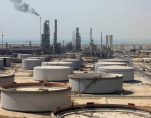
Reliance Industries has secured about five million barrels of crude oil from Iran in a transaction estimated at more than $350 million, signalling a calculated return to a trade corridor constrained for years by geopolitical tensions and sanctions.

The purchase, attributed to cargoes loaded through intermediaries and structured channels, underscores a shifting pattern in global oil flows as refiners seek cost advantages amid volatile benchmarks. Market participants said the acquisition reflects both commercial pragmatism and a broader recalibration of sourcing strategies by large refiners navigating supply disruptions and pricing differentials.

Reliance, which operates one of the world’s largest refining complexes at Jamnagar, has historically processed Iranian crude due to its favourable refining characteristics and pricing structure. The latest move suggests the company is again exploring opportunities linked to Iranian grades, which are often discounted relative to comparable Middle Eastern benchmarks.

Iran’s oil exports have been subject to US sanctions since Washington withdrew from the nuclear agreement in 2018. Those restrictions significantly curtailed Tehran’s ability to sell crude openly, pushing exports into opaque channels involving ship-to-ship transfers, reflagging, and complex payment mechanisms. Despite these constraints, Iran has continued to move significant volumes to Asia, particularly to buyers willing to navigate compliance risks.

Industry analysts say the renewed interest in Iranian oil stems from tightening margins and evolving global supply dynamics. Production curbs by OPEC+ members, combined with geopolitical disruptions affecting Russian and Middle Eastern supplies, have altered trade routes and pricing structures. Refiners are increasingly prioritising flexibility, often sourcing from multiple regions to optimise margins.

Reliance’s procurement strategy has expanded notably over the past two years, with the company becoming a major buyer of discounted crude, including shipments linked to Russia following Western sanctions. The latest Iranian cargoes appear to align with this broader approach, where cost competitiveness outweighs traditional sourcing patterns.

Energy traders indicate that the cargoes in question were likely acquired through intermediaries rather than direct state-to-company contracts, a common practice in sanctioned markets. Such arrangements can involve layered ownership structures, making it difficult to trace the origin of the oil definitively. Payment mechanisms also tend to bypass conventional banking channels, relying on alternative currencies or barter-like systems.

Officials in Tehran have repeatedly stated that oil exports remain a central pillar of the country’s economic resilience, even under sanctions. Output has gradually recovered, with production estimates rising above 3 million barrels per day in recent months. Much of this increase has been driven by exports to Asia, where demand remains robust despite regulatory scrutiny.

Global oil prices have remained sensitive to geopolitical developments, with Brent crude fluctuating amid concerns over supply security and demand recovery in major economies. The availability of discounted barrels from sanctioned producers has created a parallel market that exerts downward pressure on certain price segments, benefiting refiners capable of accessing such supplies.

For Reliance, the ability to process a wide range of crude grades provides a strategic advantage. Its refining configuration allows it to handle heavier and more complex crudes, including those from Iran, Venezuela, and Russia. This flexibility enables the company to capitalise on arbitrage opportunities that may not be available to less sophisticated refiners.

Policy implications remain a key consideration. While there has been no formal indication of a shift in sanctions policy by Western governments, enforcement patterns have shown variability. Analysts note that enforcement intensity often fluctuates depending on broader diplomatic priorities, creating windows of opportunity for market participants.

New Delhi has maintained a delicate balance in its energy diplomacy, emphasising the need for affordable supplies while adhering to international frameworks. Purchases of crude from sanctioned producers have typically been structured to avoid direct violations, with companies relying on legal and compliance teams to manage exposure.

Shipping data and market intelligence suggest that Iranian crude continues to reach global markets through a network of vessels operating under flags of convenience. These ships often disable tracking systems or conduct transfers in international waters, complicating monitoring efforts.


Semiconductor chips have moved beyond their traditional role as hardware components to become strategic gateways shaping the trajectory of the global artificial intelligence economy, according to legal and technology analysts tracking the sector’s rapid evolution. At the centre of this shift stands Nvidia, which continues to command a dominant share of the market for graphics processing units used in AI training. Its high-performance chips, particularly those tailored […]

Arabian Post Staff -Dubai Diplomatic efforts are under way at the United Nations as members of the Security Council prepare to negotiate a draft resolution that could authorise military action to safeguard commercial shipping in the Strait of Hormuz, one of the world’s most strategically vital energy corridors. The proposal, circulated by Bahrain, reflects mounting concern among maritime and energy stakeholders over persistent threats to vessels transiting […]

Japan’s latest government bond auction drew firm demand, offering a measure of stability to domestic markets as investors assessed shifting geopolitical signals tied to tensions involving Iran.

The Ministry of Finance’s sale of long-dated Japanese government bonds proceeded without disruption, with bid-to-cover ratios indicating healthy appetite among institutional buyers. Market participants pointed to a combination of steady domestic demand and easing concerns over an immediate escalation in the Middle East as key factors underpinning the auction’s outcome.

Yields on benchmark Japanese government bonds remained relatively contained following the sale, suggesting that investors were comfortable absorbing supply even as global markets remained sensitive to geopolitical developments. Traders said the absence of sharp volatility in oil prices and currency markets helped anchor sentiment, reducing the risk premium typically associated with periods of heightened uncertainty.

The auction came at a time when global bond markets have been navigating a complex mix of factors, including central bank policy adjustments, inflation expectations and geopolitical risk. Developments surrounding Iran, including diplomatic signals that hinted at a possible de-escalation, contributed to a more measured tone across financial markets, supporting demand for sovereign debt perceived as stable.

Japan’s bond market continues to be shaped by the Bank of Japan’s evolving monetary policy stance. The central bank has been gradually adjusting its approach to yield curve control, allowing for greater flexibility in long-term interest rates. While this shift has introduced some volatility in recent months, domestic investors such as banks and life insurers have remained key buyers, providing a reliable base of demand.

Analysts noted that the latest auction underscored the resilience of Japan’s domestic investor base, even as yields edge higher compared with previous years. The gradual normalisation of monetary policy has encouraged some investors to lock in returns at levels that are more attractive than those seen during the ultra-low rate environment that prevailed for much of the past decade.

At the same time, foreign participation in Japanese government bonds has shown signs of fluctuation, influenced by currency movements and relative yield differentials with other major markets such as the United States. The yen’s performance remains a crucial variable, as currency hedging costs can significantly affect the attractiveness of Japanese debt for overseas investors.

The broader global context remains a critical factor shaping investor behaviour. Tensions in the Middle East have periodically driven spikes in oil prices, which in turn influence inflation expectations and central bank policy trajectories. Any sustained escalation could lead to higher global yields, potentially affecting demand for sovereign debt across advanced economies, including Japan.

Market participants have also been closely monitoring fiscal dynamics. Japan’s high debt-to-GDP ratio remains a structural concern, although it is largely mitigated by the fact that a significant portion of government debt is held domestically. The government’s ongoing issuance programme reflects the need to finance fiscal measures while managing the cost of borrowing in a gradually changing interest rate environment.

The smooth execution of the latest bond sale is likely to be seen as a positive signal by policymakers, particularly as they navigate a delicate balance between supporting economic growth and ensuring financial stability. Japan’s economy has been showing signs of moderate recovery, with wage growth and corporate investment providing some support, although external risks continue to loom.

Police are investigating whether an arson attack on Jewish community ambulances in London is linked to Iranian state activity, as security officials warn of a persistent threat from hostile plots directed at the United Kingdom. Metropolitan Police Commissioner Mark Rowley said officers were pursuing “multiple lines of inquiry” following the incident, which targeted emergency vehicles used by a Jewish volunteer service. The attack has raised concerns among […]

VISHNU RAJA
RYO YAMADA
HITORI GOTOH
IKUYO KITA