Just in:
Dalilk Academy reaches 27 million, targets 100 million by 2030 // Egypt’s African Union trade climbs to $8.2 billion // PayerMax and ShopeePay Strengthen Strategic Partnership to Advance Digital Payment Collaboration in Southeast Asia // Phancy Announces Business Performance for the Nine Months Ended September 30, 2026 // Sui activates Hashi Bitcoin lending across partner network // US military rebuts Iran’s Gulf F-16 strike allegation // Yeebo Announces Interim Results for FY26/27 Revenue Increases by 45.5% to HK$806.7 Million Profit Attributable to Owners Surges 87.6% to HK$2,284.7 Million // Saudi Arabia schedules multinational top-up tax for 2027 // Singapore regulator cautions against AI access to bank logins // Energy Markets Find Little Substance In Shenzhen Summit Promises // Ex-minister named accused in Messi visit fraud case //
Centre grants aircraft cabin access for Sabarimala pilgrims’ irumudi
// Saudi defences destroy three Houthi missiles targeting Riyadh // Russia permits retail cryptocurrency purchases under regulated framework // Balagopal challenges CM over tax revenue // Bail refused to 17-year old in Abhiram murder // Toward a Shared Future for Humanity: Rethinking Civilizational Exchange // Promoting Common Human Development Through Exchanges and Mutual Learning Among Civilizations // Crypto market loses $150 billion amid broad sell-off // Diabetes Malaysia And Alpro Pharmacy Set National Record With 11,007 Most Blood Glucose Screenings Conducted Across Malaysia In Just 48 Hours //

News related to
prove no

The Dubai Department of Economy and Tourism has launched an incentive programme that reimburses eligible hotel developments for 100 per cent of the Dubai Municipality room-sales fee and the Tourism Dirham levy for two years following opening. The scheme targets new hotels, resorts, hotel apartments and other approved hospitality facilities in the designated growth zones of Dubai South, Palm Jebel Ali, Dubai Parks and Dubai Islands. The move stems from Executive Council Resolution No.  of 2025, […]

The competition between the AMD Ryzen 7 9800X3D and the Intel Core Ultra 7 265K highlights a deeper shift in desktop CPU design and market dynamics for 2025. While both are positioned for high-end users, their strengths lie in distinct directions: AMD emphasises gaming cache architecture, whereas Intel leans into hybrid core layouts and productivity-oriented features. In gaming performance, the Ryzen 7 9800X3D retains a marked lead. Independent testing assigns it the title “fastest […]

BEIJING, CHINA – Media OutReach Newswire – 21 October 2025 – On October 15-16, the annual global beauty innovation event, the 2025 INPD was held in Paris, France. From unveiling of the INPD awards to the specially curated “C-Beauty Landscape” and the dedicated Chinese Premium Cosmetics Appreciation Event, the rise of Oriental beauty made a remarkable impact at the Louvre, captivating the entire audience. Chinese Cosmetics Companies […]

BANGKOK, THAILAND – Media OutReach Newswire – 21 October 2025 – The Gem and Jewelry Institute of Thailand (Public Organization), or GIT, has unveiled a strategic plan to accelerate the adoption of Sustainability Standards aimed at strengthening Thailand’s gem and jewelry industry. The initiative promotes good governance, transparency, and traceability across the supply chain, establishing international benchmarks that build confidence among global buyers and leading brands. GIT […]

JAKARTA, INDONESIA – Media OutReach Newswire – 21 October 2025 – SCG participated in the Forbes Global CEO Conference 2025: THE WORLD PIVOTS in Jakarta, Indonesia, which was organized under the theme “Sustainable Philanthropy.” The conference brought together business leaders from around the world to exchange visions on driving sustainable business practices amid the changing global economic, technological, and environmental landscape. Photo credit: Forbes Global CEO Conference […]

The Linux distribution Pop!_OS 24.04 Long-Term Support Beta from System76 introduces a ground-up rewrite of its desktop environment and enhanced hardware support, while still leaving some features unfinished and cautioning users about its beta status. Built on the foundation of Ubuntu 24.04 LTS, Pop!_OS 24.04 adopts the new Rust-based COSMIC desktop environment, moving away from the GNOME-derived shell used in previous releases. System76 describes the transition as a bid […]

A new entrant to the Linux desktop space, the distro known as NebiOS, has been unveiled by Turkish developer Sarp Mateson under the umbrella of his company NebiSoft. Built on the foundation of Ubuntu and tailored for Wayland graphics instead of the older X11 system, NebiOS marks a distinct shift in how independent desktop Linux distributions are conceived and delivered. Mateson’s project began as a personal experiment […]

Advertisements

The government of British Columbia has introduced legislation that would permanently ban new crypto-mining operations from connecting to the provincial grid via BC Hydro, and impose formal limits on power access for AI and data-centre operators. The bill, known as the Energy Statutes Amendment Act, aims to steer the province’s clean-electricity supply toward mining, LNG and natural-resource industries viewed as higher-priority than the high-load crypto sector.

Under the new framework, BC Hydro will no longer approve fresh power-grid connections for crypto-mining facilities. The moratorium first established in 2022 is now set to become law. In parallel, beginning in late 2025 the province will introduce an allocation process for electricity demanded by AI and data-centres: only a capped amount of power will be available to those sectors, and they must compete for it under stricter criteria.

Government officials say the shift reflects a need to address surging grid-demand from emerging industries and to ensure that public electricity resources deliver broad economic and employment benefits. Premier David Eby said the move will help the province “move faster” on major transmission infrastructure and support industrial growth in a planned megaproject in the northwest. Energy and Climate Solutions Minister Adrian Dix added: “Our new allocation framework will prioritise vital growth in sectors like mining, natural gas and lowest-emission LNG, while ensuring our clean energy is directed to projects that deliver the greatest benefit to British Columbians.”

The backdrop encompasses the looming construction of the North Coast Transmission Line, a roughly $6 billion project designed to bring new clean-electricity capacity to the province’s sparsely-electrified northwest. That infrastructure is central to the government’s strategy of prioritising industrial connections over speculative, high-load users such as crypto-mining farms.

Industry analysts have mixed reactions. Supporters say the policy reflects sound planning in a jurisdiction dependent on hydroelectric power and facing increasing pressure from multiple large-scale electricity users. They note that the high energy-intensity of crypto-mining—with relatively modest job creation and economic multiplier effects—makes it a less compelling candidate compared with mining, LNG, hydrogen and industrial AI. On the other hand, critics warn that the framework gives the government wide discretionary power, potentially reducing transparency and favouring incumbents. As one Green-party MLA noted: “With no detail on this framework or the criteria for decision-making in Bill 31, we are concerned that the minister will be the one making these consequential determinations under the influence of friends or lobbyists.”

The government has indicated that data-centres and AI firms will still be eligible for power, but will face competition under the new mechanism: for example, BC Hydro reportedly will allocate only about 300 megawatts for AI and 100 megawatts for data-centre use every two years. Those thresholds will represent a major scaling down in open-access grid connections for such technology users and signal a shift away from first-come, first-served power allocations.

For prospective crypto-miners, the measure marks a turning point. Major mining projects that had anticipated low-cost Canadian hydro power will face altered calculus: either repurpose for non-crypto uses, or relocate to jurisdictions with more open grid access. This may induce capital flight or slow the growth of a nascent mining industry in the province. Conversely, proponents of the policy argue it will preserve affordability for households and existing industrial users by preventing unmanaged load growth.

The government’s timing is also notable. The bill not only formalises the ban on new crypto-mining connections, but synchronises with the broader policy shift to accelerate the NCTL and re-shape grid access rules. Construction is scheduled to begin in 2026 and extend into the early 2030s. For the grid, this means a period of constrained supply allocation while demand from resource-intensive projects expands.

Community and Indigenous groups have been emphasising that increased industrial electrification must occur in consultation and benefit-sharing with First Nations. The legislation allows for First Nations co-ownership of the transmission line and signals a broader reconciliation dimension to the infrastructure strategy.

In the crypto-community the reaction is sharp. Firms and investors note that BC’s abundant hydro power was a major attraction to set up mining operations at scale. With the ban in place, developers will need to evaluate stranded-asset risk or shift to other Canadian provinces or international venues. Some warn that innovation in GPU- and AI-mining overlap may find itself constrained as power availability tightens.

From a global lens, British Columbia joins a growing cohort of jurisdictions imposing stricter controls on high-energy crypto-activities and re-examining how emerging tech intersects with energy policy. The regulation underscores the tension between rapid tech growth and public-utility responsibilities in regions reliant on renewables and constrained transmission.


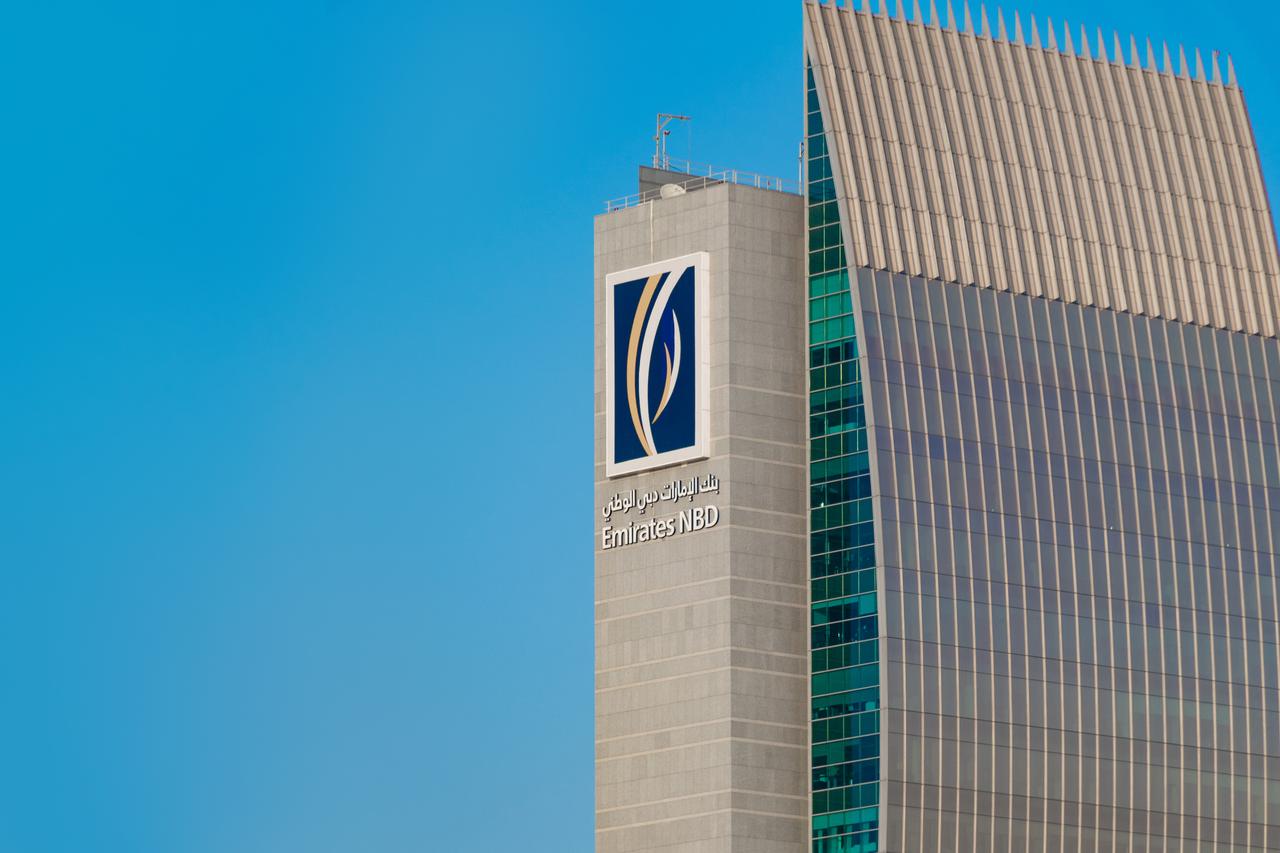
Dubai-based Emirates NBD PJSC is poised to acquire a 60 per cent stake in India’s RBL Bank via a $3 billion investment, marking the largest foreign direct investment ever recorded in India’s banking sector. The move, announced on 18 October 2025, is structured through a preferential share issuance of up to 959.04 million shares at ₹280 each and is subject to regulatory approvals.

RBL Bank’s management expects the deal to close within five to eight months, positioning the infusion within the current financial year, according to statements made by the lender’s leadership. Emirates NBD will assume promoter status at RBL, gaining board-nomination rights and solidifying its long-term presence in the Indian market.

The deal comes as India’s financial sector registers a surge in cross-border deals, with total deal-value reaching approximately $8 billion from January to September 2025—a 127 per cent increase over the same period last year. For its part, RBL Bank, a private lender headquartered in Mumbai with assets estimated at ₹1.46 trillion and a customer base of over 15 million, will benefit from the capital uplift and expanded ecosystem access.

Emirates NBD’s group chief executive, Shayne Nelson, said the investment underscores the bank’s confidence in India’s financial services growth trajectory and reflects its ambition to leverage RBL’s domestic franchise alongside Emirates NBD’s regional reach. RBL’s managing director & CEO, R Subramaniakumar, described the alliance as providing “an enormous opportunity” to move from mid-sized to large-bank status in India, reinforcing its ambitions to enter wealth management and strengthen corporate and retail lending.

Under the terms of the agreement, Emirates NBD will first subscribe to a preferential issue up to 60 per cent of RBL Bank, and then launch a mandatory open offer to public shareholders of up to 26 per cent at the same ₹280 per share price. The final stake will depend on maximum permissible foreign-investment limits and minimum public shareholding norms. The Indian regulatory framework allows up to 74 per cent foreign investment in private banks, but typically limits individual foreign investors to a maximum of 15 per cent unless an exemption is granted by the Reserve Bank of India, which is reported to have given informal backing to the deal.

Analysts say the deal is transformative for both parties: RBL stands to enhance its capital adequacy ratio—projected around 40 per cent post-transaction—and may scale up its corporate banking, digital payments and branch network expansion, tapping into ties between India and the Middle East. For Emirates NBD, the acquisition consolidates its Indian market access and complements its existing footprint in the Middle East, North Africa and Turkey.

Challenges remain. The transaction is subject to regulatory approvals in India and requires compliance with public-shareholding rules, which could complicate the open-offer structure. In addition, RBL has grappled with governance concerns in the past—its former CEO stepped down abruptly in 2021 following regulatory scrutiny—which means integrating under a foreign majority owner will require careful management of culture, controls and strategic alignment.

Observers suggest the deal may set a precedent for greater foreign involvement in India’s mid-sized banking sector, with implications for capital flows, market consolidation and competition. Brokers in Mumbai noted that the infusion of “confidence capital” into RBL could unlock higher credit growth and improve investor perception of the Indian private-banking sector. Meanwhile, the broader wave of cross-border activity, including Japanese and UAE groups entering Indian banks, highlights the shifting dynamics of the India-Middle East-Europe economic corridor.

The Dubai-based airline Emirates has formally marked 25 years of its flight operations to Uganda, signalling both a milestone in the company’s growth in East Africa and its deeper entrenchment in the Ugandan travel market. Since its first landing in 2000, the carrier reports transporting 2.8 million passengers on 15,900 flights between Uganda’s capital region and Dubai. At launch, the service flew three times weekly, routed via […]

Chicago-based hospitality group Hyatt Hotels Corporation has entered into a management agreement to bring its full-service Regency brand to Lusaka, Zambia. The five-star property, to be known as Hyatt Regency Lusaka The Pamodzi, will undergo substantial refurbishment and reopen in 2026 under the new branding. The deal partners Hyatt with affiliates of ASB Hotel Properties and Albwardy Investments, placing the landmark previously called The Pamodzi Hotel at the centre […]

The social-media platform X has introduced a dedicated “Handle Marketplace” that allows paying subscribers to request usernames tied to inactive accounts, marking a significant shift in its monetisation strategy. Under the scheme, Premium Plus and Premium Business users can browse a catalogue of unused handles and make claim requests under varying terms. Eligible subscribers will see available usernames divided into two tiers: “Priority” handles, which include full […]

Tokyo’s financial regulator is advancing a proposal that would permit domestic banks to directly invest in cryptocurrencies such as Bitcoin and operate crypto exchanges, marking a significant shift from earlier restrictions. The Financial Services Agency is set to present its plans to the Financial System Council—an advisory body to the prime minister—later this month.

Under the existing regime promulgated in 2020, Japanese banks have been effectively barred from acquiring and holding digital assets for investment purposes, owing to concerns about volatility and financial-stability risk. The new regulatory blueprint would align crypto asset holdings by banks with traditional financial instruments such as stocks and government bonds, while introducing capital and risk-management requirements tailored to the asset class.

According to data cited by the FSA, Japan’s crypto account holdings have climbed past 12 million as of February 2025—a roughly 3.5-fold increase over five years. The surge in retail interest is growing pressure on regulators to provide greater clarity and institutional-grade infrastructure. Amid this backdrop, the proposed reforms aim to usher in a more integrated digital-asset ecosystem under the purview of regulated financial institutions.

The FSA’s initiative encompasses three key pillars: Firstly, banks would be authorised to purchase and hold unbacked crypto assets for trading or investment, subject to strict internal controls and exposure limits.  Secondly, bank groups may register as licensed “cryptocurrency exchange operators,” effectively allowing them to offer trading and custody services in-house rather than relying solely on third-party platforms.  Thirdly, the FSA plans to shift oversight of digital assets from the current Payment Services Act regime into the Financial Instruments and Exchange Act framework, thereby affording crypto the same legal mould as securities.

Banking groups in Japan are already responding. Three of the country’s largest financial institutions—Mitsubishi UFJ Financial Group, Sumitomo Mitsui Financial Group and Mizuho Financial Group—have announced a joint plan to issue a yen-pegged stablecoin for corporate settlements, signalling a broader shift into digital assets.

Supporters of the reforms argue that allowing regulated banks to engage with crypto assets will bolster investor protections, improve custody and transactional infrastructure, and widen market access. “This reform will treat cryptocurrencies similar to other investible asset classes under bank supervision,” noted one industry analyst. However, sceptics caution that the volatility of cryptocurrencies remains elevated and that exposure must be managed carefully to prevent end-user or systemic risk.

Regulatory design will therefore place a heavy emphasis on limiting banks’ direct holdings of digital assets relative to their capital base, imposing heightened disclosure and governance mandates. One working-group paper recommends that banks maintain separate risk-allocations and stress-testing frameworks for crypto, akin to those used for foreign-exchange or commodity trading desks.

The tax and legal context are also evolving. Japan is preparing to introduce a flat 20 % capital-gains tax on crypto assets as part of its 2025 reforms, and certain tokens are slated to be reclassified as securities under the FIEA. These measures are designed to reduce uncertainty for institutional participants and global investors seeking regulated exposure to digital assets.

Market participants appear cautiously optimistic. Some regional banks are exploring pilot custody services for institutional clients, while fintech firms anticipate greater collaboration with mainstream banks as eligibility expands. On the flip side, legacy concerns persist: past hacks and exchange failures have left regulators and consumers wary of governance failures and inadequate transparency.

HONG KONG SAR – Media OutReach Newswire – 20 October 2025 – For Hong Kong tertiary students, pursuing dreams often comes with financial pressures. While applying for the government’s Student Financial Assistance Scheme (“Grant Loan”) is a common option, its complex application process and strict deadlines frequently catch students off guard, potentially leading to missed tuition payments and penalties. uFinance, a dedicated student loan platform, addresses this […]

Sun King, a leading renewable energy firm, is poised to make significant strides in solar manufacturing, with its CEO, T. Patrick Walsh, announcing an ambitious target to establish new production plants by 2026. The company’s aggressive expansion plans aim to bolster solar panel production and position Sun King at the forefront of the renewable energy sector. Walsh’s announcement underscores the company’s commitment to addressing the global demand […]

The Free Software Foundation has unveiled an ambitious new project aimed at transforming mobile computing. Named the “Librephone,” this initiative goes far beyond typical Android modifications, focusing instead on creating a fully open-source, privacy-respecting mobile ecosystem. It seeks to address growing concerns over data privacy and surveillance, marking a pivotal moment in the ongoing debate about control in the mobile space. At the heart of the Librephone […]

ONLYOFFICE Docs 9.1 has been launched, bringing with it a significant overhaul aimed at boosting both productivity and collaboration. Among its notable additions is a new set of PDF redaction tools, enabling users to efficiently remove sensitive content from documents, as well as various editor upgrades that promise to streamline workflows. The introduction of PDF redaction tools addresses growing concerns around privacy and data security, allowing users […]

Salik, Dubai’s primary toll gate operator, has rolled out an upgraded version of its mobile application alongside the introduction of an interactive WhatsApp channel, aiming to strengthen its communication with customers and improve operational efficiency. This strategic move aligns with Salik’s commitment to digital transformation and improving user experience in an increasingly tech-driven environment. The updated mobile app introduces a streamlined user interface designed to simplify the […]

The UAE Ministry of Education has entered a new partnership with Core42, a leading company in advanced technological solutions, aiming to accelerate digital learning across the country. This collaboration marks a significant step in the UAE’s broader strategy to modernise its education system and integrate innovative technologies into classrooms nationwide.

Under the Memorandum of Understanding signed by both parties, the Ministry and Core42 will jointly focus on enhancing the digital infrastructure in schools, universities, and other educational institutions. This partnership is set to foster digital literacy, streamline educational processes, and introduce advanced technological tools that can significantly improve the learning experience. The Ministry’s initiative is aligned with its ongoing efforts to diversify and digitalise the national education landscape.

The UAE has been increasingly prioritising the integration of digital technologies within education as part of its long-term goals. The collaboration with Core42 comes at a crucial time as the nation works towards adapting its education system to meet the challenges and opportunities presented by digitalisation. By tapping into Core42’s expertise, the UAE hopes to provide its educational institutions with cutting-edge tools and systems that will prepare students for the future of work, which will undoubtedly be more technology-driven.

Core42, known for its innovative approach to digital solutions, will bring its wealth of experience in developing and implementing advanced tech-driven educational platforms. This will include custom-built software solutions, interactive tools, and data-driven systems that improve not only learning outcomes but also operational efficiency. The company’s work is expected to play a key role in addressing the increasing demand for online and hybrid learning models in response to evolving global educational trends.

The Ministry’s vision is to ensure that both educators and students have the necessary tools to succeed in an increasingly digital world. This vision includes not just integrating digital tools for learning, but also upskilling educators to effectively use these technologies. The partnership with Core42 will focus on creating tailored professional development programmes for teachers, allowing them to enhance their digital teaching capabilities. This approach seeks to bridge the gap between traditional and modern pedagogies, ensuring that both students and educators can thrive in an ever-changing digital environment.

The collaboration will also focus on leveraging data analytics to monitor progress, tailor curricula to individual student needs, and provide actionable insights into educational outcomes. By incorporating AI and machine learning into the learning process, the Ministry and Core42 aim to create personalised learning experiences that adapt to each student’s pace and learning style. This will be complemented by real-time feedback mechanisms, enabling educators to make informed decisions that foster student success.

The MoU also includes the development of digital platforms that will support a more interactive and engaging educational experience. Core42’s expertise in software development and user experience design will be crucial in creating platforms that are both intuitive and effective for students of all ages. The focus will be on ensuring that these platforms are accessible, user-friendly, and capable of supporting diverse learning needs, from primary schools to higher education institutions.

The UAE’s education system has been undergoing significant reforms in recent years, with a growing emphasis on integrating technology into learning. Initiatives like this partnership with Core42 are a clear indication of the country’s commitment to building a world-class educational infrastructure that can support its ambitious vision for the future.

Artificial intelligence has witnessed significant breakthroughs over the past few years, particularly in natural language processing tasks. Models such as GPT have revolutionized everything from content generation to complex problem-solving. However, the process of fine-tuning these systems to produce accurate, contextually relevant results remains an ongoing challenge. A particular area of focus has been prompt engineering—the art and science of crafting the inputs given to AI models […]

Sharjah Economic Development Department and Sharjah Digital Department have introduced an AI-powered Trade Name Issuance Service at GITEX Global 2025 that can cut name issuance time by as much as 98 per cent. The initiative, built into the DS Assistant tool on the Digital Sharjah platform, analyses business activity data and generates compliant trade name suggestions without human intervention.

The system assesses a company’s industry, preferred naming style and regulations, then offers tailored naming options. By automating the approval workflow, it dramatically reduces processing delays and human error. Officials say this service marks the world’s first fully AI-based trade name issuance mechanism.

Hamad Ali Abdallah Al Mahmoud, Chairman of SEDD and member of the Sharjah Executive Council, said the move underscores the emirate’s goal to streamline business setup and reinforce its position as a regional innovation hub. He noted that SEDD is deepening collaboration with other government entities to expand digital transformation across regulatory and business services.

The service dovetails with broader efforts at the Sharjah Government Pavilion to showcase human-centred digital governance. Among other highlights at GITEX, the Hamriyah Free Zone Authority unveiled a Remote Company Formation project using a Vision LLM to validate identities and documents via live video calls. SDD’s pavilion also featured infrastructure systems for energy management, smart building monitoring and citizen-oriented digital welfare platforms.

Across the UAE, government agencies at GITEX are unveiling AI systems to modernise public services. Dubai Customs launched its “Voice of Customer” platform, which ingests feedback from multiple channels, applies sentiment analysis, and converts insights into action points to improve operations. The platform supports strategic decision-making by flagging emerging client concerns in real time.

Meanwhile, the broader GITEX 2025 agenda focused heavily on sovereign AI, data sovereignty and smart city ecosystems. The event drew over 6,800 exhibitors, 2,000 startups and delegates from 180 countries. Tech firms rolled out next-generation AI, quantum computing and biotechnology solutions aimed at accelerating public sector transformation.

Analysts view Sharjah’s trade name issuance system as filling a niche in the process of company formation—one that has typically remained manual and fragmented in many jurisdictions. By embedding naming rules, business-activity semantics and regulatory checks into algorithmic logic, the system could reduce friction for entrepreneurs. Yet its success will depend on the AI’s ability to interpret diverse naming preferences, local culture, language nuance and prevent politically or culturally sensitive outputs.

Arabian Post Staff -Dubai Apple is reportedly ready to unveil a major revamp of its MacBook Pro line, introducing a touch-enabled OLED display and a hole-punch front camera in models expected during 2026 or early 2027, according to people familiar with the matter. The upgrade is slated for Apple’s high-end 14- and 16-inch Pro models, internally codenamed K114 and K116, and will be powered by the forthcoming […]

Space42 has inked a memorandum of understanding with e& UAE to co-develop Vehicle-to-Everything systems that will underpin autonomous mobility and smart city infrastructure across the UAE. The pact seeks to marry Space42’s Sovereign Mobility Cloud and autonomous vehicle expertise with e& UAE’s 5.5G connectivity, edge computing and secure communications, forming a foundation for 6G-era applications. The collaboration will see both firms launch pilot projects, help shape regulatory […]

PHU QUOC, VIETNAM – Media OutReach Newswire – 17 October 2025 – Sun Group officially launched Sun PhuQuoc Airways at a ceremony in Hanoi on October 15, marking the debut of Vietnam’s first ‘resort airline’ model, designed to seamlessly connect Phu Quoc with travellers around the world. An Airline Named After an Island Sun PhuQuoc Airways is the first Vietnamese airline named after an island, reflecting Sun […]

VISHNU RAJA
RYO YAMADA
HITORI GOTOH
IKUYO KITA
Just in:
Padmini follows Padmaja for ‘ghar vapsi’ // Phancy Announces Business Performance for the Nine Months Ended September 30, 2026 // Energy Markets Find Little Substance In Shenzhen Summit Promises // Bail refused to 17-year old in Abhiram murder // Saudi defences destroy three Houthi missiles targeting Riyadh //
Centre grants aircraft cabin access for Sabarimala pilgrims’ irumudi
// Ex-minister named accused in Messi visit fraud case // Promoting Common Human Development Through Exchanges and Mutual Learning Among Civilizations // Dubai Introduces SHARH, an AI-Powered Platform Helping Entrepreneurs Buy, Sell and Manage Businesses in the UAE // Balagopal challenges CM over tax revenue // Workday targets Honeydew purchase to unify AI metrics // PayerMax and ShopeePay Strengthen Strategic Partnership to Advance Digital Payment Collaboration in Southeast Asia //
Rahul addresses League’s INDIA bloc grievances
// Jaiedco and Golden Bridge Announce Strategic Collaboration for a New Dubai Islands Development // Russia permits retail cryptocurrency purchases under regulated framework // Egypt’s African Union trade climbs to $8.2 billion // Diabetes Malaysia And Alpro Pharmacy Set National Record With 11,007 Most Blood Glucose Screenings Conducted Across Malaysia In Just 48 Hours // Technology at Work, Heritage for All: The “Chinese Approach” to Safeguarding the Leshan Giant Buddha // Fungal toxins detected across 212 UK plant-based products // Sui activates Hashi Bitcoin lending across partner network //