Arabian Post Staff -Dubai
Al Jaber said the pipeline, intended to expand export capacity through Fujairah on the Gulf of Oman, is “almost 50 per cent complete”. The project forms part of a broader effort to reduce dependence on the narrow maritime passage between Iran and Oman, a route that has long carried a major share of global oil and liquefied natural gas shipments.
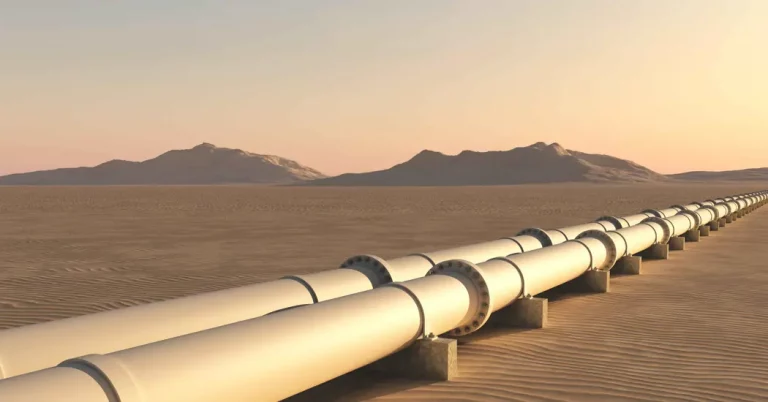
The new West-East Pipeline is designed to complement the existing Abu Dhabi Crude Oil Pipeline, also known as the Habshan-Fujairah line, which can transport up to 1.8 million barrels per day. Once operational, the additional line is expected to help double the UAE’s export capacity through Fujairah by 2027, strengthening Abu Dhabi’s ability to ship crude directly from outside the Arabian Gulf.
The announcement places energy infrastructure at the centre of the UAE’s response to geopolitical risk. Hormuz remains one of the world’s most sensitive chokepoints, with any disruption capable of pushing up shipping costs, crude prices and inflationary pressure across import-dependent economies. Before the latest escalation in regional tensions, roughly a fifth of global oil flows moved through the strait, much of it bound for Asia.
Al Jaber framed the pipeline as a strategic insurance policy rather than a short-term reaction. He said too much of the world’s energy continues to move through too few chokepoints, arguing that the UAE’s earlier decision to invest in alternative export infrastructure had become central to the country’s resilience. Fujairah, already a major bunkering and storage hub, has gained added significance because its location allows tankers to access open waters without passing through Hormuz.
The project also underlines the growing importance of infrastructure flexibility among Gulf producers. Saudi Arabia has its own east-west pipeline system linking oilfields to the Red Sea, while the UAE’s Fujairah route gives it an advantage over producers such as Kuwait, Iraq, Qatar and Bahrain, whose exports remain heavily reliant on Hormuz. Oman’s geography gives it direct access to the Gulf of Oman, but it does not have the same crude export scale as Abu Dhabi.
ADNOC’s wider production strategy adds weight to the pipeline decision. The company has been raising its capacity targets, with official figures showing oil production capacity of about 4.85 million barrels per day. Greater export flexibility would allow Abu Dhabi to move more crude when market conditions permit, while limiting exposure to route-specific disruptions.
The accelerated timetable follows Sheikh Khaled bin Mohamed bin Zayed Al Nahyan’s direction to fast-track construction. His review of ADNOC’s major projects also covered growth in domestic value chains, including the TA’ZIZ chemicals ecosystem in Al Ruwais, reflecting Abu Dhabi’s effort to link upstream energy security with industrial expansion.
Al Jaber’s comments also connected the Hormuz issue to wider debates over investment, technology and future energy demand. He warned that global upstream investment remains insufficient to offset natural field decline and meet rising consumption, while artificial intelligence and data-centre expansion are placing additional strain on electricity systems. His argument was that energy security now depends not only on production volumes but on infrastructure, logistics, grid resilience and digital capability.
The UAE’s position is complicated by the dual pressures of maintaining its role as a reliable supplier while advancing long-term energy transition goals. ADNOC, Masdar and XRG have expanded overseas investments in hydrocarbons, renewables and low-carbon technologies, reflecting Abu Dhabi’s attempt to remain central to both oil markets and emerging clean-energy supply chains.
Shipping risk remains the main immediate concern. Even partial restrictions at Hormuz can increase insurance premiums, delay cargoes and force buyers to seek alternative supplies. For Asian importers, any sustained pressure on Gulf shipments can affect refinery margins, fuel prices and trade balances. For producers, the ability to load crude from ports outside the strait has become a commercial and strategic asset.
Also published on Medium.
Follow Arabian Post
Select Arabian Post as your preferred source on Google and MSN News for trusted business news and Arab politics and updates.