

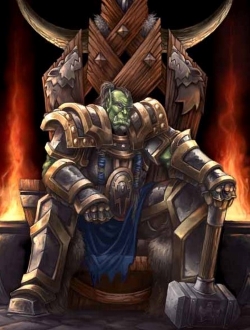
Blizzard has returned Warcraft III’s legacy client to Battle. net, giving owners of the game direct access to the original The Frozen Throne 1.29 build without requiring a Warcraft III: Reforged installation to launch it. The move reopens an official route to a version of the landmark real-time strategy title that many players believed had been effectively buried after the troubled 2020 remaster.
Players can now select “Warcraft III – Legacy TFT 1.29” through the Game Version dropdown on the Battle. net Warcraft III play screen. Blizzard’s notice says all players who own Warcraft III have access to the 1.29 client through the Battle. net app, but the legacy release is limited to offline and LAN play, leaving competitive online matchmaking and modern Battle. net functions outside its scope.
That limitation has shaped the first wave of reaction. Long-time players have welcomed the restoration of an official classic client, but many have also questioned why Blizzard chose patch 1.29 rather than a later pre-Reforged build such as 1.31, which added 64-bit support and other improvements. Forum users have also flagged issues with cinematics, map directories, download size and Mac compatibility, suggesting the launch may be more of a preservation step than a full revival.
The release carries unusual weight because Warcraft III: Reforged did not merely disappoint as a remaster; it altered access to the original game. When Reforged arrived in January 2020, classic players were pushed into the new client ecosystem, where connection problems, missing ladders, altered campaigns and custom-map disruption became part of the broader backlash. The remaster’s poor reception led Blizzard to loosen refund restrictions, a rare concession for one of its major franchises.
Warcraft III’s legacy remains larger than its remaster controversy. Released in 2002, Warcraft III: Reign of Chaos and its expansion The Frozen Throne helped define the modern hero-based real-time strategy format, blending base-building, role-playing elements and faction asymmetry. Its custom-game ecosystem also became a crucial incubator for Defence of the Ancients, which helped lay the foundations for the multiplayer online battle arena genre later dominated by Dota 2 and League of Legends.
Blizzard’s decision also fits a wider industry pattern in which publishers are under growing pressure to preserve playable versions of older games as storefronts, launchers and live-service frameworks evolve. The company has already revisited its strategy catalogue through Warcraft I: Remastered, Warcraft II: Remastered and Warcraft III: Reforged 2.0, packaged under the Warcraft Remastered Battle Chest during the franchise’s 30th anniversary push.
The difference this time is that the restored client is not positioned as a new remaster or a paid visual upgrade. It is closer to a repair of access, aimed at players who wanted a cleaner route back to the old game without relying on workarounds, archived installers or community fixes. That distinction matters for a fan base that has long argued that ownership of the original game should include access to its original form.
The current version, however, stops short of resolving the central grievance around classic Warcraft III. Offline and LAN support will help campaign players, modders, preservationists and small private groups, but it does not restore the full online ecosystem that gave the game much of its long life. Competitive ladders, public custom-game discovery and large-scale community play remain tied to the wider Reforged-era environment or alternative community arrangements.
The technical choice of patch 1.29 also raises practical questions. The build predates the full Reforged transition, but it is not the final pre-Reforged version. Some players see it as a safer compatibility snapshot, while others argue that patch 1.31 would have offered a stronger bridge between preservation and usability. The 32-bit nature of 1.29 is a particular concern for Mac users, because modern macOS systems and the Battle. net launcher environment have largely moved beyond that architecture.
For Blizzard, the move offers a modest goodwill opportunity at a time when its stewardship of older franchises is under close scrutiny. Microsoft’s ownership of Activision Blizzard has increased expectations that legacy catalogues will be handled with greater care, especially as subscription platforms, remasters and digital libraries become central to how old games remain accessible. Warcraft III is a test case because its original form was not just superseded by a remake; it was entangled with one.
Follow Arabian Post
Select Arabian Post as your preferred source on Google and MSN News for trusted business news and Arab politics and updates.




