

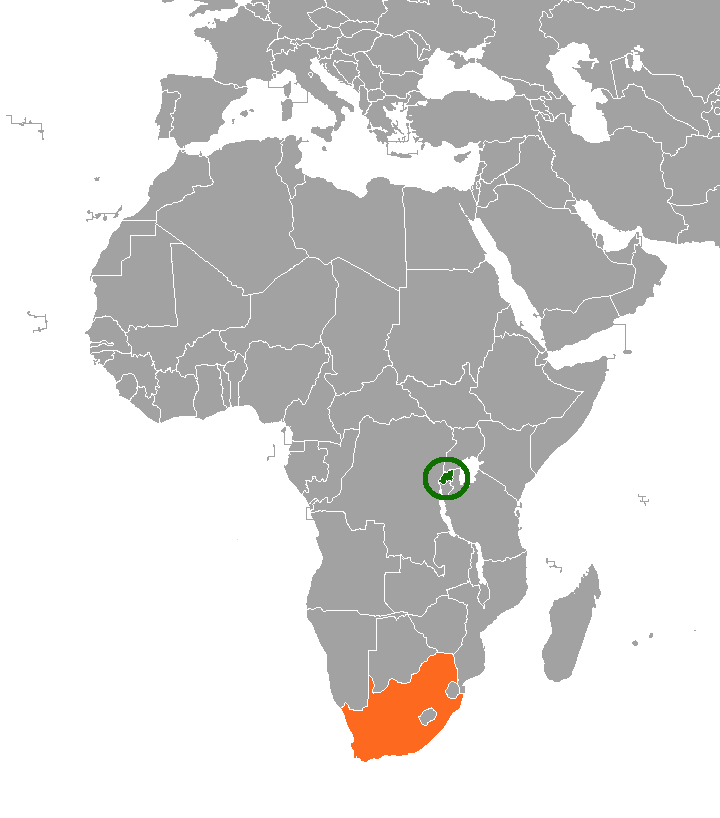
Kigali has become the launchpad for the Rwanda chapter of the Africa Trade Gateway, a comprehensive digital trade ecosystem developed by the African Export-Import Bank in partnership with the African Continental Free Trade Area Secretariat. The rollout aims to accelerate uptake of the platform across the nation and integrate Rwandan firms more closely into Africa’s digital trade networks.
The ATG combines five integrated modules—including PAPSS, MANSA, ATEX, TRADAR Club, and logistics/connectivity services—into a unified “one-stop” window for digital trade across the continent. First introduced in 2023, the gateway has been designed to lower trade costs, reduce friction in payments and cross-border compliance, and boost intra-African commerce.
Officials stated that less than 15 per cent of Africa’s trade occurs within the continent—a measure that underscores the urgency of improving connectivity, financial integration, and market access under AfCFTA. At the Kigali event, Alexis Kabayiza, chief technical advisor to Rwanda’s Ministry of Trade, emphasised that digital trade must underpin industrialisation and resilience, calling Rwanda a “digital innovator” and continental partner in integration.
Emeka Onyia, director of digital banking at Afreximbank, described ATG as “the boldest economic project of our time” and argued that the Rwanda launch moves the platform from concept toward community-level impact. Felix Kabara Chege, CEO of Real Sources Africa, added that ATG embodies a new economic era for Africa’s markets.
Rwanda’s relatively advanced digital governance and infrastructure make it a natural candidate for piloting the ATG model. Officials hope that sector actors—banks, logistics firms, trade associations and SMEs—will register with and integrate into the platform quickly, thereby converting theory into trade.
The roll-out in Rwanda coincides with parallel developments elsewhere: Kenya became the second country to activate its ATG chapter in late September, positioning itself as East Africa’s entry point for the gateway network. The Kenyan government framed the move as central to a “hub and spoke” continental trade architecture, leveraging Kenya’s port and corridor infrastructure.
Afreximbank has also appointed Real Sources Africa as a continental agent to drive awareness and onboarding of businesses across more African states. The bank says the strategy is crucial for scaling the technology and ensuring interoperability across existing national and regional trade systems.
While the ATG initiative is ambitious, it faces challenges typical of large-scale digital infrastructure projects in Africa. Many small and medium enterprises still lack digital maturity, reliable connectivity or trust in cross-border platforms. Regulatory harmonisation across countries remains uneven, particularly in areas of trade compliance, data sharing, and foreign exchange controls.
PAPSS—the payments backbone of ATG—must scale securely and reliably to manage intra-African currency settlement and mitigate foreign exchange bottlenecks. The success of PAPSS since its public launch in early 2022 has been mixed: while it has enabled currency interoperability in some corridors, widespread adoption across less connected economies is still a work in progress.
Follow Arabian Post
Select Arabian Post as your preferred source on Google and MSN News for trusted business news and Arab politics and updates.




