

Arabian Post Staff -Dubai
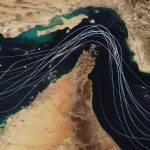
Preliminary ship-tracking data from Kpler showed the Monday total was down from 10 vessels on Sunday, extending a prolonged decline in commercial traffic through a passage that remains central to global oil and liquefied natural gas flows.
Two dry-bulk carriers left the strait, one carrying cargo and the other sailing in ballast, while two oil tankers entered, both without cargo, the data showed. The figures do not include ships that may have crossed with their Automatic Identification System transponders switched off, a practice some operators use to reduce their visibility in high-risk waters.
The reduced traffic followed another deterioration in maritime security. Iran’s Islamic Revolutionary Guard Corps said an oil tanker had exploded and caught fire after striking mines in the Strait of Hormuz, although it did not specify when the incident occurred. The claim could not immediately be independently verified, and US officials have disputed Iranian accounts of some maritime incidents in the area.
Diplomatic efforts aimed at easing tensions around the waterway also suffered a setback on Monday when Gulf Arab states postponed planned talks with Iran over possible arrangements for the strait. The discussions had been viewed as one avenue for reducing risks to commercial shipping and restoring more predictable energy flows.
Pressure on regional shipping routes was also evident at Bab el-Mandeb, the southern gateway to the Red Sea. Kpler data showed 21 commodity vessels passed through the strait on Monday, down from 28 on Sunday, as fighting involving Yemen’s Houthi movement raised concerns about another major artery used by tankers and cargo ships.
The Houthis said on Monday they launched dozens of missiles and drones at the Khamis Mushait military airbase in southern Saudi Arabia, targeting aircraft hangars, radar systems, runways and ammunition depots. The group described the operation as retaliation for Saudi air strikes in Yemen. Saudi authorities have separately reported alerts and attacks affecting several areas as hostilities have spread.
The latest fall in Hormuz traffic comes after daily transit numbers had already slipped into single digits last week. Seven vessels crossed on Thursday, down from 11 a day earlier and well below the 10-day average of 15 at the time. On Tuesday last week, six commodity vessels crossed, compared with nine the previous day.
Before the war involving Iran began on February 28, the Strait of Hormuz typically handled about 125 large commercial vessels a day, including oil tankers, gas carriers, bulkers and container ships. Roughly one-fifth of the world’s daily crude oil and liquefied natural gas supply moved through the waterway, making disruption there a direct concern for energy markets.
The strain has become more acute as alternative export routes have also come under pressure. Saudi Arabia closed its East-West oil pipeline after an attack that authorities blamed on drones launched by Iran-backed militias in Iraq. The pipeline carries crude from the Gulf side of the kingdom to the Red Sea port of Yanbu, allowing exports to bypass Hormuz.
Energy analysts estimate that between 2.6 million and 4 million barrels a day had been moving through the East-West route since late August. With the pipeline out of service, more attention has returned to the limited tanker traffic still moving through Hormuz despite the security risks.
Oil markets reflected the tightening supply outlook on Tuesday. Brent crude futures rose $1.37, or 1.3%, to $107.05 a barrel at 0406 GMT, while US West Texas Intermediate gained $1.53, or 1.51%, to $102.92. Both benchmarks had risen more than 1% on Monday as traders assessed the pipeline outage, maritime attacks and uncertainty over efforts to restore safer Gulf shipping through the strategic waterway.
Also published on Medium.
Follow Arabian Post
Select Arabian Post as your preferred source on Google and MSN News for trusted business news and Arab politics and updates.



