

Arabian Post Staff -Dubai
Oil climbed for a fifth straight session as stalled efforts to revive US-Iran de-escalation talks left traders bracing for a prolonged disruption to energy flows through the Strait of Hormuz, one of the world’s most important crude and gas corridors.
Brent crude rose about 0.5% to trade near $106 a barrel, lifting its gains for the year to roughly 74%. The benchmark is on course for its strongest weekly advance since the opening phase of the war, reflecting mounting concern that the waterway’s effective closure could keep large volumes of Middle East supply away from global markets.
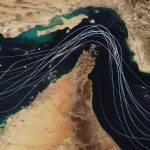
The Strait of Hormuz carries about 20 million barrels a day of oil and petroleum products in normal conditions, equal to around a quarter of seaborne oil trade, with much of that supply bound for Asia. It also handles a large share of liquefied natural gas exports from Qatar and the United Arab Emirates, making the disruption a direct threat to both fuel and power markets.
The latest price rise followed signs that diplomatic channels were struggling to produce a framework acceptable to Washington and Tehran. Talks aimed at easing military and maritime tensions have remained stuck over security guarantees, shipping access and the future policing of the waterway. Tehran has linked any reopening to the removal of pressure on its ports and forces, while Washington has insisted that commercial shipping must be protected before wider concessions are considered.
The market reaction has been amplified by the limited availability of immediate substitutes. Some Gulf producers can divert part of their crude through pipelines that bypass Hormuz, but the available capacity is not enough to replace normal seaborne flows. Traders are also weighing the risk that shipowners and insurers may remain reluctant to resume sailings even if a ceasefire formula emerges, given the danger of mines, vessel seizures and renewed attacks.
Energy inventories have already tightened. Observed global oil stocks fell sharply in March as flows from the Middle East Gulf were restricted, while crude and products built up inside the region because export outlets were constrained. That imbalance has pushed refiners in Asia and Europe to seek alternative barrels from the Atlantic Basin, West Africa and the Americas, adding freight costs and lengthening delivery times.
The price surge is feeding into broader financial markets. Gulf equities have come under pressure as investors reassess growth prospects, while airlines, petrochemical producers and transport companies face higher input costs. Import-dependent economies are exposed to a fresh inflation shock, particularly where fuel subsidies are limited or currencies have weakened against the dollar.
Washington has stepped up its military posture in the region, with naval assets deployed to protect shipping and clear hazards from the channel. The US position has hardened after further vessel incidents and claims that Iranian-linked forces were attempting to restrict passage. Iran has denied acting unlawfully and argues that its actions are a response to attacks and blockades directed at its own trade.
The dispute has widened beyond oil. Liquefied natural gas buyers are watching the route closely because Qatar’s export terminals depend heavily on Hormuz access. A sustained reduction in Qatari cargoes would tighten LNG availability ahead of summer demand in Asia and Europe, forcing utilities to compete more aggressively for replacement supply.
For crude markets, the immediate question is whether Brent’s move above $100 becomes a temporary geopolitical premium or the start of a deeper repricing of supply risk. Demand has shown signs of strain as higher prices pressure consumers, but traders say the scale of the disruption is large enough to outweigh weaker consumption signals in the near term.
OPEC+ producers face a difficult calculation. Extra output from members with spare capacity could calm prices, but much of the group’s most flexible supply is also located inside or near the Gulf system. A broad production response would therefore depend not only on political will but also on whether barrels can physically reach buyers.
Also published on Medium.
Follow Arabian Post
Select Arabian Post as your preferred source on Google and MSN News for trusted business news and Arab politics and updates.




