Arabian Post Staff -Dubai
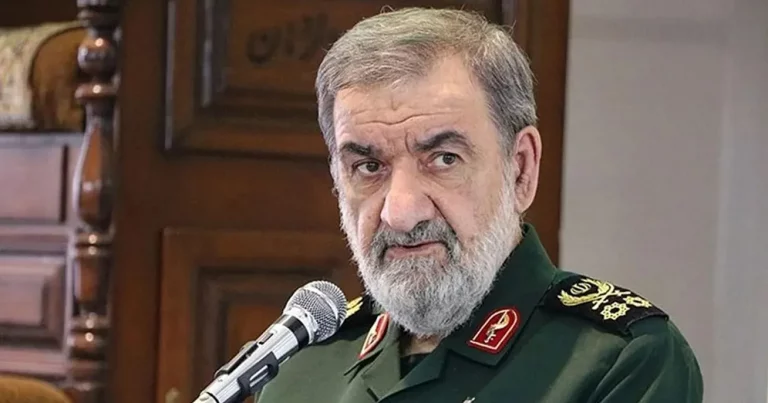
Mohsen Rezaei, secretary of Iran’s Supreme National Security Council, said the proposed zone would extend from what Tehran describes as the US naval blockade line towards the Strait of Hormuz and into parts of the Persian Gulf. He said vessels entering the area intending to transit the strait could face Iranian sanctions or other action.
The announcement followed a sharp escalation at sea over the weekend. Iran’s Islamic Revolutionary Guard Corps Navy said on Saturday that it struck three oil tankers travelling along what it called an “unauthorised route” through the Strait of Hormuz and three vessels linked to the United States elsewhere.
The IRGC said its attacks were carried out after US forces struck three Iranian oil tankers earlier on Saturday. US Central Command said those strikes were ordered after Iran launched ballistic missiles towards American warships operating in the region. US officials said the warships avoided the missiles and no American personnel were injured.
Iran’s naval force also warned commercial vessels against attempting to pass through routes it regards as unauthorised, saying ships making suspicious movements could be targeted. The warning underscored Tehran’s effort to impose its own navigation rules around the strategic waterway, which is central to global oil and liquefied natural gas flows.
Details of the planned exclusion zone remain unclear. Rezaei did not provide coordinates or a timetable beyond saying the measure would be announced in the coming days and weeks. The location of the US blockade line cited by Tehran has also not been publicly defined.
Washington says more than 20 warships are supporting its blockade operations against Iranian ports. US military figures cited on Sunday said 92 commercial vessels had been redirected and three ships disabled as part of those operations.
Shipping traffic through Hormuz has already fallen sharply. Kpler data showed an average of 10 commodity vessels a day transited the strait over the 10 days ending Sunday, the lowest level since May. Only two vessels passed through on Saturday and six on Sunday, with most using the Iranian side of the waterway.
Maritime intelligence firm Marisks identified the three Iranian tankers struck by US forces as Downy, Stark I and Kylo, also known as Noxen. The firm assessed the weekend attacks as a major escalation in the maritime confrontation and said risks were extreme for Iranian or Iran-linked tonnage and materially higher for US-linked or US-escorted shipping.
The United Kingdom Maritime Trade Operations has recorded 27 projectile strike incidents affecting vessels in and around the Strait of Hormuz since July 6. The deteriorating security environment has forced shipowners and charterers to reassess routing, insurance exposure and escort requirements.
US Energy Secretary Chris Wright said on Sunday that about 9 million barrels of oil a day were passing through the strait, arguing that energy flows had recovered substantially. Independent vessel-tracking data, however, indicated lower traffic volumes over parts of the same period, highlighting uncertainty over the scale of commercial movements.
Rezaei said Iran remained able to export between one million and 1.5 million barrels of oil a day despite sanctions and the blockade. That assertion could not be independently confirmed.
Iran also claimed on Sunday that it had struck an unmanned US naval vessel attempting to enter the Strait of Hormuz. The US military rejected that claim, saying no such strike had occurred.
The exchanges come as both sides seek leverage over shipping and oil exports while broader diplomatic contacts remain stalled. Rezaei said Tehran wanted diplomacy backed by enforceable guarantees after earlier mediation efforts failed to produce a durable agreement.
Also published on Medium.
Follow Arabian Post
Select Arabian Post as your preferred source on Google and MSN News for trusted business news and Arab politics and updates.