

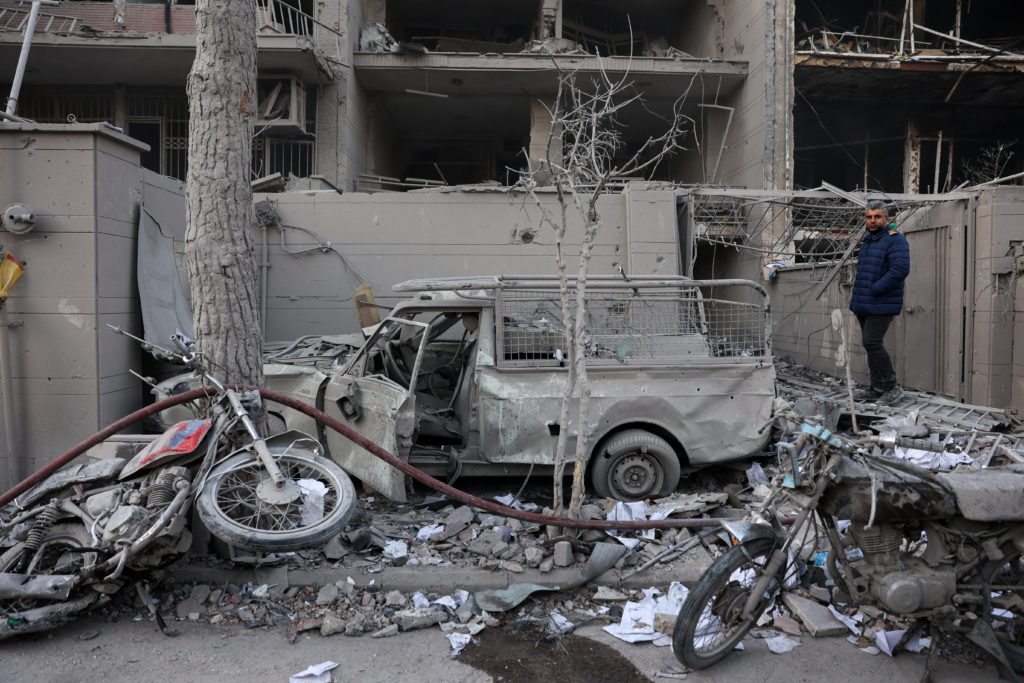
Israel has warned civilians across Iran to avoid trains and railway lines, signalling a new phase in its expanding campaign against Iranian infrastructure as the conflict entered a more dangerous stage on Tuesday. The Israeli military issued the message in Persian on its official account, telling people not to travel by rail or go near railway tracks until 9pm local time, and saying their presence there could endanger their lives.
The warning was brief but highly consequential. It did not specify which rail lines, stations or transport corridors might be at risk, leaving open the possibility of a broad threat to the national network rather than a narrowly defined military target. That uncertainty is likely to heighten anxiety inside Iran, where transport systems serve both civilian mobility and industrial supply chains, and where public alerts of this kind have become part of the psychological dimension of the war.
Tuesday’s advisory also fits a wider pattern of Israeli statements and actions pointing towards deeper strikes on economic and strategic infrastructure. Reuters reported on April 4 that Israel was preparing possible attacks on Iranian energy facilities, pending a green light from Washington, while other reports on Tuesday said Israeli officials were vowing to keep hitting what they described as critical infrastructure after earlier strikes on petrochemical and industrial targets.
The conflict itself has escalated steadily since the opening attacks on Iran on February 28, according to Reuters. Since then, the confrontation has grown beyond a bilateral exchange, with the United States openly tied to the campaign and Tehran continuing retaliatory missile launches. That wider setting has turned each Israeli warning into more than a battlefield message; it is now read across the region as a signal of where the next military and economic pressure points may lie.
For Iran, the rail system is not merely a passenger network. It is woven into the country’s domestic commerce, industrial transport and long-distance movement between major urban centres. Any credible threat to railway lines therefore carries implications far beyond travel disruption. It raises the prospect of delays to freight, pressure on fuel distribution, and more strain on a civilian population already living under air attacks, shortages and wartime uncertainty. The Israeli message appeared crafted to create exactly that sense of nationwide vulnerability without yet spelling out what form any follow-up strike could take.
The warning comes amid sharper international concern over the legality of attacks on civilian infrastructure. Associated Press reported that the United Nations and several foreign governments had voiced alarm over threats to bridges, power facilities and other public systems, while legal and humanitarian concerns have grown around whether such targets can be justified unless they are being used for a concrete military purpose. In that climate, the Israeli rail advisory is likely to draw scrutiny not only for its military intent but for the breadth of civilians potentially affected.
Iran has so far rejected a ceasefire proposal backed by Washington, saying any halt in fighting must come with a lasting end to hostilities and security guarantees. At the same time, Tehran has faced mounting military pressure and a rising human toll. AP reported on Tuesday that casualties in Iran had climbed above 1,900 since the war began, while the conflict has also spread risks across neighbouring states and energy routes. Against that backdrop, the Israeli move on rail travel appears designed to compound internal pressure on the Iranian state by placing another part of daily civilian life under threat.
There is also a strategic communications element to the message. By posting in Persian and giving a specific deadline, the Israeli military framed itself as having issued advance notice, a device often used to argue that civilians were warned before possible action. Yet such warnings do not by themselves settle the legal or moral questions surrounding strikes on infrastructure used by the public at large. Much depends on whether the assets in question can be shown to make an effective contribution to military operations and whether anticipated civilian harm would be proportionate.
Follow Arabian Post
Select Arabian Post as your preferred source on Google and MSN News for trusted business news and Arab politics and updates.



