

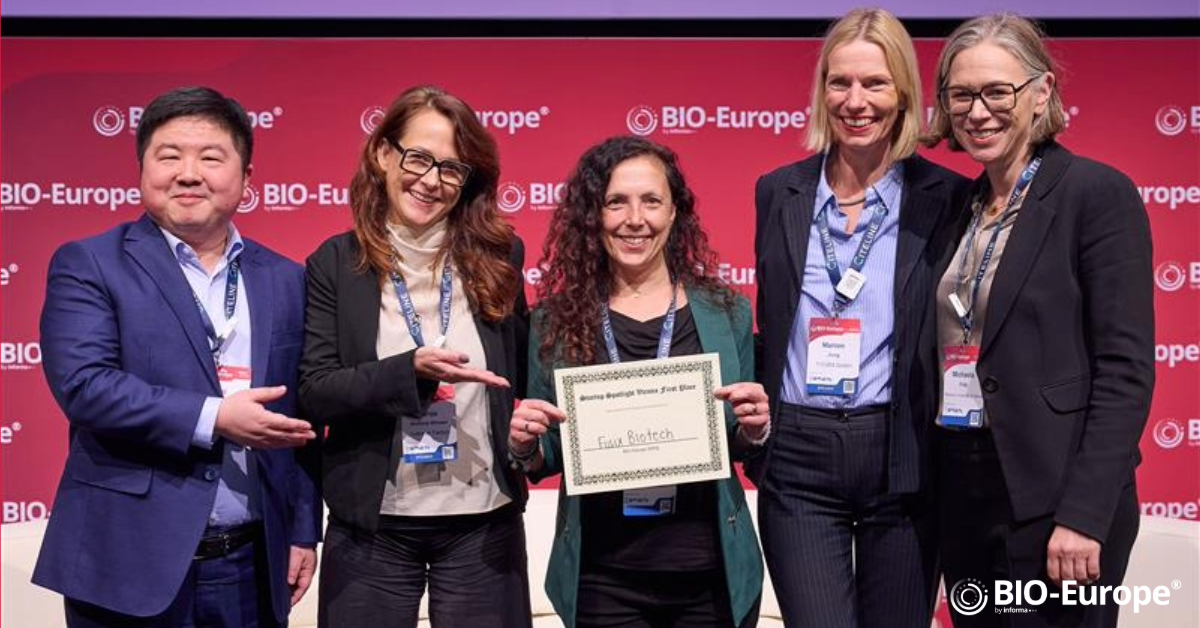
Nionyx Bio, a young US biotech focused on gene therapies for inherited kidney disease, has won the 2026 BIO-Europe Spring Startup Spotlight competition in Lisbon, giving the company an early commercial and scientific boost as investors hunt for more selective bets in the gene therapy market. The organiser’s event materials and follow-up coverage identify Nionyx Bio as this year’s winner after the live pitch contest held during BIO-Europe Spring, which ran in Lisbon from March 23 to 25, with digital partnering continuing into April.
The award matters because it places Nionyx among a small group of venture-backed biotechs trying to solve one of gene therapy’s hardest delivery problems: getting treatment precisely into the kidney. Nionyx says it is building next-generation adeno-associated virus, or AAV, therapies designed for renal disease, using a proprietary “Kidney Atlas” of vectors and a pipeline that starts with Alport syndrome, a rare inherited disorder that can lead to progressive kidney damage, hearing loss and eye abnormalities. Company statements and executive comments show the business was founded in 2023, remains private, and has stayed in the preclinical stage while trying to develop kidney-tropic capsids screened from human kidney tissue.
Chief executive and co-founder Magdalena Tyrpien has become the public face of that pitch. Nionyx and investor materials identify Tyrpien as the company’s president and chief executive, working alongside co-founder and chief technical officer Leszek Lisowski, while Juan Ruiz serves as chief medical officer and head of preclinical development. Investor and podcast descriptions of Tyrpien’s background also link her to Forge Biologics, where she previously held a senior commercial role before moving to launch Nionyx. That combination of manufacturing experience, fundraising credibility and a focused rare-disease story appears to have helped the company stand out in a competition that included several other early-stage biotech finalists.
Nionyx entered the spotlight with fresh capital but still faces the long road common to advanced therapy start-ups. The company emerged from stealth in September 2025 with $4 million in seed financing led by 2048 Ventures, with participation from New York Ventures, White Mug Healthcare, AIN Ventures and Pathway Bioventures. For investors, the attraction is clear enough: inherited kidney disease remains medically serious and commercially under-served, while a successful kidney-directed platform could support multiple programmes rather than a single asset. Yet the modest size of the seed round also underlines how early the venture remains, at a time when many gene therapy companies are being pushed to prove clearer routes to the clinic, better delivery and tighter capital discipline.
The scientific backdrop helps explain why the Lisbon win may draw attention beyond the conference hall. Kidney disease is a large and costly burden, and inherited forms represent an important but often under-recognised slice of that burden. US government and kidney-health sources say more than 808,000 people in the United States are living with end-stage kidney disease, while academic reviews indicate inherited kidney diseases account for at least 10% to 15% of kidney replacement therapy cases in adults. Alport syndrome itself is a genetic collagen disorder with a significant lifetime risk of kidney failure. That makes the disease area attractive for precision medicine, but it also sets a high technical bar because the kidney is structurally complex and difficult to target safely.
That technical challenge remains the central caveat behind the excitement. Peer-reviewed reviews and FDA materials indicate there are still no approved gene therapies specifically for kidney disease, even as the wider cell and gene therapy field has produced licensed products in other areas. Researchers have repeatedly flagged delivery, packaging limits, off-target effects and kidney toxicity as unresolved hurdles for AAV-based renal therapies. Some newer studies point to encouraging preclinical progress in kidney gene transfer, but they also reinforce that the field is still working through basic questions of vector design, dosing and durability before it can claim clinical maturity.
Follow Arabian Post
Select Arabian Post as your preferred source on Google and MSN News for trusted business news and Arab politics and updates.




