News related to
forum

The manufacturing sector in the United Arab Emirates, accounting for 15 per cent of gross domestic product, is set to become the main engine of the country’s next economic phase, according to entrepreneur Mohamed Alabbar, founder of Emaar Properties and Noon. com and chairman of Eagle Hills. Speaking at the eighth Sharjah Investment Forum–World Investment Conference 2025, he emphasised that while real estate contributes around 12 per […]

The free, cross-platform kart­ing game SuperTuxKart has officially released version 1.5, bringing a suite of graphic upgrades and performance enhancements as the project transitions into its next major chapter. The announcement by the development team highlights this as the final update of the 1. x series and sets the stage for the forthcoming “Evolution” version. Among the headline changes in version 1.5 are enhanced rendering capabilities, including […]

JAKARTA, INDONESIA – Media OutReach Newswire – 21 October 2025 – SCG participated in the Forbes Global CEO Conference 2025: THE WORLD PIVOTS in Jakarta, Indonesia, which was organized under the theme “Sustainable Philanthropy.” The conference brought together business leaders from around the world to exchange visions on driving sustainable business practices amid the changing global economic, technological, and environmental landscape. Photo credit: Forbes Global CEO Conference […]

Riyadh — The inaugural edition of FIBO Arabia drew a total of 12,399 participants from regional and international markets to the three-day expo at the Riyadh Front Exhibition & Conference Center, signalling a notable step in Saudi Arabia’s push to define itself as a wellness and fitness hub in the Middle East.

The event, held under the theme “For a Strong and Healthy Society” and aligned with the kingdom’s Vision 2030 agenda, was conducted under the strategic partnership of the Ministry of Investment, the Ministry of Sport and the Ministry of Health. More than 80 exhibitors from around 18 countries participated, while attendees were presented with more than 50 industry-leading speakers across live arenas and conference forums.

One of the centre-piece announcements was the launch of the first Fitness Sector Development Report for the Kingdom, spearheaded by the Ministry of Sport in collaboration with advisory firm CAA Portas. The report projects the domestic fitness industry could expand to a value of SAR 15.5 billion by 2030, driven by policy reforms, investor interest and a growing consumer base.

International brands such as Technogym, Life Fitness, Keiser Corporation and Therabody featured in the line-up, underscoring the global interest in the kingdom’s wellness market. The conference programme included global fitness strategist Herman Rutgers and Morgan Stanley’s Alexey Naumov among its headline speakers.

Speakers and industry insiders described the event as a sign that the Gulf region is moving into a higher gear in terms of wellness infrastructure, investment and consumer engagement. “The success of FIBO Arabia’s inaugural edition reflects both the strength of Saudi Arabia’s wellness economy and the appetite for innovation, collaboration and growth across the industry,” said Vasyl Zhygalo, Managing Director of RX Middle East and Emerging Markets.

A particularly prominent feature of the expo was its emphasis on inclusivity and community participation. Female-led sessions and anecdotes of women athletes such as Nelly Attar — recognised as the first Arab woman to climb K2 — and Saudi fitness professional Rawan Al Saadi featured in discussions on access, empowerment and facility design. Meanwhile, event organisers hosted a variety of live arenas: a Performance Arena, a Strength Arena, a Tech Arena, a Calisthenics Arena, and a Group Fitness Arena powered by Les Mills.

Business-to-business networking and investment matchmaking were core to the strategy. The ecosystem included gym operators, wellness technology firms, nutrition solution providers and investors seeking access to opportunities in the region. One panel commented on how the kingdom’s younger demographic, rising female participation, and regulatory support combine to make the market appealing. The Fitness Sector Development Report cites private-sector expansion and policy reform among the key growth drivers.

Notably, the event’s timing and format reflect a regional pivot from traditional oil-led growth toward wellness, lifestyle and economy diversification. Saudi Arabia’s commitment to developing its ecosystem was underscored through both government support and the presence of global industry players. Industry experts observed that the applied technology, live experiences and cross-border brand involvement distinguish FIBO Arabia from earlier regional trade shows in the fitness sector.

Visitor figures of 12,399 set a baseline for the event’s future editions. The organisers have already announced that FIBO Arabia will return to the same venue from 29 September to 1 October 2026.

Abu Dhabi’s Stargate UAE project is advancing swiftly, with G42 and its affiliate Khazna Data Centers confirming that construction has moved past preliminary stages and that the design-to-build effort is now in full execution. The first 200 MW of capacity is slated to go live in 2026, forming part of a 1 GW AI cluster within the broader 5 GW UAE–U. S. AI Campus. Civil, structural and […]

Multiple posts flooding social media demand accountability—users call for a regulator-led probe, the CEO’s arrest, and deep scrutiny of Binance’s internal systems. The outcry follows recent chaos around synthetic tokens USDe, BNSOL, and wBETH, which lost their pegs on Binance amid massive liquidations. Compensation is flowing, but the narrative now centers on whether the crash was a desperate scramble or a deeply orchestrated exploit.

When Binance announced it would pay $283 million to users affected by depegging and associated liquidations, it framed the move as a goodwill gesture to restore stability. The payout applies to users whose positions used USDe, BNSOL, or wBETH as collateral between 21:36 UTC and 22:16 UTC on October 10. The exchange said compensation covers the difference between liquidation price and market price at 00:00 UTC on October 11, plus fees. It also promised to improve its risk-control systems and change how its indices weigh collateral assets..

These remedial steps, however, have not assuaged skeptics. Analysts at Uphold argued the event was no accident: they see the crash as a coordinated exploit of a vulnerability in Binance’s unified margin system, in which USDe, BNSOL, and wBETH were accepted as collateral. Because the exchange valued collateral based on internal order-book data instead of aggregated external prices, they say the system could be manipulated from within the venue itself. That, they believe, allowed an attacker to locally crash prices and trigger a cascade of liquidations.

One widely cited theory points to timing. Binance announced on October 6 it would update its pricing mechanisms to rely more on external oracles, with the changes scheduled for October 14. The incident happened on October 10—right in the middle of that eight-day window. In effect, critics argue, the exchange had acknowledged the flaw but had not yet implemented the fix, leaving a vulnerability no one should have touched. On-chain data shows USDe dropped to as low as $0.65 on Binance while remaining near parity across other markets, and wBETH and BNSOL showed similar divergence. The fact that only these three tokens—and only on Binance—were massively disrupted raises the specter that this was a targeted strike, not a systemic weak spot.

The theory gains further support from social media researchers. A thread by a user called “ElonTrades” describes how roughly $60–90 million of USDe was dumped on Binance to manipulate its order book, triggering forced liquidations in unified-account positions. That thread also links to outsized short positions opened elsewhere in anticipation of a broad market drop. Combined, the strategy would allow the attacker to profit while setting off mayhem across crypto markets.

Binance has rejected claims of an external exploit. In its public statement, the company argues that extreme market volatility predated the depegs, and that local platform issues amplified rather than initiated the crash. It also suggests some of the price distortions stemmed from interface display glitches—tokens with very small values were rendered as zero on users’ screens—while others reflect execution of long-dormant limit orders. The company contends liquidation volume occurring on its platform was only a fraction of broader market activity.

Even some industry voices have pushed back against blanket condemnation of Binance. One analyst told reporters that attributing the crash entirely to internal failure is premature, and that extreme leverage and macro market turmoil may have interacted with, not originated from, the exchange’s anomalies.

Yet the optics are harsh and the damage is real. The crypto community remains intensely uneasy. Many traders point to how precisely the exploit—or crash—focused on three collateral tokens, how it preceded a planned patch, and how quickly the stains were cleaned up by compensation. To many, the $283 million seems less like accountability than a strategic PR move to calm markets and buy time.

BNB, the exchange’s native token, soared after the compensation announcement, reaching a high near $1,370. That rally suggests some market participants interpreted the payout as a signal that Binance could backstop risks if needed. But it has not quelled deeper anxieties: users are now demanding full transparency about trades, collateral decisions, and the CEO’s role in risk oversight.

Amanda, a margin trader who lost funds in the incident, told crypto forums: “This wasn’t a market tantrum. The order flow was too precise, too surgical. It felt like someone pulled the plug on us.” Other users posted examples of margin calls executed within fractions of seconds after the depeg, with little time or warning to react.

The sequence of events presents too many coincidences: a pricing flaw known and scheduled for repair, large collateral-related token dumps executed mid-window, massive liquidations cascading in an insular system, and a rapid compensation move. Taken together, the evidence aligns with a narrative of design-level risk exploited rather than location-level chaos.

If the worst scenario proves true—that Binance’s unified margin design was manipulable from inside its own infrastructure—the implications ripple far beyond a single crash. Centralized exchanges, hailed for their convenience and liquidity, might now be exposed as fragile ecosystems. Traders could demand stricter oversight, regulators more frequent audits, and entire collateral frameworks could be reassessed.


KUALA LUMPUR, MALAYSIA – Media OutReach Newswire – 15 October 2025 – Organised by the Ministry of Natural Resources and Environmental Sustainability (NRES) and co-organised by the Malaysian Green Technology and Climate Change Corporation (MGTC), the International Greentech & Eco Products Exhibition and Conference Malaysia (IGEM) 2025 opened its doors today at the Kuala Lumpur Convention Centre, marking the start of three days dedicated to innovation, collaboration, […]

Advertisements

BlackRock chief executive Larry Fink asserted that cryptocurrencies carry a role akin to gold in investment portfolios, calling Bitcoin “a decent tool for diversification” while warning that it should not form a major slice of one’s holdings.

Speaking on 60 Minutes on CBS, Fink said: “There is a role for crypto in the same way there is a role for gold … For those looking to diversify, it is not a bad asset, but I don’t believe that it should be a large component of your portfolio.”

Fink’s remarks mark a notable shift from earlier positions. In the past, he dismissed Bitcoin as a facilitator of money laundering, stating that none of his clients expressed interest in crypto. The evolution of his thought underscores how digital assets have moved further into mainstream investment discourse.

His comments come amid rising institutional engagement with digital asset markets, with BlackRock among firms championing the development of spot Bitcoin ETFs. The firm has also begun pushing into tokenization, envisioning the conversion of traditional financial products such as equities, bonds or real estate into digital token formats. Fink described tokenization of all assets as “the next wave of opportunity” over the coming decades.

Analysts view Fink’s balanced tone—acknowledging both potential and restraint—as calibrated for the climate of heightened volatility and regulatory uncertainty in crypto markets. He is signalling openness without forfeiting caution.

Some investors welcomed the endorsement as validation from one of finance’s most influential figures, though sceptics note that Fink’s insistence on limiting crypto to a small portfolio slice reflects enduring reservations.

Crypto proponents point out that Bitcoin’s often low correlation with equities or bonds—and its non-sovereign character—make it attractive as a diversification instrument. BlackRock itself in earlier internal research has characterised Bitcoin as a “unique diversifier,” citing its tendency to behave differently from traditional assets during episodes of macro stress.

Yet the environment remains fraught. Price swings, regulatory fragmentation across jurisdictions, and infrastructure challenges continue to deter widespread adoption. For instance, debates persist around how to regulate digital assets, custody risks, taxation, and classification.

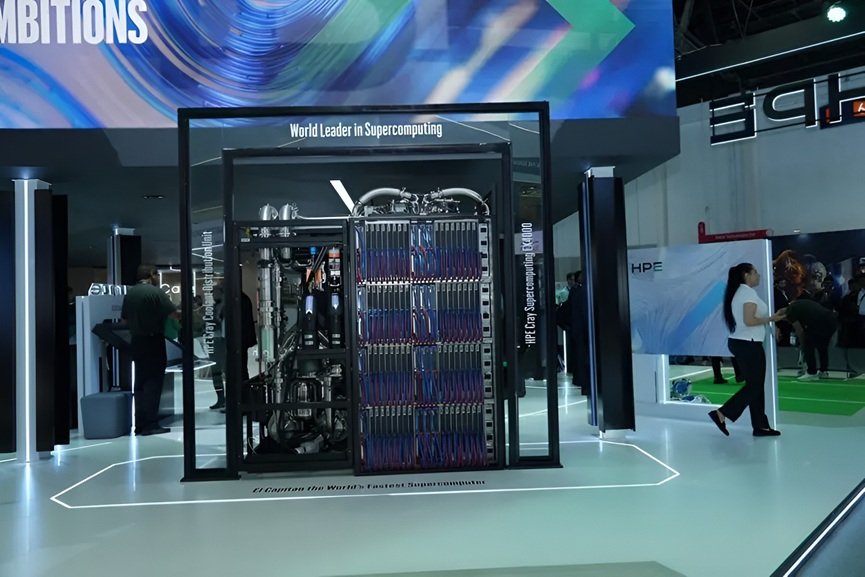
Dubai’s 45th edition of GITEX GLOBAL opened on 13 October at the Dubai World Trade Centre, attracting what organisers call unprecedented global participation. The event hosts more than 6,800 exhibitors, 2,000 startups and 1,200 investors from over 180 countries. Sheikh Mohammed bin Rashid Al Maktoum inaugurated the event, underscoring the UAE’s ambition to lead in AI-driven economies. Dubai’s leadership has signalled this edition will be the last […]

Mohammed Bin Rashid Housing Establishment is spotlighting a suite of digital housing solutions at GITEX Global 2025, announcing strategic tie-ups aimed at advancing smart infrastructure and inclusive living. The initiative underscores Dubai’s push to fuse technology with urban development amid intensifying global competition in digital transformation.

MBRHE is presenting new digital services engineered to optimise housing operations, energy efficiency and resident experience. At GITEX, the entity finalised a partnership with Emirates Islamic Bank to develop financing and digital payment tools tailored for homeowners, and earlier inked an agreement with AI Smart to retrofit housing units with assistive technologies for People of Determination. The latter includes deploying smart systems in five identified residences to enhance mobility and independence. These deals complement an existing MoU with Emirates Gas to supply next-generation LPG composite cylinders across MBRHE communities, complete with annual maintenance services.

As part of Dubai’s government ecosystem at GITEX, MBRHE is listed among Gold Partners in the Digital Dubai pavilion, joining over 50 public and private entities promoting the emirate’s City-as-a-Service model. This placement gives MBRHE visibility amid hundreds of technology players from more than 180 countries. The pavilion is intended to demonstrate cross-sector digital synergies across health, energy, mobility and governance spheres.

MBRHE officials emphasise a multipronged strategy. The partnership with Emirates Islamic is geared toward embedding embedded financial tools into housing services. The AI Smart alliance is positioned as a step toward inclusive smart homes. Meanwhile, the collaboration with Emirates Gas addresses energy reliability and safety in residential zones under MBRHE’s purview. In announcing the AI Smart engagement, MBRHE described it as aligning with UAE leadership’s agenda to empower all segments of society, especially People of Determination.

The move follows MBRHE’s earlier commitment with GFS Developments to launch the Smart Housing Forum 2025, a platform to convene global experts on sustainable housing innovation. That partnership, formalised in late September, frames GITEX as a conduit for showcasing outcomes and inviting further collaboration.

Industry analysts say MBRHE’s integration of housing, finance, energy and assistive technology is representative of a wider trend in the Gulf: public agencies are no longer viewing infrastructure in isolation but as an integrated service ecosystem. State-linked housing bodies are increasingly collaborating with fintech, cleantech, proptech and social inclusion tech firms to convert static assets into responsive, data-enabled platforms.

Critics caution that the true test lies in execution, particularly in integrating legacy systems, ensuring cybersecurity across interconnected modules, and managing equitable access across lower-income beneficiary groups. For instance, retrofitting older housing stock with IoT or assistive systems often requires structural upgrades, which carry cost and logistical burdens.

At GITEX, MBRHE is expected to demonstrate live pilot models of smart home systems, energy monitoring dashboards, and resident apps that tie into real estate finance. These demos will act as proof points to entice further private sector engagement and scaling. MBRHE’s role as both regulator and operator gives it leverage but also raises accountability for outcomes.

Amin H. Nasser, President & CEO of Aramco, told delegates at the Energy Intelligence Forum in London that the company will pursue “energy addition” to cope with intensifying global demand, underlining its steadfast ambition to maintain dominance in oil. He argued that conventional energy sources will remain critical even as the energy transition narrative evolves.

Nasser projected that global oil demand will grow by 1.1–1.3 million barrels per day this year and by 1.2–1.4 million bpd in 2026. He added that Aramco, having kept extraction costs at about $2 per barrel of oil equivalent for oil and $1 for gas, is well-positioned to meet the incremental demand. Speaking to a gathering of energy executives, he said the company can sustain maximum crude output of 12 million bpd for a full year without incurring extra cost.

He stressed that while many promises of the energy transition have fallen short, three shifts are now underway. First, he said the market is conceding that underinvestment in supply has risks. Second, cost pressures on alternative technologies are forcing a reevaluation of pace. Third, energy security is reclaiming a central role in policy-making. “Much of the promised progress has not been delivered, with many unintended consequences. Thankfully, it is finally shifting the narrative in three key ways,” Nasser said.

Behind the rhetoric lies a more cautious reality: Aramco has pared back its previous ambition to reach 13 million bpd, reverting instead to a 12 million bpd sustainable ceiling. That policy shift reportedly followed directives from Saudi energy authorities in early 2024.

In his remarks, Nasser also affirmed Aramco’s push into downstream and petrochemicals. He cited the company’s recent majority acquisition of Petro Rabigh, a 10 percent stake in China’s Rongsheng Petrochemical, and a joint $11 billion ethylene complex with TotalEnergies that is slated to come online by 2027. These moves, he said, diversify revenue streams beyond crude.

His stance echoes his commentary at earlier industry events. At CERAWeek in Houston, Nasser had cast doubt on the viability of green hydrogen and questioned the assumption that renewables alone can displace fossil fuels. He then quipped that there was “more chance of Elvis speaking” than seeing the current transition plans succeed.

Analysts say that Aramco’s optimism hinges on its low-carbon upstream intensity and vast reserves, which give it flexibility against higher-cost producers. The International Energy Agency’s estimates place Saudi spare capacity at about 2.43 million bpd, part of OPEC+’s total idle capacity of around 4.05 million bpd.

Still, external pressures persist. Governments worldwide face competing goals of emissions reduction, energy access, and geopolitical security. In many markets, renewables and storage technologies remain maturing, requiring heavy capital and regulatory support before they can scale. Critics argue that overreliance on fossil fuels could lock in carbon-intensive infrastructure and slow the path to net zero.

At the London forum, however, Nasser signalled that Aramco sees its role as not merely supplying more oil but shaping the discourse. “We are determined to remain dominant in oil thanks to a massive resource base, low costs, and one of the lowest upstream carbon intensities across the industry,” he said. He urged policymakers and financiers to support broad energy investment rather than prematurely dismiss conventional sources.

Dubai — The Syrian Pavilion will make its first appearance at GITEX Expand North Star 2025, opening from 12 to 15 October, under the banner “Syria is Online.” This marks a milestone in Syria’s efforts to reconnect with the international innovation community and attract investment for its fledgling tech ecosystem.

The pavilion is being organised by SYNC, the Syria-Next Conference network, and backed by the Syrian Business Council and the U. S.–Syria Business Council. It aims to provide Syrian startups a platform to showcase digital solutions, engage in pitching sessions, facilitate panel discussions, and establish connections with global investors and industry partners.

Bassel Yassine Ojjeh, Chairman of SYNC and project lead for the pavilion, stated that the initiative intends to generate 25,000 tech-related jobs over five years through strengthened collaboration and external funding. He emphasised that GITEX offers “a vital step … to showcase Syrian talent and build partnerships that open doors for a new generation shaping the digital future.”

The pavilion will include startup pitch showcases, interactive tech talks, and networking forums. It plans to highlight projects in sectors such as fintech, AI, e-commerce, digital health and creative tech. Several Syrian entrepreneurs have already submitted entries, and a curated selection will present on the main stages of Expand North Star.

The move aligns with a broader expansion of national pavilions in this year’s GITEX edition. Brazil is participating as the Country Partner, and new delegations from Serbia, Hong Kong, Canada and Ecuador are set to join the global tech showcase. The event is expected to host over 1,800 startups and 1,000 investors managing over USD 1 trillion AUM, turning Dubai into a tech capital for dealflow.

Despite decades of conflict and economic sanctions, Syria retains a reservoir of technical talent across its population, especially among youth and diaspora communities. SYNC was founded with the objective of bridging Syrian innovators in Silicon Valley and the diaspora with on-ground talent, thereby facilitating collaboration, mentorship, and capital flows. The 2025 edition of SYNC was held in Damascus earlier this year, bringing together local technologists and overseas experts to discuss ecosystem development.

Still, Syrian tech ambitions face significant headwinds. Infrastructure deficits, internet connectivity constraints, regulatory uncertainties, difficulties in accessing cross-border payment systems, and war-induced economic fragmentation continue to challenge the sector’s scalability. International sanctions and distrust around financial compliance also complicate foreign investment.

To mitigate these risks, the pavilion’s backers aim to frame Syria’s entry into the tech market as more than symbolic. Organisers say they are structuring due diligence frameworks, matchmaking with vetted investors, and post-event follow-up mechanisms to sustain momentum beyond the exhibition.

Abu Dhabi’s government will lead a major showcase at GITEX Global 2025, unveiling a new era of AI-native public services under its Digital Strategy 2025–2027. The Department of Government Enablement will coordinate over 30 government and academic institutions in a pavilion displaying 55 flagship initiatives.

The event, held from 13 to 17 October at the Dubai World Trade Centre, will feature the launch of TAMM 4.0, positioning it as a flagship AI-driven government platform. Other key displays include AI Supervisor and Smart Investigator by the Abu Dhabi Police, Smart Hotel Check-In by the Department of Culture and Tourism, QMobility’s barrier-free parking pilot, the Personal AI Recruitment Companion, and Rayah, a student-parent tracking app from the Department of Education and Knowledge. The DGE expects many projects to be shown publicly for the first time, alongside immersive VR experiences aimed at portraying the impact of AI on diverse stakeholders.

Chairman of the DGE, Ahmed Tamim Hisham Al Kuttab, emphasised that public services are being designed around human needs, saying the “AI-Native by Design, Community-Driven by Purpose” approach drives a reimagined, intuitive government. DGE Director General Wesam Lootah added that over 100 high-impact AI solutions have already been deployed across the emirate, following assessments of nearly 400 options, moving toward the vision of being the world’s first fully AI-native government by 2027.

Abu Dhabi’s announcement underscores more than a display of technological ambition—it highlights strategic public sector transformation at scale. The emirate claims to have rolled out AI across more than 40 government entities, automating predictive service delivery, compliance analysis, and multilingual assistance. The upcoming pavilion will also showcase Sahatna, a health services initiative, and AI Majlis forums intended to foster public dialogue on ethical and inclusive AI adoption. Workforce transformation forms a core pillar: over 95 percent of Abu Dhabi’s 30,000 government employees have reportedly undergone extensive AI awareness and skills training, with AI leadership roles now embedded in all Abu Dhabi entities.

The Digital Strategy 2025–2027 backs this push with an investment of AED 13 billion dedicated to creating an AI-first government. Key transformation axes include lifecycle orchestration of public services, predictive governance, intelligent infrastructure, and a talent ecosystem to support long-term innovation. Abu Dhabi’s approach draws attention not only for local modernization but for its ambition to set a benchmark in government digital transformation globally.

GITEX Global 2025 is positioned as a pivotal stage for these ambitions. Now in its 45th edition, the event spans multiple intersecting tech domains—including AI, blockchain, sustainability, and digital infrastructure—and serves as a convergence point for technology, policy and innovation. Abu Dhabi’s participation marks its 14th consecutive presence, reinforcing continuity in its evolving digital narrative.

Jamf launched its 16th annual Jamf Nation User Conference in Denver, unveiling a bold expansion of its device management platform with new AI tools, a richer API ecosystem and automated updates driven by declarative device management. The three-day gathering at the Colorado Convention Center brings together Apple IT administrators, security professionals and developer partners to explore the next era of enterprise Apple management. Jamf CEO John Strosahl […]

The U. S. Cybersecurity and Infrastructure Security Agency has designated CVE-2021-43226, a privilege-escalation vulnerability in Microsoft’s Common Log File System driver, as actively exploited and added it to its Known Exploited Vulnerabilities catalog. The flaw allows a local, authenticated user to bypass security controls and elevate privileges to the SYSTEM level—a shift that can lead to full system compromise. Microsoft rates the vulnerability with a CVSS 3.1 […]

The Co-Hosted With The World Economic Forum, The Summit Is Set To Launch Regional Initiatives on Sustainable and Safe AI and the Transitioning Industrial Cluster KUALA LUMPUR, MALAYSIA – Media OutReach Newswire – 7 October 2025 – The Malaysia Centre for the Fourth Industrial Revolution (MYCentre4IR) together with the World Economic Forum (WEF) will co-host the Powering the Intelligent Age: Driving Innovation with Southeast Asia and Beyond […]

Filestack has launched a sweeping upgrade to its core platform, introducing a fully integrated Digital Asset Management system, a comprehensive Event Logger, and a revamped Filepicker 4.0 with advanced upload control features. The move is aimed at giving developers stronger tools to manage file workflows, versioning, and audit trails—all without building these systems from scratch. At the heart of the update is the DAM, which allows users […]

openSUSE Project has rolled out the beta of Leap 16, marking a substantial shift in its Linux distribution strategy by extending community support to 24 months and introducing core architectural changes. The transition signals a deliberate move toward modernization and longer-term stability for users. Leap 16’s codebase is now aligned with SUSE Linux Enterprise 16 and built atop the SUSE Linux Framework One. The beta ships with […]

The Labour Fund, Tamkeen, has confirmed it will organise the Kingdom of Bahrain’s pavilion at GITEX Global 2025 in Dubai, featuring 14 Bahraini technology start-ups and small and medium enterprises alongside the Economic Development Board and ARRAY Innovations.

The event, scheduled from 13 to 17 October 2025, promises to provide the participating firms with access to global investors, partners and industry networks. The pavilion’s aim is explicit: to boost the international visibility of Bahrain’s ICT ecosystem and facilitate business growth.

Tamkeen’s announcement places it firmly in a leadership role for the pavilion’s curation and operations. The decision aligns with its 2025 strategic priorities, which emphasise supporting enterprise growth, promoting digitalisation, strengthening private-sector competitiveness and fostering sustainability.

Officials from Tamkeen and the Economic Development Board have highlighted that the selection of the 14 entities spans multiple subsectors within ICT, including software, data analytics, cybersecurity, and emerging technologies. They say the mix is intended to reflect both Bahrain’s current strengths and its ambitions for diversification.

In past editions of GITEX, Bahrain’s pavilion drew attention from regional and international delegations. During GITEX Global 2024, the pavilion was credited with facilitating multiple memoranda and partnership discussions. Tamkeen’s continued involvement signals its belief that sustained pavilion presence is critical to maintaining momentum in Bahrain’s tech diplomacy.

Some observers note that Bahrain’s tech infrastructure and regulatory environment are increasingly seen as competitive in the Gulf region. Over the past few years, the kingdom has liberalised foreign ownership rules in certain sectors and introduced incentives for startups and innovation funds. This pavilion engagement is viewed by analysts as part of a broader soft-power strategy to position Bahrain as a hub for digital investment.

However, challenges remain. For many Bahraini startups, scaling beyond domestic markets continues to be difficult. Access to international capital, navigating cross-jurisdictional regulation, and building brand recognition are persistent hurdles. Critics caution that pavilion exposure does not always translate into long-term market entry, and that stronger post-exhibition support is needed to ensure sustained growth.

Tamkeen has stated that it plans to accompany pavilion exposure with mentorship, investor matchmaking and export facilitation services for participating firms. The hope is that a combination of showcase visibility and structural support will help convert leads into lasting collaborations.

Already, the pavilion has generated interest among regional stakeholders. Several Gulf regional delegations and venture capital firms have expressed intent to engage with Bahrain’s teams during the event. The EDB is reportedly coordinating bilateral sessions between Bahrain’s entrants and visiting foreign trade missions.

For the 2025 edition, organisers have introduced a more structured schedule for pitch sessions, one-on-one meetings and thematic forums. This signals learning from past editions, where informal networking sometimes overshadowed targeted client engagement. Tamkeen officials have emphasised tighter alignment of startup offerings with investor interest sectors like fintech, AI and cloud services.

Within Bahrain’s domestic ecosystem, private sector associations and incubators have welcomed the announcement. Some have pushed for better curation, arguing that selecting firms with proven traction or clear roadmaps increases the chance that pavilion participation yields concrete contracts or investment.

Organisers have confirmed that Future Blockchain Summit x Fintech Surge will take place at Dubai Harbour from 12 to 15 October 2025, positioning the event as a central nexus for blockchain, digital assets, and fintech innovation across the MENA region. The four-day gathering, held alongside Expand North Star and powered by GITEX GLOBAL, aims to attract regulators, investors, entrepreneurs and technologists to shape emerging frameworks for finance.

Attendance is expected to exceed 70,000, with over 1,200 investors and more than 225 speakers scheduled to participate, alongside 150 exhibitors showcasing new products and solutions. A feature highlight is the Digital Assets Forum, which brings regulators, banks, and innovators together for intensive discussions on topics such as CBDCs, stablecoins, tokenised capital markets, cross-border regulation and the role of AI in compliance.

Speakers confirmed include Jimmy Su, Lily Liu, Eric Piscini, Oliver Stauber, Helen Liu and Kevin Lee. The event also features the Supernova Challenge, a startup pitch competition offering equity-free prizes totalling US$214,000 to finalists presenting to global judges and investors. Corporations such as Ruya, OKX and DKK Partners anchor the sponsorship tiers, while YPAY backs the Digital Assets Forum.

Dubai has been steadily reinforcing its position in the digital asset ecosystem. Earlier this year, the DAMAC Group signed a $1 billion contract with blockchain platform MANTRA to tokenise its real-world assets, a move aligned with the UAE’s aspirations to become a global digital assets hub. The country has been actively implementing regulatory frameworks, particularly in free zones like ADGM and DMCC, to attract blockchain firms and promote tokenisation of assets.

Investment momentum in the broader crypto and fintech sphere in the UAE has been robust. In the first quarter of 2025, global venture capital funding into cryptotech startups reached $5.4 billion, its highest quarterly total since 2022. Dubai has hosted major conferences such as TOKEN2049, drawing tens of thousands of participants and signalling regional leadership, though industry sentiment currently balances optimism with caution amid regulatory uncertainty and macro-economic pressures.

Technology trends driving this year’s agenda include the convergence of AI and blockchain, regulatory clarity for digital assets, tokenised infrastructure, and embedded finance. A newly published academic framework proposes integrating blockchain with Zero Trust security models to improve protection against insider threats in fintech ecosystems — a demonstration of how research is intersecting with commercial deployment.

Organisers emphasise that the event’s format is more than a conference: it is designed to enable deal-making, pilot launches and real partnerships. One-to-one investor matchmaking, live product demonstrations, and structured labs are scheduled to convert ideas into actionable projects. Startups exhibiting at Expand North Star receive automatic inclusion in the Supernova Challenge, deepening integration between the startup and blockchain-fintech community.

Regulators from the MENA region and beyond are expected to engage at the forum. Discussions will centre on harmonising cross-border rules, interoperability of digital asset legislation, and pathways for institutional adoption of tokenised assets. Several central banks may share updates on central bank digital currency explorations.

Annual leadership business series by Canon Singapore equips business leaders with strategies and a resilience-ready toolkit to navigate global and economic shifts impacting Singapore SINGAPORE – Media OutReach Newswire – 6 October 2025 – Canon today announced the return of the highly-anticipated annual Think Big Leadership Business Series in Singapore, designed to help businesses tackle challenges in an era of global uncertainty and technological disruption. This year’s […]

Hub71, Abu Dhabi’s global technology ecosystem, has inked its first partnership in the US with the New Jersey Economic Development Authority, opening pathways for startups to scale across continents. The memorandum of understanding was signed at the Abu Dhabi Investment Forum in New York, signalling the start of reciprocal support between the two innovation hubs. The agreement enables joint programming, market visits and curated introductions to investors, […]

GitHub’s decision to remove the ability to sort code search results by index date has triggered an outpouring of frustration from developers who argue that the change has undermined one of the platform’s most practical tools. The feature, known as “sort:indexed,” allowed users to filter code by the time it was last indexed, providing a reliable way to find fresh and relevant examples. Its absence has left […]

PENGZHOU, CHINA – Media OutReach Newswire – 29 September 2025 – On September 25, the 13th Bailu Sino-French Classical Music Art Season, hosted by the Chengdu Municipal Culture, Radio, Television, and Tourism Bureau and the Pengzhou Municipal People’s Government, opened at the Upper Academy (Shang Shuyuan) in Bailu Town, Pengzhou, Chengdu, China. On September 25, at the opening ceremony of the 13th Bailu Sino-French Classical Music Art […]

VISHNU RAJA
RYO YAMADA
HITORI GOTOH
IKUYO KITA