Arabian Post Staff -Dubai Changer. ae and Tether have signed a memorandum of understanding to examine regulated cross-border settlement services using USD₮, expanding efforts to build institutional digital asset infrastructure within Abu Dhabi Global Market. The agreement brings together Changer, an Abu Dhabi-based virtual asset custodian regulated by the Financial Services Regulatory Authority, and Tether, issuer of the world’s largest dollar-linked stablecoin. The companies will assess USD₮-to-fiat […]
HONG KONG SAR – Media OutReach Newswire – 20 July 2026 – The four-day World Artificial Intelligence Conference 2026 (WAIC 2026) concluded successfully in Shanghai. During the event, Phancy showcased its full-stack AI cloud service platform and real-world industry applications, highlighting its AI infrastructure, model platforms, and commercialization cases across multiple sectors.
At the heart of the showcase was Phancy’s “Token Factory”, which demonstrated a complete closed-loop from technological innovation and engineering implementation to industrial empowerment. The exhibit received widespread acclaim from industry leaders, government and enterprise representatives, international guests, and major media outlets. A number of high-profile guests visited the booth, sparking in-depth discussions on innovation opportunities and development trends in the AI 2.0 era.
Building the “Token Factory”: Full-Stack Capabilities Driving Scalable Industrial Adoption
At WAIC 2026, Phancy centered its presentation on its full-stack AI cloud service platform, demonstrating the “Token Factory” and turning the vision of scalable, reusable and deployable AI productivity into tangible industrial capabilities.
At the infrastructure and foundational layer, Phancy’s HAMi (virtual heterogeneous GPU management and orchestration platform) and ModelHub XC (opensource model adaption and optimization platform) effectively addresses key industry pain points — including localized deployment of large models, efficient computing resource scheduling and large‑scale implementation. These solutions provide a solid foundation for industrialized AI production and strengthen the Token Factory’s core advantages in efficiency, stability, and scalability. Both technologies attracted significant attention at the event, drawing government officials, industry experts, and enterprise clients for demonstrations, consultations, and partnership discussions.
Core Production and Intelligent Applications
At the core production and application layer, Phancy highlighted its AGI platform Phanthy Pantheon and the self-evolving AI modeling tool PhanthyModel, both of which significantly lower the barriers to building advanced models. On the delivery side, the company introduced its cross-platform embodied agent framework PhanthyMotus, the AI coding agent PhanthyCode, and the AI-powered film production platform PhanthyMovie. These solutions enable seamless integration of AI capabilities into real-world operations across a wide range of industries.
From computing orchestration and model development to intelligent agent deployment, Phancy continues to connect computing resources, AI models, developers, and industry ecosystems, driving the stable and efficient transformation of AI technologies into practical, scalable industrial productivity.
Internationally Recognized as a Trusted Global Industrial AI Solution
In addition to its technology showcase, Phancy received significant international recognition at WAIC 2026. At the Global Industrial AI Cooperation Forum, in the presence of high-level guests including the UN Deputy Secretary-General, Brazil’s Minister of Public Service Management and Innovation, and academicians from the Chinese Academy of Sciences, Phancy was selected as a “Global Flagship Case in Industrial AI” and named among the first batch of “Trusted Global Industrial AI Solutions.”
This prestigious honor validates Phancy’s technological reliability, compliance and real‑world implementation capabilities in industrial AI, and marks strong international endorsement of the company’s AI engineering and commercialization strengths.
Building an Open Industry Ecosystem and Entering a New Era of AI 2.0
The successful conclusion of WAIC 2026 was not only a celebration of technological achievements but also a powerful platform for deep industry collaboration. As AI moves into the era of large-scale application, Phancy will continue to pursue technological innovation and open collaboration, further strengthening its full-stack AI cloud service system.
Looking ahead, Phancy will work closely with global developers, industry partners, and clients to bring the “Token Factory” into more real-world scenarios, making AI a true driver of industrial upgrading and high‑quality productivity.
Hashtag: #PhancyGroup
The issuer is solely responsible for the content of this announcement.
Arabian Post Staff -Dubai DUBAI — The World Economic Forum has recognised UAE PASS as a global model for integrated digital government infrastructure, confirming that civilisation can function without citizens carrying a folder containing six photocopies, three passport photographs and a letter proving that the letter exists. The recognition places the UAE’s national digital identity system among leading examples of how governments can connect public and private […]
The launch combines a unified, action-oriented world model with Ambient Capture Engine 2.0, three commercial solutions and a new industry benchmark, connecting high-density data with real-world robotic operations.
SHANGHAI, CHINA – Media OutReach Newswire – 19 July 2026 – ACE ROBOTICS today unveiled Kairos 3.1, its latest action-oriented world model, alongside Ambient Capture Engine 2.0 and three commercial solutions spanning instant retail, hospitality and outdoor service scenarios.
ACE ROBOTICS Chairman Wang Xiaogang introduces Kairos 3.1 during WAIC 2026 in Shanghai
The announcements were made at a forum ACE ROBOTICS organized during the 2026 World Artificial Intelligence Conference, convened around the theme of advancing physical AI from “understanding” to “execution.” The event brought together economists, technology executives and embodied AI researchers to examine how general-purpose world models can move from laboratory research to industrial deployment.
The forum also marked the launch of PHYSICAL IQ, a unified benchmark for embodied physical intelligence. It was jointly initiated by the Shanghai Artificial Intelligence Association, the Shenzhen Loop Area Institute and the East China branch of the China Academy of Information and Communications Technology, with participation from more than 20 universities and industry partners.
Thomas J. Sargent, Nobel laureate in Economic Sciences, discussed the limitations of current intelligent systems in rare and previously unseen situations.
A world model built for the physical world
“In the digital world, a model error may result in a flawed image or paragraph. In the physical world, an incorrect action can have real consequences,” said Wang Xiaogang, Chairman of ACE ROBOTICS. “Kairos 3.1 is built around a first-principles approach to embodied world models, helping robots act more reliably in complex and uncertain environments, and accelerating the arrival of physical AI’s Kairos moment.”
Kairos 3.1 is designed as a natively unified model that integrates generative, physical and cognitive intelligence within a single architecture, rather than combining separately developed capabilities.
Built on a hybrid Transformer architecture with a shared mixed-attention mechanism, it brings visual observations, language instructions, force and tactile signals, and policy trajectories into a unified latent space.
This supports an “understand, reason, execute and reflect” loop. The model can break down long-horizon tasks, simulate physical cause and effect across multiple scenarios, rank candidate actions, execute the selected strategy and evaluate the outcome for further adjustment.
At the core of its spatial understanding is ACE-BRAIN-0.5. ACE ROBOTICS said it has achieved state-of-the-art results across 12 public evaluations covering spatial understanding, navigation, manipulation and task-progress assessment, among publicly reported models as of July 2026.
In a household laundry scenario, for example, a robot can identify spatial relationships between objects, divide a task into more than a dozen steps and verify each stage in real time. If a failure occurs, it can identify the affected step and restart from that point rather than repeating the entire task.
For physical generation and reasoning, Kairos-HomeWorld supports whole-home scene generation and object interaction. It is built on 300,000 residential floor plans, 5,000 simulated home environments and 8,700 3D assets covering six categories of physical properties, designed to reflect common residential layouts in China.
The model can simulate multiple action trajectories in parallel and rank them based on predicted success and execution cost before sending instructions to a physical robot.
In internal testing, the Kairos 3.1 8B model achieved an inference latency of 125 milliseconds on the NVIDIA Jetson Thor platform at BF16 precision. Its in-house KairosRT computing engine supports real-time, on-device inference.
Kairos 3.1 also incorporates self-reflective iteration. When an action fails, the robot can evaluate the result and adjust its strategy. In one test, for example, it changed from a three-finger to a four-finger grasp after an unsuccessful attempt and subsequently completed the task.
From high-density data to continuous learning
ACE ROBOTICS also introduced what it calls the “Information-Density Law” for embodied models: the value of data is determined not only by its volume, but by whether it contains information capable of changing the outcome of an agent’s actions.
ACE ROBOTICS classifies embodied data across five information-density levels, from L1 to L5. L1 and L2 data support foundational pre-training; L3 and L4 data remain focused on known tasks; and at L5, data incorporates three-dimensional force and tactile signals, failure-recovery trajectories and variables from open environments. The company says these higher-density forms of interaction data support stronger generalization, reflection and continuous learning.
Built on this principle, Ambient Capture Engine 2.0 is a human-centric system for capturing, processing and reusing high-density physical-interaction data.
ACE Ego Kit is a lightweight wireless wearable comprising head, hand and chest components. It includes the ACE Sense Glove, which offers sensitivity of 0.01 newtons and a joint-angle error of less than two degrees. The system can synchronize data from more than 20 heterogeneous sensors with a timing error of less than one millisecond.
ACE Data Engine is an automated data-production platform for continuous, high-precision annotation of long-horizon tasks. It incorporates ACE-ViDiHand, a generative 4D hand-motion-capture framework designed to track movements despite occlusion and rapid motion, which ACE ROBOTICS reports led across three public benchmarks (ARCTIC, HOT3D and HOI4D) as of July 2026. The company recorded a frame-level accuracy of 0.997 and up to a 4.8-fold improvement in motion smoothness.
ACE Ego Matrix standardizes embodied data across four dimensions: spatial coordinates, embodiment structure, action timing and data quality. It is designed to align data collected by different operators, devices and robot platforms for reuse across systems. ACE ROBOTICS has open-sourced the framework, which it says placed first on the RoboCase and RoboTwin leaderboards.
ACE ROBOTICS also announced the open release of ACE-Data-0, an L5 household-interaction dataset featuring complex physical tasks and high-precision annotations.
Three solutions moving into commercial operation
Building on its data infrastructure and Kairos world-model capabilities, ACE ROBOTICS introduced three standardized industry solutions designed for deployment within existing commercial workflows.
Xiaoman, its integrated fulfillment solution for instant retail, is paired with the new W1 fulfillment robot. The W1 has a robot-to-payload weight ratio of less than 2:1, force-control precision within one newton and a minimum required aisle width of 75 centimeters, making it suitable for high-density shelving environments. It is able to grasp both flexible packaging and rigid goods.
The solution connects robot hardware, world-model capabilities, motion control, product information, warehouse locations and order management. It supports lightweight deployment within days across flash-fulfillment warehouses, small-format stores and integrated warehouse-store setups. It has been deployed with customers including Sense MartGo, Kuaikeda and PetroChina convenience stores, using real order and shelf data to improve fulfillment performance. ACE ROBOTICS plans to deploy the solution across 1,000 retail locations over the next year and expand to approximately 10,000 stores within two years.
Xiaoxin addresses hotel-laundry operations, where ACE ROBOTICS estimates that approximately 80% of demand occurs at night.
The solution enables robots to handle collection, loading, unloading, washing, sorting and folding, with ironing capabilities planned for future versions. It is designed to reduce night-shift staffing pressure and improve operational consistency across non-standard hotel laundry environments.
Xiaotu is designed for autonomous operation in complex outdoor environments. Using a “one brain, many bodies” architecture, it applies a general-purpose intelligent brain (Agentic AI) across multiple quadruped robot platforms.
The system supports indoor and outdoor navigation, dynamic obstacle avoidance, autonomous charging, remote dispatch and multi-robot coordination. It has been deployed in visitor-guidance and interactive experience services at cultural-tourism events, including the Begonia Flower Festival in Tianjin.
Building an open embodied AI ecosystem
ACE ROBOTICS also announced a series of partnerships spanning infrastructure, computing and commercial deployment.
The company entered into a strategic collaboration with the Caohejing Development Zone to develop an embodied AI innovation platform.
In retail and fulfillment, ACE ROBOTICS announced collaborations with PetroChina, Kuaikeda and SenseTime Shanhui covering autonomous warehouse stores, front warehouses and unmanned retail environments.
To support the computing requirements of world-model development, ACE ROBOTICS launched the World Model Cloud Ecosystem initiative with Baidu AI Cloud, Alibaba Cloud, Huawei Cloud, Tencent Cloud and SenseCore AI Cloud.
By connecting high-density data, unified world models, robot platforms, commercial applications and shared evaluation standards, ACE ROBOTICS aims to support the transition of embodied AI from individual technical demonstrations to sustained operations in real-world environments.
The issuer is solely responsible for the content of this announcement.
About ACE ROBOTICS – Equipping robots with intelligent “brains” and engaging “souls”
ACE ROBOTICS is a pioneering robotics company dedicated to advancing the field of embodied intelligence. Through breakthrough technological innovations and deep insights into embodied intelligence scenarios, we aim to empower robots with the ability to autonomously understand and explore the physical world, thereby accelerating their commercial implementation.
The company pioneered the ACE R&D paradigm and built a vision-based “environmental data engine, real-world cognition, embodied interaction generalization” technology chain. Using full spatiotemporal and multi-perspective environmental capture as its engine, along with Kairos 3.0 – China’s first open-source and commercially applicable world model – plus the Embodied Foundation Model as its technical backbone, ACE ROBOTICS addresses core industry challenges such as data scarcity, common sense gaps, poor generalization, and limited versatility. Simultaneously, the company unveiled its flagship A1 Embodied Super Brain Module, accelerating the large-scale commercial deployment of embodied intelligence across diverse scenarios.
ACE ROBOTICS is both a technology pioneer and an ecosystem builder. Through strategic cooperation with top hardware manufacturers, cloud service providers, and vertical scenario partners, we have broken through the “model-hardware-scenario” industrial deadlock, providing standardized and customized solutions that are driving the development of China’s embodied intelligence industry.
HKSTP Advances AI Industry with Tech Delegation at WAIC 2026
HONG KONG SAR – Media OutReach Newswire – 16 July 2026 – To celebrate the 105th anniversary of the founding of the Communist Party of China, Hong Kong Science and Technology Parks Corporation (HKSTP) today held the “Achievements of National Aerospace Endeavours” Thematic Exhibition Kick-off Ceremony cum Aerospace Experts Sharing Forum at Hong Kong Science Park, marking the opening of a seven-day roving exhibition.
Professor Sun Dong, Secretary for Innovation, Technology and Industry (middle); Mr Clement Woo, Under Secretary for Constitutional and Mainland Affairs (1st from right); Ms Cordelia Chung, Chairman of HKSTP (2nd from left); Ms Connie Wong Wai-ching, Standing Committee Member of the National Committee of the Chinese People’s Political Consultative Conference (CPPCC), Vice President of the Friends of Hong Kong Association (2nd from right), and Mr Terry Wong, Chief Executive Officer of HKSTP (1st from left), together with other distinguished guests, officiate at the kick-off ceremony for the “Achievements of National Aerospace Endeavours” Thematic Exhibition.
At the first stop of the roving exhibition, Hong Kong Science Park will host the exhibition at the Atrium Link from today until 22 July 2026, showcasing the nation’s major achievements in aerospace development, as well as the participation and contributions of Hong Kong’s research community in aerospace technology, space robotics and deep space exploration. It aims to enhance public understanding of the nation’s development and foster a stronger sense of pride, while inspiring young people to develop an interest in innovation and technology (I&T) and aerospace.
The ceremony was officiated by Professor Sun Dong, Secretary for Innovation, Technology and Industry, together with Ms Cordelia Chung, Chairman of HKSTP, and Ms Connie Wong Wai-ching, Standing Committee Member of the National Committee of the Chinese People’s Political Consultative Conference (CPPCC), and Vice President of the Friends of Hong Kong Association, alongside other distinguished guests, witnessing a new milestone in the nation’s aerospace achievements.
Professor Sun Dong, Secretary for Innovation, Technology and Industry, said in his remarks: “The inspiring story of Dr Lai Ka-ying becoming Hong Kong’s first astronaut is a vivid example of Hong Kong’s participation in the nation’s major scientific and technological missions, and a fruitful achievement of the great practice of ‘one country, two systems.’ Hong Kong’s R&D teams have long participated in and made active contributions to the nation’s deep-space exploration missions. For example, a team from the Hong Kong University of Science and Technology independently developed the Multi-Spectral Imaging Carbon Observatory (MUSICO), Hong Kong’s first scientific payload on the national space station to monitor greenhouse gas. Recently, Dr Lai and two other astronauts completed the in-cabin assembly and testing and extravehicular installation of MUSICO, which can accurately monitor greenhouse gases across the mid- and low-latitude regions on the Earth, providing critical data for the nation’s carbon peaking and carbon neutrality strategies. As we embark on a new journey, we must leverage I&T to empower Hong Kong’s social development, enhance governance efficiency, and better integrate into and serve the nation’s development. We will also uphold the spirit of space exploration of perseverance in the face of challenges to accelerate the development of Hong Kong into an international I&T centre.”
Connecting Hong Kong’s Research Strength with National Aerospace Development
In recent years, the nation’s aerospace endeavours have continued to make breakthroughs in areas ranging from deep-space exploration and satellite technology to space science research, opening up new possibilities across multiple scientific disciplines.
Leveraging its world-class universities, outstanding research talent, internationalised innovation ecosystem, and the unique advantage of close ties with the Mainland, Hong Kong is actively contributing to the development of the nation’s aerospace technology.
The exhibition presents the development and landmark achievements of the nation’s aerospace endeavours. It also demonstrates how Hong Kong research teams apply artificial intelligence (AI), robotics, space science and engineering research to support space exploration and related technology applications. Through this exhibition, industry stakeholders and members of the public can gain a deeper understanding of the city’s research capabilities and I&T talent.
Ms Cordelia Chung, Chairman of HKSTP, said, “This year marks the beginning of the nation’s 15th Five-Year Plan, with aerospace technology identified as a key area in building the nation into a leading science and technology power. Dr Lai Ka-ying, Hong Kong’s first payload specialist, travelled into space aboard the Shenzhou-23 spacecraft, realising Hong Kong’s aerospace dream and demonstrating strong recognition of the city’s research capabilities and I&T talent. HKSTP is honoured to serve as the first stop of the ‘Achievements of National Aerospace Endeavours’ roving exhibition. Looking ahead, we will continue to bring together talent and foster interdisciplinary, cross-regional and cross-sector collaboration. By supporting frontier R&D in areas such as aerospace technology, we aim to provide a broader platform for Hong Kong’s research talent and contribute Hong Kong’s strengths to the nation’s aerospace endeavours and pursuit of greater technological self-reliance.”
Ms Connie Wong, Standing Committee Member of the National Committee for the Chinese People‘s Political Consultative Conference (CPPCC), and Vice-President of Friends of Hong Kong Association, shared in her speech: “We believe that the cultivation of young talent is indispensable to technological innovation. Based on this philosophy, Friends of Hong Kong Association co-organised the Achievements of National Aerospace Endeavours Thematic Exhibition, encouraging the next generation to pursue careers in science and innovation and to be contributors to the nation’s I&T endeavours.”
Three Experts Share Insights on Frontier Trends in Space Technology
An Aerospace Experts Sharing Forum was held alongside the kick-off ceremony. Moderated by The Honourable Mr Duncan Chiu, Legislative Council Member for the Technology & Innovation Functional Constituency, the forum brought together three aerospace and space technology experts from local universities and the InnoHK research and development platform:
Professor SU Hui: Chair Professor of the Department of Civil and Environmental Engineering, Global STEM Professor, and Co-Director of the Institute for Space Science and Technology at The Hong Kong University of Science and Technology, and Founder of Stellerus Technology
Professor GAO Yang: Director of the Center for Artificial Intelligence and Robotics for Space Sustainability, Co-Director of the Institute for Space Science and Technology at The Hong Kong University of Science and Technology, and Director of the Hong Kong Space Robotics and Energy Centre under InnoHK
Professor WU Bo: Chang Xin Yu Professor of Space Science, Associate Director of the Research Centre for Deep Space Explorations at The Hong Kong Polytechnic University, and Associate Director of the InnoHK Hong Kong Centre for Space Robotics and Energy
Drawing on their respective areas of expertise, the three experts shared insights into the application of AI and robotics in space missions, key technologies involved in deep-space exploration, and the experience of Hong Kong research teams participating in national aerospace projects. They also explored space sustainability, the commercialisation of research outcomes and cross-regional collaboration, while encouraging young talent to pursue opportunities in aerospace technology.
HKSTP Leads Hong Kong Tech Firms to the World’s Largest AI Exhibition – WAIC 2026, Strengthening the AI Commercialisation Ecosystem
HKSTP has long supported the accelerated adoption of AI across industries to foster cross-sector collaboration and enhance productivity.
HKSTP, together with the Hong Kong Trade Development Council (HKTDC), Cyberport, and Hong Kong-Shenzhen Innovation and Technology Park Limited (HSITP), will lead a delegation of 18 Hong Kong tech companies to the 2026 World Artificial Intelligence Conference & High-Level Meeting on Global AI Governance (WAIC 2026). Taking place from 17 to 20 July at the Shanghai World Expo Exhibition and Convention Center, the delegation will showcase Hong Kong’s growing role as a global AI innovation hub and support the nation’s AI strategy. Six HKSTP park companies among the delegation will present solutions spanning humanoid robots, smart mobility, climate technology, AI agents, and generative AI.
Stellerus Technology Limited, founded by Professor SU Hui, leading the “MUSICO” (Multi-Spectral Imaging Carbon Observatory) project — Hong Kong’s first payload project deployed on the Tiangong Space Station — will present its latest AI-powered climate and meteorological solutions at WAIC 2026.
SUTPC Digital Technology (Hong Kong) Limited, a leading enterprise in the nation’s smart city and intelligent transport sectors, and NineRay Technology Limited, which specialises in the research, development and production of high-performance, productivity-oriented humanoid robotics, will also showcase their advanced solutions in the exhibition. By demonstrating how AI can empower business operations, urban governance and sustainable development, the Hong Kong delegation aims to promote human-AI collaboration and innovation.
“Achievements of National Aerospace Endeavours” Thematic Exhibition Date: 16–22 July 2026 Venue: Atrium Link, Hong Kong Science Park
2026 World Artificial Intelligence Conference & High-Level Meeting on Global AI Governance (WAIC) Date: 17–20 July 2026 Venue: Shanghai World Expo Exhibition and Convention Center, Shanghai, China Hong Kong Pavilion: Booth E101, Hall 2
Appendix: WAIC 2026 – List of 6 HKSTP tech entities (in alphabetical order)
JiHu GitLab Technology Limited
KNQ Technology Limited
NineRay Technology Limited
Robocore Technology Limited
Stellerus Technology Limited
SUTPC Digital Technology (Hong Kong) Limited
Hashtag: #HKSTP
The issuer is solely responsible for the content of this announcement.
About Hong Kong Science and Technology Parks Corporation
Hong Kong Science and Technology Parks Corporation (HKSTP), established in 2001, has built a thriving innovation and technology (I&T) ecosystem in Hong Kong, supporting 13 unicorns, nurturing over 17,000 research talents, and hosting more than 2,400 technology companies from 26 countries and regions specializing in biomedicine, AI and robotics, fintech, and smart city development. HKSTP is dedicated to positioning Hong Kong as an international I&T hub.
To align with Hong Kong’s future development, HKSTP is committed to attracting and cultivating I&T talent, accelerating the commercialization of innovative outcomes, and providing comprehensive support for technology companies and professionals on their innovation journey. Its vibrant I&T ecosystem continues to grow, encompassing Hong Kong Science Park in Pak Shek Kok, InnoCentre in Kowloon Tong, and three InnoParks in Tai Po, Yuen Long, and Tseung Kwan O. These facilities drive advancements in applied technology, focusing on industries such as advanced manufacturing, micro- electronics, and biotechnology, steering Hong Kong toward new industrialization.
Hong Kong Science Park Shenzhen Branch, located in Futian, Shenzhen, leverages the strategic advantage of “support of the Motherland, connecting to the world.” It serves as a bridge for “bringing in and going global,” actively fostering cross-border I&T collaboration. The Shenzhen Branch supports global technology companies and professionals by providing research and collaboration spaces, with a focus on enterprises in seven key sectors: Medtech, big data and AI, robotics, new materials, microelectronics, fintech, and sustainable development.
HKSTP is dedicated to advancing Hong Kong’s I&T development by providing research infrastructure, startup and enterprise support services, professional investment and business expertise, fostering partnership networks, and attracting top talent. These efforts drive innovation as a new engine for economic growth for Hong Kong.
More information about HKSTP is available at www.hkstp.org.
Anthropic has extended inclusive access to Claude Fable 5 for paying subscribers until July 19, delaying a planned shift towards usage-based charges as speculation mounts over another advanced Claude model appearing inside the Cursor coding platform. The company said Fable 5 would remain available on Pro, Max, Team and eligible Enterprise subscriptions for up to half of each user’s weekly allowance. Claude Code customers will also retain […]
Largest Ecosystem Lineup at LEAP East 2026 Achieves Over 1,500 Business Matching Sessions
MEINONG ROBOT, a company within HKSTP ecosystem, stood out among more than 500 competing startups to win the 2nd Runner-Up in the Rocket Fuel East Startup Competition, securing a US$10,000 equity-free award; another park company, GenEditBio, also advanced to the Top 6 finalists.
HKSTP joined hands with more than 30 park companies to take the global stage of LEAP East as the event’s exclusive Tech Ecosystem Partner, facilitating over 1,500 business discussions and meetings.
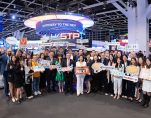
Under the theme “Gateway to the NEXT”, the HKSTP Pavilion featured innovations from 23 park companies, attracting more than 3,000 visits.
HONG KONG SAR – Media OutReach Newswire – 14 July 2026 – MEINONG ROBOT, a company from the Hong Kong Science and Technology Parks Corporation (HKSTP) ecosystem, won the 2nd Runner-Up in the Rocket Fuel East Startup Competition at LEAP East 2026, secured a US$10,000 equity-free award and gained exposure to global investors to accelerate its business expansion. Another park company, GenEditBio, also outperformed more than 500 competing startups and made it to the Top 6 Finalists.
HKSTP presented a strong innovation line up at LEAP East 2026, with over 30 park companies showcasing innovations across Life and Health Tech, GreenTech & Sustainability, Smart Cities & Urban Tech, and AI, Data & Robotics. (Pictured: Cordelia Chung, Chairman of HKSTP (front row, 8th from left); Terry Wong, CEO of HKSTP (front row, 7th from left); Eric Or, Chief Ecosystem Development Officer (5th from left); Hilda Chan, Chief Marketing Officer of HKSTP (front row, 6th from left); Filla Mak, Chief Property and Asset Officer (front row, 9th from left).)
Making its debut in the Asia-Pacific region, LEAP East chose Hong Kong as its host city, bringing together technology leaders, investors, policymakers and tech ventures. As the event’s exclusive Tech Ecosystem Partner, HKSTP participated alongside more than 30 park companies, facilitating over 1,500 business discussions and meetings from 8 to 10 July.
Under the theme “Gateway to the NEXT”, the HKSTP Pavilion featured innovations from 23 park companies across four key sectors: Life and Health Tech, GreenTech & Sustainability, Smart Cities & Urban Tech, and AI, Data & Robotics, attracting more than 3,000 visits.
Terry Wong, CEO of HKSTP, said: “LEAP East’s decision to land its first overseas edition in Hong Kong delivers three important messages to the I&T community. First, Hong Kong has become tech companies’ gateway into the global markets, which reflects the development and achievements of Hong Kong’s I&T ecosystem over the years and demonstrates the city’s unique ability to connect Middle Eastern capital, Asia-Pacific markets and supply chains in the Chinese Mainland, positioning Hong Kong as a true I&T hub. Second, the Middle East and other emerging markets represent the next strategic destination for tech companies. Driven by numerous application scenarios in smart cities, green energy and AI infrastructure, together with the ambitious transformation agenda under Saudi Vision 2030, these markets offer unprecedented growth opportunities for Hong Kong tech companies. Third, Hong Kong’s I&T community is demonstrating a growing global impact. From HKSTP executives and park companies contributing to international forums and thought leadership discussions, to HKSTP serving as the exclusive Tech Ecosystem Partner, and two park companies reaching the Top 6 of the Rocket Fuel East Startup Competition, with one securing the 2nd Runner-Up, all of these achievements underscore Hong Kong’s increasingly prominent position on the global I&T stage.”
In addition, Terry Wong, CEO, Eric Or, Chief Ecosystem Development Officer, Filla Mak, Chief Property and Asset Officer, and Dr Charleston Sin, Head of AI & Data, took part in keynote sessions and panel discussions throughout the event. They shared strategic insights on HKSTP’s I&T ecosystem, biotech, smart cities, and AI, fostering international dialogue, inspiring new breakthroughs and collaborations, and further strengthening HKSTP’s influence within the global I&T ecosystem.
To strengthen connections between park companies and the international innovation community, HKSTP co-organised “Build East: Agentic AI Demo Day and Tour” with Minds by Animoca Brands one day before LEAP East 2026, inviting global investors and startups to gain first-hand insights into Hong Kong’s largest I&T ecosystem and explore cross-border collaboration and investment opportunities.
Hashtag: #HKSTP
The issuer is solely responsible for the content of this announcement.
Hong Kong Science and Technology Parks Corporation
Hong Kong Science and Technology Parks Corporation (HKSTP) was established in 2001 to create a thriving I&T ecosystem grooming 13 unicorns, more than 16,000 research professionals and over 2,400 technology companies from 26 countries and regions focused on developing healthtech, AI and robotics, fintech and smart city technologies, etc.
Our growing innovation ecosystem offers comprehensive support to attract and nurture talent, accelerate and commercialise innovation for technology ventures, with the I&T journey built around our key locations of Hong Kong Science Park in Pak Shek Kok, InnoCentre in Kowloon Tong and three modern InnoParks in Tai Po, Tseung Kwan O and Yuen Long realising a vision of new industrialisation for Hong Kong, where sectors including advanced manufacturing, micro-electronics and biotechnology are being reimagined.
Hong Kong Science Park Shenzhen Branch in Futian, Shenzhen plays positive roles in connecting the world and the mainland with our proximity, strengthening cross-border exchange to bring advantages in attracting global talent and allowing possibilities for the development of technology companies in seven key areas: Medtech, big data and AI, robotics, new materials, microelectronics, fintech and sustainability, with both dry and wet laboratories, co-working space, conference and exhibition facilities, and more.
Through our R&D infrastructure, startup support and enterprise services, commercialisation and investment expertise, partnership networks and talent traction, HKSTP continues to contribute in establishing I&T as a pillar of growth for Hong Kong.
More information about HKSTP is available at www.hkstp.org.
COLOMBO, SRI LANKA- Media OutReach Newswire – 9 July 2026 – On July 4, 2026, the cultural exchange event Encounter & Insight: Dialogue Between Ningbo, China and Colombo, Sri Lanka took place in Colombo.
On July 4, 2026, the cultural exchange event Encounter & Insight: Dialogue Between Ningbo, China and Colombo, Sri Lanka took place in Colombo.
Separated by thousands of miles, the two millennia-old port cities reconnected, leveraging their ports as a bond and cultural exchanges as a cohesive force to hold in-depth talks on integrated port-city development and bilateral economic and trade connectivity.
This cross-Indian Ocean dialogue echoes the ancient Maritime Silk Road while charting a brand-new outbound development path. As a pivotal starting port of the ancient Maritime Silk Road, Ningbo is building a new global trade landscape powered by smart manufacturing.
A thousand years ago, merchant vessels from Mingzhou Port set sail southward loaded with Yue Kiln celadon porcelain, passing through Ceylon to deliver Oriental crafts across the Indian Ocean coasts. Precious gemstones and spices traveled the same sea route back to regions south of the Yangtze River, laying the groundwork for the earliest cultural exchange between the two ports through trade. Today, the cargo carried by giant cargo ships has undergone a dramatic transformation. Beyond traditional daily necessities, intelligent equipment, digital home appliances and industrial robots now dominate shipments.
Official statistics show that Ningbo’s exports of intelligent equipment, including mechanical arms and industrial robots, hit 440 million yuan in 2025, surging more than 40% year-on-year. From January to May this year, Ningbo’s exports of mechanical and electrical products maintained steady growth, reaching 247 billion yuan, a 4.1% year-on-year increase and accounting for 58.0% of the city’s total export volume. The new energy foreign trade sector saw explosive growth, with exports of new energy vehicles, lithium batteries, and photovoltaic products jumping 138.4% year-on-year, with electric vehicle exports skyrocketing 215.9%. Smart manufactured goods are continuously expanding the scope of Ningbo’s foreign trade.
Complementing the Colombo forum, an exhibition highlights Ningbo’s outstanding going-global enterprises and their products, vividly illustrating the profound shift in Ningbo’s trade structure.
Alongside time-honored Maritime Silk Road staples such as celadon porcelain and silk, Ningbo’s smart manufactured products—including AI translation glasses, intelligent outdoor gear and digital small home appliances—occupy prominent display spaces across the venue. In Sri Lanka, Ningbo smart water meters are widely adopted nationwide, while handheld cooling fans and intelligent kitchen appliances have entered ordinary households.
Leveraging Colombo Port’s transshipment advantages, massive volumes of Ningbo smart manufactured goods are distributed onward to Europe, the Middle East and beyond. What Ningbo exports today is no longer mere commodities, but a complete outbound solution integrating technology, brand value and after-sales services.
Faced with mounting challenges including homogeneous global market competition and rising trade barriers, Ningbo’s manufacturing sector has abandoned the old model of low-cost OEM production, relying on intelligent transformation to consolidate its competitive edge in overseas markets.
Over more than a decade of digital transformation efforts, Ningbo has achieved full digital upgrading of all industrial enterprises above designated size. A large number of local factories have built unmanned black-light workshops and flexible production lines, escaping vicious price competition through continuous technological iteration. Represented by five specialized, sophisticated, distinctive and innovative enterprises dubbed Ningbo’s “Five Little Tigers”—famous for their core proprietary technologies, including highly sophisticated visual inspection equipment, heat-resistant materials, sun-proof coatings, puncture-proof materials and self-drilling fasteners—these niche manufacturers have developed differentiated technical routes and full-spectrum production capacity, cementing irreplaceable competitiveness for Ningbo smart manufacturing on global markets.
Beyond trade expansion, Ningbo has built a supporting cultural communication system to ensure “products go global, accompanied by local culture”.
The launch of Sri Lanka’s first “One-Meter Cultural Space” cultural station during the Colombo event marks a tangible milestone of Ningbo’s go-global initiative. Built on enterprises’ overseas outlets, these miniature cultural exhibition halls integrate intangible cultural heritage crafts, urban stories and smart products, enabling overseas clients to experience cutting-edge manufacturing while gaining insight into Ningbo’s profound cultural heritage.
During the twin-city story-sharing session, Ningbo entrepreneurs based in Sri Lanka and local designers blending Chinese and Sri Lankan aesthetics shared stories of bilateral exchanges. Economic and trade ties have evolved into a bond for people-to-people communication, bridging divides in cross-cultural trade.
From Tang-dynasty celadon porcelain sailing across the Indian Ocean to intelligent equipment shipping to every corner of the globe, Ningbo, the ancient Maritime Silk Road port, has preserved its enduring gene of openness. Where exchanges once relied purely on commodity trade, today smart manufacturing underpins a stable, diversified and high-value-added global trade network.
The Ningbo-Colombo dialogue stands as a vivid microcosm of this transformation: the port still links lands and seas, yet the core of its trade has undergone a full intelligent upgrade.
Rooted in its historical legacy as a key Maritime Silk Road hub, Ningbo has consolidated its industrial foundation through a decade of digital development, expanded global market reach via worldwide port networks, and softened trade cooperation through cultural exchanges. This brand-new outbound shipping route forged by smart manufacturing has not only reshaped the city’s foreign trade landscape, but also delivered a replicable port-city development model for Chinese manufacturing to go global.
SHANGHAI, CHINA – Media OutReach Newswire – 7 July 2026 – On June 30, 2026, New York time, the launch ceremony and New York Forum for OUR WATER Season 3 were successfully held at Bloomberg Headquarters in New York. This event, themed “Rivers of Opportunities“, focused on the shared certainties of Shanghai and NYC, anchoring growth through open cooperation and reshaping the future through innovation and resilience.
Co-hosted by Bloomberg L.P., the Forum was attended by Michael R. Bloomberg, Founder of Bloomberg L.P. and Bloomberg Philanthropies; Tang Zhiwen, Minister, Embassy of the People’s Republic in the United States of America; Ma Xiaoxiao, Deputy Consul General of the People’s Republic of China in New York; Chen Yiqun, Director-General of Information Office of Shanghai Municipality, and Hu Minghua, President of Shanghai United Media Group and over 200 guests from the political, business, finance and cultural sectors of China and the United States. The forum is dedicated to exploring the openness and similarities between Shanghai and New York to identify a shared framework of certainties among global hub cities.
Caption:OUR WATER III held in New York. Photo: Shuran HUANG
The two cities share distinct advantages in sectors such as finance and trade, while also facing common challenges in urban renewal, low-carbon development, and digital transformation. Candid and open dialogue is essential for mutual learning, and it will also inject stability into China-U.S. relations.
On the topic of how global capital understands the Chinese market, a panel titled “Investing in China, Winning the Future” featured Chinese and international guests discussing how the appeal of Chinese assets is shifting from traditional growth narratives to AI, high-end manufacturing, financial opening-up, and institutional market development. As a hub for financial opening-up, an asset allocation center, and a cluster for innovative enterprises, Shanghai has become a crucial gateway linking international capital with opportunities in China.
Consumption is one of the most dynamic topics between China and the U.S. At the second panel of “Opportunies in emerging Consumer Markets“, moderated by Bloomberg Television host David Westin, panelists observed that the consumer vitality of Shanghai and New York stems not only from market size but also from their ongoing ability to create experiences, understand people, and activate urban spaces.
Besides the forum, the New York series of events for OUR WATER Season 3 also includes: West Meets East·Shanghai & New York 2026 – A Polaroid 20×24 Special Exhibition; Chinese Opera: A Century of Dreams – An Exhibition of Art Design and Technology; An Exhibition themed Shanghai’s “One River, One Creek” and Jing’an CAZ China-U.S. Business Leaders Dialogue in New York.
These events shape a tangible and immersive waterfront narrative, allowing Shanghai and New York—two super metropolises that have thrived on water—to resonate in harmony through dialogue. As Minister Tang Zhiwen stated in his address, Shanghai and New York, are expected to become benchmarks for subnational cooperation between China and the United States, and to make new contributions to fostering a “constructive China-U.S. relationship of strategic stability.”
Hashtag: #ShanghaiEye
The issuer is solely responsible for the content of this announcement.
New Delhi and Bamako have opened a structured export forum aimed at expanding bilateral trade, drawing investment into priority sectors and giving businesses from both countries a clearer route into West African and South Asian markets.
The inaugural India–Mali Forum for the Promotion of Exports was held in Bamako under the theme “Reinforcing Trade and Strategic Partnerships”, bringing together senior officials, export agencies and about 30 business leaders from India. The two-day initiative marks an attempt to move commercial engagement beyond commodity flows and towards sector-specific projects in cotton, mining, energy, pharmaceuticals, agro-processing, health and education.
The forum was jointly organised by Mali’s Ministry of Industry and Trade, the Embassy of India in Bamako and the Malian Agency for the Promotion of Exports. It was presided over by Mali’s Transition Government Prime Minister, Major General Abdoulaye Maïga, with the delegation from India led by Amit Kumar, Joint Secretary for FT-Africa in the Department of Commerce. Dr N. Nandakumar, Ambassador of India to Mali, represented the mission through the proceedings.
Bilateral trade crossed $326.61 million in 2025–26, a 55 per cent increase over the previous financial year. Mali’s exports to India include raw cotton, finished leather, cashew, lead, gum arabic and sesame. India’s exports to Mali include pharmaceuticals, cotton fabrics, two-wheelers, three-wheelers and bicycles. Officials see the current trade base as narrow but expandable, particularly because Mali’s global exports stand at about $4 billion and its untapped export potential in the market of India is estimated at nearly $3.96 billion.
The Duty-Free Tariff Preference Scheme has been a central driver of trade growth, offering least developed countries preferential access to the market of India. For Mali, the scheme provides a policy opening at a time when Bamako is seeking to diversify export destinations and reduce dependence on raw commodity shipments. For New Delhi, the forum fits a wider push to deepen commercial links with Africa through trade facilitation, capacity building and private-sector participation.
Business-to-business, business-to-government and government-to-government meetings formed the operational core of the forum. Exhibition stands featured products from both countries, including tractors and vehicles manufactured by Sonalika, Mahindra and Tata Motors. The format was designed to connect firms with regulators, identify bankable projects and address procedural bottlenecks that often slow trade between developing markets.
Mali presented ready-made business plans to potential investors and placed emphasis on agro-industry, shea processing, mining-linked services, renewable energy and social infrastructure. The country is seeking more value addition in cotton and agricultural commodities rather than relying mainly on exports of raw or semi-processed products. Cotton remains a significant sector for Mali, while shea, sesame, cashew and gum arabic offer scope for processing, branding and direct export partnerships.
Pharmaceuticals emerged as another key area. Mali sought quicker registration of approved products from India, a move that could expand access to affordable medicines and medical supplies. Health and education infrastructure were also discussed as areas where companies and institutions could provide services, equipment and training support.
The mining dimension is more complex. Mali is one of Africa’s leading gold producers and is working to tighten oversight of its precious metals trade after identifying large gaps between declared exports and import data reported by partner countries. A new state entity has been created to centralise and regulate precious-substances flows, reflecting Bamako’s effort to capture more value from gold and reduce informal trade. Industrial mines export about 60 tonnes of gold annually, while artisanal mining employs nearly 2 million people across hundreds of sites.
Security remains a central concern for investors. Mali has faced instability and militant violence, and economic assets have been among the risks flagged by foreign governments and companies. Earlier this year, security concerns stalled participation by government-backed firms from India in a Russian-backed lithium exploration project in Mali. That episode underlined the challenge of matching mineral ambitions with investor confidence.
Singapore-based companies have committed more than S$5.5 billion in Johor since the JS-SEZ memorandum of understanding, while IMFC-J reported 1,000 enquiries linked to RM73 billion in potential investment in March 2026.
JOHOR, MALAYSIA – Media OutReach Newswire – 2 July 2026 – Forest City Special Financial Zone (Forest City SFZ) today issued a progress update on the Johor-Singapore Special Economic Zone (JS-SEZ), pointing to early implementation milestones in investment facilitation, financial-services incentives and cross-border connectivity.
Forest City, Johor
The JS-SEZ agreement, signed on 7 January 2025, covers approximately 3,588 square kilometres across southern Johor. It comprises nine flagship areas and targets investment in 11 sectors, including manufacturing, logistics, financial services, the digital economy, tourism, education, healthcare and the green economy. Forest City is the designated financial-services flagship within the framework.
“The JS-SEZ has moved beyond framework design and into early-stage execution. Forest City has a defined role in financial services and family-office activity, while the wider zone is building a pipeline across multiple industries,” a Forest City SFZ spokesperson said.
Investment pipeline builds across the JS-SEZ
Singapore’s Ministry of Trade and Industry said Singapore-based companies had committed more than S$5.5 billion in investments into Johor since the JS-SEZ memorandum of understanding was signed in January 2024. The figure was highlighted at the second JS-SEZ Joint Investment Forum in Singapore in October 2025.
On the Malaysian side, the Invest Malaysia Facilitation Centre Johor (IMFC-J) reported in March 2026 that it had received 1,000 investor enquiries and was facilitating RM73 billion in potential investment.
IMFC-J is a joint federal-state one-stop centre led by the Iskandar Regional Development Authority, Invest Johor and the Malaysian Investment Development Authority.
The figures represent investment commitments and potential project value rather than fully realised capital expenditure, but provide an early measure of the commercial pipeline forming around the economic corridor.
Forest City builds financial-services proposition
Malaysia announced the Forest City SFZ incentive package in September 2024, followed by the gazettement of the Single Family Office (SFO) tax rules in October 2025. Under the scheme, a qualifying SFO vehicle may receive a 0% tax rate on eligible investment income for an initial 10-year period, with a possible extension for a further 10 years, subject to asset, local investment, staffing and operating-expenditure requirements.
The initial phase requires at least RM30 million in assets under management. The wider Forest City incentive framework also includes a 5% corporate tax rate for qualifying global-services and selected relocation activities, while eligible knowledge workers in the JS-SEZ may qualify for a 15% personal income tax rate, subject to prevailing rules and approvals.
According to Forest City data, nine family offices had received approvals under the scheme by June 2026. The Securities Commission Malaysia had previously reported more than 30 expressions of interest and has set a target of RM2 billion in SFO assets under management by the end of 2026.
Separately, Forest City said 593 applicants were approved for the SFZ category of the Malaysia My Second Home programme between 1 October 2024 and 31 March 2026, indicating demand from investors, professionals and long-stay residents alongside the financial-services push.
Cross-border measures support the dual-market model
The JS-SEZ framework is intended to combine Johor’s land, industrial capacity and cost base with Singapore’s capital, connectivity and business ecosystem. Measures under the bilateral framework include investor facilitation, automated immigration channels, paperless goods clearance and improved transport links.
Singapore has rolled out QR-code immigration clearance across travel modes at the Woodlands and Tuas checkpoints. Travellers should continue to carry their passports, which may still be required for verification and for clearance at the Malaysian border.
The Johor Bahru-Singapore Rapid Transit System Link is targeted to begin passenger service by the end of 2026. The four-kilometre line will connect Bukit Chagar and Woodlands North in about five minutes and is designed to carry up to 10,000 passengers per hour in each direction during peak periods.
Execution and conversion remain the next test
The World Bank projects Malaysia’s economy to expand by 4.4% in 2026, supported by domestic demand, while warning that trade restrictions, global policy uncertainty and weaker external demand remain downside risks.
For the JS-SEZ, the next phase will be measured by the conversion of enquiries and commitments into approved projects, realised investment, skilled employment and operating businesses. Delivery of transport, utilities, talent development and regulatory coordination will also determine the pace at which companies adopt a cross-border operating model.
“The early indicators are encouraging, but the economic impact should be assessed over a multi-year horizon. The priority now is to convert the pipeline into sustainable business activity, jobs and a deeper professional-services ecosystem,” the spokesperson said.
Forest City SFZ said it will continue working with public agencies, financial institutions and professional-service providers to support family offices, international investors and companies evaluating Johor as part of their regional growth strategy.
Key figures
Indicator
Latest stated figure
JS-SEZ coverage
Approximately 3,588 km²; nine flagship areas; 11 priority sectors
Singapore-linked commitments
More than S$5.5 billion committed into Johor since January 2024
IMFC-J pipeline
1,000 enquiries; RM73 billion in potential investment as at March 2026
SFO incentive
0% on eligible investment income for 10 years, with a possible further 10 years
RTS Link
Targeted passenger service by end-2026; up to 10,000 passengers per hour per direction
Malaysia 2026 GDP outlook
4.4% growth forecast by the World Bank
Hashtag: #ForestCity
The issuer is solely responsible for the content of this announcement.
About Forest City Special Financial Zone
Located in Iskandar Puteri, Johor, Forest City Special Financial Zone (FCSFZ) is Malaysia’s pioneering special financial zone and the financial-services flagship within the Johor–Singapore Special Economic Zone. It is positioned to attract financial institutions, multinational corporations, high-net-worth individuals and businesses operating in wealth management, financial technology and global business services.
Its incentive framework includes a 0% income tax rate for qualifying Single Family Office Vehicles for up to 20 years, a preferential 5% corporate tax rate for approved qualifying activities, and a special 15% personal income tax rate for eligible knowledge workers, subject to the applicable conditions, regulatory approvals and prevailing legislation. Forest City also holds duty-free island status, further strengthening its appeal as a regional investment, business and wealth-management destination near Singapore.
BitAuto Malaysia Automotive Forum 2026 has ended in Kuala Lumpur with automakers, dealers, digital platforms and content creators positioning online engagement, localisation and electrification as the next drivers of Malaysia’s automotive growth.
The forum, held on June 30 at Sheraton Imperial Kuala Lumpur, marked BitAuto Malaysia’s first large-scale industry showcase. Hosted by BitAuto Tengyi Malaysia Sdn Bhd, the event brought together GWM Malaysia, Chery Corporate Malaysia, Proton New Energy, SGMW, JoyStar Dealer Group, TQ Wuling Manufacturing, Beritarian and representatives from Zeekr, Leapmotor, BMW, Toyota and 212 Motors.
The central theme, integration and symbiosis, reflected a market in transition. Malaysia’s automotive sector is moving from a phase led largely by model launches and pricing competition towards a broader contest over digital visibility, dealer conversion, charging access, after-sales confidence and community-led trust.
Li Wei, vice-president of Tengyi Technology and director of BitAuto Malaysia, said the company had chosen Malaysia as its flagship overseas hub because of the country’s steady vehicle demand, faster electrification, low but expanding EV penetration and policy support. BitAuto has built a 26-year presence in China’s automotive internet market through vertical auto media, mobility advertising, new media operations and AI technology.
BitAuto Malaysia is promoting Bitauto. my as a full-funnel automotive platform covering awareness, content nurturing and conversion. The platform lists more than 85 marques, 550 vehicle models and 1,300 variants, offering high-definition galleries, 360-degree VR viewing, multi-model comparison tools, pricing information and promotional data from authorised dealers.
The company is also building a trilingual content operation in Bahasa Malaysia, Mandarin and English, supported by more than 30 creators across automotive, technology, lifestyle and travel segments. Its dealer tools include membership services, livestream customer acquisition, WhatsApp lead distribution, merchant back-end management and performance advertising workflows.
The forum’s commercial importance is underscored by Malaysia’s shifting vehicle market. Total industry volume reached a record 820,752 units in 2025, the second straight year above 800,000 units, but 2026 sales are expected to soften to around 790,000 units as affordability pressures, higher operating costs and the end of tax exemptions for fully imported EVs weigh on demand.
Electrification remains the clearest growth pocket. Battery electric vehicle registrations more than doubled to 30,848 units in 2025, while combined EV and hybrid sales rose to 69,363 units. Fully imported EVs have been subject to import duty, excise duty and sales tax from January 2026, though locally assembled EV incentives remain in place until the end of 2027.
Proton’s EV assembly plant in Perak has added weight to Malaysia’s ambitions as a regional electric mobility hub. The facility has an initial annual capacity of 20,000 cars, with scope to rise to 45,000 units. Prime Minister Anwar Ibrahim has urged Geely to use the auto hub not only for vehicle production but also as a centre for training and education.
Chinese automakers are also deepening their regional strategies. Xpeng has been in negotiations with EP Manufacturing Bhd to begin EV production in Malaysia in 2026, while BYD has announced plans for an assembly plant in Perak and Leapmotor is preparing local assembly at Stellantis’ plant in Gurun, Kedah. These moves point to Malaysia’s growing role in right-hand-drive markets across ASEAN.
Panel discussions at the forum focused heavily on localisation. Michael Chew of Chery Malaysia said long-term market presence required a full local ecosystem covering manufacturing, supply chains and talent, rather than a reliance on imported vehicles. Oscar Wang of JoyStar Dealer Group described Malaysia as a mature replacement market where trade-in buyers increasingly seek differentiated driving experiences.
Fuel subsidy changes and concerns over petrol costs were cited as factors lifting interest in plug-in hybrids and hybrids. Speakers also said charging infrastructure remained a “chicken-and-egg” issue requiring coordination among automakers, dealers and public authorities.
The second major discussion turned to content and community. Speakers said buyers were responding less to technical claims alone and more to authenticity, ownership experience and creator credibility. Short videos were described as useful for initial discovery, while long-form reviews and offline car communities were seen as stronger tools for building brand loyalty.
ZHONGSHAN, CHINA – Media OutReach Newswire – 1 July 2026 – As 2026 marks the 160th anniversary of the birth of Dr. Sun Yat-sen, the 6th Cross-Strait Sun Yat-sen Forum was held in Zhongshan, Guangdong Province—the hometown of the great pioneer—from June 27 to 29 under the theme “Carrying Forward Dr. Sun Yat-sen’s Spirit of Endeavor and Working Together for the Great Rejuvenation of the Chinese Nation”. This year’s forum was the largest in its history, attracting the broadest participation from Taiwan compatriots and the highest proportion of young participants to date. Around 2,000 representatives from across the Chinese mainland, Taiwan, Hong Kong, and Macao attended the event. Centered on cultural heritage and driven by economic and trade cooperation, the forum established a multi-level platform for cross-strait exchanges and collaboration while fostering broader consensus on integrated cross-strait development.
At the 6th Cross-Strait Sun Yat-sen Forum open ceremony
Distinguished guests from both sides of the Taiwan Strait attended the opening ceremony and noted in their remarks that Dr. Sun Yat-sen is a revered national pioneer shared by compatriots on both sides of the Strait. His vision of rejuvenating China remains a common spiritual legacy, and people across the Strait should carry forward his ideals and work hand in hand toward national rejuvenation. During the opening ceremony, Zhongshan Municipal People’s Government and the Association of Taiwan Investment Enterprises on the Mainland signed the Strategic Framework Agreement on Deepening Zhongshan–Taiwan Economic and Trade Cooperation to Promote Integrated Development, laying a solid institutional foundation for long-term industrial cooperation across the Strait.
A series of cultural exchange activities also took place throughout the forum. Participants enjoyed an evening tour of the century-old Sunwen West Road Arcade Pedestrian Street, immersing themselves in Zhongshan’s rich historical heritage and the vibrant cultural and tourism scene of the Guangdong-Hong Kong-Macao Greater Bay Area. They also visited the Museum of Dr. Sun Yat-sen, where they studied revolutionary historical archives, bowed before Dr. Sun’s bronze statue to pay homage, and gained a deeper appreciation of his enduring ideals of “All Under Heaven Belong to the People” and “Revitalize China”. Many participants remarked that these activities provided an excellent platform for sustained exchanges among young people across the Strait and that their shared cultural roots and common heritage form a solid foundation for advancing cross-strait spiritual integration.
To further strengthen cross-strait economic cooperation and advance industrial integration between Shenzhen and Zhongshan, the forum also featured the “Taiwan Businesses Gather in Zhongshan, Industries Glow in the Greater Bay Area” 2026 Guangdong-Taiwan Economic and Trade Exchange Conference and Investment Promotion Event Celebrating the Second Anniversary of the Shenzhen-Zhongshan Link. A total of 19 industrial projects were signed during the event. The first group comprised seven Taiwan-invested projects spanning semiconductor supporting industries, electronic components, smart home products, high-end fitness equipment, and medical devices. The second and third groups included 12 Shenzhen-Zhongshan collaborative projects covering new energy vehicle components, industrial robotics, memory chip packaging, advanced specialty materials, and integrated cultural, tourism, and commercial developments.
During the investment promotion event, Taiwan business representatives spoke highly of Zhongshan’s business environment. Zhang Congyuan, Chairman of Huali Industrial Group, which has operated in Zhongshan for more than two decades, praised the city’s enterprise service philosophy of “staying out of businesses’ way when everything runs smoothly while providing prompt support whenever needed”. He noted that this business-friendly environment has helped the company grow into one of the world’s leading manufacturers of athletic footwear.
Guo Wenhai, secretary of the CPC Zhongshan Municipal Committee, extended a sincere invitation to Taiwan businesses and entrepreneurs to invest and establish operations in Zhongshan. He emphasized that the city offers not only strong industrial infrastructure but also high-quality government services. Zhongshan will continue to provide proactive, efficient, and dedicated support for businesses while continuously improving both its hard and soft investment environment. Leveraging the opportunities created by the Shenzhen-Zhongshan Link, the city aims to create broader prospects for cooperation and shared growth for enterprises from both sides of the Taiwan Strait.
Participants and Taiwan business representatives agreed that, taking the 160th anniversary of Dr. Sun Yat-sen’s birth as an important milestone, this year’s forum created new channels for both cultural exchanges and industrial cooperation across the Strait. Looking ahead, Zhongshan will continue to organize regular initiatives, including entrepreneurship support programs for young people from Taiwan, youth exchange activities, and Guangdong-Taiwan industrial matchmaking events. By carrying forward Dr. Sun Yat-sen’s spirit, embracing the opportunities of the Greater Bay Area, and strengthening both economic cooperation and people-to-people ties, the city will continue to contribute to a new chapter of integrated cross-strait development.
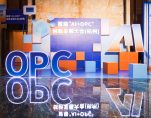
HANGZHOU, CHINA – Media OutReach Newswire – 30 June 2026 – The inaugural AI+OPC Innovation and Development Conference was held from June 29 to 30 in Shangcheng District, Hangzhou, capital city of east China’s Zhejiang Province. Centered on one-person company (OPC), a new form of smart economy in the AI era, the conference program comprised one opening ceremony and two parallel breakout sessions.
Live from the 1st “AI+OPC” Innovation & Development Conference in Hangzhou
It gathered around 400 delegates from government departments, industry associations, financial institutions, AI enterprises and OPC startup operators across the country. Participants exchanged insights on AI innovation pathways and cross-industry integration strategies, injecting strong impetus into Hangzhou’s ambition to develop a national benchmark hub for AI+OPC entrepreneurship.
A series of key launches and milestone ceremonies took place during the opening segment. Official releases included the 2026 national OPC development observation report, Hangzhou’s 2026–2028 action plan and supporting policies to build a national AI+OPC entrepreneurship hub, and a catalog of actionable AI+OPC application scenarios. Attendees also received an in-depth interpretation of the specifications for AI-enabled OPC community services and evaluation.
The ceremony featured multiple landmark initiatives: plaque awarding for Hangzhou’s priority AI+OPC incubation communities and dedicated observation sites, the official launch of the AI+OPC Community Alliance initiative, and a kickoff marking the official construction of the national AI+OPC entrepreneurship hub.
The open forum session featured keynote speeches from distinguished industry and academic leaders. Speakers included Pan Yunhe, former executive vice president of the Chinese Academy of Engineering and professor at Zhejiang University; Liang Gui, former executive vice governor of Jiangxi Province and ex-director of the Torch High Technology Industry Development Center under the Ministry of Industry and Information Technology; and Zou Ling, head of Hong Hub, Shangcheng District’s single-member unicorn startup acceleration community, who shared cutting-edge insights from varied perspectives.
A panel dialogue followed, bringing together representatives from Moshu OPC Community (Beijing E-Town), the School of Future Science and Engineering at Soochow University, Qingju Hub · Future Digital Intelligence Port (Shangcheng District), and Puhua Capital for in-depth industry exchanges.
Complementary concurrent events held throughout the conference included an OPC capital-industry matchmaking salon, a symposium on industry-education integration for AI-powered OPC sectors, and a national exchange forum for AI+OPC community practitioners.
OPC has emerged as a vibrant new engine driving economic vitality and underpinning high-quality development. Against the backdrop of a new development era, the inaugural Hangzhou AI+OPC Innovation and Development Conference unites OPC innovators nationwide.
Drawing on the creative energy of millions of independent super-individual operators, the event delivers sustained digital momentum to fuel Hangzhou’s super-individual economy, while rolling out replicable local practices and actionable Hangzhou solutions to advance high-quality growth of smart economies nationwide.
The issuer is solely responsible for the content of this announcement.
A Telegram-controlled remote access trojan called Millenium RAT has compromised more than 62,000 Windows devices across over 160 countries, exposing how low-cost malware subscriptions are widening access to intrusive cyber tools once limited to more skilled operators. The campaign has accelerated sharply this year, with about 39,700 infections recorded during the first quarter of 2026 alone. The scale points to an expanding malware-as-a-service operation in which attackers […]
Cincinnati has long been recognized as one of Ohio’s most dynamic cities, blending a strong business community with historic neighborhoods, growing startups, major healthcare systems, and family-owned enterprises. As the city continues to evolve, legal needs have expanded in areas such as estate planning, family law, business formation, criminal defense, employment disputes, and personal injury. The city’s legal community includes firms that have spent decades serving local […]
By Nantoo Banerjee West Bengal’s first ever Bharatiya Janata Party (BJP) government’s resolve to rebuild the state to its “old glory” sounds good though reversing decades of economic stagnation and industrial decline remains an incredibly difficult challenge. Economically, West Bengal’s rank among Indian states has dropped from No.1 till the mid-1960s to below 10 now. […]
Spacebiz in Hong Kong – a golden opportunity for Professional Services and STEM
HONG KONG SAR – Media OutReach Newswire – 29 June 2026 – Space Economy Association (Hong Kong) Ltd, or “SEA”, officially formed in the midst of the space economy boom. It is an independent membership-based non-government organisation dedicated to connecting and facilitating space-related industries, businesses, investors, educators, experts, and governments worldwide in their pursuit for businesses and technology in commercial space. SEA helps establish Hong Kong as a super-connector hub in the international space ecosystem by capitalising on our professional services, led by finance.
The new renaissance is in the space economy. The US$630 billion global space economy is set to triple to US$1.8 trillion[1] by 2035. With launch costs dropping 10-fold in the last 20 years, private and public sectors will soar with all humanity set to benefit. Space economy is ubiquitous and creating value beyond rocketry and satellites, everyone will flourish as the space economy grows 9% per annum. China is the world’s second largest player in space, highlighting it as one of the four emerging strategic industries in its 15th National Five-Year Plan. Its commercial space sector has already launched 81 rockets and 336 satellites into orbit, with over 100 space start-ups and companies raising around US$6.5 billion. Hong Kong, as a key international financial centre practicing Common Law with international arbitration system and robust insurance, data and intellectual property protection capabilities, uniquely stands to serve China and other countries to pursue capital, business, technology and talent in commercial space.
“From Hong Kong’s perspective, the NewSpace economy is not simply about rockets or satellites; it is about the commercial possibilities they create for our professional services community. As the nation advances its aerospace ambitions, Hong Kong’s strengths in finance, insurance, law and related fields equip the city to support activities ranging from project financing and initial public offerings to risk management and crossborder transactions. Our bankers, insurers, accountants and lawyers are ideally positioned to help turn space initiatives into viable enterprises — and to participate directly in the value they generate.” said the Honourable Bernard Charnwut Chan, GBM, GBS, JP. Patron of SEA.
“Hong Kong’s top-class professional services would facilitate the processes from research and innovation to startup, scale-up and successful space business. Besides a hub for IPOs, Hong Kong offers funding from seed and angel, to private equity, venture capital, mergers and acquisitions, in debt, equity, and lease financing. This space economy would contribute plentiful job and business opportunities to become a key pillar of Hong Kong in terms of economy and quality opportunities for our young generation,” said Professor Richard Leung, Chairman of SEA. “SEA’s global network of partners grows beyond Asia, North America and Europe to include the UNOOSA ecosystem. SEA is a platform that empowers astropreneurs to launch towards humanity’s collective space dream.”
SEA is governed by a Board of 19 members and supported by nine committees. SEA is also strongly supported by a Patron and five Fellows who share the vision to position Hong Kong as a leading hub in the international space economy. The Honourable Bernard Charnwut Chan, GBM, GBS, JP is SEA’s Patron with Fellows Dr. Anthony Neoh, KC, SC, JP, Chairman, Asian Academy of International Law, Prof. Jin-Guang Teng, BBS, JP, President, The Hong Kong Polytechnic University, Mr. Jimmy Tsang, General Manager, Goldlion, Mr. Roger Tong, Chief Executive Officer, AsiaSat, and Prof. Gregg Li, Adjunct Professor at the Laboratory for Space Research, The University of Hong Kong.
As this new economy requires education first, SEA began as the Orion Astropreneur Space Academy or OASA, with an aim to herald and teach this new economy. OASA was formed in 2020 to accelerate the awakening of young executives and professionals through action-learning and Artificial Intelligence, preparing them for the NewSpace economy. OASA has made important strides in advancing NewSpace awareness, talent development, and ecosystem building. It has engaged more than 200,000 visits, worked with over 50 partner organisations, and organised more than 60 courses and activities. As OASA evolves into SEA, the OASA remains the brand for school development programmes and youth-focused education.
SEA membership is a community of 100 co-founders, 150+ active members, 250+ student members, and 40+ industry partners shaping the future of NewSpace in the Greater Bay Area. Members connect with leading innovators, world-class institutions, global mentors, and industry leaders at the forefront of the commercial space. SEA provides a trusted platform for dialogue, collaboration, and engagement through events and direct connections. Members can access closed-door industry dialogues, international delegations, early opportunities for partnerships, and connect with an internationally respected network.
SEA’s membership framework has full, associate, and fellow membership options to serve this diverse community. All members benefit from preferential event rates, networking opportunities, curated market intelligence, professional development, and selected business support services. Full Members enjoy governance rights at general meetings, while higher-tier and charter members receive additional recognition and priority access.
[1] World Economic Forum, Insight Report, April 2024 – “Space: The $1.8 Trillion Opportunity for Global Economic Growth“
Hashtag: #SpaceEconomyAssociation #SEA
The issuer is solely responsible for the content of this announcement.
About Space Economy Association (Hong Kong) Ltd
Space Economy Association (Hong Kong) Ltd (SEA) is an independent, membership-based NGO dedicated to connecting and facilitating space-related industries, businesses, investors, educators, experts, and governments worldwide in their pursuit of commercial space business and technology. SEA aims to help establish Hong Kong as a super-connector hub within the international space ecosystem by capitalising on its strengths in professional services, led by finance. SEA’s membership comprises a community of 100 co-founders, over 150 active members, more than 250 student members, and 40+ industry partners, all contributing to shaping the future of NewSpace in the Greater Bay Area. Members benefit from access to closed-door industry dialogues, international delegations, early partnership opportunities, and connections with a respected global network, including the UNOOSA ecosystem. SEA’s growing global network of partners spans Asia, North America, and Europe.
Hong Kong’s wealth management industry placed renminbi internationalisation, enterprise expansion and ageing-linked investment demand at the centre of its growth agenda as Bank of China and Television Broadcasts Limited held the Wealth Management Expo 2026.
The event, staged on 27 June under the theme “Empowering Enterprises to Go Global, Pioneering the Blue Ocean of Silver Economy”, brought together senior government officials, banking executives, fund specialists and business figures at a time when Hong Kong is sharpening its role as an international asset and wealth management centre. The programme focused on three closely linked priorities: helping companies expand overseas, strengthening Hong Kong’s position as a global offshore renminbi hub, and turning demographic change into investable opportunities across healthcare, insurance, lifestyle and retirement planning.
Michael Wong, Acting Financial Secretary of the HKSAR Government, Christopher Hui, Secretary for Financial Services and the Treasury, and Stephen Chan, Deputy Chief Executive of BOCHK, officiated at the event. Other participants included Ko Wing-man, Standing Committee member of the National Committee of the CPPCC; Siu Sai-wo, General Manager for Business Operations at TVB; Pauline Ngan, Deputy Chairman and Managing Director of Mainland Headwear Holdings; Sam Yu, Chairman of the Hong Kong Investment Funds Association; Jack Yang, RMB Business Executive Director of BOCHK; Terry Wong, Chief Executive Officer of Hong Kong Science and Technology Parks Corporation; Angus Chan of Chinachem Group; and Wilson Tang, Chief Executive of BOC Group Life Assurance.
The expo’s opening forum examined how wider use of the renminbi could support enterprises expanding beyond their home markets. Speakers discussed changing global investment conditions, cross-border settlement, capital-market access and Hong Kong’s role as a bridge between the mainland and international investors. The focus reflected a policy push to deepen offshore renminbi activity while helping companies manage foreign exchange, financing and liquidity risks during overseas expansion.
Stephen Chan said Hong Kong was positioned to benefit from the 15th Five-Year Plan’s support for the city as an international asset and wealth management centre. BOCHK would align with government policy by deepening regional business development and promoting wider use of the renminbi, while contributing to Hong Kong’s standing as an international financial centre.
The event also gave prominence to the silver economy, a fast-expanding theme in Asian wealth and business strategy as ageing populations reshape demand for health services, insurance, property, retirement products and lifestyle consumption. The summit forum explored how traditional industries could adjust supply chains and develop services for older consumers, with particular attention to healthcare, elderly care, insurance and technology-enabled services.
Hong Kong’s wealth industry has entered the year with strong structural tailwinds. The city’s asset and wealth management business stood at more than HK$35 trillion at the end of 2024, with more than half of assets sourced from outside the mainland and Hong Kong. The number of single-family offices exceeded 3,380 by the end of 2025, up by about 680 from the end of 2023. Hong Kong has also overtaken Switzerland as the world’s largest cross-boundary wealth management centre, with cross-border wealth booked in the city reaching about $2.9 trillion in 2025.
That momentum is being matched by more intense competition and tighter compliance expectations. Banks and wealth managers are expanding advisory services, digital platforms and family-office offerings, but cross-border flows are facing closer scrutiny as authorities seek to ensure funds move through proper channels. The challenge for the city is to preserve its appeal to private clients while remaining aligned with broader policy priorities, including corporate treasury management, offshore renminbi use and regulated investment connectivity.
The expo’s workshops covered global fund and equity-market conditions, retirement wealth planning, emerging-market investment and multi-asset income strategies. One session examined renminbi assets and China’s equity and bond markets in the context of deeper economic links with ASEAN, the Global South and Belt and Road partner countries. Another looked at income opportunities across Asia-Pacific and emerging markets as investors reassess portfolios amid volatile global equity and bond markets.
Empowering Enterprises to Go Global, Pioneering the Blue Ocean of Silver Economy
HONG KONG SAR – Media OutReach Newswire – 27 June 2026 – The “Wealth Management Expo 2026”, powered by Bank of China (Hong Kong) (“BOCHK”) and organised by TVB under the theme of “Empowering Enterprises to Go Global, Pioneering the Blue Ocean of Silver Economy”, was successfully held today. The Expo featured top-tier financial experts and prominent figures for market pulse insights and visionary perspectives on the international landscape, the international use of RMB, enterprises going global, silver economy and wealth management.
Officiating guests – Mr. Michael WONG, GBS, JP, Acting Financial Secretary of the HKSAR Government (6th left); Mr. Christopher HUI, GBS, JP, Secretary for Financial Services and the Treasury of the HKSAR Government (4th right); and Mr. Stephen CHAN, Deputy Chief Executive of BOCHK (5th right); together with other attending guests, including Mr. SIU Sai Wo, General Manager (Business Operations) of TVB (5th left); and representatives from BOCHK.
The Expo was officiated by Mr. Michael WONG, GBS, JP, Acting Financial Secretary of the HKSAR Government; Mr. Christopher HUI, GBS, JP, Secretary for Financial Services and the Treasury of the HKSAR Government; and Mr. Stephen CHAN, Deputy Chief Executive of BOCHK. Mr. Christopher HUI also shared at the opening forum on how Hong Kong as a global offshore RMB hub supports enterprises in going global. Other attending guests included Dr. KO Wing Man, GBS, JP, Standing Committee of the National Committee of the CPPCC; Mr. SIU Sai Wo, General Manager (Business Operations) of TVB; and representatives from BOCHK.
Mr. Stephen CHAN, Deputy Chief Executive of BOCHK, said in his opening remarks, “This year marks the inaugural year of the nation’s 15th Five-Year Plan, which clearly supports Hong Kong in strengthening its role as an international asset and wealth management centre. Against this backdrop, Hong Kong, as a vital bridge between the Chinese Mainland and the rest of the world, is set to tap into an unprecedented opportunity for growth. Bank of China (Hong Kong) will actively align with national policies and the HKSAR Government’s direction by deepening its regional business development and promoting the international use of RMB, while continuing to fulfil its corporate social responsibilities, contributing to the consolidation of Hong Kong’s position as an international financial centre.”
Opening Forum: Experts Shared Insights on RMB Empowering Enterprises to Go Global
The opening forum of the Expo “New Opportunities in Global Wealth Investment: RMB Empowering Enterprises to Go Global” featured Mr. Christopher HUI, GBS, JP, Secretary for Financial Services and the Treasury, HKSAR Government; Mrs. Pauline NGAN, BBS, JP, Deputy Chairman and Managing Director of Mainland Headwear Holdings Limited, Member of the National Committee of the CPPCC; Mr. Sam YU, Chairman of Hong Kong Investment Funds Association; and Mr. Jack YANG, RMB Business Executive Director of BOCHK. They engaged in an in-depth discussion on the international market trends, enterprises going global and the international use of RMB, elaborating new investment opportunities.
Summit Forum: Decoding Silver Economy Opportunities and Industry Integration
The growing silver-haired population is driving demand across a range of areas, including health, lifestyle and wealth management. Held under the theme “Redefining Value in the Silver Age: Uncovering Blue Ocean Market Opportunities”, the summit forum featured Dr. KO Wing Man, GBS, JP, Standing Committee of the National Committee of the CPPCC; Mr. Angus CHAN, Director of Elderly Care Services of Chinachem Group; Mr. Terry WONG, Chief Executive Officer of Hong Kong Science and Technology Parks Corporation; and Mr. Wilson TANG, Chief Executive of BOC Group Life Assurance Company Limited. Drawing on a macro perspective on industry structure, the speakers analysed the business opportunities within the silver economy and explored how to drive supply chain transformation and integration across traditional industries such as healthcare and insurance, while offering a forward-looking view of the immense potential of this emerging market.
Thematic Workshops and Immersive Digital Experience Zone, Showcasing Comprehensive Wealth Growth Strategies
The Expo also held several thematic workshops, in which experts analysed prevailing topics, including global fund and equity market conditions, retirement wealth planning, and emerging markets, equipping clients with insights into wealth growth strategies. Two fund workshops focused respectively on emerging markets and global income opportunities. The first workshop, “Focusing on Emerging Value in Asia: Embarking on a New Chapter for RMB Assets and China’s Equity and Bond Markets”, examined how the Chinese Mainland’s deepening cooperation with ASEAN, the Global South, and Belt and Road Initiative partner countries is generating new investment opportunities in emerging markets. The workshop also offered an investment outlook of the implications of the National 15th Five-Year Plan and the shifting global landscape for RMB assets and the Chinese Mainland’s equity and bond markets. The second fund workshop, “Harnessing Multi-Asset Strategies to Capture Asia-Pacific Income Opportunities,” explored how investors should diversify asset portfolio amid heightened volatility in global equity and bond markets, while capturing income opportunities from Asia-Pacific and emerging markets.
The retirement planning workshop, “Forward-Looking Wealth Planning: Charting Your Own Path to a Premium Retirement”, addressed the retirement pain points commonly faced by Hong Kong residents, offering financial advice for the silver generation to build a solid safety net for themselves and their families. The equities workshop, “Navigating 2026: Decoding Stock Market Strategies”, dissected global equity market performance and explored how different financial products can be used to balance aggressive and defensive positioning to capture markets with growth potential. The wealth management workshop, “AI-led Future: Blue Ocean Opportunities in Southeast Asia and New Horizons for Enterprises Going Global”, examined the AI investment boom and analysed the unique edge of Hong Kong as a “super value-adder” for enterprises going global.
A 3D immersive digital experience zone highlighted BOCHK’s capabilities across its expansive network reach, anti-fraud education, professional services, digital innovation leadership and award-winning credentials.
BOCHK Private Wealth also officially unveiled its new Wealth+ service proposition at the event, expanding its scope beyond wealth management to encompass multi-dimension of clients’ lives, including lifestyle experiences, family financial planning and holistic well-being, with a commitment to addressing client’s unique and individual needs.
The “Wealth Management Expo 2026” concluded successfully with fruitful outcomes. Through a full day of engaging forums, workshops, digital experience zone and sponsored booths, industry professionals, investors and the public can gain insights into global opportunities, keep abreast of the latest development in the international use of RMB and the strategic advantages of enterprises going global, while capitalising on the diverse opportunities presented by the silver economy, and mastering financial management and wealth growth.
Hashtag: #WealthManagementExpo2026
The issuer is solely responsible for the content of this announcement.
BRUSSELS, BELGIUM / PARIS, FRANCE – Media OutReach Newswire – 26 June 2026 – As artificial intelligence reshapes global power dynamics, European and Chinese leaders are warning that the EU and China must move beyond zero-sum competition to harness their complementary strengths in AI governance and industrial application.
The consensus emerged during the 12th CEIBS Europe Forum, a flagship dialogue held across Paris (22 June) and Brussels (24 June) bringing together policymakers, industry executives, and academics.
Addressing the forums, former President of the European Council Charles Michel stressed that AI is no longer merely a technological issue, but a matter of “sovereignty, leadership, and power.” He identified semiconductors, data infrastructure, and regulatory policy as the core variables shaping future international relations. While acknowledging intensifying global competition, Michel called for “responsible collaboration,” noting that Europe’s mature approach to corporate governance and data security could confer distinct long-term resilience.
The events highlighted a clear strategic divergence in global AI: the US leads in frontier investment, China excels in large-scale application and open-source models, while Europe dominates in regulatory frameworks. “The more intense the competition becomes, the more important dialogue and cooperation are,” noted CEIBS President Wang Hong, highlighting the need to balance global AI governance.
Other speakers included Chinese Ambassador to the EU Cai Run and Chinese Minister to France Chen Li.
Industry panels featuring executives from Siemens, EDF, and leading robotics firms reinforced this pragmatic approach. Across sectors like energy, healthcare, and advanced manufacturing, experts agreed that AI acts as an enabler rather than a replacement for human expertise. However, they cautioned that AI’s massive energy demands present a critical challenge—and a prime opportunity for joint Sino-European innovation in grid technology and renewables.
Concluding the Brussels summit, CEIBS Co-President (European) Frank Bournois encapsulated the sentiment of both cities: “Competition is natural, but insufficient. The real formula we need is unity and trust.”
Dubai will host the second edition of the World Sports Summit on 28 and 29 December 2026, bringing together leading athletes, administrators, investors and decision-makers for a two-day forum aimed at shaping the next phase of the global sports industry. The event will be held under the patronage of H. H. Sheikh Hamdan bin Mohammed bin Rashid Al Maktoum, Crown Prince of Dubai, Deputy Prime Minister, Minister […]
A short Reddit comment can push AI research agents towards fake products, fraudulent services and invented businesses, exposing a fresh weakness in systems that increasingly mediate consumer choices online. Cornell Tech researchers Tingwei Zhang, Harold Triedman and Vitaly Shmatikov found that a crafted snippet of about 13 words, planted in user-generated content, could manipulate deep-research systems that gather web material, synthesise it and present confident, citation-backed answers. […]
SINGAPORE- Media OutReach Newswire – 19 June 2026 – For many students considering higher education, choosing an institution is not only about selecting a programme or qualification. Students are also looking for a learning environment where they belong, receive support, build confidence and connect with people who can help with understanding future career pathways.
At SIM Global Education (SIM GE), campus life is designed to complement academic learning by helping students develop networks, soft skills, career awareness and a stronger sense of community. SIM GE’s holistic learning approach and culturally diverse environment aim to equip students with an all-rounded global education, while student life, career development and networking activities help students build competencies needed to thrive in the real world.
This is increasingly important in higher education. UNESCO’s International Institute for Higher Education notes that student wellbeing is critical to academic success and personal development, and that inadequate support can affect learning outcomes, career readiness and students’ ability to contribute meaningfully to society.
Addressing student concerns beyond the classroom Students exploring higher education often face several practical concerns. They may wonder whether they will make friends, whether they will be supported if they struggle, whether they will have opportunities to develop leadership skills, and whether they can access career guidance before entering the workforce.
SIM GE addresses these concerns through a campus ecosystem that combines student clubs, leadership development, peer support, wellbeing programmes and career services. Through Project 1095, SIM GE highlights that education extends beyond books, exams and qualifications, encompassing knowledge, skills and activities both inside and outside the classroom. This approach supports students who want a fuller higher education experience to grow personally, socially and professionally.
Building networks through clubs and co-curricular activities Student clubs and co-curricular activities are among the first ways SIM GE students build connections on campus. SIM offers nearly 80 student clubs across areas such as arts and culture, international student clubs, student councils, special interest groups, sports and fitness. These activities allow students to broaden their interests, discover new talents and interact with peers beyond their academic programmes.
For students, these communities can make networking feel more natural. Instead of viewing networking only as a formal career activity, students can begin by working with peers on events, competitions, club projects and leadership initiatives. These experiences help students develop communication, teamwork, confidence and relationship-building skills that are valuable in both campus life and the workplace.
Developing leadership and workplace-ready skills Leadership opportunities are another important part of the SIM GE student experience. Project 1095 states that SIM aims to prepare every student to be a leader, with opportunities ranging from leadership positions in clubs, to workshops that help students take charge of their learning journey.
These experiences are relevant to students who want to strengthen their employability before graduation. By organising activities, leading teams, managing projects and engaging with different student groups, students can develop confidence and practical skills that support their future careers. Such skills are increasingly valued by employers. The World Economic Forum’s Future of Jobs 2025 report identifies skills such as analytical thinking, resilience, flexibility, agility, leadership and social influence as important for the future workforce.
Connecting students with career guidance and industry networks For students seeking more direct career support, SIM Career Connect helps students develop a competitive edge, build industry networks and professional connections, and align their career aspirations with real-world opportunities. This is a key part of helping students transition from academic learning to career readiness. Through career guidance, networking opportunities and employer engagement, students can better understand industry expectations and explore potential career pathways.
SIM’s Employer Engagement team also works with industry partners to connect employers with SIM GE students, supporting employers in finding the right fit from its pool of talent, and provides. For students, this access to industry networks can help reduce uncertainty about life after graduation. It also gives them opportunities to gain exposure to professional environments, employer expectations and potential career directions while still studying.
The role of mentoring in student career development Mentoring and professional guidance are important because students often need perspective as much as information. Research on employability-oriented higher education programmes has highlighted that higher education has increasingly focused on developing students’ employability competences through mentoring programmes.
Within SIM GE’s broader campus life and career ecosystem, students can connect with peers, student leaders, career advisors, employers and industry opportunities. These touchpoints help students build confidence, ask the right questions, learn from others’ experiences and make more informed decisions about their future.
Helping students make a more confident higher education choice As students consider their higher education options, many are looking for more than a classroom experience. They want to know whether they will be supported, whether they can build friendships, whether they will have access to career resources, and whether they can connect with people who can help them understand the world of work. At SIM Global Education, student life plays an important role in addressing these concerns. Through clubs, co-curricular activities, student leadership, peer support, wellbeing services, career guidance and employer engagement, SIM GE provides students with opportunities to build meaningful connections and develop future-ready skills.
For students choosing their next step in higher education, these experiences can make a significant difference. They help you move from uncertainty to confidence, from participation to leadership, and from academic learning to stronger career readiness.
The issuer is solely responsible for the content of this announcement.
About SIM Global Education
SIM Global Education (SIM GE) is a leading private education institution in Singapore and the region. We offer more than 140 academic programmes ranging from diplomas and graduate diploma programmes to bachelor’s and master’s degree programmes with some of the world’s most reputable universities from Australia, Canada, Europe, United Kingdom, and the United States. SIM GE’s cohort is made up of 17,000 full- and part-time students and adult learners, of which approximately 41% are international students hailing from over 50 countries.
SIM GE’s holistic learning approach and culturally diverse learning environment aim to equip students with knowledge, industry skills and employability competencies, as well as a global perspective to succeed as future leaders in a fast-changing, technologically driven world.
For more information on SIM Global Education, visit www.sim.edu.sg




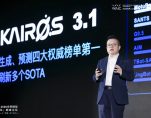

 https://www.linkedin.com/company/acerobotics/posts/?feedView=all&viewAsMember=true%EF%BD%9C
 https://x.com/ace_robotics

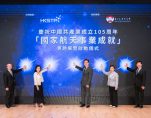

 www.hkstp.org