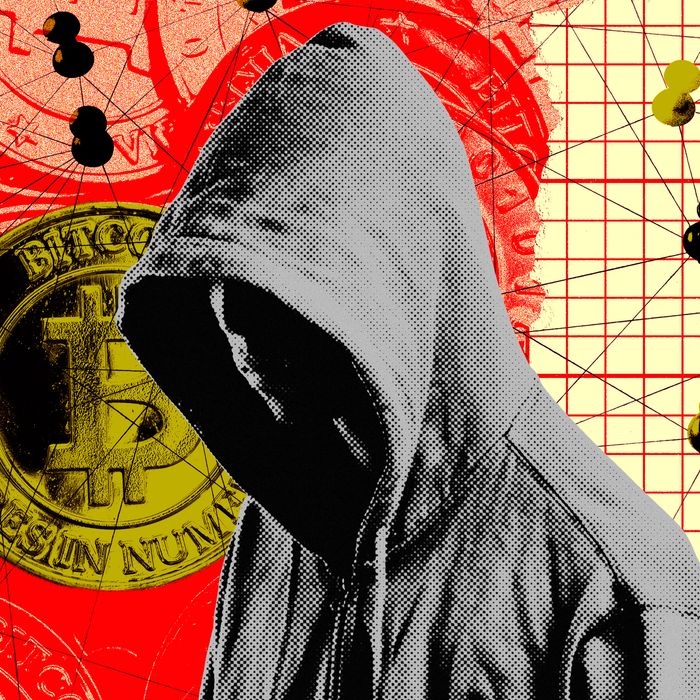
Satoshi Nakamoto, the pseudonymous creator of Bitcoin, remains one of the most intriguing figures in modern finance. In his latest book, *The Mysterious Mr. Nakamoto*, author Benjamin Wallace embarks on a fifteen-year quest to uncover the identity behind this digital currency pioneer.
Nakamoto introduced Bitcoin in 2008 through a white paper detailing a peer-to-peer electronic cash system. This innovation laid the foundation for a decentralized financial network, free from traditional banking intermediaries. Despite Bitcoin’s global impact, Nakamoto vanished in 2011, leaving behind a fortune in unspent bitcoins and an enduring mystery surrounding his identity.
Wallace’s investigation delves into the cypherpunk movement of the 1990s, a collective advocating for privacy-enhancing technologies and cryptographic solutions. This community’s ideals significantly influenced Bitcoin’s development, aiming to create a currency independent of governmental control. Through meticulous research, Wallace examines potential candidates who could be Nakamoto, analyzing their backgrounds, writing styles, and contributions to cryptography.
One prominent figure explored is Hal Finney, a renowned cryptographer and the first person, aside from Nakamoto, to run the Bitcoin software. Finney’s involvement in early Bitcoin development and his correspondence with Nakamoto position him as a plausible candidate. However, Finney consistently denied being Nakamoto until his death in 2014.
Another individual scrutinized is Nick Szabo, a computer scientist known for his concept of “Bit Gold,” a precursor to Bitcoin. Linguistic analyses have highlighted similarities between Szabo’s writings and Nakamoto’s white paper, yet Szabo has repeatedly refuted claims of being Bitcoin’s creator.
The book also addresses the controversial claims of Australian computer scientist Craig Wright, who has publicly asserted that he is Satoshi Nakamoto. Despite presenting purported evidence, Wright’s claims have been met with skepticism, and he has not provided cryptographic proof accepted by the broader community.
Wallace’s narrative not only investigates these individuals but also reflects on the broader implications of Nakamoto’s anonymity. Bitcoin’s decentralized nature is intrinsically linked to the absence of a central authority, embodied by its creator’s pseudonymity. This deliberate concealment has fueled speculation and intrigue, contributing to Bitcoin’s mythos and cultural significance.
The author employs forensic techniques, including textual analysis and code examination, to trace Nakamoto’s digital footprints. Despite these efforts, the true identity remains elusive, underscoring the challenges inherent in unmasking a figure who meticulously crafted his anonymity.
Wallace’s exploration extends beyond the search for Nakamoto, offering insights into the evolution of digital currencies and their impact on global finance. The book contextualizes Bitcoin’s rise within economic events such as the 2008 financial crisis, highlighting the demand for alternative financial systems.