News related to
political

Abu Dhabi is marketing a three-year and a 10-year US dollar Reg S/144A bond offering, aiming to capitalise on robust investor demand and reinforce its global funding outlook. The three-year tranche is pitched at approximately 40 basis points over US Treasuries, while the longer 10-year issue is offered at around 55 bps.

By mid-morning in Dubai, books had swelled past $10 billion, excluding joint lead manager interest, with slight tilt toward the 10-year line. The bonds will be senior, unsecured and rated AA/AA by S&P and Fitch, matching the issuer’s prevailing Aa2/AA/AA credit standing. Listings are planned in both London and Abu Dhabi.

Investors see this transaction as a test of global appetite for Gulf sovereign credits amid a cautious backdrop of moderate US interest rates and evolving geopolitical risk. Despite volatility in energy prices and external debt markets, Abu Dhabi’s strong fiscal and balance sheet metrics underpin confidence in its sovereign name. The credit ratings assigned reflect the emirate’s resilient fiscal policy, substantial hydrocarbon reserves, and large sovereign wealth fund buffers.

Structurally, the Reg S/144A setup allows the issuer to access both non-US and US institutional investor pools. Regulation S permits offers outside the United States, while Rule 144A enables sales to qualified institutional buyers within the US, offering dual reach while maintaining issuance flexibility. The base offering circular explicitly restricts transfers and resales to be compliant with those regimes.

Observers note that the pricing levels—40 bps for three years and 55 bps for 10 years over Treasuries—are ambitious but not unprecedented within Gulf sovereign borrowing. Prior precedent includes a multi-tranche Abu Dhabi sovereign bond of $5 billion in April 2024, which achieved strong oversubscriptions and favourable pricing benchmarks. That deal underlined investor appetite for Gulf issuers with strong credit credentials.

Market participants closely monitor skew and order distribution between tenors. That the books are marginally skewed toward the 10-year suggests appetite for duration, perhaps reflecting yield scarcity in core markets. Should the order book widen further, the issuer may flex uncertainty concessions or tighten spreads modestly before final pricing. Co-ordinating banks are likely adjusting intermediate guidance as allocations firm.

Analysts flag that appetite for Gulf sovereign issuance is tempered by global headwinds: tighter US credit spreads, sticky inflation, and competition from other supranational and sovereign issuers. Some international investors may demand additional premium for regional or geopolitical exposures. Yet Abu Dhabi’s entry with a dual-tranche issuance signals intent to extend its credit curve, deepen investor relationships, and enhance liquidity in its sovereign bonds.

The listings in London and Abu Dhabi are intended to enhance secondary market trading, improve visibility to European and global investors, and cement Abu Dhabi’s status in global bond markets. The London listing, especially, provides access to a deep pool of international fixed income investors and a regulatory framework well understood by global asset managers.

Defence stocks will rally and global investors will be paying attention, I believe. The reason the bullish analysis is a catalyst came the moment President Donald Trump, after meeting Ukraine’s President Volodymyr Zelenskyy at the UN General Assembly, declared that Kyiv can reclaim all territory seized by Russia, an abrupt and market-moving pivot from his earlier calls for compromise. In a single statement, the world’s largest economy […]

Fitch Ratings changed Thailand’s long-term foreign-currency issuer outlook to Negative from Stable, citing mounting pressures on public finances, fragile growth prospects and ongoing political fragility. The sovereign rating itself remains at BBB+.

The credit agency warned that escalating risks to fiscal stability — especially rising debt and persistent budget deficits — are aggravated by uncertainty over government continuity and policy direction. Economic growth slowing below peer averages and vulnerabilities in the tourism and export sectors further reinforce downside risks.

Fitch singled out Thailand’s general government debt reaching about 59.4 percent of GDP, a level close to median thresholds for ‘BBB’-rated sovereigns, noting it has risen sharply from pre-pandemic levels. Persistent fiscal deficits of 4.6 percent of GDP in fiscal 2025 and 4.3 percent in 2026 are projected, and though Fitch expects stabilisation beyond 2027, the window for improvement is narrow.

Fitch also emphasised Thailand’s external buffers — a consistent current account surplus and conservative composition of government debt — as mitigants that support the affirmed rating despite the negative outlook. It noted that average debt servicing costs relative to revenues remain lower than peer country averages, which grants some breathing room.

The political backdrop has intensified the strain. The constitutional court’s removal of Prime Minister Paetongtarn Shinawatra over an ethics violation tied to a leaked phone conversation triggered a swift transition. Anutin Charnvirakul assumed the premiership through a deal with the opposition party that mandates a general election within four months, introducing turbulence to fiscal continuity and policy clarity. Fitch warned that this political flux could amplify short-term spending pressures and generate unpredictable policy shifts.

Macro-economic forecasts reinforce the downgrade rationale. The World Bank has trimmed Thailand’s projected GDP growth in 2025 to 1.8 percent and 1.7 percent in 2026, citing weak external demand, slowed tourism recovery and waning domestic consumption — outcomes likely exacerbated by political volatility. Inflation has turned slightly negative, prompting central bank expectations of further rate cuts; Fitch expects two more 25 basis point cuts this year and in 2026.

Thailand’s central bank has already lowered its policy rate 100 basis points over the past year to 1.5 percent, and with inflation below zero, the case for easing remains plausible — though constrained by high household debt levels. The Bank of Thailand has signalled readiness to act if growth weakens further.

Analysts caution that structural deficiencies — such as sluggish productivity gains, reliance on tourism, and high household debts — limit upside recovery. Institutional weakness and frequent leadership turnover further deter investment confidence.

To reverse the negative trajectory, Fitch emphasised that Thailand’s government must demonstrate strong fiscal consolidation, stabilise public debt dynamics and restore growth momentum. A return to a stable outlook would require credible cuts to the fiscal deficit, credible medium-term plans to reduce debt, and a more predictable policy environment that supports private investment.

By Nitya Chakraborty India’s South Asia diplomacy is proving a disaster as the neighbouring countries of the South Asian Association of Regional Cooperation (SAARC) are discussing in details the issue of the revival of SAARC which has been lying inactive in the political arena since 2016 due to India’s decision not to deal with Pakistan […]

The article How Narendra Modi’s Ego Has Destroyed India’s South Asian Diplomacy In The Recent Past? appeared first on Latest India news, analysis and reports on Newspack by India Press Agency).

OpenAI, Oracle and SoftBank have unveiled plans for five new artificial intelligence data centres across the United States under their Stargate infrastructure initiative, pushing the programme’s capacity to almost 7 gigawatts and investment to over US$400 billion over the next three years. Three of the new sites will be developed in partnership between OpenAI and Oracle, located in Shackelford County, Texas; Doña Ana County, New Mexico; and […]

China is pursuing arrangements with allied central banks to store foreign sovereign gold within its territory, aiming to elevate its influence over global bullion holdings. The People’s Bank of China is deploying the Shanghai Gold Exchange as a vehicle to attract sovereign clients to park bullion inside China. At least one Southeast Asian country has expressed interest.

Officials involved say that the proposal involves central banks of “friendly” states buying gold and placing it in warehouses tied to the Shanghai Gold Exchange. This builds on China’s strategy of diversifying reserves and enhancing its status in global bullion markets.

China’s own gold holdings are growing steadily. As of July, its official international reserves included approximately 73.96 million ounces of gold, up from 73.9 million the month before. That marks nine months of continuous growth. At that point gold accounted for about 7% of China’s foreign reserves—well below the global average of around 15%. Analysts said China is likely to continue buying gold while moderately reducing holdings of US Treasuries, both to strengthen the renminbi’s international standing and mitigate exposure to dollar-linked risks.

Gold-buying by China fits into a larger global trend among central banks. Many are raising their allocation to gold as a hedge against geopolitical risks, inflation, and the uncertainty of reliance on major foreign currencies. Market watchers note that China’s moves are consistent with efforts from BRICS countries to build financial infrastructure and reserve mechanisms less dependent on dollar-centred systems.

For China, becoming a custodian for others’ gold reserves would represent a significant shift. It would mean not only controlling its own gold supply but also offering vaulting, storage, and custodial services to foreign sovereign clients. Such an arrangement would involve regulatory, security, and diplomatic considerations—from ensuring physical security of bullion to managing compliance with international rules around audits, transparency, and cross-border transfers.

Questions remain about how much demand exists among sovereigns for such an arrangement. The identity of the Southeast Asian country showing interest has not been confirmed. Some central banks prefer keeping reserves offshore for perceived neutrality or diversification of geographic risk. Others may hesitate due to concerns over sovereignty, geopolitical leverage, or storage fees and logistics.

China’s global gold purchases continue regardless. Observers point to continued accumulation of gold by the People’s Bank of China, a trend seen in the State Administration of Foreign Exchange data. Gold holdings have increased month after month, even as foreign exchange reserves fluctuate.

By Dr. Gyan Pathak Ban order on caste based political rallies issued by the Uttar Pradesh government on September 21, 2025 has significantly raised the political heat in the state, since it is likely to impact all political parties and political alliances,.. Nevertheless, the BJP led government under Chief Minister Yogi Adityanath has opted for […]

The article Ban On Caste Based Political Rallies Raises Political Heat In Uttar Pradesh appeared first on Latest India news, analysis and reports on Newspack by India Press Agency).

Advertisements

Abu Dhabi’s Technology Innovation Institute and Nvidia have signed an agreement to establish the Middle East’s first joint laboratory dedicated to artificial intelligence and robotics. The new facility, known as the TII-NVAITC Joint Lab for AI and Robotics, will be located at TII’s headquarters. Its mandate is to push forward next-generation AI models, robotics platforms and humanoid technologies. The lab combines TII’s strength in applied research with […]

Ottawa has rejected about 80% of visa applications from Indian students this year, marking the highest refusal rate in over a decade, according to data from Immigration, Refugees and Citizenship Canada and other analyses. The drop in approvals reflects sweeping policy changes by Canadian authorities, including increased financial requirements and tighter scrutiny of student credentials.

IRCC numbers show that during January to April, only 43% of study permit applications were approved overall. In contrast, work permit applications saw about a 69% approval rate in the same period.

Indian applicants have borne the brunt of this shift. BorderPass data cited by multiple outlets reports that in the second quarter alone, four out of five Indian student permit applications were refused. Canada has also raised the proof-of-funds requirement: as of September 1, international students must now show CA$22,895 in financial backing.

Educators and students are reacting to this change as more than procedural. The 2025 cap on study permits stands at 437,000—roughly 10% below the 2024 level. Countries such as Germany are emerging as preferred alternatives: surveys and reports indicate its share of Indian student interest has climbed to about 31%, overtaking Canada. Canada’s popularity among Indian applicants has reportedly fallen from 18% in 2022 to 9% in 2024.

Officials justify the stricter stance by pointing to domestic strains. Housing shortages, stretched infrastructure, political pressure to prioritise local talent, and concerns about fraudulent college admissions have all been cited. IRCC and immigration experts say increasing financial thresholds, more detailed study plans and higher language standards are among the new hurdles for applicants.

The effects are being felt sharply. Indian students, many of whom viewed study in Canada as a pathway to permanent residence, are reassessing options. Families facing sunk costs in application fees, language tests, travel, and preparations are now especially vulnerable. Educational institutions that depend on international tuition are also under pressure. Smaller colleges in particular fear that fewer foreign students will hurt viability.

By T N Ashok The Trump administration’s latest immigration directive has stunned employers, foreign workers, and higher-education leaders alike: a $100,000 surcharge on each H-1B visa application, announced by executive order on 19 September 2025. What might appear on the surface as a routine adjustment to visa fees is, in reality, a dramatic escalation in […]


The article Trump’s $100,000 H-1B Visa Fee Redefines U.S. Liberal Immigration Policy appeared first on Latest India news, analysis and reports on IPA Newspack.

Estonia has lodged a formal diplomatic protest after three Russian MiG-31 fighters entered its airspace near Vaindloo Island, above the Gulf of Finland, without clearance for twelve minutes. The Estonian government described the incursion as “unprecedentedly brazen” and requested alliance consultations under NATO’s Article 4.

The three jets flew without flight plans, had their transponders switched off, and failed to communicate with Estonian air traffic control, according to official statements. Italian F-35s stationed under NATO’s Baltic Air Policing Mission intercepted and escorted them out. Estonia claims these flights mark the fourth known violation of its airspace by Russia this year.

Margus Tsahkna, Estonia’s Foreign Minister, stressed that while earlier violations had occurred, this one stood out in scale and coordination. He called on political and economic allies to respond forcefully to what he labelled an escalation.

Russia’s defence authorities countered that the mission was “scheduled” and followed agreed routes, asserting that the aircraft remained over neutral waters and did not cross Estonia’s borders. The claim disputes Estonia’s account, insisting no laws or flight path rules were broken.

Following the incursion, Estonia summoned the Russian chargé d’affaires and formally submitted a protest. NATO has agreed to convene under Article 4, allowing member states to discuss perceived threats to security, territorial integrity, or political independence. The North Atlantic Council is expected to deliberate early next week.

European Union officials, including EU foreign policy chief Kaja Kallas, condemned what they described as a dangerous provocation that heightens regional tensions. Estonia’s Prime Minister, Kristen Michal, echoed these concerns, saying Moscow’s actions test the limits of NATO’s resolve.

A federal judge dismissed Donald Trump’s $15 billion defamation lawsuit against The New York Times and Penguin Random House, ruling that the complaint was legally insufficient and procedurally improper. U. S. District Judge Steven Merryday criticised the 85-page document for lacking a “short and plain statement” required by the federal rules, and for including excessive laudatory language and irrelevant attacks rather than cogent legal allegations. Judge Merryday […]

NANNING, CHINA – Media OutReach Newswire – 19 September 2025 – On September 17, the 22nd China-ASEAN Expo and China-ASEAN Business and Investment Summit opened in Nanning, Guangxi. The theme of this year’s expo and summit is “Digital Intelligence and Innovation empower Development – Leveraging ASEAN-China FTA 3.0 new opportunities for an even closer ASEAN-China community with a shared future,” attended by Chinese and foreign leaders, government […]

/India Press Agency/

By Nitya Chakraborty Prime Minister Narendra Modi has stepped into his 75th year on Wednesday, September 17.His birthday is being celebrated by the BJP nationally. The significance is much more as PM’s 75th birthday celebrations have coincided with the centenary programmes on the founding of the RSS in 1925.On October 2 this year, Vijaya Dasami […]

The article Decoding Prime Minister Narendra Modi As A Political Leader On His 75th Birthday appeared first on Latest India news, analysis and reports on IPA Newspack.

Government officials in New Delhi have unveiled a secure integrated circuit solution, fully developed within India, designed to underpin future digital identity systems including e-passports. All intellectual property is said to reside domestically, marking a significant milestone in the nation’s tech self-sufficiency drive.

The secure IC is embedded with a “smart OS”, enabling secure authentication, encryption, and identity verification. It is intended for deployment in identity credentials issued by federal authorities. Verification features include tamper resistance, cryptographic protection of stored data, and interoperability with global identity verification standards. The OS is modular, allowing updates and extension of features such as biometric modules, NFC, and remote authentication.

The development is part of the broader India Semiconductor Mission and Semicon India Programme, with an investment outlay of ₹76,000 crore supporting chip fabrication, assembly, display fabs, and design projects. The pilot line for this secure chip is being hosted in Gujarat at an OSAT facility.

Sources indicate that ten semiconductor manufacturing projects have been approved across six states—Gujarat, Assam, Uttar Pradesh, Punjab, Odisha, and Andhra Pradesh—with total investment commitments exceeding ₹1.60 lakh crore. These projects include multiple fabs, ATMP/OSAT facilities, and chip design initiatives.

Among recent achievements is the development of Vikram-3201, a 32-bit space-grade processor by the ISRO Semiconductor Laboratory, presented to the Prime Minister at Semicon India 2025. It has been validated in the PSLV-C60 mission and is said to be robust under extreme launch-vehicle conditions. It was fabricated using a 180 nm CMOS process.

The secure IC is expected to be somewhat different in specifications from Vikram-3201: targeted more towards identity and citizen services rather than space applications. Performance metrics are likely less extreme, but security requirements—such as resistance to physical tampering, side-channel attack mitigation, secure boot, and cryptographic module certification—are being prioritised. Implementation of secure OS standards is underway.

In tandem with hardware development, the government has accelerated IP and design ecosystem support. Under the Design Linked Incentive scheme, 23 design projects have been approved to foster startups, MSMEs, and academic participation. Skill development in VLSI design, packaging, EDA tools, and fab-operations is being emphasised.

Policy observers note that global supply-chain disruptions and geopolitical shifts have provided a backdrop that intensifies India’s push for technological sovereignty. External partnerships—for example in materials, equipment, packaging technologies—are being pursued to fill gaps in the domestic ecosystem.

Challenges remain. Process node maturity is one area—while the 180 nm node is proven and reliable for many applications including space, more advanced nodes dominate consumer electronics and high-performance identity solutions globally. Also, certifications for security standards, supply of trusted materials, secure hardware lifecycle management, and scaling production to volumes needed for national identity issuance will test capacity. Ensuring interoperability with international identity verification frameworks will also be essential.

A constitutional referendum in Guinea is scheduled for 21 September 2025 under the government led by General Mamady Doumbouya, with a draft constitution that would allow him to run for president, extend presidential term limits, and reshape the country’s political structures. The proposal removes a provision in the current transition charter that bars junta members from contesting elections. It introduces a seven-year presidential term renewable once, up […]

Matein Khalid Mauritius, an island archipelago state in the Indian ocean, has long maintained extensive economic and cultural ties with the GCC. Thanks to tax treaties with India, Mauritius is a favourite domicile for wealthy Indian expatriate residents of the UAE and Saudi Arabia. GCC citizens and residents are prominent investors in some of Africa’s most expensive luxury beach resorts located in the island nation, where property […]

Prime Minister Narendra Modi turned 75 today amid widespread greetings and the launch of a two-week “Sewa Pakhwada” campaign aimed at welfare and outreach efforts across India. State and central leaders as well as ordinary citizens extolled his leadership, while a slate of new programs for women, children and tribal communities were rolled out, especially from Dhar in Madhya Pradesh.

President Droupadi Murmu hailed Modi as “an exemplar of hard work” who has inspired the nation to set and pursue large goals. She wished him health and joy, emphasising how his leadership has helped shape India’s progress globally. Union ministers including Rajnath Singh, Nitin Gadkari and BJP president J. P. Nadda echoed these sentiments, pointing to Modi’s role in promoting self-reliance, elevating India’s international stature, and executing reforms across sectors.

The “Sewa Pakhwada” initiative has been structured as a fortnight of activity ending on 2 October, coinciding with the birth anniversaries of Mahatma Gandhi and Lal Bahadur Shastri. Under the campaign, programmes such as health check-ups, cleanliness drives, blood donation camps, environmental awareness efforts, promotion of indigenous products, exhibitions, and sports events will take place. BJP youth wings are staging runs and community events in dozens of cities to mark the milestone.

From his birthplace town of Vadnagar in Gujarat to distant corners of the country, celebrations have taken on local flavour. In Madhya Pradesh’s Dhar district, special welfare initiatives for women, children and tribal populations were unveiled. Across India, schools and public spaces have hosted rangoli displays, devotional prayers, and cultural performances. Special Ganga Aarti ceremonies have been organised and major state capitals are seeing visual tributes such as large-scale posters and tricolours.

Political reaction has been overwhelmingly positive, with opposition voices largely restrained or offering measured praise. Chief ministers from various states, as well as senior figures within BJP and allies, emphasised continuity of governance and commitment to delivering public services. Some messages focused on Modi’s global diplomatic presence, while others lauded domestic schemes and grassroots infrastructure projects.

Analysts see the birthday observances and accompanying welfare push as both symbolic and strategic. The scale of the celebrations and outreach efforts suggests an aim to reinforce popular support ahead of upcoming elections. The use of service initiatives spans across regions and social groups; the focus on tribal welfare and women’s health is being viewed as an attempt to address longstanding development gaps. Modi’s third consecutive term as Prime Minister has already witnessed significant policy moves in defence, infrastructure, manufacturing, and digital governance, boosting India’s international profile even as challenges such as inflation, unemployment and rural distress persist.

By Nitya Chakraborty Europe which was the main centre of two world wars in the last century is showing signals of many of the features of the politics of the continent in the pre- second world period spanning 1925 to 1939 in political and military terms. Though in term of economy, the threat of great […]

Washington and Doha are on the verge of agreeing a substantially upgraded defence cooperation treaty following an Israeli airstrike in Doha targeting Hamas leaders, sources say. The move signals a deepening strategic alignment as tensions in the region intensify. US diplomat Marco Rubio confirmed that both countries are “nearing finalisation” of an agreement that would strengthen joint military planning, basing, intelligence sharing and oversight of operations on […]

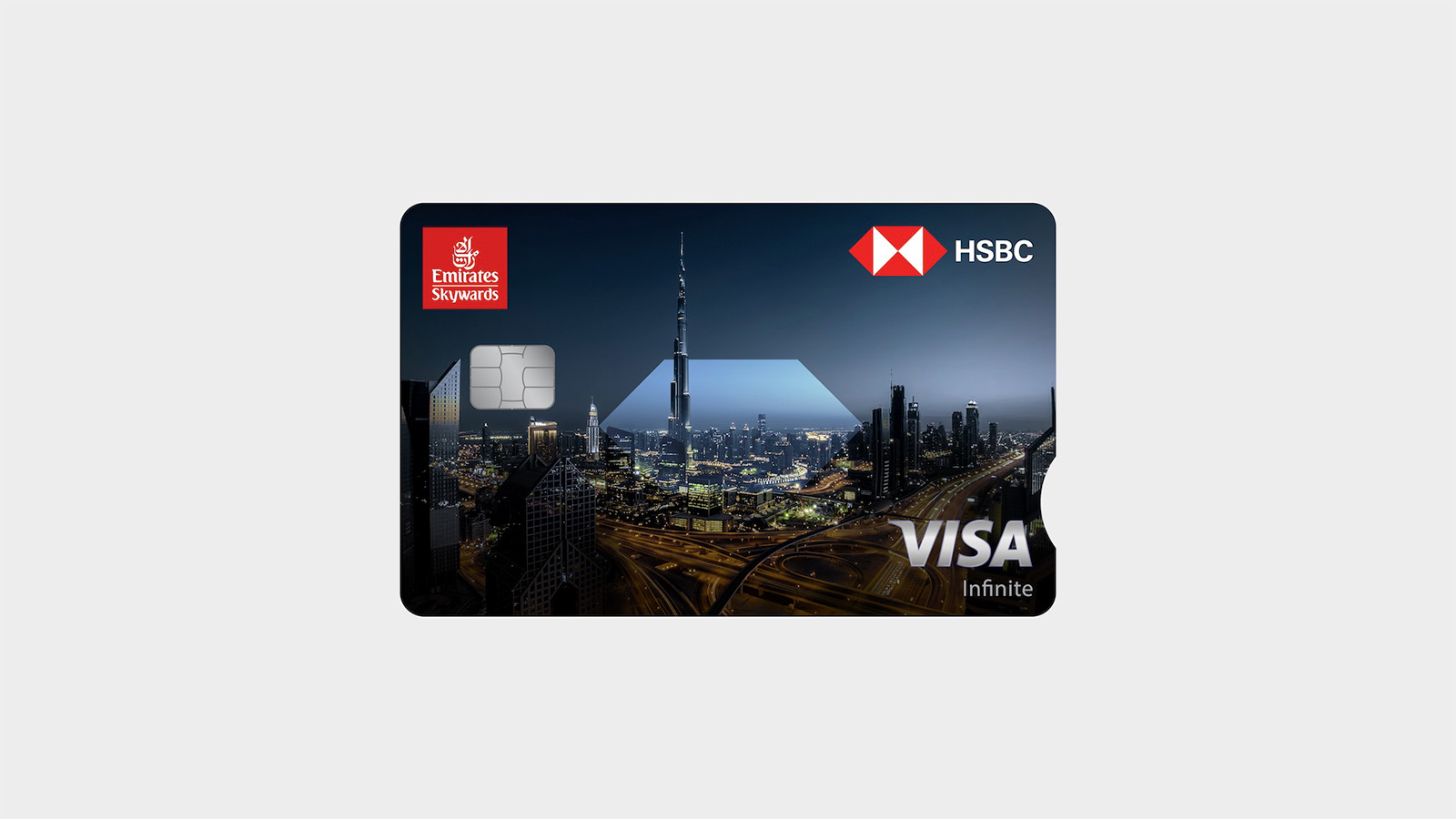
HSBC has opened a dedicated wealth centre in Dubai aimed at serving affluent clients, stepping up efforts to capture a growing share of the UAE’s expanding wealth and asset management sector. It comes as the bank’s Swiss private arm moves to cut ties with over 1,000 wealthy clients from the Middle East under regulatory pressure.

The Dubai centre, housed in HSBC’s flagship Jumeirah branch, will offer Premier and high-net-worth clients access to relationship managers in a specialist space. Dinesh Sharma, HSBC’s head of International Wealth and Premier Banking for Middle East, North Africa and Turkey, said the UAE is among HSBC’s top five global markets, and the investment in infrastructure, people, capabilities and marketing over the next three to four years represents its largest in two decades. Singapore is cited as a model for how the UAE could develop into a global wealth hub.

In parallel, HSBC Private Bank has informed more than 1,000 clients in Saudi Arabia, Lebanon, Egypt and Qatar—many with assets exceeding US$100 million—that it will terminate its relationships with them. The bank is classifying these clients as high risk, following findings by Swiss regulator FINMA that it failed to meet anti-money laundering obligations in past transactions involving politically exposed persons.

HSBC has emphasised its continued commitment to both its Middle East and Swiss wealth business units. Barry O’Byrne, CEO of International Wealth and Premier Banking, maintains that Switzerland remains one of HSBC’s “core wealth hubs.” HSBC is structuring its strategy to grow where it has “a clear competitive advantage.”

The bank notes that personal financial assets in the UAE have surged over the past few years, exceeding US$700 billion, with more than 130,000 millionaires now in the country. Migrants of wealth are drawn by favourable investment policies, tax incentives and regulatory reforms. Regions contributing large shares of incoming wealth include India, other Middle Eastern markets, Russia and the Commonwealth of Independent States, and a growing number from the UK, Europe and China.

HSBC’s move to reduce exposure to high-risk clients comes after FINMA’s rulings in 2024, which identified breaches in anti-money laundering duties in connection with transactions involving politically exposed persons between 2002 and 2015. The regulator prohibited HSBC Private Bank from onboarding new relationships with such individuals until its compliance practices were overhauled. The bank is now working under those rules, winding down existing relationships judged to pose compliance risk.

Hesai Group’s shares surged in their Hong Kong debut, trading above its IPO price after the lidar‐sensor maker raised approximately HK$4.16 billion in its secondary listing.

Trading under code 2525, the stock opened at HK$229.20, about 7.7 per cent above the offer price of HK$212.80. Demand was strong: the international tranche was oversubscribed around 14 times, while the Hong Kong public tranche drew nearly 168.65 times subscription. Six cornerstone investors including HHLR Advisors, Taikang Life, and WT Asset Management committed some US$148 million worth of shares, agreeing to hold them for at least six months.

Hesai’s second quarter performance helped set the stage. Its revenue rose by 54 per cent year-on-year, shipments more than tripled, and the company reported a net profit of roughly RMB 44.1 million, reversing a loss from the year before. These results support its strategy to scale lidar sensor shipments, especially for advanced driver-assistance systems and autonomous driving applications.

A key driver is Hesai’s plan to cut manufacturing costs and selling prices. CEO David Li stated that the company is working to reduce the cost of its sensors dramatically, targeting a price of about US$200 per unit from previous models that sold for tens of thousands of dollars. To assist this, production expansion is underway, and Hesai is also pursuing international customers and counterparties in the autonomous vehicle and robotics sectors.

Geopolitical and regulatory pressures are also shaping Hesai’s approach. The dual listing in Hong Kong while retaining its U. S. listing on Nasdaq reflects efforts to strengthen capital access amid U. S.-China tensions. Hesai had earlier denied accusations of misleading investors over revenue and alleged military links; the company stated its operations are independent and compliant with regulations.

Kathmandu’s streets remain tense as Sushila Karki assumed the premiership and formed an interim cabinet, calling for unity after anti-corruption protests left at least 72 people dead and more than 2,100 injured. Violent demonstrations over corruption, nepotism and a short-lived social media ban triggered the collapse of the previous government led by K. P. Sharma Oli. Ms Karki, a former chief justice and Nepal’s first woman prime […]

Tanzania’s Independent National Electoral Commission disqualified opposition presidential candidate Luhaga Mpina for the second time on Monday, reversing an order from two days earlier that had reinstated his nomination. Mpina, leader of ACT-Wazalendo, Tanzania’s second-largest opposition party, had his nomination papers accepted by INEC following a high-court ruling. That court decision had overturned an earlier disqualification. But the electoral commission, citing procedural irregularities, reimposed the ban. With […]

VISHNU RAJA
RYO YAMADA
HITORI GOTOH
IKUYO KITA
Just in:
CrowdStrike explores Zscaler takeover amid cybersecurity dealmaking // Abu Dhabi boat show seals manufacturing partnership on Saturday // PayerMax and ShopeePay Strengthen Strategic Partnership to Advance Digital Payment Collaboration in Southeast Asia // Toward a Shared Future for Humanity: Rethinking Civilizational Exchange // Saudi Arabia schedules multinational top-up tax for 2027 // Ex-minister named accused in Messi visit fraud case // Fungal toxins detected across 212 UK plant-based products // Yeebo Announces Interim Results for FY26/27 Revenue Increases by 45.5% to HK$806.7 Million Profit Attributable to Owners Surges 87.6% to HK$2,284.7 Million // Vinhomes Green Paradise: An ESG++ Megacity and the Future of Sustainable Urban Living // US military rebuts Iran’s Gulf F-16 strike allegation // Anthropic briefly reaches $2 trillion in Nasdaq debut // Energy Markets Find Little Substance In Shenzhen Summit Promises // Saudi defences destroy three Houthi missiles targeting Riyadh // UN arms talks sidestep binding autonomous weapons rules // ED searches five districts in probe against hawala // Diabetes Malaysia And Alpro Pharmacy Set National Record With 11,007 Most Blood Glucose Screenings Conducted Across Malaysia In Just 48 Hours // Bail refused to 17-year old in Abhiram murder // Crypto market loses $150 billion amid broad sell-off // Singapore regulator cautions against AI access to bank logins // Technology at Work, Heritage for All: The “Chinese Approach” to Safeguarding the Leshan Giant Buddha //