Just in:
CrowdStrike explores Zscaler takeover amid cybersecurity dealmaking // Vinhomes Green Paradise: An ESG++ Megacity and the Future of Sustainable Urban Living // Promoting Common Human Development Through Exchanges and Mutual Learning Among Civilizations // Anthropic briefly reaches $2 trillion in Nasdaq debut // ED searches five districts in probe against hawala // Singapore regulator cautions against AI access to bank logins // Ex-minister named accused in Messi visit fraud case // Yeebo Announces Interim Results for FY26/27 Revenue Increases by 45.5% to HK$806.7 Million Profit Attributable to Owners Surges 87.6% to HK$2,284.7 Million // Bahrain demands UN action after Iranian industrial strike // Padmini follows Padmaja for ‘ghar vapsi’ // Balagopal challenges CM over tax revenue //
Centre grants aircraft cabin access for Sabarimala pilgrims’ irumudi
// Energy Markets Find Little Substance In Shenzhen Summit Promises // PayerMax and ShopeePay Strengthen Strategic Partnership to Advance Digital Payment Collaboration in Southeast Asia // Diabetes Malaysia And Alpro Pharmacy Set National Record With 11,007 Most Blood Glucose Screenings Conducted Across Malaysia In Just 48 Hours // Sabarimala booking discrepancies prompt sabotage angle probe // Abu Dhabi boat show seals manufacturing partnership on Saturday // Egypt’s African Union trade climbs to $8.2 billion // Technology at Work, Heritage for All: The “Chinese Approach” to Safeguarding the Leshan Giant Buddha // Crypto market loses $150 billion amid broad sell-off //

News related to
political

Markets are sending urgent signals. Gold has burst above $3,600 an ounce, a record that reflects both anticipation of rate cuts and a broader scramble for safety. Treasury yields have swung sharply, with shorter maturities pulled lower by expectations of central bank easing while long-dated bonds creep toward multi-year highs, and across equities, momentum has become fragmented, with volatility rising around political headlines and economic uncertainty. These […]

The United States and European Union are ramping up economic pressure, yet sceptics say even tougher measures may fail to push Vladimir Putin to the negotiating table. Treasury Secretary Scott Bessent has signalled that imposing secondary tariffs on countries continuing to purchase Russian oil—coupled with coordinated sanctions—could trigger a collapse in Russia’s economy and potentially compel the president to consider diplomacy. Sanctions fall short in forcing Putin […]

Egypt and Sudan insist that discussions surrounding the Grand Ethiopian Renaissance Dam must remain confined to the three riparian countries—rejecting calls to broaden the talks to include other Nile Basin nations. The two have signalled mounting concern over Ethiopia’s unilateral conduct, describing the situation as a “continuous threat to stability in the Eastern Nile Basin.” They warned that Ethiopia’s steps to fill and operate the dam could […]

Thailand’s incoming prime minister, Anutin Charnvirakul, will nominate veteran economic official Ekniti Nitithanprapas to lead the finance ministry, aiming to stabilise an economy weighed down by US tariffs and mounting household debt.

Anutin, fresh from his parliamentary victory and poised to assume the premiership, unveiled his cabinet selections on Saturday, naming experienced hands to key posts: Ekniti for finance, diplomat Sihasak Phuangketkeow for foreign affairs, and energy executive Auttapol Rerkpiboon to helm the energy ministry. Seasoned Bureaucrat Bound for Finance Ministry signals a clear intention to anchor the economic team with trusted professionals.

Anutin said he chose Ekniti due to his broad leadership across the finance ministry’s departments and his readiness to meet the challenges of the role swiftly. He underscored the appointee’s capacity to help guide Thailand through the turbulence created by US-imposed tariffs and persistent high levels of household debt.

Ekniti, 54, brings an extensive résumé. He has served as director-general across revenue, excise, and treasury departments, and held roles at the Fiscal Policy Office and State Enterprise Policy Office. His résumé also includes positions as financial attaché in London, adviser at the World Bank, and board chairmanships across major financial institutions and state enterprises—including Siam Commercial Bank, EXIM Bank, and Thai Airways.

Anutin’s selections come at a critical juncture. Thailand’s economy has been under strain from weaker growth compared to regional peers, ongoing political unrest, border tensions with Cambodia, declining tourism, and disruptions linked to global trade pressures—particularly from US tariffs. These factors have combined to sap investor confidence.

The finance nomination must receive royal assent before becoming official. Assuming approval, Ekniti will carry the mandate to reassure markets and manage policy responses that address fiscal and external vulnerabilities. His depth of institutional experience positions him as a credible figure to help guide economic policy swiftly during the transition.

Dream Security and other cybersecurity analysts have identified a widely distributed, Iran-linked spear-phishing campaign that exploited a compromised Ministry of Foreign Affairs mailbox in Paris. The operation impersonated legitimate Omani diplomatic communication to deliver malware-laden Word documents to government, diplomatic, and multilateral institutions across Europe, Africa, Asia, the Americas, and international organisations such as the UN and World Bank. The campaign’s scale, timing, and technical sophistication reflect […]

Conor McGregor has announced his intention to run for President of Ireland in the upcoming election, marking a dramatic shift from mixed martial arts to the political arena. The election is scheduled for 24 October 2025. The victory is deeply improbable, given Ireland’s strict constitutional requirements for candidacy and growing scepticism from political observers. McGregor’s campaign relies heavily on public support rather than political endorsements. On 4 […]

Matein Khalid Gold’s 38% surge in 2025 to as high as 3570 an ounce in the New York spot market is not just about central bank anti-dollar reserve accumulation, expectations of a Fed rate cut at the September FOMC or inflation/deficit angst but also a very rational response to President Trump’s repeated assaults on the political independence of the Federal Reserve, which raises the likelihood of deliberate […]

Advertisements
By Dr Arun Mitra Unending armed conflicts are unfolding across various regions of the world. As a result the global security is perhaps facing a degree of uncertainty not witnessed since the Second World War. Crisis-ridden capitalist institutions may outwardly appear powerful and dominant, yet their inability to resolve the pressing problems of the people […]

A pivotal online gathering on Sunday will determine whether the Organisation of the Petroleum Exporting Countries and its allies proceed with further oil production increases or hold current levels. The group has already rolled back its earlier cuts by 2.5 million barrels per day, equivalent to around 2.4 per cent of global demand, and is now assessing whether to unwind the next 1.65 million bpd tranche ahead of schedule.

Markets responded to the impending meeting with cautious anticipation. Brent crude fell modestly, trading near $67 a barrel, while U. S. West Texas Intermediate hovered around $63–$64. Analysts, including those at ANZ, flagged that any additional supply could deepen the surplus during a typically weak demand season. The softening outlook has already rippled through equity markets: major oil producers and service firms such as APA, Occidental, Halliburton and Schlumberger saw their shares slip between 3 and 5 per cent.

Since April, OPEC+ has pursued an aggressive unwind of output curbs. Initial increases began with modest tranches but have since accelerated: April saw the first rise, followed by consistent monthly boosts—from 411,000 bpd in May, June and July to 548,000 bpd for August and 547,000 bpd for September. These decisions reflect strategic moves to regain market share amidst growing competition, especially from U. S. shale producers, and external pressures, including public calls from the U. S. administration to increase global supply.

Despite these ramped-up supplies, prices have retained considerable strength—hovering around the $70 mark—bolstered by low inventory levels and geopolitical constraints, particularly sanctions on Russia and Iran. Analysts at the Commonwealth Bank of Australia observe that OPEC+ now appears comfortable with Brent trading in the $60–$65 range, a level that could pressure U. S. shale operations by narrowing profit margins.

Meanwhile, data from the American Petroleum Institute indicated an unexpected rise of 622,000 barrels in U. S. crude stocks, counter to forecasts, adding another layer of downward pressure on prices. The situation reflects a delicate balance: rising supply meets lukewarm demand, particularly as global economic growth shows signs of softening in key regions like China, India and Brazil.

Executive voices within OPEC+ remain tight-lipped. No official statements were forthcoming from Riyadh or other capitals prior to the weekend meeting. Analysts remain split: some believe the group will maintain its current stance through October, exercising caution amid market saturation concerns. Others argue that continued increases are part of a calculated strategy to defend or expand market share well into next year.

Centrus Energy Corp has delivered 900 kilograms of high‑assay low‑enriched uranium to the Department of Energy, marking the completion of its second phase under a demonstration contract and validating the United States’ ability to produce this critical fuel domestically. This achievement opens the path for expanded reactor fuel supply amid growing demand for advanced nuclear technologies. The enrichment took place at Centrus’s American Centrifuge Plant in Piketon, Ohio, […]

A federal district court in Virginia has ruled that Google unlawfully monopolised its publisher ad‑server and ad‑exchange markets, a decision that has now been met with a pause in Brussels, where regulators have deferred a long‑anticipated fine while awaiting developments in U. S. trade policy. A U. S. judge determined that Google secured illegal dominance in the open‑web display advertising ecosystem, by tying its ad‑server to its […]

Turkey’s sovereign wealth fund is pressing ahead with a planned sale of dollar‑denominated bonds on Wednesday after weighing a delay during a sharp stock‑market sell‑off triggered by a court decision affecting the main opposition party’s leadership. The Turkiye Wealth Fund is poised to issue both five‑year and ten‑year notes, guided initially at yields of approximately 7.625 per cent and 8.375 per cent, respectively. The decision to proceed […]

By Nitya Chakraborty After successfully passing the test of strategic autonomy for India at the just concluded summit of the Shanghai Cooperation Organisation (SCO) at Tianjin in China on August 31 and September 1, Prime Minister Narendra Modi faces another test on Monday September 8 at the virtual meeting of the BRICS nations convened by […]

Growth in the United Arab Emirates’ non‑oil private sector held above the threshold indicating expansion in August, buoyed by stronger output, even as sales registered their weakest performance in more than four years. The S&P Global UAE Purchasing Managers’ Index edged up to 53.3 from July’s reading of 52.9, affirming ongoing growth but reflecting persistent underlying challenges. Despite the headline PMI maintaining expansionary territory, new orders – […]

A sharp rebound in the Taiwan dollar has intensified financial pressure on exporters, undermining earnings and dampening competitiveness in overseas markets. The appreciation, driven by a blend of strong trade inflows, hedging activities, and speculative pressures, has prompted swift policy attention and heightened concern among industry observers.

Taiwan’s currency surged to its highest level since early 2022—landing near NT$29 per U. S. dollar—amid a weakening U. S. dollar and heightened equity inflows. The rally, measuring around 12 per cent so far this year, has inflicted renewed strain on leading exporters, including Taiwan Semiconductor Manufacturing Company and Foxconn, which report substantial margin erosion when the Taiwan dollar strengthens.

Exporters are finding that every one‑unit appreciation of the currency can slash revenue by roughly 3 per cent and chip away at gross margins—Foxconn estimates its margins dip by 0.1 percentage point per NT$1 gain. Smaller, traditional manufacturers—especially machinery producers—are even more exposed, with limited hedging capacity and tighter operating margins.

Life insurers are not spared. Many hold a sizable portion of assets in U. S. dollars—Fubon Financial, for example, has about 70 per cent of its portfolio in foreign holdings—and face amplified foreign‑exchange losses as the local currency climbs.

Regulators are treading a delicate line. Taiwan’s central bank has urged restraint, discouraging speculative trades through vehicles such as ETFs, and cautioning against exaggerated market commentary. It has also issued warnings to foreign investors who may be circumventing capital controls by not deploying inflows into domestic securities—a move intended to curb volatility without triggering accusations of currency manipulation from Washington.

Policy shifts and trade developments elsewhere may be compounding the pressures. Analysts observe that rapid appreciation could weaken Taiwan’s offerings amid looming U. S. tariffs and a lack of definitive agreements with Washington. Others point to structural shifts: Asian economies, Taiwan included, are unwinding dollar‑heavy positions amid growing concern over U. S. policy and economic fragility. One commentator dubbed this a “reverse Asian crisis,” pointing to a regional transfer of purchasing power back to local currencies.

Reactions continue to unfold across sectors. The logistics industry, for instance, is grappling with imbalances in shipping flows and heightened forex risk; yet it also sees potential growth through import logistics and value‑added FX‑savvy services for clients.

Altogether, Taiwan confronts a complex convergence of forces: strong export volumes feeding currency strength, speculators and hedgers accelerating the appreciation, and policy efforts seeking to stabilise markets without undermining global credibility. With export earnings vulnerable, insurers weighed down by FX losses, and the broader economy exposed to tariff dynamics, the coming months could heighten the stakes if the exchange rate remains elevated, especially in the absence of agreements that mitigate trade frictions.

Journalistic due diligence underscores that the data and figures—such as the currency’s 12 per cent gain, margin impacts for Foxconn and others, and the insurers’ USD-exposure ratios—have been corroborated across reputable sources. Reporting maintains a balanced perspective, acknowledging both the financial risks and policy responses shaping Taiwan’s export-heavy economy.

By T N Ashok NEW YORK: For the first time since 2018, Indian Prime Minister Narendra Modi landed in China in late August 2025, greeted warmly by President Xi Jinping for the annual Shanghai Cooperation Organisation (SCO) Summit. Alongside Russian President Vladimir Putin, the trio projected a striking image of solidarity—three leaders from the world’s […]

A succinct pledge to resolve their border differences and reinvigorate cooperation was exchanged between Chinese President Xi Jinping and Prime Minister Narendra Modi during a summit in Tianjin. The meeting, marking Modi’s first visit to China since the border clashes of 2020, signals a strategic effort to steady bilateral ties ahead of the meeting of regional leaders.

At the outset, Modi acknowledged that disengagement along the Line of Actual Control has created a peaceful environment, underlining that tranquility along the border is essential for bilateral development. He emphasised that relations have moved in “a meaningful direction” and stressed that both countries should pursue strategic autonomy without being viewed through the lens of a third country. Xi mirrored that sentiment, contending that border issues should not define China‑India relations. He urged a focus on economic growth and expressed a hope that their meeting would “further elevate” bilateral relations to a stable trajectory.

This diplomatic retreat from escalating tensions emerges amid broader geopolitical recalibrations. The summit, bringing together more than 20 non‑Western leaders, offered a stage for Xi to advocate a new global order more favourable to the Global South, challenging Western dominance. He proposed the creation of a SCO development bank, new financial mechanisms to reduce dependence on the US dollar, AI cooperation, and a lunar research partnership.

For his part, Putin welcomed the revival of “genuine multilateralism” through the SCO framework and lauded efforts toward building alternative Eurasian security structures. The visual solidarity among the three —occasionally dubbed the “anti‑Western bloc”— underscores their shared interest in countering US influence and economic pressure, including US‑imposed tariffs on India.

India’s engagement at Tianjin reflects a broader wave of diplomatic stepping stones: direct flights have resumed, the Kailash Mansarovar Yatra has been revived, and Indian pilgrims are again welcome in Tibet. These developments follow mutual agreements on border patrolling mechanisms and a gradual easing of visa and tourism restrictions.

While the tone between Xi and Modi was markedly conciliatory, analysts caution that underlying issues persist. The legacy of the 2020 deadly Galwan clash remains a psychological and strategic fault line. Mistrust endures, and there is no immediate indication of a comprehensive border settlement or legally binding roadmap toward de‑escalation.

The SCO’s Tianjin gathering is the largest of its kind in the organisation’s history, with Xi presiding and an array of Eurasian leaders in attendance. The event signifies a collective push toward regional cooperation and institutional alternatives to Western‑led institutions.

Canada is advancing its Arctic security and defence strategy by expanding collaborations with NATO’s newest members—Finland and Sweden. As the geopolitical landscape shifts, Ottawa is actively moving beyond traditional reliance on the United States to forge deeper military, industrial and technological ties with Nordic allies, reinforcing its sovereignty and resilience in the High North. The Honourable Anita Anand, Minister of Foreign Affairs, has formalised a Canada–Finland strategic […]

Chinese President Xi Jinping delivered a bold address at the Shanghai Cooperation Organisation summit in Tianjin, asserting China’s leadership role in global affairs and unveiling a series of strategic initiatives—most notably a new AI cooperation centre and a development bank—that signal an assertive pivot towards a multipolar world order. With over 20 leaders present, including Russian President Vladimir Putin and Prime Minister Narendra Modi, the summit stood […]

Spot gold surged past the $3,500 mark, reaching new record highs amid mounting anticipation of Federal Reserve interest rate reductions and a weakening dollar. Bullion briefly traded near $3,508 an ounce, extending its year-to-date gains to around 30%, as markets grow increasingly uneasy over central bank independence and geopolitical stress.

Markets are pricing in a high likelihood—approaching 90%—that the Fed will proceed with a 25-basis-point cut at its upcoming meeting in mid-September, following dovish signals from Fed Chair Powell and softening macro data. A key US non-farm payrolls release this Friday is expected to reinforce the case for monetary easing, given signs of cooling in the labour market. Lower rates would reduce the appeal of interest-bearing assets, boosting demand for non-yielding gold.

The US dollar’s decline has played a significant role in elevating gold’s appeal, making bullion more attractive to global buyers. Safe-haven flight intensified after mounting investor concern regarding the Fed’s autonomy, stemming from high-profile political pressure, including moves to dismiss Governor Lisa Cook—actions perceived as jeopardising monetary policy credibility.

Investor sentiment has translated into tangible market flows: holdings in gold-backed ETFs have climbed steadily, piling pressure on available stockpiles and raising lease rates, especially in London’s bullion markets. Central banks, including those in emerging economies, continue to accumulate gold, adding institutional momentum to the rally. As a result, gold is increasingly viewed as a strategic hedge amid persistent inflation uncertainty, trade tensions, and an unpredictable global political landscape.

Strategists at UBS have noted that softer economic indicators, lower interest-rate environments, and elevated macro-geopolitical risks enhance gold’s function as a portfolio diversifier. Their outlook anticipates continued upward price movement into the coming quarters. Likewise, Goldman Sachs has raised its year-end target, citing strong central bank demand and ETF inflows despite broader market volatility.

Crypto casinos continue to outpace regulatory efforts, with regulatory frameworks lagging behind industry growth. Crypto gambling revenue soared past $81 billion in 2024, a more than fivefold increase since 2022, as players flocked to platforms such as Stake, Rollbit and Roobet—licensed in jurisdictions like Curaçao and Malta—despite restrictions in major markets including the UK, US and China. Widespread access through VPNs and affiliate marketing, combined with limited KYC […]

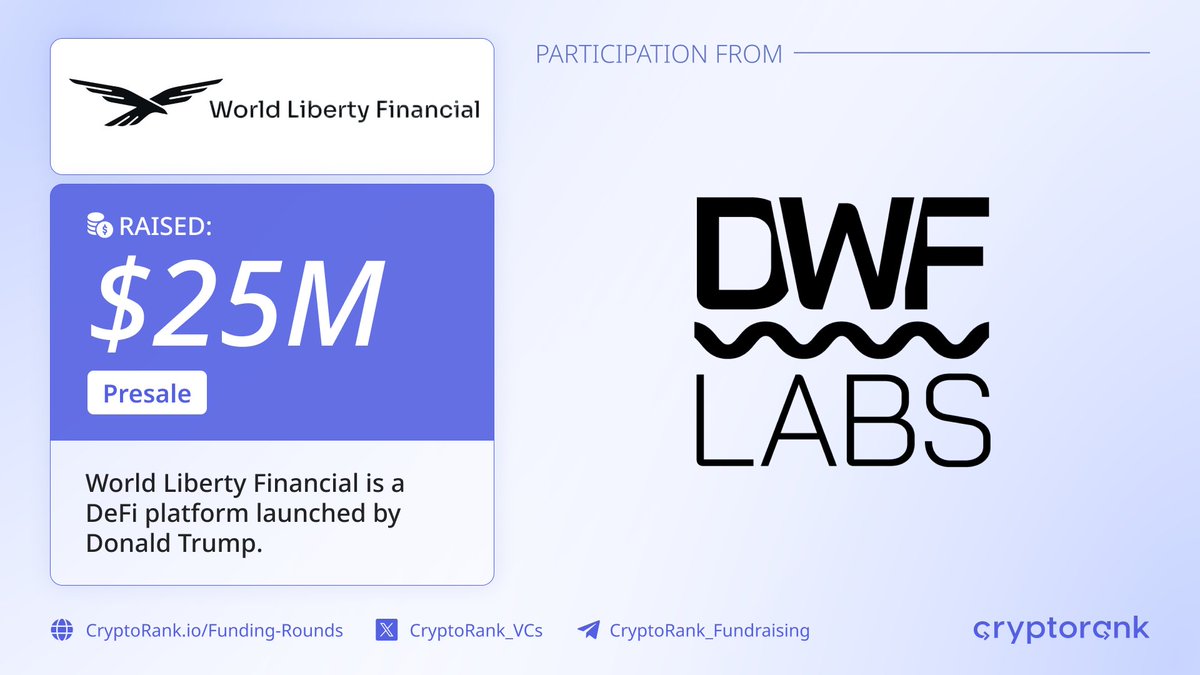
DWF Ventures, the investment arm of Web3 market‑maker DWF Labs, has delivered a detailed evaluation of $WLFI, World Liberty Financial’s newly issued utility token. Published via X, the analysis emphasises $WLFI’s integration into World Liberty’s broader ecosystem and its potential as a key enabler in connecting traditional finance with on‑chain liquidity. Unlike World Liberty’s $TRUMP memecoin, $WLFI is purpose‑built to power the upcoming “WLFI super app”, which will streamline access through web wallets and bank on‑ramps, and underpin planned lending and borrowing services.

The report highlights the success of the USD1 stablecoin—backed by short‑term US Treasuries and cash equivalents—which now commands a market capitalisation approaching $2.5 billion and enjoys listings on major exchanges such as Binance and Coinbase. These developments have significantly boosted investor attention toward the $WLFI token.

World Liberty has raised approximately $500 million across two funding rounds by selling about a quarter of its 100 billion token supply. Among its backers are DWF Labs itself and crypto figure Justin Sun, while ALT5 Sigma has outlined a $1.5 billion treasury strategy centred around $WLFI. DWF Ventures expects that the token could soon be integrated by several DeFi protocols, including Falcon Finance, Ethena and Mantle.

Importantly, DWF Ventures positions $WLFI’s launch as more than a token debut; it sees the initiative as a structural pivot that could catalyse institutional adoption and facilitate compliant capital onboarding—possibly even drawing interest from sovereign investors.

But $WLFI’s entry into the market has triggered concerns. Reports reveal technical difficulties involving the Lockbox contract, intended to unlock 20 percent of token allocations for early investors, which have left many users unable to activate the mechanism. Pre‑market trading responded with a 40 percent drop, raising doubts about launch readiness. Coupling these issues with the political profile of its founders, the token has become entangled in financial and reputational risks.

Indeed, WLFI’s connection to the family of the former president has cast a shadow over its market potential. The token’s political dimensions have already affected diplomatic engagements—such as withdrawals from the Bitcoin Asia 2025 conference—and prompted ethical criticism over conflicts of interest.

Broader scrutiny of World Liberty Financial underscores such tensions. Investigations have revealed that the Trump family commands a substantial share of revenue from token sales and that governance design reflects unusual centralisation for a DeFi project. Further concerns relate to self‑dealing practices: for instance, ALT5 Sigma—a firm acquired by World Liberty—purchased $750 million worth of WLFI tokens. As part of this arrangement, its leadership includes Eric Trump and WLFI co-founder Zach Witkoff, a structure that regulators and critics view as raising red flags.

Ethics experts warn that such close ties between ruling office, private enterprise and foreign investment could undermine democratic safeguards. The New Yorker, for one, described the venture as stretching the norms of political ethics, with World Liberty seen by some as a mechanism for influence through token‑based access channels.

The $WLFI launch is clearly more than a token generation event—it is shaping into a test case for the nexus of politics, finance and regulation in the emerging Web3 era.

The European Union is preparing to postpone taxes on aviation and shipping fuels until 2035 under its energy tax reform, a move that significantly delays the implementation of climate-aligned taxation for these sectors. A draft proposal endorsed by Denmark, the current holder of the EU presidency, outlines this extension and is slated for discussion among member states in Brussels, with an aim to reach agreement in November. […]

Bilateral non-oil trade between the UAE and India surged past US $37.6 billion in the first half of 2025, marking a 33.9 per cent increase compared with the same period in the previous year. The UAE’s Foreign Trade Minister, Dr Thani bin Ahmed Al Zeyoudi, highlighted during his Mumbai visit the pivotal role of the Comprehensive Economic Partnership Agreement in propelling this growth. Discussions focused on expanding cooperation across pharmaceuticals, food and logistics, alongside Bharat Mart, a 2.7 million sq ft trade complex in Jebel Ali Free Zone designed for Indian exporters to reach markets across the Middle East, Africa and Europe.

Trade figures underscore that CEPA has significantly deepened economic ties. In 2024, non-oil trade between the two nations topped US $65 billion, reflecting a 19.7 per cent increase from 2023 and more than doubling the 2020 tally of US $27.9 billion. UAE investments in India reached around US $17 billion by late 2023, while Indian investments in the UAE climbed to approximately US $8 billion—total mutual investment topping US $25 billion, with the UAE accounting for 70 per cent of that figure.

This dynamic was further backed by the UAE-India CEPA Council’s Start-up Series, which has drawn more than 10,000 applications from Indian entrepreneurs since its launch in June 2025. The initiative, showcased in New Delhi by Ahmed Aljneibi, has made stops at leading institutions including Banaras Hindu University and the Master’s Union School of Business, offering mentorship, regulatory guidance and pathways for cross-border scale-up.

The strategic focus on innovation also extends beyond startups. Sheraa, Sharjah’s entrepreneurship centre, and Startup Middle East signed a memorandum to establish an India Startup Hub in Sharjah, aimed at facilitating the entry of Indian ventures into the UAE market and strengthening regional innovation ecosystems.

Policy measures in the UAE are evolving to match this economic outreach. Amendments to more than 40 laws, most notably the Commercial Companies Law enabling 100 per cent foreign ownership, are part of a broader strategy to double the non-oil economy—from US $381 billion to US $762 billion—by 2030. Foreign trade is viewed as central to achieving that ambition, with the UAE’s connectivity, infrastructure and logistics network seen as vital assets for Indian businesses seeking wider regional access.

CEPA’s architecture underscores its comprehensive approach: since its implementation in May 2022, tariffs on more than 80 per cent of Indian exports to the UAE have been reduced or eliminated immediately, benefiting sectors from gems and jewellery to pharmaceuticals and automobiles. Additional gains accrue from streamlined customs protocols, regulatory harmonisation and a joint committee addressing market-access and technical barriers.

Experts point to CEPA as transformative for both economies. Indian gems and jewellery exports more than doubled from US $4.9 billion to US $8 billion in fiscal year 2024, aided by duty removals. Labour-intensive industries such as textiles, leather, footwear, sports goods, plastics, furniture, engineering goods, agricultural produce and food items have also gained momentum, while regulatory alignment has accelerated entry of generic drugs and medical devices, boosting health-sector cooperation and supply-chain resilience.

Further integration is visible in emerging fintech and logistics initiatives. Bharat Mart reinforces logistical synergy, while the nascent Virtual Trade Corridor, fintech sandboxes and experiments such as India’s MagRail pilot demonstrate growing interoperability in digital trade and compliance systems.

At the political level, the CEPA enters its third year this February. Al Zeyoudi noted that India remains the UAE’s second-largest non-oil export destination, accounting for 13.5 per cent of total non-oil exports in 2024—a 75.2 per cent rise year-on-year. Conversely, the UAE is India’s third-largest trading partner and a major investor, illustrating the strategic depth CEPA has added to bilateral ties.


VISHNU RAJA
RYO YAMADA
HITORI GOTOH
IKUYO KITA
Just in: