News related to
stablecoin

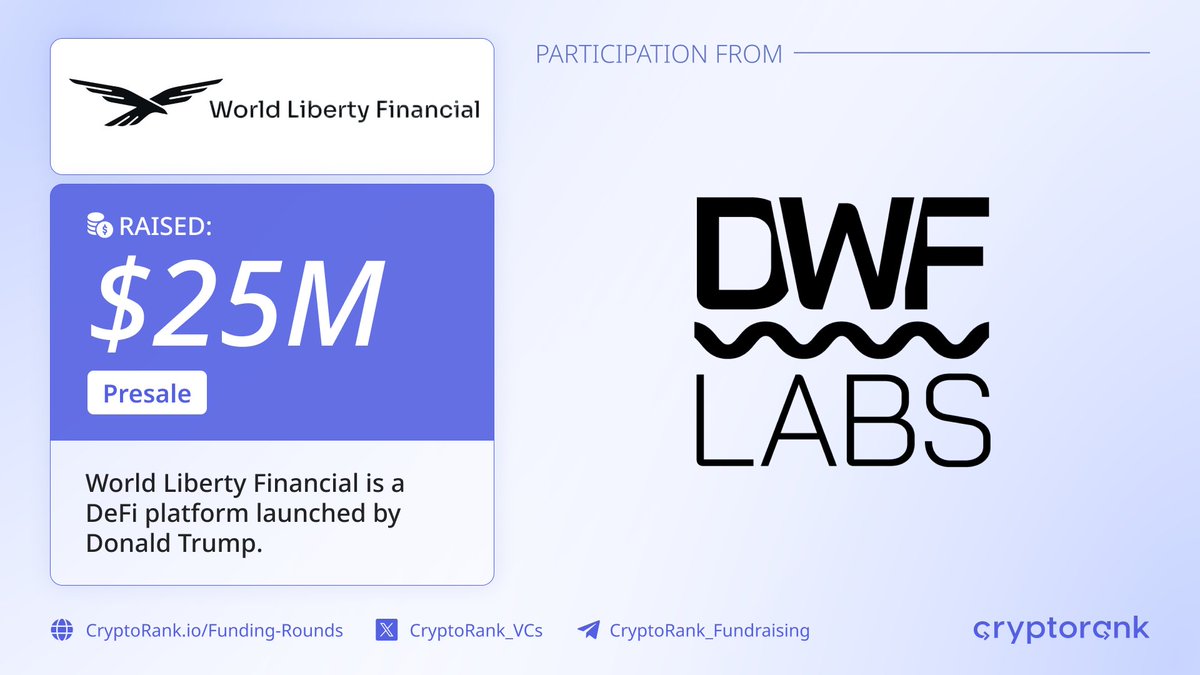
DWF Ventures, the investment arm of Web3 market‑maker DWF Labs, has delivered a detailed evaluation of $WLFI, World Liberty Financial’s newly issued utility token. Published via X, the analysis emphasises $WLFI’s integration into World Liberty’s broader ecosystem and its potential as a key enabler in connecting traditional finance with on‑chain liquidity. Unlike World Liberty’s $TRUMP memecoin, $WLFI is purpose‑built to power the upcoming “WLFI super app”, which will streamline access through web wallets and bank on‑ramps, and underpin planned lending and borrowing services.

The report highlights the success of the USD1 stablecoin—backed by short‑term US Treasuries and cash equivalents—which now commands a market capitalisation approaching $2.5 billion and enjoys listings on major exchanges such as Binance and Coinbase. These developments have significantly boosted investor attention toward the $WLFI token.

World Liberty has raised approximately $500 million across two funding rounds by selling about a quarter of its 100 billion token supply. Among its backers are DWF Labs itself and crypto figure Justin Sun, while ALT5 Sigma has outlined a $1.5 billion treasury strategy centred around $WLFI. DWF Ventures expects that the token could soon be integrated by several DeFi protocols, including Falcon Finance, Ethena and Mantle.

Importantly, DWF Ventures positions $WLFI’s launch as more than a token debut; it sees the initiative as a structural pivot that could catalyse institutional adoption and facilitate compliant capital onboarding—possibly even drawing interest from sovereign investors.

But $WLFI’s entry into the market has triggered concerns. Reports reveal technical difficulties involving the Lockbox contract, intended to unlock 20 percent of token allocations for early investors, which have left many users unable to activate the mechanism. Pre‑market trading responded with a 40 percent drop, raising doubts about launch readiness. Coupling these issues with the political profile of its founders, the token has become entangled in financial and reputational risks.

Indeed, WLFI’s connection to the family of the former president has cast a shadow over its market potential. The token’s political dimensions have already affected diplomatic engagements—such as withdrawals from the Bitcoin Asia 2025 conference—and prompted ethical criticism over conflicts of interest.

Broader scrutiny of World Liberty Financial underscores such tensions. Investigations have revealed that the Trump family commands a substantial share of revenue from token sales and that governance design reflects unusual centralisation for a DeFi project. Further concerns relate to self‑dealing practices: for instance, ALT5 Sigma—a firm acquired by World Liberty—purchased $750 million worth of WLFI tokens. As part of this arrangement, its leadership includes Eric Trump and WLFI co-founder Zach Witkoff, a structure that regulators and critics view as raising red flags.

Ethics experts warn that such close ties between ruling office, private enterprise and foreign investment could undermine democratic safeguards. The New Yorker, for one, described the venture as stretching the norms of political ethics, with World Liberty seen by some as a mechanism for influence through token‑based access channels.

The $WLFI launch is clearly more than a token generation event—it is shaping into a test case for the nexus of politics, finance and regulation in the emerging Web3 era.

Mastercard and Circle have deepened their collaboration to enable settlement of transactions in USDC and EURC stablecoins for acquirers and merchants across Eastern Europe, the Middle East and Africa. Arab Financial Services and Eazy Financial Services are among the first institutions to access this capability, which integrates stablecoin payments into Mastercard’s established global network.

The initiative marks a clear shift towards tokenised money. Mastercard’s President for EEMEA, Dimitrios Dosis, emphasised the ambition to bring stablecoins into mainstream finance by investing in infrastructure, governance and partnerships, while leveraging the company’s longstanding expertise in security and compliance. Kash Razzaghi, Chief Business Officer at Circle, framed the move as a step towards “borderless, real‑time commerce,” seeking to make USDC as ubiquitous as traditional payments.

Arab Financial Services highlighted the tangible value of the new model: improved liquidity, operational efficiencies and dramatically reduced friction in high‑volume reconciliations. Eazy Financial Services underscored how the expanded settlement option aligns with its mission to offer faster, more secure, and efficient payment solutions, setting a fresh standard for digital settlements in EEMEA.

This development builds on existing collaborations such as crypto payment card solutions with the likes of Bybit and S1LKPAY, which already use USDC for settlement in the region. Mastercard further extends its stablecoin portfolio beyond USDC and EURC, already supporting USDG, FIUSD and PYUSD across various use‑cases spanning remittances, B2B, and payouts via platforms like Mastercard Move and the Multi‑Token Network, underpinned by its Crypto Credential and Crypto Secure frameworks.

Financial infrastructure experts view the rollout as particularly meaningful for emerging markets. World Bank data indicates cross‑border transfer costs remain high—around 8% on average—far exceeding the UN’s Sustainable Development Goal threshold of 3%. Introducing stablecoin settlement is expected to trim costs, accelerate transfers, and bolster working capital and currency resilience for small and medium businesses.

Analyses point to early adopters witnessing significant gains: settlement speeds up by 30%, and liquidity costs drop around 20%, according to some reports. Mastercard’s compliance infrastructure, combined with evolving regulatory frameworks like the European MiCA and US GENIUS Act, fosters institutional trust in this digital settlement evolution.

Circle is working to fortify USDC’s global footprint beyond this initiative. Its broader strategy includes partnerships with Finastra to plug USDC into traditional payment hubs, OKX for zero‑fee USDC conversions, and ventures with SBI Group and Ripple in Asia—all aimed at building liquidity, interoperability and widespread adoption.

World Liberty Financial’s WLFI token is set to begin trading on the Ethereum mainnet on 1 September 2025, with only 20 per cent of the total supply unlocked for early supporters, while the remaining 80 per cent remains under community‑governance lock. Funding rounds have raised up to $2.26 billion, including significant equity backing from ALT5 Sigma, attributing a paper valuation—and potential risk—for retail traders.

Trading commences at 12:00 UTC on 1 September, when presale participants can claim and exchange the portion of tokens unlocked by activating the audited “Lockbox” smart contract. A week‑long activation window began on 25 August to prepare wallets. The initial release affects only a fraction of the total supply; community votes will determine release schedules for the locked remainder.

Pre‑launch futures activity offers a stark view of market sentiment. WLFI perpetual contracts debuted around $0.42, implying a fully diluted valuation of $40 billion. However, futures prices plunged 44 per cent shortly after, collapsing from $0.44 to below $0.25 and slashing the FDV to $24 billion, amid heavy shorting and a sharply negative funding rate of around ‑35 per cent.

Tokenomics reveal a further concentration of risk: insiders—including the Trump family—hold a vast share of true control. Estimates suggest between 75 per cent and over 80 per cent of the supply remains allocated to founders, team members, and affiliated entities, with release terms opaque and subject to governance decisions.

The project has drawn intense scrutiny for its centralised structure and ethical implications. Reuters reported that the Trump family raised approximately $550 million through WLFI token sales and now claims around 75 per cent of net revenue. That level of control starkly contrasts with the decentralised ideals usually associated with DeFi. Commentary in outlets such as The New Yorker emphasises how such arrangements echo a “raffle-ticket” model, whereby early purchasers gain governance power and speculative upside while insiders benefit disproportionately, fuelling concerns about influence‑peddling and conflicts of interest.

Further fuelling caution, benzinga commentary and crypto analysts warn that the small circulatable portion at launch, paired with concentrated insider holdings, could make WLFI’s valuation look inflated on paper—yet leave retail investors exposed if token dumps or sell pressure emerge post‑launch.

Pending regulatory clarity also looms large. With USD1 stablecoin already launched and tied to WLFI’s ecosystem, the project’s compliance with securities laws remains under question, especially given public funds, centralised control, and political ties.

Experts urge prospective investors to proceed with caution. The disparity between locked and unlocked supply, the volatility seen in derivatives markets, and the centralisation of control combine to form a high-risk scenario reminiscent of past politically affiliated crypto launches. While some anticipate short-term rallies driven by hype and governance claims, the sustainability and fairness of WLFI’s structure remain deeply uncertain.

The US Department of the Treasury has issued a formal call for public feedback on cutting‑edge mechanisms that regulated financial institutions might deploy to detect illicit digital asset activity. This request stems from the Guiding and Establishing National Innovation for U. S. Stablecoins Act, signed into law on 18 July 2025, mandating that entities issuing payment stablecoins are treated as financial institutions under anti‑money laundering, sanctions, and related frameworks. The Treasury now seeks input on application programming interfaces, artificial intelligence, digital identity verification, and blockchain analytics as tools to bolster enforcement and transparency. Respondents are invited to submit comments by 17 October 2025.

The Treasury plans to assess submissions to evaluate how these technologies may enhance detection abilities, weigh the associated costs and privacy and cybersecurity implications, and understand operational hurdles. This evaluation will inform a report to Capitol Hill, which will include suggestions for legislative and regulatory action, possibly followed by guidance or rulemaking.

The request arrives on the back of Executive Order 14178, issued in January 2025, advocating for US leadership in digital finance technologies. It also follows the Working Group on Digital Asset Markets report, released in July 2025, which called for stronger AML/CFT and sanctions frameworks, including enhanced public–private cooperation and digital identity measures.

Regulated entities are urged to outline how they are using—or could use—APIs to improve risk detection, for example through real‑time data sharing or transaction monitoring. AI deployment examples might cover systems capable of spotting complex illicit finance networks via large‑scale transaction analysis. Digital identity verification inputs could focus on portable credentials or biometrics, and the blockchain component invites discussion of analytics tools that integrate on‑chain and off‑chain data, as well as efforts to overcome obfuscation techniques.

Treasury’s criteria for evaluating the proposals extend beyond efficacy. Institutions must weigh how sensitive the data is, the privacy implications of collection and analysis, the technological and operational burdens of implementation, and any cybersecurity vulnerabilities.

Industry reactions underscore both opportunity and burden. As the Treasury’s announcement puts it, “innovative tools are critical to advancing efforts to address illicit finance risks but can also present new resource burdens for financial institutions.” Advocacy groups like America’s Credit Unions have endorsed the consultation, framing it as a critical step in aligning stablecoin activity with the GENIUS Act’s one‑year implementation horizon, urging rapid progress toward safe digital asset services for communities.

Law‑firm analysis also points to the broader AML/CFT context. The consulting documents note that the GENIUS Act and its complementary Executive Order seek to fold stablecoin activities into the Bank Secrecy Act framework—bringing them under familiar obligations for AML, sanctions screening, transaction monitoring, and customer due diligence.

The public consultation ends on 17 October 2025. Following that, the Treasury is expected to synthesise the feedback into a report for the Senate’s Banking committee and the House Financial Services committee, and potentially proceed with issuing guidance or initiating rulemaking.

Beyond these regulatory actions, separate developments in the enforcement space illustrate an increasing reliance on technology to combat illicit finance. The IRS’s CI‑FIRST initiative streamlines subpoena processes and heightens data‑sharing with financial institutions to tackle financial crimes, including those linked to illicit trafficking and fraud, using AI and automation.

In parallel, academic innovations continue apace. Recent studies have explored graph neural networks and unsupervised anomaly detection for tracing illicit flows through Bitcoin, offering early malice‑detection frameworks that prioritise interpretability and adaptability—trends that align well with the Treasury’s probe into AI, APIs, identity verification and blockchain monitoring.

SHENZHEN, CHINA – Media OutReach Neswire – 26 August 2025 – On August 26, 2025, Linklogis Inc. (09959.HK, “Linklogis”) released its interim results. In the first half of 2025, the total transaction volume processed by its technology solutions reached RMB 203.6 billion. The total revenue and income amounted to RMB 374.5 million. The number of anchor enterprise and financial institution customers for its supply chain finance technology […]

China is reportedly on the brink of a significant policy shift that may see the introduction of yuan-backed stablecoins, a move designed to bolster the international standing of its currency. With global financial markets increasingly leaning towards digital currencies, Beijing’s latest plan could mark a pivotal moment in the international adoption of the yuan.

The Chinese government is set to consider a proposal to allow the issuance of stablecoins pegged to the yuan, which would aim to challenge the dominance of the US dollar and its associated stablecoins in global markets. The proposal, expected to be reviewed by the State Council, reflects Beijing’s ongoing strategy to expand the yuan’s reach beyond its traditional borders, positioning it as a competitor to the greenback.

As part of its broader push for digital currency integration, China could allow key financial hubs such as Hong Kong and Shanghai to be the first to implement the new stablecoin systems. These cities are already at the forefront of China’s broader efforts to foster the growth of digital currencies, and the stablecoin initiative could further solidify their roles as global financial centres.

Discussions surrounding the adoption of yuan-backed stablecoins are expected to feature prominently during high-level meetings, including the upcoming Shanghai Cooperation Organisation Summit. This gathering will provide an important platform for Chinese leaders to outline their vision for the future of digital currencies, while signalling their intent to shape international policy on the use of stablecoins.

The planned move is in direct contrast to China’s earlier stance on cryptocurrency regulation. In recent years, the country has imposed strict measures on the use of private cryptocurrencies, citing concerns about financial stability and capital outflows. The proposed policy reversal regarding stablecoins marks a dramatic shift in strategy, moving from a position of stringent control to one of potential global leadership in digital currency innovation.

Stablecoins, which are digital currencies pegged to stable assets like fiat currencies or commodities, have become increasingly popular among investors seeking to minimise volatility. In particular, US dollar-backed stablecoins have grown exponentially, with major players like Tether and USD Coin dominating the market. The success of these assets has prompted China to explore ways in which the yuan can gain a similar foothold in the emerging digital economy.

By introducing a yuan-backed stablecoin, China would not only be promoting its digital currency but also attempting to influence how digital currencies are adopted globally. The move could significantly shift the dynamics of international trade and finance, particularly in Asia. As countries continue to look for alternatives to US dollar-dominated systems, China’s push for a digital yuan is increasingly seen as a strategic move to improve its influence over global financial markets.

Key stakeholders in the financial sector have already begun to take notice of China’s evolving stance on digital currencies. Financial institutions operating in Hong Kong and Shanghai are expected to play an integral role in the rollout of yuan-backed stablecoins, with implications for both domestic and cross-border transactions. Additionally, blockchain technology providers are closely monitoring developments in this space, anticipating a surge in demand for stablecoin-related infrastructure as China accelerates its digital currency ambitions.

The anticipated approval of yuan-backed stablecoins would also contribute to the development of China’s central bank digital currency, the digital yuan. While the digital yuan has already been tested in select regions, the integration of stablecoins would expand the use of digital yuan products, making it more accessible to international markets. This could significantly enhance the usability of China’s digital assets, providing a stable, digital alternative to traditional fiat currencies for global trade and investment.

At the same time, China’s global competitors, particularly the United States and the European Union, are likely to view this move with caution. While the yuan-backed stablecoin could disrupt traditional financial systems, it could also prompt a race to establish new regulatory frameworks and digital currencies to safeguard the dominance of the US dollar and the euro in global markets.

Federal lawmakers are grappling with a surge of feedback following the Senate’s release of its discussion draft of the Responsible Financial Innovation Act, aimed at defining the regulatory framework for digital assets. With a compressed input window and wide-ranging submissions from banking associations, regulators and web3 groups, attention has quickly centred on stablecoin interest—an area of mounting concern.

Provisions introduced by the House’s CLARITY Act placed digital assets under Commodity Futures Trading Commission oversight, but the Senate’s RFI Act grants the Securities and Exchange Commission primary regulatory authority over so-called “ancillary assets” while still permitting CFTC consultation on specific rules. The RFI Act also empowers banks to engage in activities such as custody, lending, market-making and even operating blockchain nodes, alongside instructing the SEC to craft a new rule to determine what constitutes an investment contract, potentially supplanting the decades-old Howey Test.

While the SEC-centric approach aims to resolve ambiguity in digital asset regulation, banking groups are alarmed by what they describe as a critical loophole in the GENIUS Act—the stablecoin law recently enacted. Although the GENIUS Act forbade stablecoin issuers themselves from paying interest on token holdings, it does not explicitly block affiliated intermediaries from offering yield-like rewards. This is of particular relevance to Coinbase, which ends its joint issuance role in USDC but still enables clients to earn approximately 4.1 percent via “rewards” on their holdings.

Major banking associations, including the American Bankers Association and the Bank Policy Institute among others, have urged Congress to plug this gap. Their position is clear: yielding through affiliates risks siphoning deposits from traditional banks, potentially destabilising credit provision and triggering deposit outflows that could amount to trillions.

Coinbase disputes accusations of exploiting the loophole, characterising its model as a legitimate separation between issuers and intermediaries. Nonetheless, concerns endure that such practices undercut the intent of the GENIUS Act, which aimed to draw boundaries between stablecoin issuers and banking functions.

Meanwhile, the RFI Act has divided opinion in the Senate. Democratic senators, led by Senator Elizabeth Warren, warn that redefining digital assets as “ancillary” could erode critical investor protections and financial stability. They argue that the bill would weaken the SEC’s regulatory role and expose taxpayer-backed protections such as FDIC insurance to undue risk.

On the industry front, the GENIUS Act did usher in uniform rules for payment stablecoins, mandating full backing with low-risk assets, monthly reserve disclosures, and independent audits—including attestations from CEOs or CFOs. Yet critics caution that the law stops short of safeguarding against systemic threats or conflicts of interest, particularly noting exemptions that may benefit subsidiaries of large tech firms or powerful political figures.

Academic analysis underscores the broader implications: stablecoins are increasingly viewed as pivotal to a new era of banking, often referred to as “Banking 2.0,” given their potential to enhance global transaction speed, reduce fraud and integrate new financial mechanisms—yet they also carry real risks if regulatory gaps persist.

As the Senate culture shifts from discussion to legislation, the RFI Act’s comment deadline—set for 5 August—has crystallised the debate. The responses could shape whether a stablecoin interest ban via intermediaries is codified, and determine the future balance of power between the SEC and CFTC, between innovation and investor protection, and between crypto-enabled finance and the conventional banking system.

Advertisements

Terra/Luna founder Do Kwon has pleaded guilty to charges of misleading investors in the wake of the cryptocurrency platform’s dramatic collapse. The South Korean entrepreneur’s admission follows an extensive investigation into the catastrophic failure of his company, which resulted in billions of dollars in losses for global investors.

Kwon’s once-promising cryptocurrency project, Terra, alongside its native token Luna, was heralded as a revolutionary model in the digital finance space, promoting a stablecoin system backed by a complex algorithm. However, as Terra’s market value spiralled downward in May 2022, the system’s instability became glaringly apparent, triggering a collapse that sent shockwaves through the entire crypto industry.

At the heart of the scandal is the assertion that Kwon misled investors by downplaying the risks of the Terra/Luna ecosystem. During several public appearances and through communications with investors, Kwon had portrayed the Terra network as safe and resilient. His claims were underpinned by his ability to maintain a high market value for Luna and the purported stability of TerraUSD, a stablecoin tied to the project. The failure of the system, when TerraUSD’s peg to the US dollar faltered, led to an unprecedented crash in Luna’s value, rendering it almost worthless.

The legal proceedings against Kwon were initiated shortly after the collapse, with allegations of fraud, market manipulation, and a blatant disregard for investor protection laws. Following his arrest in Montenegro earlier this year, Kwon’s legal troubles intensified, with prosecutors alleging that his actions were tantamount to a Ponzi scheme, designed to artificially inflate the market for Luna and its associated assets.

Kwon’s defence team initially argued that he did not intentionally deceive investors and that the Terra/Luna collapse was the result of market conditions beyond his control. However, his guilty plea signals a change in approach. Experts suggest that Kwon may have opted for a guilty plea in order to avoid prolonged legal battles, especially as the mounting evidence pointed towards significant flaws in the way he operated the project.

The plea has drawn significant attention, not just from the cryptocurrency community, but also from regulators worldwide who have been closely monitoring the growing number of legal cases involving crypto fraud and market manipulation. The Terra/Luna crash is widely seen as one of the most significant incidents in the volatile history of cryptocurrency, highlighting the risks associated with algorithmic stablecoins and the lack of regulation in the sector.

Kwon’s case has also reignited discussions about the need for comprehensive regulation in the cryptocurrency space. Many in the industry believe that the failure of Terra/Luna could have been prevented or mitigated had there been clearer regulatory oversight governing the behaviour of blockchain-based projects. In the aftermath of the collapse, several global regulators have moved to draft stricter guidelines aimed at improving transparency and accountability for digital assets, particularly those promising stability through mechanisms like algorithmic stablecoins.

The consequences of Kwon’s actions extend beyond financial losses. The collapse of Terra/Luna resulted in a loss of trust in the cryptocurrency market, with many investors becoming wary of similar projects that promise high returns with little risk. While the crypto sector has made efforts to rebuild its reputation, the Terra/Luna scandal remains a cautionary tale for anyone entering the volatile world of digital finance.

For investors, the aftermath of the collapse has been bitter. Many are still seeking compensation, and several class action lawsuits have been filed against Kwon and his associates. However, the road to recovery for those affected may be long, as legal proceedings unfold and the extent of Kwon’s liability is determined.

Shiga Digital, a rapidly expanding blockchain-based fintech company, is reshaping financial access for African businesses with its newly launched mobile applications. Available on both Android and iOS, the platform provides businesses and individuals across the continent with seamless access to a suite of digital finance tools, including stablecoin payments, cross-border transactions, and secure digital asset management. This move marks a significant step forward in the company’s mission […]

A landmark federal framework for stablecoins became law on 18 July 2025, when President Donald Trump signed the Guiding and Establishing National Innovation for U. S. Stablecoins Act. The legislation mandates that stablecoins — digital currencies pegged one‑to‑one to the U. S. dollar or short‑term Treasury bills — must be fully backed by liquid reserves, publicly disclose holdings monthly, and comply with anti‑money laundering and consumer protection rules.

The Act clears a path for both banks and approved non‑bank entities to issue payment stablecoins under a dual licensing system, encompassing federal and state oversight. It also creates a formal category for such assets, offering legal clarity that had eluded stablecoin issuers until now.

Despite bipartisan support in Congress — with Senate approval on 17 June and House passage on 17 July — the new law has drawn criticism. Some lawmakers and experts argue it falls short on stricter anti‑money laundering measures and allows big tech firms to issue stablecoins with fewer regulatory hurdles than traditional banks.

Trump lauded the Act during the White House signing ceremony, calling it “a hell of an act” and asserting it will solidify American crypto leadership and support the dollar’s global primacy. He noted the GENIUS Act “creates a clear and simple regulatory framework” capable of unleashing innovation and enhancing payment systems.

Stakeholders across finance and fintech are re-evaluating their strategies. Traditional banks are preparing pilot programmes and exploring partnerships to issue or facilitate stablecoins, while crypto firms like Circle and Coinbase, which have backed U. S. stablecoin issuance earlier, have seen share prices rise following the law’s enactment.

In parallel, the law aims to channel demand into U. S. Treasuries, reinforcing the dollar’s global role. Treasury Secretary Scott Bessent highlighted that requiring asset backing in government debt would deepen Treasury markets. Financial institutions are bracing for increased reserve purchases and adjustments in asset allocation strategies.

The Act introduces rigorous governance: stablecoin issuers must implement reserve audits, adhere to marketing restrictions—such as avoiding government endorsement claims—and prioritise redeeming customer claims ahead of other creditors in insolvency scenarios. It also extends anti‑money laundering obligations under the Bank Secrecy Act, granting treasury authorities power to freeze illicit funds.

Though heralded as a milestone, implementation remains complex. Regulators are expected to issue detailed rules within a year, and the Act’s “effective date” is projected for late 2026, contingent on final regulatory actions or an 18‑month grace period.

Global central banks and fintech players are watching closely. Some expect U. S. leadership in regulated digital currencies could spur innovation overseas, while others warn that insufficient guardrails may encourage regulatory arbitrage. Foreign issuers may enter the U. S. market if they meet rigorous Treasury approval, including comparable home‑jurisdiction oversight and U. S.-based reserve management.

Market response has been immediate: global crypto valuations have surged past $4 trillion, led by strong gains in bitcoin and ether amidst expectations of broader stablecoin integration. Industry experts suggest stablecoins may soon become mainstream payment tools, with major retailers and tech giants like Google, Uber and Apple exploring adoption.

However, voices of caution persist. Critics say the framework could permit big tech to bypass stricter banking regulations, heightening systemic risks, and that consumer safeguards remain inadequate. Transparency International warned the law might provide loopholes exploitable by criminals or hostile regimes.

As rule‑making proceeds and industry adapts, the GENIUS Act marks a fundamental shift in U. S. crypto policy — ushering stablecoins from regulatory limbo into a legalised, structured, but contested future.

KUALA LUMPUR, MALAYSIA – Media OutReach Newswire – 24 July 2025 – Bitcoin (BTC) has been rising almost uninterruptedly over the past three months, setting new all-time highs (ATH) essentially every week since mid-May. According to Coinbase, BTCUSD surpassed the crucial $112,000 mark on 10 July and went on to touch the $123,200 level on 14 July. Since then, the market seems to have entered a period […]

PayPal has unveiled PayPal World, a global payments network that links PayPal and Venmo with prominent domestic digital wallets—India’s Unified Payments Interface, China’s Tenpay Global, and Latin America’s Mercado Pago—with the aim of serving nearly 2 billion users by late 2025.

The announcement, made on 23 July 2025, positions PayPal World as the first truly interoperable cross-border payments ecosystem. Users will be able to send money and shop overseas using their familiar wallets, while merchants can receive payments from these networks without further integration. This ecosystem begins with the interoperability of PayPal and Venmo, progressing to UPI, Tenpay, and Mercado Pago.

Alex Chriss, PayPal’s president and CEO, described PayPal World as a “first‑of‑its‑kind payments ecosystem” capable of simplifying intricate cross‑border transactions for “nearly two billion consumers and businesses”. Ritesh Shukla, CEO of NPCI International Payments Ltd, affirmed that UPI’s integration will expand its global reach and benefit Indian users by offering secure and seamless international payments. Wenhui Yang, Tenpay Global’s CEO, added that the partnership would enable PayPal and Venmo customers to use Weixin Pay QR codes in China, while enabling deeper remittance collaboration.

The platform is technologically built for scale, using open‑commerce APIs and cloud‑native architecture to ensure low latency and reliability across global regions. It promises “device and technology‑agnostic” compatibility and is designed to embrace emerging commerce formats—including AI‑agent payments, dynamic payment buttons, and stablecoins over time.

Competitors and analysts note that PayPal World addresses a longstanding fragmentation in international payments. By reducing dependency on credit cards, currency conversion, and complex onboarding, it offers a streamlined experience for consumers and merchants alike. However, successful execution will depend on regulatory compliance across jurisdictions and the ability to integrate smaller wallets and merchants beyond launch partners.

Operationally, PayPal World will go live in autumn 2025 with PayPal and Venmo already interoperable. In 2026, Venmo users will be able to make purchases at millions of global merchants within the PayPal network—both online and in physical stores.

For Indian users, the move is particularly significant. UPI, which represents around 85% of digital retail payments domestically, gains a pathway to the global market, including e‑commerce platforms abroad and in‑store payments when travelling internationally. The integration could substantially reduce costs tied to credit card surcharges and foreign exchange fees.

Latin America’s Mercado Pago, though not yet fully finalised, joins under a memorandum of understanding, reinforcing PayPal’s focus on emerging-market inclusion.

If implementation proceeds as outlined, PayPal World could reshape cross‑border commerce by integrating regional payment infrastructures into a unified global network. Its potential success will hinge on seamless interoperability, robust regulatory alignment, and continued onboarding of diverse payment ecosystems.

HONG KONG SAR – Media OutReach Newswire – 24 July 2025 – Recently, DL Holdings Group (1709.HK) has entered into strategic cooperation agreements with ViaBTC, Asseto, and Rich Dragon Consultants, while actively advancing the tokenization of HK$500 million in assets for the DL Tower. These initiatives have sparked significant market attention, with the stock price surging over 70% in a single day. On July 23, DL Holdings […]

A significant majority of sovereign wealth funds from the Middle East are poised to increase their investments in Chinese assets over the coming five years, according to the latest findings from Invesco’s Global Sovereign Asset Management Study. This shift places China at the forefront of strategic allocation decisions, reflecting growing confidence in its innovation-led sectors.

The study, conducted between January and March and covering funds and central banks managing a combined US$27 trillion, reveals that around 60% of Middle Eastern sovereign wealth funds are planning to boost exposure to China. This places the region only behind Asia‑Pacific and Africa, where 88% and 80% of funds respectively intend to raise allocations. North American counterparts also show strong interest, with approximately 73% signalling intent to increase investment in China.

Funds across regions cited strong returns—identified by 71% of respondents—as a key motivator, alongside diversification goals cited by 63% and improved market access for foreigners mentioned by 45%. Chinese innovation sectors, including digital technology, software, advanced manufacturing, automation, and clean energy, are particularly attractive, with 89% indicating interest in digital tech and software, and 70% each for manufacturing and green energy.

Participants in the study included 141 senior investment professionals—chief investment officers, asset-class heads and portfolio strategists—drawn from 83 sovereign wealth funds and 58 central banks globally. The high participation rate lends weight to the findings: China is now ranked as a high or moderate priority for 59% of funds, a notable jump from the previous year.

Despite geopolitical tensions between Washington and Beijing, sovereign funds appear more focused on structural opportunities. North American allocations towards China are framed as strategic, long-term bets in innovation rather than reactive moves to policy friction. As one Invesco executive described, investors appear driven by fear of missing out on China’s strides in semiconductors, AI, EVs and renewable energy—“a strategic urgency they once directed toward Silicon Valley”.

A regional lens reveals the Middle Eastern shift as part of a larger recalibration. Sovereign funds in the Gulf and from oil-rich neighbours are increasingly turning to China not just for commodity trades but for diversified returns and access to high-growth sectors. One Middle Eastern fund commented that the credit spectrum in fixed income markets currently offers more attractive risk-adjusted returns than public equities, underlining a broader repositioning.

Globally, sovereign investors are embracing active management, allocating more to fixed income and private credit as markets normalise post ultra-low interest rate era. Thirty‑nine per cent of funds plan to increase fixed income exposure, underscoring a pivot towards liquidity management and resilience. Private credit usage has expanded sharply, from 30% to 44% in direct or co-investments, reflecting growing appetite for yield and portfolio diversification.

Central banks are also reshaping strategy, with 64% planning to grow reserve holdings and 53% aiming to diversify further within two years. Gold remains a popular hedge: almost half intend to expand allocations over the next three years. The dominance of the US dollar persists, with 78% expecting no credible alternative supply within the next two decades.

A modest entrant in the digital asset space, sovereign wealth funds are gradually increasing exposure to digital currencies. Direct allocations rose to 11% from 7% in 2022, most pronounced in the Middle East, Asia‑Pacific and North America. Stablecoins, viewed as more accessible than traditional crypto, are gaining attention among emerging market funds.

China remains a focal point for global sovereign investors seeking exposure to growth-critical sectors and structural diversification. The convergence of strong returns, market access improvements, and sectoral opportunities is driving Middle Eastern and other funds to recalibrate their portfolios. China has transitioned from an optional allocation into a central pillar of future-focused asset strategies, marking a calculated investment pivot amid an evolving global landscape.

Ripple has formalised a partnership with UAE-based tokenisation platform Ctrl Alt to deliver institutional-grade digital asset custody services as part of a landmark initiative by the Dubai Land Department to digitise property ownership using blockchain infrastructure.

The agreement will enable Ctrl Alt to leverage Ripple’s custody solution to store and manage tokenised property title deeds on the XRP Ledger, as Dubai intensifies its push to integrate advanced digital frameworks into its real estate sector. The project marks a significant stride in DLD’s broader strategy to streamline property transactions and increase market transparency by replacing conventional title documentation with blockchain-native digital representations.

Ripple’s institutional custody platform, designed for banks and financial institutions, will play a central role in securing and scaling the digital assets underlying Dubai’s real estate tokenisation programme. Ripple’s solution will ensure regulatory compliance, operational efficiency, and asset security as property titles are issued and exchanged through blockchain mechanisms.

The announcement positions Ripple as a key player in the UAE’s drive toward regulated digital asset ecosystems. The partnership also represents Ripple’s first custody deployment in the UAE, expanding its global digital asset custody network into the Middle East and further solidifying its presence across EMEA, Asia Pacific, and Latin America.

Ctrl Alt, which had disclosed its participation in the DLD project earlier, is building tokenisation infrastructure tailored for real-world assets such as real estate. The firm will integrate Ripple’s technology to facilitate the issuance, transfer, and management of tokenised property deeds while ensuring institutional-grade security standards.

The Real Estate Tokenisation Project aims to transform Dubai’s property registry system by offering a fully digital framework that eliminates physical documentation and manual recordkeeping. Through the initiative, the DLD intends to increase efficiency in property ownership transfers, reduce fraud risks, and create a foundation for smart contract-enabled real estate solutions. By leveraging the XRP Ledger’s speed and cost efficiency, the project also seeks to attract global investors and developers to participate in tokenised real estate offerings governed by transparent, immutable ledger protocols.

Ripple’s expansion into the UAE’s digital asset space follows its broader global strategy to deliver enterprise-grade blockchain tools tailored to financial infrastructure, a focus that has intensified as global regulators and institutions begin adopting tokenisation at scale. Ripple’s digital custody division — established through its acquisition of Metaco in 2023 — has emerged as a core offering, providing secure storage infrastructure for tokenised assets in both public and permissioned blockchain environments.

Metaco’s digital asset custody platform, which now underpins Ripple’s institutional offering, was originally designed to meet the requirements of global banks and has been adopted by several financial institutions in Europe and Asia. Its integration with Ripple’s payment and liquidity tools enables a seamless experience for enterprises managing digital asset portfolios alongside tokenisation and cross-border payment rails.

Ripple’s custodial framework offers support for a wide range of tokenised assets, including stablecoins, real-world assets, and CBDCs. It provides multi-tier security, granular permission controls, and compliance features needed for institutional applications. The company’s leadership has highlighted tokenisation as a core theme in the evolution of financial infrastructure, predicting that trillions of dollars worth of real-world assets will migrate to blockchain ecosystems in the coming decade.

Ctrl Alt’s involvement in the DLD-led project comes as Dubai cements its role as a global testbed for blockchain innovation, with a supportive regulatory regime, ambitious smart city initiatives, and a growing appetite for Web3 integration. The company has built its platform to allow regulators, issuers, and investors to interact within a compliant digital asset ecosystem. Its participation in the project is expected to open the door for additional applications of tokenisation beyond real estate, including commodities, equities, and infrastructure.

Dubai’s real estate market, historically characterised by high-value transactions and global investor interest, is seen as an ideal candidate for tokenisation. By converting ownership documents into digital tokens recorded on a blockchain, authorities aim to offer fractional ownership models, enhance liquidity, and enable secondary market trading. The shift could also reduce costs and settlement times, while allowing retail and institutional investors to access real estate markets with lower capital thresholds.

Ripple’s role in the project is expected to be pivotal in meeting security, governance, and compliance requirements for digital custody. The partnership strengthens Ripple’s position as a go-to infrastructure provider for tokenisation use cases and reflects its strategic intent to deepen engagement in jurisdictions with progressive digital asset frameworks.

The U. S. House of Representatives has approved the GENIUS Act, the inaugural federal regulatory framework targeting fiat‑backed stablecoins, with a decisive 308–122 bipartisan vote on 17 July 2025. With Senate approval secured in June by a 68–30 margin, the legislation now advances to President Trump’s desk for signature, anticipated as early as tomorrow.

The GENIUS Act mandates that issuers—including banks, credit unions, fintech firms, and select non‑bank entities—maintain one‑to‑one reserves in cash or low‑risk assets such as U. S. Treasury bills, with mandatory monthly public disclosures of reserve composition. It also institutes anti‑money laundering controls, requires issuance organisations to obtain licences from federal or state financial regulators, and prohibits paying interest directly to stablecoin holders.

The legislation forms part of a broader “Crypto Week” effort in the House, which also included passage of the CLARITY Act—allocating oversight of digital asset classification between the SEC and CFTC—and the Anti‑CBDC Surveillance State Act, barring the Federal Reserve from issuing a central bank digital currency. Both now await Senate consideration.

Advocates argue that the GENIUS Act addresses long-standing regulatory uncertainty, providing market stability and consumer safeguards within a $260 billion-plus stablecoin ecosystem. Senior figures from institutions such as JPMorgan Chase, Bank of America, Citi, Walmart, and Amazon have reportedly expressed interest in issuing stablecoins under the new regime. Market sentiment reflects optimism: crypto‑linked equities and assets rose when the House vote was finalised, with Bitcoin nearing record highs above $119,000.

Nonetheless, critics highlight significant concerns. Consumer advocates emphasise that stablecoins remain outside FDIC protection and could pose redemption risks or obscure hidden fees. Others express unease over potential weak guardrails: the SEC’s Paul Atkins cautioned that regulatory innovation must still ensure sufficient market safeguards.

Ethics debates spotlight former President Trump’s extensive ties to the crypto industry, including investments in World Liberty Financial and a meme coin touted as generating over $300 million in related revenues. Opponents claim this raises conflict‑of‑interest questions and risks favouring Trump‑linked enterprises, though the White House has asserted asset segregation via a family trust.

In Congress, both Democratic and Republican proponents defended the legislation for delivering much‑needed structure. Democratic Rep. Josh Gottheimer remarked that introducing “some rules of the road” was preferable to having none. Opposing voices like Rep. Maxine Waters cautioned that the law might “signal tolerance for corruption” without closing presidential exemptions from conflict‑of‑interest prohibitions. Meanwhile, Senate Democrats, including Richard Blumenthal, criticised the bill’s failure to eliminate loopholes or demand stronger consumer protection standards.

Beyond federal oversight, the GENIUS Act introduces a layered supervisory model: federal agencies will regulate larger issuers and interstate entities, while state regulators handle smaller players—those issuing under $10 billion annually. The legislation sets out implementation timelines, including one‑year deadlines for rule‑making and an 18‑month effective date, with a three‑year transition period before enforcement on custody and transaction restrictions.

Industry stakeholders anticipate dramatic market growth. Scott Bessent, Treasury secretary, projected the stablecoin market could swell from around $195 billion to over $2 trillion following the GENIUS Act’s implementation. Christian Catalini of the MIT Cryptoeconomics Lab predicted fierce competition as banks and fintechs join traditional issuers with consumer trust bolstered by regulation.

The crypto sector, stung by past regulatory setbacks under the prior administration’s enforcement actions, now views the GENIUS Act as a turning point. Major players like Circle and Coinbase backed the measure after directing substantial lobbying resources toward lawmakers. Jennifer Nolan, head of the Blockchain Association, described it as a “defining moment in the evolution of U. S. digital asset policy”.

With presidential signature expected imminently, the GENIUS Act is poised to redefine the U. S. approach to stablecoins—ushering in regulated issuance, enhanced transparency, and heightened institutional involvement. Its progress also spotlights ongoing debates about market oversight, political influence, and financial stability in an increasingly digital economy.

HONG KONG SAR – Media OutReach Newswire – 15 July 2025 – In July 2025, Hong Kong fintech company KN Group announced a significant strategic partnership with AlloyX, a prominent Hong Kong-based Web3 financial technology company. Leveraging AlloyX’s on-chain tokenization infrastructure technology, the two parties will jointly launch the industry’s first tokenized fund with consumer loans as its underlying assets. This collaboration marks the first tokenization of […]

BitMine Immersion Technologies has amassed 163,142 ETH, valued at roughly $500 million, marking the culmination of a newly launched treasury-driven strategy centred on Ethereum. The company raised $250 million via a private placement on July 9 and swiftly deployed the funds, achieving the milestone just five days later. The announcement triggered a surge in its share price—up by more than 40%, erasing prior losses linked to a stock offering.

Tom Lee of Fundstrat, newly appointed chairman, likens the approach to MicroStrategy’s bitcoin strategy, suggesting large Ethereum reserves could confer a “Wall Street put” by accumulating a noticeable slice of supply. At $3,072.67 per ETH, the treasury is positioned to generate upside from both price appreciation and staking rewards.

BitMine’s shift from Bitcoin mining to a dual treasury model hinges on three levers: reinvestment of operational cash flow, capital-market activities, and staking yield. CEO Jonathan Bates emphasises that ETH-per-share will be a key performance metric as the firm expands its treasury holdings.

The broader commercial embrace of Ethereum as a treasury asset is gaining momentum, with decentralised organisations and listed companies now collectively holding around 1.5 million ETH. BitMine is among the heaviest publicly traded Ether holders, joining peers such as Coinbase, SharpLink Gaming, and Bit Digital in staking Ethereum as a productive asset.

Market reaction has been volatile. BitMine shares shot up 3,000% over five trading days by early July following the raise, though the stock later retraced approximately 25% after a market dip. Its market valuation now stands near US$2.4 billion—reflecting a speculative premium on its treasury profile.

Ethereum’s value proposition as a central hub for smart contracts, DeFi applications and stablecoins underpins the strategy. BitMine positions itself as capitalising on the infrastructure layer beneath an expanding $250 billion-plus stablecoin market. Staking offers a yield-generating mechanism that differentiates Ether from Bitcoin, allowing the firm to extract returns while holding the asset.

However, the approach carries risks. Ethereum remains volatile—down roughly 9% year-to-date—raising concerns over treasury valuation swings. Regulatory scrutiny of large crypto holdings also looms, and the firm’s reliance on a single digital asset exposes it to concentration risk.

BitMine operates mining facilities in Trinidad, Texas and Las Vegas, but its identity is now steering towards being an institutional Ethereum treasury vehicle. Analysts note that staking infrastructure providers, such as Galaxy Digital and Alluvia, are launching yield-based products tailored for corporate crypto treasuries.

Investor interest appears to reflect a broader shift. Companies with regulatory barriers to direct crypto holdings are gaining exposure by investing in treasury-oriented businesses. That convergence of traditional finance and decentralised assets is central to BitMine’s narrative as it targets more ETH accumulation per share.

Rumble has unveiled its new “Rumble Wallet” in collaboration with crypto‑payments specialist MoonPay, designed to empower content creators by enabling them to monetise and manage earnings with Bitcoin and other digital assets directly on the platform. The wallet, slated for launch in the third quarter of 2025, will feature seamless on‑ and off‑ramps for buying, selling and swapping cryptocurrency—a move aimed at reducing dependence on traditional banking […]

Bitcoin surged past $118,000 this week, driven by booming ETF inflows and institutional adoption. Bitwise Asset Management’s CIO Matt Hougan forecasted that the leading cryptocurrency could reach $200,000 by year‑end, citing intensified demand and structural momentum.

Industry momentum is underpinned by record ETF inflows. As of Thursday, bitcoin exchange‑traded funds saw $1.18 billion of daily inflows, with total net inflows in 2025 reaching approximately $51 billion. Hougan emphasises that this flood of investment—coupled with restricted supply—is driving a new price discovery phase for BTC. BlackRock’s IBIT, the fastest‑growing spot ETF in history, exceeded $80 billion AUM shortly after its launch.

On‑chain metrics bolster the institutional narrative. Marta technical analyst Katie Stockton of Fairlead Strategies identified a cup‑and‑handle pattern following the breakout above $111,000, projecting a potential climb to around $134,500—an upside of nearly 14 percent from current levels. Additional evidence of a short‑squeeze emerged: over $1 billion in short positions were liquidated within 24 hours as bitcoin surpassed $118,000.

Corporate treasury adoption continues apace. Firms beyond MicroStrategy are increasingly allocating bitcoin holdings. Q2 saw a 23 percent surge in corporate bitcoin ownership, reaching approximately 847,000 coins. Alongside MicroStrategy’s substantial position, companies like GameStop and Figma initiated purchases, with Sequans Communications acquiring 370 coins. This trend reflects a deepening conviction in bitcoin’s strategic value amid macroeconomic uncertainty.

Political developments have also shaped sentiment. The U. S. Senate approved the GENIUS Act in June, defining regulatory frameworks for stablecoins and crypto platforms. Congressional discussions continue on the CLARITY Act and the Anti‑CBDC Surveillance State Act. Meanwhile, an executive order issued on 6 March 2025 established a Strategic Bitcoin Reserve, mandating government retention of forfeited bitcoin and signalling federal endorsement.

Global macro conditions are another tailwind. Federal debt expansion and a weaker dollar, driven by U. S. fiscal policy and potential monetary easing, reinforce bitcoin’s appeal as an inflation hedge. Hougan argues that supply limitations combined with persistent ETF and corporate demand create a compelling bull case.

Closer analysis reveals technical resilience. Support now lies around previous resistance levels—between $108,300 and $112,000. BTC’s consolidation above these benchmarks, paired with strong volume and bullish MACD readings, suggests sustained momentum.

Analysts from Citi, Hashdex, and Kraken echo the bullish tone. Citi describes bitcoin’s behaviour as akin to a physical commodity and part of a diversified risk-on portfolio. Trade Nation’s David Morrison attributes the uptick to widespread investor appetite for risk, while Kraken’s Thomas Perfumo ties the rally to strength in US equities and cascading liquidation of short positions.

Ethereum and other altcoins are not left behind: Ethereum surpassed $3,040 this week, buoyed by its own ETF inflows, while Solana hit $167 driven by increasing trading volume. However, bitcoin remains the primary focus, reflecting its entrenched role in institutional strategies.

Matt Hougan’s forecast of $200,000 rests on three pillars: ETF demand, corporate accumulation, and constrained supply. “Bitcoin is no longer a speculative asset,” he stated; “It’s now a cornerstone in institutional portfolios. This trend is just beginning”. Even if volatility persists, the convergence of demand-side forces underscores a paradigm shift in how bitcoin is perceived by policymakers and capital allocators alike.

The Bank of England is evaluating the role of stablecoins in wholesale payments and tokenised asset infrastructure via its UK Digital Securities Sandbox, at a pivotal juncture for financial market innovation. Sasha Mills, Executive Director of Financial Market Infrastructure, outlined this approach during her keynote at City Week in London on 2 July. The central bank is focusing on blending stability, regulatory clarity, and interoperability as it reshapes post-trade and settlement systems.

Mills emphasised that the digitalisation of wholesale financial markets—driven by tokenisation, distributed ledger technology, smart contracts and programmable ledgers—has the potential to enhance market depth, reduce friction, and mobilise capital more efficiently. Yet she stressed that any emerging system must preserve the bedrock of financial stability: confidence in finality of settlement and risk parity across new and legacy platforms.

The Digital Securities Sandbox has emerged as a cornerstone of the Bank’s strategy. Since its inception, the sandbox has attracted both incumbents and new market entrants. A notable early application has been the UK Government’s Digital Gilt pilot—nicknamed DIGIT—where debt issuance occurs on a distributed ledger. Mills noted it has catalysed broader interest in using tokenisation to simplify asset mobility, enable intraday repo operations and improve collateral utilisation.

Crucially, the Bank is exploring the integration of stablecoins within this sandbox framework. While central bank money remains the preferred settlement asset, Mills described the Bank’s position as “open‑minded” to stablecoins’ potential utility in wholesale markets. The Bank plans to provide further clarity on stablecoin roles and standards later this year.

In its consultation approach to systemic stablecoins—launched with a discussion document in November 2023—the central bank is considering reforms such as permitting a percentage of reserves to be held in high-quality liquid assets, rather than unremunerated central bank balances. It is also contemplating transitional holding limits: for individuals, between £10,000 and £20,000; for businesses, up to £10 million. These measures aim to curb stability risks from sudden large outflows.

Beyond stablecoins, tokenised deposits are highlighted as a promising vehicle to merge regulatory safeguards of traditional deposits with the efficiency of real-time, on‑chain settlement. Mills confirmed the Bank is working to integrate tokenised deposits across DSS initiatives and its broader National Payments Vision.

Complementing these developments, the Bank continues to elevate its core infrastructure. Its Real‑Time Gross Settlement system is undergoing major upgrades under the RT2 programme. Upcoming enhancements include broader access, extended operating hours, and a synchronisation interface. This interface is designed to facilitate conditional settlement—in which transfers within the RTGS can be synchronised with transactions on external DLT systems.

The Bank has joined the BIS Innovation Hub’s DLT Innovation Challenge to test whether wholesale central bank money can be transacted and settled on external programmable ledgers. Mills described this as an experiment into how wholesale central bank monies, stablecoins, and tokenised deposits can co-exist safely.

The BoE maintains that a mixed infrastructure ecosystem—where traditional and emerging systems operate side by side—is the foreseeable outcome. Ensuring interoperability across public and private, permissioned and permissionless ledgers is essential to prevent liquidity fragmentation and support seamless transfer of capital. Public blockchains may offer connectivity solutions, provided they meet security and regulatory standards.

Mills cautioned that while technological adoption is important, regulators must integrate hard-earned lessons on confidence and stability. “Money requires confidence to support economic activity and growth in good times and bad,” she said, warning that failures in settlement finality could erode trust and trigger cascading market events.

With its “secondary innovation objective”, the Bank is actively reviewing existing regulations that pose barriers to digital finance, engaging continuously with industry participants. The DSS, tokenised deposits, upgraded RTGS, stablecoin framework, and experimental alignment with DLT signal a coordinated strategy to modernise UK wholesale finance.

HONG KONG SAR – Media OutReach Newswire – 11 July 2025 – Today, IX Asia Indexes announced the 2025 2nd quarter review of the ixCrypto Index Series and the IX Digital Asset Industry Index Series. The constituent changes will be implemented on the effective date of 18th July 2025 (Friday). The results of the constituent review and exchange review are as follows: 1. Constituent Review – ixCrypto […]

HONG KONG SAR – Media OutReach Newswire – 9 July 2025 – On July 9, DL Holdings Group (HKEX:1709) announced via the Hong Kong Stock Exchange that its Real-World Asset (RWA) tokenization project in collaboration with leading fintech company Asseto Fintech Limited (Asseto) has achieved substantial progress. Following the signing of a Strategic Memorandum of Understanding (MOU) on June 30, DL Holdings is poised to become Hong […]

Abu Dhabi Securities Exchange has opened the pricing stage for the first blockchain-based digital bond in the Middle East and North Africa, issued by First Abu Dhabi Bank and powered by HSBC Orion, marking a significant leap in regional capital market innovation. Global investors will be able to participate through accounts at the Central Moneymarkets Unit in Hong Kong, Euroclear, Clearstream or via HSBC Orion, either directly or through […]

VISHNU RAJA
RYO YAMADA
HITORI GOTOH
IKUYO KITA