News related to
stablecoin

XRP has moved back into the top tier of digital assets by market value, overtaking Binance-linked BNB to reclaim fourth place among cryptocurrencies as trading momentum gathered pace and regulatory signals from Washington shifted. Data from major market trackers show the token’s market capitalisation pushing past that of BNB, leaving only Bitcoin and Ethereum ahead when stablecoins are excluded. The advance follows a sharp rally that lifted […]

More than $110 billion in digital assets moved out of South Korea during 2025 as stringent trading restrictions and policy uncertainty pushed investors and firms to seek friendlier jurisdictions, according to estimates compiled from blockchain analytics, exchange disclosures and regulatory briefings. The scale of the outflows has sharpened debate in Seoul over how to balance market oversight with competitiveness at a time when global crypto activity is […]

XRP has moved ahead of BNB to claim the position of the world’s fourth-largest cryptocurrency by market capitalisation, marking a sharp shift in the digital-asset rankings during a period of heightened market activity. The token’s valuation has climbed to about $123 billion after prices advanced to the $2.02–$2.03 range, reflecting an intraday rise of roughly 8 per cent and outpacing gains among several large-cap peers. The change […]

Britain has begun enforcing a far-reaching set of crypto tax disclosure rules, marking one of the most significant shifts in oversight of digital assets to date. From 1 January 2026, authorities started applying the OECD’s Cryptoasset Reporting Framework, a global regime designed to close gaps that allowed gains from crypto trading to fall outside conventional tax reporting. The new framework requires cryptoasset service providers operating in or […]

Tether has expanded its balance-sheet exposure to bitcoin with a purchase of close to $800 million worth of the cryptocurrency, lifting its total holdings to more than 96,000 tokens and reinforcing a strategy that ties the world’s largest stablecoin issuer more closely to the digital asset market. The acquisition, disclosed in company statements and blockchain data tracked by market analysts, forms part of Tether’s policy of allocating […]

Bitcoin’s upward momentum has softened after a sharp recovery phase, while XRP has slipped to about $1.86, underscoring a pause in risk appetite even as exchange-traded fund assets linked to XRP reach roughly $1.25 billion. The divergence highlights a market grappling with profit-taking, regulatory recalibration and shifting liquidity conditions across major digital assets. Bitcoin’s price action shows signs of consolidation following a rebound that drew fresh inflows […]

A London-based stablecoin infrastructure startup is seeking to accelerate how banks and regulated fintechs move money across borders after securing $1.45 million in pre-seed funding, underscoring growing institutional interest in blockchain-based settlement that aligns with European compliance rules. Nodu said the round was led by Digital Space Ventures and will be used to expand operations across Europe, hire engineering and compliance specialists, and deepen partnerships with regulated […]

Advertisements

Brazil’s youngest investors are reshaping the country’s crypto economy, pushing demand beyond speculative trading towards stablecoins and tokenised income products that mirror traditional fixed income while operating on blockchain rails. Platforms catering to this shift say participation from users in their late teens and twenties has climbed sharply, reflecting a broader generational move towards digital-first savings tools amid stubbornly high interest rates and volatile global markets. Data […]

Citigroup’s global research team is sticking with crypto-linked equities even after bitcoin’s sharp year-end volatility, arguing that listed companies tied to digital assets are increasingly driven by cash flows, regulation and market share rather than the spot price of the world’s largest token. The bank continues to flag Circle as its preferred exposure in the sector, while keeping a constructive view on Bullish and Coinbase, according to […]

HONG KONG SAR – Media OutReach Newswire – 18 December 2025 – IX Asia Indexes today announced the 2nd Half 2025 Review of the IX Digital Asset Industry Classification System (“DAICS®“), aiming to provide professionals worldwide with a transparent and standardized classification scheme to determine sector and exposure of particular digital assets. DAICS® classifies digital assets into 2 main categories: a) Cryptocurrencies and b) Asset Backed Tokens (ABTs) in a 3-tier system for each category. For Cryptocurrencies: Tier 1-Industry/ Tier 2-Sector/ Tier 3-Sub-sector; and for ABTs: Tier 1-Asset Type/ Tier 2-Branch/ Tier 3-Sub-branch. The results are as follows:

  • DAICS® coin coverage: As of 3rd December, the top 50 coins by average market capitalization across the past 90 days
  • DAICS® market capitalization coverage: 96.98%*
  • The % coverage of market capitalization of the 50th ranked coin: 0.048%**
  • Member changes within the Top 50 Coins in DAICS®: eight coins added and nine coins deleted
  • Additions: Zcash (ZEC), World Liberty Financial USD (WUSD), PayPalUSD (PYUSD), Memecore (M), Worldcoin (WLD), Story (IP), Arbitrum (ARB), KuCoin (KCS)
  • Deletions: Mantra (OM), GateToken (GT), Official Trump (TRUMP), VeChain (VET), Render (RENDER), First Digital USD (FDUSD), Filecoin (FIL), Cosmos (ATOM), Algorand (ALGO)
  • 9 Green Coins labelled: Cronos (CRO), Pi (PI), Internet Computer (ICP), Hedera, Sui (SUI), Toncoin (TON), Arbitrum (ARB), Mantle (MNT), Tron (TRX)

Note:
*Special currency treatment of DAICS® applies, where any wrapped or second-level cryptocurrency is not considered in the calculation for the market capitalization of DAICS®

**Based on 3rd December 2025
G: Green Coin

The rankings of additions and deletions for the DAICS® top 50 cryptocurrencies are listed in Appendix 1. All classification changes, including the ixCrypto Infrastructure Index and ixCrypto Stablecoin index, will take effect on 23rd January 2026, with market capitalization, rankings, and weightings available at www.ix-index.com.

1. Cryptocurrencies

1.1. Structure and Definitions

Tier 1: Industry Changes
The industry groups remain unchanged, with 5 industries and the respective weightings as follows:

Industry Weighting (%)
Payment (110) 73.87%
Infrastructure (120) 19.89%
Financial Services (130) 4.82%
Tech & Data (140) 0.22%
Media & Entertainment (150) 1.20%

Tier 2: Sector Changes
The number of sectors has increased from 17 to 18. There is one new sector added under the industry group “Tech & Data (140)”:

Identification (14040)
Definition: Cryptocurrencies that facilitate decentralized identity authentication and/or blockchain-based validation of digital intellectual property rights. The classification emphasizes trust, data consent, and privacy as core architectural features while the crypto by itself is not an identity token.

1.2. Reclassification Changes
This review doesn’t have any reclassification of the existing coins. The DAICS® 2H 2025 cryptocurrencies classification is available in Appendix 2.

1.3. Green Coin Label
This review identifies 9 Green Coins, classified based on their energy-per-unit-transaction, which is defined as the amount of energy consumed for a successful single unit transaction of the coin in the blockchain network. The coins selected rank in the top 20 percentile of the least energy-consuming cryptocurrencies out of the 50 DAICS® constituents. The top 20 percentile’s threshold in this review is ≤ 0.150 Wh. The table below lists these low-energy coins.

Industry Low Energy-per-transaction (≤ 0.150 Wh)
Payment (110) CROG
PIG
Infrastructure (120) ICPG
SUIG
ARBG
TRXG
HBARG
TONG
MNTG
Financial Services (130) NIL
Tech & Data (140) NIL
Media & Entertainment (150) NIL


Note: G as ‘Green Coin‘ labelling for cryptocurrencies that adhere to the principles of sustainability

2. Asset Backed Tokens (ABT)

2.1. Structure and Definitions

Tier 1: Asset Type Changes
The asset types remain unchanged at 6 as follows:
1) Culture (205),
2) Real Estate (215),
3) Financials (235),
4) Entertainment (255),
5) Natural Resources (265), and
6) Green Economy (275)

Tier 2: Branch Changes
The number of branches has increased from 31 to 32, with a new branch added under Financials (235): Tokenized funds (23540).

2.2. Classification Changes
This review doesn’t have any reclassification of the existing assets.

2.3. Coverage of DAICS®
A classification summary and definition table of both cryptocurrencies and ABTs are available in Appendices 3 and 4. For further information regarding the methodology of the DAICS®, please refer to the “IX Digital Asset Industry Classification System”- principle and guiding methodology on the company website https://ix-index.com/daics.html.

For more details on DAICS® qualification criteria, please email daics@ixindex.com.

Appendix 1

Additions and Deletions in DAICS® Top 50 Cryptocurrencies

Additions
Current Rank Cryptocurrencies
28 Zcash (ZEC)
31 World Liberty Financial USD (WUSD)
41 PayPal USD (PYUSD)
45 MemeCore (M)
46 Worldcoin (WLD)
49 Story (IP)
50 Arbitrum (ARBG)
51 KuCoin (KCS)

Deletions

Prev. Rank Cryptocurrencies Current Rank
34 Mantra (OM) 300+
41 GateToken (GT) 67
43 OFFICIAL TRUMP 56
45 VeChain (VET) 55
46 Render (RNDR) 58
47 First Digital USD (FDUSDG) 71
48 Filecoin (FIL) 61
50 Cosmos (ATOM) 54
51 Algorand (ALGO) 52

G: Green Coin

Appendix 2

Classification of the Top 50 Coins by Industry and Sector
Category

Industry Sector Cryptocurrencies
Cryptocurrencies (1) Payment:

Blockchain based money, designed for transactional purposes. This includes daily transactions usage and stablecoins.

Transaction & Payment BTC
XRP
BCH
XLM
LTC
XMR
CROG
ZEC
PIG
KAS
Stablecoin USDT
USDC
USDe
DAI
WUSD
PYUSD
Infrastructure:

Bedrock blockchain that facilitates the operation of other decentralised applications. This includes the creation and running of dedicated blockchain platforms, achieving interoperability between networks, increasing the amount or speed of transactions etc

Application Development Protocol & Smart Contract ETH
SOL
TRXG
ADA
HYPE
SUIG
AVAX
HBARG
TONG
NEAR
ETC
APT
ICPG
Interoperability LINK
DOT
ATOM
Scaling & Sharding MNTG
ARBG
POL
Supporting System NIL
Financial services:

Tokens that provide on-chain asset management services, crypto-exchange services, funding, lending and other capital markets related services

Exchange Tokens BNB
LEO
BGB
UNI
OKB
KCS
Lending & Borrowing AAVE
Staking ENA
Financial Asset Tokenization ONDO
Tech & Data:

Provision of data management and storage, and development of innovative crypto technology

Storage & Sharing NIL
Data Management NIL
Artificial Intelligence TAO
Identification
(NEW)
WLD IP
Media & Entertainment:

Recreational and media services. Including content creation and distribution, advertising through crypto-asset incentive mechanisms, gaming and collectibles

Social Media & Community DOGE
SHIB
PEPE
M
Streaming NIL
Gaming NIL
Metaverse NIL

Note:
G as ‘Green Coin‘ for cryptocurrencies that adhere to the principles of sustainability

NEW for newly added sector

Appendix 3

DAICS® Industry and Sector Definition

Category Industry Sector Sector definition
Cryptocurrencies (1) Payment: (110)

Definition
Blockchain based money, designed for transactional purposes. This includes daily transactions usage and stablecoins.

Transaction & Payment
(11010)
Cryptocurrencies that are used for store of value, unit of account, medium of exchange
Stablecoin
(11020)
Cryptocurrencies where price is pegged to a / a basket of, reference asset
Infrastructure: (120)

Definition
Bedrock blockchain that facilitates the operation of other decentralised applications. This includes the creation and running of dedicated blockchain platforms, achieving interoperability between networks, increasing the amount or speed of transactions etc.

Application Development Protocol & Smart Contract
(12010)
layer-1 blockchain network that facilitates DApp creation and smart contract execution and smart contract
Interoperability
(12020)
Network that increases inter-connectivity and integration of the fragmented cryptocurrency ecosystem
Scaling & Sharding
(12030)
Networks that increase the ability to cope with the influx of many transactions at a time and blockchain network that can be split into smaller partitions, to improve scalability and process transactions quicker
Supporting System
(12040)
Networks/sidechains that improve functionality of layer-1 network
Financial services: (130)

Definition
Tokens that provide on-chain asset management services, crypto-exchange services, funding, lending, and other capital markets related services

Exchange Tokens
(13010)
Cryptocurrencies that represent the stable coin in the exchange ecosystem and allow users to covert from digital asset on decentralised or centralised system int fiat currencies
Lending & Borrowing
(13020)
Borrowing and lending crypto assets with interest in return and other secondary financial tools derived from primary underlying asset, such as crypto futures and options
Staking
(13030)
Holding and “staking” of certain amount of cryptocurrency in a wallet to facilitate network operations
Financial Asset Tokenization (13040)

Cryptocurrencies/protocols that focus on the tokenized issuance and management of financial assets
Tech & Data: (140)

Definition
Provision of data management and storage, and development of innovative crypto technology

Storage & Sharing
(14010)
Crypto protocols that provide decentralized storage and/or sharing of data filing and resources.
Data Management
(14020)
Networks/Protocols that facilitate the indexing and querying of data from blockchain(s), enabling efficient data retrieval and management for decentralized applications
Artificial Intelligence
(14030)
Cryptos/Protocols that facilitate the use of AI powered apps or projects directly using blockchain platform.
Identification
(14040) (NEW)
Cryptocurrencies that facilitate decentralized identity authentication and/or blockchain-based validation of digital intellectual property rights. The classification emphasizes trust, data consent, and privacy as core architectural features while the crypto by itself is not an identity token.
Media & Entertainment: (150)

Definition
Recreational and media services. Including content creation and distribution, advertising through crypto-asset incentive mechanisms, gaming and collectibles

Social Media & Community
(15010)
Cryptos that provides mast social community and followers without a close secondary industry sector
Streaming
(15020)
Cryptos that provides rights to access decentralised video-streaming sites
Gaming
(15030)
Cryptos which mainly used in gaming or gaming supporting industry
Metaverse
(15040)
Cryptos that is commonly used in collective virtual open space, created by the convergence of virtually enhanced physical and digital reality. This includes the use of VR and/or AR and/or 3D.

Note: NEW for newly added sector

Appendix 4

DAICS® Asset Type and Branch Definition
Category

Asset Type Branch Sub -branch
Asset-Backed Tokens (2) Culture: (205)

Definition
Real asset relating to sports, art, cultural drama, festive collectibles and design IPs etc.

Art
(20510)

This shall be further developed in the future with more digital assets available in the market

Sports
(20520)
Festive Collectibles
(20530)
Design IPs
(20540)
Drama and Play IPs
(20550)
Real Estate:(215)

Definition
Assets that mainly derived its valuation from property, real estate, and land

Commercial Property
(21510)
Residential Property
(21520)
Governmental Property
(21530)
Residential and Commercial Land
(21540)
Financials: (235)

Definition
Real financial asset including listed company shareholdings on regulated centralised exchanges and private company shareholdings; debt instruments; property trusts and derivatives that settled on regulated exchange (CeFi and DeFi).

Tokenised Securities (Company Securities, ETF)
(23510)
Tokenised Debts
(23520)
Tokenised REITs
(23530)
Tokenised Funds(NEW)
(23540)
Entertainment: (255)

Definition
Ownership of the IPs assets in the area of entertainment in real world such as concert, play, shows, circus, musicals, songs, movies, games, events and programs, and souvenir collectibles that is derived from the above areas.

Movies
(25510)

This shall be further developed in the future with more digital assets available in the market

Songs
(25520)
Concerts
(25530)
Gaming
(25540)
All Other Entertainment Events and Collectibles
(25550)
Natural Resources: (265)

Definition
Natural resources asset that derived directly from sea, sky, atmosphere and underground and can be classified as a commodity with standardisation such as precious metals, agricultural, energy and metals.

Precious Metals
(26510)
Agricultural
(26520)
Energy
(26530)
Metals
(26540)
Green Economy (275)

Definition
Ownership of Projects Asset that falls under the definition of the UN 17SDG²s, with over 80% of the income or jobs provided on these 17 initiatives.

No Poverty & Zero Hunger
(27510)

Following definition of the United Nations
17 sustainable development goals²

Good Health and Well-Being
(27520)
Quality Education
(27530)
Gender Equality
(27540)
Clean Water and Sanitation/Affordable and Clean Energy
(27550)
Decent Work and Economic Growth/ Industry, Innovation, and Infrastructure/ Partnerships for the Goals
(27560)
Reduced inequalities/ Peace, Justice and Strong Institutions
(27570)
Sustainable Cities and Communities/Responsible Consumption and Production
(27580)
Climate Action
(27590)
Life Below Water & Life on Land
(27500)

Note: NEW for newly added branch

² United Nations 17 sustainable development goals covering 1) No Poverty 2) Zero Hunger 3) Good Health and Well-Being 4) Quality Education 5) Gender Equality 6) Clean Water and Sanitation 7) Affordable And Clean Energy 8) Decent Work and Economic Growth 9) Industry, Innovation and Infrastructure 10) Reduced inequalities 11) Sustainable Cities and Communities 12) Responsible Consumption and Production 13) Climate Action 14) Life Below Water 15) Life on Land 16) Peace, Justice and Strong Institutions and 17) Partnerships for the Goals https://sdgs.un.org/goals

The issuer is solely responsible for the content of this announcement.

About DAICS®

DAICS® covers both cryptocurrencies and asset-backed tokens (“ABTs”), to be reviewed semi-annually at the end of June and December. On the cryptocurrency side, it is a three-tier system that groups cryptocurrencies into 5 main industries: 1) Payment, 2) Infrastructure, 3) Financial services, 4) Technology & Data, and 5) Media & Entertainment. These industries are further divided into sectors and sub-sectors to be introduced in the future. Under asset-backed tokens, there are 6 asset types: 1) Culture, 2) Real Estate, 3) Financials, 4) Entertainment, 5) Natural Resources, 6) Green Economy. These asset types are further divided into branches and sub-branches to be introduced in the future.

About the IX Asia Tokenization Advisory Committee and Working Group

The establishment of the IX Asia Tokenization Advisory Committee (“Advisory Committee”) is to pursue the goal and vision of formulating a standard for a global tokenization framework in a compliant and transparent way. The key role of the Advisory Committee is to formulate the guidelines and references for tokenization in terms of infrastructure, business, financial stability, sustainability, internal control, and classification. The Advisory Committee is comprised of industry-recognised leaders from blockchain consultancy, sustainable projects, and the field of the Art industry.

The establishment of the Working Group is to identify, evaluate and recommend key directions and founding principles according to their specific industry knowledge and expertise in relating to the creation of the specified token. It will examine and propose improvements to the guidelines and references for tokenization. The working group is formed of a diverse group of market experts representing relevant sectors and markets, to provide input and discuss case studies for creation of tokenization framework, best practices and development of real-world projects.

For more information about IX Asia Tokenization Advisory Committee & Working Group, please visit .

Tether, the issuer of the world’s largest stablecoin, has taken a formal step towards acquiring Juventus Football Club, signalling a deeper push by a major crypto firm into mainstream European sport. Paolo Ardoino, Tether’s chief executive, has confirmed that the company has submitted a proposal to buy the Turin-based club, opening a new chapter in speculation over the future ownership of one of football’s most recognisable names. […]

Growing concerns over the expansion of dollar-linked digital tokens have prompted the International Monetary Fund to issue a caution over the strain stablecoins could place on emerging markets, with the institution arguing that widespread use of these instruments risks weakening domestic monetary frameworks. The warning centres on the potential for currency substitution and accelerated outflows should stablecoins gain traction in jurisdictions where confidence in local units is fragile. This caution mirrors the broader message conveyed in IMF warns of stablecoin strain on emerging economies, underscoring the possibility of digital tokens amplifying financial vulnerabilities.

The Fund’s latest assessment highlights the challenge posed by USD-pegged tokens such as USDT and USDC, which together dominate the global stablecoin market. Analysts tracking flows note that these instruments have evolved into widely used vehicles for cross-border transfers, digital asset trading and store-of-value purposes in countries with volatile currencies. The IMF argues that their adoption can reduce the capacity of central banks to manage liquidity conditions, especially in economies where monetary authorities already contend with limited tools to stabilise inflation and anchor expectations. The institution has urged regulators to assume a proactive posture, particularly in markets where capital controls or shallow financial systems heighten the risk of abrupt movements.

The concerns reflect a shift from earlier phases of the digital asset cycle, when stablecoins attracted regulatory scrutiny largely due to their reserve backing and operational transparency. With greater clarity emerging around reserve audits and redemption mechanisms, policymakers are now looking beyond technical design and towards systemic implications. Economic experts cautioned that dollar-denominated tokens might evolve into parallel settlement channels, enabling households and corporates to bypass domestic banking systems during periods of stress. For countries with restricted foreign exchange markets, that pattern could complicate monetary management and accelerate the erosion of trust in local units.

Despite these warnings, several analysts point out that the scale of stablecoin adoption across developing economies remains uneven. Data from blockchain analytics firms suggests that while usage has grown in parts of Latin America, Africa, Eastern Europe and South Asia, activity is still far from the threshold that would trigger systemic currency substitution. Experts add that stablecoins often function as short-term hedging tools rather than long-term savings instruments, meaning their impact on monetary sovereignty is not yet of the magnitude implied by more pessimistic scenarios. Many economists argue that structural weaknesses in local economies, such as persistent inflation or fiscal imbalances, are more significant drivers of currency instability than the availability of digital dollar substitutes.

Regulators in several markets have already begun drafting frameworks to govern stablecoin issuance and use. Authorities in regions including the Gulf, the European Union, Singapore and parts of East Asia have introduced licensing requirements and reserve rules to ensure issuers maintain high-quality backing assets. These frameworks emphasise transparency and redemption at par, which policymakers view as essential to preventing destabilising runs. Some central banks are also exploring bilateral agreements to manage cross-border flows facilitated by stablecoins, particularly where local banks have limited capacity to monitor or report such transactions.

Several financial commentators suggest that concerns over capital flight through stablecoins stem from gaps in existing capital control regimes rather than from the forms of technology used to move funds. They argue that digital tokens merely enhance the speed and efficiency of transfers that might otherwise occur through informal channels. Nonetheless, the IMF stresses that the visibility and liquidity offered by stablecoins could encourage larger volumes to exit strained economies during periods of uncertainty. The institution asserts that emerging markets could face amplified volatility if households and corporates shift towards digital dollars at scale.

The rise of stablecoins has also coincided with broader experimentation in monetary innovation, with more than one hundred central banks evaluating options for digital currencies. Some economists view central bank digital currencies as a potential counterbalance to dollar-pegged private tokens, offering residents a regulated alternative for digital payments while preserving oversight. Others note that CBDCs alone will not offset the appeal of USD-linked tokens in countries where macroeconomic fundamentals drive demand for safer units. Policymakers face the challenge of building credibility, strengthening reserves and reinforcing inflation-targeting regimes while managing digital asset adoption.

While a number of market strategists acknowledge the IMF’s concerns, they contend that fears of widespread dominance of dollar-linked tokens may be overstated at the current stage of development. Adoption depends heavily on access to smartphones, internet connectivity, financial literacy and the availability of compliant service providers. These conditions vary widely across emerging economies, limiting the capacity of stablecoins to displace formal banking for now. Yet industry participants agree that the trajectory of digital finance warrants close oversight as stablecoin issuers expand their footprint and integration with payment networks.

Botim Money and Binance have moved to broaden digital asset access for users across the UAE after signing a memorandum of understanding during Binance Blockchain Week in Dubai, signalling a push to integrate regulated crypto services into one of the region’s most widely used digital platforms. The agreement reflects a growing alignment between established fintech operators and global exchanges seeking to deepen their presence in a market that has positioned itself as a leader in digital-asset regulation and innovation.

Botim Money, the financial services arm of the UAE-based communications platform Botim, aims to use the partnership to explore compliant pathways for users to buy, sell and manage crypto assets from within its ecosystem. The platform, owned by Astra Tech, has expanded from a calling and messaging service into a broader super-app model, adding payments, remittance and e-commerce tools. Executives have argued that embedding secure crypto access is a natural progression as users increasingly seek unified financial services in trusted digital environments. The collaboration with Binance, one of the world’s largest crypto exchanges by trading volume, is expected to focus first on regulatory frameworks, technical integration and user-protection standards.

The signing of the agreement at Binance Blockchain Week placed the partnership in the spotlight as global industry participants gathered in Dubai. Officials from Binance highlighted that the UAE’s licensing landscape and digital economy strategy have created conditions where exchanges can build long-term infrastructure. Richard Teng, who heads Binance globally, has repeatedly emphasised that the Gulf region’s regulatory clarity has allowed the company to stabilise operations after addressing compliance concerns elsewhere. The MoU with Botim Money follows earlier moves by Binance to secure approvals through Dubai’s Virtual Assets Regulatory Authority, enabling it to develop a locally compliant exchange environment.

Senior figures at Botim Money pointed to the super-app’s large user base as a strategic advantage. With millions of active customers across the Middle East and South Asia, Botim has become a central payments and communications tool for expatriate workers. Astra Tech’s leadership said the partnership could help bridge the gap between conventional financial users and digital-asset platforms, allowing remittance senders, online shoppers and small businesses to access crypto payments or investment tools without transitioning to unfamiliar applications. Industry analysts noted that such integrations could accelerate mainstream adoption, provided that strong risk controls are embedded from the outset.

Dubai’s position as a global blockchain hub formed a central backdrop to the announcement. The emirate has attracted exchanges, tokenisation projects and Web3 developers with its tiered licensing system and emphasis on consumer safeguards. Officials have pitched Dubai as a base for companies seeking regulatory stability after volatility in global crypto markets. Binance Blockchain Week itself drew developers, institutional investors, compliance specialists and start-ups exploring tokenised assets, AI-driven trading tools and cross-border payment systems. The Botim Money–Binance collaboration stood out among the event’s business announcements for its potential to link a mass-market communications app with a globally recognised exchange.

The partnership arrives at a time when the UAE continues to refine rules governing custodial services, stablecoins and digital-asset marketing. Market participants say these developments have strengthened confidence among fintech companies looking to integrate virtual assets without jeopardising compliance obligations. Botim Money’s leadership has indicated that any crypto services made available through the platform would adhere to regulatory requirements on customer verification, anti-money laundering controls and risk disclosures. Binance has similarly stressed that its growth strategy in the UAE is tied to full regulatory alignment, following heightened scrutiny by authorities in Europe and North America earlier this year.

Observers viewed the agreement as part of a broader trend in which everyday digital platforms embed financial products to enhance user engagement. For Binance, the arrangement offers an opportunity to reach a large demographic that predominately uses mobile channels for financial activities. For Botim Money, it presents a pathway to diversify revenue streams and retain users within a single app environment, especially as competition intensifies among regional fintech operators seeking to offer remittances, payment processing, microfinance and merchant tools.

Shares of Twenty One Capital, the newly public Bitcoin-native company, plunged sharply as trading began on the New York Stock Exchange under ticker “XXI”. The decline, amounting to roughly 24-26%, underscores investor unease even as the firm debuts with substantial holdings — over 43,500 bitcoins, valued at nearly US$4 billion, making it one of the largest corporate Bitcoin treasuries globally.

The decline came just as the firm completed a merger with special-purpose acquisition company Cantor Equity Partners, a process that had secured shareholder approval earlier this month. The combined entity began trading today, marking the formal public debut of Twenty One Capital.

The backers behind Twenty One include stablecoin issuer Tether, trading platform Bitfinex, and investment-holding conglomerate SoftBank Group — with the SPAC sponsored by global financial firm Cantor Fitzgerald.

Leadership under co-founder and CEO Jack Mallers has portrayed Twenty One as more than a treasury — the firm aims to build Bitcoin-centric financial services, capital markets advisory, lending and education operations. The business model seeks to marry a large Bitcoin reserve with recurring-revenue operations, offering investors both exposure to crypto and conventional business growth potential.

Despite the ambitious roadmap and deep institutional backing, investor sentiment appears cautious. The dip in share price comes amid a broader downturn in cryptocurrency valuations; bitcoin itself has fallen more than 28% since hitting a peak in October. That decline has put pressure on companies with large digital-asset treasuries.

Market watchers note that the stumble highlights the risks inherent in combining a speculative asset like bitcoin with public equity. Treasury-centric crypto firms have gained attention in recent months for treating bitcoin as a corporate reserve asset — yet, as volatility returns, their valuations are bearing the brunt. Some analysts argue the drop may force such firms to rethink reliance solely on crypto-treasury value, especially if markets remain turbulent.

For now, Twenty One’s challenge is to reassure shareholders that the business side will grow fast enough to absorb volatility in bitcoin prices. Its future will depend on execution: whether it can build a sustainable loan, advisory or media business around Bitcoin — and whether that strategy can hold up even if crypto markets remain unpredictable.

Swiss-registered fintech firm TrustLinq has rolled out a crypto-to-fiat payment platform designed to let holders of digital currencies send real-world payments in over 70 local currencies — without requiring a bank account. Users can fund transfers from holdings of cryptocurrencies such as USDT, USDC and EURC; the platform then converts and routes the funds through traditional banking rails, so recipients receive standard fiat via bank transfer.

The push addresses a long-standing barrier in the adoption of cryptocurrencies: while there are more than 580 million crypto users globally, under 0.005 percent of businesses currently accept digital currencies directly. As a result, many holders have struggled to use their crypto for everyday needs — rent, supplier bills, international transfers, or payroll. TrustLinq aims to bridge that divide.

Unlike traditional crypto payment gateways that require merchants to accept crypto directly, TrustLinq enables users to pay any individual or business worldwide, using crypto funds while sending fiat to the recipient’s bank account. Recipients do not need a digital wallet or to handle crypto; they receive funds just like a regular bank transfer.

For businesses — especially those operating across borders — the implications are significant. Vendors, employees, contractors, or suppliers can be paid in their local currency without the hassle of crypto-to-fiat conversion or the need for them to manage digital assets. In effect, TrustLinq offers companies a way to manage vendor payments, international payroll, and operational expenses via crypto without forcing counterparties into crypto adoption.

From a regulatory standpoint, TrustLinq operates under Swiss oversight, providing bank-grade compliance and secure automation. That regulatory clarity may matter more than ever as regulatory landscapes shift across regions for crypto payments.

Observers in the payments industry see TrustLinq’s entry as part of a larger pattern: financial firms and fintech companies are increasingly building infrastructure to integrate digital assets with traditional finance. Crypto payment solutions are evolving beyond speculative trading or niche peer-to-peer transfers; they are morphing into tools that can plug directly into legacy banking systems and everyday commerce.

Still, hurdles remain. While TrustLinq enables individuals to pay in fiat using crypto, global compliance regimes differ widely. Some jurisdictions continue to impose restrictions on crypto-to-fiat transfers, stablecoin use, or crypto payments — a fragmentation that can hinder adoption. Furthermore, currency volatility may still pose a concern for users who bring in crypto at one exchange rate and transfer to fiats pegged to different currencies. Analysts caution that until broader regulatory clarity and merchant acceptance emerges, such payment platforms may remain niches rather than mainstream alternatives.

TrustLinq has announced that it plans to launch its own debit cards in the first quarter of 2026, which could further expand usability for holders wanting to pay with crypto-backed fiat in everyday contexts — physical stores, online purchases, subscription services.

Abu Dhabi’s transformation into a leading centre for digital asset regulation is gathering global recognition, with legal and financial experts pointing to its advanced regulatory framework and investor-friendly environment as key drivers for growing crypto-sector confidence.

At the sidelines of Abu Dhabi Finance Week, compliance specialist Magdalena Boškić of Swiss firm Kellerhals Carrard declared that the UAE has firmly established itself as a global hub for digital-asset businesses, drawing major international players thanks to robust legislation and transparent licensing regimes. She highlighted the role of regulatory bodies such as the Financial Services Regulatory Authority at Abu Dhabi Global Market, the Virtual Assets Regulatory Authority in Dubai, the Dubai Financial Services Authority, and the Central Bank of the UAE, describing their collective efforts as among the most advanced globally.

Under the UAE’s multi-jurisdictional model, companies involved in trading, custody, asset-management or tokenisation can select the regulatory framework that matches their business model, offering flexibility without sacrificing oversight. The regime is built on principles like technology neutrality, activity-based licensing and strict compliance with investor-protection standards — features that offer legal clarity and attract institutional as well as retail participation. Boškić noted that this environment has led several prominent Swiss digital-asset banks such as Sygnum and AMINA to expand their presence in the Emirates.

A 2025 ranking by the Global Finance & Technology Network, in collaboration with consultancy Arthur D. Little, placed the UAE alongside jurisdictions such as Switzerland and Singapore among the most advanced globally for crypto regulation. The report credited the UAE for its comprehensive approach to tokenised assets, stablecoins, virtual-asset service providers and other fintech innovations — moving the country from ambition into execution.

Institutional adoption has risen sharply. Data on inflows between mid-2023 and mid-2024 show digital-asset investments of more than US$30 billion — roughly 10 percent of the Middle East and North Africa region’s total — with institutional-sized transfers jumping about 55 percent year-on-year. Simultaneously, retail participation has surged; the number of daily active crypto traders in the UAE has reportedly crossed 500,000, underscoring broad public engagement with digital-asset markets.

Fiscal incentives have added to the appeal. The absence of personal income tax or capital-gains tax, combined with exemptions on value-added tax for trading and conversion of virtual assets, offers one of the most favourable tax regimes globally. These conditions, combined with regulatory clarity, help explain the influx of both specialized crypto firms and traditional financial institutions adapting to digital-asset offerings.

The expansion also includes the tokenisation of real-world assets — such as real estate, aviation and even sovereign bonds — indicating that the UAE’s digital-asset market is evolving beyond speculative cryptocurrency trading into structured financial instruments. This opens pathways for sophisticated investors and enterprises seeking to integrate blockchain-based financing or asset-tokenisation into mainstream operations.

Still, rapid growth is not without risks. Observers caution that heightened crypto activity brings exposure to money laundering, unregulated peer-to-peer trading, cybersecurity threats and uneven investor protection. Regulators must balance fostering innovation with safeguarding financial integrity.

A milestone for regulatory trust came this week when Binance secured a global licence under the ADGM framework granted by the FSRA. The approval of the world’s largest crypto exchange underlines the UAE’s drive to cement its status as a credible, regulated base for digital-asset operations.

Web3 momentum across the Gulf is increasingly visible in grassroots spaces where developers, founders, and early-stage investors gather to exchange ideas far from official boardrooms. The growth of these informal networks in Dubai, Abu Dhabi, Riyadh, and Bahrain has become a notable driver of activity in blockchain, tokenisation, digital assets, and decentralised applications, complementing government-led strategies that have positioned the region as a key hub for emerging […]

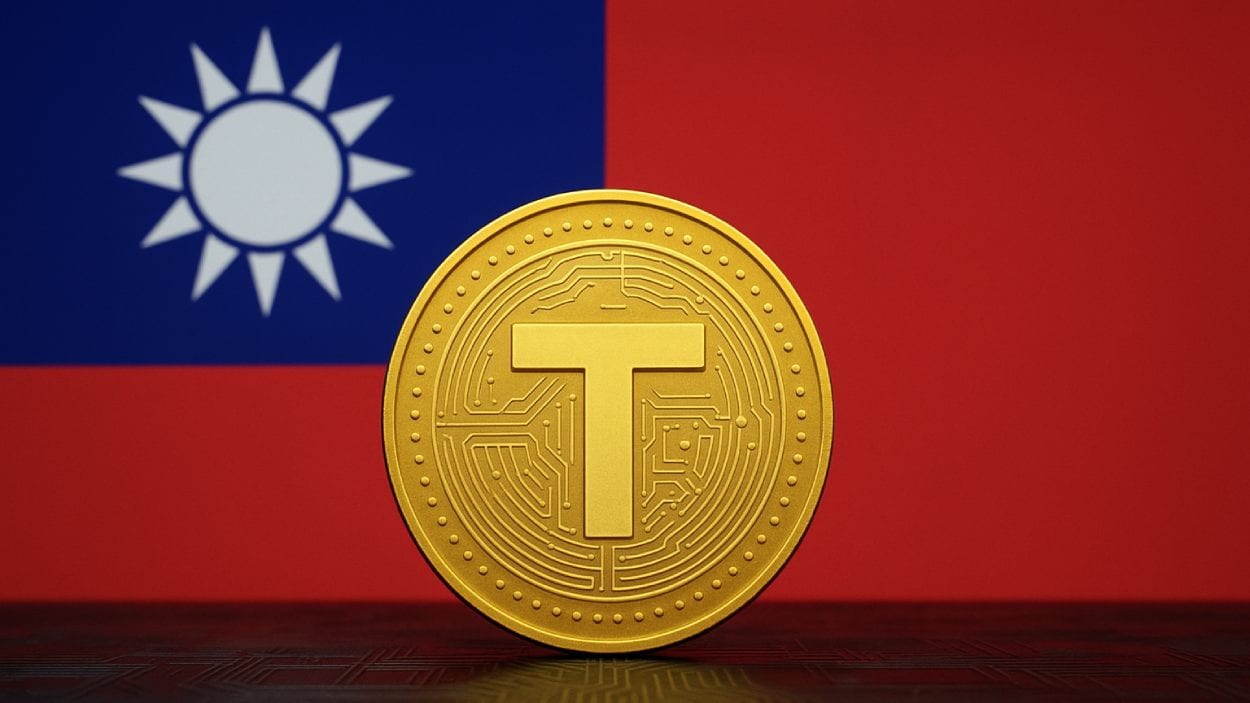
Taiwan’s financial authorities have confirmed that the territory is preparing to introduce its first regulated stablecoin by the second half of 2026, marking a significant step in its oversight of digital assets. The move establishes a formal framework for issuers and signals a wider effort to balance financial innovation with stricter consumer safeguards.

The Financial Supervisory Commission said the project aims to create a compliant asset-backed token that can operate within a supervised environment. Officials outlined that the proposed model would require issuers to undergo licensing, maintain verifiable reserves and implement robust disclosure rules. The initiative forms part of a broader regulatory roadmap that includes enhanced governance standards for exchanges and custodians, supplemented by anti-money laundering protocols already legislated in earlier phases of Taiwan’s digital asset oversight.

Taiwan has seen increased retail interest in digital tokens over the past two years, accompanied by concerns about informal trading platforms and fragmented reserve practices. Authorities have been developing clearer definitions around virtual asset providers, following earlier commitments to draft bespoke legislation for the sector. The stablecoin proposal marks the first time regulators have publicly set a target date for a national, fully supervised token that can circulate in mainstream financial channels.

Officials involved in the planning process described the stablecoin framework as an attempt to reduce systemic vulnerabilities that arise from lightly governed instruments. They indicated that the 2026 timeline allows sufficient room for market consultation with local banks, fintech operators and blockchain firms. The authorities emphasised the need for transparency around backing assets, independent audits and liquidity arrangements to prevent redemption shocks during periods of market stress.

Taipei’s policy trajectory mirrors a wider shift across Asia, where governments have begun formalising rules for digital currencies amid concerns about financial stability and technological competitiveness. Japan’s stablecoin regulations came into force earlier, requiring issuers to be banks, trust companies or registered intermediaries. Singapore’s approach has focused on wallet security, reserve segregation and consumer risk warnings. Taiwan’s proposed regime appears to blend elements of both models, adapting them to domestic institutions and supervisory capacities.

Market analysts say the announcement demonstrates how regulators are transitioning from broad guidance to more detailed rule-making. They note that several local financial institutions have shown interest in blockchain-based settlement systems but have lacked the legal certainty required to develop pilot projects. A regulated stablecoin could allow banks to explore tokenised deposits, speed up cross-border payments and reduce settlement backlogs, provided the technology meets stringent compliance standards.

Developers and industry groups argue that clarity around governance will be crucial to gaining public trust. They expect Taiwan’s framework to include ring-fencing of reserves, real-time reporting tools and strong oversight of custodial arrangements. Several blockchain service providers in Taiwan have already contributed to consultation papers, advocating for interoperability with international systems and stronger penalties for misappropriation of client funds.

Policy advisers involved in the consultation say authorities are mindful of global regulatory pressure, as jurisdictions coordinate rules for financial stability and cross-market supervision. They note that Taiwan has studied overseas cases where unbacked or poorly audited stablecoins faced severe liquidity issues, prompting large-scale withdrawals and disruptive price swings. Officials believe a regulated model will help Taiwan avoid similar vulnerabilities and foster safer digital innovation.

Some opposition lawmakers have urged the commission to publish more technical details, particularly regarding the choice of reserve assets, settlement architecture and the criteria required to issue the token. They want clearer rules on redemptions, consumer rights and supervisory intervention during market volatility. Financial regulators responded that these elements remain under review and will be formalised following extended consultation with the private sector.

Industry observers expect the stablecoin to be structured as a fully collateralised token backed by high-quality liquid assets such as government bonds or cash equivalents. This design is intended to minimise counterparty risk and ensure immediate redemption at par value. Regulators are also exploring how to embed cybersecurity requirements and resilience testing into the licensing regime, responding to heightened concerns about digital infrastructure vulnerabilities.

HONG KONG SAR – Media OutReach Newswire – 3 December 2025 – XTransfer, World’s Leading B2B Cross-Border Trade Payment Platform, announces the publication of the industry’s first Unified Global B2B Trade Settlement Network and Risk Control Platform Whitepaper. The whitepaper presents an end-to-end framework designed to resolve long-standing inefficiencies in B2B cross-border payments and establish a secure, scalable, and standardized global trade infrastructure for SMEs. X-Net, a […]

United Kingdom legislation now formally recognises digital assets such as cryptocurrencies and stablecoins as personal property, offering holders protections under established property law. The Property Act 2025 — previously a bill — received royal assent, confirming that digital tokens may be treated as a third category of personal property alongside traditional “things in possession” and “things in action.” This marks a decisive shift from earlier reliance on case-by-case rulings by courts.

Legal recognition ensures that crypto-owners gain enforceable rights in instances of theft, fraud or insolvency, and enables digital assets to be included in estates or bankruptcy proceedings under the same protections afforded to conventional property. The Act does not itself define which digital assets qualify — courts will decide those details over time.

Judicial developments had already begun to lay the groundwork for this change. As early as 2019, the UK Jurisdiction Taskforce concluded that crypto-assets met criteria for property under English law: they could be defined, identified, transferred and treated as assets capable of value retention. A key case, AA v Persons Unknown, saw the High Court of England and Wales recognise Bitcoin provided as ransom in a cyber-attack as property, granting the insurer a proprietary injunction.

Advocates of the law hailed it as providing clarity long sought by individuals and businesses holding crypto-assets. CryptoUK, a leading trade body for digital assets, noted that while courts had already treated crypto as property in some cases, codifying the principle into statute removes uncertainty and streamlines legal protections across theft, insolvency and estate-related scenarios.

Legal experts say the Act reflects the recommendations laid out by the Law Commission in a 2023 report, which urged reform to ensure the law could accommodate emerging digital assets under a flexible yet robust framework. The Commission argued that existing categories of personal property under law were too rigid to account for assets that lacked physical form or contractual rights.

This statutory change arrives as UK regulators concurrently refine the broader regime for crypto-assets. Draft legislation published earlier this year already seeks to amend the Financial Services and Markets Act 2000 to designate certain “qualifying cryptoassets” and “qualifying stablecoins” as regulated investments, bringing market-level rules for trading, custody and compliance under formal oversight.

While the law does not render cryptocurrency a legal tender — meaning it still cannot be used to settle debts in substitute for currency — its classification as property gives holders legal certainty over ownership and enforceable rights. Taxation and regulatory treatment will continue to follow established frameworks, though this legal milestone reduces ambiguity over the status of crypto-assets in private law contexts.

Judges, lawyers and market participants anticipate that the Act will lead to a more stable and predictable legal environment for crypto-asset ownership, enabling individuals and institutions to treat tokens with the same legal respect accorded to traditional assets. As the courts start applying the new law in real cases, the boundaries of which digital assets qualify will grow clearer — and the UK’s position as a regulatory pioneer in digital asset law will be reaffirmed.

Solana has formed a double-bottom reversal pattern around the $125 support level, setting up bulls for a possible surge past the $145 resistance zone.

Price data shows that SOL is trading near $143, with technical indicators on daily charts signalling a strong buy: moving averages across 5-, 10-, 20- and 50-day periods align bullish, while MACD, CCI and other oscillators support renewed upward momentum.

Longer-term studies point to a bullish swing if SOL clears $145, a level viewed by many as a crucial barrier to resetting next-leg targets. One prominent analysis suggests that if SOL flips this resistance to support, upside zones near $165 and $179 could come into play — levels that previously acted as consolidation thresholds.

Support near $125 has been repeatedly defended following a dip from higher levels. That makes the double-bottom pattern more credible: the chart shows two distinct troughs at roughly the same price, followed by a rebound — a textbook technical reversal signal.

Traders are watching on-chain metrics as well. The blockchain’s ecosystem remains active with strong total value locked and steady stablecoin and DEX activity, providing some fundamental stability alongside the technical setup.

Regulators at the Federal Reserve are moving to formalise rules for stablecoins, signalling a shift in how banks may soon treat these digital assets under supervision. The Vice Chair for Supervision at the Fed, Michelle Bowman, emphasised that banks should be able to engage with digital currencies — including stablecoins — under new regulatory guardrails. She argued that existing regulations, many crafted in the aftermath of the 2008 financial crisis, may no longer be appropriate given how much the economy and technology have evolved. Her remarks came against the backdrop of recent legislation that lays the groundwork for stablecoin regulation, prompting an overhaul of existing frameworks to encourage innovation while managing risk.

The regulatory momentum follows the passage of the Guiding and Establishing National Innovation for U. S. Stablecoins Act — known as the GENIUS Act — which establishes a comprehensive legal framework for payment stablecoins. Under the law, issuers of stablecoins must back tokens on a one-to-one basis with U. S. dollars or other low-risk assets, provide regular disclosure of reserves, and maintain transparent redemption processes. This marks a turning point: stablecoins officially enter the regulated financial system, opening the door for banks and other financial institutions to participate under defined standards.

Bowman has signalled that the Federal Reserve, alongside agencies such as the Office of the Comptroller of the Currency and the FDIC, intends to craft tailored supervisory guidelines rather than impose a one-size-fits-all regulatory model. She has called for regulators to abandon what she described as an “overly cautious mindset” that has slowed the banking sector’s ability to embrace digital innovation. According to her, banks seeking to engage in stablecoin activities must separate those assets from their traditional banking operations. This segregation, she said, is necessary to preserve the safety and soundness of the banking system even as banks expand into digital asset services.

The move has drawn cautious optimism from some quarters of the financial world, particularly among proponents of digital assets and stablecoin issuers, who view increased regulatory clarity as critical for broader adoption. They argue that a well-designed framework will enable mainstream financial institutions to offer digital asset services, increasing legitimacy and liquidity in the stablecoin market. Analysts point to academic research suggesting stablecoins have evolved from niche cryptocurrency experiments to integral components of payments infrastructure worldwide — with stablecoins’ market capitalisation estimated to exceed several hundred billion dollars. Some experts have proposed hybrid models that combine fiat-backed stablecoins with central-bank anchored systems to mitigate liquidity risks and improve stability, particularly in volatile market conditions.

At the same time, concerns remain about potential threats to financial stability. Regulators such as the Fed must weigh the risk of deposit outflows, competition between banks and non-bank issuers, and the challenge of preventing money-laundering or illicit finance through digital assets. Financial supervisors globally are wrestling with how to calibrate capital requirements and risk-weighting rules for banks engaging with stablecoins and digital tokens — taking into account factors like volatility, liquidity stress, and redemption risk.

China’s central bank has reaffirmed its prohibition on cryptocurrency use and announced a renewed enforcement drive targeting stablecoins and underground trading networks. At a high-level interagency meeting convened in Beijing by the People’s Bank of China, officials declared that all virtual currencies remain outside the legal tender framework and insisted that any related business activity constitutes illicit financial conduct.

The PBOC underscored heightened concerns over what it described as a resurgence in speculative trading and misuse of stablecoins. According to the statement delivered at the meeting, stablecoins fail to meet mandatory requirements for identity verification and anti-money-laundering safeguards — deficiencies that increase their vulnerability to use in fraud, money laundering and unauthorised cross-border transfers.

China outlawed trading and mining of cryptocurrencies in 2021, with regulators barring financial institutions and intermediaries from facilitating such activity. The current announcement makes explicit that the ban also extends to stablecoins — digital assets whose value is typically pegged to fiat currencies or other claims — signalling a shift from broad prohibition to more specific targeting.

Officials from thirteen government agencies, including judicial and cyberspace regulatory bodies, participated in the enforcement meeting, indicating that anti-crypto efforts are being treated as a coordinated, cross-sector priority. The agencies pledged to intensify monitoring, crack down on underground trading platforms, clamp down on illicit payment flows and coordinate information sharing across law enforcement and regulatory bodies.

The renewed clampdown comes even as some on-the-ground activity suggests partial revival of mining in certain energy-rich provinces, driven by low electricity costs and data-centre growth. Reports indicate that a segment of cryptocurrency miners have quietly restarted operations despite the 2021 ban, suggesting enforcement may be uneven across China’s vast terrain.

Regulators framed the move as necessary to safeguard financial and economic stability, citing recent upticks in speculation, fraud and illegal cross-border capital flows linked to virtual currencies. The articulation of fresh enforcement measures and explicit inclusion of stablecoins reflects a shift in China’s regulatory approach — from discouragement to active suppression.

Given the global ripple effects of China’s policy, observers expect tightening enforcement to influence not only domestic underground markets but also international crypto platforms, stablecoin issuers and cross-border payment flows that might involve Chinese users or capital.

Stellar’s native token XLM jumped above $0.25 as U. S. Bank embarked on a pilot to issue a bank-grade stablecoin on the public Stellar blockchain. That move marks a notable shift for legacy finance, signalling growing institutional comfort with blockchain rails offering compliance, speed and programmability.

U. S. Bank, the fifth-largest commercial bank in the United States, is working in partnership with advisory firm PwC and the Stellar Development Foundation to test issuance of a custom stablecoin using the Stellar network. The pilot aims to evaluate whether a traditional bank can leverage a public blockchain for regulated payments by utilising Stellar’s ability to freeze assets and reverse transactions — features deemed essential for regulatory compliance and customer protection. According to a bank executive, those built-in safeguards helped make the network an attractive choice for a stablecoin pilot.

This institutional endorsement of Stellar coincides with the network’s ongoing development push. A major upgrade code-named Protocol X-Ray is slated for rollout in early 2026. The upgrade will support zero-knowledge applications, giving institutions optional privacy tools for confidential transfers while retaining blockchain auditability — a balance likely to appeal to regulated financial players concerned with compliance and confidentiality.

On-chain metrics suggest the network’s fundamentals are strengthening. Total value locked on Stellar’s smart-contract layer has climbed substantially this year, while transaction volume of stablecoins on the chain — including $AUDD, a prominent fiat-pegged token — has surpassed the $1 billion mark. Observers point out that this surge reflects genuine usage by businesses and institutions rather than speculative activity.

The market has reacted positively. XLM recorded a 2.6 percent uptick, rising from around $0.244 to $0.2505 over 24 hours, with trading volume surging about 45 percent above the daily average. That breakout cleared a key technical resistance near $0.246 and pushed the token past the psychologically significant $0.25 level, renewing optimism among investors who follow price action closely.

While the stablecoin pilot at U. S. Bank remains at an exploratory stage, the partnership underscores a broader shift in the financial sector toward embracing tokenised assets under regulatory guardrails. If the trial succeeds, other banks may follow, potentially driving further demand for blockchain platforms that combine compliance, efficiency and transparency.

VISHNU RAJA
RYO YAMADA
HITORI GOTOH
IKUYO KITA