News related to
today

Continued Gross Profit Margin and Net Operating Cash Flow improvements albeit difficult market conditions HONG KONG SAR – Media OutReach Newswire – 26 June 2025 – HONMA Golf Limited (“HONMA”; together with its subsidiaries, the “Group”; HKEx stock code: 6858), one of the world’s most prestigious golf brands, announces its consolidated annual results for the year ended 31 March 2025 (the “Period”). Financial Highlights Due to economic […]

PUTRAJAYA, MALAYSIA – Media OutReach Newswire – 26 June 2025 – Malaysia today launched the Startup ASEAN platform, marking the full-scale rollout of a bold, unified digital gateway to connect and empower startups across ASEAN. Spearheaded by the Ministry of Science, Technology and Innovation (MOSTI) and executed by Cradle Fund Sdn Bhd (Cradle), the platform’s regional launch underscores Malaysia’s commitment under its 2025 ASEAN Chairmanship to fostering […]

Researchers in Sweden have created a pulse‑activated microwave amplifier that reduces power usage by a factor of ten while preserving qubit data integrity—an advance that promises to accelerate the growth of scalable quantum computers. A team at Chalmers University of Technology reports that its new low‑noise amplifier only activates during qubit read‑out pulses, cutting average power consumption to roughly one‑tenth that of current systems. By shedding the […]

 Small and medium-sized companies need more than just spreadsheets and simple systems to be competitive in today’s fast-paced, digital market. They need a single platform that makes finance, operations, sales, and customer support easier. That too, while still being able to grow and provide them real-time data.    Microsoft Dynamics 365 Business Central helps small and medium-sized enterprises run their businesses more effectively. It works well with Office […]

Dubai has earned its reputation as the financial and technological capital of the Middle East—and when it comes to cryptocurrencies, the city is blazing ahead. With crypto-friendly regulations, tax-free gains, and strong government support for blockchain innovation, more people than ever are turning to secure, efficient crypto exchanges in Dubai to buy, sell, and hold digital assets. Whether you’re an investor, trader, or curious beginner, choosing the […]

By Dr. Gyan Pathak Government of India led by the Prime Minister Narendra Modi is observing June 25, 2025, as the first Savmidhan Hatya Diwas (the Day of Killing the Constitution of India), to remember the day of proclamation of emergency at midnight of June 25, 1975 in the country by the then prime minister […]

SINGAPORE – Media OutReach Newswire – 25 June 2025 – Six trade associations and professional membership bodies have come together under a unified collaboration, known as the Alliance, to officially launch the full-scale Professional Services (PS) Centre in Shanghai today. The Alliance comprises the Institute of Singapore Chartered Accountants (ISCA), the Association of Small & Medium Enterprises (ASME), the Institute of Valuers and Appraisers, Singapore (IVAS), the […]

Advertisements

HONG KONG SAR – Media OutReach Newswire – 25 June 2025 – AIA Hong Kong announced the launch of Wealth Generation (“the Plan”), a bespoke life insurance plan designed exclusively for high-net-worth (HNW) individuals. This Plan enables customers to capitalise on wealth creation opportunities in today’s dynamic market while fostering long-term prosperity through strategic legacy planning. The Plan features multiple market-first^ legacy planning options, a rare-in-market* Flexi […]

By Saifur Rahman The International Monetary Fund (IMF) has approved the allocation of US$1.33 billion to Bangladesh to support the country’s economy that witnessed slowdown since the change of government in August 2024. The allocation is part of the US$4.7 billion combined support package authorised by the IMF in January 2023 under the US$3.3 billion Extended Credit Facility (ECF) and Extended Fund Facility (EFF) and US$1.4 billion […]

Elon Musk has cast aside the existing Grok AI training corpus and directed xAI to construct an entirely new foundation—one that excludes what he calls “garbage” and “uncorrected data”—and then retrain the model from that vetted base. This overhaul is intended to power the next-generation Grok, tentatively dubbed Grok 3.5 or Grok 4, with “advanced reasoning” capabilities that Musk says will enable it to “rewrite the entire […]

HANOI, VIETNAM – Media OutReach Newswire – 23 June 2025 – With the invention of solar cells using Passivated Emitter and Rear Contact (PERC) technology, Prof. Martin Andrew Green from the University of New South Wales (Australia) and his team made a groundbreaking contribution to green energy production. Two years after receiving the 2023 VinFuture Grand Prize, he continues to push the boundaries of solar innovation, working […]

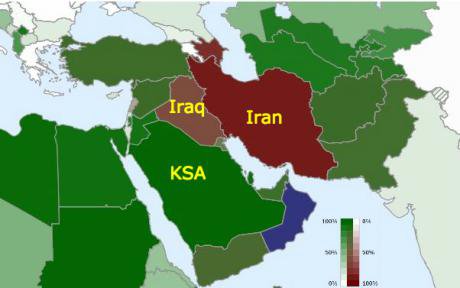
By Nantoo Banerjee It may be wrong to believe that Israel and the United States of America are the only two countries strongly against Iran’s bid to become a nuclear-armed country. The entire world is concerned about nuclear proliferation and nuclear smuggling and its falling into the wrong hands. The nature of the Iranian regime […]

Saudi Arabian Oil Company, widely known as Aramco, is dramatically expanding beyond its oil and petrochemical roots into a diversified, technology-centric energy powerhouse. Under Chief Executive Amin Nasser, the enterprise is balancing its historic role as a revenue pillar for the Kingdom with aggressive investments in artificial intelligence, renewables, blue hydrogen, carbon capture and e‑fuels. Aramco’s strategic pivot is anchored in its financial strength. The company reported […]

Driving Economic Momentum, Leading Trends with Mega Events HONG KONG SAR – Media OutReach Newswire – 21 June 2025 – The “Wealth Management Expo 2025”, powered by Bank of China (Hong Kong) (“BOCHK”) and organised by TVB under the theme of “Driving Economic Momentum, Leading Trends with Mega Events” has been successfully held today. The Expo has brought together leading figures from the government, business and financial […]

The Saudi Central Bank has introduced sweeping reforms in the rules governing credit-card issuance and operation, aiming to reduce consumer costs, bolster transparency and align with global standards. The changes include mandatory fee notifications, reduced cash withdrawal charges, capped international transaction fees and improved disclosures.

SAMA will implement these updates within 30 to 90 days. Key changes include a requirement for issuers to send SMS alerts before any fee or term modification, allowing cardholders a 14-day window to cancel agreements without penalty under the updated terms. E-wallet top-ups using credit cards will now incur no charges, a move intended to incentivise digital payments.

Cash withdrawals of SR2,500 or less will carry a maximum fee of 3% of the transaction value; those of SR2,500 or more are capped at SR75. Previously, cash advance fees applied sharply until SR5,000 with a flat SR75, and beyond that 3%, up to SR300—making the new cap notably more favourable for larger withdrawals. International purchases will now attract a clear 2% fee of the transaction amount.

A notable enhancement allows customers to deposit amounts beyond their credit limit and withdraw them at any point without additional charges, enhancing flexibility and consumer agency. Account statements must now be issued via SMS at least 25 days before payment, detailing balances, due dates and fees. Immediate notifications must follow any credit-card transaction, including details such as merchant, amount and remaining limit. Issuers are also required to provide pre‑transaction tools for estimating international charges and reward benefits.

Repayment provisions maintain consumer safeguards: a 25-day minimum grace period is mandated before term costs apply. The rules prohibit levying additional fees for full balance payments and outlining clear terms for minimum payments and their implications.

These reforms are underpinned by standardised disclosure templates for fees and benefits, inclusive of promotional terms—a step towards consistency across the market. Issuers must emphasise APR, term costs and expiration timelines for rewards or promotions, with SMS reminders 14 days in advance.

SAMA’s emphasis on mandatory due diligence and creditworthiness checks prior to card issuance is reinforced under the new framework. Criteria now include explicit customer consent via authenticated channels, formal credit record assessments and eligibility conditions aligned with industry best practices.

Procedures for supplementary cards, default reporting and dispute resolution have also been clarified. For example, the minimum repayment remains 5% of the due balance, and any default procedures must include consumer advisory services before legal or collection measures begin.

SMS has been designated the primary channel for disclosures, with issuers obliged to inform customers of account activity, fee changes and promotional developments. Financial institutions must adhere to SAMA‑specified notification templates to promote uniformity and clarity.

According to a senior official within SAMA, the goal is to “establish minimum requirements to promote disclosure, transparency and fair practices, as well as to limit credit risk.” Industry reaction has been generally positive. Analysts from regional banks suggest the rules will “enhance consumer protection while supporting digital payment growth.” Critics, however, note potential implementation challenges—particularly in updating existing systems to align with stricter notification and compliance requirements.

The timing reflects SAMA’s broader strategy to modernise the financial sector and accelerate digital payments as part of Saudi Vision 2030. A 2020 directive mandated real‑time notifications for debit card and e-wallet transactions, laying foundational infrastructure for today’s enhanced SMS regime. Collaboration with global payment networks—such as Visa, MasterCard and American Express—has helped shape caps on international and cash advance fees.

Banks and fintech firms are now preparing compliance roadmaps. One major lender has initiated system-wide updates to include the new SMS templates, fee calculators and balance‑flexibility features. Industry trade bodies are urging transparency in implementation timelines to ensure consumers are well informed ahead of the rollout.

As SAMA positions Saudi Arabia’s credit‑card framework at par with international best practice, key areas to monitor include transparency in third‑party charges, enforcement mechanisms for non-compliant issuers, and feedback from consumer‑protection advocates.


Acquisition strengthens Chemin’s capabilities in complex AI data services amid global demand surge SINGAPORE – Media OutReach Newswire – 20 June 2025 – TDCX Group, a leading provider of digital customer experience (CX) and growth services for global enterprises, today announced the acquisition of SUPA, a cutting-edge data labeling and annotation platform known for its agile, gig-powered delivery model. SUPA will be integrated into Chemin, TDCX Group’s […]

ImFact today unveiled its “Blockchain Anywhere” infrastructure, enabling 6.8 billion devices—from smartphones to IoT hardware—to operate individual blockchain instances. Dubbed Personal Blockchain and On‑Device Blockchain, the rollout promises cryptographic data verification embedded directly within devices, marking a pivotal shift in trust architecture for artificial intelligence applications. The launch was showcased through Korea’s DaeguChain deployment across Daegu city and supported by a global testnet.

Personal Blockchain runs as a standalone blockchain on smartphones via mobile apps such as MyChain and Fact Stamp, allowing users to verify image authenticity, certify legal documents and complete offline transactions. In parallel, On‑Device Blockchain embeds blockchain functionality into internet-connected hardware—security cameras, autonomous vehicles, industrial sensors—assuring tamper-evident data creation at the source. Together, they integrate with ImFact’s Layer‑1 mainnet through a proprietary Station protocol.

These innovations build on six years of development and have undergone trials within DaeguChain, the civic blockchain network of Daegu city—South Korea’s fourth largest—with a population of 2.5 million. ImFact confirmed the system has proven reliable at enterprise scale. A dual‑track Testnet 2.0 currently supports more than 50,000 users across 97 countries, with participants incentivised via device mining rewards and verification incentives. The team aims to launch the Layer‑1 mainnet in Q4 2025.

Driving ImFact’s initiative is a leadership team comprising Professor Minkyu Je from KAIST—previously with Samsung—as head of hardware blockchain integration; Professor Yasin Ceran of San Jose State University and Stanford Medical School, focusing on privacy-sensitive health data verification on-device; and David Woong Jin Yoon, ex‑CEO of Gravity, steering strategic market deployment. Senior Ecosystem Builder San Jun described the development as the group’s solution to embedding blockchain functionality wherever computing power exists.

The announcement arrives against a backdrop of broader technological investment in South Korea. The government has pledged 16.1 trillion KRW over five years to boost artificial intelligence infrastructure, including data centres and GPU capacity, as outlined in a policy paper presented to the Presidential Policy Planning Committee on 18 June 2025. Key objectives include constructing AI data centres and offering open‑model development to citizens.

Industry analysts suggest that while South Korea’s blockchain strategy originated in controlled, closed networks, the growth of AI demands public and verifiable data systems. Infrastructure such as ImFact’s aligns with this strategic shift, seamlessly enabling decentralised trust within traditionally siloed environments.

ImFact positions its infrastructure as DePIN, distinct from existing offerings that rely on external validation. Instead, their data integrity is assured at the point of generation—whether it be a camera capturing footage or a sensor logging readings—with cryptographic proof to prevent tampering. The embedded nature enhances security and auditability, crucial for sectors like healthcare, autonomous vehicles, legal systems, and industrial monitoring.

While ImFact’s public roadmap outlines the L1 mainnet launch in late 2025, it is already actively engaging early adopters through Testnet 2.0. Users are deploying personal blockchain nodes on smartphones and integrating on-device blockchain chips in IoT hardware, generating token rewards and engaging in verifiable proof tasks. These early-stage validators are cultivating a nascent ecosystem that could mature rapidly ahead of commercial stage.

South Korea’s public sector stance and investment in AI and related infrastructure create a favourable landscape for projects like ImFact. The 16.1 trillion KRW policy emphasises open‑source AI models and GPU availability—initiatives that align with ImFact’s objective to offload cryptographic verification tasks to the edge of the network. The convergence of national policy and device-level trust architecture underscores an ecosystem designed to support AI at scale.

ImFact’s strategy hinges on the deployment and interoperability of three layers: personal blockchains for users, on-device blockchains for hardware, and an L1 mainnet offering global anchoring. Success depends on adoption rates of its mobile apps and IoT kits, regulatory acceptance of on-device verification for legal and medical use cases, and demonstration of clear ROI for participants in device mining.

KUALA LUMPUR, MALAYSIA – Media OutReach Newswire – 19 June 2025 – On 16 June 2025, Chairman Xu Guanju of Transfar Group was invited to speak at the 2025 Energy Asia Conference. Hosted by PETRONAS, the Energy Asia Conference was held at the Kuala Lumpur Convention Centre from 16 to 18 June. Focusing on the theme ‘Delivering Asia’s Energy Transition’, the conference brought together policymakers, industry leaders, […]

Bitcoin Solaris is gaining rapid momentum, positioning itself as a potential outperformer of Polkadot’s early expansion. Analysts and on‑chain metrics highlight growth indicators that not only replicate Polkadot’s debut phase but in several cases significantly surpass it. Market observers attribute this shift to Solaris’s mobile‑first mining approach, hybrid consensus architecture, and aggressive presale execution.

Polkadot established its reputation through multi‑chain interoperability and shared security via parachains—a design emphasising developer adoption over mainstream user engagement. In contrast, Bitcoin Solaris is scaling through mass inclusivity. Its Solaris Nova app enables users to mine with everyday smartphones or PCs, eliminating the need for costly ASICs or complex infrastructure—barriers that still restrict Polkadot validator participation. This strategy has sparked an influx of retail interest, including among existing Polkadot investors turning to BTC‑S presale phases in search of higher short‑term returns.

Solaris’s roadmap reflects an ambition to execute where Polkadot encountered slowdowns. From launching testnet and mobile wallet in early 2026 to a full mainnet and exchange listings by late 2026, the timeline is concrete and time‑bound. In contrast, Polkadot’s parachain roll‑out, while pioneering, has been criticised for complexity and slower-than-expected mainstream uptake.

Technically, Solaris combines foundational Proof‑of‑Work for security with Delegated Proof‑of‑Stake for instant transactions and smart contracts. Its target throughput—10,000 to 100,000 TPS with finality in as little as two seconds—edges ahead of both Polkadot and competing layer‑1 networks. Validators rotate daily to enhance decentralisation, and its Helios security layer brings protocol-level safeguards comparable with Bitcoin’s scarcity model and Solana’s performance.

Energy consumption is also a focal point. Solaris claims 99%+ savings in power usage compared with legacy mining operations. With escalating scrutiny of crypto’s environmental impact, that low‑energy design resonates with both regulators and eco‑conscious investors.

The presale narrative underscores urgency. Currently in mid‑phases, token pricing has ranged from US $2–8, with anticipated exchange‑launch pricing plateauing near US $20. This structure has already attracted over US $4–5 million in capital, and presale bonuses approach 12–14% per phase.

Comparisons to Bitcoin’s early growth phase are emerging. Financial analysts argue that Bitcoin Solaris’s fixed supply, mobile mining model, and early‑stage presale echo crypto’s 2013 dynamics. Even modest investments—US $1,000 today—are being framed as having potential to outperform multi‑thousand‑dollar Bitcoin buys over a similar timeframe.

However, such enthusiasm is not without admonitions. As a relatively new protocol, Solaris remains in development, with adoption hinging upon mainstream acceptance of the Nova app, audit outcomes, smart contract integrity, and exchange listings. Polkadot’s longevity and proven ecosystem via robust parachain deployment stand as a counterpoint—Solaris must demonstrate resilience under live load.

The academic and developer communities have taken note of Polkadot’s strengths—shared security via NPoS consensus, governance frameworks, and scholarly analysis of its sharding mechanisms. Yet critiques surrounding complexity, validator cost thresholds, and centralisation risks persist. By contrast, Solaris is proactively targeting those criticisms with user‑centric design, streamlined entry, and full audit transparency.

Early data from presale participants suggests substantial uptake. West African and Southeast Asian communities—traditionally underrepresented in high‑end mining—are increasingly engaging through mobile mining accessibility. While precise regional figures are opaque, anecdotal evidence and community growth metrics from Solaris’s Telegram and X channels point to significant global traction.

Institutional interest remains unsubstantiated. Vertex Ventures and other blockchain‑focused funds have yet to announce allocations. Solaris’s validation remains retail‑driven, though its governance plan includes institutional play in later roadmap phases. By contrast, Polkadot has cultivated grants via Web3 Foundation and tapped institutional bonds for parachain funding.

As of now, the crypto community stands at a divergence point. One path reflects Polkadot’s methodical but slower‑burn strategy, centred on developer utilisation and cross‑chain infrastructure. The other is a sprint toward inclusion, speed, and mobile participation via Bitcoin Solaris.

By P. Sudhir It may appear rather unusual to recall the inglorious sequence of events that began at midnight on June 25, 1975, with the declaration of the Internal Emergency. However, we are reminded of those immortal words of wisdom: ‘those who tend to forget the lessons of history are condemned to repeat them.’ These […]

FalconX, a leading cryptocurrency prime brokerage, has initiated informal talks with bankers and advisers to explore an initial public offering in 2025, signalling a significant move to satisfy burgeoning institutional demand for digital assets. The firm, which last raised $150 million in 2022 at an $8 billion valuation, is not yet retaining an underwriter—an early but strategic step toward going public.

Founded in 2018, FalconX began as a crypto-focused prime broker, enabling clients to trade directly on exchanges. Today it spans three verticals—markets, custody and staking, and direct market access prime brokerage—positioning itself as a full-spectrum financial services provider for institutional clients. This evolution reflects growing investor interest in digital assets and the firm’s expansion through deals and strategic integration.

In early 2025, FalconX acquired Arbelos Markets, marking its entry into the derivatives segment, a lucrative but highly competitive space. It also forges partnerships with established players such as Standard Chartered, integrating global banking and foreign-exchange capabilities, and with Cantor Fitzgerald, accessing a credit facility collateralised by Bitcoin—its “first step in a broader credit framework” to bolster institutional offerings.

The broader crypto sector is experiencing an IPO wave. Several digital-asset platforms, including Fold, Exodus and eToro, have listed in 2025. Notably, stablecoin issuer Circle achieved a landmark $1.1 billion IPO on 5 June, marking the largest crypto-market debut in history and fuelling expectations of further listings. Following Circle’s success, firms such as Bullish and Gemini filed for public listings, with Kraken and Justin Sun’s Tron Group also preparing filings.

Amid this sector-wide momentum, FalconX is working to enhance its public profile, seeking to craft a compelling narrative ahead of a potential IPO. The firm’s strategy, according to one insider, emphasises readiness to appeal to public-market investors, including both strategic partnerships and public relations positioning.

The firm’s track record underpins its IPO ambition. In June 2022, it secured a $150 million Series D led by Singapore’s GIC and B Capital at an $8 billion valuation. That round also involved Thoma Bravo, Wellington Management, Adams Street Partners and Tiger Global Management. CEO Raghu Yarlagadda emphasised FalconX’s market‑neutral model, rigorous risk‑management and profitability amid volatility—a rarity in the crypto space.

With over $430 million in capital raised to date, FalconX has demonstrated resilience, continuing to hire and expand services even as competitors retrench. GIC’s commitment and the firm’s strategic posture reflect stable investor confidence.

Institutional demand for crypto is rapidly growing, and FalconX’s moves align with this shift. The acquisition of Arbelos, banking collaboration and credit facility signal a broader ambition to integrate traditional and digital finance infrastructures, broaden offerings and close service gaps. As co-head of markets Joshua Lim observed, strategic partnerships and acquisitions enable FalconX to fill missing links that would otherwise force customers to assemble services piecemeal.

Within this context, launching an IPO emerges as both a capital‑raising tool and a visibility lever. As one adviser noted, “When you launch an IPO, you need to have a story…. You’re selling yourself to the investing public”. FalconX’s groundwork suggests readiness to craft that narrative, aligning with its strong financial position and strategic trajectory.

Damac Chelsea Residences is more than just a real estate project — it’s a long-term investment in lifestyle, brand equity, and high-growth potential. Situated in the prime seafront district of Dubai Maritime City, this development by DAMAC Properties brings the prestige of Chelsea Football Club to Dubai’s property scene. As branded residences become one of the most in-demand asset classes worldwide, investors are turning their eyes toward Chelsea Residences by […]

ISTANBUL, TURKEY – Media OutReach Newswire – 18 June 2025 – The report “Evolving Legacy: Decoding the Scientific Trajectory of Chinese Medicine” released today by Hong Kong Baptist University (HKBU) and Elsevier, reveals the growing impact of Chinese Medicine research on global healthcare and modern health challenges. In this context, “Chinese Medicine research” encompasses not only clinical practice, but also basic and translational science, AI-driven systems medicine, […]

Bitcoin has surged to command approximately 64 per cent of the global cryptocurrency market, a dominance level unseen since January 2021 and propelled by heavy institutional inflows following the U.S. Securities and Exchange Commission’s approval of Bitcoin ETFs in January 2024. This increased dominance has coincided with a resurgence in confidence for Ethereum, which has seen its share climb from around 7.1 per cent in April to approximately 9.3 per cent today.

This shift marks a turning point in crypto capital flows. For many investors, Bitcoin remains the safe harbour amid global market volatility and rising macroeconomic uncertainty. According to the Financial Times, heightened Bitcoin dominance is underpinned by “heightened institutional investment,” with major hedge funds such as Millennium Management and Brevan Howard among top ETF holders. Smaller tokens have lost ground as smart money funnels into the more established and liquid assets.

Ethereum’s revival reflects this evolving dynamic. Once languishing with just over 7 per cent market share in April, it has rebounded to 9.3 per cent. Analysts attribute the rise to improving investor sentiment and increasing adoption of Ethereum-based applications. Technical indicators also support a bullish outlook: Ethereum’s market value has risen nearly 48 per cent over the past three months, compared to Bitcoin’s 31 per cent.

Chart patterns signal a potential inflection. Bitcoin dominance has encountered resistance at around 64–65 per cent, hinting at a possible reversal. Analysts such as “Astronomer” on social platforms point out that Bitcoin’s market share is approaching a critical ceiling and may soon recede—a shift that historically precedes renewed altcoin activity.

Investor behaviour appears to reflect this emerging balance. Spot Ethereum ETFs have attracted sustained inflows, with over US$1.3 billion entering ETH products across 19 consecutive days. Additionally, ‘smart money’ whale activity in ETH protocols indicates a strategic accumulation, even as retail traders step back. These large-scale holders are said to control nearly 27 per cent of the total ETH supply—an indication of growing institutional confidence.

Market analysts underscore that Bitcoin dominance near 64 per cent still keeps altcoins marginalised. Daan Crypto warns that unless Bitcoin dominance dips below this level, funds will remain weighted toward Bitcoin. The Altcoin Season Index—a metric tracking the performance of top altcoins relative to Bitcoin—currently sits in the 30s, suggesting a fading but not yet full-blown move into altcoins. Historically, a shift above 75 triggers more substantive altcoin rallies.

Nevertheless, proponents argue that liquidity rotation is underway. Ethereum’s rise is seen as the vanguard, often signalling broader market rotation into high-cap alternatives. As Maxwell Mutuma noted, “Altcoins have spent a good part of 2025 playing catch‑up…with Bitcoin’s dominance at 64 per cent, it’s certainly raised some concerns,” even as “Ethereum’s recent surge hints at a broader altcoin rotation”.

Despite current trends, caution remains. Analyst Severino has advised that although technical indicators support a pullback in Bitcoin’s dominance, any full-scale altcoin rally is not yet assured. He emphasises that meaningful declines below 62 per cent in Bitcoin dominance would be needed to confirm a structural shift in asset allocation.

Ethereum stands at the centre of this crossroads. With its market share approaching 9.3 per cent, ongoing technological updates such as the upcoming Pectra upgrade may reinforce investor confidence and drive further capital inflows.

The current scene paints a narrative of cautious optimism. Bitcoin remains firmly dominant, buoyed by institutional demand, but Ethereum’s resurgence signals that capital is beginning to trickle back into the altcoin space. Whether this marks the vanguard of a broader altcoin resurgence or simply a temporary reprieve will depend on whether Bitcoin dominance retreats from its 64 per cent plateau.

VISHNU RAJA
RYO YAMADA
HITORI GOTOH
IKUYO KITA